Extra inning baseball book reviews for 2020: A bible that still carries weight, especially when held right-side up

2020 new cover
Not quite actual size. But you get the picture …

The New Baseball Bible:
Notes, Nuggets, Lists and Legends From
Our National Pastime


The author:
Dan Schlossberg
Publishing info: Sports Publishing/Skyhorse, 465 pages, $19.99, released March 17
Links: At the publisher’s website (which still only lists the 2017 edition); at Amazon.com; at BarnesAndNoble.com; at Powells.com; at Target; at Indiebound.org; at the author’s website

The review in 90 feet or less

Bibles should be thumped in higher regards at this moment in time. Because they can serve a higher purpose. Right-side up, especially, with favorite passages recited in order to help put things into perspective.
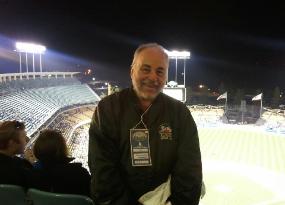
179704_4001272630637_1112735565_n-285x205In the beginning, Dan Schlossberg created a lot of this.

It may seem like night and day since he proclaimed “The Baseball Book of Why” in 1984. Or even “The Baseball Almanac: Big Bodacious Book of Baseball” of 2004 for Triumph Books, followed by “Baseball Gold: Mining Nuggets from Our National Pastime” in 2007 and Baseball Bits: Little-Known Stories, Facts, and Trivia from the Dugout to the Outfield” in 2008. There are many others in between for the former Associated Press sports editor from New Jersey, a regular writer for Street & Smith’s Official Baseball Yearbook, Sports Collectors Digest, The Sporting News and official World Series programs. His resume includes more than three dozen books.

For this particular book of numbers, facts and stories that’s about as large as old Sears catalogue (with a typeface that still reminds us one, along with the muddied black-and-white photos), the lineage goes back to “The Baseball Catalog” of 1980 (and a millennium edition in 2000) from Jonathan David Publishers. This is now the third version of “The New Baseball Bible,” which Sports Publishing took over with a version in 2002, and last updated it in 2017 before the latest refresh.

So, what’s new?
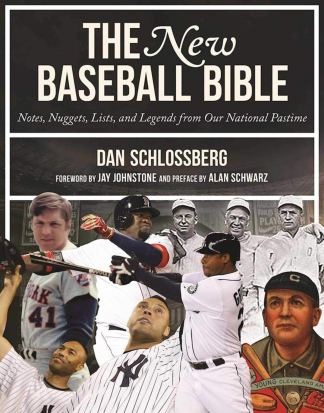
2017 coverLComparing this one to three years ago – which we can, having both editions here in front of us – the cover tweaks include noting that Schlossberg is now identified as a “former AP sportswriter” (he now can be found contributing to Forbes.com), the forward is now by official MLB historian John Thorn (versus former Dodger Jay Johnstone) and the preface comes from former MLB umpire Al Clark (instead of writer Alan Schwarz). The cover collage also adds Mike Trout as the main figure in the center, replacing Ken Griffey Jr., while Hank Aaron and Eddie Matthews are added (and a group of three old-timers we’d be hard pressed to identify are left off).

And a yellow coloring of the book title instead of white.

Improvement overall already.

Ramping up from 408 pages to 467, the most notable additions:

== Aside from chapters on Beginnings of Baseball, How Some Rules Apply, Umpires, Playing the Game, Equipment, Ballparks, The Game, Famous Faces, Managers, The Brass (commissioners and owners), Trades, The Supporting Cast (stadium announcers, organists, vendors, etc.), The Media, Big Moments, The Language of Baseball, Superstitions and Other Traditions, Spring Training, Other Leagues and Other Lands, Fans, The Expansion Eras and A New Century, there are three additional chapters: Cooperstown (all things related to the Hall of Fame), After 108 years (the Cubs’ 2016 title) and Turbulent Times (labor pains, Astros’ scandals and a change in how offense is played).

The most poignant addition of having Thorn do the new forward and talk about for all the baseball history he has written, Schlossberg has been more than a kindred spirit, matching him publication for publication going back to the mid 1970s. It’s akin to watching the Beatles/Paul McCartney and the Beach Boys/Brian Wilson look and admire each other and then have it inspire their next pieces of work.

“For all these years, Dan and I have been friends rather than rivals, belonging to a mutual admiration society, population: two,” says Thorn, who later adds that the only book he can ever compare “The Baseball Bible” series to “as a foundation of wit and wisdom” is Jim Bouton’s “Ball Four.” Continue reading “Extra inning baseball book reviews for 2020: A bible that still carries weight, especially when held right-side up”
Extra inning baseball book reviews for 2020: When Cleveland rocked 25 years ago, we can still roll with it

s-l640
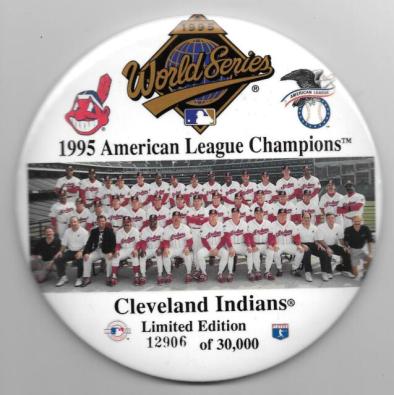
A memento from the 1995 World Series, available for sale on eBay.com.

Cleveland Rocked:
The Personalities, Sluggers and Magic of
the 1995 Indians

61UIHMBWipLThe author:
Zack Meisel

The publishing info:
Triumph Books
$28
288 pages
Released May 12

The links:
At the publisher’s website
At Amazon.com
At BarnesAndNoble.com
At Powells.com
At Target
At Indiebound.org

The review in 90 feet or less

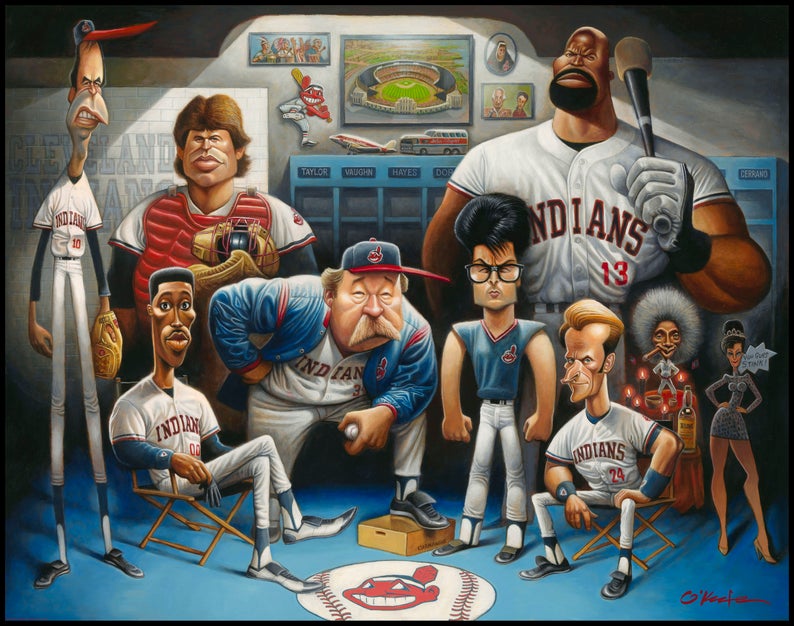
When the movie “Major League” arrived in 1989, it kinda rocked the box office.

Tom Berenger, Charlie Sheen, Wesley Snipes, Dennis Haysbert, Corbin Bernsen … plus Milwaukee County Stadium, and Brewers broadcaster Bob Uecker, recruited to somehow merge into this a fictionalized story using a real MLB team and logos to grab onto some kind of authenticity.

Yet, was it really doing the real Indians of Cleveland any favors?

il_794xN.1504888065_g58x
A “Major League” tribute illustration, available on Etsy.com

The R-rated “Slap Shot”-type of tale about how an evil woman owner of the team is trying to break the stadium lease with the city by fielding the most mismatched roster possible that will sink ticket sales and then she can move the franchise to Miami. It wasn’t based on a true story. But one couldn’t help compare the team to how the real ’89 Indians of Joe Carter, Cory Snyder, Brook Jacoby, Greg Swindell and Doug Jones were operating amidst their third losing season in a row, a 73-89, next-to-last finish in the AL East.

91v9tWcaEmL._AC_SY741_In the movie, the guys rallied together. In real life, not so much. (Oh, and here’s also 10 “wild” facts about the movie, thanks to the late, great Mental Floss magazine).

Because the movie grossed about $50 million just with its domestic release, “Major League” it would spawn two sequels.

By the time “Major League II” came out in 1994 — sub in Omar Epps for Snipes as Willie Mays Hayes, as if we wouldn’t notice, and then drop it down to a PG rating – the real Indians had started to turn a corner under manager Mike Hargrove. They were going along at a 66-47 clip and second in the newly created AL Central (the first year beyond a simple East-West division for each league) when everything came to a ridiculous stop for the strike/lockout. The Indians were almost assured a playoff spot in ’94. But with the season done (ask the Montreal Expos about “what if?”), there would be no World Series and everything would bleed over into the threat of replacement players and the delayed start of a 1995 season.

(You may be hearing more about how the current MLB situation reminds some of that ’94-’95 period when it comes to how to split up income. Some things just don’t change).

Back on that Indians’ ’94 roster was Albert Belle, a rookie back in ’89, coming off an All-Star year where he led the league with 129 RBIs and was third in AL MVP voting. Manny Ramirez was a 22-year-old who would finish second in AL Rookie of the Year voting (17 HRs, 60 RBIs, .269). Jim Thome, drafted by the team in ’89,  was a 23-year-old third baseman showing some power – the first of 11 straight seasons of 20 or home homers. Kenny Lofton, Eddie Murray, Sandy Alomar, Carlos Baerga, Omar Vizquel and Paul Sorrento were the core of the lineup. The pitching staff focused on 40-year-old Dennis Martinez and 39-year-old Jack Morris at the top, with Charles Nagy and Jason Grimsley. But no one in the bullpen had more than five saves.

When “MLII” hit theaters in March, 1994, it debuted at No. 1 in the box office. Yet critics gave it a 5 percent rating on Rotten Tomatoes.

Yet from where we sit – as well as where Steve Yeager fits in, considering he played the Indians’ coach in every movie – the timing of both movies have to be factored into if you’re trying to tell the tale of Cleveland Indians’ real-life resurgence and redemption versus the public perception and acceptance of them as a down-and-out franchise. Continue reading “Extra inning baseball book reviews for 2020: When Cleveland rocked 25 years ago, we can still roll with it”

Extra inning baseball book reviews for 2020: No need to start a nerdy WAR over MLB’s new metrics system … try some cool WHIP

MLB: All Star Game
Mike Trout and Miguel Cabrera as teammates during the 2014 MLB All Star game in Minnesota.

A Fan’s Guide to Baseball Analytics:
Why WAR, WHIP, wOBA, and Other Advanced Sabermetrics Are Essential to
Understanding Modern Baseball

81LBEOl7yaL
The author:

Anthony Castrovince

The publishing info:
Sports Publishing/Skyhorse
$16.99
240 pages
Released May 12

The links:
At the publisher’s website
At Amazon.com
At BarnesAndNoble.com
At Powells.com
At Indiebound.org

The review in 90 feet or less

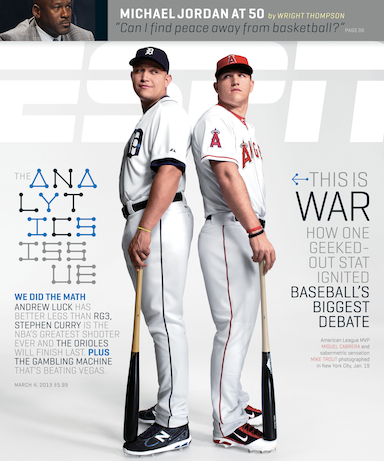
The discussion over who most deserved the 2012 American League MVP Award – Angels rookie sensation Mike Trout or Tigers’ Triple Crown winner Miguel Cabrera – appeared to depend far less on how voters quantified a player’s value and more on how they valued certain statistics.

Eventually, an important WAR broke out over the weight of some very basic sabermetrics. Baseball’s older, old and not so old grabbed a handrail and payed attention to this shifting ground.

E-030413-COVERPROMOAfter the fact, ESPN did a whole issue about analytics and how it pertained to this decision, in its February, 2013 issue. But long before that, when editors of The Daily News thought it would be worthwhile to have me and writer J.P. Hoornstra publicly hash things out on the front page of the Sept. 24, 2012 edition – the season wasn’t even over yet – it was couched as a classic “new-vs.-old school mentality.” There was the weighted scales of how was also about whether this 21-year-old on a team that would be missing the playoffs deserved taking this honor from a veteran player, whose team was bound for the playoffs, and was accomplishing a feat that hadn’t been done in decades.

There was no regional bias in that we were all enamored with Trout. Not just his “traditional” average/power numbers, but also his nearly 50 stolen bases, and his phenomenal defense. He was “Magic Mike.”

Since I was taking the “old school” argument, it was mostly based on “this is how we’ve done it in the past.” What pushed me for Cabrera was accomplishing the league lead in average, homers and RBIs, plus the fact the team was going to the post-season. And he was finishing strong.

The pivot to this whole discussion was Wins Above Replacement. Trout led the league, above 10. Cabrera wasn’t so bad, either.

My final argument: “I’m most impressed with the fact Trout has saved 25 runs with his defense (again, a stat I’m not sure how it’s devised) and he’s only been caught stealing four times. Zack Greinke and Felix Hernandez already have turned the tide on how Sabermetrics can determine a Cy Young Award, and this may take it to the next step. It’s just a shame if Cabrera pulls this rarity and doesn’t win. It’s something that happened to four Triple Crown winners in the past, but that didn’t make it necessarily right (see: Williams, Ted; hated by reporters). Trout and Cabrera both have great stories.”

I asked for a tie (see: 1979 NL MVP). When the votes came in, Cabrera (.330, 44 HRs, 139 RBIs from the No. 3 spot, plus a .606 slugging percentage and 6.9 WAR for the AL champion Tigers) won far too easily over Trout (.326, 30 HRs, 83 RBIs from the leadoff spot, a league-best 129 runs and 49 steals and a MLB best 10.7 WAR). Easily. It shouldn’t have been that way, but it was. Old school won. Perhaps, for the last time.

mlbf_37202783_th_45

So now, on pages 189-200 in Anthony Castrovince’s old school/new school updated guidebook on baseball analytics that focuses especially Wins Above Replacement, he can take that 2012 example and, with hindsight, better summarize:

You can protest WAR, and many have. Complex thinkers have derided it as too simple, and simple thinkers have derided it as too complex. … To be very clear: WAR has flaws. But if nothing else it’s a quick and dirty starting point.

In this book, it’s actually the end point – the final chapter in the fifth and last section of a book, and probably the best place to put it, because of how it ties together and captures the intricacies of all the stats discussed before it.

But getting to this point, you have to start with now-obvious flaws of the “old stats” – batting average, RBIs, errors, pitching victories and saves, covered in Section 1. Then after those 38 pages comes the parade of newer, sometimes esoteric, occasionally hair-splitting calculations that have grown from the Bill James movement.

00043000009536_cl__gs1_jpegThat would be, in order presented here for purposeful reasons: OBP, SLG, OPS, RC, ISO, wOBA, wRC+, BsR, ERA+, WHIP, GSs, FIP, DRS, UZR, Diff, SRS, DER, WP, MN, BABIP, xBA, xSLG, xwOBA and WPA.
(Just then, we had a flash back there of our junior year in high school, having finished advanced algebra, geometry and trig, we were asked if we would be continuing on with the group into the calculus phase of this mathematical maze. Initially — both rhetorically and literally — we were scared at what we saw on the horizon. Suddenly, the 26 letters of the alphabet looked far easier to master into sentences and paragraphs over in the English department than trying to wrestle with these these calculations that only added up to doom for whatever jobs we might enjoy going forward. For what it was worth, we scored far higher on the math portion of the SAT than we did the English side of it, so math got us a better seat in the college admissions offices). Continue reading “Extra inning baseball book reviews for 2020: No need to start a nerdy WAR over MLB’s new metrics system … try some cool WHIP”

Extra inning baseball book reviews for 2020: “Big Sexy” education, or the new scent of Bartolo Colon

613kzSHApHL
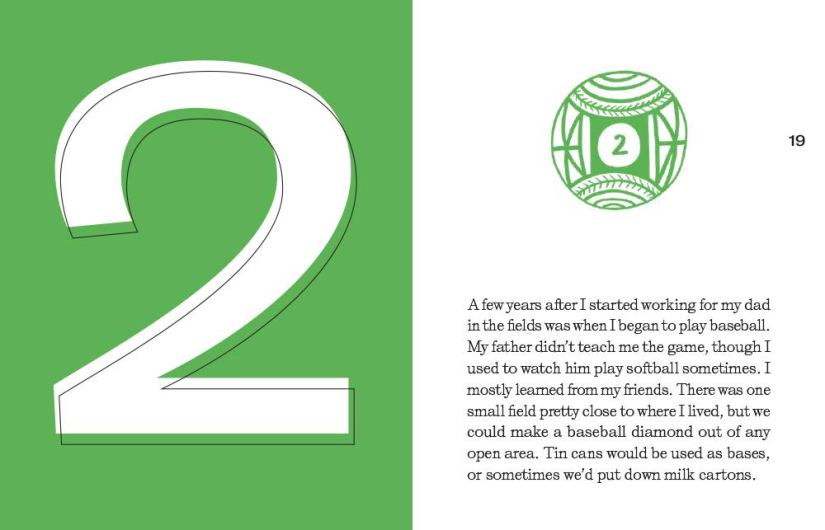
Pages 180-181 of “Big Sexy” … any guess as to what it is referencing?

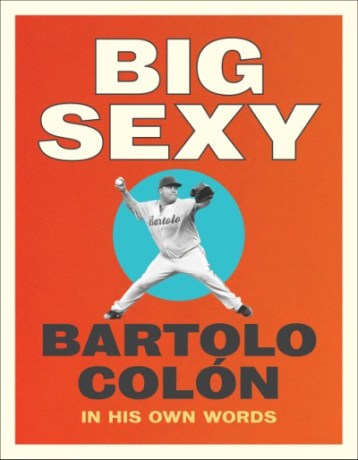
“Big Sexy: Bartolo Colon In His Own Words”

9781419740374_s3
The author:

Bartolo Colon
with Michael Stahl
Illustrations by Meagan Ross

The publishing info:
Abrams
$24.99
208 pages
Released May 12

The links:
At the publisher’s website
At Amazon.com
At BarnesAndNoble.com
At Powells.com
At Indiebound.org
At the author’s website

The review in 90 feet or less

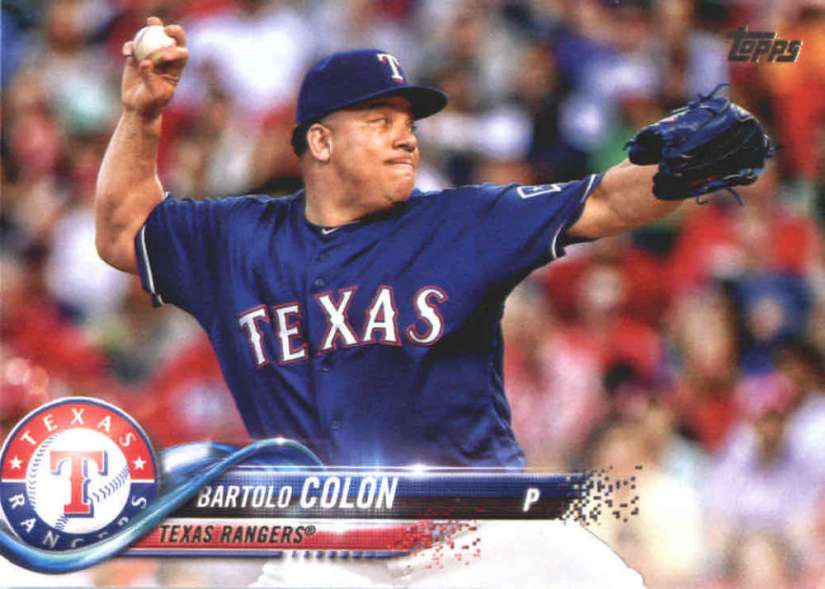
Big Bart was in the news recently. On his 47th birthday, as a matter of fact, right before Memorial Day.

s-l1600

“I’m not retired,” he proclaimed. “I know this is not a sport for the old, it’s for the young. Even though I’m not playing right now, I tried to keep fit.”

An Associated Press story pointed out that for Colon, it’s still a numbers game. The number 46 is more important that 47, because if he can just log 46 more innings with a big-league team he will have passed Juan Marichal with the most by a Dominican pitcher. Colon already passed Marichal in career wins with 247.

When the 2019 MLB season started, Colon also made some news by not playing: The fact he wasn’t on any roster, combined with the retirement of Adrian Beltre, meant that there no longer any active players left from the 20th Century.

Kind of a jarring headline, but you figure it out.

If we’re talking more numbers about Colon here:

With the new book “Big Sexy,” it measures 7×9 inches, which may not seem to be all the relevant, but in the book world, it’s a bit odd shaped. Maybe on purpose, consider Colon’s, eh, physique?

(To which, we refer to a quote of Colon’s on page 188: “Sometimes in my career, I heard fans yelling at me things like ‘Fat boy’ or ‘Eat some more hamburgers’ or ‘Eat some salads so you can lose weight, you fucking fatty.’ They think I don’t understand, but I do. It never bothered me, though. … When it comes to my body, I feel good the way I am; that’s all that matters.”

(And as for whether he understood the English fans were yelling:  “I speak English better than most people know, but I’m much more comfortable with Spanish … I’m not sure if the opportunity will ever come about because of the language barrier with me, but if I were asked to be a pitching coach somewhere, I think I woudl like that. It would be an honor.”)

51bxd08zEtL

It only has 208 pages, but that’s not an issue either, because it’s very visually  driven. Words are important, but this isn’t close to any of the expanded bios one might find these days on any athlete.

In a word, this is somewhat ground-breaking. It’s a hybrid of a graphic novel and a magazine story, with bold/pastel colors that would seem to be geared more toward a teen than a seasoned baseball fan who recalls all he did for the Angels during his 2005 Cy Young season (21-8, 3.48 ERA, 4.0 WAR for AL West champions, with 84 percent share of the vote ahead of runner-up Mariano Riviera). Continue reading “Extra inning baseball book reviews for 2020: “Big Sexy” education, or the new scent of Bartolo Colon”

Extra inning baseball book reviews for 2020: Now it’s “Doc,” with all of Roy Halladay’s perfect moments and personal imperfections … then an ESPN doc

wife
Brandy Halladay reaches for a ball on the mound at the end of a memorial tribute for her husband at the Phillies’ spring training stadium in Clearwater, Fla., on Nov. 14, 2017.

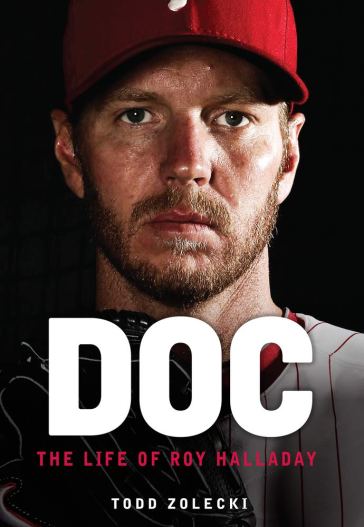
“Doc: The Life of Roy Halladay”

book cover
The author:

Todd Zolecki

The publishing info:
Triumph Books
$28
352 pages
Released May 19

The links:
At the publisher’s website
At Amazon.com
At BarnesAndNoble.com
At Powells.com
At Indiebound.org

The review in 90 feet or less

We had this idea back at the MLB trade deadline of 2009, advocating for the Dodgers to shore up their patchwork pitching rotation to do whatever was necessary to grab veteran ace Roy Halladay for the stretch run during a Toronto Blue Jays fire sale.

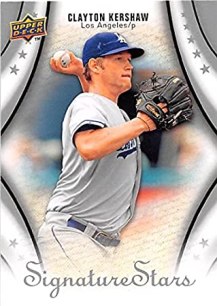
Even if the cost was swapping out this new young gun named Clayton Kershaw.

“Thanks for all, Kershaw, but Dodgers now need a Halladay” started this way:

Clayton Kershaw, thanks for all the weeks you’ve put in as a member of the Dodgers. We admire your tiresome efforts to get past the sixth inning start after start after start. … But now you have a higher calling. You’ve become our sacrificial left-hander in our quest to make the city of Los Angeles temporarily misremember that the Lakers’ 2009-10 season will start in just three months.

The Toronto Blue Jays have made it known they would like to have you on their roster. We will oblige them – in turn, by taking Harry Leroy “Doc” Halladay III off their payroll. We consider this a win-win situation. We’ll win more games. You’ll win more opportunities to endorse snow tires in eastern Canada.

51bWjJ-PqRL._AC_SY450_In Kershaw, you relent on the chance he’ll develop into an elite hurler.
In Halladay, you get it, guaranteed.

In Kershaw, you dispatch someone who may never adjust to life in the Great White North, unable to avoid another Tim Horton’s doughnut-stuffing break from his flat on the way to the stadium.
In Halladay, you get someone due $5 million for the rest of this season, $15 million more for next season (or a bit less than what the Dodgers are giving to Jason Schmidt for his painful efforts), and the inside track to signing him until he’s finished with some Hall of Fame-worthy numbers.

So, it didn’t happen. No Halladay trade even came about by July 31, even if the Phillies — champions in ’08 and eventual NLCS champs in ’09 — tried.

Good, bad or indifferent to all teams involved?

s-l500That 2009 season would be Halladay’s 13th and final one in Toronto, a franchise dumping salary and going no where. In his age 32 season, he would be nearing 150 career wins and continue to annually lead the AL in complete games, innings pitched and expending energy on a team that couldn’t make the playoffs.

That same year, Kershaw, at age 21, would still be just a .500 pitcher trying to find his way – 13-13 after some 50 starts, a season where he’d also amass a career-high 91 walks in 171 innings, up against 185 strikeouts. His breakout wouldn’t come for two more seasons. The Dodgers’ 2009 season ended up in an NLCS loss to the Phillies, trying to make due with a staff that only got a team-best 12 wins from 24-year-old Chad Billingsley, plus Randy Wolf, Kershaw in the No. 3 hole, Hiroki Kuroda and Jeff Weaver, with help from Vicente Padilla and Eric Stultz.

See how Halladay could have been one to strap them all to his back?

Note: As we read now in this bio,  the Angels actually came closer than the Dodgers to making something happen in July 2009 — Toronto wanted Jered Weaver or Joe Saunders, plus shortstop Erick Aybar and outfield prospect Peter Bourjos. The Angels turned it down — with Aybar as the deal-breaker.

61aeBuJy3oL._AC_SY606_In the 2009 offseason, Halladay ended up getting traded to Philadelphia, for Travis d’Arnaud, Kyle Drabek and Michael Taylor. The Phillies had playoff momentum and wanted to keep it as some key players were leaving.

Halladay’s annual salary jumped to $20 million a year, and the Phillies appear to get their money’s worth — a 21-10 record, a 2.44 ERA, nine complete games, nearly 1,000 batters faced, and a second career Cy Young Award. He threw the spectacular no-hitter against Cincinnati in the NLDS and then did all he could when the Phillies ran into the San Francisco Giants in the NLCS, with Halladay twice going up against Tim Lincecum, losing Game 1, 4-3, but getting the win in a 4-2 Game 5 triumph.

Halladay followed that up with 19 wins in 2011 — a Cy Young runner-up to the now-emerging Kershaw, who took his first trophy.

But that was about all Halladay had left.

He would combine 2012 and ’13 with a 15-13 record and an ERA of about 5.00 in 38 starts. He wanted to pitch through all this pain in his shoulder — taking pain meds that made him lose weight and send up red flags. He wanted to finish the contract he signed up for.

His wife, Brandy, begged him to quit. She explains, starting on page 259: Continue reading “Extra inning baseball book reviews for 2020: Now it’s “Doc,” with all of Roy Halladay’s perfect moments and personal imperfections … then an ESPN doc”