

Dodgers vs. Yankees: The Long-Standing Rivalry Between Two of Baseball’s Greatest Teams
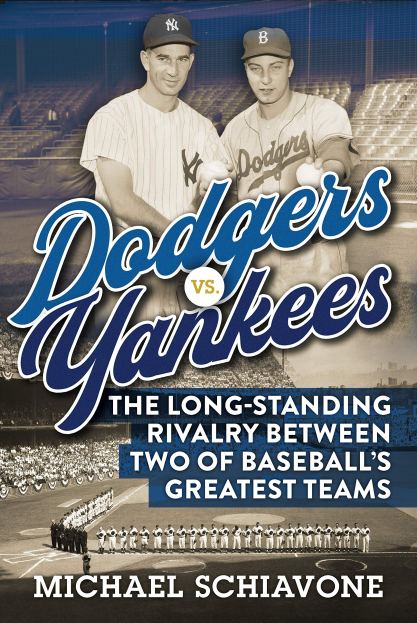
The author:
Michael Schiavone
The publishing info:
Sports Publishing/Skyhorse
$24.95
288 pages
Released June 30, 2020 (after original promised release dates of May 5 and June 2)
The links:
At the publisher’s website
At Amazon.com
At BarnesAndNoble.com
At Powells.com
At Target.com
At Indiebound.org
The review in 90 feet or less
Who can really tell what the future brings at this point? “Past performance is no guarantee of future results” could be the motto of what the 2020 MLB season comes to be, if it actually comes to be. Yet if they make it to late October week and discover a Dodgers-Yankees matchup in the World Series awaits — is it best three-of-five now with six DHs per side? — that would seem to give odds makers a reason to feel some validation, for whatever they seem to be espousing at this point in time based on no idea who else will opt out of playing, who becomes sick and … the world’s future condition in general.
The Dodgers currently launch as as a 15/4 favorite to win it all, just ahead of the 4/1 Yankees by VegasInsider.com, while at Vegas.com, it’s the Yankees (3/1) over the Dodgers (6/1). There’s Forbes.com citing something called SportsInformationTraders.com that has the Dodgers (+375) with an edge over the Yankees (+450). At BetOnLine.ag, they are co-favorites at +400.
 So now in anticipation of this projected occurrence, if we were to calculate odds on whether this latest book from Michael Schiavone actually gives us something to advance our education and/or entertainment of the history of the Dodgers-Yankees rivalry – it goes back to the 1941 World Series, most recently to that 1981 strike-plagued campaign, and then a few inter-league meetings that resulted in some oddly-dressed version in 2019 – they would be far longer than the 1,000-to-1 we’ve already seen pinned on chances that the Orioles, Tigers or Marlins have in winning the 2020 title.
The low-bar expectancy is solely based on Schiavone’s 2018 travesty, “Dodgers: 60 Years in Los Angeles,” which is summed up in a back-cover blurb by Molly Knight as a “must-read for not only Dodger fans but for anyone interested in how America’s pastime went national.” This gives its content some benefit of the doubt based on an opinion by the author of the equally dubious “Best Team Money Can Buy” mess of a book about the Guggenheim Dodgers a few years ago that is nothing more than a scripted press release than any sort of journalistic endeaver.
Nonetheless, because it involves a title focused on local history, and we assume readers could often be swayed only by that fact, we dug into it, process it and came up with our conclusion: Continue reading “Extra inning baseball book reviews for 2020: How to make the Dodgers-Yankees rivalry become historically dull, dim-witted and disappointingly vapid … but not out of left field”

 The author:
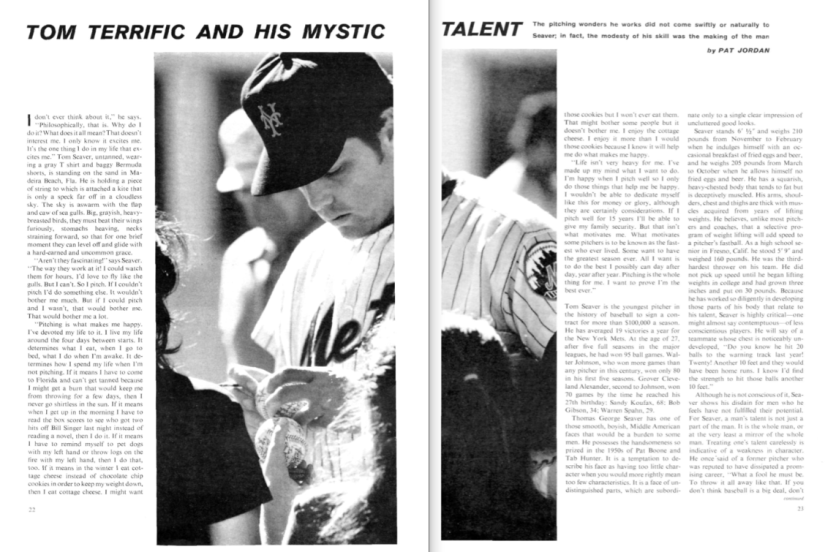
 For us, it’s his 1973 book, “


 The author:
 ==
==  ==
== 
