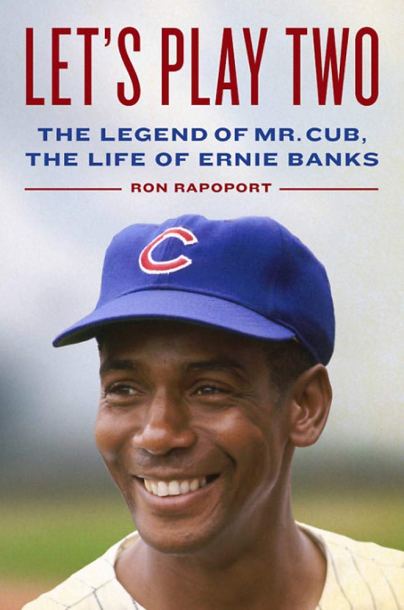
 The book:
“Let’s Play Two: The Legend of Mr. Cub, the Life of Ernie Banks”
The author:
Ron Rapoport
The publishing info:
Hachette Books, 464 pages, $28, released March 26.
The links:
At the publishers’ website, at Amazon.com, at BarnesAndNoble.com, at Powells.com. Also at the writers’ website
Also:
The book: “Let’s Play Two: The Life and Times of Ernie Banks”
The author: Doug Wilson
The publishing info: Rowman & Littlefield Publishers, 272 pages, $24.95, released Feb. 15.
The links: At the publisher’s website, at Amazon.com, at BarnesAndNoble.com, at Powells.com. Also at the writers’ website.
The reviews in 90 feet or less
On the 14th day of this book review series, we must note that Ernie Banks, whose No. 14 was retired with a Wrigley Field banner upon his retirement in the early 1970s, has banked plenty of earnest good will when his legacy is in question.
In the Baseball Hall of Fame for 42 years, the lone inductee of the Class of ’77 in his first year of eligibility, he also has seen a statue put up of him on Clark Street outside of Wrigley Field in 2008. It was spending the winter of 2015 in Kalamazoo, Mich., foundary to have some restoration work when fans looked for it in January of that year, seeking a place to gather upon hearing the news of Banks’ death at the age of 83.
Those writing the obituaries had plenty of material to go with about his unwavering kindness and joy.
So why now is there this — two books about him, all this time later?
Just an odd coincidence, says Rapoport, the former Chicago Sun-Times columnist living in Santa Monica, who had runs at the L.A. Times and L.A. Daily News.
Before Rapoport’s book came out, his publisher, Hatchette, promised “the definitive and revealing biography” of “one of America’s most iconic, beloved, and misunderstood baseball players.” It is based “on numerous conversations with Banks and on interviews with more than a hundred of his family members, teammates, friends, and associates as well as oral histories, court records, and thousands of other documents and sources. Together, they explain how Banks was so different from the caricature he created for the public.”
Publisher Weekly then called it “marvelous” and “essential reading for baseball fans.”
 Wilson’s book, 100 pages smaller than Rapoport’s came out a month earlier. Rowman & Littlefield called Wilson’s project a portrait “of the baseball player not just as an athlete, but also as a complex man with ambitious goals and hidden pains.” It also offers “details that have never before been printed.”
Publisher’s Weekly calls it an “exuberant biography” and “insightful look at the truth and the legend.”
Rapoport’s book, 100 pages longer than Wilson’s, came out a month after.
If Wilson whet the appetite, Rapoport gives us a full satisfying helping with far more meat on the bone. (That’s also a reference to a joke that Rapoport reveals on the very last page of his book, one that Banks liked to tell).
Then again, if there’s any question on fact checking, it’s a shame that Wilson’s book includes this note: Continue reading “Day 14 of 30 baseball book reviews for April 2019: Let’s read two (really, just one) about the too sad ending of No. 14, Ernie Banks” →


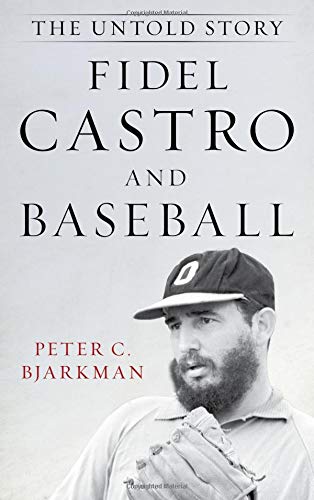 “The Untold Story: Fidel Castro and Baseball”
 “Last Seasons in Havana: The Castro Revolution and the End of Professional Baseball in Cuba”
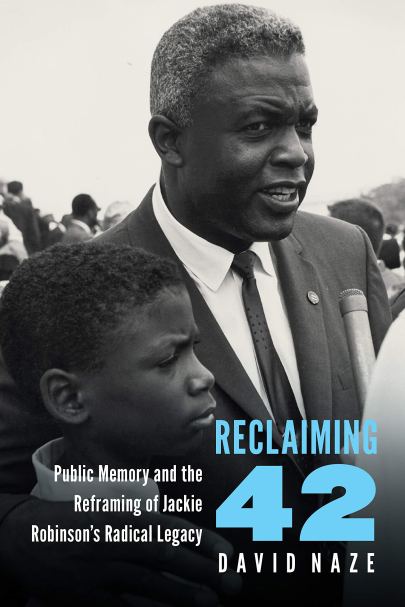 The book:
 The guy wearing No. 42 for the Cincinnati Reds on Monday night against the Dodgers will be Yasiel Puig.
 The Clippers’ Western Conference Game 1 quarterfinals loss at Golden State on Saturday – kind of expected, with some extra chippiness. What will change? TNT has the next two games. Maybe that factors into things? At least three games are left in this matchup:
  Tom Hoffarth's The Drill: More Farther Off the Wall