Updated 12.10.25: Scroll to the end of this post and see the running list of people, places and things so far assigned to numbers 00 to 99.
What if we told you the history of Southern California sports in the Greater Los Angeles area can be explained in unique bios, stories and essays that are attached to the 101 different numbers worn on the front, back, or elsewhere on an athlete’s uniform?
Let’s say this covers, perhaps, the last 101 years.
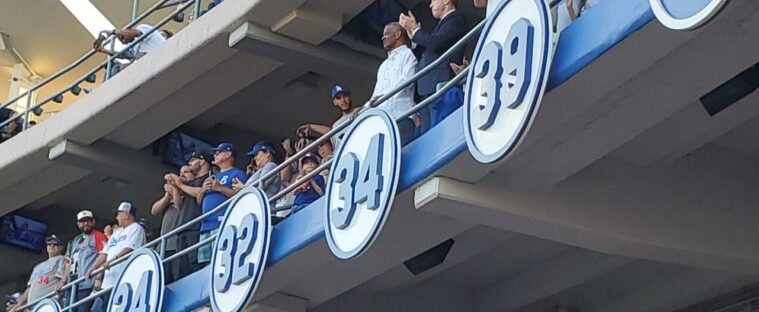
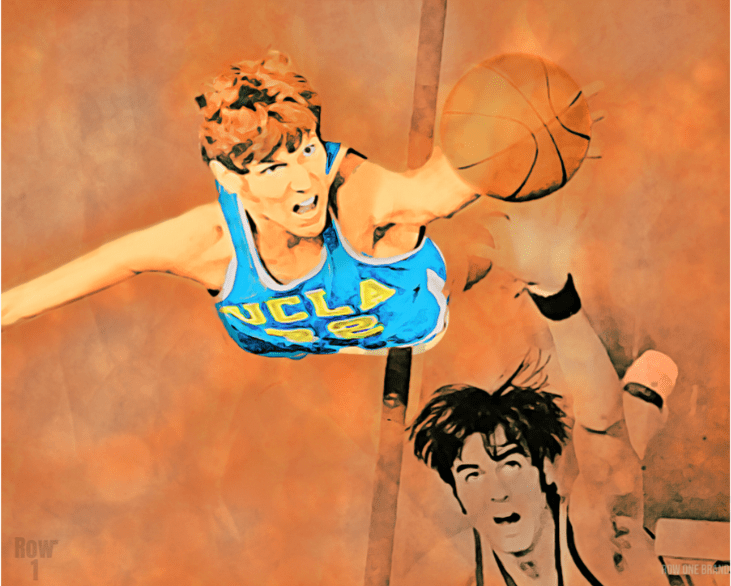
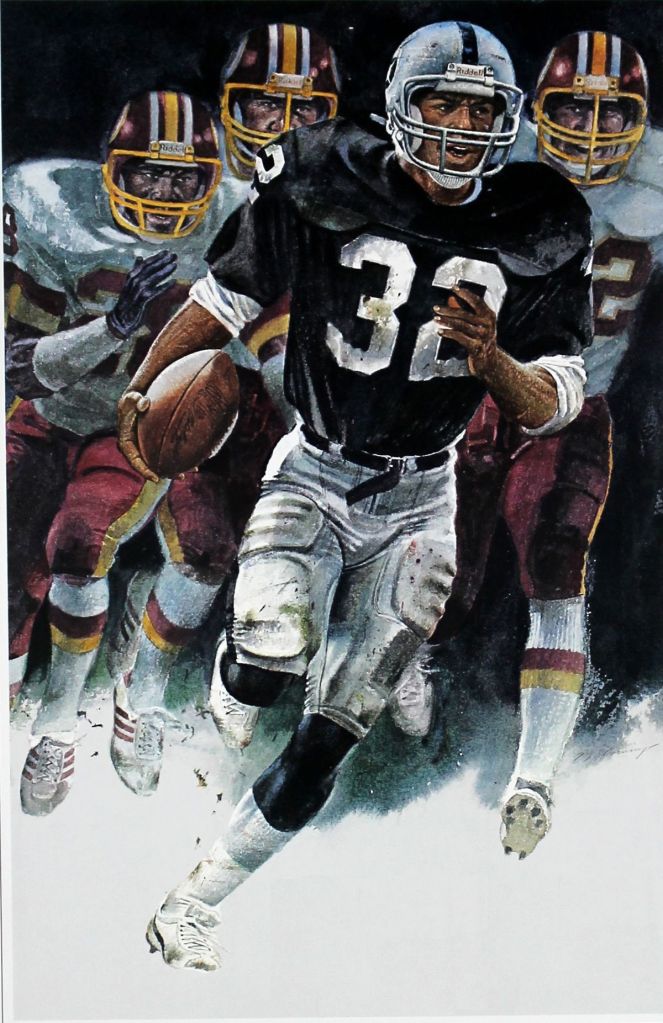
Take a jersey number like 32. So many who have worn it represent all the different aspects of SoCal history. Look here: Koufax, O.J., Magic, Walton, Marcus, Quickie.
Quick — who might generate the most compelling story for anyone who has worn No. 32?
It’s probably not anyone you might think, even if given 32 guesses.
This isn’t so much about who “owns” the number, or who wore it best. Those discussions over a few beers have their own amusement element and entertainment value. Ultimately, they come up to personal preference, nostalgic entrancement, and the first one of these athletes you may have encountered between the age of 6 and 11.
We will start by defining SoCal territory as what starts below the 35°45′ latitude line, stops short of our friends in San Diego, and unites the counties of Los Angeles, Orange, Riverside, San Bernardino, Ventura, San Luis Obispo and Santa Barbara as kissing cousins. All are freeway adjacent, used to traverse the landscape fluidly. Otherwise, this becomes unremittingly sized up as a misunderstood gaggle of scattershot suburbs, all in search of a cohesive landmass.
Sports helps shape its boundaries, and its communities and neighborhoods.
Los Angeles, by itself, one of the most mythologized cities in the world, blurring a public idea of the city that blends fact, fiction and Hollywood; desert, beach and snow-capped mountains; landslides, earthquakes and floods. We all have some identify from it, via the prism of a traffic jam, a yoga session or plastic surgery. From high-priced villas to a beleaguered homeless population that can’t be blamed for just wanting to enjoy a warm day on the sidewalk tent not far from a local outreach facility.
We weather this storm as we can.
Modified over the years and attributed most notably to Dorothy Park, Aldous Huxley, H.L. Menken or Alexander Woollcott — maybe even Snoop Dogg — SoCal is far more fascinating than 88 surburbs in search of city. Plant that idea in its fertile desert soil, often in sorely need of watering, and it takes root.
But it’s not all that watered down.
“Los Angeles is a city built upon amnesia and denial,” Tom Curren wrote for the Los Angeles Times in 2025, helping to introduce a multi-faceted project trying to predict the future success, or failure, of the region.
“Graded and paved, bought and sold, it bears little likeness to Tovaangar, the home for the first people who, for thousands of years, walked its valleys and chaparral-clad basins and paddled its broad shorelines.
“Eventually, they were overtaken, falling silent to the noisy ambitions of foreigners and settlers who set about transforming this vast floodplain with imported water and orchards and homes. Branding their creation paradise, they never questioned their improbable aspirations.
“Instead, they mythologized their works, borrowing from the past what was convenient and discarding the rest, so the picture of the Golden State in the early 20th century was romantic enough to persuade more and more Easterners to board the trains that crossed the deserts to arrive in this transformed pueblo.”
Sports fits mightily into this ambiguous narrative that has blossomed into folklore as a geographical punchline for those outside the civic dysfunction of it all and dispassionate for clarification.
Sports shaped the region’s history — from the 1932 Summer Olympics, to the 1984 Summer Olympics, to the 2028 Summer Olympics. To baseball’s World Series championship teams jammed into the football arena that would host the first Super Bowl, Coliseums and Forums and do-it-yourself home repair-sponsored mini stadiums.
“In an area larger than Rhode Island and Delaware combined, there are 88 municipalities, countless unincorporated areas, and almost 10 million residents, many of whom aren’t entirely sure what jurisdiction they’re in at any given moment,” Conor Friedersdorf once wrote for The Atlantic in 2011.
You be the judge.
Expand your idea of the boundaries we want to cover here. And figure in all its numerology.
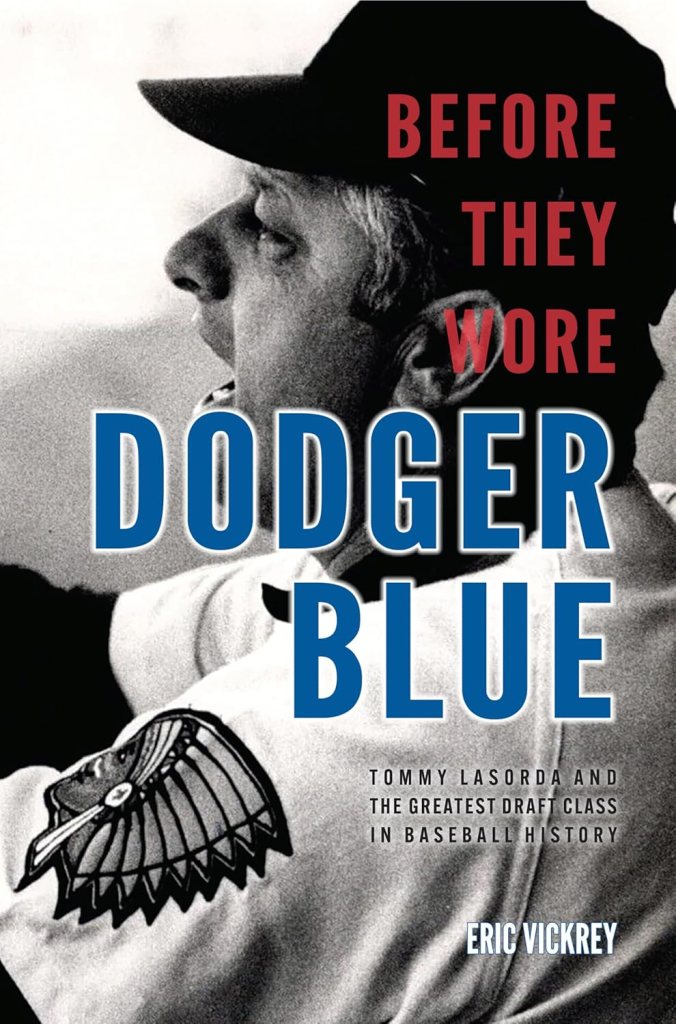
“Before They Wore Dodger Blue: Tommy Lasorda And the Greatest Draft Class in Baseball History”
The author: Eric Vickrey The details: August Publications, 348 pages, $24.95; released Dec. 7, ’25 The links:Author site, publisher site, Bookshop.org
A review in 90 feet or less:
The time capsule that Sports Illustrated has become, in the musky scent of its recent emasculation, can still be a bit jarring.
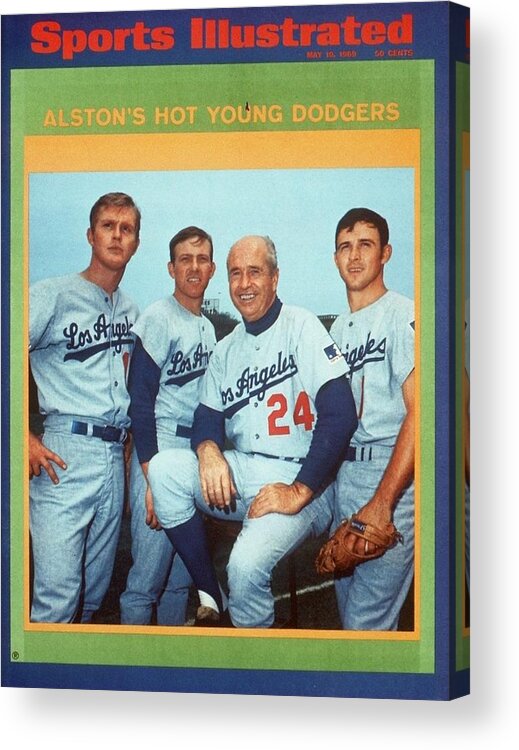
When the SI issue of May 19, 1969 arrived at our house, proclaiming a group of “hot young” Dodgers were about come to the rescue of a franchise still trying to find its footing from a 95-win team getting swept in the ’66 World Series, then watching Sandy Koufax retire, and now braced for Don Drysdale heading in that direction, there was some reason for optimism for all the kids in my neighborhood. The magazine’s 40-cent cover price our parents paid was also worth an investment in seeing the future as predicted by our wise elders.
Manager Walter Alston, as we were shown, had Bill Sudakis, Ted Sizemore and Billy Grabarkewitz all ready for the reboot. Tell Danny Goodman to start cranking out World Series trinkets.
Given that those ’69 Dodgers would finish 85-77, fourth-best and just eight-games out in the newly created National League West, it was a bit of an illusion, but much easier to compartmentalize after taking in a 76-86 showing in ’68 (seventh in the elongated NL, 21 games back) and a 73-89 free-fall from ’67 (eighth place, 28 1/2 games back).
Yet, these three Musketeers fresh out of the Mickey Mouse Club would bring it back to glory.
With mixed results.
Sudakis, a catcher and third baseman who signed as a free agent in 1964 a year before the MLB Draft began, hit .234 that ’69 season in 132 games, age 23. Sudsy, as was his nickname, seemed to be all but washed up by ’72 when the Dodgers waived him. The Angels kicked the tires on him before the ’75 season, then released him mid-way through after he hit .121 in 30 games.
Sizemore, a 15th round draft pick in 1966, somehow won the ’69 NL Rookie of the Year Award following Johnny Bench (in ’68) and Tom Seaver (in ’67) in an otherwise so-so year for up-and-coming talent. Starting at second base, Sizemore would have a career-best 4.2 WAR, hitting .271 in 159 games, age 24. After upping that to .306 in ’70, the Dodgers capitalized on his value, sending him to St. Louis with backup catcher Bob Stinson for Dick Allen (which didn’t end up so well). Sizemore came back to the Dodgers in ’76 via a trade for Willie Crawford, but by ’79, the Dodgers were done with him again, sending him this time to Philadelphia.
Grabarkewitz, taken in the 12th round of the ’66 Draft, was bestowed jersey No. 1 when he came up for 34 games that ’69 season, going 6 for 65 (.092). But the next year, he was on the NL All-Star team, hitting .289 in 156 games with a team-leading 17 homers, 92 runs scored, 84 RBIs and 19 stolen bases.
Then, poof.
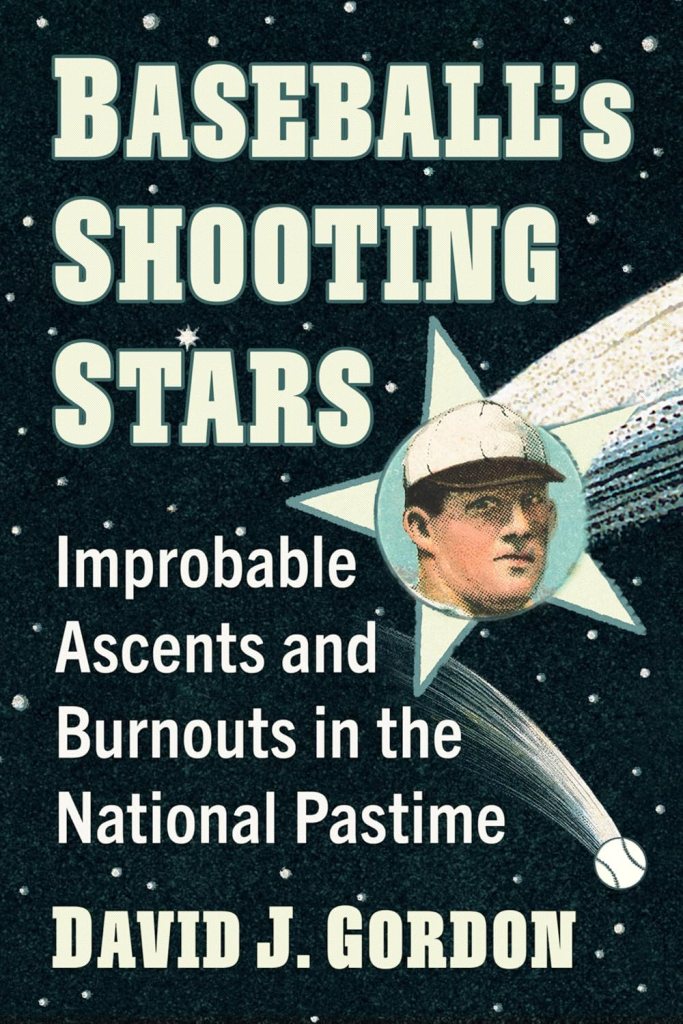
In the 2024 book “Baseball’s Shooting Stars: Improbable Ascents and Burnouts in the National Pastime,” author David J. Gordon devotes a special chapter to Grabarkewitz, the man “who led the league in consonants” but was “stymied by badly timed injuries.” His 6.5 WAR in his career year in 1970 — a stat that didn’t even exist at the time but often used in modern times to measure former players in a new light — wasn’t that remarkable, but in the aftermath, Gordon write that Grabarkewitz “may have been the most extreme one-year wonder of any non-pitcher in MLB history … I can find no other historical example of a position player with a career lasting at least five years who posted a > or = 6.5 WAR in one season but played at or below replacement level for the remainder of his career.” Why he was out of the game by age 29, after a brief time with the Angels, can be baffling to some, but Gordon has a thought on that:
“My reflexive take on one-year wonders like Grabarkewitz is their career years were flukes and the law of averages caught up with them. But Grabarkewitz is something else. Nothing about his sterling 1970 season seems lucky or flukish. A combination of lesser injuries and an overloaded Dodgers farm system — not regression to the mean — conspired to prevent him from becoming the player everyone thought he would be for more than one season. I view Grabarkewitz mainly as a very unlucky player who might very well have achieved long-term success on a different team and under more favorable circumstances.”
Gordon allusion to “an overloaded Dodgers farm system” goes to why Vickrey’s book gives a greater context to how and why the team’s 1968 MLB draft remains, by consensus still today, the greatest haul of talent in the game’s history.
Dialing back to that ‘69 season, there was a brief glimpse of a 20-year-old Steve Garvey (1-for-3), 19-year-old Bobby Valentine (five pinch-running appearances) and 19-year-old Bill Buckner (0-for-1).
Valentine, Buckner and Garvey were prized pieces of a collection that included Ron Cey, Davey Lopes, Tom Paciorek, Doyle Alexander, Joe Ferguson and Geoff Zahn. Adding in Bill Russell, Charlie Hough and Tommy Hutton, the Dodgers’ foundation had been laid and would last more than a decade — let’s call it the 1981 World Series, after they team decided to let their prized infield break into pieces.
The link to all of them is Tommy Lasorda. As Vickrey details, it was Lasorda, that scout, who was a key figure in the Dodgers’ acquisition of talent before the instution of the 1965 MLB Draft — the first pick of that draft was Rick Monday, an outfielder from Santa Monica High who had gone to Arizona State and was all but signed as Dodgers home-town talent before the Kansas City A’s were allowed to take him. Just prior to that, Lasorda was the important figure in the Dodgers signing local talent Willie Crawford from Freemont High in L.A., one of the last of the “bonus baby” players who had to spend time on the major-league roster likely before they were ready.
Vickrey’s dive into the whole process of scouting and why the MLB Draft came about in the first place sets the stage for how the Dodgers somehow pulled off their ’68 feat at a time when owners were trying to suppress run-away salary expendures.
Fresco Thompson was promoted to the Dodgers’ general manager in June of ’68 right at the time of that draft, after Buzzie Bavasi left to join the expansion San Diego Padres. But when Thompson died that offseason at age 66, scouting director Al Campanis was promoted to GM for the ’69 season.
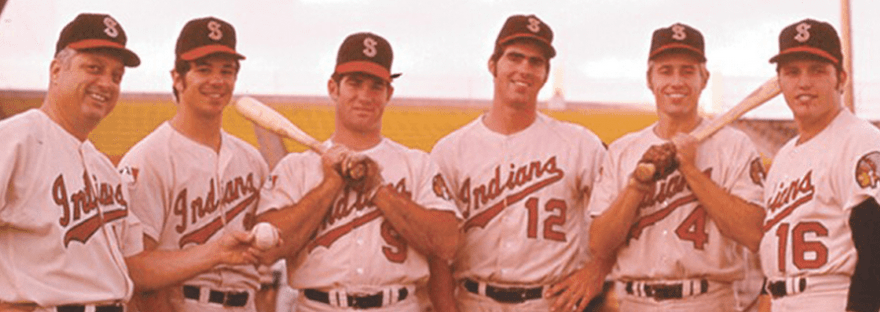
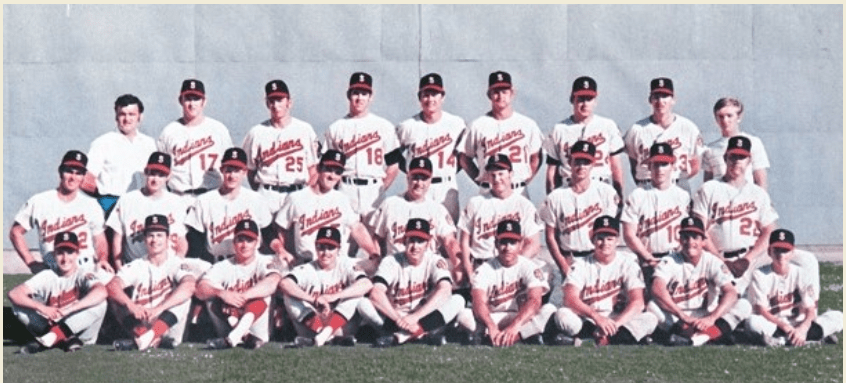
The 1970 Spokane Indians (via https://www.terryfrei.com/spokane.html) Back row: Trainer Herb Vike, Jerry Stephenson, Doyle Alexander, Mike Strahler, Tom Paciorek, George Lott, Dick Armstrong, Charllie Hough, clubhouse boy Kent Schultz. Middle row: Bill Buckner, Geoff Zahn, Sandy Vance, Dick McLaughlin, manager Tom Lasorda, Bart Shirley, John Purdin, Marv Galliher, Jack Jenkins. Front row: Batboy Dave Vaughn, Bob Valentine, Bob Stinson, Bob O’Brien, Tom Mulcahy, Davey Lopes, Steve Sogge, Gus Sposito, ballboy Mike Wilson. Not pictured: Steve Garvey, Tom Hutton, Bill Russell
The Dodgers’ Single-A farm team in Ogden, which in ’68 was managed by Lasorda, followed by its Triple-A farm time, 1970 Spokane Indians, where Lasorda was promoted, would have players who went on to account for 23 World Series appearances, 23 All-Star selections and on National League Most Valuable Player Award — Garvey’s in 1974.
Lasorda’s role in all this is important enough to make him the cover photo of the book — in his Spokane Indians uniform. He was still trying to figure himself out.
Version 1.0.0
As Vickrey notes on page 115, Lasorda carried around a 1960 self-help book called “Psycho-Cybernetics: A New Way to Get More Living Out of Life,” by Dr. Maxwell Maltz — how to achieve success by changing one’s self-image, boosting self-esteem and eliminating false beliefs and negativity.
“Have you ever told a story so often over a time that you finally believed it yourself?” Lasorda asked Spokesman-Review writer Mike Lynch in an interview. “Have you ever picked out a successful man in your field that you want to be like? … You tell yourself you’re the best. I wake up in the morning and I believe. I tell myself I’m the best manager in baseball … I speak before thousands of people every winter and I have confidence that I can without preparation entertain those people because I believe.”
Vickrey, who did 70 interviews for this book, goes on to report: “One pitcher who declined to go on the record for this book described Lasorda as more a politician than a manager. Some guys who played for Roy Hartsfield a year earlier preferred his more traditional style and thought Hartsfield possessed a higher baseball IQ.”
Maybe true, but Lasorda was learning the game like the rest of the talent around him, starting in the Dodgers’ minor league system in 1966. By 1973, Lasorda was the Dodgers’ third-base coach. By 1976, he was their big-league manager.
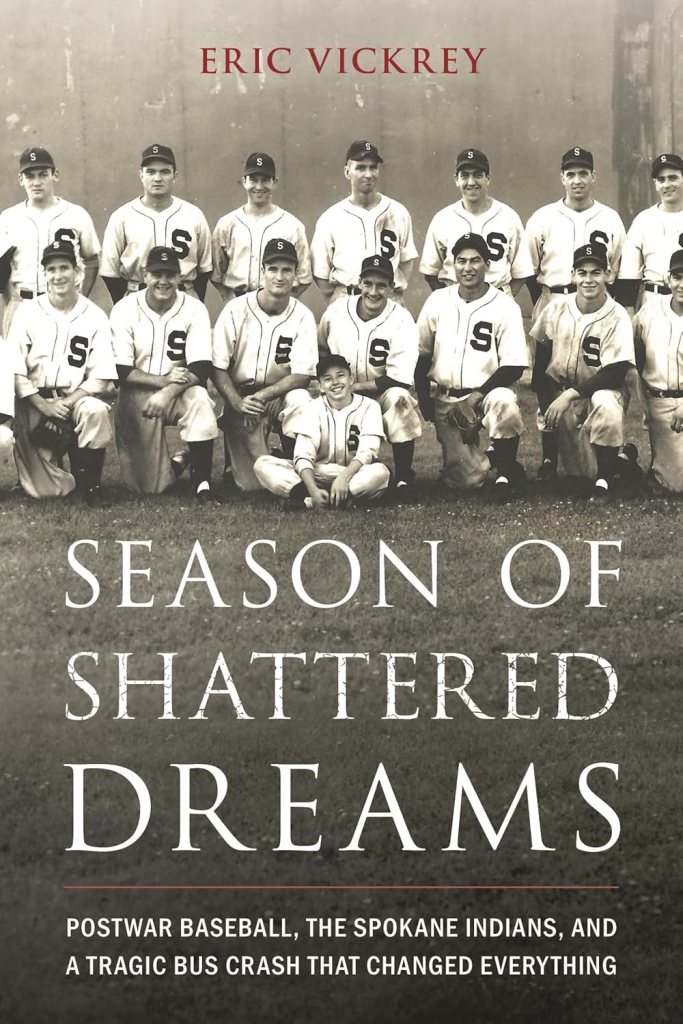
Vickrey, who lives in the state of Washington, was curious about this time in the Spokane Indians’ history after doing a 2024 CASEY Award-finalist book “Season of Shattered Dreams” about a tragic bus crash that affected the franchise in 1946. Nine members of the 1946 Western International League’s team died and the other six were injured in a June bus crash to the bottom of a ravine in the Snoqualmie Pass going through the Cascade Mountains in Washington. It remains the deadliest accident in the history of American professional sports.
It is no accident, all these years later, that the Dodgers’ ’68 MLB Draft, and its subsequent success at various levels through the minors and majors, is worth looking back to see how and why there was some magic in place. Was it scouting genius? A minor-league regime to maximize the picks’ potential? Pure luck?
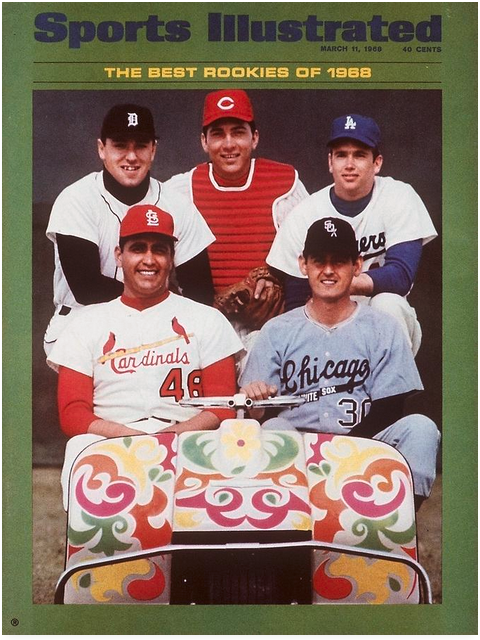
A year before that 1969 SI cover of the Dodgers’ “hot young” core, the magazine’s 1968 baseball preview issue included the Dodgers’ Alan Foster, a local kid out of Los Altos High in Hacienda Heights, was lumped in a group of “Best Rookies.”
Yes, it included Cincinnati catcher Johnny Bench. But Foster, like the other four pitchers around the future Hall of Famer, were far from “best” when their careers are reviewed. Foster, who pitched 16 2/3 innings in two starts during the ’67 season to merit all this hope, would complete a’68 season with a 1-1 mark in three starts over 15 2/3 innings. In ’69, he was 3-9 with a 4.38 ERA in 15 starts (more promise: two were complete-game shutouts). By 1971, he was traded to Cleveland, posting a 14-24 record in four seasons with the Dodgers to go with a 4.07 ERA.
As a follow up to his 2023 “The Dodger Collection,” Kee comes back through the lineup with more thoughtful reflections on the “gifts” he received from his years around the team capturing moments that remain cherished. Now, we have more of his back story to them. The photos may speak 1,000 words, but Kee’s own words added as a narrative make them all the more special. Especially the stories that don’t have a photo to go with them — like granting Tommy Lasorda’s “favor” to get over to Lil’ Joe’s in Chinatown to pick up a massive tray of rigatoni “so good it could’ve ended a war.” Or the one about when Ken Brett had his jeans sliced up by his teammates as a prank but played it off as if he didn’t notice it while signing autographs for kids. Or the time Vin Scully called to thank him for being at an event, another act of kindness. We miss those times, those asks, and that food. Kee is a gift we take from our profession.
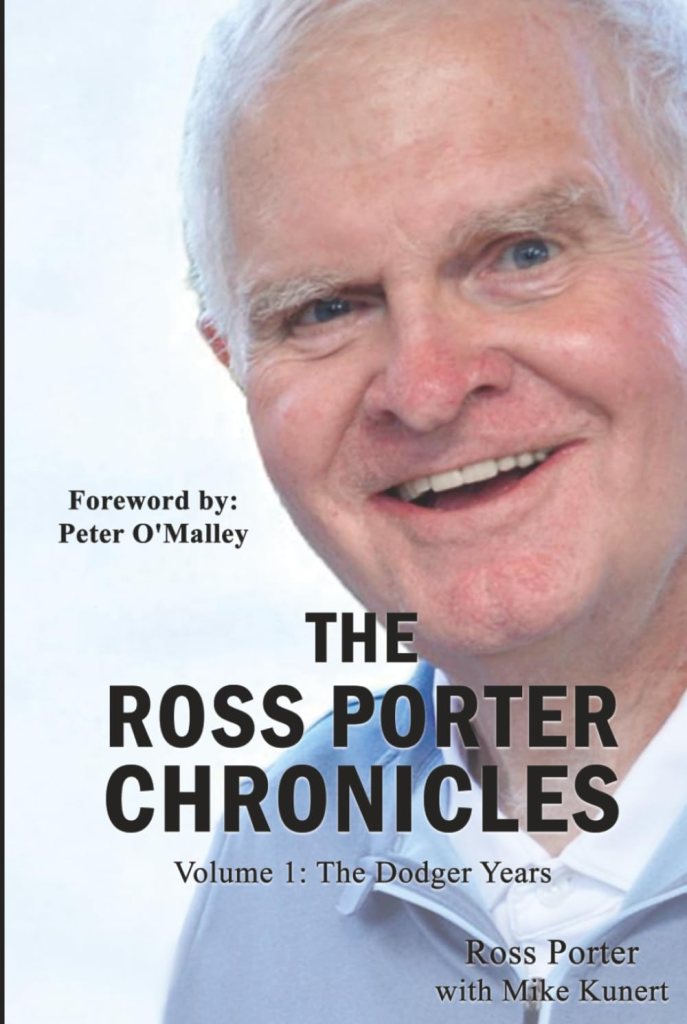
Of all the saved interviews Porter had with Dodgers players and beyond during nearly 30 years with the organization (1977 to 2004), hired to do TV and radio play-by-play as well as pre- and post-game Dodger Talk, this seems to be the first of several books full of transcript discussions he offers up. Along with some are QR codes that gets the reader to more audio and photographs. The lineup for this one: Vin Scully, Sandy Koufax, Don Drysdale, Don Sutton, Jerry Doggett, Jaime Jarrin, Ron Cey, Peter O’Malley, several stories by Tommy Lasorda, and Porter talks to Rick Dempsey (and his own wife, Lin, who was there) about that 22-inning, 1-0 game in Montreal in 1989 that Porter called in its entirety.
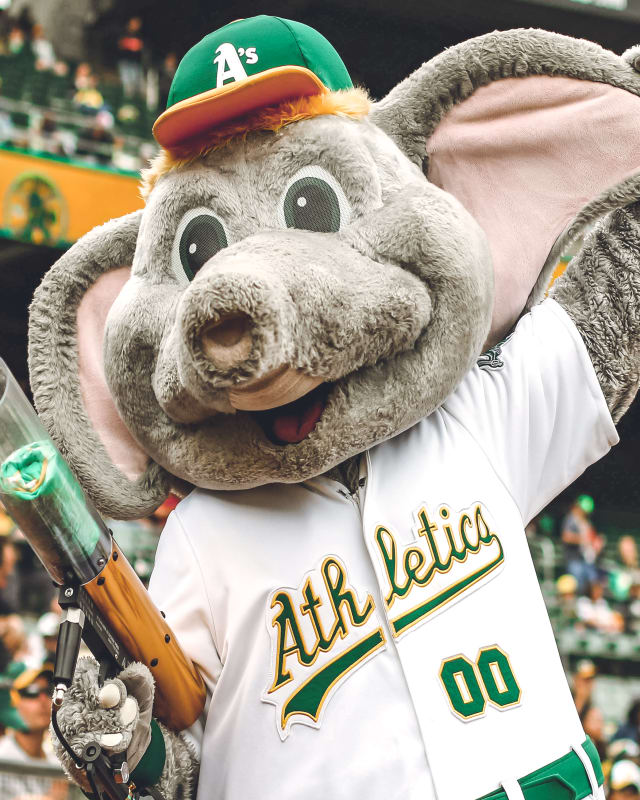
Stomper, the official elephant mascot of the Sacramento/Las Vegas (former Oakland, Kansas City, Philadelphia) Athletics.
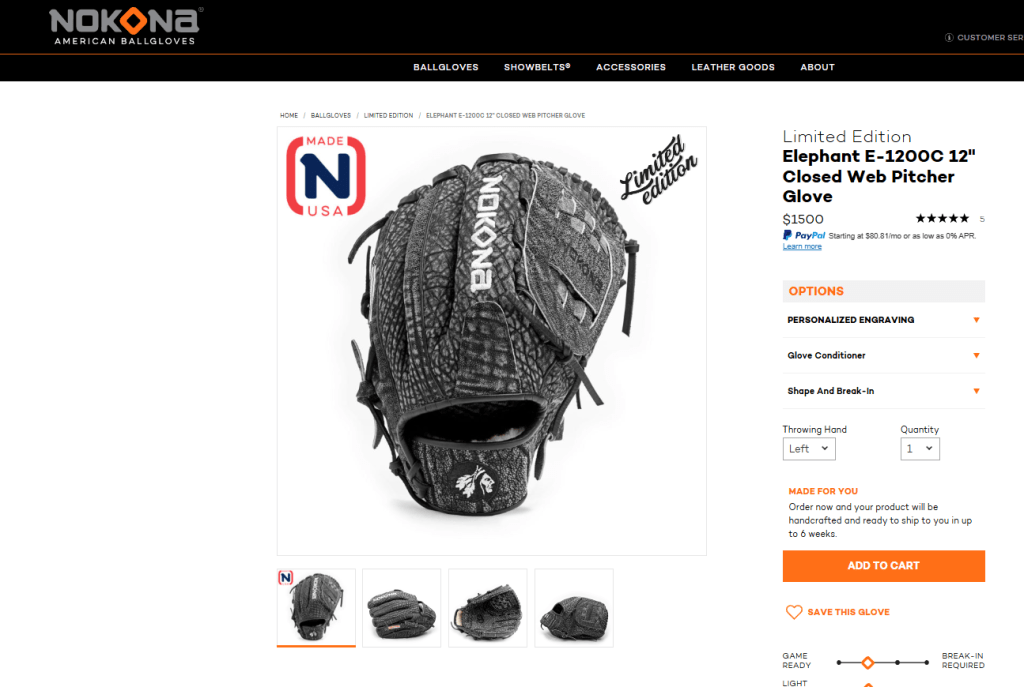
It’s made of actual elephant.
Oh, now you’re all ears.
In the product details, it notes: “All skins have CITES tags, meaning they were harvested in an approved program and comply with the Convention on International Trade of Endangered Species (CITES).”
Yes, your glove was “harvested” with oversight from … check the citing.
It also explains: “Elephant leather is one of the most durable materials used in our baseball gloves. Its dense fibers resist stretching and tearing, which allows the glove to maintain its structure season after season. Over time it breaks in beautifully, developing a unique patina while staying strong—making it a glove that can last for many years of play. Instead of Elephant leather wearing out, the glove gradually softens while maintaining its structural strength, giving it a broken-in feel without losing its shape.”
A “patina” is, by definition, a gloss or sheen as a result of aging.
So, we’re calling this “elephant leather”? Something often used in that part of the country for boots and belts, pool cues and holsters.
Asking price on the glove: $1,500. Personal engraving, add $80. Glove conditioner, add $20. If you want them to shape and break it in, add another $50. At least it’s made in the U.S. No tariffs, no problems.
It is probably not suitable for leaving in the trunk of your car. Please don’t tell the kids who have a relationship with the Athletics’ current mascot. And where are all the cows hiding in Texas these days?
It feels like decades since we last purchased a new baseball glove, so excuse our queasiness finding out that not only things other than a steer’s pelt are being used for corralling a stitched-up ball, but there are also a confusing number of companies cranking them out.
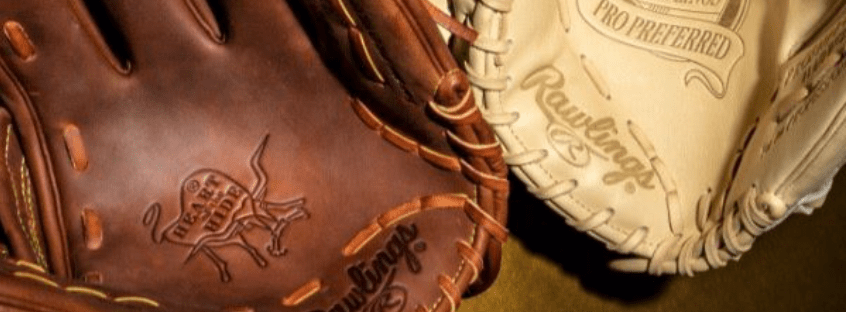
A well-oiled machine like Rawlings would never venture out past the pasture that has made for its fortunes and worship faux idols to appease the finicky masses, right?
Dick around at Dick’s Sporting Goods these days — are there any other chain sporting good stores left to shake us down? – and find a composition of mitts from companies from Akedema and All Star to Zett, with Emery, Gloveworks, Jax, Marucci, Miken, Mizuno, Nike, Shoeless Joe, Stinger, SSK, Under Armor and Vinci in between. All looking for that extra edge when up against the grandads of a Rawlings, or its otherwise chief rival Wilson and MacGregor. BaseballGloves.com lists more than 40 glove companies, including L.A.-based Buckler, Soto in Signal Hill and 44 Pro in Poway.
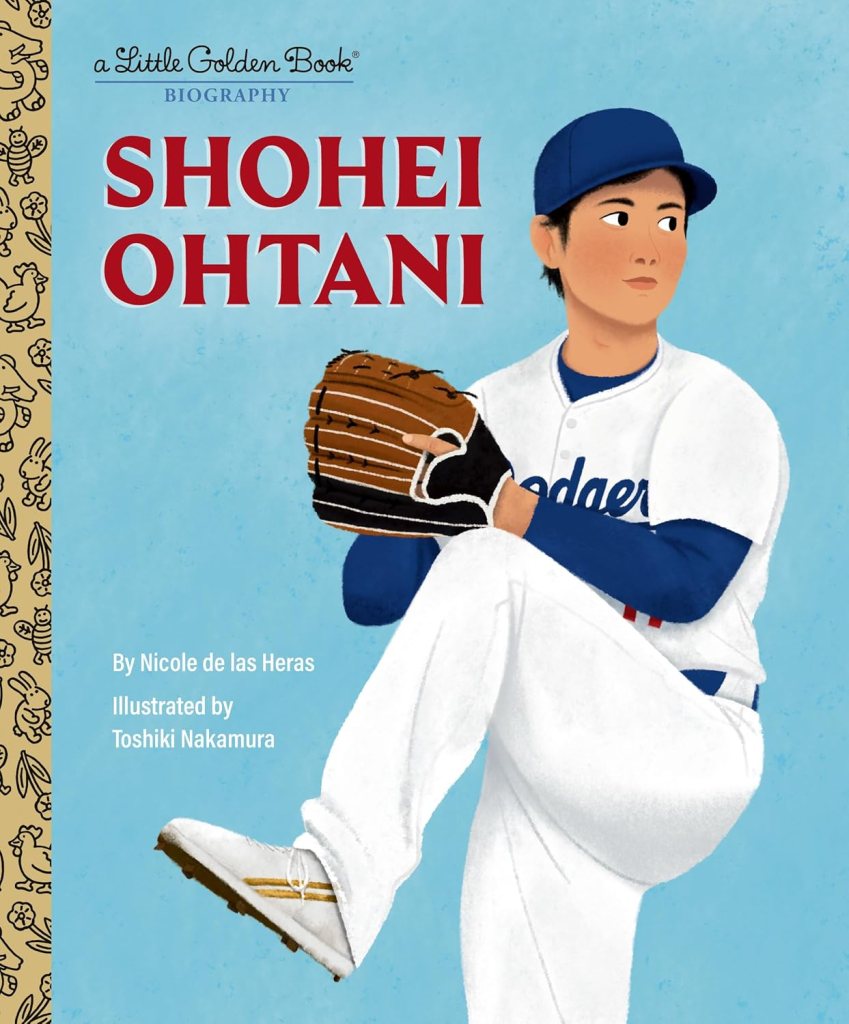
And don’t overlook the new-ish New Balance A2KSO17 model that Shohei Ohtani has during mound visits these days (with an assist from Wilson). According to those who offer such a glove on eBay.com, the production run was limited to 50 and they run for $15,000. Go ahead and add it to your watchlist.
In regards to the Rawlings models, JustBallGloves accentuates how the soft, deer-tanned cowhide is still used for the palm lining to go with its pro-grade lacing. It also says: “When you see the snorting bull in the palm of a baseball glove, you know right away that you’re looking at a Rawlings Heart of the Hide.“
The site has a Rawlings Heart of the Hide Yadier Molina catcher’s mitt for $350. Its also has a Croc Skin model (it’s really steer hide) that can go for $330. The Pro Preferred REV1X series with lighter, tighter grain kip leather, can go beyond $400. Something more for a Little Leaguer? Expect to pay up to $100.
They all, of course, now come in an array of rainbow of colors. Far beyond tan, brown, dark brown, and really dark brown.
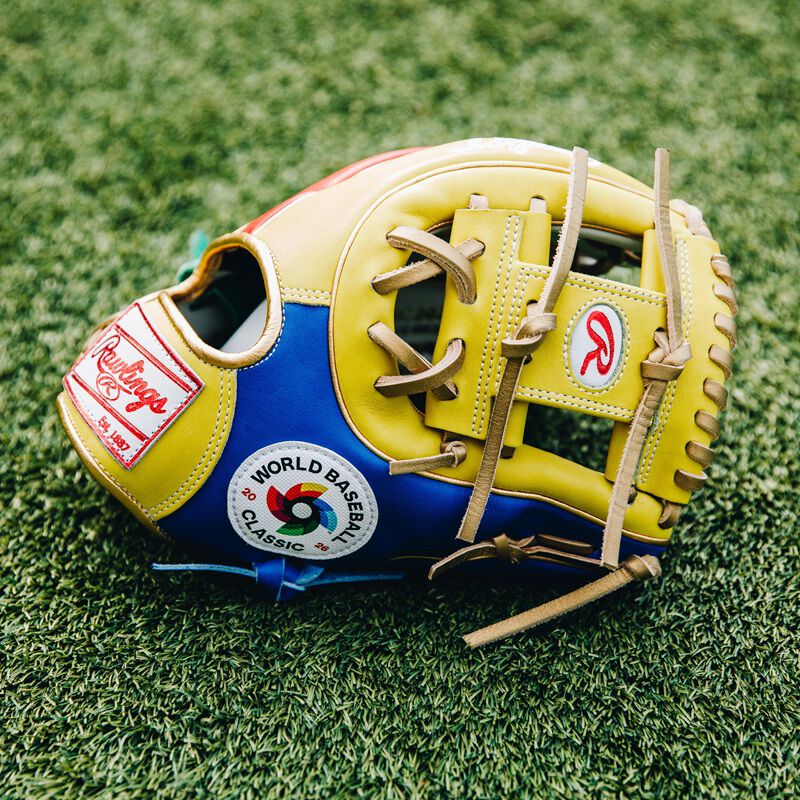
A $329 Rawlings 2026 World Baseball Classic Heart of the Hide glove is already out of stock on its website.
When George Rawlings secured a patent for a padded glove/oversized winter mitten in 1885 that he claimed was “intended especially for the use of base-ball players and cricketers … for the prevention of the bruising of the hands when catching the ball,” it was a way to acknowledge that the game he saw being played in his hometown of St. Louis area was barreling up beyond its bare-hand stage of existence. The forward-thinking drawings he created for the patent actually came two years before the sporting goods company he created with his brother Alfred and named after themselves.
By 1957, Rawlings had the first Gold Glove Awards for the top defensive players in Major League Baseball. In 2011, it introduced the Platinum Glove Award, first through fan voting and later through sabermetric analysis.
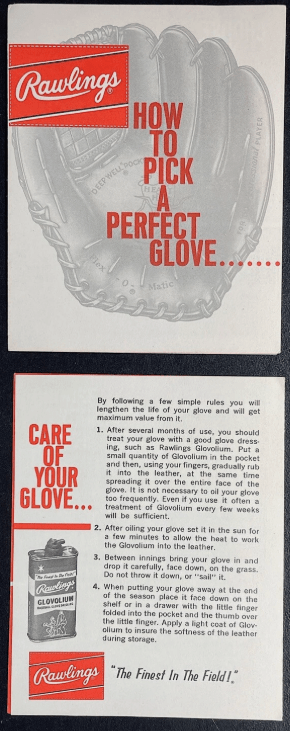
A 1965 magazine advertisement for Rawlings
In 2018, when the Rawlings company was bought for $395 million by MLB Properties along with the Marina del Rey-based Seidler Equity Partners — the group of brothers who are nephews of former Dodgers owner Peter O’Malley and control ownership of the San Diego Padres — it was investment in a brand that carried value amidst competition. Two years later, Rawlings/Seidler bought up the popular Van Nuys- based Easton brand to increase Rawlings’ offerings in bats and apparel.
So much so that last year, a 14,000-square-feet, two-story Rawlings Experience flagship store was opened in St. Louis just to prove its point.
The store, no doubt, will carry this coffee-table sized book, which has to be larger than a typical MLB second-baseman’s glove. It’s 3-pound arrival isn’t so much a self-congratulatory glove bump boasting about its legacy and survival amidst a jungle of competitors.
Recruiting the services of Rizzoli Publishing in New York to produce something akin to a Taschen art book, the contents also allow it to be more a clever dive into the company archives to extract marketing materials it used to both educate and pitch the quality of its product to kids, mostly through the endorsement of MLB player name recognition.
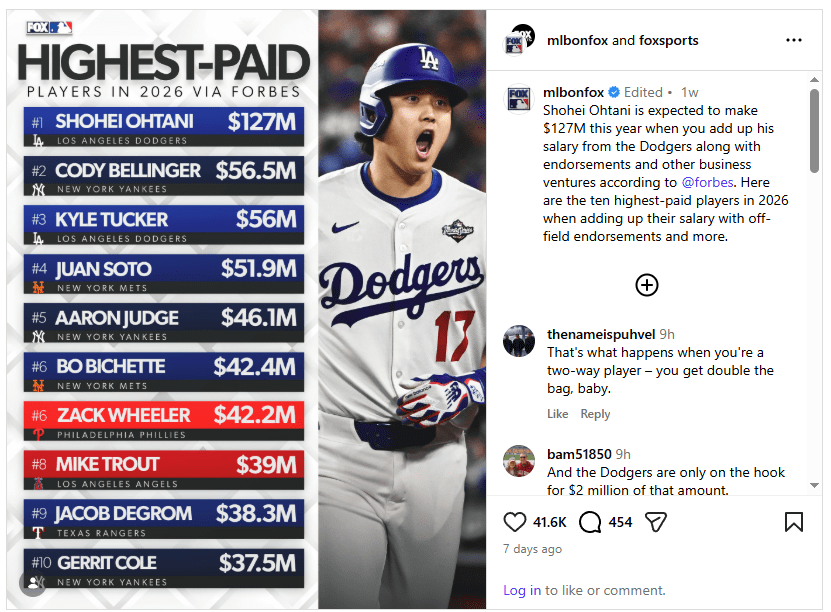
An AI overview collection of words and symbols generated from a search engine ask specifically about “Shohei Ohtani insane endorsement income” quickly will engineer this kind of answer-nugget:
“Shohei Ohtani is projected to earn an estimated $125 million in endorsement income for 2026, with nearly 20 global brand partners, making him the highest-paid athlete in the world from endorsements alone, according to Sportico data via Boardroom. This follows an estimated $100 million in marketing revenue earned during 2025, on top of a $2 million salary with the Dodgers — a threshold only previously reached by legends like Tiger Woods, Roger Federer, and Stephen Curry”
We believe this to be true, because the AI primary source for that information seems to spitting out an Instragram post made by MLB on Fox and Fox Sports. Those numbers had been regurgitated many times over by other media platforms, including the Los Angeles Times, when, in the headline “Why $100 million in endorsements says Shohei Ohtani is the global face of sport,” the writer went on to deduce: “In Ohtani, whose face appears on everything from airplanes to skin care products, baseball at long last has its Michael Jordan: the superstar that has transcended sports and ascended to the status of global pop culture icon.”
He can hit. He can pitch.
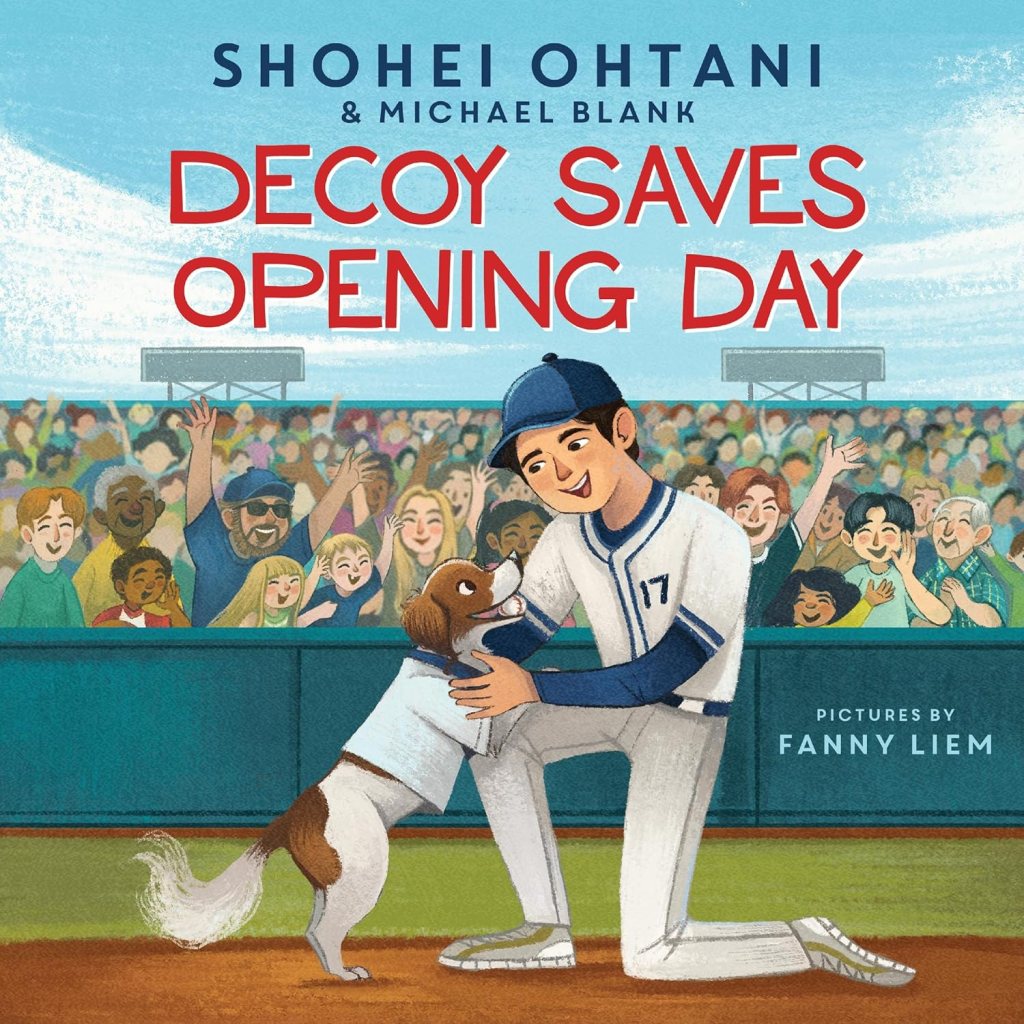
He can write a book. Not one of those “as told to” mass-market, ghost-written, give-us-the-gossip type of sordid tale.
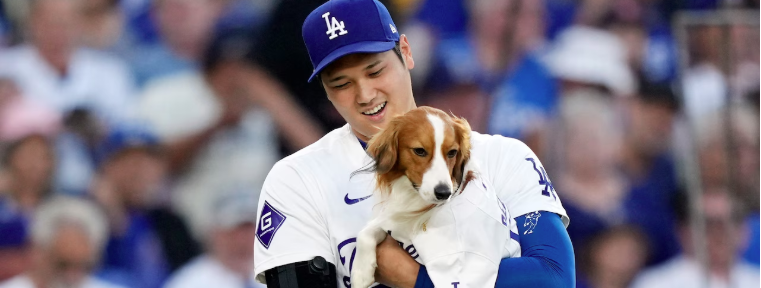
No new dirt here on Ippei here. It’s about a different dog.
Ohtani’s handlers must be painfully aware there is no money to be made in the book publishing business.
This is the latest post for an ongoing media project — SoCal Sports History 101: The Prime Numbers from 00 to 99 that Uniformly, Uniquely and Unapologetically Reveal The Narrative of Our Region’s Athletic Heritage. Pick a number and highlight an athlete — person, place or thing — most obviously connected to it by fame and fortune, someone who isn’t so obvious, and then take a deeper dive into the most interesting story tied to it. It’s a combination of star power, achievement, longevity, notoriety, and, above all, what makes that athlete so Southern California. Quirkiness and notoriety factor in. And it should open itself to more discussion and debate — which is what sports is best at doing.
The most obvious choices for No. 23:
= Kirk Gibson: Los Angeles Dodgers = LeBron James: Los Angeles Lakers = David Beckham: Los Angeles Galaxy = Eric Karros: Los Angeles Dodgers = Dustin Brown: Los Angeles Kings
The not-so obvious choices for No. 23:
= Harold Minor: USC basketball = Diana Taurasi: Don Lugo High School girls basketball = Jackie Joyner: UCLA women’s basketball = Jonathan Franklin: UCLA football = Kenny Washington: UCLA basketball
The most interesting story for No. 23: Ryan Elmquist, Caltech basketball guard (2007-08 to 2010-11) Southern California map pinpoints: Pasadena, Whittier, Pomona, LaVerne
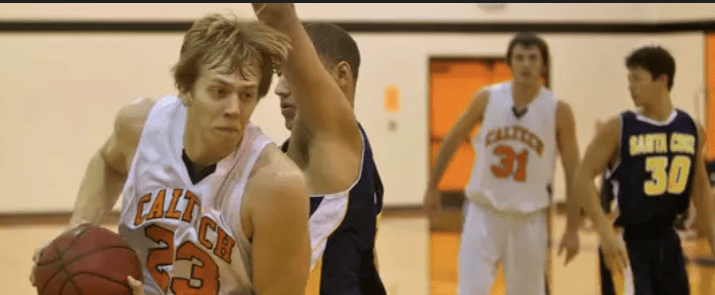
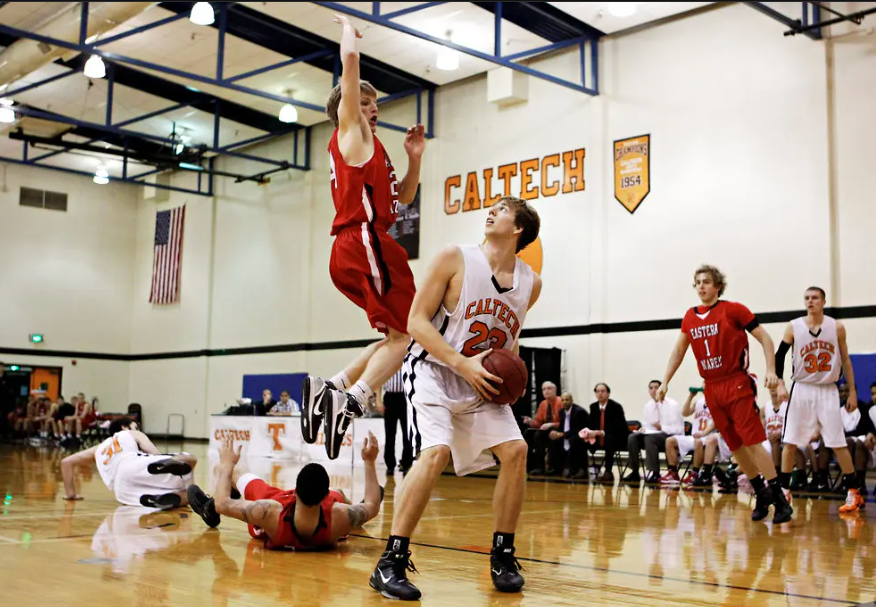
Caltech senior Ryan Elmquist looks for a shot during his team’s 87-53 win over Eastern Nazerene, its second in a row during the 2010-11 season (later forfeited). Danny Moloshok/New York Times.
Ryan Elmquist scored 36 on his ACT college entrance exam. That surely impressed his classmates at Woodbury High in Minnesota, just East of the Twin Cities. Especially those who came to understand how that was a perfect score.
It gave Elmquist a ticket to dig out of the Midwest snow, head to Pasadena and enroll in California Institute of Technology — better known as Caltech in “The Big Bang Theory” fandom.
His major was to study computer science. His guilty pleasure was to keep playing basketball.
In Caltech lore, Elmquist, a 6-foot-5 forward, is far better remembered for the time when he scored one not-so-lousy free throw on February 22, 2011. The last of his 23 points, with 3.3 seconds left, accounted for the final margin in a 46-45 victory for the Beavers over visiting Occidental College on their home Braun Athletic Center.
His smarter-than-smart peers were as impressed as the school’s Nobel Laureate-rich professorial staff and researchers. For Elmquist not only had the perfect ending to his senior season in the final game he ever played for the school, it also ended Caltech’s streak of 310 consecutive losses in Southern California Intercollegiate Athletic Conference (SCIAC) competition. That was a streak that began before Elmquist and his teammates were born, in January of 1985.
But who’s counting. Unless you are a campus full of math nerds.
This is the latest post for an ongoing media project — SoCal Sports History 101: The Prime Numbers from 00 to 99 that Uniformly, Uniquely and Unapologetically Reveal The Narrative of Our Region’s Athletic Heritage. Pick a number and highlight an athlete — person, place or thing — most obviously connected to it by fame and fortune, someone who isn’t so obvious, and then take a deeper dive into the most interesting story tied to it. It’s a combination of star power, achievement, longevity, notoriety, and, above all, what makes that athlete so Southern California. Quirkiness and notoriety factor in. And it should open itself to more discussion and debate — which is what sports is best at doing.
The not-so- obvious choices for No. 59:
= Collin Ashton, USC football = Lou Ferrigno Jr., USC football = Mario Celotto, USC football = George Kase, UCLA football = Evan Phillips, Los Angeles Dodgers = Ismail Valdez, Los Angeles Dodgers = Loek Van Mil, Los Angeles Angels
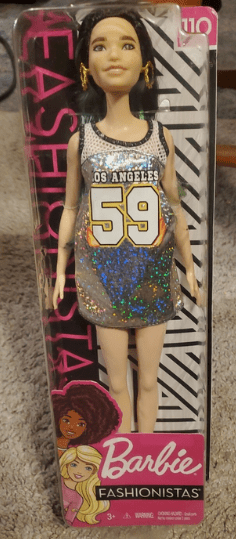
The most interesting story for No. 59: =Barbie, pop culture icon (1959 to present) Southern California map pinpoints: Hawthorne, El Segundo, Los Angeles
Of all the pretty people, impenetrable places and pretend things to chose from, Barbie pushed herself onto the cover of Sports Illustrated in early 2014.
It figures that the iconic figurine and model citizen created by the then-Hawthorne based Mattel toy company wasn’t depicted as an athlete. This wasn’t the SI Sportsperson of the Year issue.
Yet, jockified Barbie could play the part, and this could have passed as fashionable forward thinking here.
Through the years, Barbie has gone beyond a fancy-dressed glamor symbol. She’s been a volleyball player. And a soccer player. And a softball player. Name the sport — we’re even thinking pickleball — and in many display cases, she’s sporting a No. 59 jersey.
That’s a call back to the year she was created, 1959.
Some of those “59” Barbies also tout off her active lifestyle as part of the “Malibu Collection,” along with genital challenged boyfriend, Ken.
But for this purpose, for this SI cover, this Barbie, a certified Southern California 11 ½-inch titan, was on the Swimsuit issue. Wearing her a classic black-and-white one-piece retro swimsuit.
Legendary photographer Water Ioos, Jr., was also in on the photo shoot.
“She’s like the best model I’ve ever worked with,” he said. “She takes directions almost silently.”
Officially, it was an #unapologetic synergistic “cover wrap” to coincide with the American International Toy Fair, as well as celebrate the 50th anniversary of the magazine. Indeed, Mattel paid SI for the privilege of its platform exposure. And a limited edition SI Barbie doll went on sale to cash in on it all.
All in all, this Barbie/SI co-oped exposure became uncomfortable pearl clutching for some concerned about the image-consciousness messaging to young women.
“Mattel has long contended with complaints that Barbie, with her lithesome figure and focus on fashion, is not a positive role model for girls,” a New York Times story noted. “At the same time, Sports Illustrated is no favorite of some critics who believe that the swimsuit issue objectifies women.”
A Mattel spokesman responded in a story for NBC News: “Barbie has always been a lightning rod for controversy and opinions. Posing in SI gives Barbie and her fellow legends an opportunity to own who they are, celebrate what they have accomplished and show the world it is OK to be capable and captivating.”
That story noted Sports Illustrated claims to have more than 17 million women read its Swimsuit issue, more than most major fashion magazines combined, and sales for items the models wear get a significant boost.
“Barbie sort of has been taken hostage,” said a university marketing professor, “(but) despite her haters and naysayers, she’s comfortable with who she is.”













 Tom Hoffarth's The Drill: More Farther Off the Wall