The book: “Baseball Greatness: Top Players and Teams According to Wins Above Average, 1901-2017”
The author: David Kaiser
How to find it: McFarland Books, $35, 250 pages, released Feb. 16.
The links: At Amazon.com, at the publisher’s website.
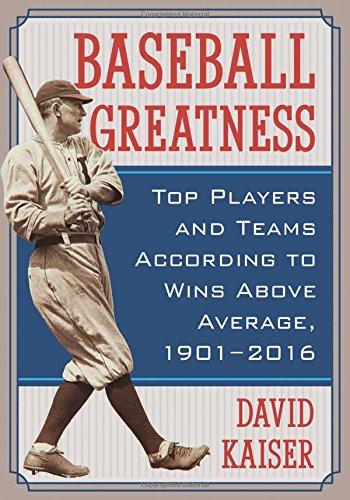 A review in 90-feet or less: In one of the most unassuming yet powerfully potent paperbacks anyone can possibly find and reference today to win a baseball argument, SABR veteran Kaiser, a 70-year-old university history professor and well-received author from Watertown, Mass., almost single-evenhandedly waters down all the arguments that Wins Against Replacement (WAR) is a superior measurement of one’s greatness when compared to how Wins Above Average (WAA) determines the greatness of a player within the context of his team’s success.
Individually, WAR has taken sabermetrics to new levels of understanding about an individual performance. But what if this guy’s team doesn’t win? Isn’t that the point of the game?
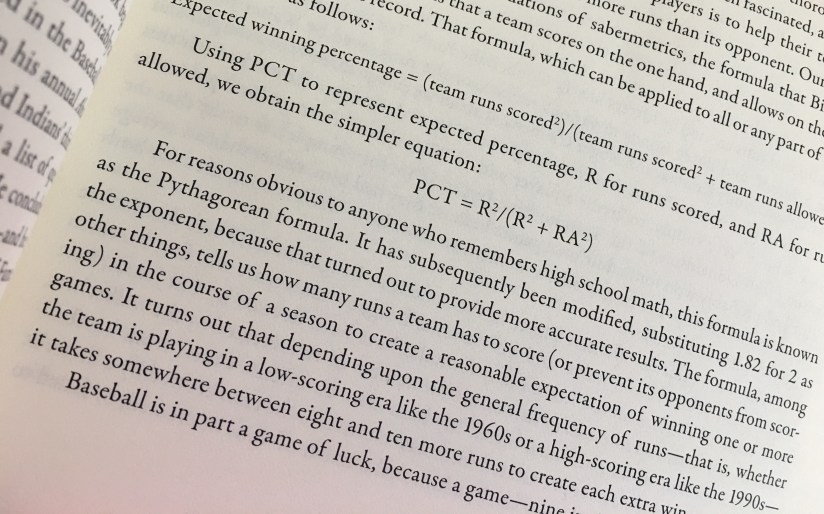
WAA, a Pythagorean formula that can be applied to any player in any era, is simple: Expected winning percentage equals teams runs scored squared divided by the sum of teams run scored squared and teams runs allowed squared. It has since been modified to substitute 1.82 for 2 as the exponent, but … you get the general point and decimal points. Hopefully.
If not, Kaiser has a basic explanation in the intro, but a much more detailed breakdown in the appendix.
He takes us chapter by chapter, era by era as determined by sociological experts (The Lost Generation, Boomers, Gen X, etc.) and redefines what players contributed the most to their team’s successes by running these new set of numbers.
Trust us, it’s not all that difficult to digest.
Just know that for someone to have star-season status in Kaiser’s calculations, he must have a 4 WAA, meaning his team probably won four additional games because of him in the lineup rather than an “average” player.
With that, Kaiser’s standard for greatness is a player who has five or more seasons of a 4 WAA or better, a standard he calculates has been met 93 times in baseball history so far (that’s one half of one percent of all who have played). There have been 1,773 “superstar” seasons posted by players since 1901, about 15 per year.
Take it for what it’s worth with this quote as well from Kaiser:
 “With the obvious exception of track and field, there are few if any human endeavors, inside or outside of sport, in which performance can be measured as accurately as in baseball. And now, with more than a century’s worth of evidence upon which to draw, using simple, powerful statistical methods, we find, generation after generation, an astonishingly small number of men who are much, much better than everyone else, and who indeed have shaped the broader story of winners and losers to a remarkable extend. … This book is about how great players make great teams. Historically, hitters have been more important than pitchers, all the more so because great pitchers very rarely remain great for very long.”
Sold.
And with that, a few intriguing things to note from Kaiser’s findings that relate to Dodgers’ history: Continue reading “Day 21 of 30 baseball book reviews for 2018: When WAA wins out over WAR, it’s a win-win for everyone … and this formula appears to bear that out” →


 A review in 90-feet or less: Ken Harrelson is the guy you wish was a teammate of Jim Bouton when the later was in the process of writing “Ball Four” in 1969.
 “I happened to be wearing a new pair of cowboy boots. We headed out of the club and as I walked down three steps toward the street, I turned around to swing at him when my feet came out from under me. I hadn’t broken in those boots and it was as if I was standing on ice. He landed a good shot to my eye and I swung again and missed. We started to fight before the police arrived to break it up.
 The book: “Tinker to Evers to Chance: The Chicago Cubs and the Dawn of Modern America”
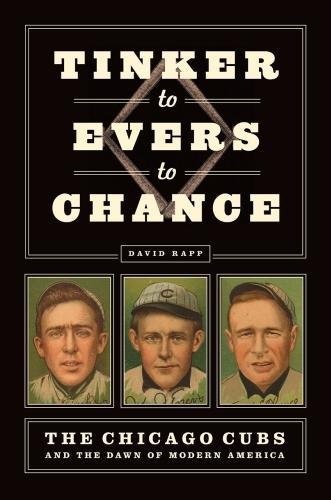 A review in 90-feet or less: Using the ironic eight-line poem about an infield that anchored a team to the World Series 100 years ago as a starting point, Rapp goes around the horn to make a case that they were not only justified by their stanza super powers, but makes a case they carried the game during that era with an extensive background check that’s a surprisingly thorough in what could otherwise be a rehash of previous works on the subject.
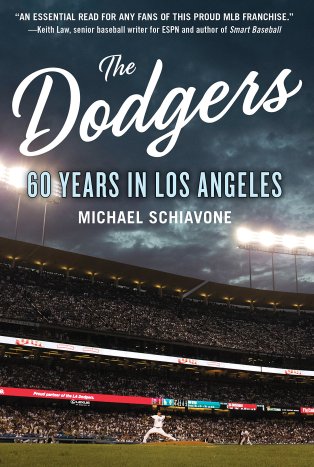 A review in 90-feet or less: The collection we have amassed of more than 100 Dodgers-related books — by historians diving in about certain periods, by players reflecting on their careers, and even a couple unauthorized pieces on Vin Scully — you’re never short of material for finding a way to frame the existence of this franchise.
 Tom Hoffarth's The Drill: More Farther Off the Wall