


This is the latest post for an ongoing media project — SoCal Sports History 101: The Prime Numbers from 00 to 99 that Uniformly, Uniquely and Unapologetically Reveal The Narrative of Our Region’s Athletic Heritage. Pick a number and highlight an athlete — person, place or thing — most obviously connected to it by fame and fortune, someone who isn’t so obvious, and then take a deeper dive into the most interesting story tied to it. It’s a combination of star power, achievement, longevity, notoriety, and, above all, what makes that athlete so Southern California. Quirkiness and notoriety factor in. And it should open itself to more discussion and debate — which is what sports is best at doing.
The most obvious choices for No. 61:

= Chan Ho Park, Los Angeles Dodgers
= Rich Saul, Los Angeles Rams
The not-so-obvious choice for No. 61:
= Josh Beckett, Los Angeles Dodgers
= Bill Fisk, USC football
The most interesting story for No. 61:
Jake Olson, USC football long snapper (2015 to 2018)
Southern California map pinpoints:
Huntington Beach, Orange, L.A. Coliseum
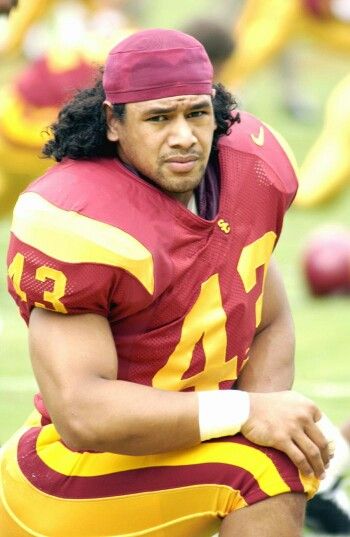
Long before he found his way onto the Coliseum turf with a huge smile on his face for the first time wearing a USC football jersey, the point person in executing an extra point, Jake Olson had already made his point.
The Trojans’ 2017 Labor Day weekend season opener against visiting underdog Western Michigan was tied 21-21 after three quarters and about to go sideways. Marvell Tell returned an interception 37 yards for a USC touchdown with 3:13 left in the game, and the fourth-ranked Trojans had some breathing room, up 17 points.
That’s when the 20-year-old Olson took a deep breath. USC head coach Clay Helton turned to the sideline and yelled his name: “Are you ready? Let’s get this done!”
The 6-foot-3, 225-pound redshirt sophomore took one more practice snap, launching the football between his legs with a rhythm and rote that, by this point, was pure and natural.
Olson put his right hand on the shoulder of teammate Wyatt Schmidt, and the two ran together more than 50 yards across the grass to where the line of scrimmage was at the peristyle end for the touchdown, and the game’s, punctuation mark. After the referee gave special instructions to both sides, he blew the whistle, Olson made the snap, the ball was placed by Schmidt, and the kick by freshman Chase McGrath was good. USC won 49-31.
“What a pressure player,” Helton said after the game. “Was that not a perfect snap?”
“It turned out to be a beautiful moment,” Olson said.
Former USC head coach Pete Carroll saw Olson go into the game and said he called Olson and said, “Hey Jakey! I’m so proud of you. I love you.”
If anyone by this point could see the good in all that happened, it was Olson.








 Tom Hoffarth's The Drill: More Farther Off the Wall