Blog

No. 0: Russell Westbrook

This post is part of a media project called SoCal Sports History 101: The Prime Numbers from 00 to 99 that Uniformly, Uniquely and Unapologetically Reveal The Narrative of Our Region’s Athletic Heritage. Pick a number, and consider the list of athletes attached to it. Who wore it best? Or, what’s the most compelling story linked to it? Any person, place or thing is in play with Southern California connections. Star power, transformational achievement, longevity, notoriety and quirkiness all factor in. Whatever leads to a lively discussion and interpretation.

The most obvious choices for No. 0:
Russell Westbrook: UCLA men’s basketball, Los Angeles Lakers and Los Angeles Clippers
Nick Young: Los Angeles Lakers
Orlando Woolridge: Los Angeles Lakers

The not-so-obvious choices for No. 0:

Kyle Kuzma: Los Angeles Lakers
Kobe Johnson: USC and UCLA basketball
Jamal Jarrett: USC football
Jack Flaherty: Los Angeles Dodgers
Al Oliver: Los Angeles Dodgers

The most interesting story for No. 0:
Russell Westbrook: UCLA guard (2006-07 to 2007-08); Los Angeles Lakers guard (2021-22 to 2022-23); Los Angeles Clippers guard (2022-23 to 2023-24) via Leuzinger High of Lawndale

Southern California map pinpoints:
Hawthorne, Lawndale, Westwood, Los Angeles (Staples Center), Inglewood (Intuit Dome)

Reference books on the subject:
“Russell Westbrook: Style Drivers,” by Russell Westbrook, 2017


Russell Westbrook III has a 6-foot-4 and 200-pound frame that accommodates a wardrobe focused on a chest size of 42, a waist size of 32, and a shoe size of 15.

So that’s one way to size up a tried-and-true triple-double.

Westbrook, with all he accomplished in 18 years of an NBA career wearing No. 0, figured out how to zero in as well on form, fashion and affirmation. He got style points on and off the court. Rarely off brand when it came to zhuzh up his apparel and appearance.

Gentlemen’s Quarterly made it a ritual to draw and quarter his style and substance with recurring cover stories, because that’s what sold:

GQ Magazine June 2015: “Russell Westbrook: Most Stylish Man Alive.”

GQ November 2016

GQ Magazine September 2016: “How To Dress Like Russell Westbrook.”

GQ Magazine October 2016: “17 Looks Only Russell Westbrook Could Pull Off.” Including the photo above.

GQ Magazine September 2017: “Why Russell Westbrook Won’t Wear Off-White Jordans On the Court.” (Because he doesn’t want to get them dirty and lower the value even if they are game-worn?)

GQ Magazine March 2018: “Russell Westbrook’s Game Day Style Look Book.

Trying to play catchup, there was also

Columbus Monthly Magazine 2015: “How NBA star Russell Westbrook is changing how men’s fashion works”

The New Yorker Magazine 2017: “Russell Westbrook May Not Love Talking to the Press, But His Clothes Speak Volumes

As a regular New York Post Page Six magnet, Westbrook was also someone who never was to be disrespected.

Wearing No. 0 is a statement in itself. It’s a much a real number as white is a real color. It’s kind of a place holder, a blank canvas. A starting point to color in the lines with flair and amazement.

That’s Russ being Russ.

Continue reading “No. 0: Russell Westbrook”
No. 67: Vin Scully

This post is part of a media project called SoCal Sports History 101: The Prime Numbers from 00 to 99 that Uniformly, Uniquely and Unapologetically Reveal The Narrative of Our Region’s Athletic Heritage. Pick a number, and consider the list of athletes attached to it. Who wore it best? Or, what’s the most compelling story linked to it? Any person, place or thing is in play with Southern California connections. Star power, transformational achievement, longevity, notoriety and quirkiness all factor in. Whatever leads to a lively discussion and interpretation.

The most obvious choices for No. 67:

Les Richter: Los Angeles Rams
John Papadakis: USC football
Duval Love: UCLA football, Los Angeles Rams
Luis Sharpe: UCLA football

The most interesting story for No. 67:

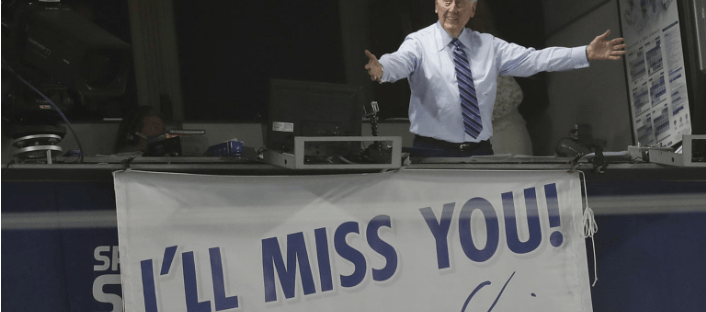
Vin Scully, Los Angeles Dodgers broadcaster (1950 to 2016)
Southern California map pinpoints:
Los Angeles Coliseum; Dodger Stadium; Pacific Palisades; Hidden Hills

Reference books on the subject:
Perfect Eloquence: An Appreciation of Vin Scully,” by Tom Hoffarth, 2024
Pull Up A Chair: The Vin Scully Story,” by Curt Smith, 2009


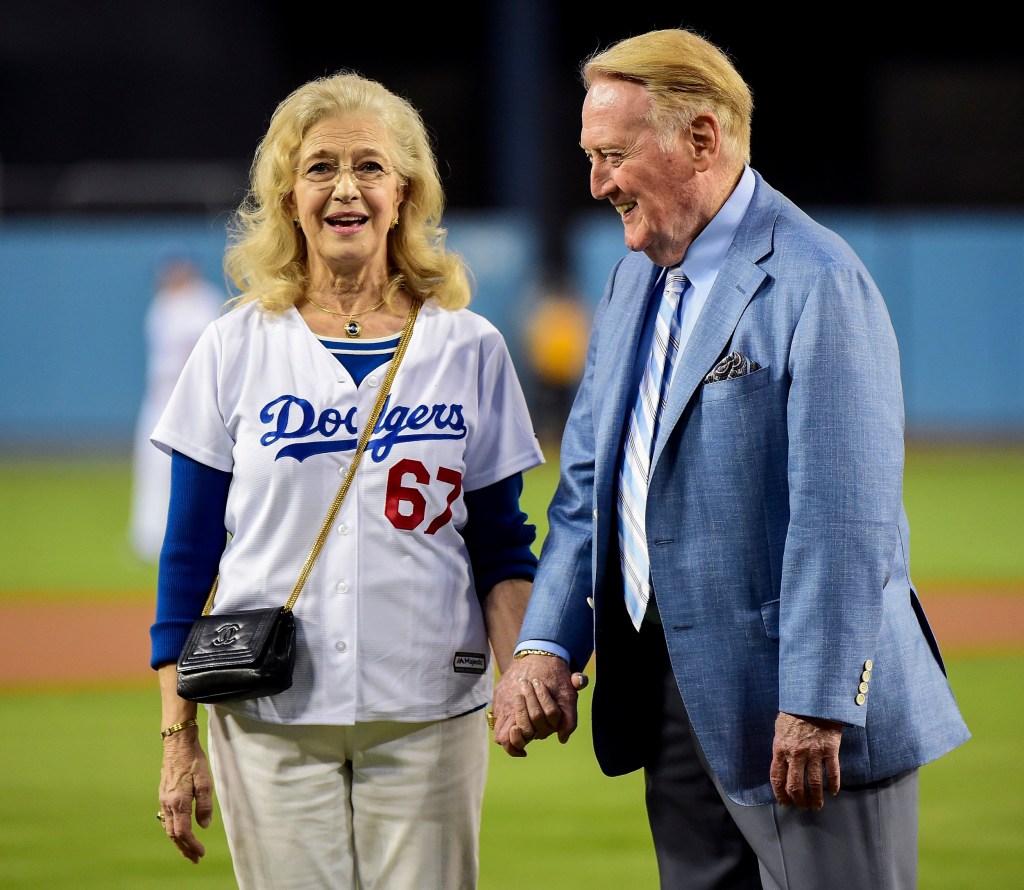
Vin Scully and wife Sandi hold hands before the game at Dodger Stadium on September 23, 2015. (Harry How/Getty Images)

All automobiles in the United States are required to have a Vehicle Identification Number. Car manufacturers started using them in 1966. By 1981, it was a standardized 17-character alphanumeric code.

In Southern California, the only VIN number that matters is 67.

A California license plate honoring Vin Scully and the No. 67, seen in the runway tunnel at Los Angeles International Airport on Sept. 6, 2025.

Vin Scully retired from broadcasting games for the Brooklyn and Los Angeles Dodgers franchise the day that the 2016 season ended. That added up to 67 seasons, starting in 1950 as a 22-year-old doing the middle innings of contests as a protoge of Red Barber. Scully was fresh out of Fordham University.

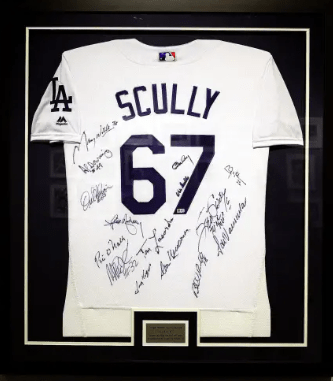
There is no official Vin Scully No. 67 Los Angeles Dodgers jersey.

When the Dodgers gave away Scully tribute jerseys in 2023, it had no number – just a red microphone logo on the front where a number should be, and a blue mic on the back. There was a Union 76 patch on the arm — the reverse of 67, perhaps by coincidence. Mostly, it had to do with the fact Scully had voiced the oil company’s TV and radio commercials for so many decades, he seemed to be part of the product.

So much so, there is a reason to believe that had Scully not been locked in as the Dodgers’ voice during their early days in Los Angeles in the 1960s, Union 76 would not have continued being a sponsor and the completion of Dodger Stadium may have been more problematic.

Online, there are dozens of variations of “Scully 67” jerseys offered. At the LADFanstore alone, there are more than a dozen choices, including “black holographic.”

Don’t do it.

An otherwise random prime number now attached in perpetuity to someone who, it has been said, made the greatest impact of any sports figure in Southern California sports history.

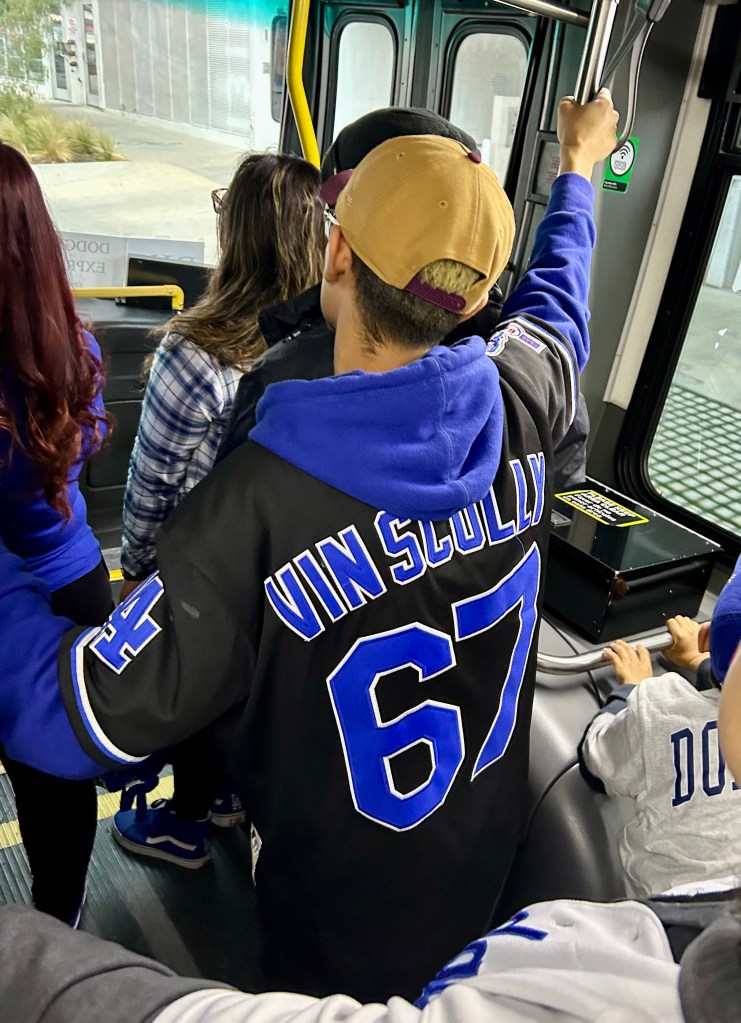
A fan riding the Union Station bus to Dodger Stadium on March 29, 2024.

Uniformly, No. 67 belongs to Scully, and it fits into the parameters of our “jersey” list here, because so many have created a Dodgers uniform in his honor in so many variations.

That’s the story we’re selling. And so many keep buying.

When Los Angeles Kings’ Hockey Hall of Fame broadcaster Bob Miller visited Scully during his final season and presented him with a No. 67 Kings jersey, Miller remarked: “Vin, when you started announcing, a high number like 67 probably meant you were a prospect, you hadn’t yet made the team.”

Scully laughed and replied: “I’m trying my best.”

Our way to honor No. 67 was pulling together “Perfect Eloquence: An Appreciation of Vin Scully” (University of Nebraska Press, 288 pages), released in May, 2024.

When we started the project of recruiting people to write essays about how Scully impacted their lives and surmising his legacy, there were 67 who signed up. We took that as a sign.

Continue reading “No. 67: Vin Scully”

No. 73: Dennis Rodman

This post is part of a media project called SoCal Sports History 101: The Prime Numbers from 00 to 99 that Uniformly, Uniquely and Unapologetically Reveal The Narrative of Our Region’s Athletic Heritage. Pick a number, and consider the list of athletes attached to it. Who wore it best? Or, what’s the most compelling story linked to it? Any person, place or thing is in play with Southern California connections. Star power, transformational achievement, longevity, notoriety and quirkiness all factor in. Whatever leads to a lively discussion and interpretation.

The obvious choices for No. 73:

Dennis Rodman: Los Angeles Lakers
Ron Yary: Los Angeles Rams

The not-so obvious choices for No. 73:

Charlie Cowan: Los Angeles Rams
Tyler Toffoli: Los Angeles Kings
George Stanich: UCLA basketball

The most interesting story for No. 73:
Dennis Rodman: Los Angeles Lakers forward (1999), Long Beach Jam forward (2003-24)
Southern California map pinpoints:
Newport Beach; Long Beach; Inglewood (Forum)

Reference books on the subject:
Bad as I Wanna Be,” by Dennis Rodman with Tim Keown, 1996
Walk on the Wild Side,” by Dennis Rodman with Michael Silver, 1997
I Should Be Dead By Now,” by Dennis Rodman with Jack Isenhour, 2005


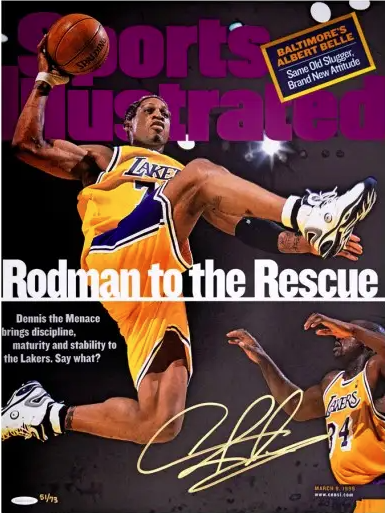
Was is really Dennis Rodman to the rescue for the Los Angeles Lakers, or was Los Angeles going to rescue Rodman from becoming obsoltes?

For 50 days spanning 23 games between February 23 and April 15, 1999, Dennis “The Menace” Rodman was a Laker. The time felt much longer and more painful.

A month after the Chicago Bulls released him, and showing up the day after the Lakers fired Del Harris as their coach and handed the job to Bill Bertka, there was a perfect amount of turmoil for Rodman to come on board.

Aside from tardiness and unpredictability, Rodman’s hair was a daily guessing game as well — dyed all shades of yellow sprinkled with black dots in it, accentuating his tattoos and piercings. Straight from the heart through his head.

Fast forward to Tax Day ’99, after he had taxed everyone’s patience. He was finally audited a month after Los Angeles Times columnist Bill Plaschke jerked his knee and told the Lakers they had to cut him loose “before he returns from spring break.”

The whole experience was long enough to get him a cover story in Sports Illustrated. Someone even had enough material to put together his “10 best plays” highlight reel.

Continue reading “No. 73: Dennis Rodman”

No. 19: Louis Lappe

This post is part of a media project called SoCal Sports History 101: The Prime Numbers from 00 to 99 that Uniformly, Uniquely and Unapologetically Reveal The Narrative of Our Region’s Athletic Heritage. Pick a number, and consider the list of athletes attached to it. Who wore it best? Or, what’s the most compelling story linked to it? Any person, place or thing is in play with Southern California connections. Star power, transformational achievement, longevity, notoriety and quirkiness all factor in. Whatever leads to a lively discussion and interpretation.

The most obvious choices for No. 19:

Jim Gilliam: Los Angeles Dodgers
Butch Goring: Los Angeles Kings
Hal Bedsole: USC football
Fred Lynn: California Angels
Marco Danelo: USC football

The not-so-obvious choices for No. 19:

Mike Gillespie: USC baseball
Jim Fox: Los Angeles Kings
Dennis Dummit, UCLA football
Lantz Rentzel: Los Angeles Rams

The most interesting story for No. 19:
Louis Lapp: El Segundo Little League pitcher/first baseman (2021), Studio City’s Harvard-Westlake High baseball (2026 to present)
Southern California map pinpoints:
El Segundo, Studio City

Reference books on the subject:
Second to None: A Coach’s Message of Love and Selflessness Propels Tiny El Segundo to A Dramatic Little League Title,” by Danny Boehle and Dan Coogan, 2026


There was a lot going on with Louis Lappe’s Little League leap.

In the summer of 2021, already 6-foot-1 and 153 pounds at 12 years old, Lappe was head-and-shoulders above most of his El Segundo Little League All Star teammates. And coaches. He could make eye contact with the team’s 53-year-old volunteer manager, Danny Boehle.

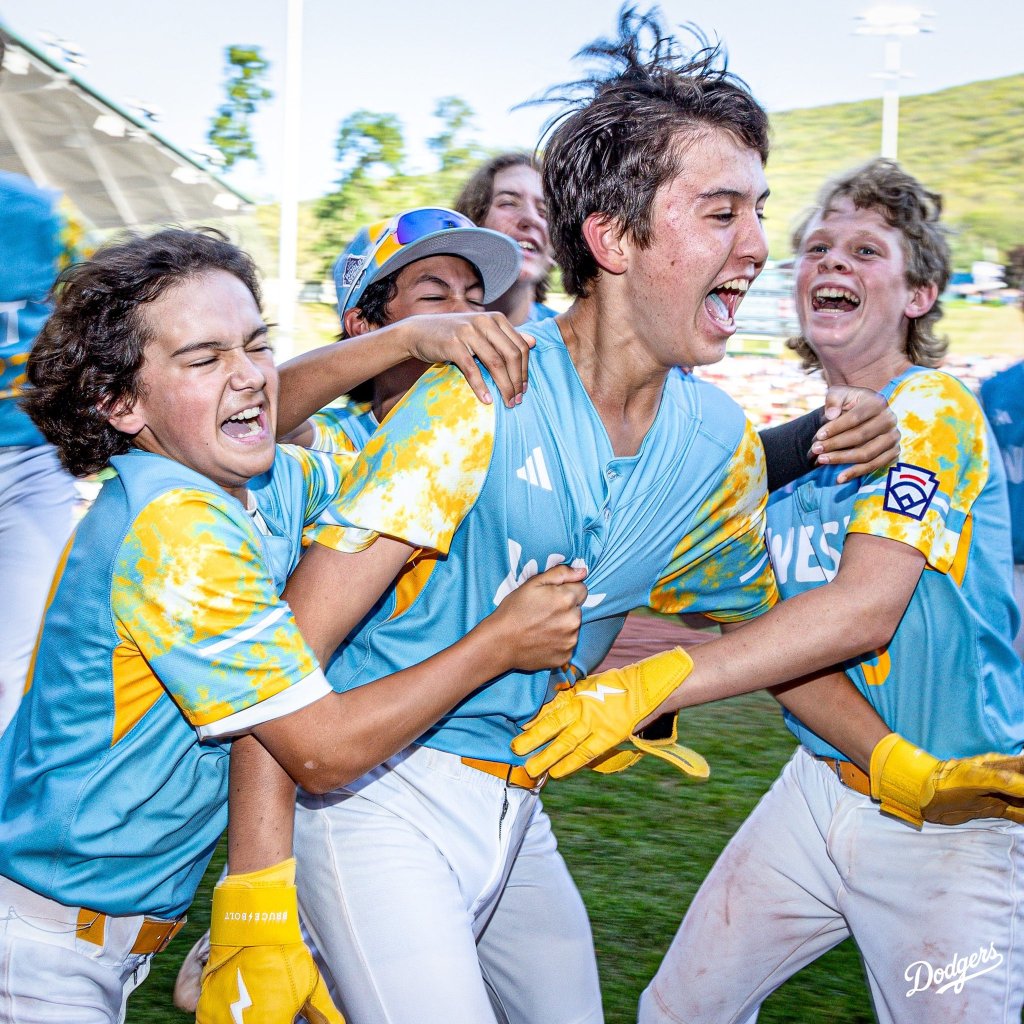
On a Sunday afternoon in Williamsport, Penn., before a national TV audience at home and many more spread out on blankets at George Brett Field in El Segundo, Lappe capped off a victory lap by launching himself into the air and landing on home plate at Howard J. Lamade Stadium to punctuate his Little League World Series-clinching.

The somewhat improbable 6-5 victory occurred after, just an inning earlier, the contest became tied because of a grand-slam gut punch delivered by the kids from Willemstad, Curacao, a team from a small island off the coast of Venezuela. When it was over, Curacao endured its second straight title game loss and third in previous last four tournaments.

Lappe’s home run was the first and only one that Willemstad pitchers allowed in its six World Series games.

“I was just looking for a good pitch,” Lappe told ABC after his Series-leading fifth home run over the team’s seven games. “My mentality was just get the next guy up and if we kept doing that, we would have won either way, but I’ll take the homer. When that pitch came, even before I hit it, I was like, ‘Oh!’ I was so excited and happy. When I got around to home plate, I made sure to touch it.”

Lappe’s teammates had already nicknamed him “The Natural.” Just 24 hours earlier, in the U.S. title game, Lappe hit a three-run homer in the fifth inning and struck out 10 batters in 5 1/3 innings on the mound for a 6-1 triumph against Needville, Texas. It was the fourth day in a row El Segundo won an elimination game — the same Needville sent it into the consolation bracket earlier in the week.

Lappe nearly didn’t show up for his final year of Little League eligibility. He played for a few years before, but sat out the season at age 11, deciding instead to focus on soccer, basketball and another travel baseball team. Lappe eventually asked Boehle if he would be OK to rejoin the program.

Boehle said he was fully on board – enough to want to coach the team himself.

Continue reading “No. 19: Louis Lappe”

No. 00: Benoit Benjamin

This post is part of a media project called SoCal Sports History 101: The Prime Numbers from 00 to 99 that Uniformly, Uniquely and Unapologetically Reveal The Narrative of Our Region’s Athletic Heritage. Pick a number, and consider the list of athletes attached to it. Who wore it best? Or, what’s the most compelling story linked to it? Any person, place or thing is in play with Southern California connections. Star power, transformational achievement, longevity, notoriety and quirkiness all factor in. Whatever leads to a lively discussion and interpretation.

The most obvious choices for No. 00:

Benoit Benjamin: Los Angeles Clippers, Los Angeles Lakers
Brian Wilson: Los Angeles Dodgers
Kevin Duckworth: Los Angeles Clippers

The most interesting story for No. 00:

Benoit Benjamin: Los Angeles Clippers center (1985-86 to 1990-91); Los Angeles Lakers center (1992-93)
Southern California map pinpoints:
Los Angeles (Sports Arena); Inglewood (Forum)


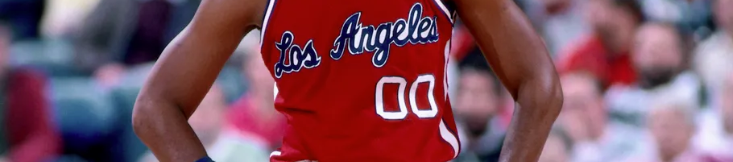
Double-digit zeros, and Benoit Benjamin, live together in imperfect alliterative NBA harmony. And a good dose of infamy.

Nothing from nothing leaves nothing.

The player, and the number, have become a circumstantial and consequential representation of Los Angeles Clippers’ entire existence. Visual evidence that Donald T. Sterling’s decision to escape the shackles of horrible San Diego to enhance his real estate presence in the area already dominated by the Los Angeles Lakers seemed like a suicide mission from the day the Clipper ship, which originally left its dock in Buffalo, decided to find a new port of entry.

Both the franchise in general, and Benjamin in particular, bank on the idea that, with a perceived amount of talent sporting an NBA-approved jersey, a major global metropolitan city will take them in. Like a weary immigrant, as the Lakers once were after shipping out from Minnesota.

That lacks a certain maturity for the sophistication of a basketball-knowledgeable L.A. The Clippers’ consistent failures can be captured in a flashback to someone like Benjamin.

Take a seat. We’ll try to explain.

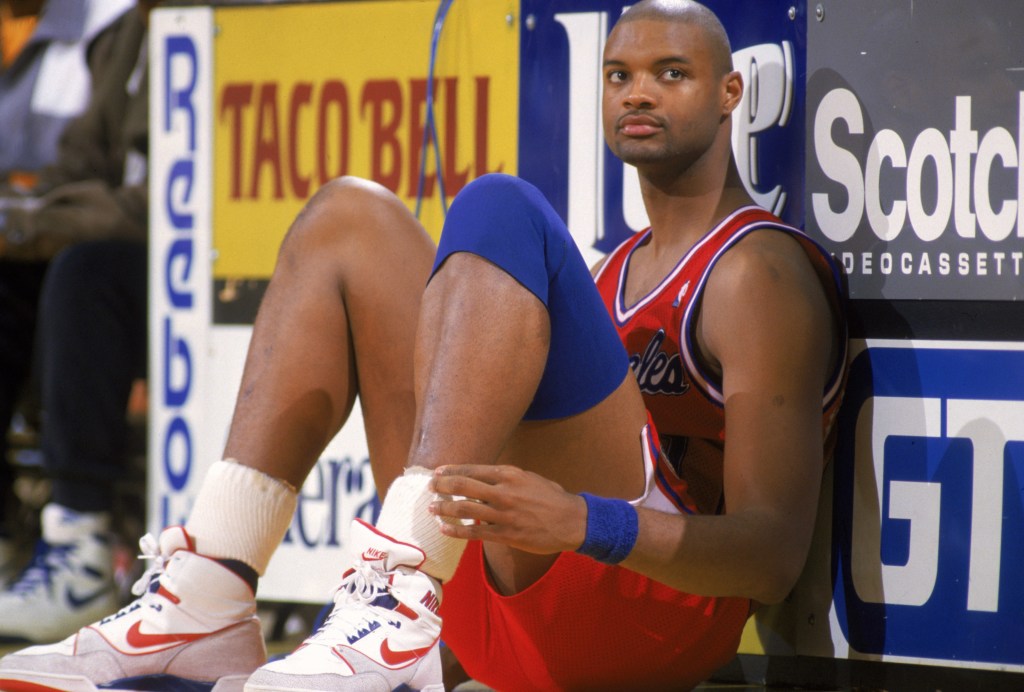
Benoit Benjamin waits to enter a game against the Lakers at the Forum on New Year’s Day, 1988. (Stephen Dunn/Getty Images)
Continue reading “No. 00: Benoit Benjamin”