Day 6 of 2026 baseball book reviews: When Jack was rooked, not so long after he was a Royal rookie

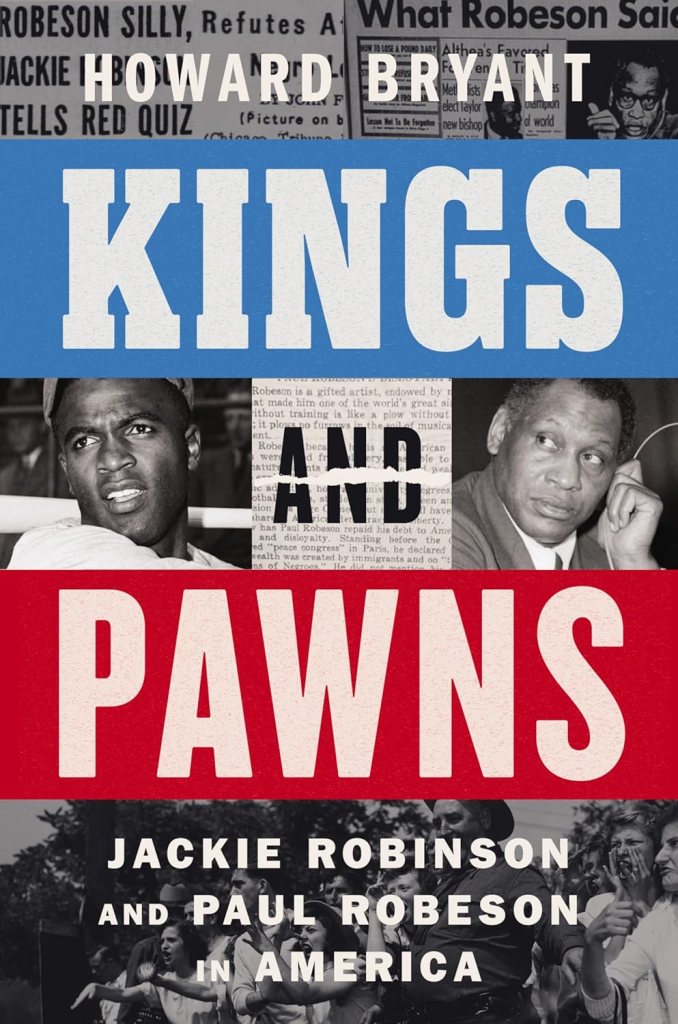
“Kings and Pawns:
Jackie Robinson and Paul Robeson in America”


The author: Howard Bryant
The details: Mariner Books/HarperCollins, 320 pages, $32, released Jan. 20, ’26
The links: Publisher site, author website, Bookshop.org

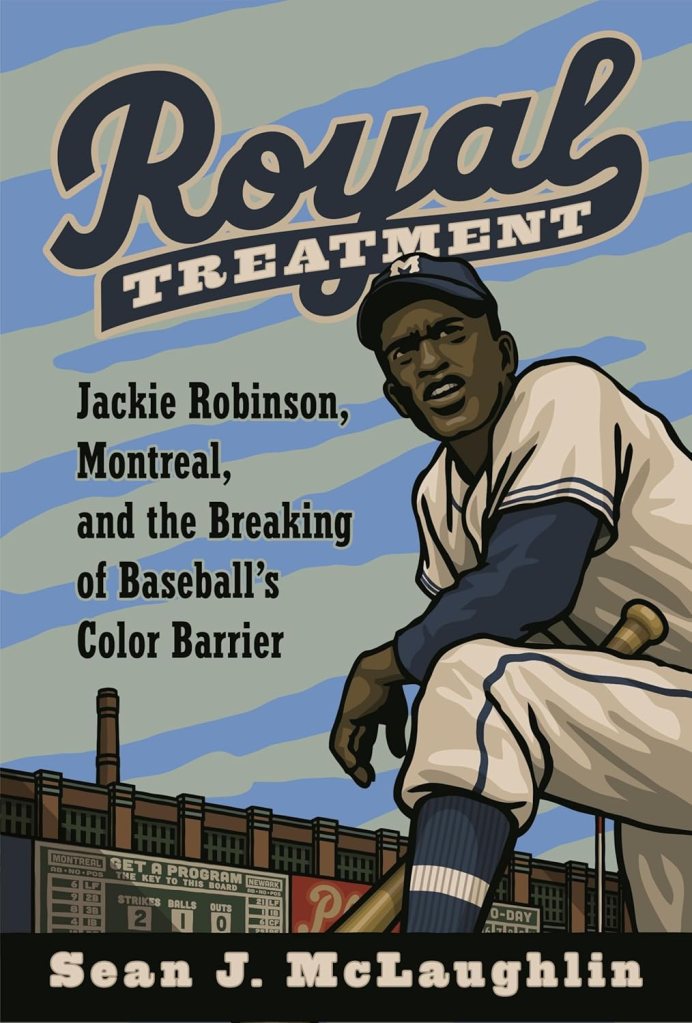
“Royal Treatment:
Jackie Robinson, Montreal,
and the Breaking of Baseball’s Color Barrier”


The author:
Sean J. McLaughlin 
The details: University of Nebraska Press, 296 pages, $36.95, released April 1, ’26
The links: Publishers website, Bookshop.org


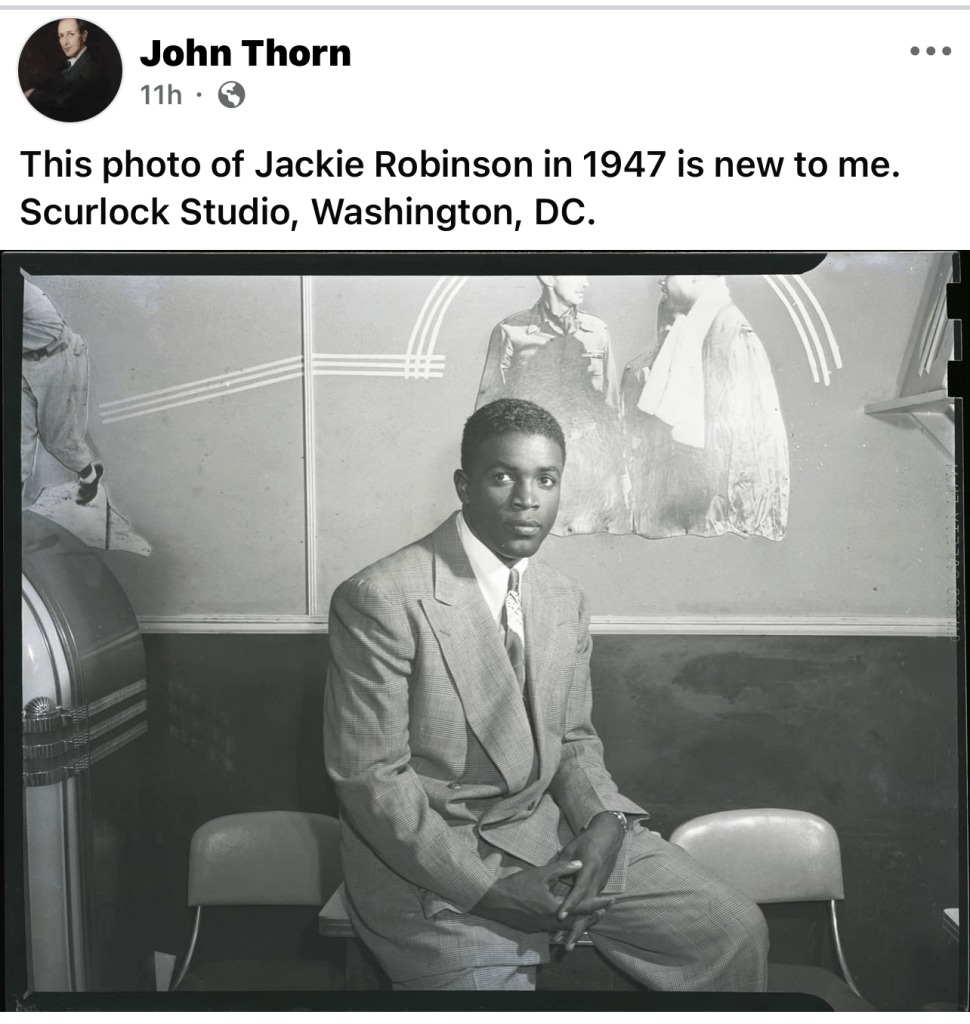
A Jack Robinson Day preamble

Only a year ago, as we rounded up the book reviews for Jack Robinson MLB Appreciation Day — or however they’re selling it — the disgust over crude governmental redaction of all things DEI was front and center. It may seem like such a long time has passed. But it’s still lingering.

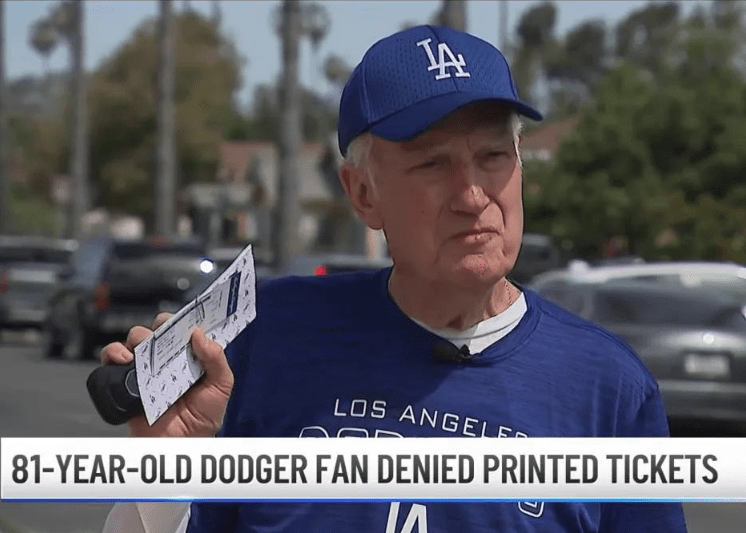
What would Jack Robinson had done if he was invited with the Dodgers’ championship team to be vetted in the Trump White House? What would his reaction be if he saw that a bio on his World War II military requirement that’s heralding him on the U.S. Department of Defense’s website had been taken down “by mistake” during a Trump-mandated cleansing history.

What could the Dodgers players do, as they were being “honored” for their 2024 World Series triumph, in protest to mark the occasion — all wear No. 42 jerseys? Give Trump a 42 jersey?

It was all the wishy-washy white washing that was abhorrent, and called out.

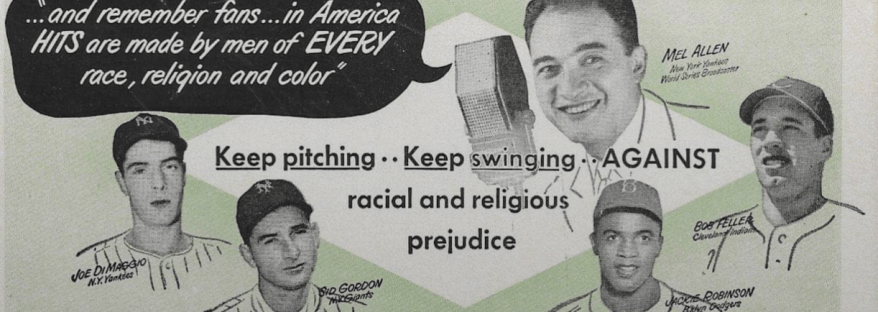
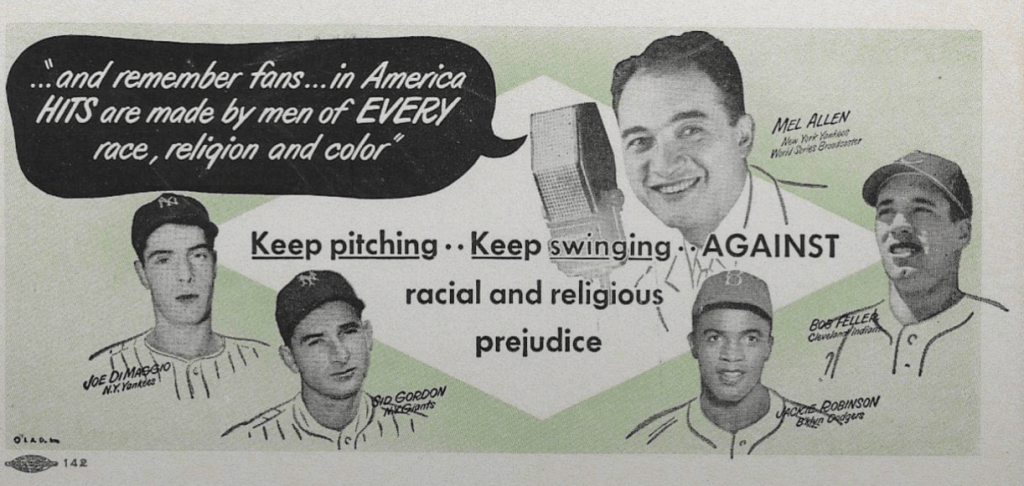
The irony of this public service announcement is positioning Jackie Robinson next to Bob Feller. In 1947, Feller, an established star pitcher for the Cleveland Indians, publicly expressed skepticism about Robinson’s ability to succeed in the major leagues, predicting he would not be able to hit elite pitching. Feller later observed Robinson with admiration for his courage and composure under extreme pressure, acknowledging his tremendous impact on the game. They were inducted together in the Baseball Hall of Fame Class of 1962.

When the Dodgers were recently in DC-adjacent territory over the Easter weekend to face the Washington Nationals, they said “a scheduling conflict” precluded them from making a Trump/Easter Egg roll re-visit to mark their 2025 title. Maybe they’ll reconnect sometime later in the season when some of the push back dies down. Hopefully not.

A Jackie Robinson shirt is among the collection offered by Pasadena CLSC. a company co-founded in 2019 by Dennis Robinson, the the grandson of Mack Robinson and great-nephew of Jackie Robinson.

Don’t let those triggering memories of ’25 dissipate now that ’26 has splashed down on us.

Don’t forget how writer Craig Calcaterra pointed out that the MLB continues to scrub the word “diversity” from what was once its “Diversity and Inclusion” web link, and that “the Trump regime remains a shitty, segregationist enterprise that is unworthy of anyone’s respect or obeisance and Major League Baseball utterly lacks a spine.”

Peter Drier, a professor of politics and urban policy at Occidental College and author of “Baseball Rebels: The Players, People, and Social Movements That Shook Up the Game and Changed America,” provides a reminder this week in a piece for TalkingPointsMemo.com that demands Jackie Robinson Day should be “a wake-up call, not a feel-good moment.” Frequent Robinson topic author Chris Lamb also doesn’t want us to forget the impact of Rachel Robinson, who will turn 104 this summer and outlived her husband by 50 years. They married 80 years ago.

That is, in a very interesting way, directly conflicting with how Robinson is adored in the new film, “Baseball: Beyond Belief.”

The Paulist Productions film, after a short theatrical run, and with some irony, was embraced by Fox to put it onto its Easter Day programming slate. It is an extension of the book by John Sexton, “Baseball as a Road to God: Seeing Beyond the Game,” who teaches a class by that same name at New York University. Sexton, a Catholic, puts into words all the connections he makes between baseball and faith-based entities, and many have noticed.

Joe Price could be identified these days as is the Executive Director of the Baseball Reliquary, the non-profit focused on the cultural history of baseball, which has an annual Shrine of the Eternals election. He is also co-director for the Institute for Baseball Studies at Whittier College, which houses the Reliquary’s research archives. For the film’s purposes, his status as a professor emeritus of religious studies at Whittier College, holding a doctorate in theology and culture, lends him the gravitas to say things in the film such as: “Dodger Stadium might be a sacred place depending on how much you have to pay for parking.”

Robinson and sainthood are discussed by Price because “saints are doing the work of God in ordinary ways.”

Sexton is shown in his classroom explaining to students how the April 15 Jackie Robinson Day is “set apart the same way Easter is set apart, the same way Passover is set apart” by religious followers. Willie Alfonso, one of the New York Yankees chaplains, says “God was using (Robinson) as the catalyst to break down this barrier” of MLB discrimination. A rabbi in the film explains how Jews “took on Jackie Robinson as their hero — to them, if Jackie Robinson could be a Brooklyn Dodger, maybe Jews could be acceptable (in America) too.” Baseball broadcaster Chip Caray says the grace by which Robinson made it through his career “was somewhat Christ-like. Think about the abuse that he took. Could you imagine someone of this generation going through that today? People today cry when they get a bad tweet. … Definitely a saint, maybe numero uno.”

David Robinson, Jackie and Rachel’s youngest son, explains how his father lived a life “that could be seen as a model and as an obligation to follow … he showed examples of leading with action.” But as for sainthood? Jackie Robinson, a lifelong Methodist, as was Branch Rickey, and grew up attending Scott Methodist Church in Pasadena and later in life belonged to a Congregational/United Church of Christ church in Connecticut, “would absolutely refuse the term,” said David. “But he was striving to lead a good life.”

The Dodgers are giving away a new version of a Robinson 42 jersey to honor the day. ESPN has national coverage, bringing out Joe Buck back to the baseball booth with Doug Glanville as his analyst. MLB has a new “We Are Jackie” campaign for social media, tying it somehow to the country’s 250th birthday.

Dodgers manager Dave Roberts will take his players, as well as members of the visiting New York Mets, out to the center field plaza where the Robinson statue is displayed for another teachable moment/video capture for social media content. This time with Robinson’s grandchildren Sonya Pankey Robinson and Ayo Robinson, plus and Negro League Baseball Museum president Bob Kendrick.

UCLA’s No. 1-ranked baseball team also broke out new retro jerseys this week to honor Robinson. The first night the Bruins wore them, the were shutout for the first time this season, by UC Santa Barbara on Tuesday night, 4-0, ending a 27-game win streak, falling to 33-3. On Jackie Robinson Field in Westwood.

So we wonder again: How does this all uniformly resonate in a 2026 setting?

Jackie Robinson, center, shows his son Jack Jr. and the son of Roy Campanella the statue of Abraham Lincoln that stands outside the Essex County Courthouse in Newark, New Jersey in February 1951. (SABR-Rucker Archive, via the essay “The Black Knight: A Political Portrait of Jackie Robinson“)

A review in 90 feet or less

The newest machinations that connect and correlate well with the current interpretation of all matters Jack Robinson:

== In Bryant’s “Kings and Pawns,” the author has explained on social media about how the title reflects not just his love of chess but a realization that “each Black entity in the story was accused — often by each other — of being manipulated either by a foreign government, or their own” as they tries to traverse the politics of the day aside from their main jobs as athlete and actor.

Jackie Robinson testifies at the House Un- American Activities Committee on July 18, 1949 (Getty Images, via JackieRobinsonMuseum.org)

The two events Bryant focuses on:

= A July 1949 House Un-American Activities Committee meeting convened to smear and derail the career of Paul Robeson, a great All-American football player at Rutgers in 1917 and ’18 who played pro ball and then made a career in the theater as an actor and singer, but was also true to his ideological compass and social justice activism in the 1930s and ’40s. It was easy to label him as dangerous and subversive by the FBI. Robinson had been recruited to testify against him.

= A June 1956 Robeson battle with the HUAC over it prohibiting him from leaving the United States, with Robinson again being called to testify at the hearings.

Bryant writes: The Cold War resembled a chess match, and everchanging cast of kings and pawns. The United States and Soviet Union fought for control of the chessboard, which was to say, the world. Robinson, Robeson and (NAACP founder and author W.E.B.) Du Bois had been kings, crowned by the Black community who idolized them, but who were the pawns? Robeson supporters believed it was Robinson, allowing himself to be used by HUAC that July day in 1949, a champion to the segregationists who would not shake his hand. The NAACP, and much of the country, believed it was Robeson, the former for setting back Black progress by conflating civil rights with communism, the mortal enemy of his country — American were were currently fighting communists in the unforgiving mountains of Korea. Robeson and Du Bois suspected it was the entire Black leadership itself, the Walter Whites and Roy Wilkinses, who appeased the very government agencies — Hoover’s FBI and the State Department among others — that were also surveilling them, did not trust them and would, in the very near future, accuse them of the same subversiveness that was destroying Robeson’s livelihood. The furious Malcolm X saw Black America as the pawn, constantly willing to be used by their country in exchange for an acceptance from whites as equals that would never come.

Heavy stuff, and heavy content, asking the readers to do a lot of heavy lifting. What are we often missing here?

Paul Robeson listens to a speech during the Peace Partisans World Congress in Moscow on April 20, 1949 (Getty Images via JackieRobinsonMuseum.org)

Doreen St. Félix points out in her review of the book for The New Yorker:

“The narrative that increasingly takes shape, in our minds, as we read ‘Kings and Pawns’ is that of a fratricide — one that is particularly captivating, because the ‘brothers’ in question did not meet at any point during the overlapping course of their two extraordinary lives. But it’s us, the appalled readers, who are doing most of that projecting, and imposing on this story the logic of a modern-day pop-culture feud. … The fastidiousness of (Bryant’s) elastic text does little to allay those who are likely to become inflamed. (Bryant) is a serious and engaging sportswriter who has published eleven books, many of them fuelled by his ambition to disturb the stubborn and déclassé jingoism that still sustains the subject he loves — baseball, the American game.

“He leans on a labored metaphor here: ‘Through countless published biographies over several decades, Robinson’s 1949 testimony against Robeson on Capitol Hill had long sat in plain sight, explored in only a page or two or usually by a single sentence—Jackie Robinson testified against Paul Robeson—an exposed root on the beaten path of the story of baseball integration.’ The “root” grabs and tugs Bryant down into a swamp of disinformation, hero worship, groupthink, xenophobia, daddy issues, and dark bargaining. The book is a little like a thriller, following Bryant as he lances a Red Scare factoid, which spills out on him its substance.”

For Bryant, tackling this important moment in time is hardly a surprise, or a stretch. It’s also a given that his text is rich, ripe and, at times, a challenge to navigate, but that is a style we’ve already become accustomed to from “Rickey: The Life and Legend of an American Original” (Mariner Books, 2022), “Full Dissidence: Notes From an Uneven Playing Field” (Beacon Press, 2020), “The Heritage: Black Athletes, A Divided America and the Politics of Patriotism” (Beacon Press, 2018), “The Last Hero: A Life of Henry Aaron” (Pantheon, 2010) and “Shut Out: A Story of Race and Baseball in Boston” (Routledge 2002), plus his weekly appearance on NPR’s Weekend Edition.

It is important to note that Bryant, in sizing up Robinson for a newer generation of historians, wasn’t someone who embraced having to be involved in the civil rights movement because he had “to live within the deferential parameters of how an athlete was expected to speak,” especially him, for all he did.

Also it is enlightening that Bryant recounts an interview Al Cohn of Newsday did with Rachel Robinson in October of 1976, almost a year after her husband’s passing, where she talked about his civil rights leadership role. She admitted there were “two major mistakes that Jack made” in this arena. “He regretted them very much .. He didn’t think he did wrong things when he was doing them. But his judgment changed as time went on. … (One of the mistakes) was his statement against Paul Robeson and his appearance before the House Un-American Activities Committee. I think we got some bad advice, and we didn’t fully understand the committee … When Jack was asked to testify, he conferred with Mr. Rickey and with black leaders who were heads of organizations. Jack was at that time very patriotic — his country right-or-wrong. … We came out of conservative families that were afraid of communism. … He got misused.”

Bryant can put this into the context of current events and accept that no longer should Robeson and Robinson been viewed as adversaries, but as manipulated minority leaders thrown into a public square and expected to say whatever they had to for survival and acceptance in their world.

“The shock of the Trump administration’s assault on the arts and universities, its immigration and visa restrictions, and domestic attacks on citizenship may feel unprecedented because many of today’s generation have no firsthand memory of the first half of Cold War and cannot envision Americans comfortable with the police-state tactics, but what is past is prologue: Trump is merely re-instituting the playbook of the McCarthy 1950s, the time of Robeson and Robinson, American versions of authoritarianism.”

== McLaughlin’s “Royal Treatment” first should be commended for its brilliant commission of a Gary Cieradkowski illustration that fits the occasion.

Recounting Robinson’s time playing Triple A ball in Montreal — the year after he signed his contract with the Dodgers and a way for him to get integrated in a pro baseball world for one season before his MLB arrival in Brooklyn — might have already been presented well enough in Chadwick Boseman’s portrayal from the 2013 film “42.”

Robinson actually wore No. 9 that season with the Royals, when he led the International League with a team-record .349 average as well as a .468 on-base percentage, and tied for the lead with 113 runs while stealing 40 bases. It wasn’t enough to win league MVP (it went to Baltimore first baseman Eddie Robinson — .318, 34 homers, 128 RBIs).

George Shuba greets Jackie Robinson at home plate in a famous handshake captured on April 18, 1946. (Courtesy of Greg Gulas, Carrie Anderson, Mike Shuba via SABR.com Games Project)

But there was a lingering question as the season went on: What would prevent the Dodgers from promoting Robinson to the big-leagues during that ’46 season rather than wait until the start of the ’47 season?

“For perfectly understandable reasons, there was no bigger fear in the stands of Delorimier Stadium (in Montreal) in the late summer of 1946 than the one posed from above in Brooklyn. Would (GM Branch) Rickey rob the Royals of their greatest hero ever to save the Dodgers? How could he not?”

The Royals had wrapped up their league title with a 71-36 record by August 1, 14 games up and “Royals fans were becoming quite accustomed to (Robinson’s) heroics and had no desire to share him with Brooklyn just yet.” They had the Junior World Series to look forward to, and the last Canadian team to win that was Toronto in 1926.

“Rickey would have done considerable damage to his relationship with the club,” McLaughin writes, “if he exercised his right to pluck Robinson away for its own playoff run. Would this be enough to resist tempations?”

The Dodgers would tie St. Louis for the National League title, but then lose a best-of-three playoff for the right to face Boston in the World Series. What if Robinson played that last month?

On Aug. 10, the Dodgers had traveling secretary Hal Parrot announce in Brooklyn that Robinson would stay in Montreal. Even though the Dodgers could have used help at first base and third base for Leo Durocher’s lineup.

“This was nowhere hear enough to satisfy the conspiratorially minded north of the boarder,” McLauglin wrote. “Such a statement would have carried more weight coming from Rickey himself, or Rickey Jr., the Dodgers’ farm director, rather than a potentially disavowable former sportswriter turned PR man.”

Topps created a 2022 “Pro Debut” series that included Jackie Robinson as a Montreal Royals player.

Maybe there was concerns Robinson, who had moved from shortstop already to second base, wouldn’t do well with another position switch — he would eventually start 151 games at first in his rookie season with Brooklyn. Robinson also had some back ailments that kept him out at times in the Montreal lineup and a doctor had “advised him to step away from baseball for ten days to calm his nerves (to the approval of) Rachel Robinson,” but Jack only missed one day.

“Rickey ultimately concluded he made too big an investment in Robinson, both as a player and a broader change agent in American culture, to rush the Great Experiment, which had been planned and executed methodically up to this point,” McLaughlin concluded. “If Robinson were white, it is nearly unimaginable to think that he would not have gone up to Brooklyn mid-season. Reality being what it was, Royals fans could breathe easy and Dodgers fans would have to wait another year.”

Robinson helped Montreal outlast Louisville in six games for the Junior World Series title and the love of the fans poured out for him before and after the game as they serenaded him with song and appreciation.

It led to the famous words by Sam Maltin, a reporter from the Pittsburgh Courier, who not only wrote that Robinson, in his opinion, was “the most popular athlete ever to wear a Montreal athletic uniform,” but as fans swarmed Robinson afterward, Maltin famously wrote that it was “probably the only day in history that a black man ran from a white mob with love instead of lynching on the mind.” He added, as McLaughlin noted in his book, that the group of Louisville fans who came to the game saw “a lesson of goodwill among men. That it’s the man and not his color, race or creed. They couldn’t fail to tell others down South of the ‘riots,’ the chasing of a Negro — not because of hate but because of love.”

A message that future Dodgers teammate and Louisville native Pee Wee Reese also took to heart.

A shelf of Jackie Robinson related book titles at the Los Angeles Central Library’s sports section.

More to explore:

== Maybe it’s also worth nothing that today marks the 120th anniversary of the first Japanese professional baseball game, by a team of barnstormers in Kansas — thanks for the heads up by Robert Fitts.

== University of Nebraska Press, in honor of Jackie Robinson Day, offers “The Royal Treatment” at a special 40 percent discount (down to $22.17 from its cover price) through May 31 on its website. Use the promo code 6AS26

== In the new book, “American Sportswriters: A Biographical Dictionary,” by Jerry Roberts (McFarland, 652 pages, $145), the entry for Bryant includes: “Bryant’s books are incisive, taking on large issues in no uncertain terms, exposing the rot behind the scenes in an even-handed way. Saying Boston is a racist town, particularly regarding sports and sportswriters, is not a new issue. But Bryant went a step further and put some blame on an icon of the trade: ‘Influential Globe sports columnist Will McDonough sees race in Boston as a media creation, a topic alive only because the Red Sox haven’t won a championship,’ Bryant wrote in ‘Shut Out” in 2002. ‘It’s a viewpoint that is immediately offensive because he is not Black and thus cannot relate to the tremendous emotional distance that African Americans have felt from Boston.” 

== Recent review posts of Robinson books to align with Jackie Robinson Day/April 15 in this annual series include:

= 2025: “Jim Gilliam: The Forgotten Dodger” by Steve Dittmann; “Play Harder: The Triumph of
Black Baseball in America,” by Gerald Early, “They Changed the Game: 50 Stories
and Illustrations Celebrating Creativity in Sports,” and “Dream Merchant of the Perfect Game:
The Life and Legacy of Frank ‘Doc’ Sykes.”
= 2024: “Under Jackie’s Shadow: Voices of Black Minor Leaguers Baseball Left Behind” by Mitchell Nathanson
= 2023: “Strength for the Fight: The Life and Faith of Jackie Robinson” by Gary Scott Smith, “Call Him Jack: The Story of Jackie Robinson, Black Freedom Fighter,” by Michael G. Long
= 2022: “True: The Four Seasons of Jackie Robinson” by Kostya Kennedy, “Not an Easy Tale to Tell: Jackie Robinson on the Page, Stage and Screen,” by SABR
= 2021: “42 Today: Jackie Robinson and His Legacy” by Michael G. Long, “Jackie: Perspectives on 42″ by SABR
= 2020: “The Court-Martial of Jackie Robinson: The Baseball Legend’s Battle For Civil Rights during World War II” by Lt. Col. Michael Lee Lanning
= 2019: “Reclaiming 42: Public Memory and the Reframing of Jackie Robinson’s Radical Legacy” by David Naze, “A Fine Team Man: Jackie Robinson and the Lives He Touched,” and “Black Baseball, 1858-1900: A Comprehensive Record of Teams, Players, Managers, Owners and Umpries,” by James E. Brunson III
= 2018: “Singles and Smiles: How Artie Wilson Broke Baseball’s Color Barrier” by Gaylon H. White

== One final curious discovery with “Kings and Pawns”: In the acknowledgements, Bryant credits the “tireless research and watchful of eye of Brooks Melchoir” for making the book happen. “With precious few possible exceptions, I cannot think of a person in the country who has devoted more personal time to the story of Jackie Robinson, especially his early, pre-major league years. For the past three years, Brooks has worked on making sure this project was afforded the benefit of every magazine article, newspaper story, video clip, cartoon and photograph of Jackie Robinson and Paul Robeson. Every author should have such an ally and friend.”

Melchoir could be the subject of a Bryant book, if he so desires. The former SportsByBrooks.com blogger disappeared between 2013 and 2018 after becoming so ubiquious online, and few are apt to explain why. Only Jeff Pearlman seems to have known as much to write about it, and then not particularly make clear what happened. Even when one asks him about it. But now Melchoir is back, and has Bryant’s back? Well, OK then …

More reviewers and interviews to access:

== The PBS News Hour interview with Bryant includes a transcript of the segment at this link.

== Bryant joins Bomani Jones for his “The Right Time” podcast:

== Reviews about “Kings and Pawns” from DemocracyNow.com, Kirkus review, the Washington Independent Review of Books, and an excerpt from the Jackie Robinson Foundation website, where a bio of Bryant exists on the organization’s website as well.

These are also out there we have yet to find and review:

Opening the Door for Jackie: The Untold Story of Baseball’s Integration,” by Keith Evan Crook (McFarland, 297 pages, $49.95, released Nov. 26, ’25).

Leslie A. Heaphy, author, “The Negro Leagues, 1869–1960,” offers a blurb: “You may think you know the story of Robinson and Rickey and the integration of the baseball, but author Keith Crook provides a more extensive story. Rickey plays a role but as we read so did many others. Crook places Robinson’s signing in the much deeper context of New York politics and law in 1945. What he has produced is a rich story steeped in primary sources to show the more complex story surrounding Rickey, Robinson and the Dodgers.”

Black Baseball’s Heyday: Capturing an Era in Art and Words, by Denny Dressman; illustration by Anthony High (McFarland, 189 pages, $39, released Dec. 4, ’25).

A blurb from Booklist: “A prominent Kansas City artist and a veteran author collaborate to create a colorful snapshot of Black baseball stars and the Negro National League from the 1880s through 1948 and the integration of Major League Baseball. Each chapter includes colorful reproductions of High’s artwork, highlighting pivotal moments in baseball history or individual players who shaped the face of the league and have only recently been recognized by the National Baseball Hall of Fame and Museum. Chapters conclude with High’s meditations on his inspiration and methodology for creating a particular work, and several illustrations portray works in progress with explanations of the art and composition of his unique collagraphs, making this as much an art book as a baseball history. Covering everyone from Moses Fleetwood Walker, the first Black major-league player in 1885, to Cuba’s Martin Dihigo, one of the greatest players who never played in MLB, Dressman and High recount the greatness of Black players and coaches in early baseball history, the innovations they created to showcase their talents, and the obstacles they had to overcome for long-overdue recognition.”

Simulating Satchel: A What-If History of Integrated Major League Baseball in 1934by John Graf (McFarland, 341 pages, $39.95, released March 5, ’26).

It’s framed as a ” Utopian Baseball Fantasy” to guess how the game might have been different if things really were different in a 1934 world. Graf assumes it could have come about at the urging of President Theodore Roosevelt, imploring the 16 teams of the all-white NL and AL to add four Negro League teams — at a time when many of the Negro League stars were in their prime. Teams are then integrated to include White and Black players through a draft. It’s like Strat-O-Matic come to life. Satchel Paige, in real life, wasn’t allowed to join the established Cleveland Indians in 1948 at age 41, a year after Robinson came to the Dodgers. In 1934, Robinson was a 15-year-old at Muir High in Pasadena, best known as the city’s ping-pong champion.

Day 3 of 2026 baseball book reviews: The Class of ’68 Brigade

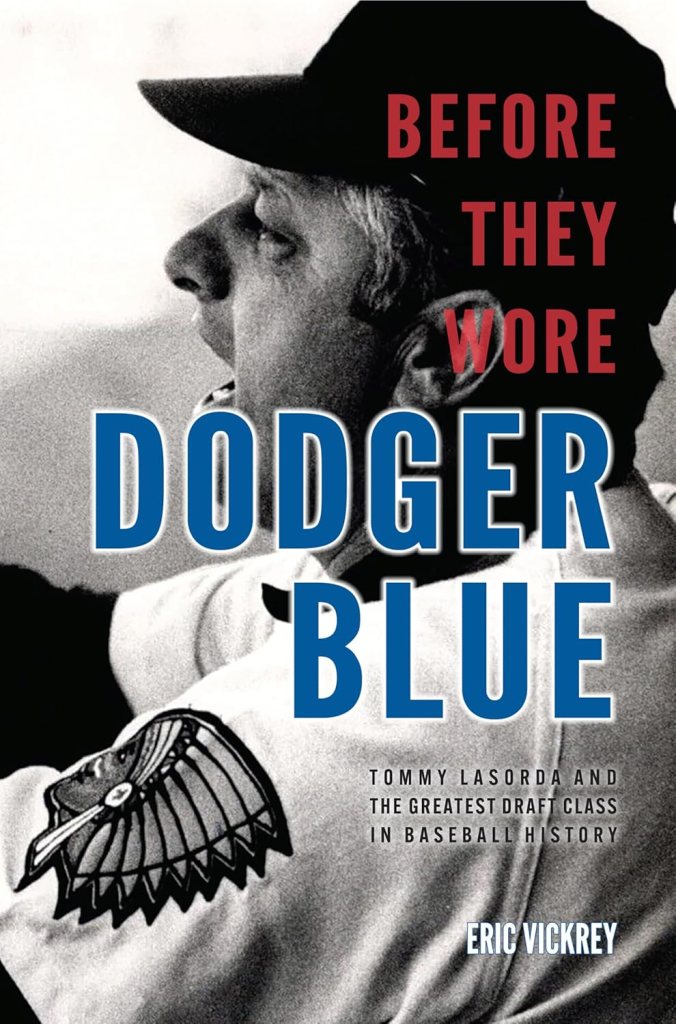
“Before They Wore Dodger Blue: Tommy Lasorda
And the Greatest Draft Class in Baseball History”

The author: Eric Vickrey
The details: August Publications, 348 pages, $24.95; released Dec. 7, ’25
The links: Author site, publisher site, Bookshop.org


A review in 90 feet or less:
The time capsule that Sports Illustrated has become, in the musky scent of its recent emasculation, can still be a bit jarring.

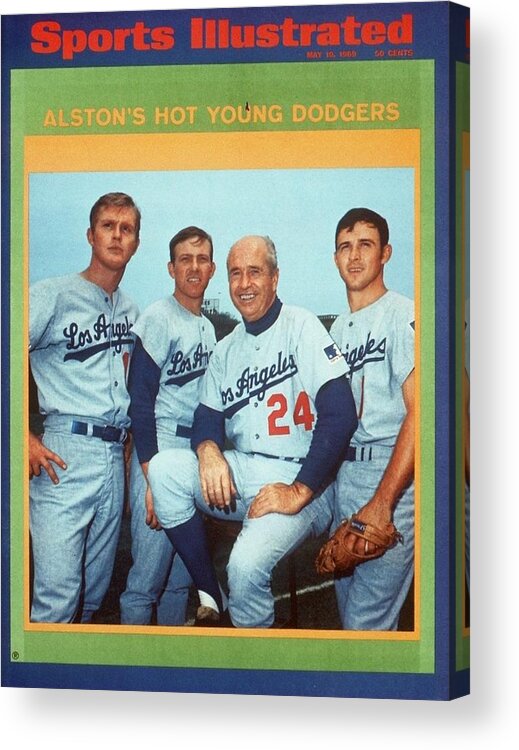
When the SI issue of May 19, 1969 arrived at our house, proclaiming a group of “hot young” Dodgers were about come to the rescue of a franchise still trying to find its footing from a 95-win team getting swept in the ’66 World Series, then watching Sandy Koufax retire, and now braced for Don Drysdale heading in that direction, there was some reason for optimism for all the kids in my neighborhood. The magazine’s 40-cent cover price our parents paid was also worth an investment in seeing the future as predicted by our wise elders.

Manager Walter Alston, as we were shown, had Bill Sudakis, Ted Sizemore and Billy Grabarkewitz all ready for the reboot. Tell Danny Goodman to start cranking out World Series trinkets.

Given that those ’69 Dodgers would finish 85-77, fourth-best and just eight-games out in the newly created National League West, it was a bit of an illusion, but much easier to compartmentalize after taking in a 76-86 showing in ’68 (seventh in the elongated NL, 21 games back) and a 73-89 free-fall from ’67 (eighth place, 28 1/2 games back).

Yet, these three Musketeers fresh out of the Mickey Mouse Club would bring it back to glory.

With mixed results.

Sudakis, a catcher and third baseman who signed as a free agent in 1964 a year before the MLB Draft began, hit .234 that ’69 season in 132 games, age 23. Sudsy, as was his nickname, seemed to be all but washed up by ’72 when the Dodgers waived him.  The Angels kicked the tires on him before the ’75 season, then released him mid-way through after he hit .121 in 30 games. 

Sizemore, a 15th round draft pick in 1966, somehow won the ’69 NL Rookie of the Year Award following Johnny Bench (in ’68) and Tom Seaver (in ’67) in an otherwise so-so year for up-and-coming talent. Starting at second base, Sizemore would have a career-best 4.2 WAR, hitting .271 in 159 games, age 24. After upping that to .306 in ’70, the Dodgers capitalized on his value, sending him to St. Louis with backup catcher Bob Stinson for Dick Allen (which didn’t end up so well). Sizemore came back to the Dodgers in ’76 via a trade for Willie Crawford, but by ’79, the Dodgers were done with him again, sending him this time to Philadelphia.

Grabarkewitz, taken in the 12th round of the ’66 Draft, was bestowed jersey No. 1 when he came up for 34 games that ’69 season, going 6 for 65 (.092). But the next year, he was on the NL All-Star team, hitting .289 in 156 games with a team-leading 17 homers, 92 runs scored, 84 RBIs and 19 stolen bases.  

Then, poof.

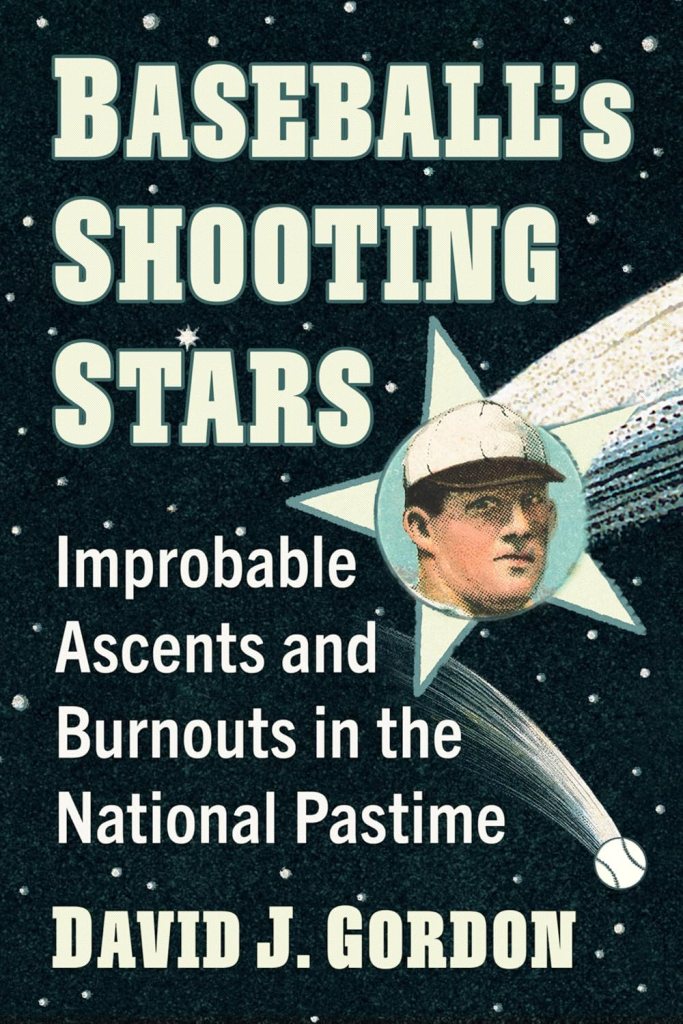
In the 2024 book “Baseball’s Shooting Stars: Improbable Ascents and Burnouts in the National Pastime,” author David J. Gordon devotes a special chapter to Grabarkewitz, the man “who led the league in consonants” but was “stymied by badly timed injuries.” His 6.5 WAR in his career year in 1970 — a stat that didn’t even exist at the time but often used in modern times to measure former players in a new light — wasn’t that remarkable, but in the aftermath, Gordon write that Grabarkewitz “may have been the most extreme one-year wonder of any non-pitcher in MLB history … I can find no other historical example of a position player with a career lasting at least five years who posted a > or = 6.5 WAR in one season but played at or below replacement level for the remainder of his career.” Why he was out of the game by age 29, after a brief time with the Angels, can be baffling to some, but Gordon has a thought on that:

“My reflexive take on one-year wonders like Grabarkewitz is their career years were flukes and the law of averages caught up with them. But Grabarkewitz is something else. Nothing about his sterling 1970 season seems lucky or flukish. A combination of lesser injuries and an overloaded Dodgers farm system — not regression to the mean — conspired to prevent him from becoming the player everyone thought he would be for more than one season. I view Grabarkewitz mainly as a very unlucky player who might very well have achieved long-term success on a different team and under more favorable circumstances.”

Gordon allusion to “an overloaded Dodgers farm system” goes to why Vickrey’s book gives a greater context to how and why the team’s 1968 MLB draft remains, by consensus still today, the greatest haul of talent in the game’s history.

Dialing back to that ‘69 season, there was a brief glimpse of a 20-year-old Steve Garvey (1-for-3), 19-year-old Bobby Valentine (five pinch-running appearances) and 19-year-old Bill Buckner (0-for-1).

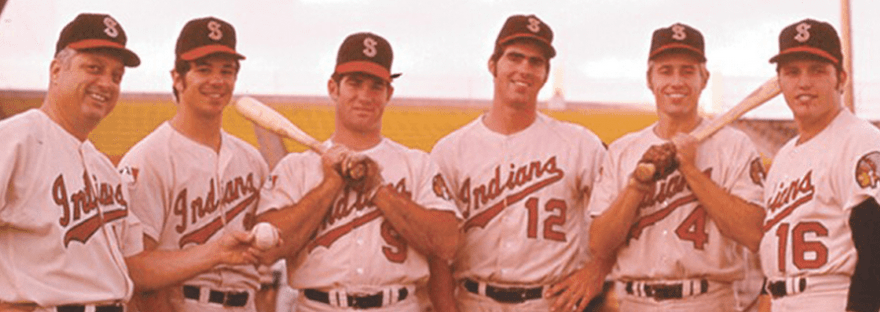
Valentine, Buckner and Garvey were prized pieces of a collection that included Ron Cey, Davey Lopes, Tom Paciorek, Doyle Alexander, Joe Ferguson and Geoff Zahn. Adding in Bill Russell, Charlie Hough and Tommy Hutton, the Dodgers’ foundation had been laid and would last more than a decade — let’s call it the 1981 World Series, after they team decided to let their prized infield break into pieces.

The link to all of them is Tommy Lasorda. As Vickrey details, it was Lasorda, that scout, who was a key figure in the Dodgers’ acquisition of talent before the instution of the 1965 MLB Draft — the first pick of that draft was Rick Monday, an outfielder from Santa Monica High who had gone to Arizona State and was all but signed as Dodgers home-town talent before the Kansas City A’s were allowed to take him. Just prior to that, Lasorda was the important figure in the Dodgers signing local talent Willie Crawford from Freemont High in L.A., one of the last of the “bonus baby” players who had to spend time on the major-league roster likely before they were ready.

Continue reading “Day 3 of 2026 baseball book reviews: The Class of ’68 Brigade”

Day 1 of 2026 baseball book reviews: Sho-ing off for the kids

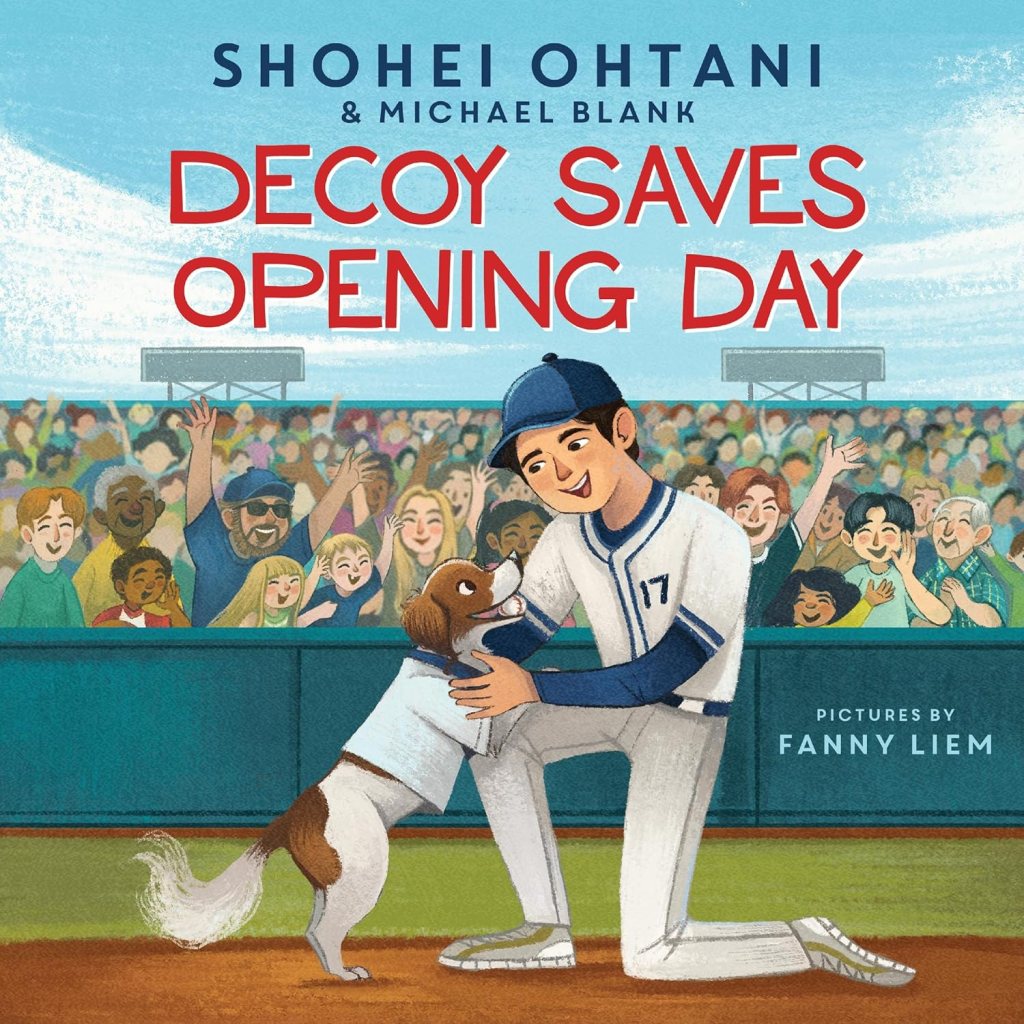
Decoy Saves Opening Day

The author: Shohei Ohtani and Michael Blank
The illustrator: Fanny Liem
The details: HarperCollins, 32 pages, $21.99, released Feb. 3, ’26
The links: The publisher and Bookshop.org

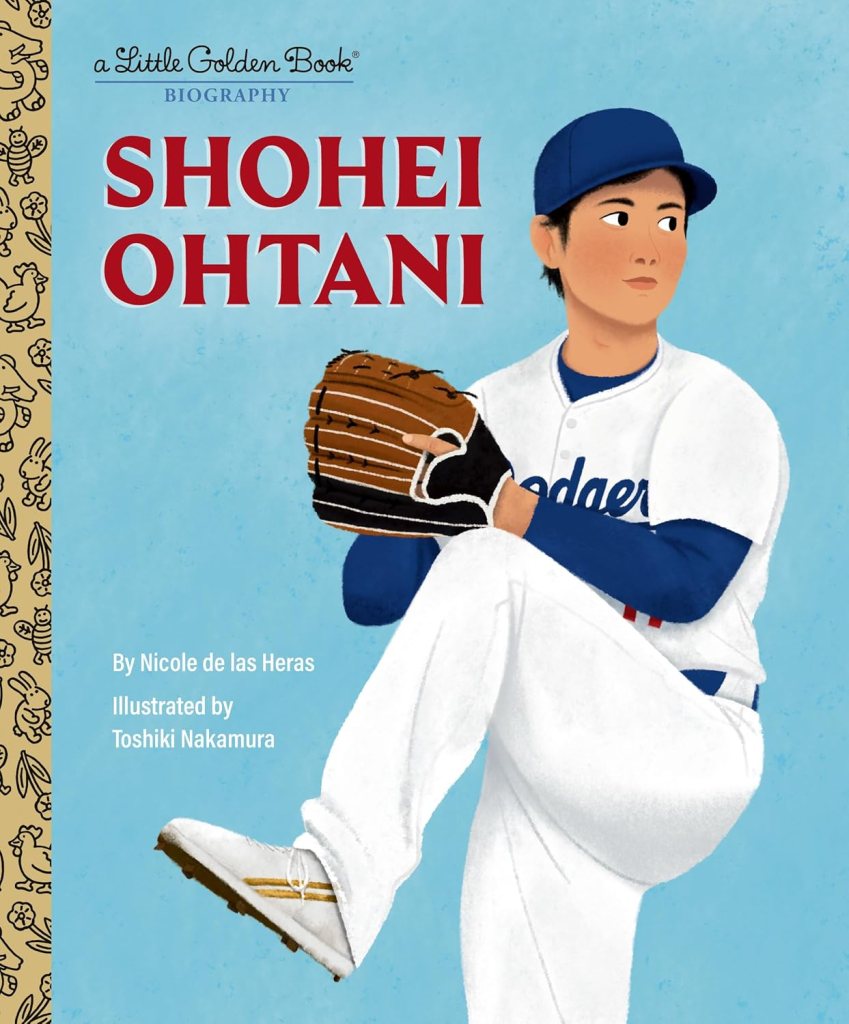
Shohei Ohtani: A Little Golden Book Biography”

The author: Nicole de las Heras
The illustrator: Toshiki Nakamura
The details: Little Golden Book Biographies/Penguin/Random House, 24 pages, $5.99; released March 3, ’26
The links: The publisher and at Bookstore.org


A review in 90 feet or less:

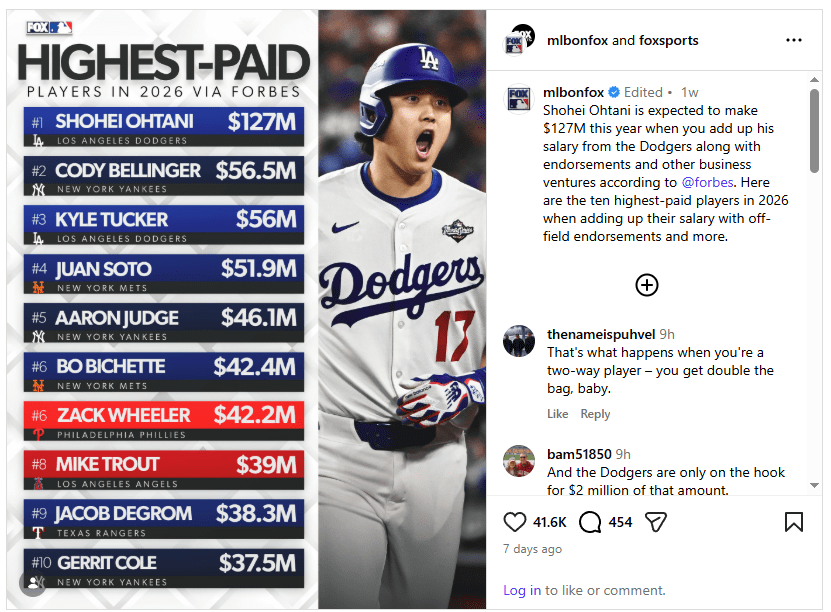
An AI overview collection of words and symbols generated from a search engine ask specifically about “Shohei Ohtani insane endorsement income” quickly will engineer this kind of answer-nugget:

“Shohei Ohtani is projected to earn an estimated $125 million in endorsement income for 2026, with nearly 20 global brand partners, making him the highest-paid athlete in the world from endorsements alone, according to Sportico data via Boardroom. This follows an estimated $100 million in marketing revenue earned during 2025, on top of a $2 million salary with the Dodgers — a threshold only previously reached by legends like Tiger Woods, Roger Federer, and Stephen Curry”

We believe this to be true, because the AI primary source for that information seems to spitting out an Instragram post made by MLB on Fox and Fox Sports. Those numbers had been regurgitated many times over by other media platforms, including the Los Angeles Times, when, in the headline “Why $100 million in endorsements says Shohei Ohtani is the global face of sport,” the writer went on to deduce: “In Ohtani, whose face appears on everything from airplanes to skin care products, baseball at long last has its Michael Jordan: the superstar that has transcended sports and ascended to the status of global pop culture icon.”

He can hit. He can pitch.

He can write a book. Not one of those “as told to” mass-market, ghost-written, give-us-the-gossip type of sordid tale.

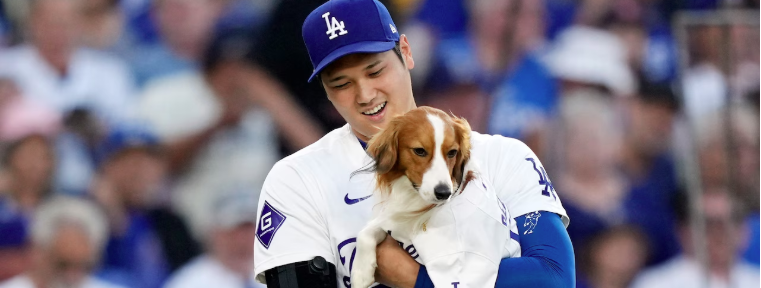
No new dirt here on Ippei here. It’s about a different dog.

Ohtani’s handlers must be painfully aware there is no money to be made in the book publishing business.

Just ask writers such as Bill Plunkett, who did the 2025 “L.A. Story: Shohei Ohtani, The Los Angeles Dodges and a Season for the Ages” or Jeff Fletcher, who fashioned an update of his 2022 “Sho-Time: The Inside Story of Shohei Ohtani and the Greatest Baseball Season Ever Played.” All their deadline work dancing around their regular job of covering the Dodgers and Angels didn’t generate royalties that will allow them to lead a more regal suburban existence.

Ohtani’s co-author, Michael Blank, could even clue him in. Blanks is a venture capitalist who has been with Creative Artists Agency for 15 years.

Continue reading “Day 1 of 2026 baseball book reviews: Sho-ing off for the kids”

No. 94: Don Yi

This is the latest post for an ongoing media project — SoCal Sports History 101: The Prime Numbers from 00 to 99 that Uniformly, Uniquely and Unapologetically Reveal The Narrative of Our Region’s Athletic Heritage.  Pick a number and highlight an athlete — person, place or thing — most obviously connected to it by fame and fortune, someone who isn’t so obvious, and then take a deeper dive into the most interesting story tied to it. It’s a combination of star power, achievement, longevity, notoriety, and, above all, what makes that athlete so Southern California. Quirkiness factors in. And it should open itself to more discussion and debate — which is what sports is best at doing.

The most obvious choices for No. 94:

= Kenechi Udeze, USC football
= Paul Bergmann, UCLA football
= Mateen Bhaghani, UCLA football

The not-so-obvious choices for No. 94:

= Terry Crews, Los Angeles Rams

The most interesting story for No. 94:
Don Yi, Korean language interpreter for Chan Ho Park (1994)
Southern California map pinpoints:
Lakewood, Glendale, Los Angeles (Dodger Stadium)


The 1994 Major League Baseball season started with Don Yi wearing the No. 94 jersey for the Los Angeles Dodgers.

It wasn’t necessarily the Year of Yi in Dodgertown that particular season, but numerically, it made sense.

While Yi was neither bat boy, ball dude nor clubhouse attendant, the 31-year-old UCLA graduate and computer programmer spoke South Korean. The Dodgers in general, and Chan Ho Park, more specifically, could use Yi’s skill set.

As an important part of a contract stipulation when the Dodgers signed a $1.2 million landmark deal with the 20-year-old pitcher, announced at a press conference at a hotel in Koreatown, the team would provide an interpreter.

Where Yi came into the picture, it’s somewhat a mystery.

Park, as the first MLB player brought in from South Korean player, needed to acclimate and assimilate. Yi was there to accomodate. This new-fangled job would evolve, or go sideways, on a daily basis.

It started with this: What is Park’s name?

The first time Yi was in full uniform as the team arrived its Vero Beach, Fla., training camp in March of ’94, reporters and teammates wanted to know what to call him.

“Some people are calling him Mr. Ho,” said Yi.

Dodgers broadcaster Ross Porter called him “Park Chan-ho,” as per Korean custom to use the family’s given surname first. Park asked if Yi could help him get the media covering him to “Americanize” his name.

Once that box was checked, what else might get found in translation?                         

Continue reading “No. 94: Don Yi”

No. 37: Tom Seaver

This is the latest post for an ongoing media project — SoCal Sports History 101: The Prime Numbers from 00 to 99 that Uniformly, Uniquely and Unapologetically Reveal The Narrative of Our Region’s Athletic Heritage.  Pick a number and highlight an athlete — person, place or thing — most obviously connected to it by fame and fortune, someone who isn’t so obvious, and then take a deeper dive into the most interesting story tied to it. It’s a combination of star power, achievement, longevity, notoriety, and, above all, what makes that athlete so Southern California. Quirkiness and notoriety factor in. And it should open itself to more discussion and debate — which is what sports is best at doing.

The most obvious choices for No. 37:

= Donnie Moore: California Angels
= Lester Hayes: Los Angeles Raiders
= Ron Artest/Metta World Peace: Los Angeles Lakers

The not-so-obvious choices for No. 37:

= Kermit Johnson, UCLA football
= Bobby Castillo: Los Angeles Dodgers
= Ron Washington: Los Angeles Angels manager
= Tom Seaver: USC baseball

The most interesting story for No. 37:
Tom Seaver: USC baseball pitcher (1965)
Southern California map pinpoints:
Los Angeles (USC), Manhattan Beach, Twentynine Palms


Tom Seaver was a stellar bridge player.

Bridge can be a tricky game. The trick is to gather the least the number of tricks bid by the partnership at the four-person table. The rules seem simple, but mastering the strategy and complexity of it all takes time and practice. Intelligence and patience are rewarded.

During his brief time as a USC student — a pre-denistry major, because he sensed he might need a fallback career — Seaver sometimes could be found with friends hanging out at the 901 Club on Jefferson Blvd., famous for its hamburgers and beer.

And bridge building, when he was there.

In the abridged version of how Seaver went from college baseball to a pro career, there should have been a simple bridge there for him to cross from USC to the Los Angeles Dodgers’ stellar starting rotation of the 1960s.

Instead, there was a toll to pay, and the Dodgers balked.

That’s where Seaver’s poker face came into play. A fantastic 2020 book by acclaimed author and former minor leaguer Pat Jordan revealed how deep a Seaver was. But when it came to his MLB future, Seaver wasn’t bluffing on contract demands. Eventually, both the Dodges and USC lost out.

As the Vietnam War started in 1962, Seaver wasn’t keen on being drafted out of Fresno High, where he just finished his senior baseball season with a 6-5 record but made the Fresno Bee All-City team. Still, he had no pro offers, nor any college interest.

So Seaver enlisted in the U.S. Marine Corps Reserves in 1962 and ’63, with bootcamp at Twentynine Palms. He realized eventually the extra weight and strength he gained in that training allowed him to eventually throw a more effective fastball and slider.

His roadmap to the bigs started with one season at Fresno City College as a freshman, then earning a scholarship to play at USC, the perennial NCAA title team under coach Rod Dedeaux (see SoCal Sports History 101 bio for No. 1).

After Seaver posted an 11-2 mark at Fresno City, the Dodgers were interested. But not more than $2,000 interested. Maybe it was $3,000. That was their reportedly their offer in 1964, the last time MLB teams would have the freedom to sign whomever they wanted before the draft kicked in.

Seaver declined the Dodgers’ gesture and went panning for gold elsewhere.

Dedeaux, who called Seaver the “phee-nom from San Joaquin,” agreed to give him one of his five USC baseball full scholarships — if Seaver first played in Alaska summer ball in ’64. Dedeaux worked out a deal for Seaver to pitch for the Alaska Goldpanners of the Alaska Baseball League, which showcased college talent. The 19-year-old experienced his first Midnight Sun Game in Anchorage — the 10:30 p.m. start on June 21 for the summer solstice that has become part of baseball lore.

In 19 games, starting five, Seaver was 6-2 with a save and 4.70 ERA to go with 70 strike outs in 58 2/3 innings. Later that summer, playing in an National Baseball Congress World Series in Wichita, Kansas, Seaver, now with the Wichita Glassmen, hit a grand slam in a game where he had been called in as a relief pitcher. Seaver would say that was one of his career highlights.

At USC, Dedeaux slotted Seaver as the Trojans’ No. 3 starter – also on the staff was junior Bob Selleck, the 6-foot-6 older brother of eventual USC basketball, baseball and volleyball player and actor Tom Selleck.

Continue reading “No. 37: Tom Seaver”