“Baseballisms: A Murders’ Row
of Metaphors and Idioms”
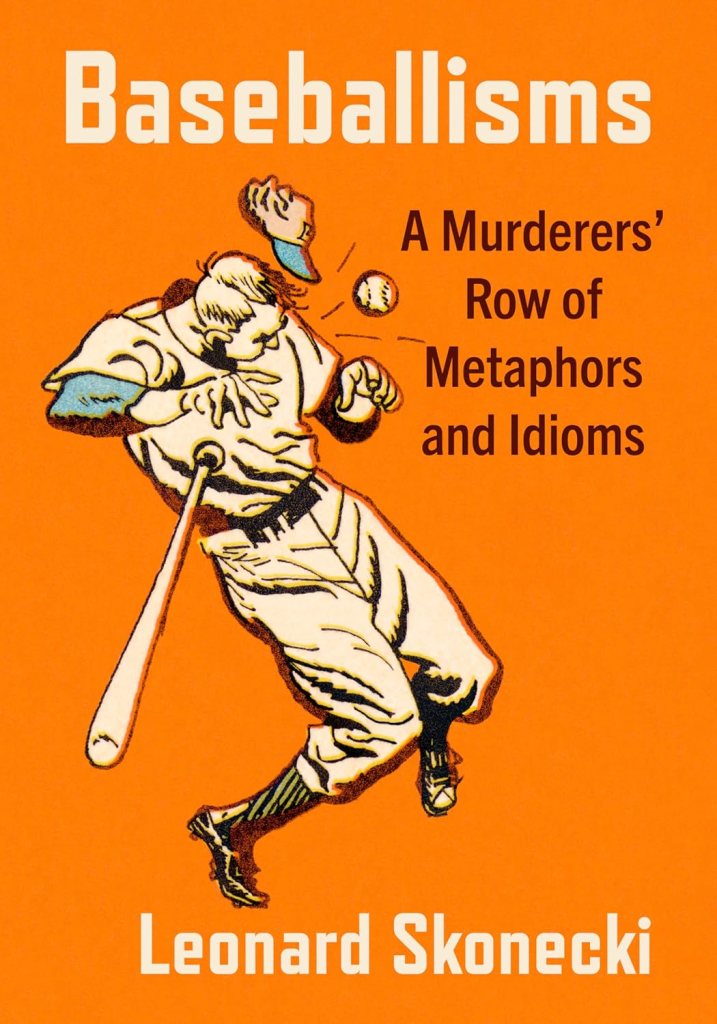
The author: Leonard Skonecki
The details: McFarland, 334 pages, $59.95/$49.95
The links: The publisher, Bookshop.org
The slight confusion: The publisher lists it at $49.95 in stock. Amazon (please don’t buy it there) also has it for that price, as of March 19, ’26. Bookshop has it for $59.94, available as of May 22, ’26. Target also offers it at $49.99 starting in May.
A review in 90 feet or less:
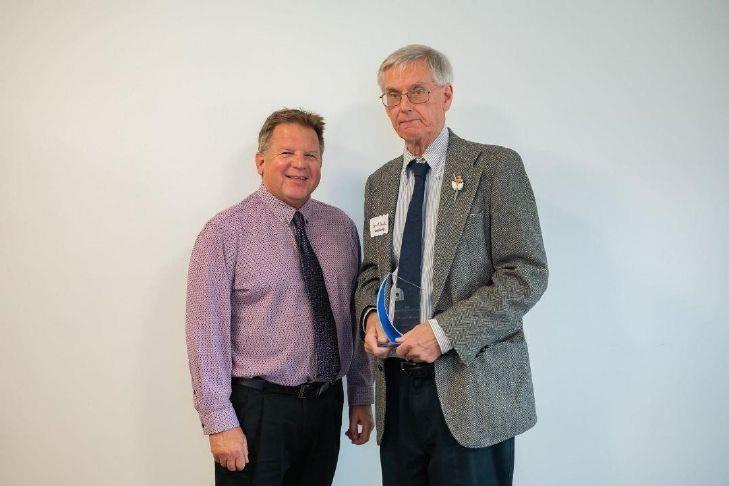
Bless you, Leonard Skonecki.
While not a renowned linguist but a dedicated and curious reader/researcher finding something meaningful and purposeful in retirement, Skonecki is best described as “well-known in Fostoria.” That’s from our own research in the matter.
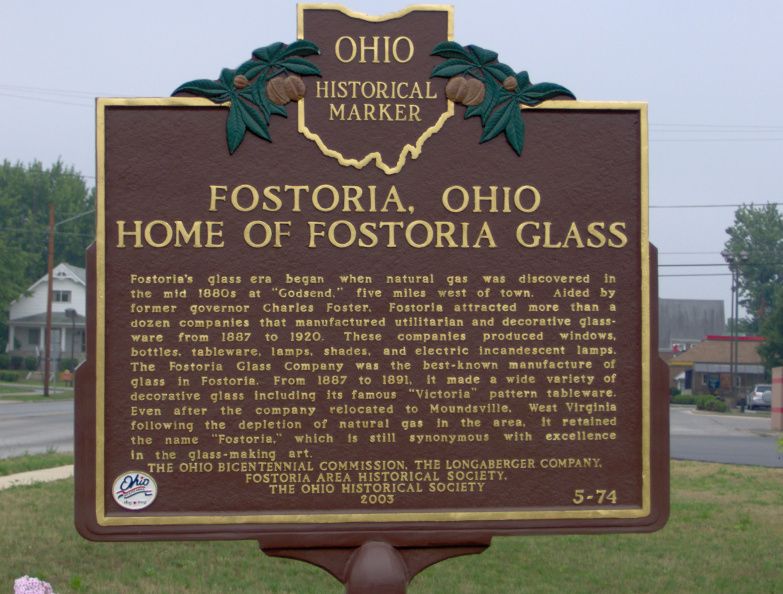
Through a parallel search, we find Fostoria is “a city located at the convergence of Hancock, Seneca and Wood counties in the northwestern part of the U.S. state of Ohio. The population was 13,046 in the 2020 Census, slightly down from 13,441 at the 2010 Census. It is approximately 40 miles south of Toledo and 90 miles north of Columbus.”
It was named after Charles W. Foster, a local businessman. His son, also named Charles, became governor of Ohio and U.S. Secretary of the Treasury under Benjamin Harrison.
It is also was once famous for making glass.
Now we have a visual.
Skonecki’s author bio notes he once wrote for the weekly Fostoria Focus newspaper, which had a bold run between 1994 until 2014. He also worked in the reference department of the Kaubisch Memorial Public Library.
“Now retired, he lives in Fostoria, Ohio,” the bio wraps up.
We also learned from another source Skonecki “was born and raised in Fostoria and graduated from St. Wendelin High School in 1968. He then lived in Toledo and Dayton and returned to Fostoria in 1995. He has served as the president of the Fostoria Area Historical Society, and also worked for WFOB where he hosted the Friday edition of the Talk@10 interview show.”
Now, we have context.
His body of work includes an appearance in the 2013 documentary “History of Fostoria (Vol. 1),” and, because you can’t stop the flow of important material but you can only hope to contain it, Skonecki reprized his role in the 2014 update “History of Fostoria (Vol. 2).”
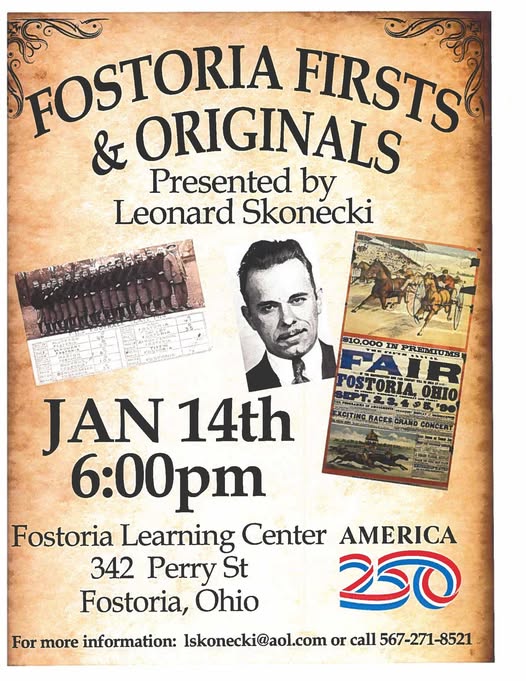
Last January, Skonecki was the guest presenter for “Fostoria First & Originals” at the Fostoria Learning Center as part of its “America 250” celebration. Flyers were distributed as the city noted on its Facebook post that it was a moment in time where “Fostoria history comes to life.”
This follows up from a time in April of 2024 when the Seneca County Museum started a “speaker series” where Skonecki presented a program on the robbery of the First National Bank of Fostoria. On May 3, 1934, John Dillinger and one of his gang, Homer Van Meter, robbed the bank of $17,299. In the course of the robbery, nine persons were shot, including Fostoria Police Chief Franklin Culp. In order to make a safe getaway, Dillinger and Van Meter took two bank employees hostage.
“Leonard will be sharing information about the robbery, related events, and how it affected the persons most directly involved,” the information noted. “He will also allow time for questions.”
Continue reading “Day 8 of 2026 baseball book reviews: Word up”