


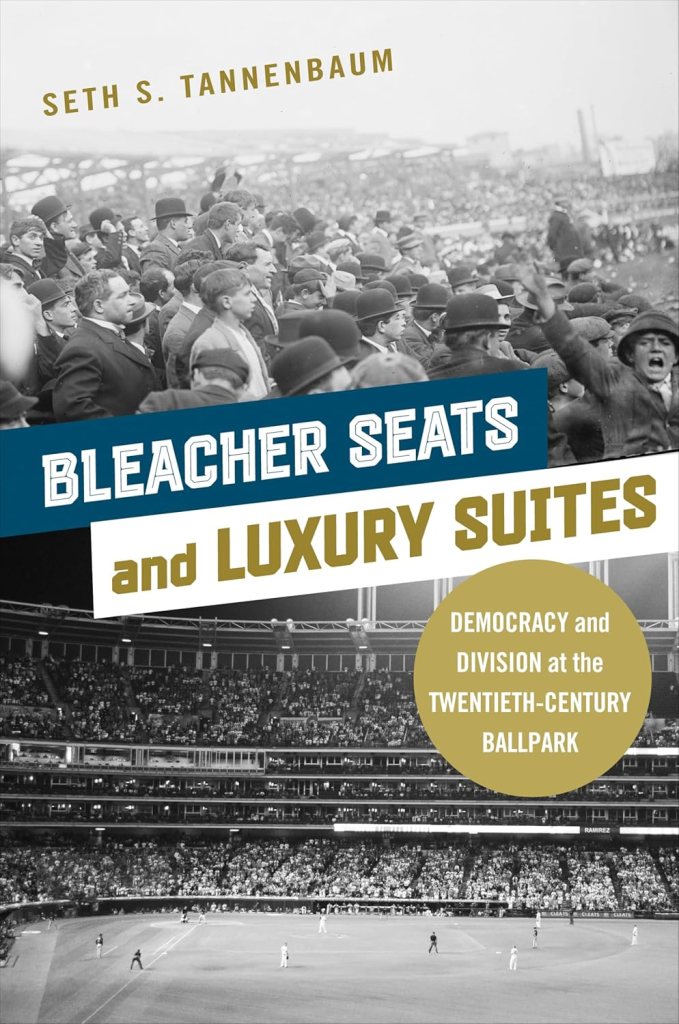
“Bleacher Seats and
Luxury Suites:
Democracy and Division at the
Twentieth-Century Ballpark”
The author: Seth S. Tannenbaum, Ph.D.
The details: University of Illinois Press, 304 pages, $30; released March 31, ’26
The links: The publisher, the author, Bookshop.org
A review in 90 feet or less:
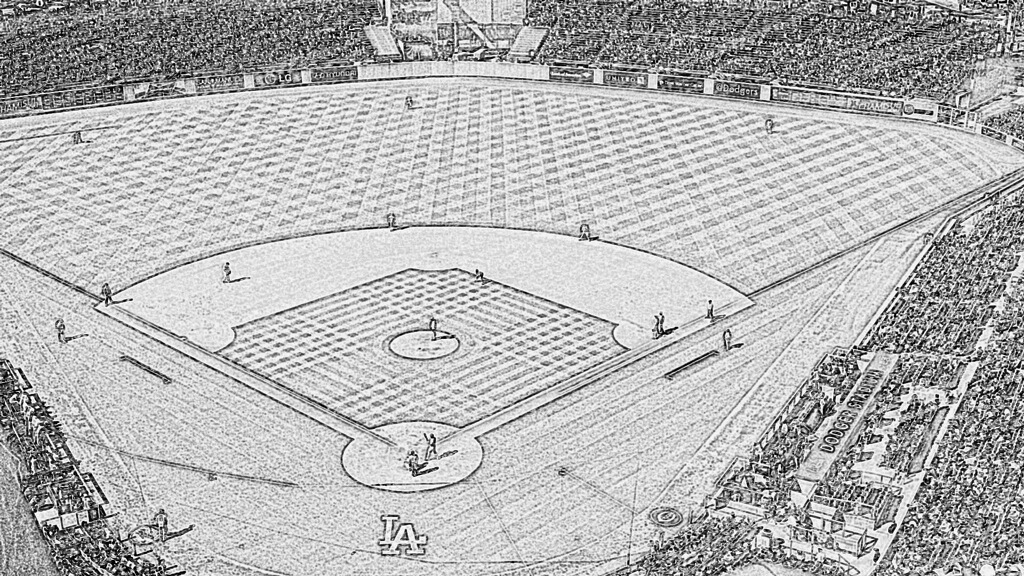
To anyone of a certain age still most profoundly comfortable printing out an airline boarding pass because this idea that a QR code will stay secure in your smart phone after TSA is done running it through their radio-active scanners — or, more realistic, the problematic consequences of watching that smart phone fall into a Terminal 5 restroom urinal just 10 minutes before Group 12 is called — the plight of Errol Segal doesn’t sound all that bothersome.
A so-called “long-time season-seat holder” — as if that is a necessary qualification — Segal’s end game recently was to just get the Dodgers to just give him printed-out Dodger Stadium entrance tickets. Yes, everyone else seems A-OK with the post-COVID practice of having tickets downloaded to an app, to be waved in front of an infrared light with the aid of a very useful employee there to problem solve. You just hope this works through your glass-cracked phone screen, and, if you’ve bought tickets on the secondary market, the company’s software is compatible with with the stadium’s approved ticketing partner.
Plus, Segal is just fine with his flip phone and how it fits in his day-to-day business. His age or whether he can afford some kind of iPhone/Android upgrade shouldn’t be a factor either.
It’s perhaps with some irony that this story didn’t seem to grab many people’s attention until — thanks to modern technology — it became a thing on social media.
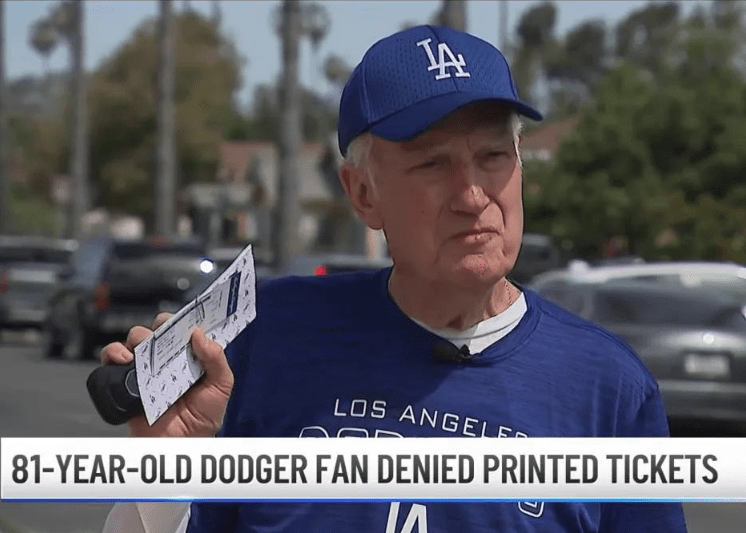
Those seeking more intel on Segal’s struggle and his feeling he had been “thrown under the bus” by the team’s administrators sticking to policy could access a) an extended video interview Segal did on a local TV news channel that, after airing a couple times, was now on the company’s website; b) the MSN.com cut-and-paste steal of a California Post story; c) AOL hjijacking a story it found on the demographically-aligned Fox News Channel; d) an earnest follow-up piece by the helpful publisher of the Los Cerritos Community News, and e) this Facebook post that, of course, didn’t quite frame the fan’s age accurately according to other reports, and then provided a perfectly toxic discussion thread, where punctuation-challenged pinheads could chime in with things like:
“Ill be that guy. If you cant use an iPhone in 2026, thats on you. He was 63 when the first iPhone came out. Im sure hes smart, hes had plenty of time to learn how to use apps. Also, iPhones are pretty user friendly for the older community”
“Lots of people feeling sorry for this guy who has had season tickets for 50 years … nah. I appreciate his fandom, but it’s better for him if he learns to live in today’s world. I’m sure someone can teach him how to use a phone. If it’s the learning something new that’s frustrating, that’s not the Dodgers’ problem. I’m GenX, and when we started working, we had to learn how to use all kinds of technology, still working, have learned to use AI, and will continue to learn my whole life. “I don’t know how” is a lame excuse.”
“Can’t wait for the Gen Z’s to get rejected cuz the eye scan doesn’t recognize ‘ancient eye rolls’ in the 22th century!”
“Wait til he tries to buy a hotdog with a $20”
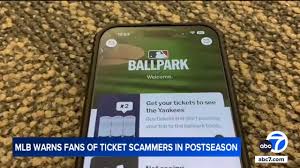
Wait, hold that $23.50 beer I just had delivered to my suite seat.
Remember the story last fall that came under a Los Angeles Times headline: “MLB ticket issues create entry delays at Dodger Stadium and other ballparks”? The Dodgers were in damage control, scrambling to notify season-ticket holders that their entry passes were indeed somehow disappearing — likely stolen — off the MLB app. They advised it would be wise to reset one’s password and contact the team’s member services department if tickets couldn’t be accessed.
Then what? Juggle your phone sideways like a Shake Weight, trying to dump out crumbled cookies before a reboot?
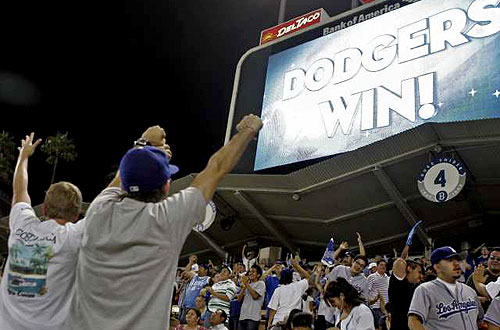
The MLB eventually responded to all this with a generic-sort of “thoughts and prayers” to those who trusted their setup: “There is no evidence that this was a breach of the MLB system. There have been widespread reports of significant data breaches on other platforms. Bad actors then have utilized leaked or stolen credentials from other websites in efforts to access the accounts of MLB fans. We are working tirelessly to address this matter and protect our fans. We want all of our fans to have a great experience when they come to the ballpark and we are sorry that some fans have had to deal with an issue related to their tickets.”
Some, not all, because, really, some have better phones, and Wifi, and are digital natives when it comes to problem solving for those digital immigrants. This story may feel like it’s just “old guy won’t adjust to modern times,” but it’s not from a lack of trying. Maybe he’s had some identify theft issues that turned him or his business upside down, and he’s just trying to simplify things. Maybe he’s been scammed in other ways.
Maybe he just likes having ticket stubs to tack onto his bulletin board from a nice memory.
Maybe, on some level, it’s magnifying a class-structure issue. A “rich people problem.” The comment about trying to use cash at the concession stand is legit. You can see it most often when groups of inner-city kids come as a group to a mid-week day game. Maybe their parents gave them a $20 bill to enjoy themselves, but the kid found out he needed a debit card at the concession stand/cash-free check out. Watch the line of kids with their escorts find one of the few ATM machines on the club level converting cash into a card — a line that move slow and could cause someone to miss an inning or two of the game in the process.
It’s a reminder that maybe the team isn’t so worried about those who don’t have the resources to technologically upgrade because they needed that $500 to help make the rent last month and already splurged too far from their budget just to buy the tickets to that game.
Anyone remember when poor people’s revenge manifested itself about 20 years ago after the Dodgers decided to try “$2 True Blue Tuesdays” in the right field pavilion — the so-called bleacher seats/cheap seats — framing it a family friendly compromise to rising prices?
The ensuing shitshow led Los Angeles Times reporters to interview academics who had studied fan behavior to probed how something like this could happen in a city so otherwise well behaved — aside from looting that had occasionally occurred over the years during public rioting in reaction to a class uprising over authority enforcement.
“There comes a point where you can’t laugh along with the ringleaders,” said Leonard Zaichkowsky, a Boston University professor, about the Dodgers’ situation at the time. “It becomes an emotional contagion. A mob mentality starts to form.”
Can’t we all just get along?
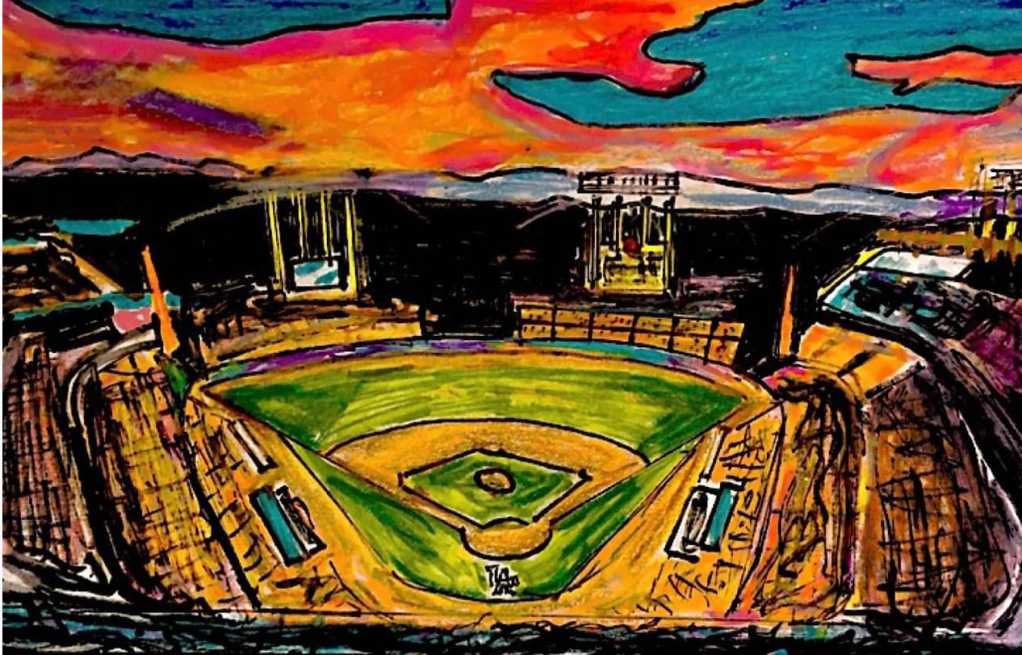
In the process of researching his first book — one reinforcing a thesis that if Major League Baseball ballparks have historically been built on idea of it being “an egalitarian place,” the team owners have shown they need to cater to the “needs, desires and perspectives” of “privileged middle- and upper-class white men” and “the vision of America it represented” or else fewer could pay for a ticket — Seth Tannenbaum found plenty of material to draw from over the years on this topic.
When Tannenbaum decided that, among his test cases, he was intrigued by the Dodgers’ journey from Ebbets Field in Brooklyn to the Los Angeles Coliseum and Dodger Stadium in Los Angeles, he didn’t realize some helpful material provided by caretakers of the Walter O’Malley archives could, in today’s light, be viewed as somewhat damning in what was discussed more than a half-century ago concerning what’s now the MLB’s third-oldest stadium.

Tannenbaum, a Philadelphia-bred sports fan who got his Ph.D. in history from Temple, has for the last four years been an assistant professor of sports studies at Manhattanville University near the New York-Connecticut border.
His courses have focused on Baseball and American Society and American Sports History. He is involved in a Sports Fan Oral History Collection to document ballpark and stadium experiences. In 2024, his university gave him a Justice, Equity, Diversity and Inclusion Collaboration Award.
“Suburban-Style Gated-Community Baseball: Whitewashing the City at Dodger Stadium” is the title of Chapter 3 in Tanneubaum’s new book. The 238 footnotes lean into the work of about a half-dozen authors who have researched their own material for Dodgers-related projects.
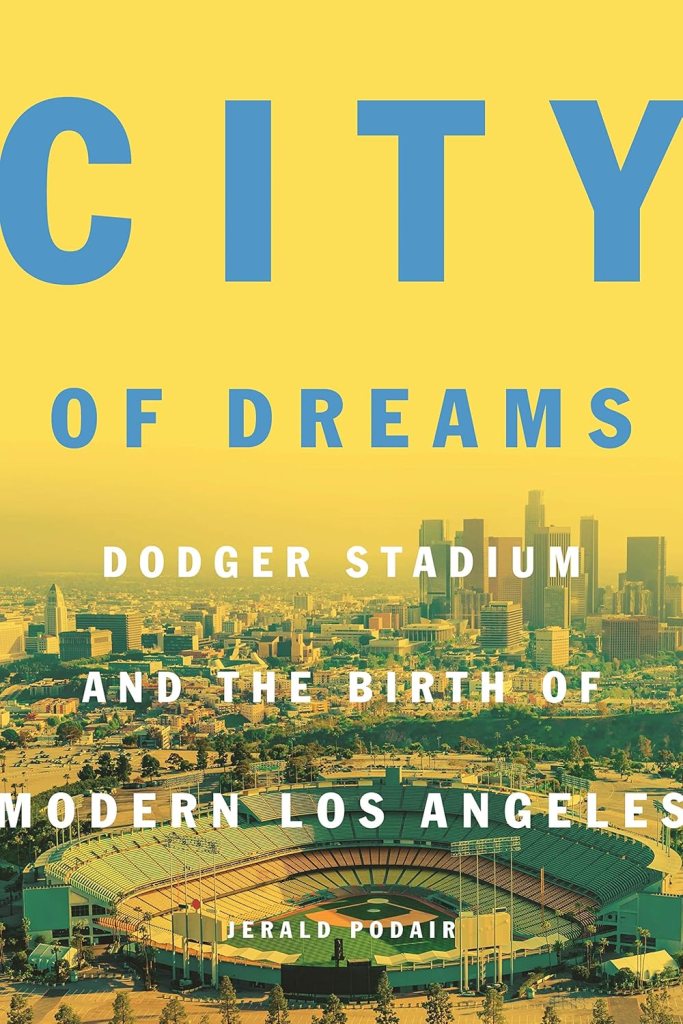
Tannembaum embraces Jerry Podair’s “City of Dreams: Dodger Stadium and the Birth of Modern Los Angeles” from 2017. We have as well in the past, noting that Podair, a professor of history and American studies at Lawrence University in Appleton, Wisc., devoted all sorts of research into declaring: “Dodger Stadium made downtown Los Angeles possible. Downtown Los Angeles in turn made modern Los Angeles possible.” This, after the construction of the L.A. Aqueduct (1913), City Hall (1928), the Coliseum (1923) and Union Station (1939) gave that central core specific definition, Dodger Stadium’s opening in 1962, with its modernistic form and accessibility, “began the process of change … the gateway that transformed downtown.”
Tannembaum includes two more beauties — Eric Nusbaum’s “Stealing Home: Los Angeles, The Dodgers and the Lives Caught In Between” in 2020 and Erik Sherman’s 2023 “Daybreak at Chavez Ravine: Fernandomania and the Remaking of the Los Angeles Dodgers.” We have given each glowing reviews. Nusbaum’s work really helps us get through the pandemic shutdown. Sherman’s work likely led to getting Fernando Valenzuela’s number retired.
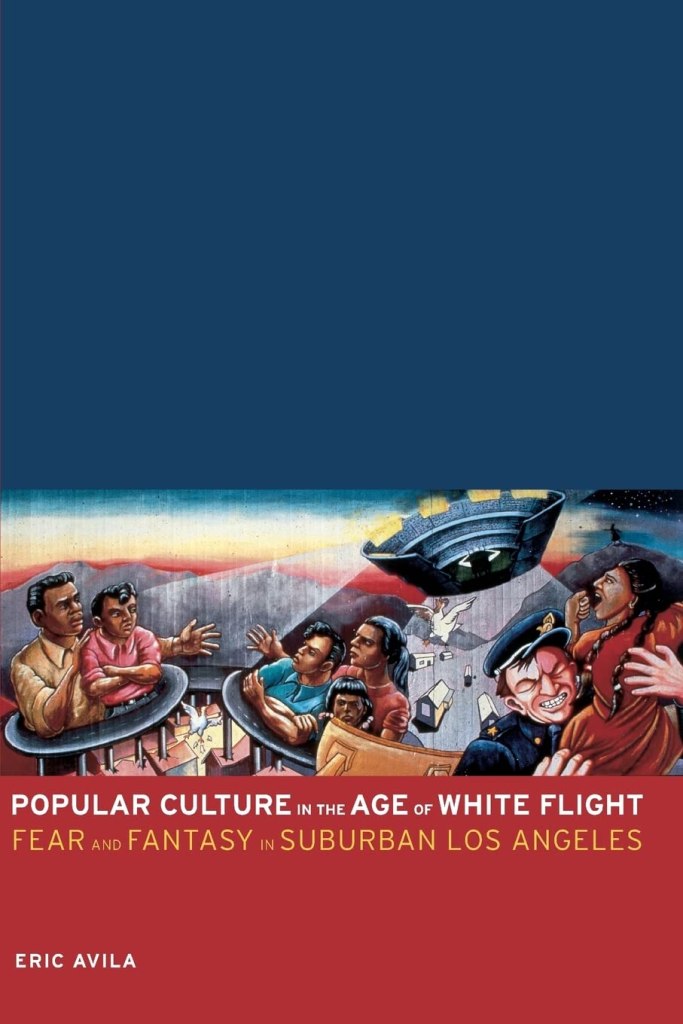
Those three works can be amplied by Eric Avila’s “Popular Culture in the Age of White Flight: Fear and Fantasy in Suburban Los Angeles” from University of California Press in 2004; Neil Sullivan’s “The Dodgers Move West” through Oxford Academic from 1987; Andy McCue’s “Mover and Shaker: Walter O’Malley, The Dodgers and Baseball’s Westward Expansion” from University of Nebraska Press in 2014; and Michael D’Antonio’s 2010 work on “Forever Blue: The True Story of Baseball’s Most Controversial Owner, and the Dodgers of Brooklyn and Los Angeles.”
Those alone allow Tannenbaum to deduct, for example, on pages 84-85:
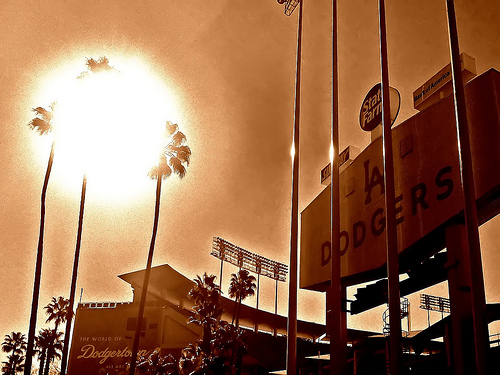
“The Dodgers’ move to Los Angeles brought significant changes to baseball and ultimately fueled a forty-year period of expansion that increased the number of MLB teams from sixteen to thirty. But they also reaffirmed the game’s traditional orientation toward middle- and upper-class white men by finding new ways to make it more difficult for less-privileged Americans to attend and creating new divisions between fans inside the park. … (Dodger Stadium was a space) akin to the shopping malls and developments fans had grown to favor … (the park) was divided into five tiers, so fans were likely to be surrounded by people with whom they shared demographic characteristics. Wealthy fans had exclusive spaces, and poorer fans — Black, Latinx, and white — had bleacher seats … Dodger Stadium showed that fans, and the broader America they represented, were comfortable with even more segmentation and division that had been on display in the classic era as long as it remained wrapped in the trappings of open access and democracy that were long associated with the ballpark experience.”
Then there’s the O’Malley family archives.
Launched in October of 2003 to commemorate the 100th anniversary of the birth of longtime owner Walter O’Malley, it has dutifully served as a purposeful resource for not just preserving the narrative that these franchise caretakers “thrived on stability,” but their collection of work is there to give any context to whatever else may have been created in media or entertainment regarding books, theater, documentaries or other storytelling devices.
At www.walteromalley.com, former longtime Dodgers employees Brent Shyer (executive producer) and Robert Schweppe (archivist) are the main gatekeepers for the O’Malley Seidler Partners, led by Peter O’Malley, Walter’s only son who, now 88, was team president from 1970 until they sold the whole package off to Fox Sports in 1998.
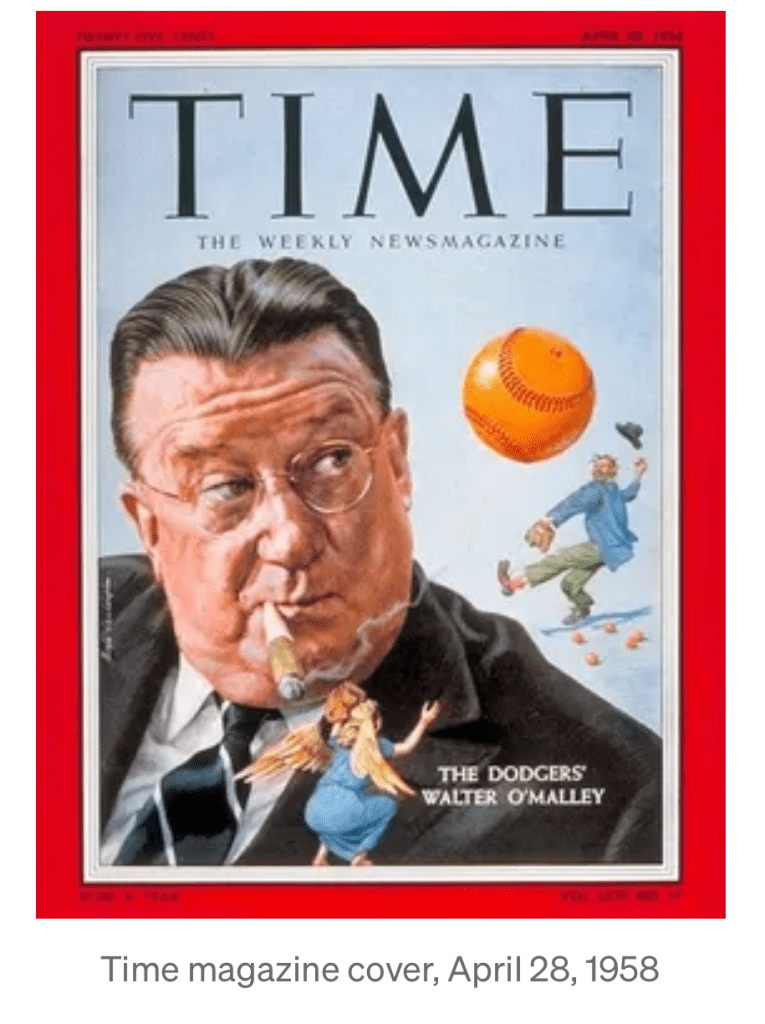
Amidst biographies, historical timelines and photos from the O’Malley files, there is also an array of business correspondence — telegrams, memos, press releases and media clips. More than 125, dated between from 1946 through 1974, all that can be downloaded.
Of the items Tannebaum was given by Team O’Malley and was included in his book, the most intriguing clips are not on the website.
Those that did not age very well are directly linked to the man in charge of the Dodger Stadium project.
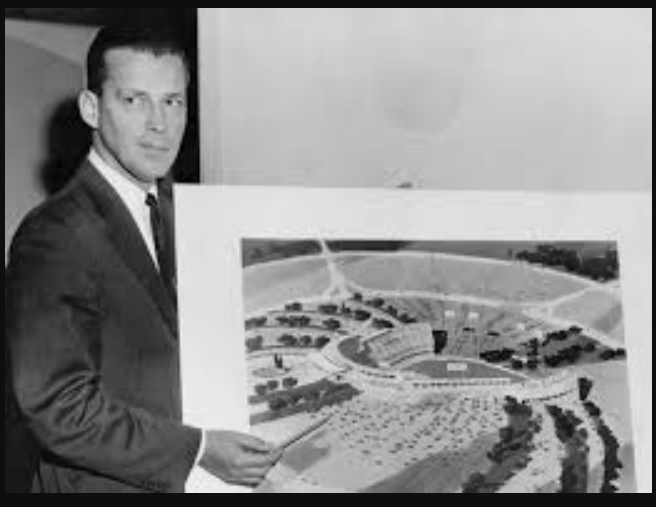
Dick Walsh, the Vice President of Stadium Operations from 1958 to 1966 and the point person for the construction of Dodger Stadium, died in Fullerton in 2011 at age 85. An All-City third baseman at Los Angeles High in 1943, Walsh joined the Brooklyn Dodgers out of World War II and was a key aid in the team moving back to his hometown years later.
Walsh’s career included working as the general manager for Gene Autry’s California Angels (1968 to ’71), GM of the Los Angeles Convention Center for 24 years (leaving when the city approved the new Staples Center to be built next to his building) and commissioner of the North American Soccer League.
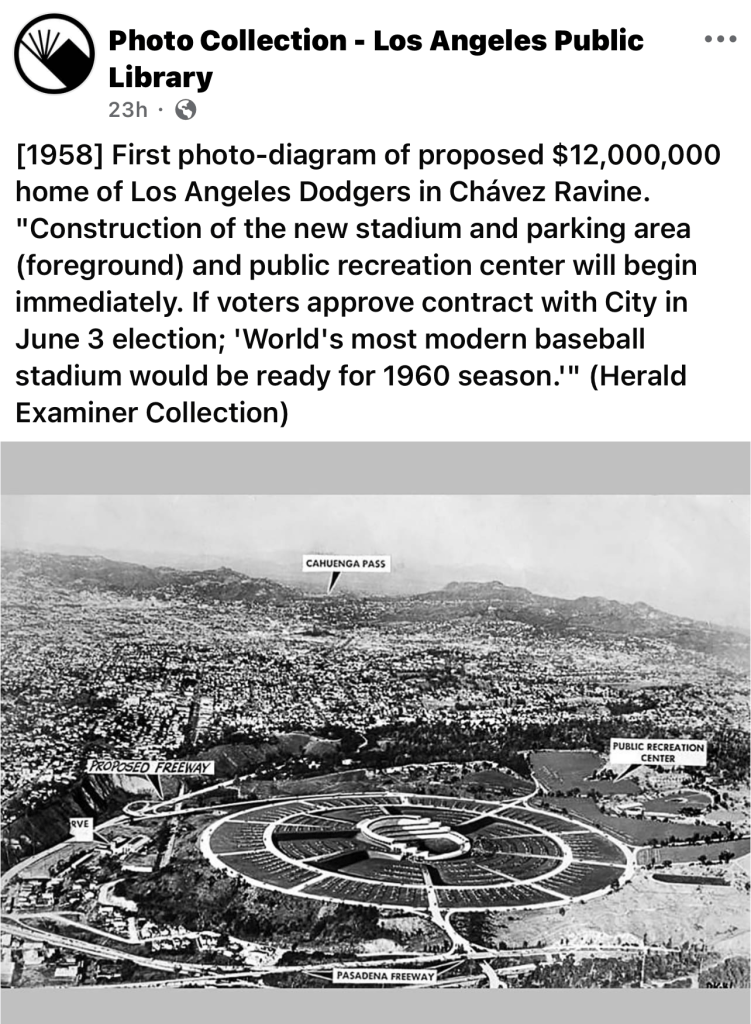
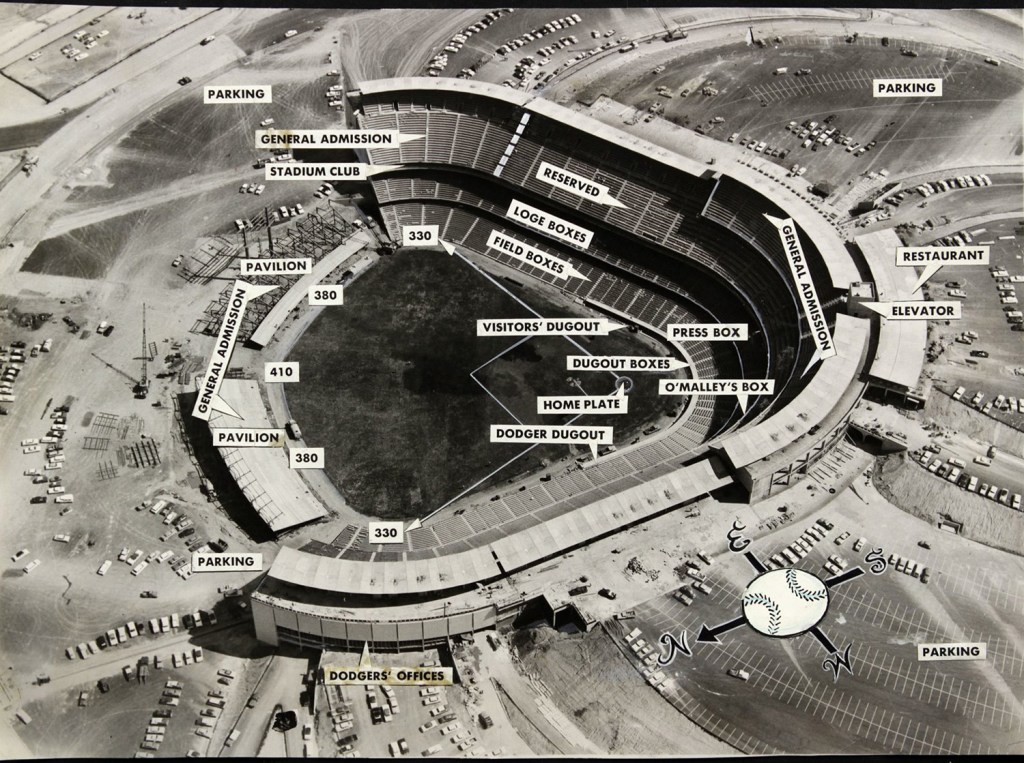
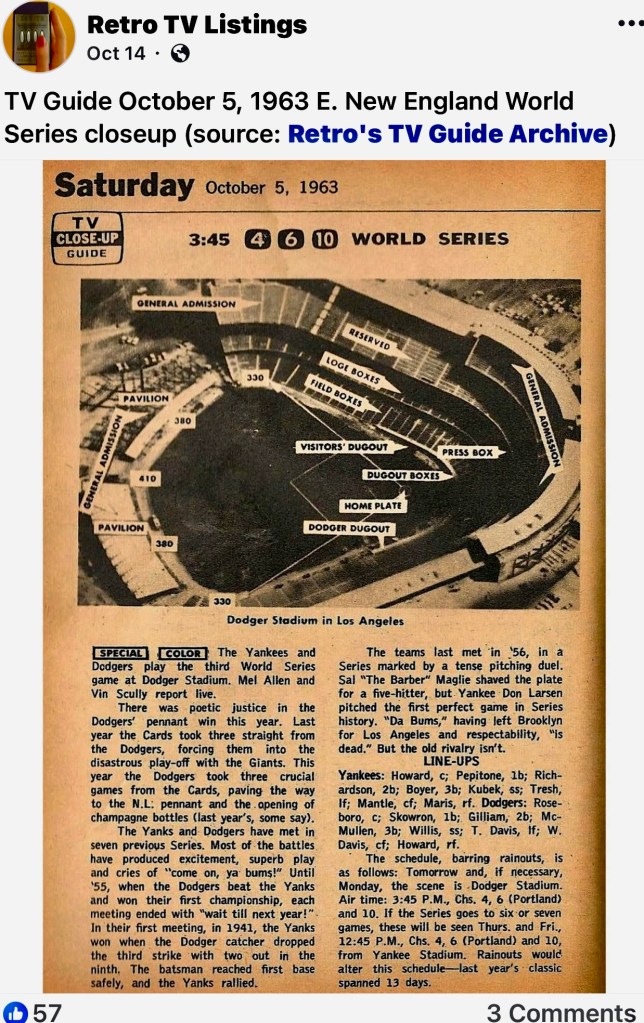
Tannenbaum’s 40-page chapter on the Dodgers first gives the overview of how O’Malley and his crew were leery of the poor neighborhoods around Ebbets Field creating some resistance for attendance. After 10 years of negotiation ways to stay in New York, he saw Los Angeles at the forefront of the suburban lifestyle via cars traversing a modern freeway system. He could get some land carved in Solano Canyon north of downtown L.A. that had been occupied and carved out by the Latino-rich neighborhoods of Chavez Ravine.
The Dodgers were building a stadium from their own private funding, without city assistance. The city would get property tax payments from O’Malley. That happened because, in 1955, L.A. voters rejected a referendum to build a municipally funded stadium.
So when you’re putting out more than $20 million in 1960 money to privately fund a ballpark — the first since since Yankee Stadium was built in 1923 — you probably have a bigger say in how it’s going to be put together.
O’Malley’s place could offer a range of ticket options for all-comers. Almost half the stadium — some 25,000 box seats going for $3.50 — would be at a premium. That left 15,000 in the middle tiers going for $2.50 and another 13,500 set aside at $1.50 in the upper deck and bleachers.
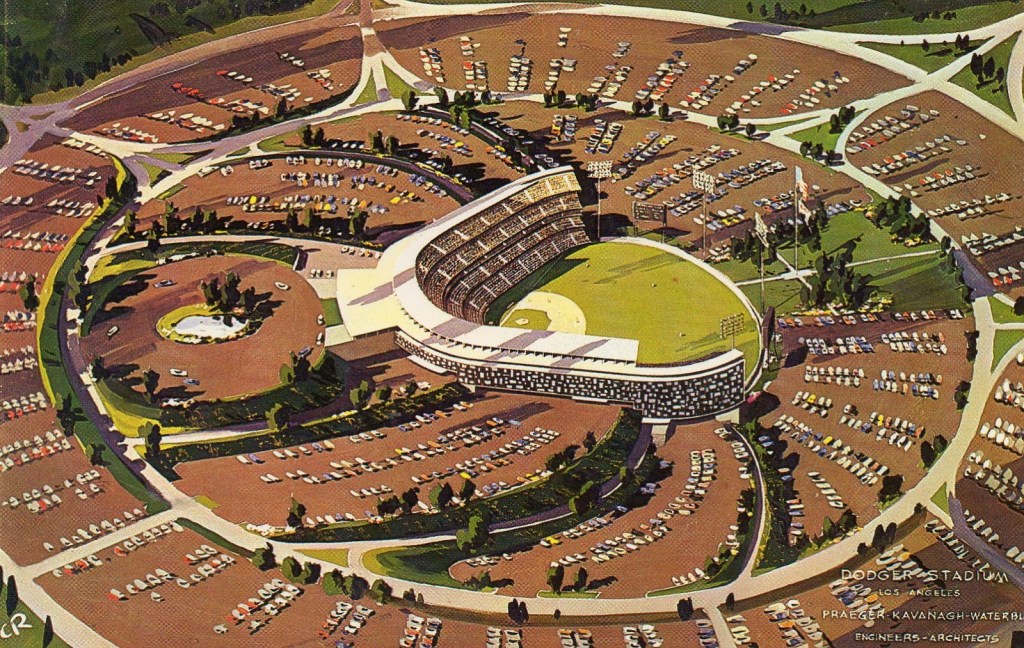
How O’Malley and his team, led by Walsh, came about many of these decisions, Tannenbaum’s book now sheds some light through rarely-made-public documents. In chronological order, they reveal:
= A March 2, 1961 letter from Walsh to Dodger Stadium architect Emil Praeger, a well-known New York civil engineer who already built important bridges in addition to Holman Stadium in Vero Beach, Fla., the Dodgers’ spring training site, and would later do Shea Stadium in 1964.
Walsh asked there be a more secure way to lock some doors at the new ballpark, otherwise “people could enter into the stadium via the mechanical equipment room and some of our former Chavez Ravine residents could construct a bedroom in the area directly behind the elevator shafts and we would have another cause celebre when we attempted to remove them from their ‘home’.”
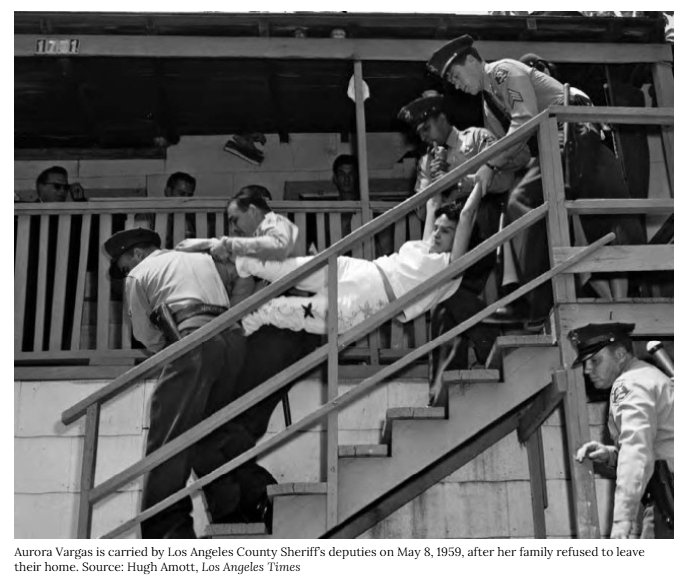
The reference is to what happened two years earlier. On May 8, 1959, the final residents of the Palo Verde, La Loma, and Bishop communities were evicted from their local village, through the enforcement of eminent domain. These residents had once been promised access to an affordable housing project on that land, but that fell through. Now, the property was made available to the Dodgers to develop for the good of the city. They had to leave, one way or another.
Tannenbaum also pulls from that memo information about how the Dodgers “paid special attention to the dynamics of the places where the wealthiest fans would sit. The Club Level had its own entrance because the team did ‘not wish to have these people … stand in line’ ” with others, according to Walsh.
Tannenbaum notes Walsh had a desire to put “the best coating on the walls” of bathroom stalls “to make writing graffiti more difficult.” He wondered if “the plumbing could handle sanitary napkins.”
Walsh asked Praeger to install “recessed mirrors and closed circuit television cameras” to “police behavior in low-traffic areas of the park.”
Walsh also wanted a fence separating the ballpark from the parking lot to be 12-feet tall, “angled upwards and outwards with barbed wire on the top to preclude entry by those persons who lack the funds to buy tickets.”
All seem reasonable. The language used just now seems a bit barbaric.
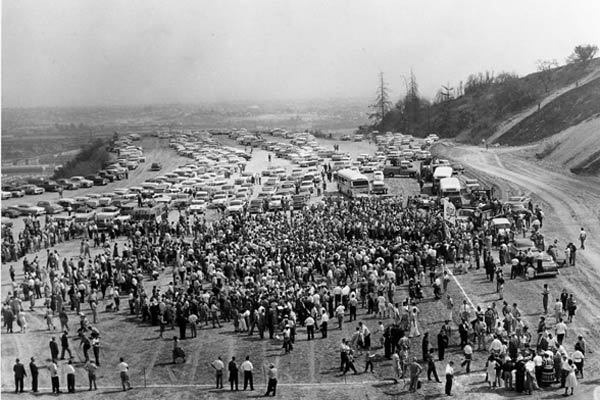
== A Dec. 5, 1961 letter from Walsh to O’Malley pointed out that the design for lighting in the parking lots was “completely inadequate … without additional illumination we will have considerable vandalism and hubcaps, accessories, etc. being stolen.” O’Malley approved more lights.
That letter is also referenced to explain how “O’Malley and the Dodgers planned for the possibility of rowdy fans.” O’Malley asked Praeger to add “wire mesh in front of the first rows of the various levels to prevent items being thrown … onto the heads of the people … below.”
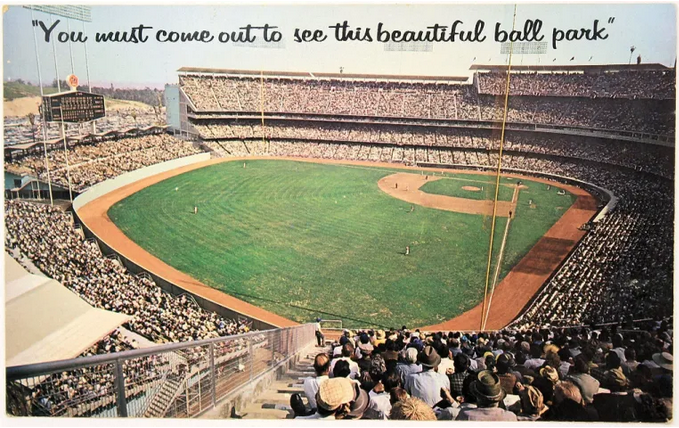
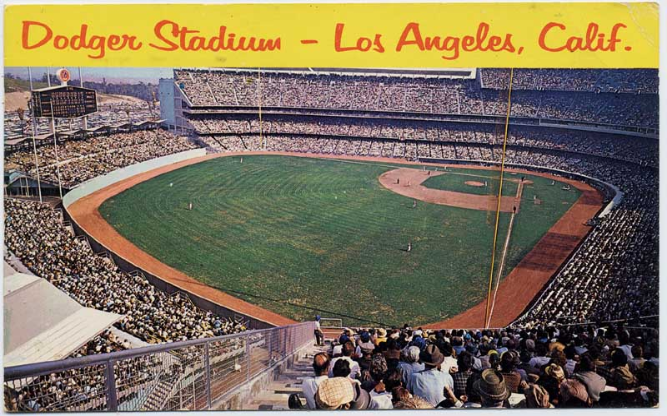
Dodger Stadium opened on April 10, 1962, and 52,564 were there on one of the five levels surrounding the diamond.
Three days later, a letter from O’Malley to Walsh was more specific about the quality control of the Stadium Club food versus what was available in other parts of the park. “Choice grade is generally acceptable,” O’Malley wrote, “but in the Stadium Club it should be AA Eastern Prime (not Western Prime).”
Six days after the opener, O’Malley asked Walsh, according to another memo, that “a security officer on a scooter to come around on the playing field after the final out and between his scooter and a whistle he can see that no one enters the dugouts or the bull pens … perhaps (one) guard should be assigned to each extremity to work toward the center to get the kids out of the seat area. They should not disturb adult patrons who might want to sit for awhile and look at the moon.”
Through more diligent and impressive research, Tannenbaum found useful gems in the archives of the Los Angeles Sentinel and The California Eagle, the city’s major African-American newspapers, plus the Spanish-language La Opinion. He interviewed Richard Santilla, the East Los Angeles College professor and creator of the Latino Baseball History Project for perspective on the Latino experience, as well as admitted baseball fan Tomas Benitez, a longtime voice for Chicano arts in Los Angeles.
Tannenbaum also came across a 1984 Greyhound bus print ad “depicting six Black fans at Dodger Stadium (that was) as much of an advertisement for those divisions as anything else. The six fans were shown reacting to a foul ball coming into the stands, but they were the only fans pictured; they were surrounded by empty seats. The copy for the ad told fans to charter a Greyhound to the game. It suggested that the only way for Black fans to enjoy the game was to rent a bus, limiting their interactions with other fans, and to sit alone in a section of the stands. Although Jerry Podair wrote that Dodger Stadium was not ‘racially exclusionary,’ there were still a host of barriers to access or to interactions between fans there.”
(Interestingly: Joe Black, one of the first African-American players in the Dodgers’ organization, coming up with Brooklyn in 1952 at age 28 and winning the National League Rookie of the Year Award, began working for Greyhound bus lines in 1963 as a “special markets representative” and soon was the company’s first African American vice president. Black died in 2002 at age 78).
To single out the Dodgers’ chapter from Tannenbaum’s examination of a timeline that includes the evolution of New York’s Polo Grounds and Yankee Stadium before and the creation of Houston’s Astrodome and Baltimore’s Camden Yards afterward might, in some degree, misrepresent his overarching timeline. The Dodgers are one contextual element of his presentation and not an aberration as far as what other teams and cities were wrestling with to provide safety and comfort for those well-paying customers.
But in having these O’Malley documents, it reinforces how, at the time of Dodger Stadium’s conception, privilege had its perks. Looking at the current structure of today’s ticket pricing — a $100 face value for the least expensive and more than $2,000 a seat for prime real estate, especially with that’s now called a “dynamic pricing” algorithm that adjusts for give-away nights that aren’t really giving things away, one can still wrestle with the idea that there is a modified division still in place. Not just in L.A., but all over.
It’s just how you decide to recognize it after your entry pass is scanned and you are allowed in with all the legalese you used to be able to read with a magnifying glass on the back of the cool, wax-coated ticket.
Author Q&A:
In an email exchange with Tannenbaum, we offer this up for more background:
Q: Can you go into more detail — aside from what you mentioned in the acknowledgements — about the information you’ve procured from the Walter O’Malley website? There are more than 100 downloadable documents, but it seems all that you have for your book aren’t on the site. How was any of that negotiated, or even known about? As a result, how do you think readers seeing this for the first time might react as it fits your presentation about how those fans with more means benefit from receive a better experience?

A: As a scholar of the fan experience, I regularly run into issues accessing documents that would really help me to understand the experience historically because those documents have been produced by private corporations (teams) and many times not gifted to publicly accessible archives. For that reason, when I read Jerry Podair’s City of Dreams and saw his references to the “O’Malley Archive,” I was very intrigued. Jerry, being the wonderful academic colleague that he is, kindly responded to my inquires about the ‘O’Malley Archive’ by connecting me with Brent Shyer and Robert Schweppe. When I explained my project to Shyer and Schweppe, they mailed me three or four separate inch-thick envelopes of photocopies of documents from their collection that they thought would be useful to me — and many of them certainly were and are cited in the book. Shyer and Schweppe made the decisions about what to send me (and, I suppose what not to send me).
Q: Los Angeles is such a metropolitan melting pot and cultural celebration of diversity. If the common denominator between the class structure is that we all want to see a team succeed because it bolsters community pride and it can bridge a gap that exists in the demographics … what do you see as the harm that eventually comes from that dynamic in that same community when people get back to their separate worlds and those boundaries seem to go back up — those in the bleacher seats are now cleaning the homes or parking the cars or bussing the tables of those in the luxury boxes?
A: If there is real egalitarian intermixing at the ballpark — not just people rooting for the same team from what are functionally different gated communities in the ballpark — it can help to also lessen some of those divides outside the ballpark. When we see people as our equals inside the ballpark, we are more likely to treat them as such outside the ballpark as well.
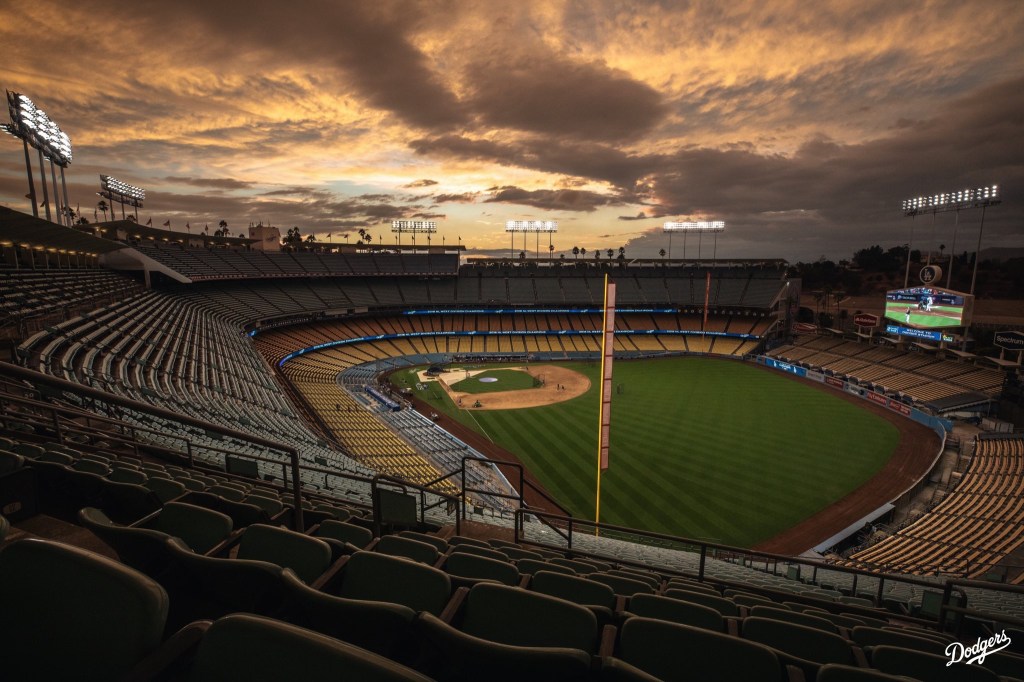
Q: You closed Chapter 3 with acknowledgement that a recent stadium renovation started before COVID and finally completed to show off for the 2023 All Star Game includes new ramps for fans to access all levels of the stadium – including from the main part to the pavilion. It’s as if the new ownership team maybe realizes it had to react to how fans could do that in other ballparks – especially at nearby Angel Stadium. Do you have a sense they also saw this retrofit as a way to break down social barriers they sensed were happening? Any insights?
A: I really can’t speak to what truly motivated team executives to undertake the remodel you mention in the question. However, I can say that as a result of the remodel, Dodger Stadium is now equipped with more money-making, baseball-adjacent entertainment spaces (bars and socializing spaces and etc.) than it used to have, putting it more in line with other ballparks across the country — not just Angel Stadium.
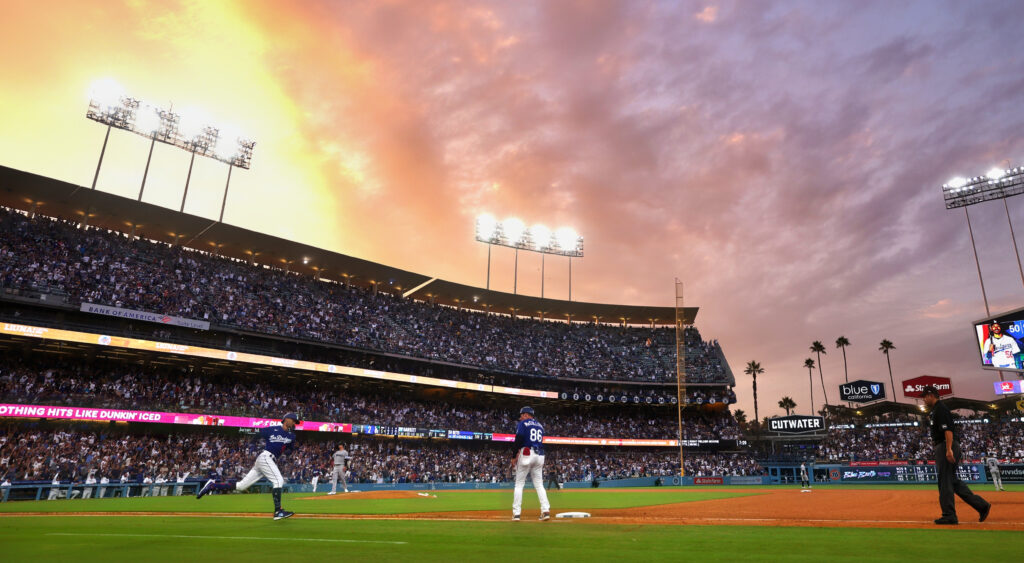
Q: We are at a time when baseball higher ups are quietly backing down from anything that appears to be DEI, as per directives from the current presidential administration. In your book trailer you’ve said you hope the take away for the reader is you hope he and she thinks harder and differently about the ballpark experience and you’d hope fans could think of ways that makes it more inclusive. Any suggestions on how that becomes a reality, even if it has to circumvent whatever policies seem to be enforced at this moment in time? Is there a pathway to a call to action?
A: This is a question I’ve been asked a fair bit when I give talks on my book and it’s a tough one. As individual fans, we cannot make sweeping changes to the state of the game. What we can do, however, is think about how we treat the people around us at the ballpark (when we can afford to go, I suppose). Are we accepting of the idea that there are different and equally appropriate ways to be a fan and that the notion of a “true fan” does as much to create barriers to entry as anything else? Do we assume that certain people at the park aren’t knowledgeable about the game simply because of their appearance, age, race, or gender for example? Knowledge about the game and passion about the game are not inherent to certain groups of people and if we want more people to love baseball (I’m selfish in that way — I want more people to love what I love), then we need to recognize that anyone can be a “real fan” and react accordingly.
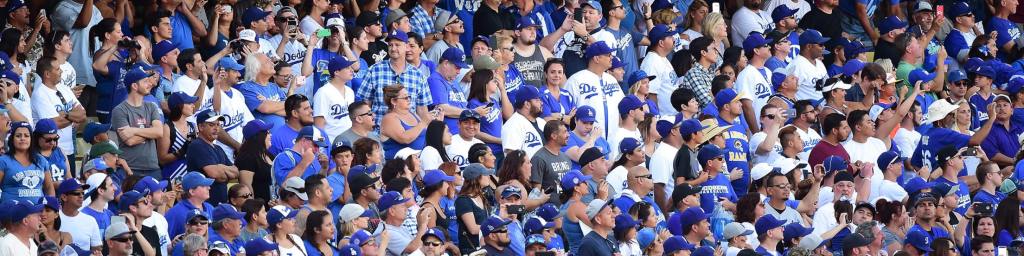
How it goes in the scorebook:
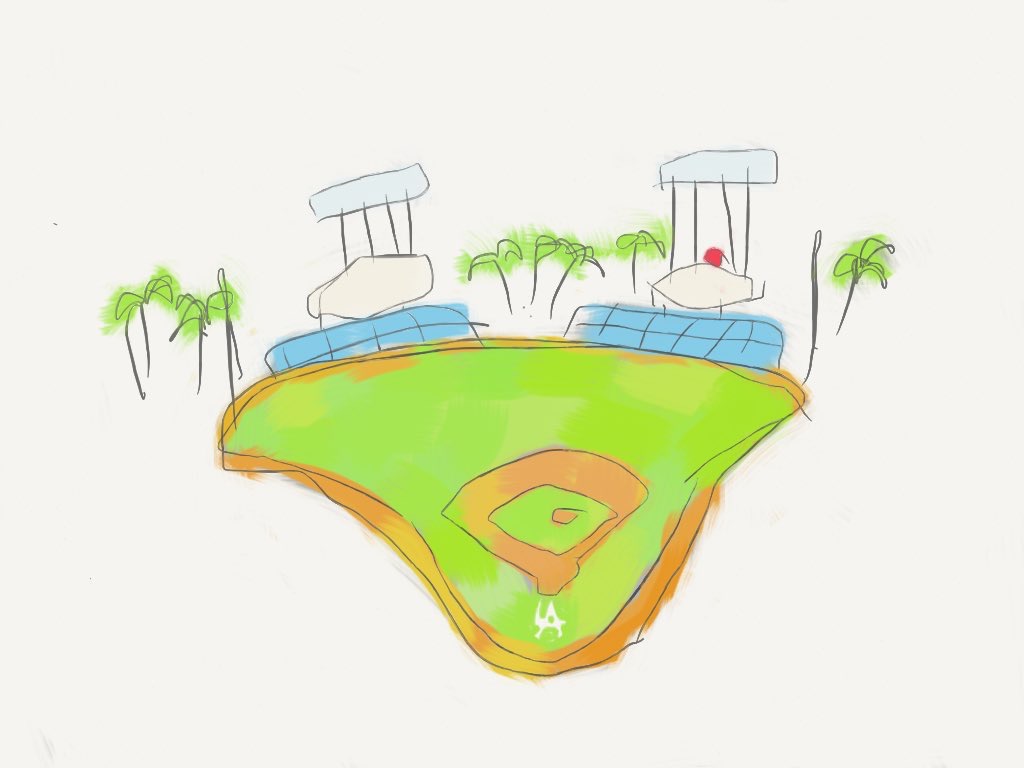
There is a new post on the WalterOMalley.com site that recommends five books written about Walter O’Malley that “shed light” on the family’s story. Podair’s “City Of Dreams” and D’Antonio’s “Forever Blue” are there, including excerpts. Sullivan’s “The Dodgers Move West” also made the cut. Two more, just released in the last eight months, have been added: “Brooklyn Dodgers at Ebbets Field, 1939-1957,” and “Ebbets to Paradise: O’Malley’s Journey to the Coliseum and Dodger Stadium,” both by Allen Schery.
Notably missing from this list: Nusbaum’s “Stealing Home,” McCue’s “Mover and Shaker” and Avila’s “Popular Culture in the Age of White Flight.”
We wouldn’t necessarily expect Tannenbaum’s “Bleacher Seats & Luxury Suites” to be added either. But so it goes..
“I had not noticed that list of recommended books on walteromalley.com because it was not posted when I was doing my research on the fan experience at Dodger Stadium,” Tannenbaum told us. “I haven’t read the two books by Allen Schery, but I found the other three — in conjunction with the three you mentioned that are not listed — to be fundamental to understanding the process that led to the construction of Dodger Stadium. I can’t speculate about whether my book will be included. I believe Shyer and Schweppe are aware that my book has been published (I emailed them about it). While it would be nice to be included alongside key scholars like Neil Sullivan and Jerry Podair, I certainly won’t be offended if my book is not included.”
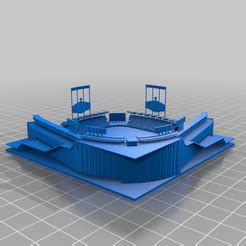
Put it another way: These days, a Dodger Stadium sellout is when 53,393 are in attendance, even if the official capacity is often listed at 56,000.
The average minimum ticket price at Dodger Stadium is said to be $76.57, nearly twice the MLB average of $34.82, and almost $60 more than the Angel Stadium average minimum of $18.02.
So you know how when you are in a stadium and the attendance announcement is made (if that’s still a practice), and the place is declared “a sellout”? Meaning, we’re led to believe every seat has been taken. The reality, of course, is every seat has been reported sold, even if some didn’t show up, or are notably not in their seats because of the way stadiums are designed now to make them more fluid and walk able and even encouraging those to go outside to playgrounds and visit displays.
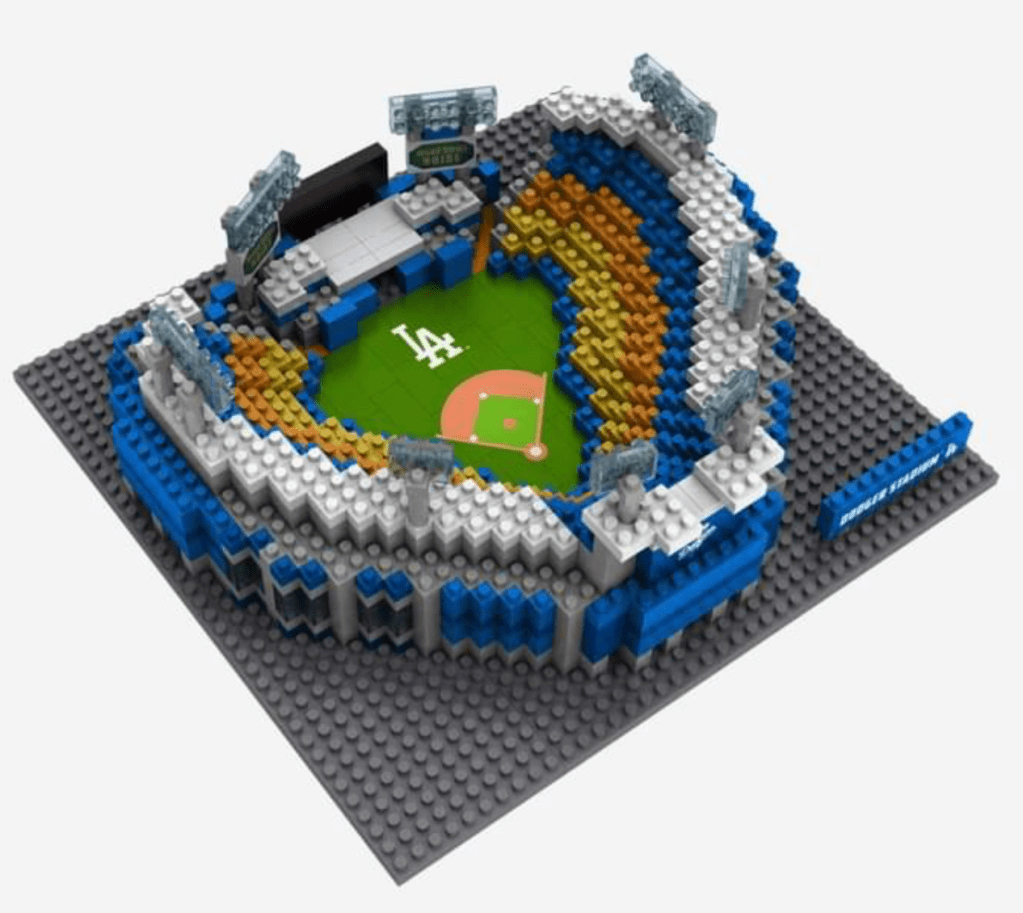
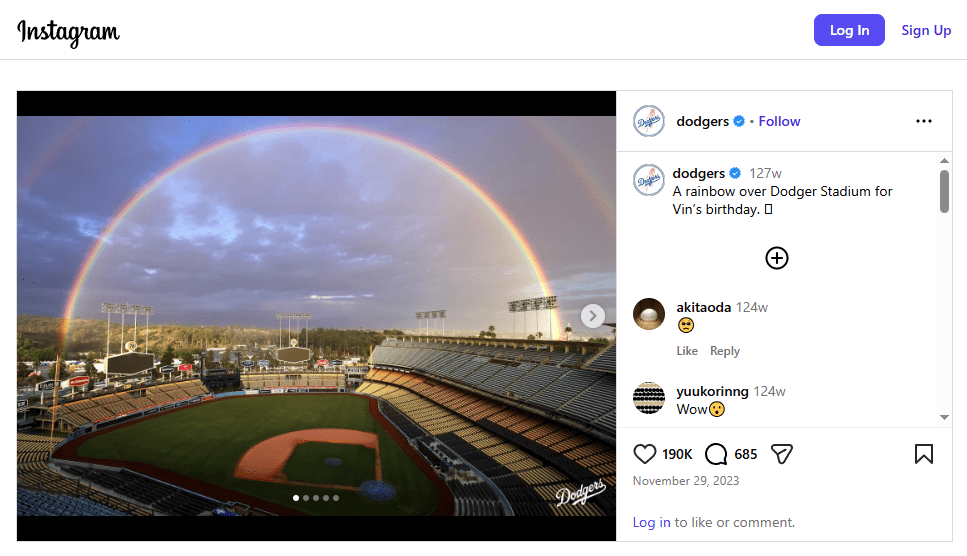
This book is hardly a sell-out. We’re sold on its message, research and execution. The material Tannenbaum culls here is surely perfect for SABR Chapter zoom communities and college-level examination, but for those who dare stretch their reality past rainbows and lollypops — or field-level sushi — here’s where to be a bit more enlightened about the business behind those cushy dugout seats you often see empty during TV coverage, and the lack of a mechanism to remedy the poor optics by employing seat fillers.
Maybe that’s the next memo to shoot out. How do they do it for the Academy Awards? Hire extras at scale.
More to followup:
== A “book trailer” above allows Tannenbaum to explain the myth that a ballpark is a common ground for all who enter just isn’t so — whether it’s intentional or not: “It’s a lovely idea and it’s a comforting idea but there is a greater truth to it.”
== A University of Illinois Press Q&A with Tannenbaum includes why he decided to do this book: “In graduate school, I took classes on consumer culture history and food history and began to think about the nexus of the two. I soon realized that they coalesced in many ways in the fan experience at baseball games. As a lifelong baseball fan, I was intrigued by the topic enough to know that it was something I could “live with” (and not get tired of) for the length time it would take to research and write the book. More importantly, however, I realized it was a very important topic that helped to explain the nature of American society and one that had not been appropriately addressed by other scholars. “
== As long as we’re on the subject: One of the more interesting pieces on WalterOMalley.com is one Bob Schweppe wrote called “Great Ideas at Dodger Stadium (That Never Made it to First Base).”
Schweppe’s father, Bill, was VP of minor-league operations for the team from 1968 to 1987, dying at age 86 in 2000. Bob Schweppe’s piece leans into his father’s knowledge and explains how O’Malley, who saw the things Walt Disney did in creating Disneyland in Orange County shortly before the Dodgers’ move to Los Angeles, wondered if the stadium he was building to open in 1962 on its 300-acre site could:
= Have been fully enclosed with wrap-around seating rather than have sections separated by the bullpens (that was eventually modified from 2019 to 2023),
= Build pedestrian bridge overpasses in the parking lots (still not a bad thought),
= Add a monorail for transportation of fans from lots to the park (see: McCourt, gondola),
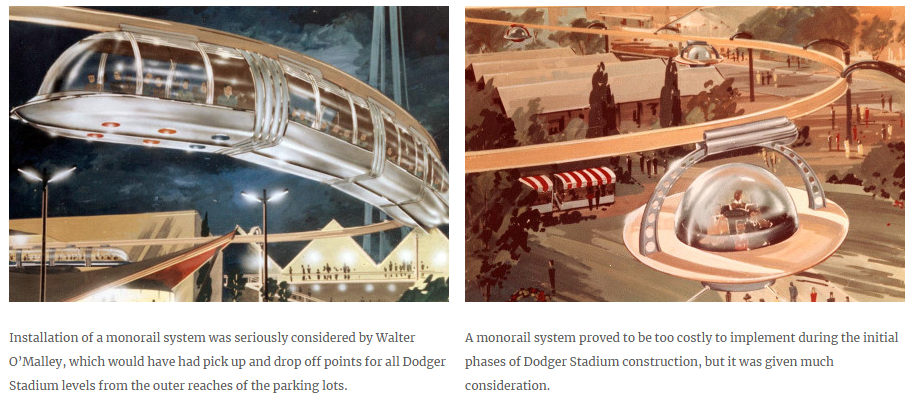
= Include stadium amenities such as an eye-washing station, a child-care nursery, coin-operated telescopes, a center-field fountain, compressed air in the flagpole to keep the flags blowing, a drive-in ticket window, a dumbwaiter behind home plate to deliver baseballs, dugout boxes enclosed with glass and AC pumped in, or a helipad and helicopter to transport VIPs.
= O’Malley also toyed with the idea of having an apartment for him at the park — again, Disney had one on his Main Street theme park — but “it was shot down as much for political purposes as an assistant to the mayor felt the appearance would not be appropriate,” Schweppe writes.
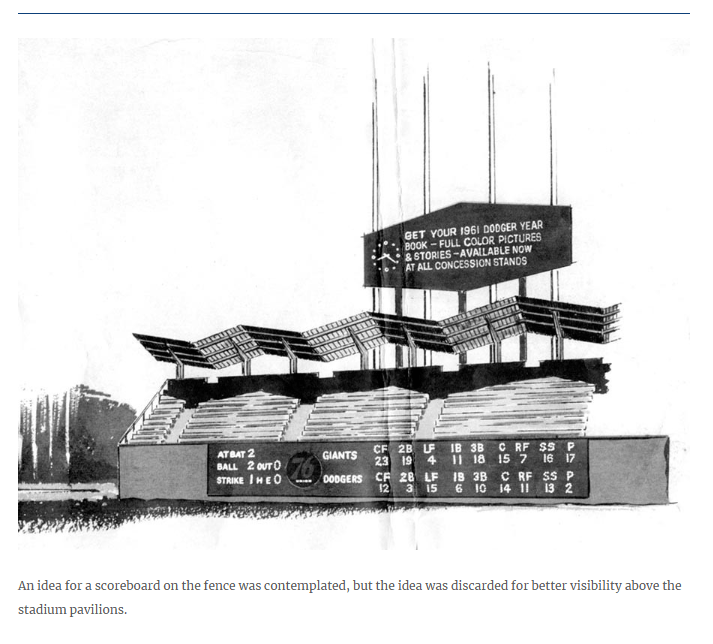
= O’Malley also resisted ads or lighted scoreboards on the outfield walls, a protective screen in front of the dugout, or putting any level of seats on rollers so the place might be easier to convert for football.
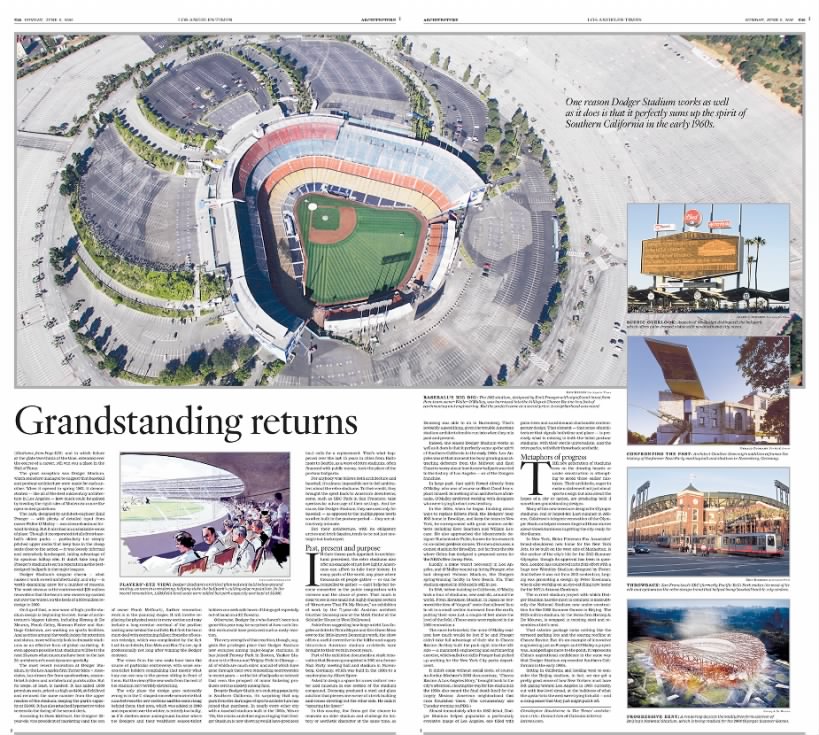
== In June 2005, Los Angeles Times esteemed architectural critic Christopher Hawthorne did a piece on Emil Praegar’s Dodger Stadium creation 43 years later. He wrote:
“There were two kinds of projects that modern architecture proved particularly ill-suited to take on during the height of its American influence in the decades after World War II. The first was design at the scale of the city: Modernism and urban planning turned out to be a terrible match, producing towers-in-the-park schemes, hulking expressways and other architectural disasters.
“The second was the design of baseball stadiums. From the late 1950s to the mid-1970s, 17 major-league teams moved into new ballparks. With their strict symmetry and stripped concrete exteriors, the stadiums were full of disdain for the history of architecture — and of baseball. By the end of the 1980s most of them had become unloved white elephants, sitting forlornly in the middle of lake-sized parking lots…
“The great exception was Dodger Stadium, which somehow managed to suggest that baseball and postwar architecture were made for each another. When it opened in spring 1962, it demonstrated — like all of the best midcentury architecture in Los Angeles — how much could be gained by treating the rigid rules of Modernism more like open-ended guidelines.
“The park, designed by architect-engineer Emil Praeger — with plenty of detailed input from owner Walter O’Malley — was streamlined and forward-looking. But it also had an unshakable sense of place: Though it incorporated details from baseball’s oldest parks — particularly the steeply pitched upper decks that keep fans in the cheap seats close to the action — it was loosely informal and extensively landscaped, taking advantage of its spacious hilltop site. It didn’t take long for Praeger’s stadium to earn a reputation as the best-designed ballpark in the major leagues.”

 Tom Hoffarth's The Drill: More Farther Off the Wall
1 thought on “Day 14 of 2026 baseball books: Any legal recourse to egalitarian promises not delivered?”