

“Bleacher Seats and
Luxury Suites:
Democracy and Division at the
Twentieth-Century Ballpark”
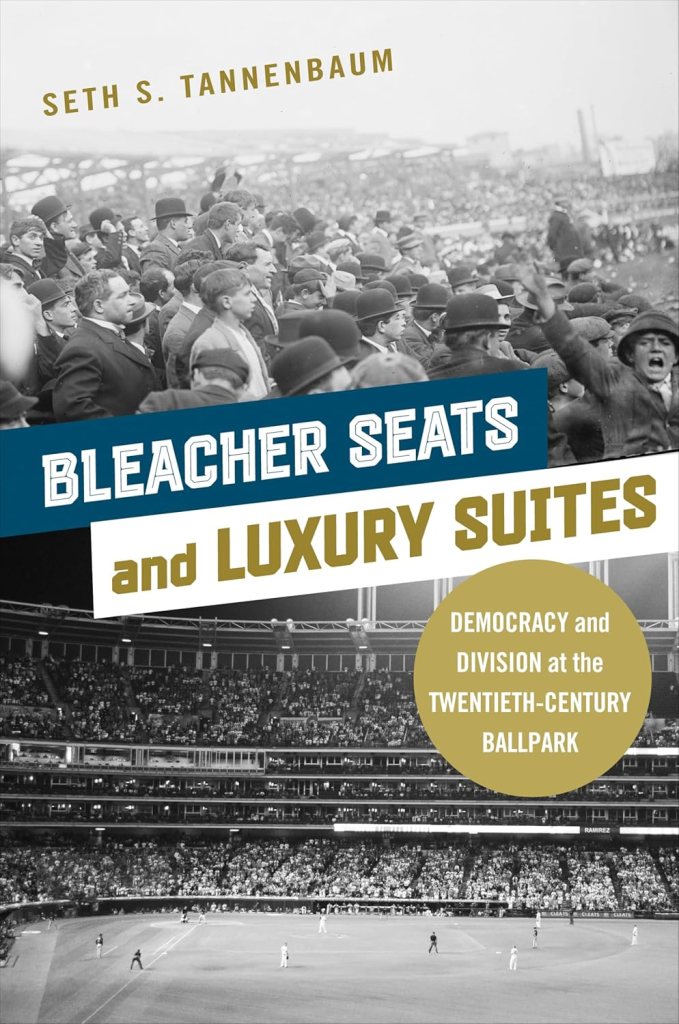
The author: Seth S. Tannenbaum, Ph.D.
The details: University of Illinois Press, 304 pages, $30; released March 31, ’26
The links: The publisher, the author, Bookshop.org
A review in 90 feet or less:
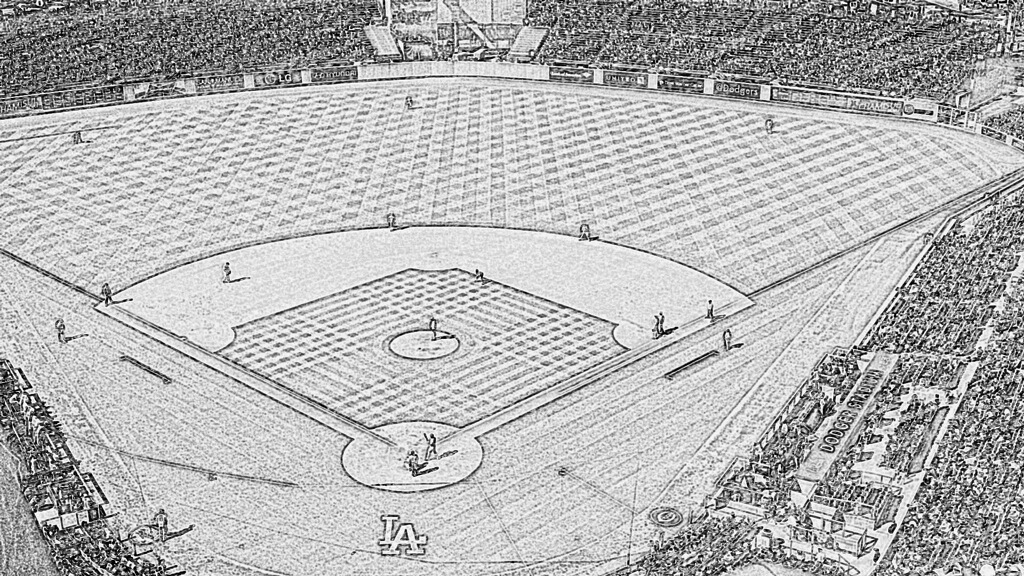
To anyone of a certain age still most profoundly comfortable printing out an airline boarding pass because this idea that a QR code will stay secure in your smart phone after TSA is done running it through their radio-active scanners — or, more realistic, the problematic consequences of watching that smart phone fall into a Terminal 5 restroom urinal just 10 minutes before Group 12 is called — the plight of Errol Segal doesn’t sound all that bothersome.
A so-called “long-time season-seat holder” — as if that is a necessary qualification — Segal’s end game recently was to just get the Dodgers to just give him printed-out Dodger Stadium entrance tickets. Yes, everyone else seems A-OK with the post-COVID practice of having tickets downloaded to an app, to be waved in front of an infrared light with the aid of a very useful employee there to problem solve. You just hope this works through your glass-cracked phone screen, and, if you’ve bought tickets on the secondary market, the company’s software is compatible with with the stadium’s approved ticketing partner.
Plus, Segal is just fine with his flip phone and how it fits in his day-to-day business. His age or whether he can afford some kind of iPhone/Android upgrade shouldn’t be a factor either.
It’s perhaps with some irony that this story didn’t seem to grab many people’s attention until — thanks to modern technology — it became a thing on social media.
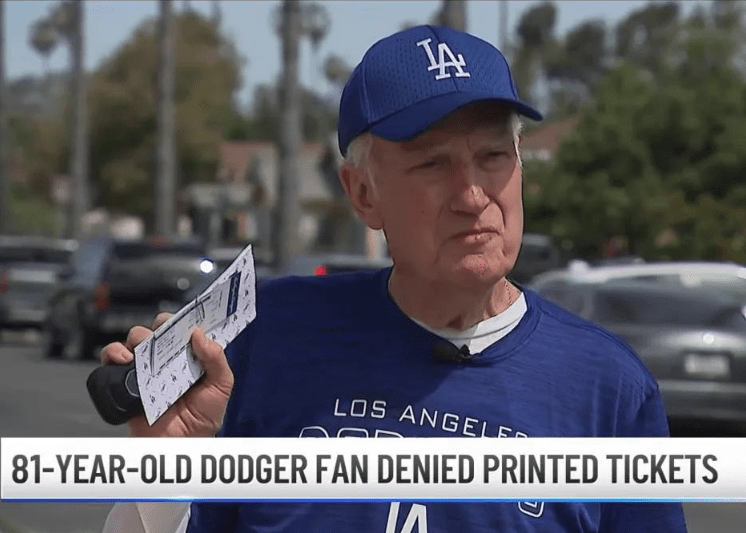
Those seeking more intel on Segal’s struggle and his feeling he had been “thrown under the bus” by the team’s administrators sticking to policy could access a) an extended video interview Segal did on a local TV news channel that, after airing a couple times, was now on the company’s website; b) the MSN.com cut-and-paste steal of a California Post story; c) AOL hjijacking a story it found on the demographically-aligned Fox News Channel; d) an earnest follow-up piece by the helpful publisher of the Los Cerritos Community News, and e) this Facebook post that, of course, didn’t quite frame the fan’s age accurately according to other reports, and then provided a perfectly toxic discussion thread, where punctuation-challenged pinheads could chime in with things like:
“Ill be that guy. If you cant use an iPhone in 2026, thats on you. He was 63 when the first iPhone came out. Im sure hes smart, hes had plenty of time to learn how to use apps. Also, iPhones are pretty user friendly for the older community”
“Lots of people feeling sorry for this guy who has had season tickets for 50 years … nah. I appreciate his fandom, but it’s better for him if he learns to live in today’s world. I’m sure someone can teach him how to use a phone. If it’s the learning something new that’s frustrating, that’s not the Dodgers’ problem. I’m GenX, and when we started working, we had to learn how to use all kinds of technology, still working, have learned to use AI, and will continue to learn my whole life. “I don’t know how” is a lame excuse.”
“Can’t wait for the Gen Z’s to get rejected cuz the eye scan doesn’t recognize ‘ancient eye rolls’ in the 22th century!”
“Wait til he tries to buy a hotdog with a $20”
Continue reading “Day 14 of 2026 baseball books: Any legal recourse to egalitarian promises not delivered?”