

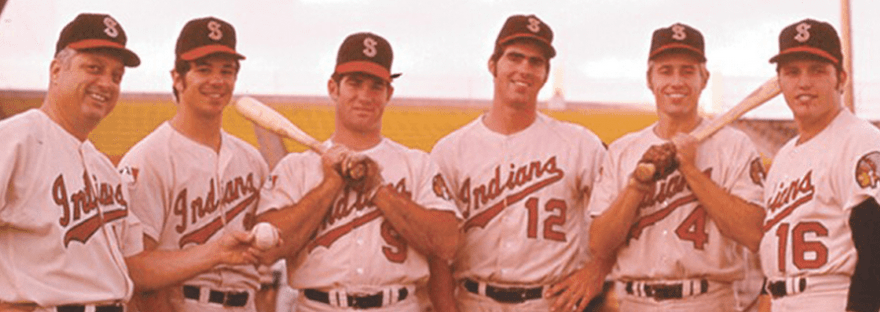
“Before They Wore Dodger Blue: Tommy Lasorda
And the Greatest Draft Class in Baseball History”
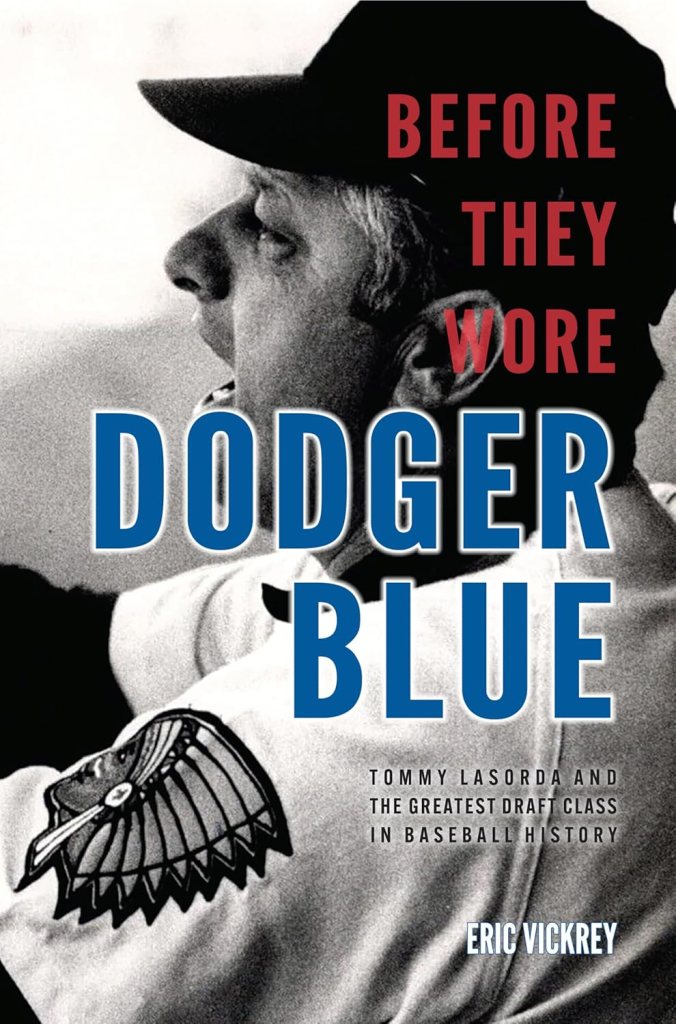
The author: Eric Vickrey
The details: August Publications, 348 pages, $24.95; released Dec. 7, ’25
The links: Author site, publisher site, Bookshop.org
A review in 90 feet or less:
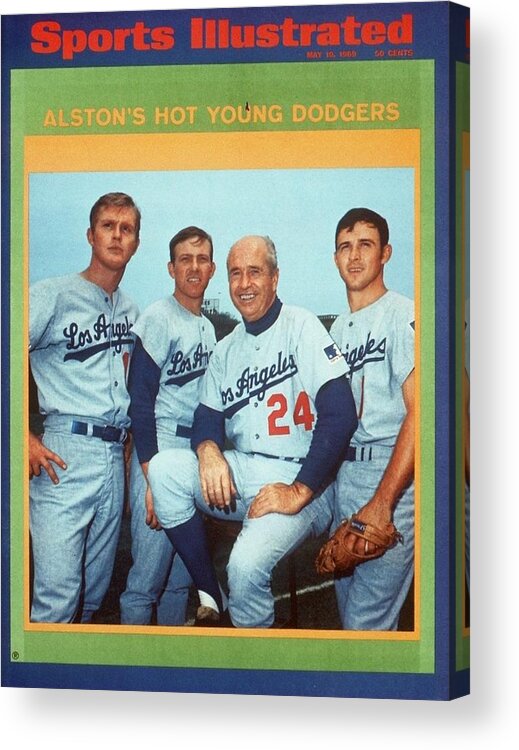
The time capsule that Sports Illustrated has become, in the musky scent of its recent emasculation, can still be a bit jarring.
When the SI issue of May 19, 1969 arrived at our house, proclaiming a group of “hot young” Dodgers were about come to the rescue of a franchise still trying to find its footing from a 95-win team getting swept in the ’66 World Series, then watching Sandy Koufax retire, and now braced for Don Drysdale heading in that direction, there was some reason for optimism for all the kids in my neighborhood. The magazine’s 40-cent cover price our parents paid was also worth an investment in seeing the future as predicted by our wise elders.
Manager Walter Alston, as we were shown, had Bill Sudakis, Ted Sizemore and Billy Grabarkewitz all ready for the reboot. Tell Danny Goodman to start cranking out World Series trinkets.
Given that those ’69 Dodgers would finish 85-77, fourth-best and just eight-games out in the newly created National League West, it was a bit of an illusion, but much easier to compartmentalize after taking in a 76-86 showing in ’68 (seventh in the elongated NL, 21 games back) and a 73-89 free-fall from ’67 (eighth place, 28 1/2 games back).
Yet, these three Musketeers fresh out of the Mickey Mouse Club would bring it back to glory.
With mixed results.
Sudakis, a catcher and third baseman who signed as a free agent in 1964 a year before the MLB Draft began, hit .234 that ’69 season in 132 games, age 23. Sudsy, as was his nickname, seemed to be all but washed up by ’72 when the Dodgers waived him. The Angels kicked the tires on him before the ’75 season, then released him mid-way through after he hit .121 in 30 games.
Sizemore, a 15th round draft pick in 1966, somehow won the ’69 NL Rookie of the Year Award following Johnny Bench (in ’68) and Tom Seaver (in ’67) in an otherwise so-so year for up-and-coming talent. Starting at second base, Sizemore would have a career-best 4.2 WAR, hitting .271 in 159 games, age 24. After upping that to .306 in ’70, the Dodgers capitalized on his value, sending him to St. Louis with backup catcher Bob Stinson for Dick Allen (which didn’t end up so well). Sizemore came back to the Dodgers in ’76 via a trade for Willie Crawford, but by ’79, the Dodgers were done with him again, sending him this time to Philadelphia.
Grabarkewitz, taken in the 12th round of the ’66 Draft, was bestowed jersey No. 1 when he came up for 34 games that ’69 season, going 6 for 65 (.092). But the next year, he was on the NL All-Star team, hitting .289 in 156 games with a team-leading 17 homers, 92 runs scored, 84 RBIs and 19 stolen bases.
Then, poof.
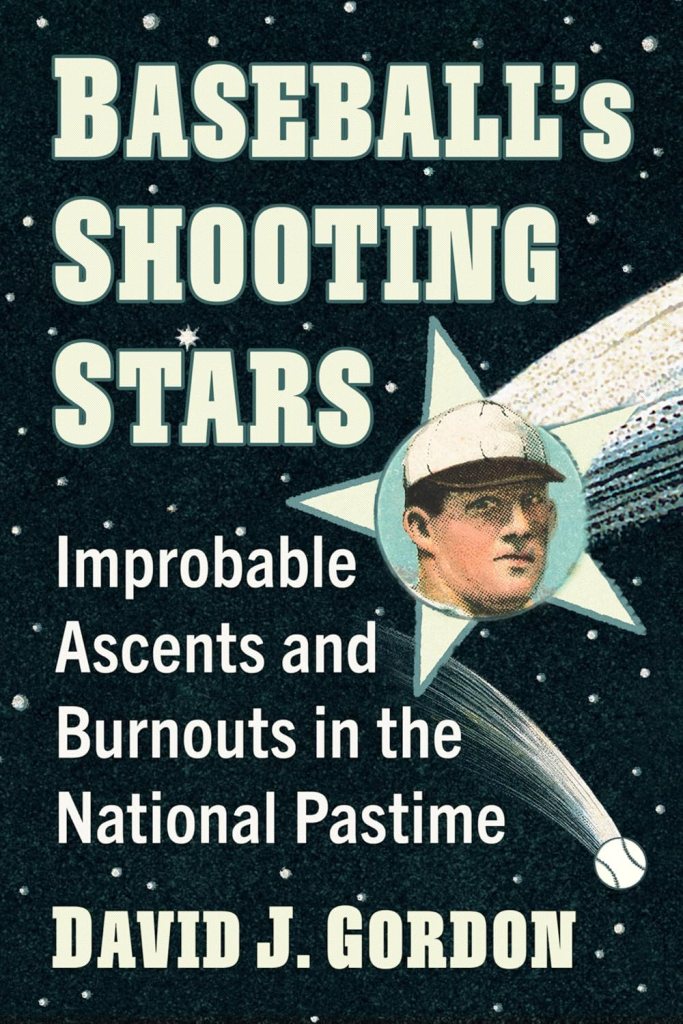
In the 2024 book “Baseball’s Shooting Stars: Improbable Ascents and Burnouts in the National Pastime,” author David J. Gordon devotes a special chapter to Grabarkewitz, the man “who led the league in consonants” but was “stymied by badly timed injuries.” His 6.5 WAR in his career year in 1970 — a stat that didn’t even exist at the time but often used in modern times to measure former players in a new light — wasn’t that remarkable, but in the aftermath, Gordon write that Grabarkewitz “may have been the most extreme one-year wonder of any non-pitcher in MLB history … I can find no other historical example of a position player with a career lasting at least five years who posted a > or = 6.5 WAR in one season but played at or below replacement level for the remainder of his career.” Why he was out of the game by age 29, after a brief time with the Angels, can be baffling to some, but Gordon has a thought on that:
“My reflexive take on one-year wonders like Grabarkewitz is their career years were flukes and the law of averages caught up with them. But Grabarkewitz is something else. Nothing about his sterling 1970 season seems lucky or flukish. A combination of lesser injuries and an overloaded Dodgers farm system — not regression to the mean — conspired to prevent him from becoming the player everyone thought he would be for more than one season. I view Grabarkewitz mainly as a very unlucky player who might very well have achieved long-term success on a different team and under more favorable circumstances.”
Gordon allusion to “an overloaded Dodgers farm system” goes to why Vickrey’s book gives a greater context to how and why the team’s 1968 MLB draft remains, by consensus still today, the greatest haul of talent in the game’s history.
Dialing back to that ‘69 season, there was a brief glimpse of a 20-year-old Steve Garvey (1-for-3), 19-year-old Bobby Valentine (five pinch-running appearances) and 19-year-old Bill Buckner (0-for-1).
Valentine, Buckner and Garvey were prized pieces of a collection that included Ron Cey, Davey Lopes, Tom Paciorek, Doyle Alexander, Joe Ferguson and Geoff Zahn. Adding in Bill Russell, Charlie Hough and Tommy Hutton, the Dodgers’ foundation had been laid and would last more than a decade — let’s call it the 1981 World Series, after they team decided to let their prized infield break into pieces.
The link to all of them is Tommy Lasorda. As Vickrey details, it was Lasorda, that scout, who was a key figure in the Dodgers’ acquisition of talent before the instution of the 1965 MLB Draft — the first pick of that draft was Rick Monday, an outfielder from Santa Monica High who had gone to Arizona State and was all but signed as Dodgers home-town talent before the Kansas City A’s were allowed to take him. Just prior to that, Lasorda was the important figure in the Dodgers signing local talent Willie Crawford from Freemont High in L.A., one of the last of the “bonus baby” players who had to spend time on the major-league roster likely before they were ready.
Continue reading “Day 3 of 2026 baseball book reviews: The Class of ’68 Brigade”
