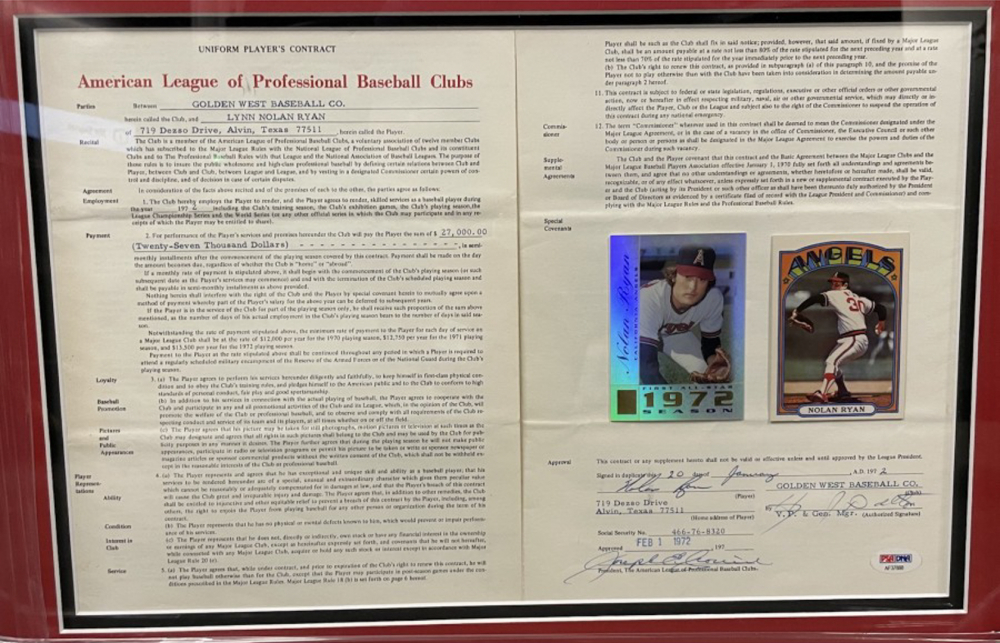
Once upon a time, this contract that Nolan Ryan signed to join the Angels, and also signed by GM Harry Dalton, was offered at auction.
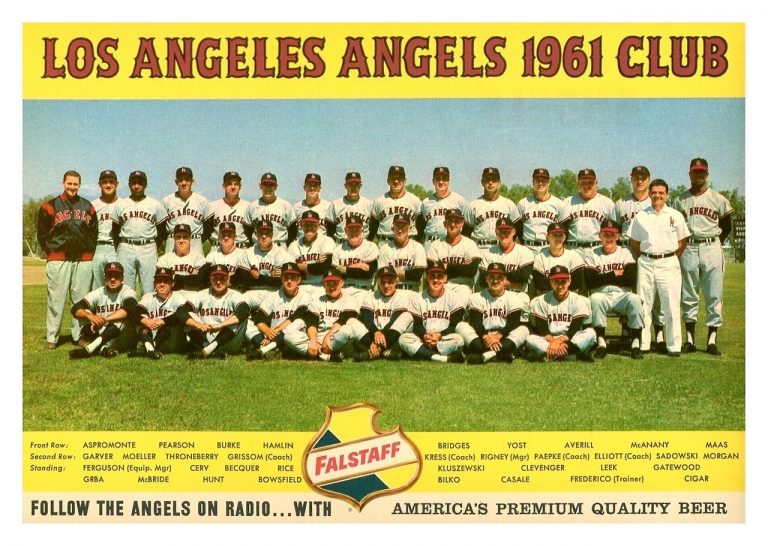
Thirteen members make up the league of unfortunate gentlemen who agreed to serve as general manager for the historically cursed Los Angeles/California/Anaheim/Los Angeles Angels of Anaheim, including prior to the franchise’s birth in 1961.
Which one generally managed to make the greatest impact?
Bill Stoneman, if only because of the fact he was in the chair during the Angels wild-winding wild-card run to the 2002 World Series title, is the quick-wit choice. He arrived three seasons before that improbable title scramble. He lasted five more afterward before he pooped out at age 63. Between his term of 1999 and 2007, the Angels also made the playoffs as the AL West champs in ’04, ’05 and ’07. It was Stoneman who hired Mike Scioscia as the team’s 20th manager in 2000, and the former Dodgers catcher lasted more than 3,000 games, and was the ’02 and ’09 AL Manager of the year. In creating the 2002 roster, Stoneman pulled the trigger on the trade of Jim Edmonds to St. Louis for Adam Kennedy and Ken Bottenfield, and it worked. Stoneman signed Scott Spiezio, David Eckstein and Brendan Donnelly. Two years after the championship, he landed future Hall of Famer Vladimir Guerrero. He drafted Jered Weaver, Ervin Santana, Howie Kendrick and Casey Kotchman. Stoneman, a former big-league pitcher himself, rarely messed around with in-season trades.
Even then, he wasn’t done. Stoneman made a comeback as the interim GM in the middle of the 2015 season after Jerry Dipoto’s rocky data-driven three-and-a-half-season time ended, following the heralded signings of Albert Pujols and Josh Hamilton between 2011 and ’15.
Tony Reagins, Stoneman’s immediate successor after the 2007 season, was the franchise’s first and only Black GM. He may have only lasted four seasons, but included in that was drafting Mike Trout in 2009, at No. 25 overall, an outfielder from Millville High in New Jersey. (For what it’s worth, the pick came after Reagins took another outfielder, Randal Grichuk at No. 24 from Lamar High in Texas). Reagins also signed Torii Hunter and traded for Mark Teixeira and Dan Haren. He didn’t wear well the signings Vernon Wells and Scott Kazmir.
Fred Haney, the former Hollywood Stars and Los Angeles Angels broadcaster in the Pacific Coast League, and the GM for the 1957 World Series champion Milwaukee Braves, was the Angels’ first deal maker. He first had to navigate the dispersal draft logistics and then find a roster that could perform in the old Wrigley Field, then Dodger Stadium, then the new Angel Stadium. Somehow they had a 70-win season in ’61, still a record for expansion teams. Aside from shaping the first rosters, Haney’s success was relevant in finding Jim Fregosi, Dean Chance, Leon Wagner and Lee Thomas.
December 8, 1960: Fred Haney, left, named General Manager of the new American League Los Angeles Angels, checks the warm-up jacket worn by Angels’ Board Chairman Gene Autry as the club’s President Bob Reynolds (center) looks on. Autry and Reynolds returned from St. Louis the day before after they were granted the new franchise. Haney was named as General Manager at a press conference in the Sheraton-West hotel.(Not sure who the gentleman is on the far right, but he looks pleased).
After those three, we’ve got, in no particularly effective order:
Buzzie Bavasi (1977 to 1984) and his son, Bill Bavasi (1994 to 1999), both something of a buzz kill. The elder Bavasi’s time with the team as it went to two post-season appearances under his watch. It wasn’t really because of him, but in spite …
Billy Eppler (’15 to ’20) may have overseen five losing seasons and had another year on his contract when he was let go, and he was in change when Scioscia left and decided Brad Ausmus could handle the spot as the manager. Yet, Eppler did a lot of groundwork recruiting of Shohei Ohtani, and was in the team’s toll booth when the Japanese star arrived, helping keep Trout at bay.
No-Frills Mike Port (1984 to 1991) was really just an extension of the first Bavasi regime and relied on a farm stocked with Mike Witt, Chuck Finley, Wally Joyner, Devon White and Gary Pettis, and then drafted Edmonds, Tim Salmon, Garret Anderson, Troy Percival and Jim Abbott.
Whitey Herzog (1993 to ’94) was thought to bring some name value but was otherwise a white-hot mess, loading up the team with former Cardinals has-beens. Lump him in with Dick Walsh (’68 to ’71), Dan O’Brien (’91 to ’93) and the current Perry Minasian (since 2020), who may be on borrowed time as well.
Artificial Intelligence and Sports Illustrated got together for a discrete hook up recently, and the tabloids had a field day.
So did the moral arbiters at our non-profit member station Public Broadcasting Service team.
“Sports Illustrated is the latest media company to see its reputation damaged by being less than forthcoming — if not outright dishonest — about who or what is writing its stories at the dawn of the artificial intelligence age,” PBS reported on Nov. 29, 2023.
“The once-powerful publication said it was firing a company that produced articles for its website written under the byline of authors who apparently don’t exist. But it denied a published report that stories themselves were written by an artificial intelligence tool.”
The truth is, SI’s reputation has been damaged for several years, and this particular misstep had nothing to do with AI converging with Synthetic Intelligence. We were a bit sympathetic to what was really happening.
Since 2018, SI’s content has been leased by the Arena Group, and it was responsible for these third-party product review AI “stories” way down at the bottom of the website. The crime really is that it was ad material disguised as content. The stuff was summarily taken down and perhaps the brand’s reputation was harmed.
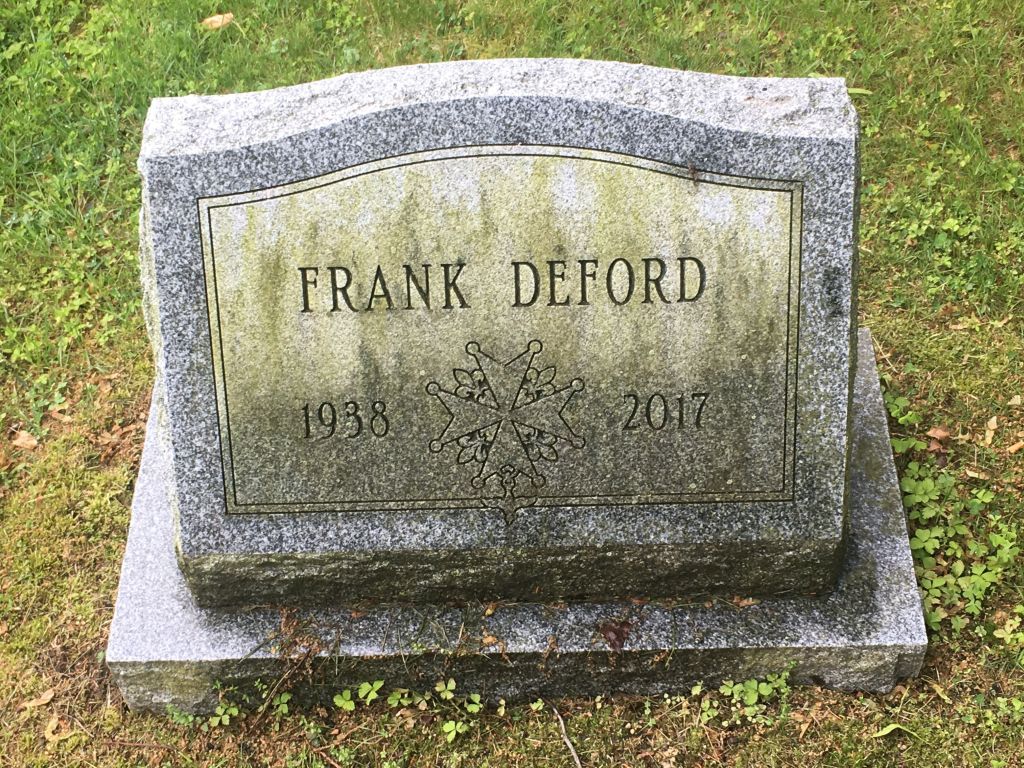
It’s not like they were channeling Frank Deford beyond the grave to rewrite some of his most popular Ted Williams pieces. That would be a grave misstep on so many levels.
This was really some superfluous stuff in question.
The humans still left at the Sports Illustrated Union was mortified, and it was a moment to suggest that there’s a chilling effect on all major news corps that had been dabbling in AI software as a way to make up for lost employees. Still, this much ruckus wasn’t really pushed out when The Associated Press started using techbots to assist in its articles about financial earnings reports since 2014, and had also been used to aggregate short sports game stories. Usually there was a tag at the end that explained how that story was produced with a data-driven technology and readers were not in the “Twilight Zone” of their existence.
Our response to today’s story from @futurism reporting that The Arena Group has published AI-written stories by fake people under the Sports Illustrated name: pic.twitter.com/QcR4iGOi5w
The fall guy for all this was CEO Ross Levinsohn, and it’s just as well. Levinsohn, a former HBO exec who also worked at Fox Sports, Yahoo and then a crazy time as publisher of the Los Angeles Times despite its internal union outcry of his incompetency, had latched onto SI’s parent company, then known as Maven, Inc., which then sold off its soul to Authentic Brands Group and became part of a NIL scam to make people believe it was worthy of its name. Like, Chuck Taylor Converse. SI still had a magazine, cut back to once a month, and this suspect website with just a small portion of what used to be on the staff.
For those who remember, SI, which launched 70 years ago in August of 1954 as the first magazine to have more than one million subscribers, and in 1983 was the first full-color news weekly magazine highlighting fantastic photography — aside from its Swimsuit issue — has been though all sorts of self-inflicted wounding for a few decades.
A six-part series airing on Turner Classic Movies channel rolled out earlier this year called “The Power of Film,” and it led off with an episode that explained the dynamics of what makes a movie both popular and memorable. They are definitely not the same.
Howard Suber, an esteemed UCLA film professor who wrote a book about this topic with the same title in 2006 after teaching this course in Westwood for many years to thousands of students, agreed to do this series. It not only is trying to enlighten those aspiring to be directors, producers or screen writers, but it is really for movie lovers — like TMC viewers — to better understand why they’ve had these connections to certain films over the years, how it is they’re able to watch them over and over again, and what leads them back for reinforcement.
Common themes that resonate in our soul and we see that portrayed on the screen are often about family. Or power. Or the fragility of life. These themes go back 2,500 years in our course of historical storytelling.
Film clips come up during this hour-long series opener, and Suber shows the ties that bind “The Godfather,” “Casablanca,” “Citizen Kane,” “A Star is Born,” “Do The Right Thing” or “The Exorcist.”
At one point during a montage, there is a quick flash of a scene from the 1992 “A League of their Own” — Geena Davis, as Dottie Hinson, bare-hand catches a ball thrown at her without showing any emotion. Awe inspiring. And powerful.
But in this TCM series context, “A League of their Own” explained how this is about a family, of baseball players. It was about overcoming odds, from the perspective of women just looking for a chance. It involved power — empowering them to show their worth. It checked off so many boxes that baseball was just a convenient entry point to another version of storytelling as old as time.
Now, we can take that movie, and more, to the next level.
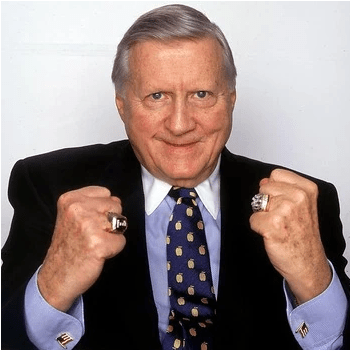
George Steinbrenner got into a scuffle with the two Dodgers fans in an elevator at the Hyatt Wilshire Hotel in Los Angeles during the 1981 World Series.
Broke his land. Left the two lads cowering and running away. The fans were razzing him because his Yankees, after winning the first two games of the series in New York, were just swept in three games at Dodger Stadium and heading back to the Bronx wounded.
At least that’s the story the late Yankees owner took to his grave.
So …….. Did it happen?
United Press International, a major wire service at the time, wrote it up, crediting a source for its information. (The source: Steinbrenner). The New York Times seemed a bit more skeptical when it reported that “cheerful” Steinbrenner “summoned a group of reporters to his hotel suite at 11:30 last night to explain what had happened and display his wounds — a bump on the head, a swollen lip, a right hand with a bandage over his cuts and an apparently broken left hand with a bandage over the cast.”
The news George Steinbrenner makes is only part of the fun. We get more laughs trying to figure out what really happened.
Hotel security and L.A. police said Steinbrenner made no report of the incident.
Maybe it happened exactly the way Steinbrenner told it.
Reporters went to other Yankee pugilists for comment yesterday. At the L.A. airport, Reggie Jackson said, “I don’t know anything about it. Don’t ask me.” Relief pitcher Rich Gossage, who sprained his thumb in a clubhouse scuffle two seasons ago, laughed and said of Steinbrenner’s broken hand in its cast, “George wouldn’t punch anyone . . . He must have caught it in an elevator.”
In 2004, the New York Times’ Murray Chass revisited it. Again with a lack of conviction, since there were no convictions:
Joe Louis? Rocky Marciano? Sugar Ray Robinson? They apparently had nothing on Steinbrenner.
Steinbrenner, 51 years old at the time, said that in rapid succession he threw three punches — two rights and a left. Down went the first miscreant; down went the second.
Muhammad Ali? He might have stung like a bee, but Steinbrenner said he swung a sledgehammer.
”I clocked them,” Steinbrenner told reporters just before midnight in a news conference he called in his hotel suite. ”There are two guys in this town looking for their teeth and two guys who will probably sue me.”
Bizarre as it might have been, the story of the fight remains part of the lore of the Steinbrenner years. What other owner could have engaged in such an episode? Peter O’Malley? Carl Pohlad? Bud Selig? Marge Schott?
No, this is one of those things that makes Steinbrenner special. He won’t be around forever, but this tale will be.
Steinbrenner died in 2010 at age 80. Still the undisputed champion of owner brawls during a World Series.
Crack open this collection of 18 stories that happened during baseball’s “glory” time of October, this would have been the time for a new revelation: The guys who did it have fessed up. The hotel security camera footage has been revealed. Hal Steinbrenner unsealed his father’s confessions that it was all a ruse — there was an elevator malfunction and he tried to punch himself out of the roof because he was claustrophobic but it just caused more damage.
Alas, this story isn’t included. A swing-and-a-missed opportunity.
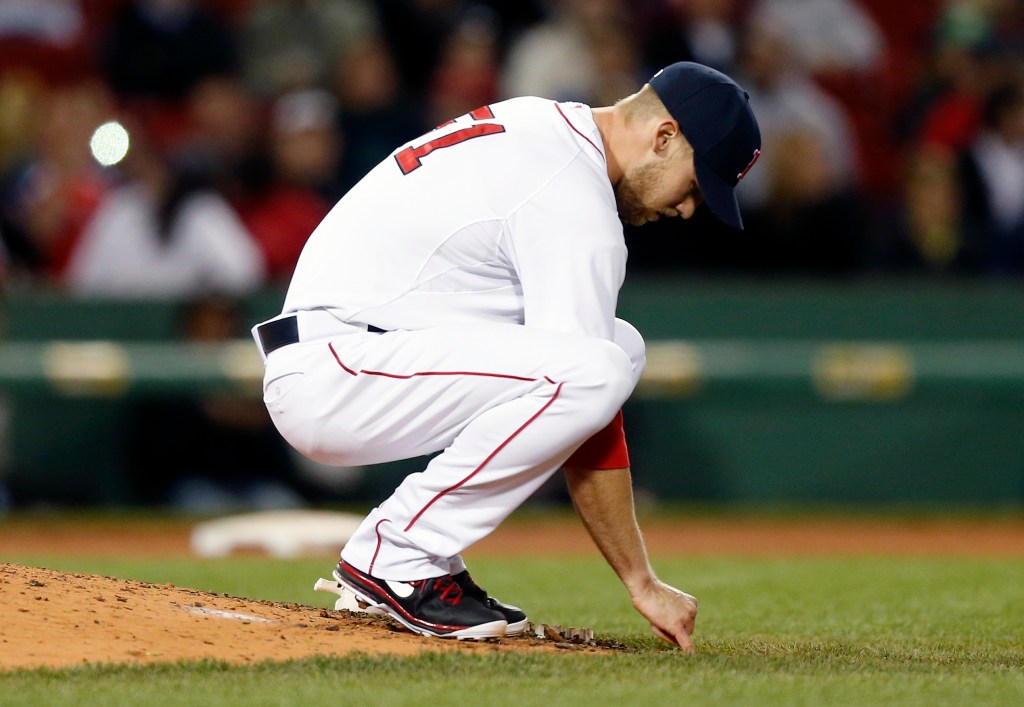
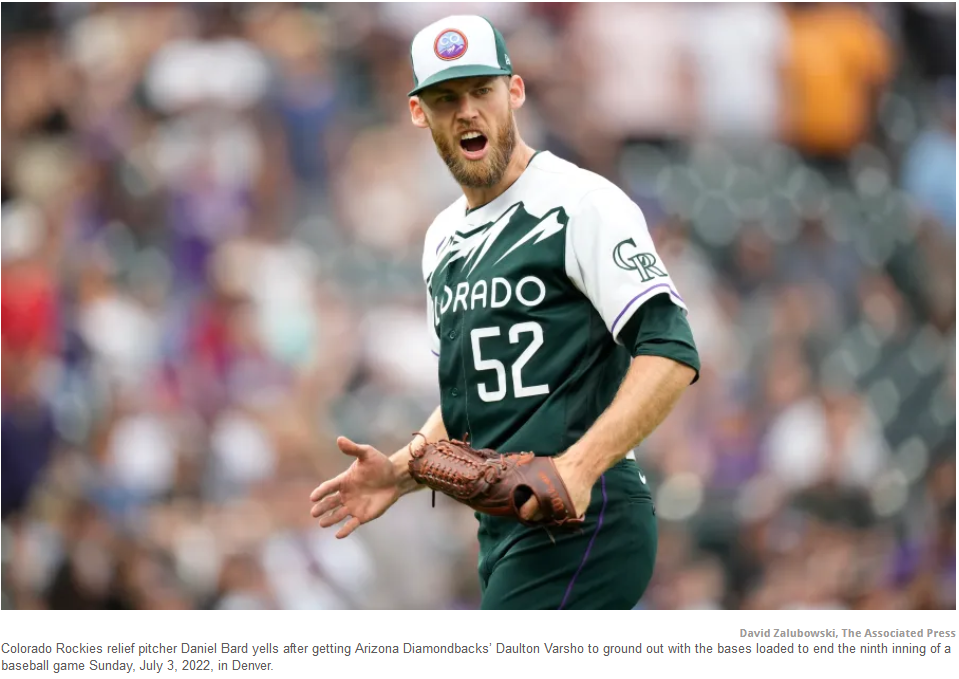
Daniel Bard prepares to pitch in the ninth inning for the Boston Red Sox against the Houston Astros on April 25, 2013. Two days later, he was sent to the minors, his career seemingly over. (AP Photo/Michael Dwyer)
The Major League Baseball odyssey of pitcher Daniel Bard continues to play out like a Shakespeare soliloquy.
Bard’s first act, five seasons from 2009 to 2013 with Boston, and his second act, five more seasons from ’20 to this calendar year with Colorado, had an eight-year intermission.
Can he explain this 2,600-plus day gap in his resume.
Yup. He had the yips.
In ’23, a season where he spent three stints on the injury list for the Rockies, he pitched a game against his former team at Fenway Park. And got the win. Ten years after he departed from the team under a storm cloud in his mind.
New Yorker magazine made note of this achievement, and explained his plight:
Everyone figured that Bard would become a star. Instead, he lost control of his pitches. He missed spots by inches, then by feet. The ball would leave his hand traveling 97 mph, then bounce in the dirt, or sail toward the backstop, or drill the batter’s shoulder. Each time, he had to get back on the rubber to throw another pitch, with no idea where it would go. He blew leads. He bruised batters. He stood on the lonely island of the mound, engulfed by jeers. He was sent to the minors, where he spent five years trying to relearn what had once felt automatic. Finally, in 2017, he quit.
There are other cases, in baseball history, of players who suddenly couldn’t pitch or throw. It’s an affliction so dreaded that players sometimes refer to it as a disease or a monster — if they’re willing to talk about it at all. But Bard came to realize the necessity of facing it. Two years after retiring, he returned to baseball and became one of the most dominant relievers in the game. It was a remarkable and unprecedented comeback. It wouldn’t be his last.
Bard told the Boston Herald: “It’s wild, man. It’s definitely a little bit surreal, in a good way. I always wanted to come take my kids to a game here when they got a little older, I didn’t think I’d be playing in it, I thought I’d just be taking them as a fan.”
Wild indeed.
Bard’s last appearance in Boston: April 27, 2013. Two walks and allowing a run without recording an out in a 8-4 loss to Houston. He was sent to the minor leagues, released, and it looked like it was done.
But after a break, Bard proclaimed in 2018 he would try again. He signed a minor-league deal with Colorado in 2020. He made the opening day roster in the pandemic-shortened season. By ’22, he was one of the league’s top closers with 34 saves and a 1.79 ERA.
“It’s crazy, it’s wild that I’m here,” he said again.
In ’23, he started the season on the 15-day injured list, missing three weeks. He made the courageous declaration that it had to do with anxiety issues. It made sense. While pitching for Team USA in the 2023 World Baseball Classic, during a March 18 game against Venezuela, Bard faced four batters. All reached base, including Jose Altuve, who Bard hit with a pitch that left the Astros star with a broken thumb, needing surgery and forcing the Astros’ All Star him to miss the season’s first 43 games.
By the end of ’23, Bard had two more IL stints, with right forearm fatigue, and finally at the end with a right forearm flexor strain. But as the 38-year-old enters the final year of a two-year, $19 million contract, he is back on the 60-day IL to start the 2024 season. In spring training, he tore the meniscus in his left knee while playing catch. Then it was discovered he needs surgery to repair the flexor tendon in his right elbow and will not pitch again in ’24.
“My tendency is to rush things back. If I could be pitching at even 80 percent. I’m going to find a way to be out there,” Bard told MLB.com last February from his home in Greenville, S.C. “This forces me to pull the reins back and just take things a little slower. It’ll be a good thing in the end.”
The Bard of Avon, William Shakespeare, wrote in Act II of his play “As You Like It”:
“Sweet are the uses of adversity, which, like the toad, ugly and venomous, wears yet a precious jewel in his head; and this our life, exempt from public haunt, finds tongues in trees, books in the running brooks, sermons in stones, and good in every thing.”
It’s been noted that in Shakespeare’s “Romeo and Juliet,” two star-crossed lovers are faced with great adversity, hiding their romance from their feuding families. As we recall from our high school honors English class, it didn’t end well.
As for Shakespeare lines above, however, there are many interpretations of what that actually means. One writer spelled out what it has meant to her:
Adversity builds character: Going through tough times can teach us important lessons about resilience, determination, and perseverance. When we overcome challenges, we become stronger and more capable of facing future obstacles.
Adversity fosters creativity: When we’re forced to think outside the box in order to solve problems, we can come up with innovative solutions that we might not have otherwise considered.
Adversity promotes growth: Facing adversity can force us to confront our weaknesses and limitations, and can push us to improve ourselves in order to meet the challenges ahead.
We’re almost positive the Bard of Colorado, Daniel, could relate to this. Just don’t go Willy Loman on us at this point of the journey.
If we check our Spark Notes, it reads: Between 1595 and 1600 Shakespeare faced a series of adversities that no doubt affected him profoundly, even as he continued to produce first-rate plays at a blistering pace. Many of the adversities that arose during this time related to the precariousness of the theater. In 1595 the Lord Chamberlain’s Men were preparing to move into a new theater in the Blackfriars district of London, when the Countess Elizabeth intervened. … Another patron adopted the players, but also because the company underwent a restructuring that involved the actors themselves, Shakespeare included, taking a financial stake in the company. The construction of the famous Globe Theater in 1599 ensured the company’s survival into the next century. Perhaps the greatest adversity Shakespeare faced during this period was the death of his only son, Hamnet (a twin, with a sister Judith). Scholars speculate that though Shakespeare no doubt grieved Hamnet’s death at the time, this grief would not find expression in his writing until around 1600, when he wrote the play that bears his dead son’s name—“Hamnet” and “Hamlet” were synonymous at the time. If this is true, then Shakespeare’s expression of grief takes an unexpected form in the play. Instead of the central grief being that of a beloved son’s death, the play centers on the murder of a cherished father.
If you’ve made this far, how about a reminder about This Date in Baseball: April 23, 2022: Detroit’s future Hall of Famer Miguel Cabrera collected his 3,000th hit.
And, This Date in Global History: April 23, 1564: William Shakespeare is born, 460 years ago, in Stratford-upon-Avon, England. Although his official date of birth is unknown, this is when it is observed, since records show he was baptized three days later. Where exactly was he born? Depends on who you ask.
And, April 23, 1616, at age 52, William Shakespeare died, in Stratford-upon-Avon. His final resting place is in that city’s Church of the Holy Trinity. His headstone reads:
Good friend, for Jesus’ sake forbear, To dig the dust enclosed here. Blessed be the man that spares these stones, And cursed be he that moves my bones.
Cabrera was 39 when he reached his 3,000th hit. It is said Shakespeare’s number of dramatic works were about 39. Scholars debate that, as well as which ones were comedies, tragedies or dramas. That can add to the drama.
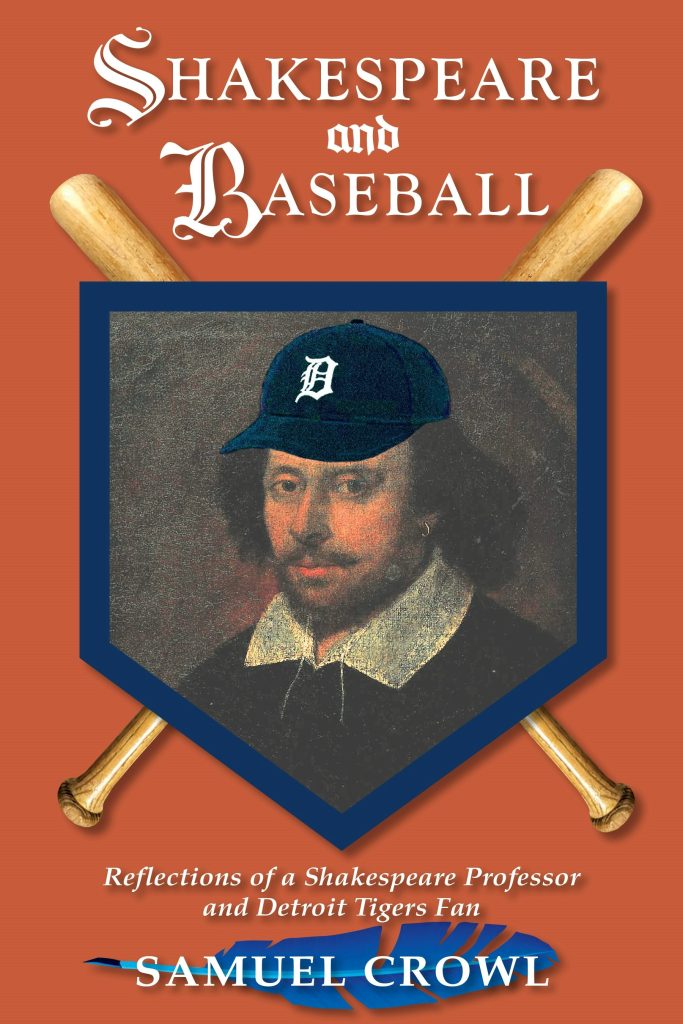
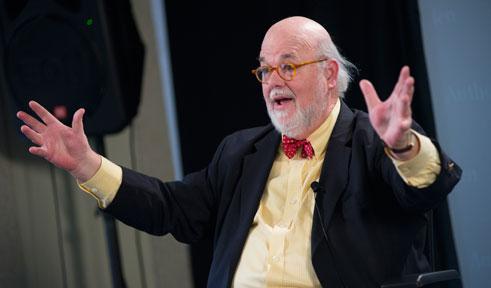
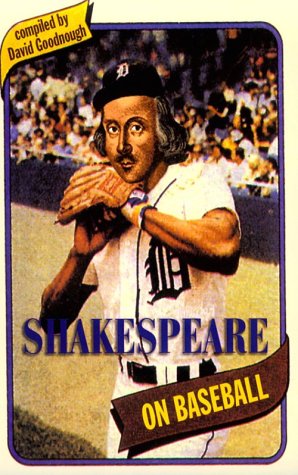
Samuel Crowl, an international Shakespeare scholar and fan of the Detroit Tigers, loves to make delicious connections between his two passions in this hymnal of a book project, a memoir that allows us to stretch our creative minds and find another way baseball permeates our belief that the play’s the thing we all embrace.
Crowl, awarded an Honorary Doctor of Humane Letters at Ohio University in 2015 and was its commencement speaker, writes he made his first Bard-Tiger connection in the summer of 1950. As a 10-year-old, he admired Detroit pitcher Hal Newhouser as he outlasted the Chicago White Sox in the first game Crowl attended. “Prince Hal,” as Newhouser was known, was the name of Shakespeare character given to Henry V of England in two plays, “Henry IV, Part 1” and “Henry IV, Part 2,” a term Falstaff uses to describe the lad who would ascend to the throne.
The first Shakespeare play Crowl was at age 12 — Alec Guinness as Richard III in nearby Ontario, Canada. His parents took him on repeated summer trips to Stratford, “where Shakespeare established his power on my imagination.”
Once you sense the overlap from Alec Guinness to Al Kaline, from Ian McKellen to Kirk Gibson, or Simon Russell Beale to Sparky Anderson, you can’t help yourself, finding some comfort in watching the Tigers’ ups and downs and going sideways over the years as the city of Detroit continues to have its own social growing pains, and Crowl views it from his residence in Bloomington, Indiana and lately from Athens, Ohio.
The third element of Crowl’s project is also how he used the first two elements to connect to his family, especially when writing letters to his children to update them on the Tigers’ progress as they were away at school. He could find himself at a Shakespeare Association of America convention with access to Fenway Park where his Tigers happened to be playing the Red Sox on Opening Day 1988 — Kirk Gibson had just departed to the Dodgers, and now it’s Alan Trammell, batting cleanup as the shortstop, hitting a two-run homer in the 10th inning to win the game for Jack Morris, triumphing over Roger Clemens. Yes, on Opening Day, both Morris (nine Ks, three earned runs) and Clemens (11 Ks, three earned runs) went the first nine innings. Morris got the win as he was still the pitcher of record. Red Sox reliever Lee Smith took the loss. And that ’88 season ended with the Red Sox winning the AL East by one game over the Tigers.
“This little book has three bases and a longing for home,” Crowl writes at the start.
Besides, as Crowl continues, “baseball is the writer’s game. Poets, novelists, essayists, biographers, historians and even Shakespeareans have found the game irresistible. Writers love the pace and grace of the game and the way it invites history to seep into the watching of any individual encounter. What other game has its own national anthem (played not at the beginning, but as the game reaches its climax), an Iowa field of dreams, and mock-epic poem?”
You can’t help but keep going stanza after stanza.
How it goes in the scorebook
Poetic in that we rose today, finished reading this, produced the review, and felt as if we actually seized the day, as they say. Mostly, seized the date — Four-twenty-three-twenty four could be just the right combination for a comedy of eras.
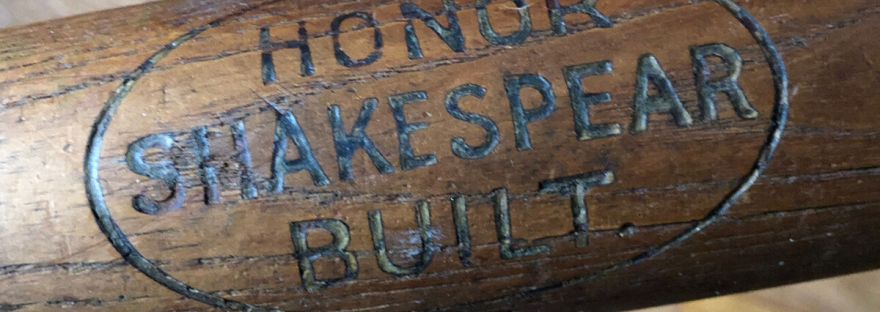
It’s time to settle once and for all the debate over the first references in print to the game of baseball. The earliest references to baseball occur in the plays of William Shakespeare and include the following:
“And so I shall catch the fly” (“Henry V,” Act V, scene ii). “I’ll catch it ere it come to ground” (“Macbeth,” III, v). “A hit, a very palpable hit!” (“Hamlet,” V, ii). “You may go walk” (“Taming of the Shrew,” II, i). “Strike!” (“Richard III,” I, iv). “For this relief much thanks” (“Hamlet,” I, i). “You have scarce time to steal” (“Henry VIII,” III, ii). “O hateful error” (“Julius Caesar,” V, i). “Run, run, O run!” (“King Lear,” V, iii). “Fair is foul and foul is fair” (“Macbeth,” I, i). “My arm is sore” (“Antony and Cleopatra,” II, v). “I have no joy in this contract” (“Romeo and Juliet,” II, ii).
I trust that the question of who first wrote about baseball is now finally settled. = Earl L. Dachslager, The Woodlands, Tex.













 Tom Hoffarth's The Drill: More Farther Off the Wall