Blog

Day 7 of 2023 baseball books: They’re talking the talk, and Scully is the language that ties it together

“The Voices of Baseball: The Game’s Greatest Broadcasters Reflect on America’s Pastime”

The author:
Kirk McKnight

The publishing info:
Rowman & Littlefield Publishers
360 pages; $36
Released April 12, 2023

The links:
The publishers website
At Bookshop.org
At Powells.com
At Vromans.com
At TheLastBookStoreLA
At Skylight Books
At Diesel Books
At BarnesAndNoble.com
At Amazon.com

The review in 90 feet or less

Back in March, 2015, the first version of this 34-chapter book came out. Jon Miller shared the cover with Vin Scully.

For this revision, it’s just Scully filling the cover, in full color.

You got our attention.

Kirk McKnight used the first edition to collect and process quotes and anecdotes from 50 broadcasters, specifically for their memories, perspectives and moments from the 30 MLB ballparks they called their home base.

Vin Scully and Charley Steiner were handpicked to talk about Dodger Stadium; Dick Enberg, Terry Smith and Rex Hudler were on the clock for Angels Stadium. Enberg is also used on the chapter about the Padres; The Hudman comes back for the chapter on the Royals.

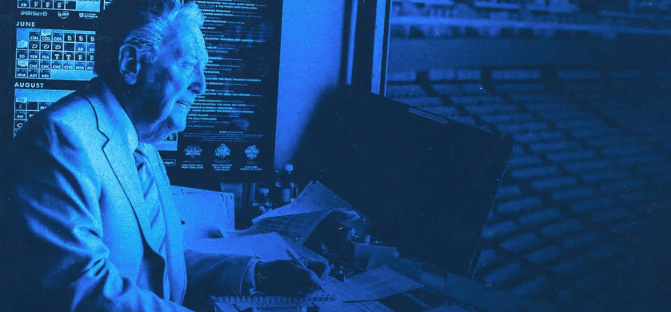
For the revamp, McKnight moves a few things around, but makes Chapter 32 the last one, titled “And That’s A Life: A Tribute to Vin Scully.” It is more about Scully stepping back into retirement than reacting to his passing in August of 2022, but the timing works well.

First, rewind to the Scully-Steiner quotes filling Chapter 3.

As for Dodger Stadium, Scully sets the stage: “They spent a lot of money to make sure it remains the edifice that it is. It’s a great tribute to the game, it’s a great tribute to baseball, and it’s a great tribute to Walter O’Malley, so, all in all, it’s a rather sacred place for me.”

Steiner, unfortunately, takes up a brunt of the seven-page chapter, perhaps because in the update, Scully isn’t available. That means Steiner is left to pompously class things up on page 31, going over how he was there for the Dodgers’ COVID-induced 2020 title:

“I remember at the moment when Urias struck out the final out of the World Series. I’m saying, ‘Finally, the wait is over. The Dodgers are the champions of 2020,’ and in that moment, when I am making that call, I am just drowning in a flood of emotions. From the little kid who was screaming his fool head off in my little house on Long Island and, 65 years later, I’m calling the World Series championship for the Dodgers. I am an out-of-body experience to myself. I thought, ‘Oh shit! It doesn’t get any cooler.’ What made it much more satisfying was it came at a time when everything was rotten on earth. The early stages of COVID, playing in front of cutouts and yet, finally, they somehow won the World Series and I had the last call and didn’t butcher it all too bad.”

He is correct. He could have butchered it much worse. Surprisingly, he didn’t.

But we, as he often does, digress.

Continue reading “Day 7 of 2023 baseball books: They’re talking the talk, and Scully is the language that ties it together”

Day 6 of 2023 baseball books: The fix is still in the minds of … who again?

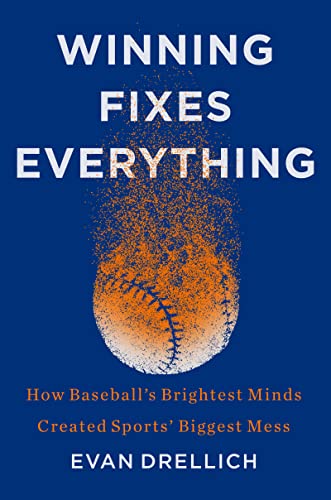
“Winning Fixes Everything: How Baseball’s Brightest Minds Created Sports’ Biggest Mess”

The author:
Evan Drellich

The publishing info:
Harper
368 pages; $32
Released Feb. 14, 2023

The links:
The publishers website
At Bookshop.org
At Powells.com
At Vromans.com
At TheLastBookStoreLA
At Skylight Books
At Diesel Books
At BarnesAndNoble.com
At Amazon.com

The review in 90 feet or less

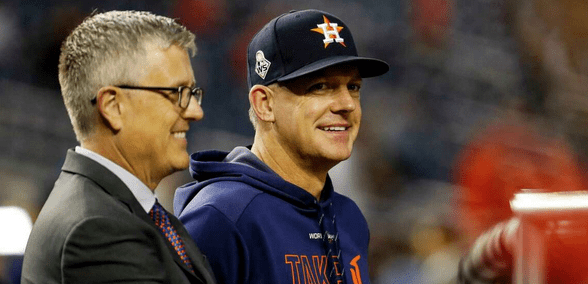
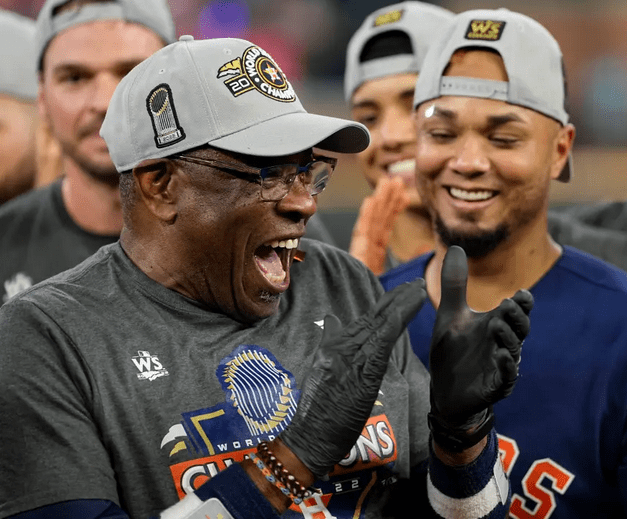
Another fine mess the Houston Astros put themselves in after winning the 2022 World Series.

Expecting some sort of redemption and adoration of how it all happened with manager Dusty Baker tasting the fruits of victory – especially after all the baggage attached to that 2017 World Series title over the Dodgers may have helped the city heal from a horrible flood situation of Hurricane Harvey – the Astros’ six-game series win over the Phillies (yes, the Phillies), a year after they came up short in the finale to the Atlanta Braves, couldn’t even fully enjoyed during the first full week of November, 2022 without more controversy.

They let go of general manager James Click for declining a one-year contract, along with assistant GM Scott Powers.

So now the question on the table: Would owner Jim Crane be brave enough to hire back Jeff Luhnow as the GM?

You know, that guy who had so much fun as a fantasy baseball owner he somehow put his MBA to use and created the rosters of ’17 and ’22, after several years of tanking games to get draft picks, and was then cut loose in early 2020 in the froth of the franchise cheating scandal?

Maybe the stink is gone from him and people have short memories. But, hey, his MLB suspension is over. He’s cleared through TSA.

But he did sue the team for breach of contract.

A a Sports Illustrated feature explains: “Luhnow seems to see the sign-stealing scandal as a black swan event: shocking, earth-shaking and impossible to have foreseen because he wasn’t involved in it.Does he believe the scandal tarnishes the 2017 title? “I think that the Astros built a powerhouse,” he says. “And it’s unfortunate for our fans that going through ’17 and winning that World Series and then two years later having to have people question that—it’s unfortunate, and I wish that had never happened.”

The story continues:

Continue reading “Day 6 of 2023 baseball books: The fix is still in the minds of … who again?”

Day 5 of 2023 baseball books: An extended spit take on Gaylord Perry

“Spitter: Baseball’s Notorious Gaylord Perry”

The author:
David Vaught

The publishing info:
Texas A&M University Press
456 pages; $38
Released November, 2022

The links:
The publishers website
At Bookshop.org
At Indiebound.org
At Powells.com
At Vromans.com
At TheLastBookStoreLA
At Skylight Books
At BarnesAndNoble.com
At Amazon.com

The review in 90 feet or less

When Gaylord Perry passed away from the lingering effects of COVID last Dec. 1 — just about a week after this book’s release – the cursory and bland Associated Press obituary started this way:

GAFFNEY, S.C. — Baseball Hall of Famer and two-time Cy Young Award winner Gaylord Perry, a master of the spitball who wrote a book about using the pitch, died Thursday. He was 84.

The book reference wasn’t to this biography.

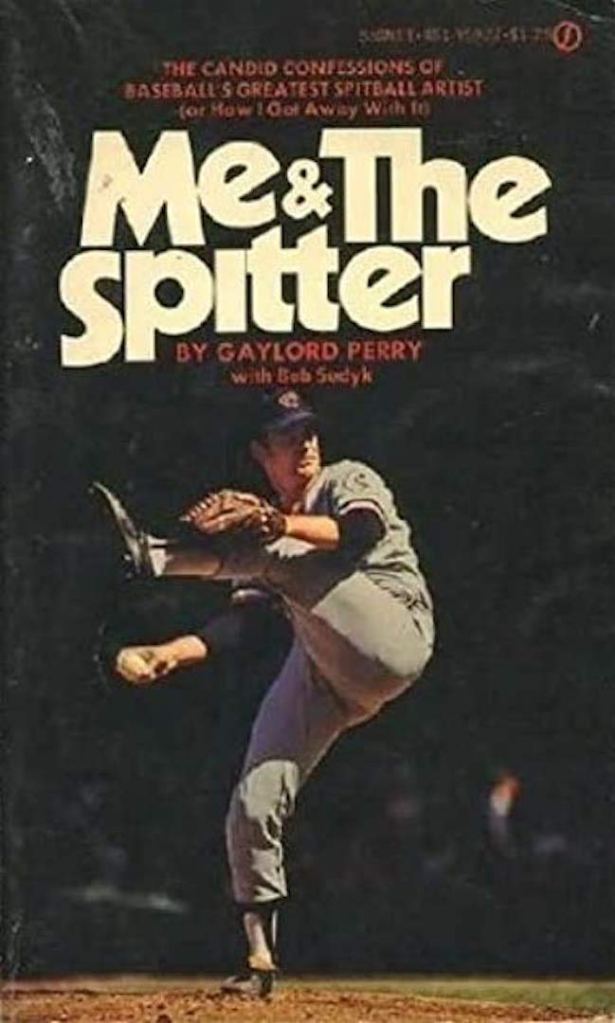
It was the 1974 as-told-to autobiography, “Me and the Spitter,” with noted Cleveland sportswriter and columnist Bob Sudyk (Saturday Press Review, 222 pages). It had the subtitle: “An Autobiographical Confession.” A book that this book, if truth be told, has swallowed whole, chewed up and is ready to spit out.

But also note: When the paperback version that book from almost 50 years ago came out by Signet, the subtitle was enhanced to read: “The Candid Confessions of Baseball’s Greatest Spitball Artist (or How I Got Away with It).” It was also brightened up with a different, more casual typeface font for the cover title, versus the block letters from the hardback version.

The media-created legend of Gaylord Perry was set in motion, and labels had to continue to be adjusted.

The AP obituary, lacking much depth or context, rambled on about how, in that old autobiography, Perry said he was the “11th man in an 11-man pitching staff” for the Giants. He needed an edge. He learned the spitter from teammate Bob Shaw. Perry said he first threw it in May 1964 against the New York Mets, and ended up going 10 innings without giving up a run. Soon enough, he won a spot in the Giants’ starting rotation.

The new book explains as much just from the intro:

That first time was May 31, 1964, before 57,037 at Shea Stadium, in the second game of what was the longest double header in major league history.

(Could the AP obit be any less compelling?)

In the bottom of the 13th, the game still tied at 6-6, Giants manager Alvin Dark called in Perry, only because it was his last available arm (aside from Bob Hendley, who was supposed to start the next day). The 25-year-old Perry had just seven appearances that season, a 2-1 record and a 4.77 ERA. He got through “two shaky innings” when catcher Tom Haller came to the mound and said, “Gaylord, it’s time to try it out.”

Perry then pitched until the 23rd, giving up seven hits and walking one, but striking out nine of the 36 batters he faced. When the Giants scored twice in the top of the 23rd, Dark brought in Hendley to get the save – he fanned two of the three he faced. The game lasted nearly seven and a half hours and Willie Mays (who went 1-for-10) actually played shortstop during some defensive finagling between the 10th and 13th inning, but then went back to center field when Perry came in. Duke Snider even entered the game as a pinch hitter for the Giants in the top of the ninth and grounded out.

Perry ended up getting three at bats during the game. He was actually the go-ahead run in the top of the 22nd when he reached on an error, went to second as Orlando Cepeda was hit by a pitch, but both were stranded. Perry could have a fourth at bat – he came out for a pinch hitter in the top of the 23rd with runners on first and third. Del Crandel, who hit for him, doubled to right to push across the tie-breaking run.

(All this happened after Juan Marichal threw a complete-game 5-3 win in the doubleheader opener that lasted just two hours and 29 minutes).

Thanks for the excuse to go back and find out about that day in baseball history. It’s an example of the kind of things the Internet will happily spit out if the right keystrokes are hit.

Perry also wrote in that book that he chewed slippery elm bark to build up his saliva, and eventually stopped throwing the pitch in 1968 after MLB ruled pitchers could no longer touch their fingers to their mouths before touching the baseball.

So he looked for other substances, like petroleum jelly, to doctor the baseball. He used various motions and routines to touch different parts of his jersey and body to get hitters thinking he was applying a foreign substance.

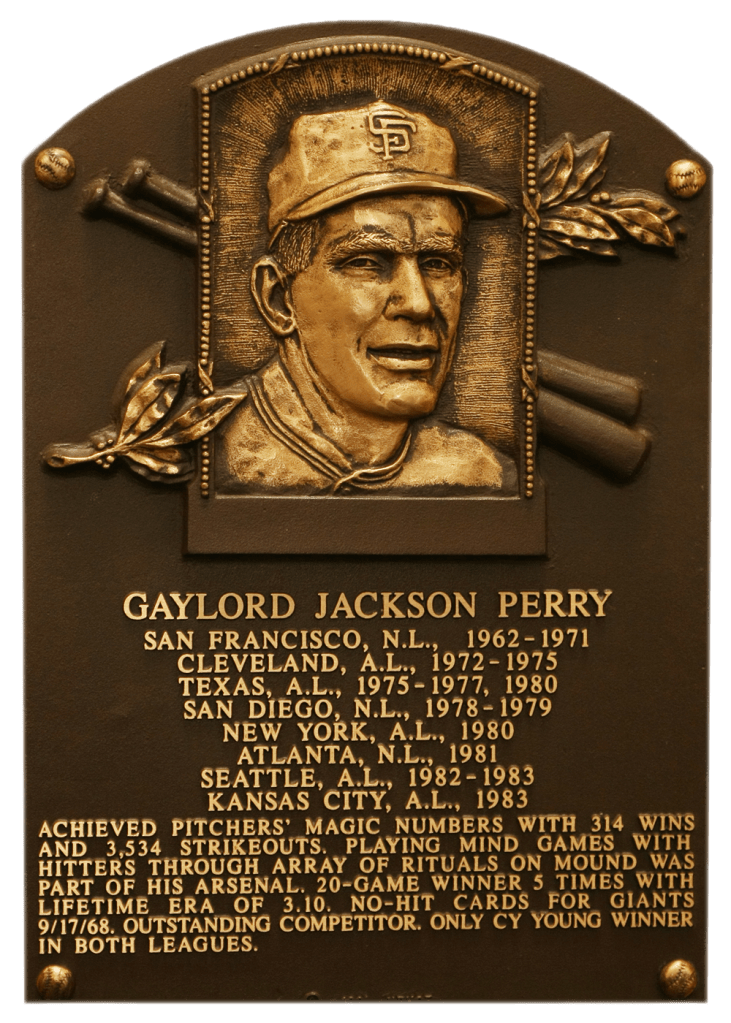
Fortunately, more complete obits came from the New York Times and Washington Post. And the Baseball Hall of Fame, for which Perry was a treasured member (and his plaque has more lines dedicated to the teams he played for versus the description of his career below).

Continue reading “Day 5 of 2023 baseball books: An extended spit take on Gaylord Perry”

Day 4 of 2023 baseball books: Fire the ball, and make someone look like a fool

“The Fireballer: A Novel”

The author:
Mark Stevens

The publishing info:
Lake Union Publishing/Amazon
415 pages, $16.99
Released January 1, 2023

The links:
The publishers website
The authors website
At Bookshop.org
At Indiebound.org
At Powells.com
At PagesABookstore.com
At BarnesAndNoble.com
At Amazon.com

The review in 90 feet or less

Vulture.com once pushed out a mind-blowing list called “All 340 Bruce Springsteen Songs, Ranked from Worst to Best.” It was updated in 2020 and, for our purposes, is still quite up to date.

Because coming in at No. 43, we’ve found “Glory Days,” from the 1984 “Born In the USA” album. Writer Caryn Rose’s assessment:

So there’s that nagging question: Why would Springsteen, who seems to know his baseball terminology, use the term “speedball” instead of “fastball”? It’s not a syllable thing that fits better in the lyrics, like Paul Simon admits he did with using “Joe DiMaggio” versus “Mickey Mantle” in his classic song “Mrs. Robinson,” right?

Baseball writer Joe Posnanski dove into this in a 2012 column, taking issue with “speedball” reference, and then throwing out: “I will say I have had numerous Springsteen experts explain why ‘speedball’ works better than ‘fastball’ in that particular case. I don’t really remember the reasons, which probably gets at the heart of how I feel about that argument, but I do remember they were adamant.”

Update: Posnanski wrote a piece on May 9 for his Substack home, “Shaking off the Speedball,” which is pleased to hear “speedball” has been updated to “spitball” in live 2023 concerts. We can all rejoice as much as we can while our dresses sway.

Posnanski circled back to that in 2021 during a discussion about another Springsteen lyric debate and added:

“I know there are extreme Boss fans who will try to defend the indefensible ‘He could throw that speedball by ya,’ by citing historical references of fastballs being called speedballs or by pointing out the musical superiority of the word ‘speedball’ to ‘fastball.’ But I cannot and will not go out on that creaky ledge with them. Speedball is wrong. Speedball is bad. Speedball is a lyrical catastrophe.”

To that point, Craig Calcaterra did a piece once for NBC Sports that defended Springsteen’s “speedball” because there’s a listing (or two) about it in Paul Dickson’s incredible “Baseball Dictionary,” spotting a reference to it used in 1918.

Some can do a deeper dive in newspaper websites and find things that back it up – this one about Bob Feller re-signing with the Cleveland Indians after he was discharged from the Navy. The headline above the story reads: “The Indians’ Speed-Ball Artist Returns.”

And for what it’s worth, the song, and its lyrics, are known well enough in baseball circles to have its own Baseball-Almanac.com post on the site’s poetry section.

If you’re wondering not, what, but who, the speedball pitcher was being referenced, we read how Springsteen was inspired to base the song on a friend of his who pitched during his time at  St. Rose of Lima High baseball team. Springsteen ran into him in a Jersey shore bar. They talked. A song emerged.

Maybe to that point, Seattle songwriter Mike Votava once presented a very sweet explanation to all this: Springsteen was annoyed with his friend talking baseball and wanted to mock him. That seems reasonable.

In the first four chapters of his new novel, Colorado-based mystery/non-fiction writer Mark Stevens tries a few different ways to emphasize why his book is called “The Fireballer,” trying to frame the abilities of Baltimore Orioles pitcher Frank Ryder and his own 110-miles-per-hour fastball/speedball/fireball:

“With each Ryder pitch, there is almost a need to laugh, partly at the spectacle of it all and partly at his own weird luck. On TV it’s like you’re watching a joke. It’s like every single pitch is a coked-up hologram video, the ball a subatomic particle, an unhittable blink of white nothing … If Frank Ryder’s pitching motion is double speed, the ball is triple speed and everything else moves to the beat of a regular world.”

Continue reading “Day 4 of 2023 baseball books: Fire the ball, and make someone look like a fool”

Day 3 of 2023 baseball books: You better not pout, Joe Kelly’s telling you why (in full mariachi jacket)

“A Damn Near Perfect Game:
Reclaiming America’s Pastime”

The author:
Joe Kelly
With Rob Bradford

The publishing info:
Diversion Books
288 pages; $28.99
Released Feb. 28, 2023

The links:
The publishers website
At Bookshop.org
At Indiebound.org
At Powells.com
At TheLastBookStoreLA
At BarnesAndNoble.com
At Amazon.com


The review in 90 feet or less

Back in the summer of 2019, when we seized space in the L.A. Times as part of a give-and-take of ideas and freelance paychecks, we thought we were doing a public service to Dodgers fans by helping them rid the nasty aftertaste of Joe Kelly.

It was mid-June, and the Dodgers had an upcoming Joe Kelly Bobblehead Night giveaway.

Say it ain’t so, everyone.

Kelly had not only posted some awful numbers in his first year in L.A., but it was even more anguishing since he was fresh off helping the Red Sox beat the Dodgers in the ’18 World Series, and somehow earning a three-year, $25 million contract for his past performance. His 7.59 ERA, a 1-3 record and three blown saves in 22 appearances didn’t endear the 31-year-old from Corona High and UC Riverside.

There were many on social media advocating for fans, upon receiving the give-away trinket, to toss it in the trash. Or even worse. Even without considering that the face value of the ticket was increased as to make this “special” day have added value.

We recruited the opinion of Phil Sklar, CEO and co-founder of the National Bobblehead Hall of Fame in Milwaukee, to chime in.

“If Kelly turns things around and ends up helping the Dodgers win the World Series, I would expect this one to rise in value,” said Sklar. “If he doesn’t turn things around, I would expect to see a lot of them at garage sales or thrift stores in the L.A. area for very low prices. Hopefully, Dodgers fans won’t litter the field with bobbleheads, especially if he has a bad outing.”

By the end of the season, Kelly was 5-4, his ERA a bit more stable at 4.56 in 55 appearances (with 13 games finished) and one save and a career-best 10.9 strike outs per nine innings.

In 2020, Kelly and the Dodgers did claim the truncated World Series title. During the COVID downtime, he even threw a baseball through his house window and became an internet legend.

By 2021, Kelly endeared himself to Dodgers fans still upset about the Houston Astros’ cheating scandal by taunting the start shortstop Carlos Correa in a inning-ending staredown. Complete with pouty face.

We found this image as a sticker in a local gift shop. We purchased it and stuck it on our skateboard.

It drew an eight-game suspension and a fine. And a fine-looking meme.

As well as a famous mural on the side of a building in Silverlake. Where fans can stop and check it out on the way to Dodger Stadium.

“Right now, he’s like the most popular guy in town,” said local radio sports-talk host Steve Mason, quoted in USA Today.

As in: How do you like my bobblehead now?

After Kelly’s performance, the pitcher’s Wikipedia page included this addition: “He is also the father of Carlos Correa.’’

Yet by the start of 2022, Kelly was free to leave. He did so, gravitating to the Chicago White Sox, where went 1-3 with 6.08 ERA in 43 games last season – with one start, and one save. He still holds a roster spot and, after the first few games of 2023, No. 17 took the loss on April Fool’s Day by giving up the go-ahead run to the Astros in the bottom of the seventh, and sports that 0-1 mark with a 9.00 ERA, unused since then.

But it was all during the delay in the 2022 season — another labor skirmish pushed back spring training and the start of the season — where Kelly was having angst as well.

He wrote up an essay that the Los Angeles Times published (was this some kind of payback?):

Continue reading “Day 3 of 2023 baseball books: You better not pout, Joe Kelly’s telling you why (in full mariachi jacket)”