

“Democracy At The Ballpark:
Sport, Spectatorship, and Politics”
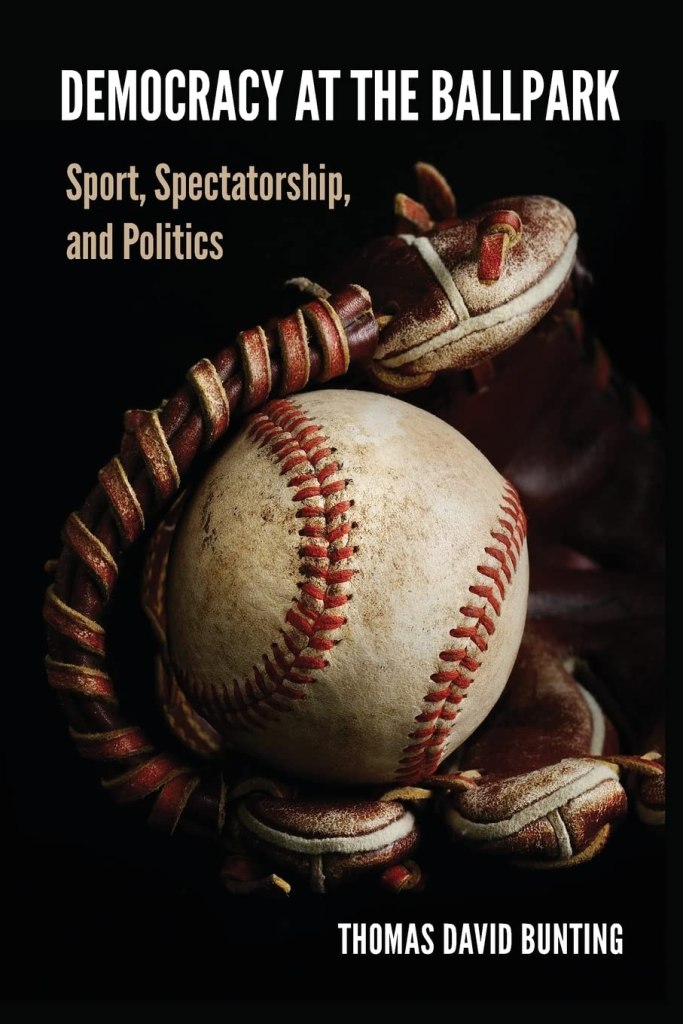
The author:
Thomas David Bunting
The publishing info:
State Univ. of N.Y. Press
212 pages
$32.95
Released July 2, 2022
The links:
The publishers website
At Bookshop.org
At Indiebound.org
At Powells.com
At Vromans.com
At TheLastBookStoreLA
At Skylight Books
At Diesel Books
At PagesABookstore.com
At Amazon.com
At BarnesAndNoble.com
The review in 90 feet or less

Draw up one of those Venn Diagrams to illustrate a wonderful overlap of “Baseball” and “Democracy,” and we suspect there would still be an incongruent segment that would take the opportunity to explain how that piece of common real estate was more of an interlope and then use it as a platform to talk in circles around it.
The political climate is such that you can’t even have the Congressional Baseball Game somewhere in D.C. — an event since 1909 — and still have it become a social media lightning rod for personal opinion that isn’t necessary.
A game that has on occasion usurped the duties of elected officials actually trying to get work done — The House was once supposed to debate an appropriations bill on Civil War cotton damage, but a quorum was not present because too many were at this heated contest — came back last September and led to California House Democrat Ro Khanna responding to the Republicans winning a 13-12 decision at Nationals Park in D.C. (for an event that is used as a bi-partisan way to raise funds for various non-profit programs):
This is why Twitter might want to have a 20-second delay between someone typing a post and having it actually post. A necessary evil in today’s world?
We’ve experienced enough in our language of action in how baseball and democracy (a word often used interchangeable with “politics”) have a way of intermingling, as a senator “goes to bat” for his constituents, or an idea for a bill is “off base” or came “out of left field.”
One could also find a way to today to incorporate an exaggerated defensive shift or a call for a review to make sure all is fair.
Perhaps our first thought of baseball and democracy as common ground – and maybe for many who hadn’t connected these dots before – came with the oft-quoted speech Crash Davis gives to Nuke LaLoosh during a mound visit in the 1988 film “Bull Durham” (and we referenced just recently in our review of “Church Of Baseball” by Ron Shelton). The veteran catcher tells the empty-headed pitcher: “Relax, all right? Don’t try to strike everybody out. Strike outs are boring. Besides, they’re fascist. Throw some groundballs – it’s more democratic.”

Get everyone involved and let their talents come forth, win (or lose) as a team.
A few other baseball/democratic attempts have also emerged over the years but those who have the nerve and resources to trust its intent.
In 2013, the esteemed Mike Veeck, owner of the independent minor league St. Paul Saints, used an exhibition game to see if it could work with no umpire present. It had been suggested by a grad student at the Citadel. The catchers called balls and strikes. A first-base jury box of fans decided safe and out calls, among other things (until they appeared to get bored and left the box in the sixth inning, leaving a guy in a judge’s robe to finish it off standing behind the pitcher’s mound). Otherwise, no one complained. The Saints won, 4-3.
The main takeaway: The speed of the game flows better when no one is holding it up by arguing. That implies maturity is necessary.
It was a reminder that Veeck’s Hall of Fame father, Bill Veeck, went to another form of Ancient Greek democracy when, as owner of the American League’s St. Louis Browns, he held a “Grandstand Managers Day” in 1951. More than 1,000 fans had placards with “yes” and “no” when a team rep asked of them “Steal?” or “Infield Back?” They also made out the lineup card by voting on it.
Thumbs up: The Browns won the game. Thumbs down: The team finished 52-102 and moved to Baltimore three years later.
Years later, Chicago Cubs owner Philip Wrigley lost his mind and tried a “College of Coaches” committee — eight coaches deciding on things rather one sole manager. More like a psychedelic collage than a collegiate endeavor that actually went from 1961 and ’62. The coaches had internal battles with each other. Leadership was needed rather than rotating personalities. Bringing more people in to make decisions, to share in a discussion, seems democratic, but even as slow as baseball becomes, it is problematic.
But it all circles back – Venn and all – to political commentator George Will, who said in the “Third Inning: 1910-1920” installment of Ken Burns’ rigorous “Baseball” documentary:
Baseball suits the character of this democratic nation. Democracy is government by persuasion. That means it requires patience. That means it involves a lot of compromise. Democracy is the slow politics of the half loaf. Baseball is the game of the long season, where small incremental differences decide who wins and who loses particular games, series and seasons. In baseball you know going to the ballpark the chances are you may win, but you still may lose. There’s no certainty, no given. You know when the season starts the best team is going to be beaten a third of the time. Worst team is going to win a third of the time. The argument, over 162 games — that middle third. So it’s a game you can’t like if winning means everything. And democracy’s that way too.”
If that wasn’t enough for some to start pushing Will as a way to become the commissioner of the game and protect its best interests, Burns himself said in an interview promoting the documentary series in 1994 – whether or not he acquired the opinion through osmosis: “Baseball is an exhilarating democratic sport that manages to exclude as many as it includes. It’s a profoundly conservative game that often manages to be years ahead of its time.”

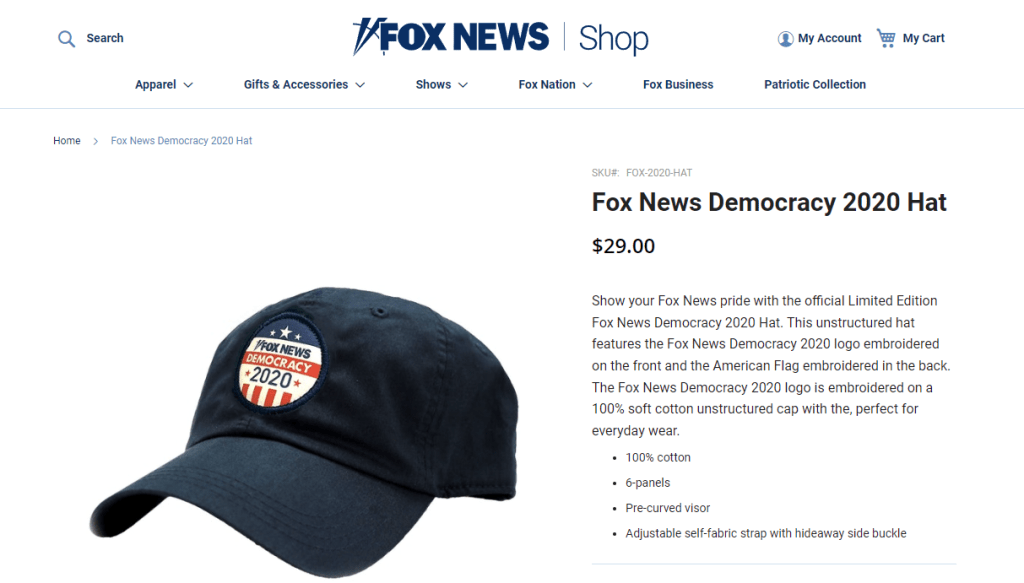
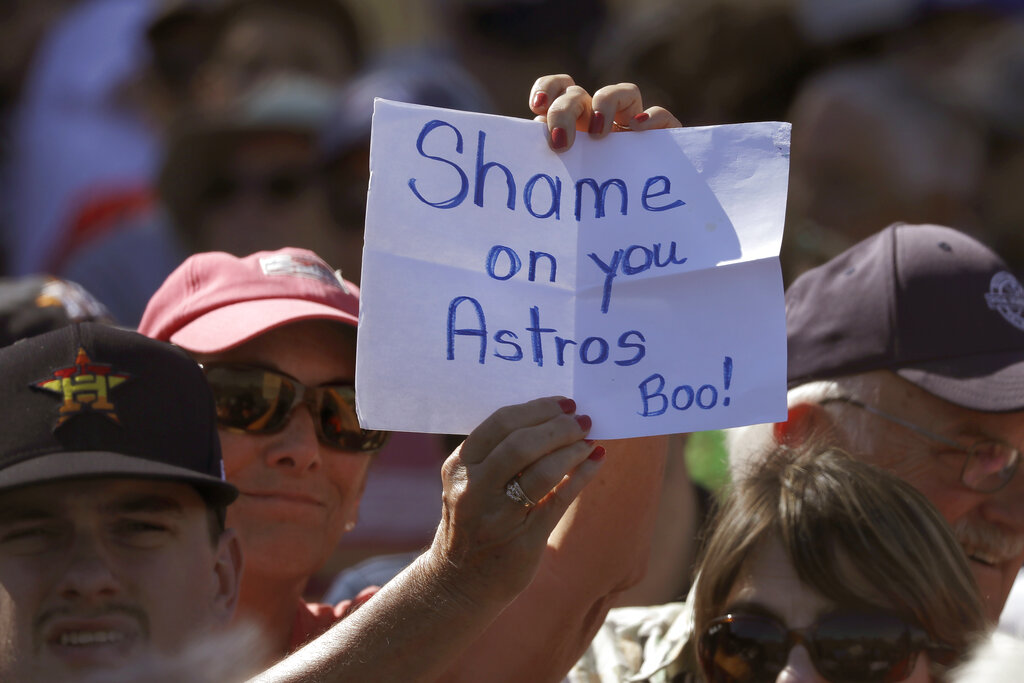
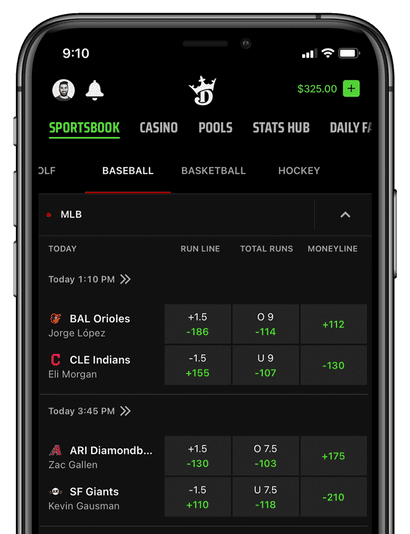
Then we land on the world today. Just see the advertisements above.
Where democracy and baseball seem in some kind of peril, maybe unsure of where their compass points, not trusting whose making decisions that seem counterintuitive to the best interest of their constituents/fans.

That seems like a ripe starting point for this renewed discussion, in a very academic yet accessible way, by Thomas David Bunting, an associate professor of political science at Shawnee State University in Southern Ohio better known for its programs in nursing, business administration, sociology, early education, biology, fitness administration and psychology. (Hey, we’re just going by the school recruiting manual here). Bunting, with a Ph.D. and Masters in Political Science from the University of Wisconsin-Madison and a B.A. in Political Theory and Constitutional Democracy from Michigan State University, could be perceived to be a bit off the academic branding radar to some whose baseball-politics range of view starts and ends with George Will. But Bunting’s essays and analysis has appeared in places such as the Washington Post, when he looked at the ramifications of Major League Baseball moving its 2021 All Star Game from Atlanta to Denver in the wake of George’s new voting law that suppresses Black access, and saw Senate Majority Leader Mitch McConnell warn MLB to “stay out of politics” as it always seems to want to play that Anti-Trust Exemption status card against the sport when it does things like become socially activated.
Another example of Bunting’s work can be found in The Constituionalist from last January, where this idea that baseball fandom and spectator democracy are ripe for dialogue.
He also has a 2018 academic work, “Breaking Barriers and Coded Language: Watching Politics of Race at the Ballpark,” that is folded into these expanded chapters of a book — which is must be noted was released in November 2021 at the price still north of $100 but has reversed the trend of inflation and came out this month in a far-more accessible one-third of that sticker shock. (One can even Nook it for $25).
Now, Bunting can ignore the bunt sign and swing away with his historical context and current angst and reach conclusions such as:
When people watch politics at the ballpark, or when the ballpark shapes politics, it does so before a political heterogeneous group of people. Politics, as a force, seems to drive people apart, unfolds within this sphere where something else brings people together. Democracy at the ballpark remains instructive as democracy outside of the ballpark becomes increasingly under threat. … Sport and baseball fill this need for meaning and show much about how people view themselves and their country. I take this everyday perspective seriously because democracy ultimately revolves around regular people and not the great men of history – democracy is about the spectators more than the spectacle. Baseball provides inside into this relationship.”
At the conclusions of his “Conclusion” chapter, he then invokes the name of Hall of Fame broadcaster Ernie Harwell, both in the deep South but beloved by many across all demographics, and a quote he is famous enough for that it still exists in memes:

Is that clear enough?
Our author Q&A

Bunting was generous with his time to offer up these answers to our questions:

Q: Amazon has your book in the rankings under “democracy,” “sports history” and “baseball,” and baseball is kinda last in that list. Would you categorize this as a political science book that touches on the importance of baseball’s history, or – considering the cover photo — a baseball book about its ties to democratic process. Or what other category does it fall under — lying and cheating?
A: It is a political theory book that seeks to start a different conversation in the the field of democratic theory. What has struck me about democratic theory is how elitist it is—it is dominated by professors at Ivy League schools saying what democracy should be. Very little of these debates resemble anything about how folks around me growing up experienced politics. My argument is basically that baseball shapes how people view politics more than normative, elitist understandings of deliberative democracy. This is the frame of the book, even though most of the book focuses on baseball, what it is pointing towards is a more democratic understanding of how people encounter politics in their everyday lives. I use baseball as a case study and look at politics of spectatorship, community, equality, virtue, and technology.
Q: You mention at the start the process of trying to start this book some eight years ago, then realizing the importance of it in 2020. How did this book find its way to the front burner? Was it a required reading piece of your class at Shawnee?

A: I began the book and had it as my primary project in graduate school. My first two years of working at SSU were quite busy so the revisions took longer than expected, but the project was under contract shortly before the pandemic. I have not made this required reading nor do I plan on subjecting students to my writing. I prefer that people decide to read my work of their own free will.
Q: What do you hope readers come away with after they’ve digested what you’ve given them here? Does it take awhile to process and reflect to capture the full effect?
A: I am in the early phases of interacting with people who have read the book and I have been struck by how different the takeaways of different readers have been so far. I do not know if this is a good or bad thing, but I hope that speaks to the nature of the project—it is an attempt to describe the worlds of politics and baseball as they are and others can form their conclusions. The big takeaway for me on this project was how important and meaningful even small and sometimes silly things like sport can be for our lives and politics.
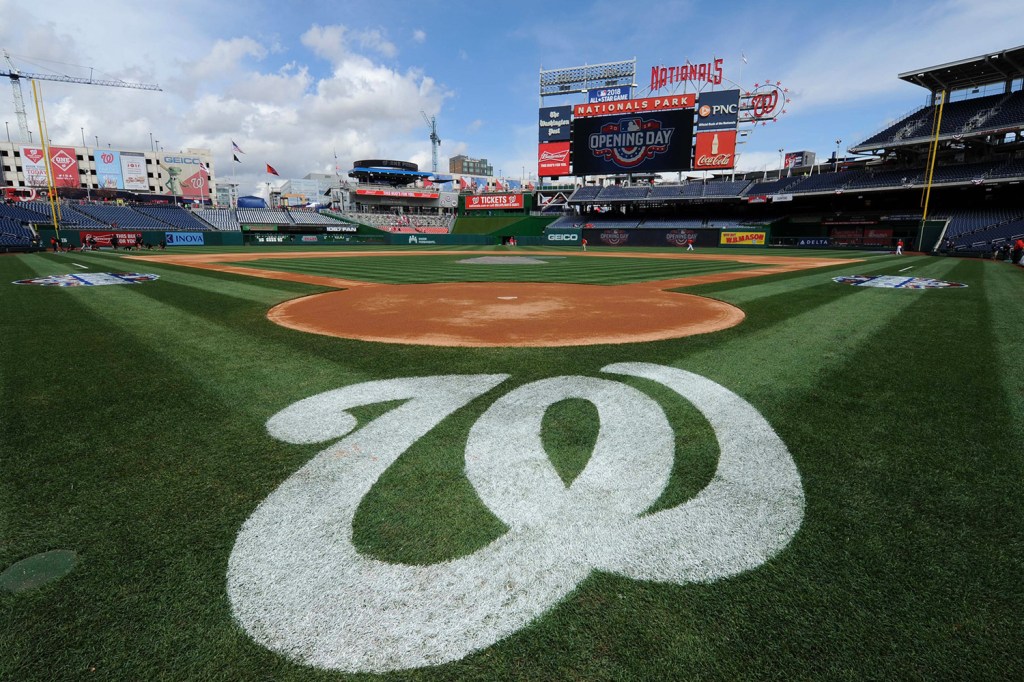
Q: There is a Major League Baseball team in Washington, called the Nationals (formerly the Expos of Montreal). In the past, we’ve had two Washington Senators, one that moved to Minnesota and another that moved to Texas – both still in place. If you were to give that team in D.C. a nickname that was more appropriate to what it represents in the heart of our democratic process, what could you come up? The Washington Whigs, for example, has nice alliteration. …

And on that topic: Is there any evidence you know of that the Presidential Mascot Race conducted every home game between Tom, George, Abe and Teddy – and they also have Taft and Coolidge — doesn’t have a per-ordained winner each night, which would undermine the fairness of it all?
A: I cannot speak to the mascot race, but I think Washington Senators is the most appropriate option given the Senate’s prominence as an obstructive body that shoots down legislation.
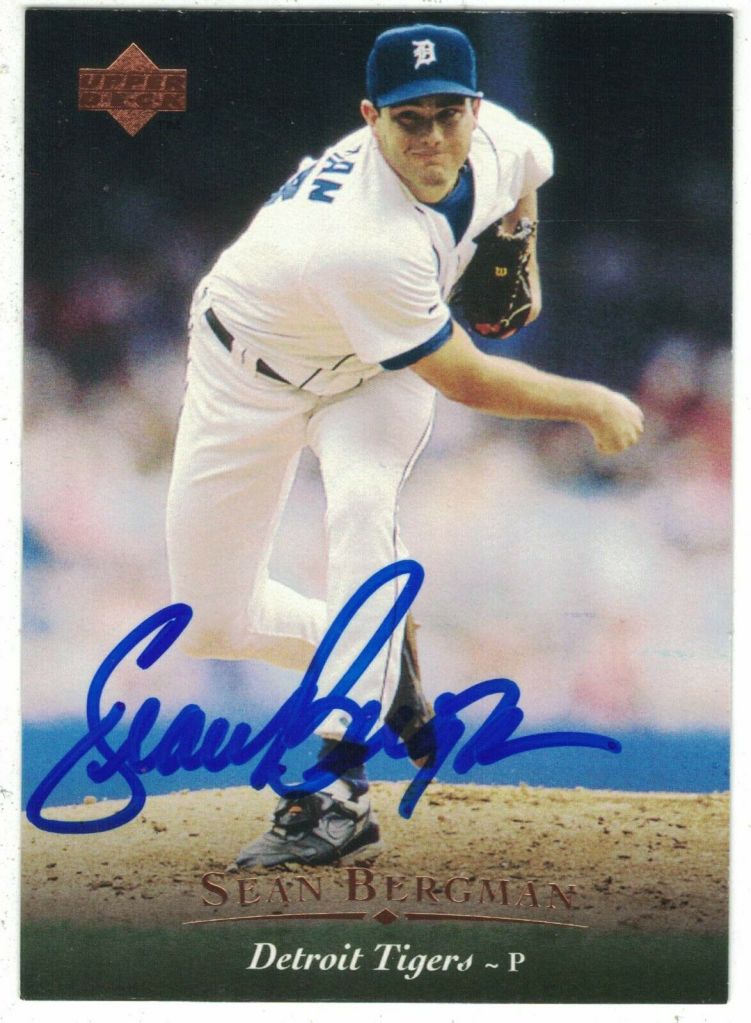
Q: As a Detroit Tigers homegrown fan – just assuming that by photos of you with an old English “D” on it – what are your memories of going to the ballpark and seeing a game unfold (and, as someone here in L.A. may ask, why did the Tigers allow Kirk Gibson to come here and win a World Series in a Hollywood-type way?)
A: My earliest memories were going to Tiger Stadium and feeling in awe of the entire experience. I am from a town of 8,000 people and Detroit seemed massive. I remember loving Cecil Fielder (his son, Prince, was later my wife’s favorite player), and getting an autograph from Sean Bergman, who was a journeyman pitcher. The Tigers in my youth were pretty terrible, so there are not a ton of memories of glory. I also remembered meeting Ernie Harwell at an event in Mt. Pleasant when I was a kid and that had a big impact on me. Re: Gibson — I supposed the Tigers let good players leave as an act of mercy.

Q: Would George Will have made a fair and balanced MLB Commissioner had he wanted to pursue it?
A: I am not sure, but he would have to be better than Rob Manfred.
Q: What person in public office, at any level, did you sense had the greatest connection to baseball and what it stood for?
A: I think FDR’s Green Light letter is the best example of someone in public office understanding the importance of games for democratic life.

Q: Do you foresee a day in our lifetime when a woman president throws out the first pitch of an MLB game?
A: I am terrible at predicting things, so I will spare everyone the wrong answer to this question.
How it goes in the scorebook
Circling the bases, with a respectable handshake from the third-base coach heading for home and a safe landing.
While the subject matter can get a little heady, Bunting’s heart is in the right place. Perhaps the most telling part of a book like this is when you scan the index and, as the alphabet separates the names and ideas, you’ll see “Aaron, Henry” with “Achilles;” “Plato” in the same neighborhood as “Piazza, Mike,” or “Nietzchke” and the “Negro Leagues” getting along just as well as French philosopher “Ranciere, Jacques” and “Robinson, Jackie.”
It also shines a light on how president leadership and baseball have always been an interesting litmus test as to what’s best for the country in a time of tension.
Was it prudent for President Trump to attend the Astros-Braves Game 4 of the 2019 World Series in Atlanta, and joyfully participate in the politically insane Tomahawk Chop? Bunting writes in response in his book: “America’s populist leader … (was) booed roundly (by the crowd) and threw his own anti-democratic language back at him, chanting, ‘Lock him up!’ … Baseball is not by essence a platform that omits dissent and gives way to spectacle and populist forces. It is a site of pluralism, vibrant community and resistance. It should not be surprising that a populist, anti-democratic leader would not fare well when exposed to democracy at the ballpark.”

In contrast, Bunting uses the first pages of Chapter 1 to remind how President Bush united the country after the 9/11 attacks by throwing the first pitch out at the Game 3 of the World Series – almost exactly eight years earlier than Trump’s World Series non-field appearance – and “used the game to show that the American way of life was still alive by using the sport as a rhetorical appeal to American leisure and resilience.” Not sure if Bunting thought it was an exploitative move, but it had its merits.
Both were voted in as Republicans. From the other side, Bunting notes how President Obama, during a visit to Cuba and taking in a baseball game (noted on page 68), said that the the sport “can change attitude sometimes in ways that a politician never can change, that a speech can’t change,” and used Jackie Robinson’s courage and integration as a visible example for citizens feeling oppressed to improve their lives. Frank D. Roosevelt also persuaded professional baseball to continue on during World War II as a way to keep Americans feeling somewhat “normal” at such a difficult period, because the game was comforting and lent stability.

“Baseball both reflects that status quo of many political issues and can be a site to challenge politics as they currently exists,” Bunting sums it up on page 149.

“Baseball can only be such a venue, it can only be a powerful metaphor, because it is a place filled with meaning … people invest in the meaning in the game because … they learned about life through the game, they remember people, places and things by touchstones in the game’s history, the formed relationships through the game.

The game taught them to look at the world differently. I encourage people to read narratives such as Potok’s ‘The Chosen’ or DeLillo’s ‘Underworld,’ because when people tell stories about baseball, they are telling stores about much more than baseball.”
That, and a go-back to a couple George Will books, becomes out latest poli-sci/American Lit 101 homework assignment.
You can look it up: More to ponder
== As baseball and democracy give noted scholars a chance to examine their DNA and wonder why that’s all so true, more recent examples can be found in Patrick Dubuque’s piece for Baseball Prospectus in the months before the 2016 President election, wondering how baseball had lost its way just as politics has been doing. Last August, the Baltimore Sun ran this op-ed piece by Jane Lo and Scott Warren (both involved in Generation Citizen, working to transform civics education) which was headlined: “Democracy And Baseball Are in Trouble for Similar Reasons … Are Their Fixes The Same as Well?” Perhaps the fix is in.
== Also coming up later this year from SUNY Press: “New York’s Great Lost Ballparks” by Bob Carlin ($29.95, 322 pages, expected to ship Oct. 1, 2022)

== In a revelatory soliloquy that is included in the stage play, “Take Me Out,” winner of the 2003 Tony Award for Best Play, an New York Empires’ Darren Lemming announces he’s gay. So how does everyone react in all this messiness? His business manager, Mason Marzac, also opening gay, with no concept about baseball but watches out of due diligence, has this soliloquy in the middle of the first act (written by Richard Greenberg), and given to us from Fangraphs.com, where he discusses now not only why he thinks “baseball is a perfect metaphor for hope in a democratic society” but also “baseball is better than democracy – because unlike democracy, baseball acknowledges loss.”
It goes like this:
It has to do with the rules of play. It has to do with the mode of enforcement of these rules. It has to do with certain nuances and grace notes of the game.
First, it’s the remarkable symmetry of everything.
All those threes and multiples of three – calling attention to – virtually making a fetish of the game’s noble equality. Equality, that is, of opportunity.
Everyone is given exactly the same chance. And the opportunity to exercise that chance at his own pace.
There’s none of the scurry, none of that relentlessness that marks other games – basketball, football or hockey. I’ve never watched basketball, football or hockey, but I’m sure I wouldn’t like them. Or maybe I would but it wouldn’t be the same.
What I mean is, in baseball there’s no clock.
What could be more generous than to give everyone all these opportunities and the time to seize them in, as well? And with each turn at the plate, there’s the possibility of turning the situation to your favor. Down to the very last try.
And then, to insure that everything remains fair, justices are ranged around the park to witness and assess the play. And if the justice errs, an appeal can be made.
It’s invariably turned down, but that’s part of what makes the metaphor so right.
Because even in the most well-meant systems, error is inevitable. Even within the fairest of paradigms, unfairness will creep in.
And baseball is better than democracy – or at least democracy as it’s practiced in this country – because unlike democracy, baseball acknowledges loss.
While conservatives tell you, ‘‘leave things alone and no one will lose,’’ and liberals tell you, ‘‘interfere a lot and no one will lose,’’ baseball says, ‘‘Someone will lose.’’ Not only says it – insists upon it!
So that baseball achieves the tragic vision that democracy evades. Evades and embodies. Democracy is lovely, but baseball’s more mature.

















 Tom Hoffarth's The Drill: More Farther Off the Wall