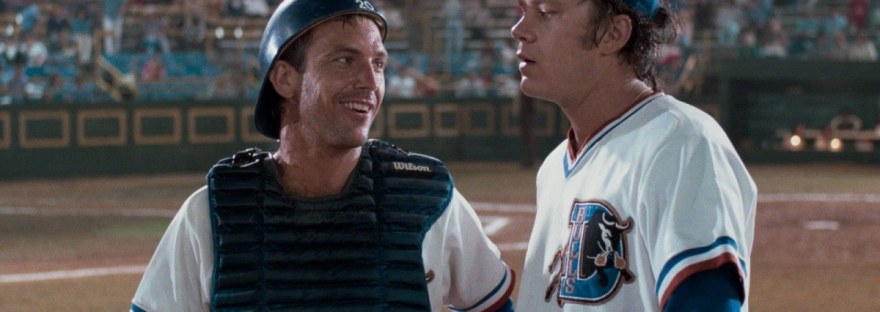
If the church of baseball works as a metaphor for “Bull Durham” — and those who continue to gospel sing its praises nearly 35 years after its release into the world — it can work the other way around in real-time church talk.
In 2017, Dr. Jason Lief, a professor of biblical and theological studies at Northwestern Christian College in Iowa who got his Ph.D. from Luther Seminary, wrote an essay for ReformedJournal.com headlined “Strikeouts are Fascist: Crash Davis and the Body of Christ.”
Hang in there, it’ll make some sense.
Tom Verducci’s lamentations in Sports Illustrated about the state of Major League Baseball was this jumping off point. In light of specialization — the decrease of the number of balls put into play, and the action often reduced to walks, strike outs or home runs — baseball has become boring. The piece refers to a scene in “Bull Durham” when Crash Davis is exasperated with Nuke LaLoosh, calls time, goes to the mound, and blurts out one of 238 memorable lines (*or maybe just a Top 37) from the flick:
Relax, all right? Don’t try to strike everybody out. Strikeouts are boring! Besides that, they’re fascist. Throw some groundballs – it’s more democratic.”
Lief sees that as a burning bush moment.
“What makes baseball good and what makes baseball interesting is when it is a collection of players with different skills and abilities working together as a team. We can’t all be shortstops, and we can’t all pitch. We need the gritty little players who slap hit the ball to the opposite field to move a runner, and we need the big swinging lefty to get us back into the game …
“When baseball teams start following some universal pattern, and players start playing the same, looking the same, and sounding the same… well, we get bad baseball. Or, at least boring baseball.”
He ventures to book of Colossians, where Paul says in the New King James Version: “Where there is no longer Greek nor Jew, circumcised or uncircumcised, barbarian, Scythian, slave nor free, but Christ is all, and in all!” (Colossians 3:11).
Lief reads into that as: “The church is a unified diversity, or maybe a better way to say it is a diverse unity … We need shortstops, left fielders, catchers, and pinch runners. We need different personalities — the clubhouse clown, the Crash Davis veteran, and the hotshot young pitcher with loads of directionless talent.
“The problem with the church is the same problem affecting baseball — we all want to be the same. We only want to worship with those think like us. We only want to hear the ‘truth’ of scripture that fits with the ‘truth’ as we see it. We don’t want to be bothered with the hard task of serious interpretation or discernment. We certainly don’t want to be bothered with the hard task living in real community, as opposed to the vague, overused, rhetoric that people mistake for community.
“When it comes to the social issues ready to rip our denominations and congregations apart, what if we stopped listening to the loudest, and often most ‘certain’ voices and started listening to the Crash Davises within our communities? What if our churches stopped worshiping at the cult of personality and become much more democratic, much more empathetic, and much more interesting?
“We need each other in all of our diversity and quirkiness. Maybe we need to start playing church (and I mean the word play in a philosophical sense, not a ‘let’s pretend’ sense), and stop talking about being the church.”
Amen and pass the hot dog relish.
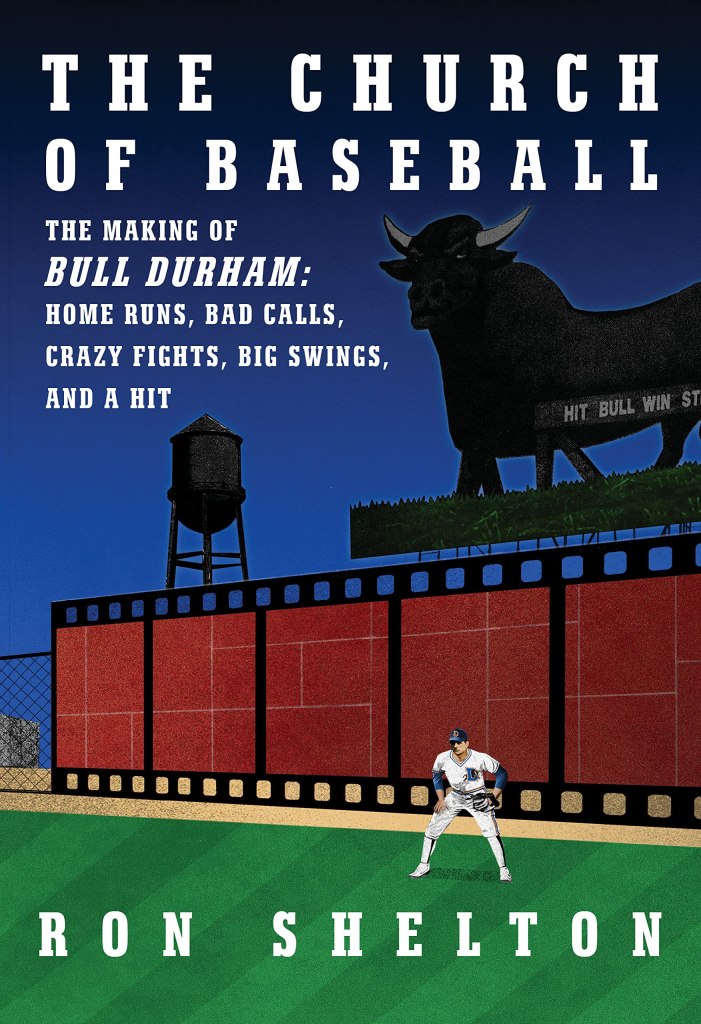
With writer/director Ron Shelton’s incredibly insightful breakdown about how, why and what happened when “Bull Durham” came out in baseball’s spiritual summer of 1988 — it preceded the release of “Eight Men Out” and was one bookend of the Dodgers’ improbable World Series run – he often goes back to that church connection to explain, because that’s in his DNA.
He grew up with bible stories. He took required Old and New Testament courses at the Christian liberal arts Westmont College in Santa Barbara and found them to be “the most rigorous classes I’ve ever taken.”
But as a 12-year-old growing up in Santa Barbara, a baseball fan of local native Eddie Matthews and his Milwaukee Braves, when the team moved into in the 1957 World Series facing the New York Yankees, the “church thing” took on new revelations.
On a Sunday morning in October, after Shelton first attended church school and then went to services at First Baptist Church, his father suddenly took the family out of church to get home in time to meet the TV delivery man from Ott’s department store. A delivery on a Sunday? It was special order.
The black-and-white set came on to show the fourth game of the World Series, as the Braves were trailing two games to one, and prayers were needed.
From page 6: “We watched that game in terror, aware that Eddie was having a terrible series. But after the team tied it in the bottom of the tenth, our hometown hero hit a towering two-run homer to win the game. A great weight lifted up out of the room, my father looked around, his shoulders lightened and we started going to church less and less. The seed for the Church of Baseball was planted.”
The first lines of the movie that Shelton feeds Annie Savoy picks up on that:
“I believe in the Church of Baseball. I’ve tried all the major religions, and most of the minor ones. I’ve worshiped Buddha, Allah, Brahma, Vishnu, Siva, trees, mushrooms, and Isadora Duncan. I know things. For instance, there are 108 beads in a Catholic rosary and there are 108 stitches in a baseball. When I learned that, I gave Jesus a chance. But it just didn’t work out between us. The Lord laid too much guilt on me. I prefer metaphysics to theology. You see, there’s no guilt in baseball, and it’s never boring … which makes it like sex.”
A true Catholic rosary may have just 59 beads – a Mala necklace Hindu prayer beads from India actually has 108 for many more celestial reasons. But the point is made.
The beauty of Shelton’s book is it continues to enlighten and entertain, not through tawdry details about misbehaving cast or crew, but connecting the far more intimate dots, looks at the impact of the film (finding out people have named their kids after some of the characters) and how the city of Durham still credits it for a revival.
It’s also a detailed TED talk about how movies are made, from budgets, shooting schedules, changing scripts and scenes, interwoven music, and what one fights for and gives up on with the bosses.
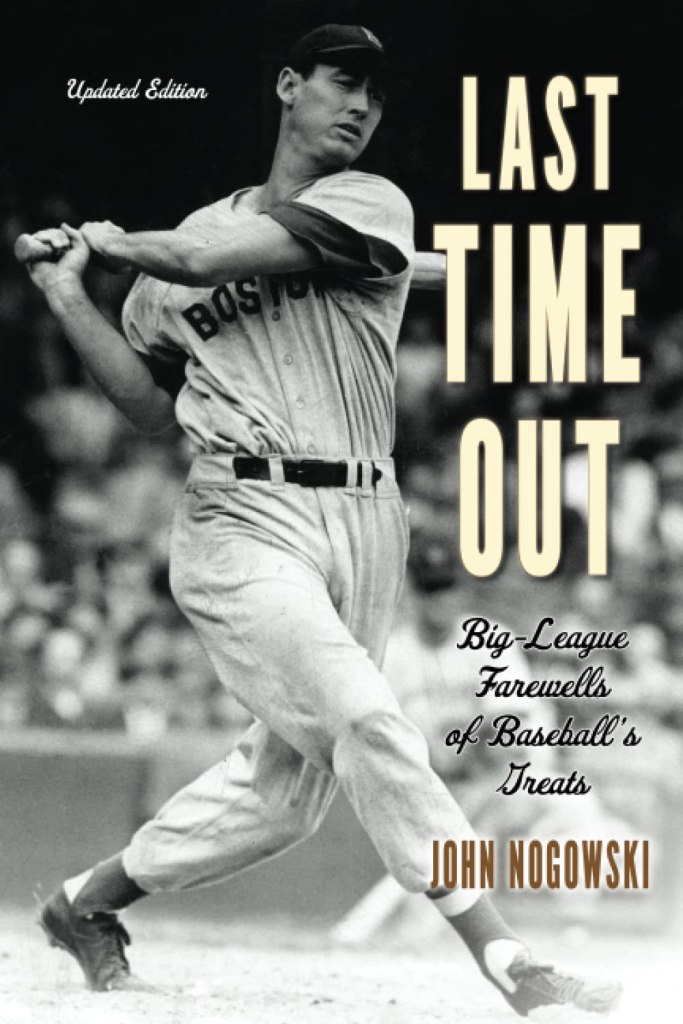
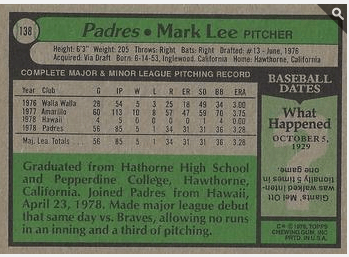
Pull up a chair from the bullpen and let us tell you about Mark Lee’s last time out in a Major League Baseball game was nothing to write home about.
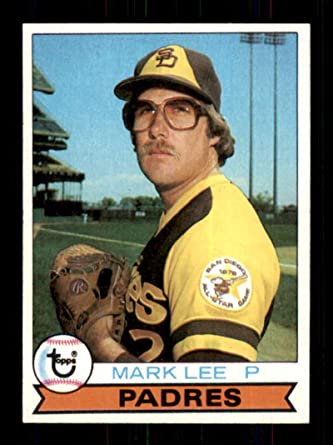
And if he did write home, it would have been to his family in Hawthorne, California — also my hometown. Lee came through Hawthorne High a few years ahead of me during the 1970s, as the Elton John glasses and Goose Gossage-like glare gives away that time period.
Nonetheless, and for the record, this occured:
October 4, 1981: The 28-year-old Pittsburgh Pirates reliever makes his 118th appearance as the team wraps up the strike-interrupted season at Three Rivers Stadium against St. Louis on a crisp Sunday afternoon.
Lee gives up a run on three hits over the fourth and fifth innings. His sixth inning is three up and three down — a Dane Iorg fly ball to Mike Easler in left field, Steve Braun grounds it back to the box Lee throws him out, and then coaxing Orlando Sanchez to fly out to right fielder Bill Robinson. In the bottom of the sixth, Lee Lacy pinch hits for Mark Lee, and manager Chuck Tanner sends Kent Tekulve to mop up the final three innings in a game the Pirates eventually drop, 4-0.
For Lee, and the other 10,022 in the park, time to go home for the winter.
Lee comes back to 1982 spring training for the Pirates, but he is apparently expendable. The Pirates sell him to the Detroit Tigers (there is video evidence above). After giving him some innings in Florida, the Tigers dispatch Lee to Double-A Evansville. But after 18 games — a 7.25 ERA with a 1-2 mark — Lee is released in early June.
But he’s not finished.
The Pirates are game to have him back, but only at their Triple A Pacific Coast League’s Portland Beavers. There could be worse places to wallow.
As the season wears down, Lee’s 0-5 record and 4.08 ERA aren’t all that notable, even when one factors in he had a team-best eight saves (following up his PCL-best 20 saves in ’81). The Pirates aren’t committed to this re-investment, so it’s time to cut ties. Again.
But if this were it was all going to end, Lee decided he’d go down on his terms. He would do it in a way a national wire services would find out, and the New York Times would follow up on it.
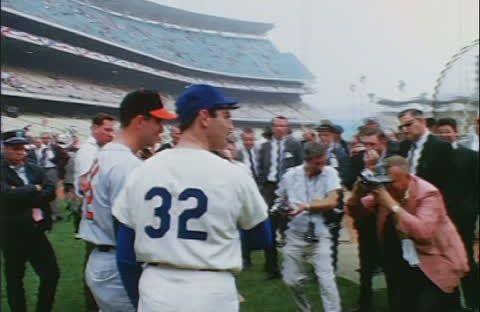
Why not use this surprisingly rare opportunity for the Dodgers’ hosting the 2022 MLB All Star game on July 19 – it is the 92nd of these, only the second in L.A. since 1980 – to spread the news about a new 100 percent cotton Reyn Spooner commemorative shirt (available in 3XL) as well as chop up some history of the franchise representation in this exhibitionist exercise of non-extreme exertion, starting with this handy, dandy comb-over list we just uncovered.
== Steve Garvey, who could have been a Minnesota Twin if he signed with them after they drafted him out of his Tampa, Fla., high school in the third round of the 1966 MLB amateur selection, made nine starts for the National League in his 19-year career (1969-87). That is the most by any first baseman of either league and includes eight in a row from 1974 (when he made history to get in as a complete off-the-ballot write-in and then won the game’s MVP) through ’81. That was also the heaviest part of his 1,207 consecutive games-played streak. Then he represented the Padres in ’84 and ’85 (at age 35 and 36) to give him 10 appearances. Also MVP in ’78. His ASG career stats — 11 for 28 (.393), seven runs, two homers, two doubles, two triples, seven RBIs, 433 OBP and .821 slugging. Of all those who make up the all-time All-Star game starting lineup of appearances, he’s the only one not in the Hall of Fame.
You explain that one to all his kids.
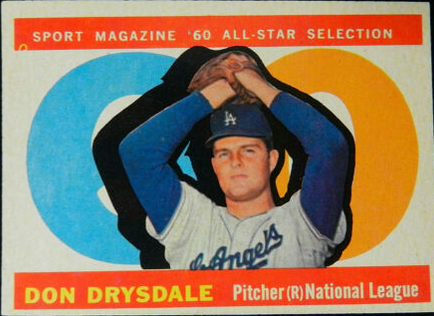
== Don Drysdale holds the record for most starts by a pitcher – five – to go with nine All-Star selections over his 14 seasons (1956 as a 19-year-old to 1969 at age 32). That includes 1959 when they played two All-Star games, the second one at the L.A. Coliseum. He started both of those as well as the second one in ’62, ’64 and ’68. He has a 2-1 record, 1.40 ERA, and the career ASG record for most innings (19 1/3) and strikeouts (19).
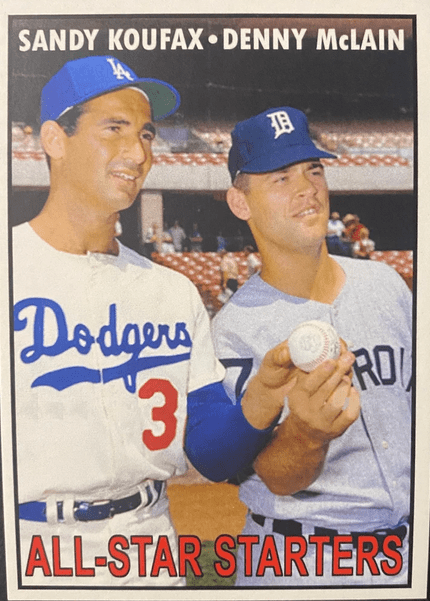
== Sandy Koufax batted right and threw left if you were bi-curious about his democratic approach to playing.
He was picked for six straight ASGs from ’61 (age 25) through ’66 (age 30) but made only four appearances – two in ’61 (at Fenway Park in Boston, which ended in a 1-1 tie because of rain, and at San Francisco’s Candlestick Park), plus ’65 (in Minnesota) and ’66 (in St. Louis), starting the last one in his final year active as a player.
He was left with just a 1-0 record with 1.50 ERA – one run over six innings, with three strike outs in 23 batters faced. What did the NL just not want to win?
== Clayton Kershaw has been picked for eight of them, every year from 2011 through 2019 (except for ’18). Six appearances. Has yet to make a start. Saddled with an 0-2 record, 4.50 ERA in six innings, facing 27 batters. Other Dodgers pitchers who have made the NL ASG team and then were named starters (aside from Drysdale and Koufax): Hyun Jin Ryu, Zack Grienke, Brad Penny, Hideo Nomo, Fernando Valenzuela, Don Sutton, Andy Messersmith, Ralph Branca, Dan Bankhead and Whit Wyatt. What, Whit Wyatt?
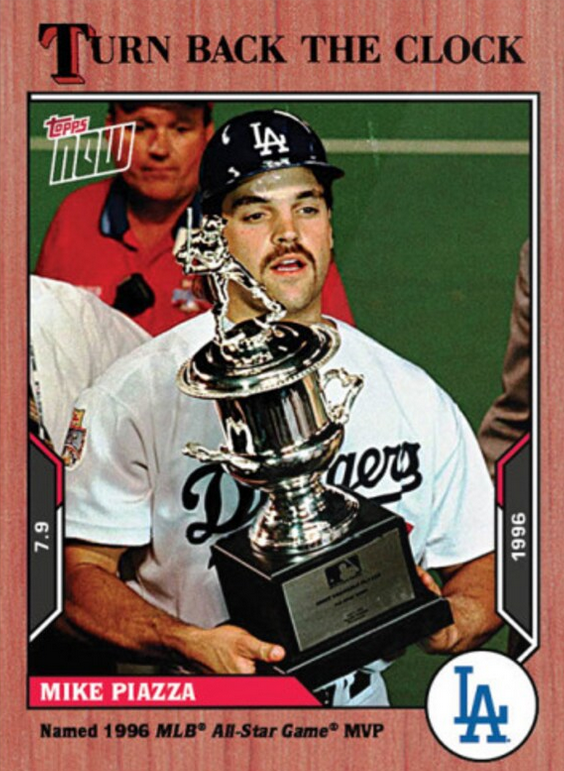
== Mike Piazza, a 12-time ASG pick, represented the Dodgers as the NL starting catcher in ’94, ’95, ’96 (game MVP) and ’97, plus a ’93 appearance off the bench during his Rookie of the Year campaign.
He was a keeper, right?
In the 1998 ASG at Coors Field, Piazza started as a member of … well, he began the season in L.A. (37 games), was shipped to Florida (five game), then moved for three unknowns to the New York Mets (on May 22), but still relevant enough to be picked for that year’s contest. He must have been a real difficult person to be around. Six more ASGs for those Mets and his 11 years worth of stats, with 10 straight starts: 6-for-25 (.240), 2 homers, 5 RBIs, 5 strikeouts. If only we could turn back the clock.
== Dodgers named MVPs of the game: Garvey twice (’74 and ’78), Piazza (’96), Maury Wills (’62, the first one) and Don Sutton (’77).
Wills, who would become the NL MVP that extended 165-game regular season with a record-setting 104 stolen bases (caught just 13 times, and a .299 average), didn’t start in either of those ’62 games – the Pirates’ Dick Groat did. In the sixth inning, As a pinch-runner for Stan Musial, Wills into the July 10 game at D.C. Stadium in Washington (where John Kennedy threw out the first pitch). Wills stole second and scored on Groat’s single. Staying in the game, Wills started the eighth with a single, somehow got to third on a single to short left field by Jim Davenport, then tagged and scored a fly ball in foul territory down the right field line by Felipe Alou. The NL won 3-1 — two of those runs almost single-handedly accounted for by Wills, a D.C. native a seven-time All Star pick from ’61 to ’65 (but not making it in ’64?) In the second ’62 ASG that year – Wrigley Field, 20 days later on July 30 – the L.A. Angels’ Leon Wagner was the MVP, starting in left field and going 3-for-4 with a fourth-inning home run off the Phillies’ Art Mahaffey.
As for Sutton: The 12th of his 23 seasons, when he led the NL in nothing, made him the starter at Yankee Stadium. He went the first three innings – no runs, one hit, four strikeouts, 11 batters faced. No one else went that many innings, and who today would even consider that load? Meanwhile, the NL was posting five runs against Jim Palmer with three homers (Garvey knocking him out in the third inning), staking Sutton to a 5-0 lead. WIth only four All-Star appearances (’72, ’73, ’75 and this one), Sutton got the starting nod by Sparky Anderson over Tom Seaver, Rick Reuschel, Steve Carlson (in his sixth ASG), Joaquin Andujar, John Candelaria, plus relievers Rich Gossage, Gary Lavelle and Bruce Sutter. No Mike Marshall? An All-Star in ’74 (with a Cy Young that year) and ’75, Iron Mike was wasting away in Atlanta and Texas that year before coming back with Minnesota for a stretch.
== Dodgers who’ve made the All-Star game you mostly likely have forgot about:
= In the 2000s: Relief pitcher Ross Stripling (’18: 1 1/3 IP, 3 ER, 4 H, 2 HR, losing pitcher in 10th inning, as NL manager Dave Roberts put him in over Kenley Jansen), second baseman Dee Gordon (2014, now Dee Strange-Gordon), relief pitcher Hung-Chik Kuo (’10), infielder Orlando Hudson (’09), pitcher Takashi Saito (’07), pitcher Odalis Perez (’02).
Way back in the 20th Century: Shortstop Jose Offerman (’95), infielder Mike Sharperson (’92), pitcher Mike Morgan (’91), second baseman Juan Samuel (’91), second baseman Willie Randolph (’89), pitcher Rick Rhoden (’76), outfielder Manny Mota (’73), infielder Billy Grabarkewitz (’70), catcher Tom Haller (’68), outfielder Norm Larker (’60, both games), outfielder Gino Cimoli (’57), pitcher Hal Gregg and outfielder Goody Rosen (’45, one of the great Jewish players of all time), outfielder Augie Galan (’43 and ’44) and infielder Pete Coscarart (’40). In 1933, infielder Tony Cuccinello was in the first All-Star Game, and the only Dodger representative at Comiskey Park.
== Dodgers who you likely forgot never made an All-Star team:
At least Eric Karros got to be on a 1996 Upper Deck card that celebrated Mike Piazza’s All star status.
= Eric Karros, the Los Angeles Dodgers’ all-time leading home run hitter – 270 over 12 seasons – the ’92 Rookie of the Year and fifth in the MVP voting in ’95. He averaged 25 homers and 89 RBIs over that time. Those who did make the NL ASG team during the dozen years of Karros’ availability: Will Clark, John Kruk, Gregg Jefferies, Fred McGriff, Jeff Bagwell, Mark Grace, Andres Galarraga, Mark McGwire, Sean Casey, Todd Helton and Ryan Klesko. (For the longest time, the Angels’ Mike Salmon was the franchise leader in home runs with 299, plus 1,016 RBIs, and also never was made an AL ASG pick over his 14 seasons as a California/Anaheim/Los Angeles cap wearer from 1992 to 2006).
= Kirk Gibson (like Karros, wore No. 23): Invited twice, in ’85 and ’88, but he declined. So … that’s on you, Gibby. During his NL MVP year of ’88, he hit .290 with 25 homers, 76 RBIs and 31 stolen bases (not to mention that stuff in the post-season). BTW: In his 17 MLB seasons, he never led the league, AL or NL, in any notable statistical category. In his first year of Baseball Hall of Fame eligibility, 2001, he had just 2.5 percent of the vote and was dropped from then on. He would win the 1984 AL ALCS MVP and was the 2011 National League Manager of the Year with Arizona.
Something we learned from the excellent “How to Beat a Broken Game: The Rise of the Dodgers in a League on the Brink” by Pedro Moura were from these two paragraphs: “In John Helyar’s 1994 book, ‘Lords of the Realm: The Real History of Baseball,’ he argues that the day MLB owners collusion likely ended was on Oct. 15, 1988 – when Kirk Gibson, the Dodgers’ prized free-agent off-season signing, who would win the regular season MVP award, created what is still considered the greatest moment in Los Angeles sports history. ‘Nobody who witnessed that scene – a fist-pumping Gibson rounding the bases, his teammates mobbing him at home plate, Dodgers fans filling the night with a roar – could ever again say that no free agent was worth it.'”
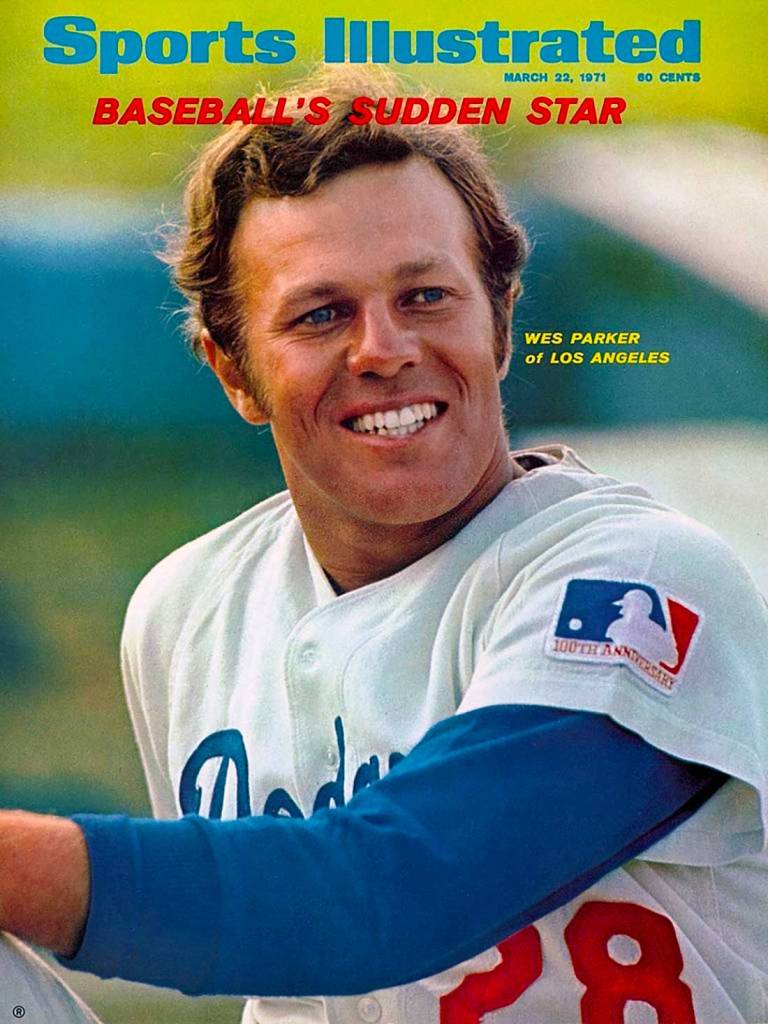
= Wes Parker (like Karros, owned a first baseman’s mitt): Posted nine more-than-worthy seasons from ’65 to ’72, winning six Gold Gloves. Fifth in the league in hitting in 1970 with a .319 mark (plus a league-leading 47 doubles and a career-best 111 RBIs, fifth in the NL MVP voting). He was given the 1972 MLB Lou Gehrig Memorial Award to “honor the Major League Baseball Player who best exemplifies the spirit and character of Lou Gehrig, both on and off the field.” At least Greg Brady knows the true value of Paker, who made an early 1971 baseball season cover of Sports Illustrated as a “sudden star” at age 31. Jinx?
Throw the books at us. There exist two new bios about these Brooklyn stars.
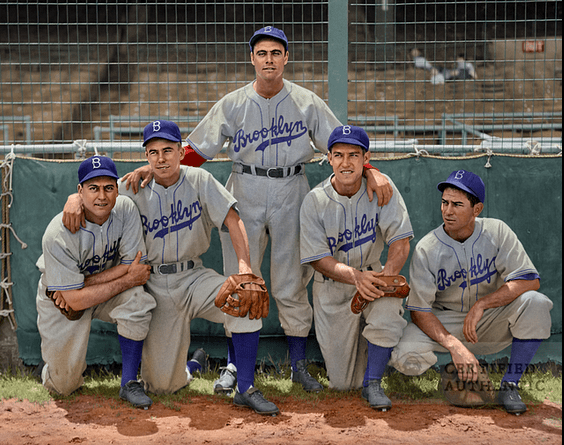
At MancavePictures.com, this $120 limited edition canvas portrait of the 1941 Dodgers: From left — Billy Herman, Pee Wee Reese, Kirby Higbe, Pete Reiser, and Mickey Owen
Born less than a year apart, Reese and Reiser seemed to relish their time as Brooklyn Dodgers teammates for six seasons — first in 1940, ’41 and ’42, then a three-year departure to serve in World War II, then back together for ’46, ’47 and ’48.
That can be a baseball lifetime.
They were a pair of 22-year-olds starting on the Dodgers’ 1941 100-win World Series team that lost to the Yankees. Both went 4-for-20 in the Fall Classic, and Reiser hit the team’s only homer.
They were also together in the ’46 NL All-Star team at Fenway Park in Boston, the game’s revival a year after it was canceled because of the war. That game’s 13th edition, a 12-0 AL win, was made famous when Ted Williams hit a homer off Rip Sewell’s “Eephus pitch.”
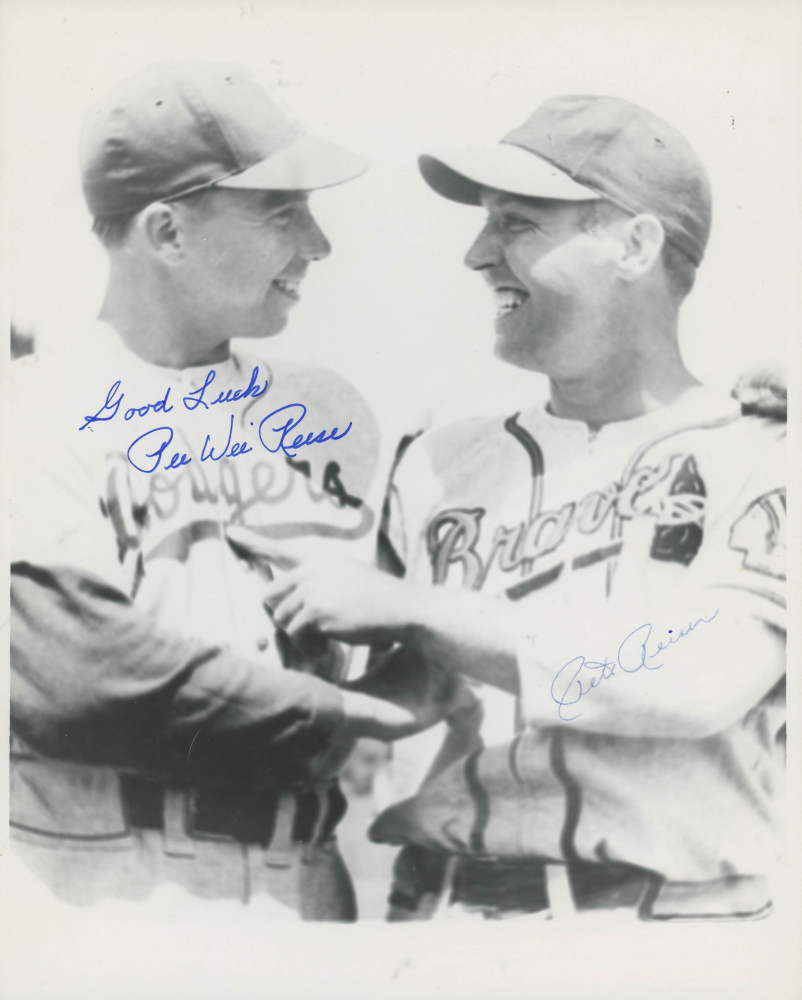
Reese, left, with Reiser, after Reiser joined the Boston Braves.
Back from Army military work, Reiser was 27 in ’46, and would lead the league with 34 stolen base — seven of them, steals of home — finishing ninth in MVP voting. He had finished second in ’41 and fifth in ’42. Reese, also 27 in that game, turning 28 a couple weeks later, returned from his Navy stint and was sixth in MVP voting for the 96-win team that finished two games out of winning the pennant.
Reese wasn’t the Dodgers’ first starting ASG shortstop — that would be Leo Durocher in 1938. But in his 16-year MLB career that ended at age 39 as a player/coach in L.A. for one abbreviated season to help ease in Wills, Reese was named to 10 All-Star teams – a franchise record — starting three.
Reese made that first ASG at age 23, then nine in a row from age 27 through 35 (’46 through ’54). In the ’49 game — the one and only at Ebbets Field in Brooklyn — he started and batted first, ahead of second baseman and teammate Jackie Robinson. That was also the first time an African-American was picked to play (along with the Dodgers’ Roy Campanella and Don Newcomb, plus Larry Doby for the AL).
The ’49 game, which was also the first of Gil Hodges’ eight ASG picks (with only one start, in ’51) only gets minor mention in Chapter 10, titled “That’s Why We Called him ‘Captain.’) It includes a line by The Sporting News’ Harold Burr: “Captain Pee Wee Reese is having one of his greatest years at short, which is just about all that could be said in praise of the greatest shortstop in the game.” Reese went 0-for-5.
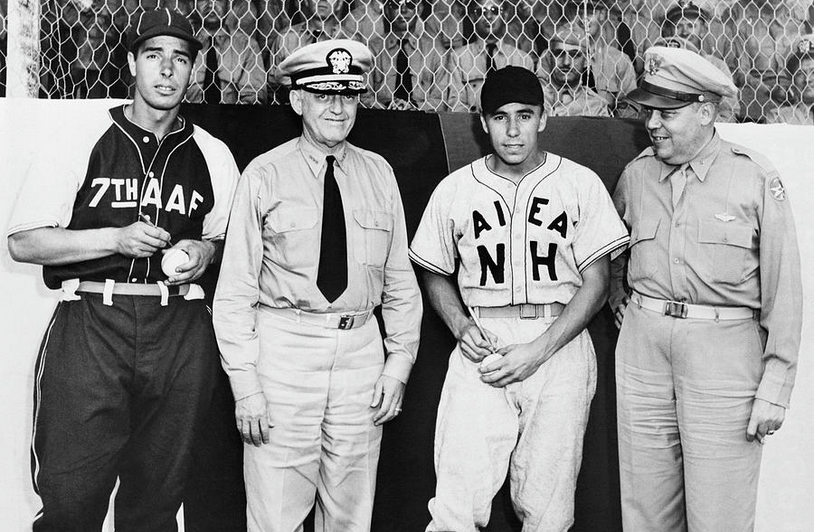
In July, 1944, Sgt. Joe DiMaggio, left, and Chief Specialist (Physical Training) Pee Wee Reese autograph baseballs for Vice Adm. Robert L. Ghormley, USN (second left) and for Brig. Gen. William J. Flood, Chief of Staff of the 7th Air Force, before a Central Pacific Area Service Championship game between the 7th AAF Nine and AIEA Heights Naval Hospital team. (Getty Images).
The pieces of Reese’s life you’ve come to see portrayed in movies like “42” or recall from “The Boys of Summer” all get otherwise cursory recognition, very brief at times — such as his time in the Navy playing baseball at bases around the U.S., pushing Roy Campanella in his wheelchair out on the field before the 1959 tribute at the Coliseum).
Not all that much either about his national TV game analysis, the Hall of Fame vote in ’84 (he’d go in with Drysdale as it happened) all up to his passing in 1999.
“Pee Wee Reese, the former ace marble shooter from Louisville, made his mark as both a person and as a player,” Sparks concludes, without much of a spoiler alert. “He led the Dodgers both on and off the field. One story goes that a young fan saw him in a hotel lobby and asked another player, ‘What does he do?’ The player said, ‘Anything you want him to.'”
And let’s just end it at that.
In detailing the life and times of Reiser, Joseph seems to have much intriguing story narrative to sift through — and it earned him 2022 SABR recognition for best research work on the Brooklyn Dodgers.
Aside from his NL ASG start in ’42, Reiser also started in center field and hit third in the ’41 ASG at Briggs Stadium in Detroit. Please note: Hall of Famer and eight-time All Star center fielder Duke Snider also only started two NL ASGs in back-to-back years of ’54 and ’55.
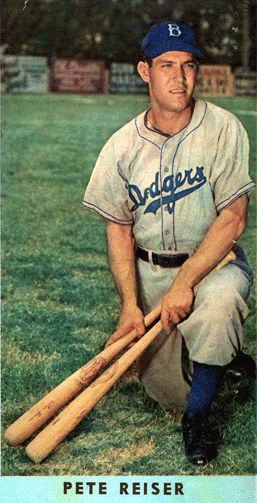
Reiser, the NL batting champ in ’41 at .343 with a league-best 117 runs and 17 triples, lasted just those six Dodgers seasons, discarded in ’48. He was out of the game by ’52, age 33, trying to come back with the Boston Braves, Pittsburgh Pirates and Cleveland Indians.
The problem was Reiser’s inability to do his own stunts.
Reese even said in 1972: “Pete was better than Stan Musial, I think. He could do more things than Stan. He’d run through a brick wall to get a ball — and did try a couple of times.”
Joseph writes it is hard to document all the incidents, “but sports writers of the time said Reiser was carried off the field 11 times during his career.
Joseph, who in 2019 also wrote “Last Ride of the Iron Horse” about Lou Gehrig’s final year in the Yankees lineup, kept reading about how Reiser’s heroics were passed down through the years to the extent that, he would often still be a bit loopy from a collision, but volunteer to pinch hit days later and come up with a game-winning wack.
“My journalistic soul raised its hand and asked: Are these stories true?” Joseph continues in the intro. “If they are true, why would Reiser push himself to such extremes? What maniacal drive caused him to risk his career, health and life for a baseball game? Moreover, why would the Dodgers’ decision-makers let him even try? I had to find out. That’s the first reason I’m writing this book.”
Our series on the all-time lineup for all 30 teams, position by position, continues this week with center fielders. Please vote for the greatest Dodgers center fielder:
Because, as he reminds us, Reiser was “set to become a central figure in the national pastime. He was at the right place at the right time — New York, baseball and media capital of the world, at the start of the most drama-filled period in the game’s long, long history.”
Joseph is wise enough to connect Reiser’s his style of play to today’s gatecrashers. At least most now don’t have to contend with flagpoles, bullpen mounds or stone monuments, and have padded wood walls rather than brick facades to contend with.
The worst Ebbets Field had was an iron exit gate in center field that Reiser cut his back on in ’41.
During a Dodgers-Nationals game in 2013, Joseph brings up a moment when Bryce Harper was chasing a fly ball to right field and charged face-first into the right-field wall and scoreboard, bringing on an ugly gash on his neck that required 11 stitches.
“All I can think of … is a name that is a legend in Dodger history, an outfielder named Pete Reiser,” Vin Scully said on the broadcast.
It led the L.A. Times’ Jim Murray to write about Reiser: “Every ballpark in America has a Pete Reiser memorial: The warning track in the outfield.”
Sigh.
Joseph gets the most of the subject by devoting the final Chapter, the 12th, to Reiser’s legacy. It was revived a bit when Donald Honig and Lawrence Ritter included Reiser in their 1981 book, “The 100 Greatest Baseball Players of All Time.” He touches on how Reiser had an influence on Bernard Malamud’s creation of Roy Hobbs in “The Natural.”
Awaiting batting practice at Old Timers Day in New York in 1976 staged by the New York Mets — Brooklyn Dodgers’ Pete Reiser, left, Pittsburgh Pirates’ Ralph Kiner, New York Yankees’ Joe DiMaggio and Brooklyn Dodgers’ Cal Abrams. (AP Photo/Harry Harris)
Joseph also correctly writes that while Reiser will likely never be inducted into Baseball’s Hall of Fame, “whether measured in terms of statistics, awards, pennants or overall impact, Pete’s actual accomplishments do not rise to the level of a typical Hall of Fame outfielder, even with compared to low-tier what-where-they-thinking picks like Chick Hafey and Harold Baines … But before the walls got in the way, Pete was starting to build a bona-fide Cooperstown resume.”
Sigh again.
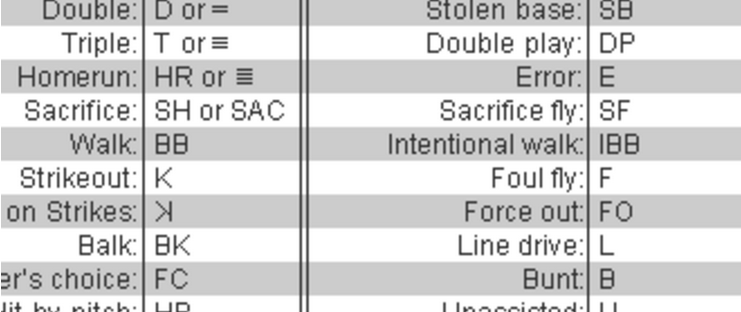
How it goes in the scorebook
8-6 double play output.
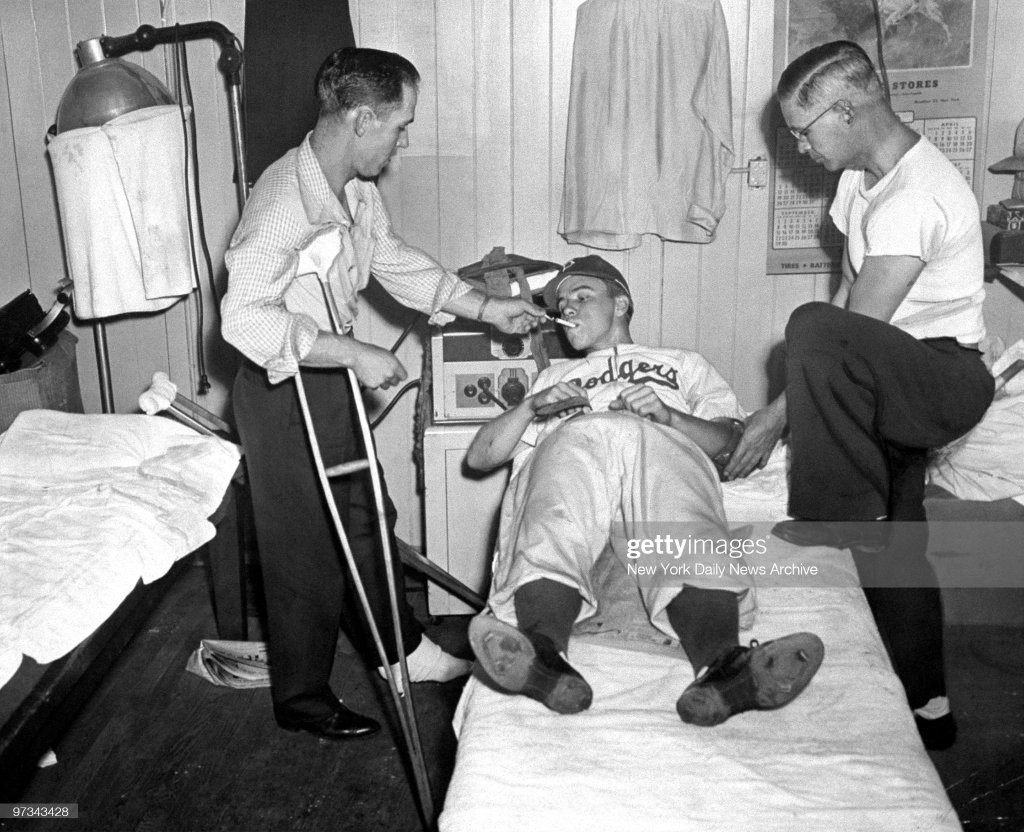
Pete Reiser, left, lights up cigarette for Pee Wee Reese, who hurt his left elbow in Dodgers-Boston game, as trainer Harold Wendler holds ice pack to arm in Sept., 1946 at Ebbets Field. Reiser already appears to be recovering from an injury. (Photo by Seymour Wally/NY Daily News Archive via Getty Images)
Neither are knock-your-blue-socks-off when it comes to prose — think of Kosyta Kennedy and his latest Jackie Robinson book, which is why one is apt to pick it up in the first place no matter what you already know about the subject. It’s the research that sells it as another SABR-sort of project that heralds documentation gathering over turning a phrase.
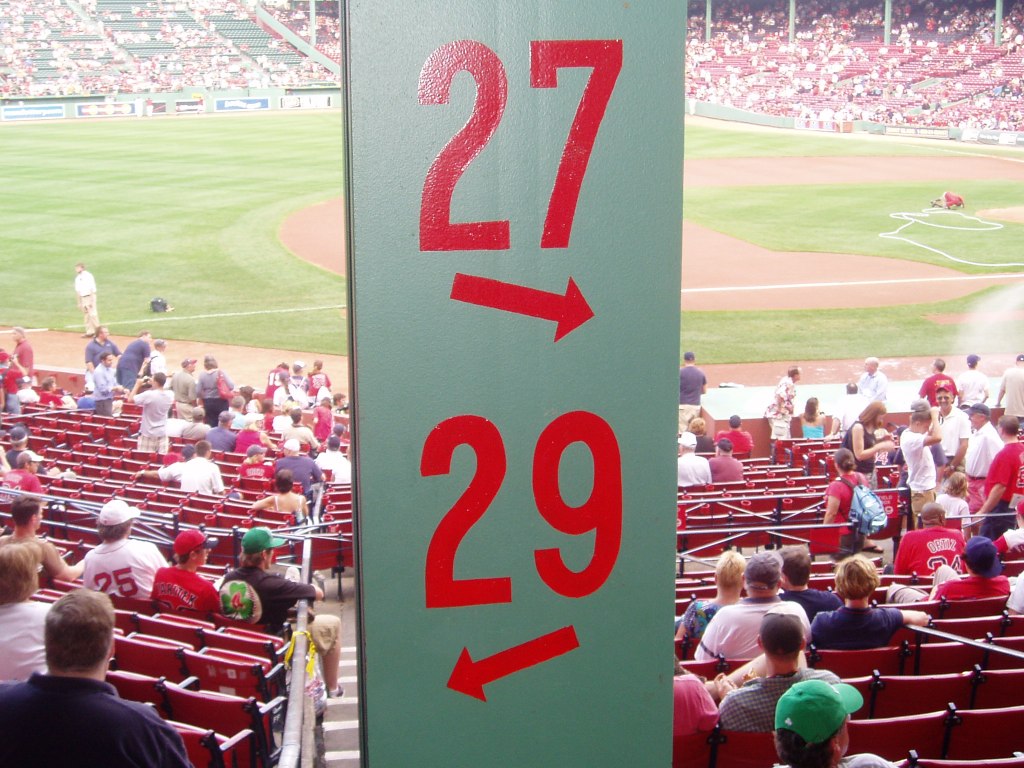
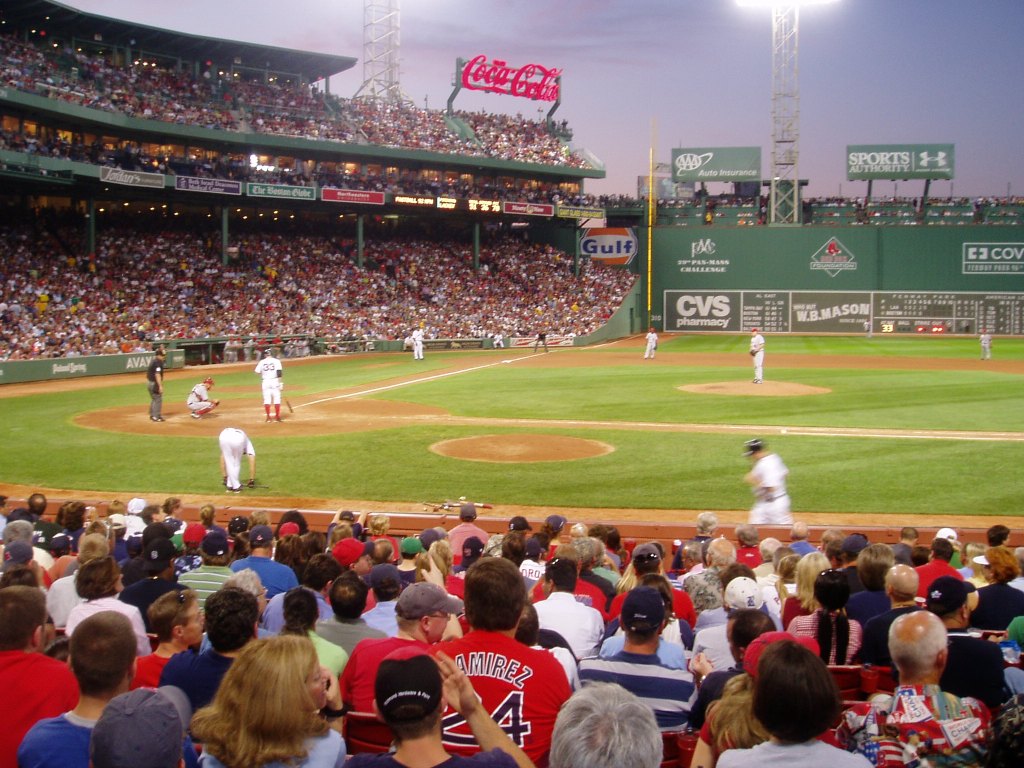
July 29, 2008, Angels vs. Red Sox, at Fenway Park. The one and only time we were ever inside the fabled ballyard to see a live, official Major League Baseball game. Among the 38,110 in attendance, with seats that actually allowed viewing of the field.
Keeping score? Nope, just soaking in what could have been history.
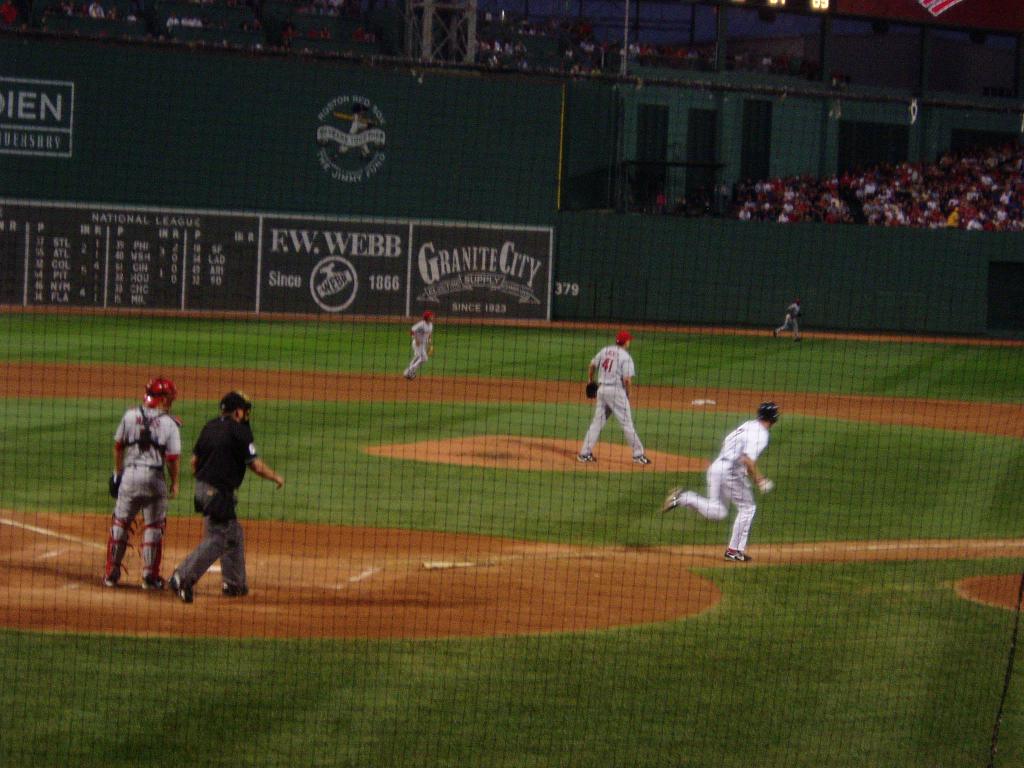
Our Olympus Digital camera captures this from the ninth inning of the Angels-Red Sox game on July 29, 2008.
The Angels’ John Lackey somehow has a no-hitter going into the bottom of the ninth.
We got out of our seat down the left-field line and started to walk around, mingle behind home plate, for a better view of what was happening. We spotted Angels TV analyst Mark Gubicza down by the team’s dugout, preparing to catch Lackey when he came off the field, leaving Rory Markus in the booth to call it. That had to jinx it.
Because we today can access Retrosheet.org, there is not only the box score recorded in its full glory, but the stark description of how that ninth inning unfolded:
What’s perhaps more memorable about any of this: Two days later, the Red Sox gave Manny Ramirez to the Dodgers at the trading deadline.
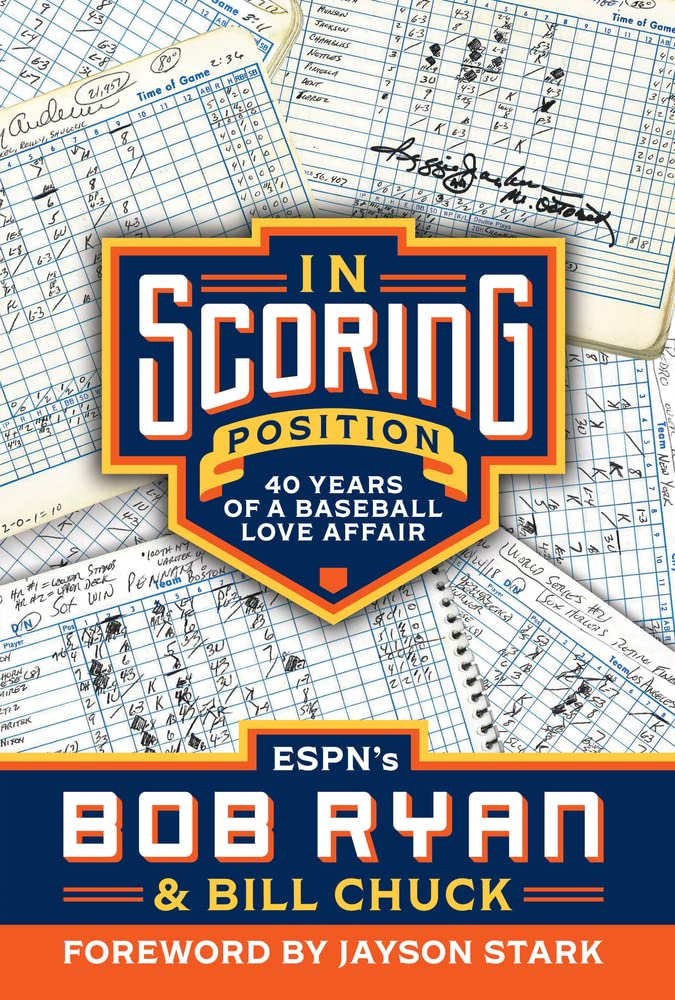
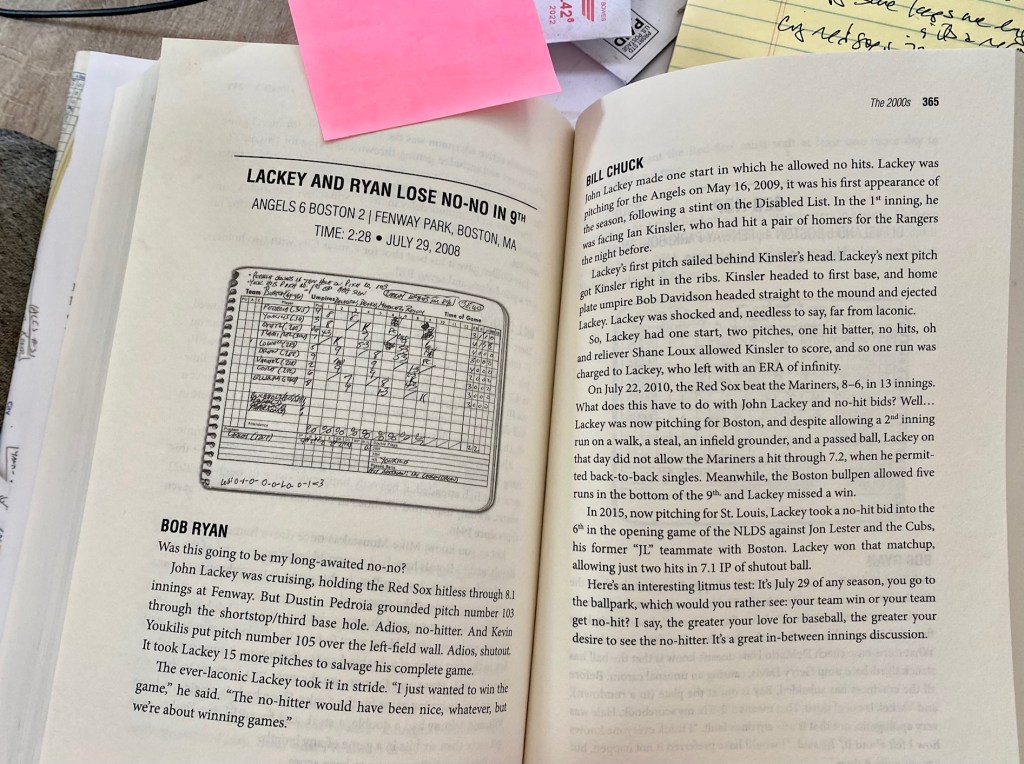
Flip open this book by well-recognized Boston Globe writer and ESPN yacker Bob Ryan, and on page 364, there is it.
Ryan skims the details in three paragraphs — more about his inability to finally see a no-hitter at Fenway (which explains this page heading … we thought it was referring to Nolan Ryan for some reason).
His writing partner, Bill Chuck, gives it six more graphs of context – not from that game, but from Lackey’s future performances.
He ends it with: “Here’s an interesting litmus test: It’s July 29 of any season, you go to the ballpark, which would you rather see: Your team win or your team get no-hit? I say, the greater your love for baseball, the greater your desire to see the no-hitter. It’s a great in-between innings discussion.”
OK, we’ll play along. Here’s the (almost) perfect case in point: July 28, 1991. Had tickets behind home plate to the Dodgers’ home game against Montreal. Gave them away. Dennis Martinez threw a perfect game against the home team. Would have loved to have been present and accounted for among the 45,560 on a sweltering hot Sunday afternoon to see Martinez (who by the way went 1-for-3) mow down a lineup with Brett Butler, Juan Samuel, Eddie Murray and Darryl Strawberry as the top four contenders. (And Samuel tried to bunt his way on in the seventh but Martinez picked it up and threw him out).
But let’s not get distracted from the pileup on the other side of the road.
Trying to look at the one sheet of Ryan’s scorebook from that Angels-Red Sox game, we’d size it up pretty much unreadable – 3 ¼ inches wide, 2 ½ inches deep. We put our index finger and thumb on the printed reproduction, expecting we can expand it into a larger, more decipherable size. This isn’t interactive. Almost the opposite. A magnifying glass is needed, if we want to go through that trouble.
And again, there’s only one page here – the Red Sox’s batting order. We don’t see the Angels’ lineup that was providing Lackey with a 6-0 cushion heading into the final Boston at-bat.
It was a joyous occasion when we first came across this project in the Year of our Baseball Existence 2009.
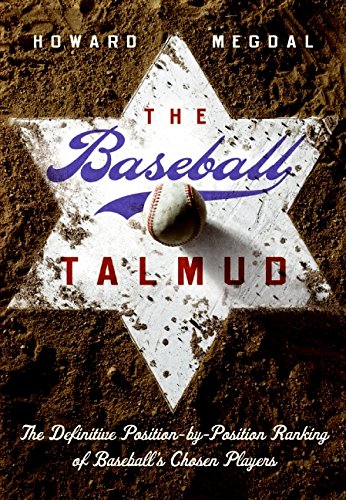
It made the cut as part of our inaugural list of 30 new baseball books to be reviewed — 307 pages with index for Harper Collins, a swell sell at $22.99, taking more than two years to knit together.
Megdal, at that time covering baseball for the New York Observer, may have secured glowing reviews about the book’s importance from industry scribes such as Jeremy Schaap, L. Jon Wertheim and John Eisenberg. But we were more enamored with how Megdal summarized it all himself in the last graph:
“Let this … book ring out in response to the well-known ‘Airplane!’ gag about Jewish athletes. In baseball alone, there are more than just a pamphlet. I encourage you, should anyone make that joke to you — throw this book at them. And I don’t mean rhetorically. Actually throw this book at them and say, ‘Does this feel like a pamphlet? Well? Does it?’”
Not then, and not now.
Note the book has increased in size, dropped the index, found a new publisher, procured a snappy new forward by Jason Stark (to augment more quippy endorsements from Schaap, Eisenberg and Wertheim), all there for the low, low price of $28 — at a time when too many things of value go up exponentially to keep up with inflation.
Make no inflated mistake in how Stark, the former ESPN reporter and now senior baseball writer at The Athletic who in 2019 was given the Baseball Hall of Fame’s BBWAA Career Excellence Award, admits that this “one of the most important baseball books ever written – it’s one I’ll keep handy on a shelf near me every day of the year.”
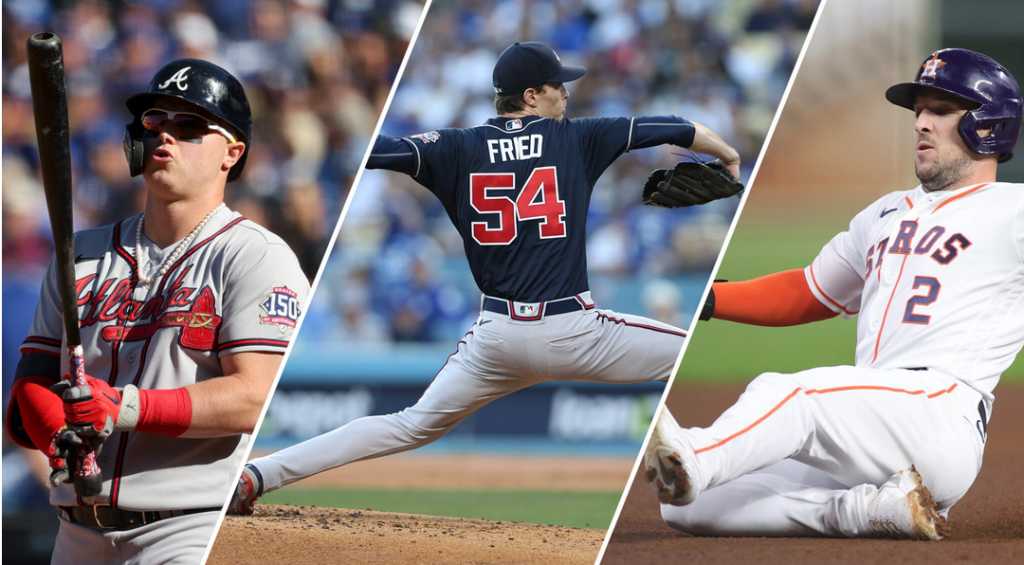
Stark’s point was driven home by a cool thing that happened in the 2021 World Series: In the second inning of the sixth and final game, Max Fried pitched to Alex Bregman, who flew out to Joc Pederson. It was the first time three Jewish players were on the field for a World Series game at the same time — and now were involved in the same play. (The Astros also had a Jewish backup catcher, Garrett Stubbs, who didn’t get into the series, but he adds to the history).
— JewishBaseballMuseum (@JewishBBMuseum) June 16, 2022
(One more thing we found as astounding in the 2020 World Series, when the Dodgers were facing Tampa Bay in Texas: The Rays had last-minute roster addition — a left-handed reliever named Ryan Sherriff. Both his material grandparents were Holocaust survivors. Jewish fans (and those with a sense of history) were anticipating a time when Sherriff might be brought in as a specialist to face the Dodgers’ Pederson. It didn’t happen. But it could/should have, so those of us paying attention.)
Before we get into the frolic and perhaps frivolity of what’s at stake here, it is poignant to note how Megdal, whose calling card now focuses on his founding of The IX: Your Curated Guide to Women’s Sports as well as The Next @ The IX that highlights women’s basketball, writes in his introduction why we should have a better understanding how this project brings some added value and renewed importance. Consider the rise in hate crimes against Jews. Community centers under bomb threats. Insane, incited things elected representatives are allowed to say and do these days:
This is an America where some figures on the left, preaching intersectionality, always manage to leave Jews out of the equation. This is not an accident. We hear those comparisons. We hear the silence. These people mean to write us out of the American story. This is the American Jewish conversation in the summer of 2021 at socially distanced barbecues and family dinners. … This is most definitely not the book that grapples with such disturbing, sinister trends. This is where we go to escape from it, to revel in what the Jewish people have accomplished, and to celebrate what achievements lay ahead. What makes baseball such a perfect emotional haven for us all is the sheer size and complexity of it. That we could engage with the game, even as we all navigated the early unknowns of COVID-19, speaks to the ways baseball can fill our lives even during periods when most other aspects of life are shut down. But the reason it matters so much to us as Jews is the extent to which baseball itself is an extension of America writ large.”
There are far more things to honor, Megdal points out — the emergence of Jewish leaders like Justine Siegal, creator of Baseball For All (see above), creating a pipeline for women to play the game. Two Orthodox Jews taken in the 2021 MLB Draft (Jacob Steinmetz and Elie Kligman. The emergence of Team Israel in the Olympics.
Megdal then concludes, perhaps referencing his own “throw this book at them” line from years earlier:
“Celebrating Jewish excellence in baseball is not a difficult thing to do despite all the jokes through the years. It is, at its heard, a supremely Jewish thing to do, too: Finding joy in the argument, in the discussion of statistical evidence and sense memory and arcane topics, in cultural pride. It’s a recognition that one of us did something that made our group proud and a larger group, us among them, collectively cheer.”
Here’s a mensch who doesn’t mince words. Hear, hear.
But don’t think that trivializes the next 300-some pages trivial.
Just the opposite.
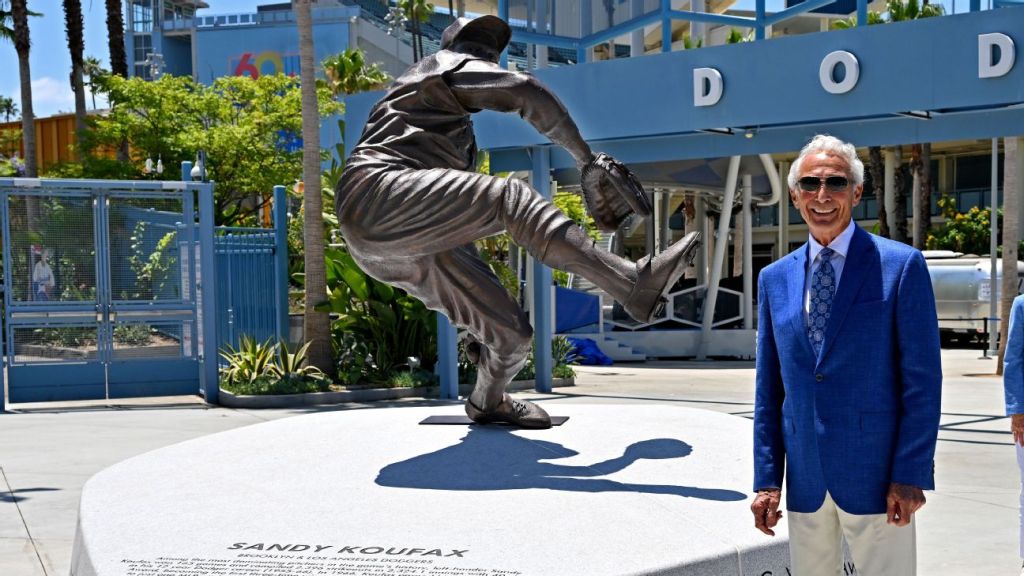
== Explain how Hank Greenberg remains the greatest Jewish major leaguer in history instead of Sandy Koufax – who just got a statue in his honor at Dodger Stadium? C’mon, the gap has to be closing at some point with all the numbers crunched and re-crunched these days. (Spoiler alert: Nope).




















 Tom Hoffarth's The Drill: More Farther Off the Wall