
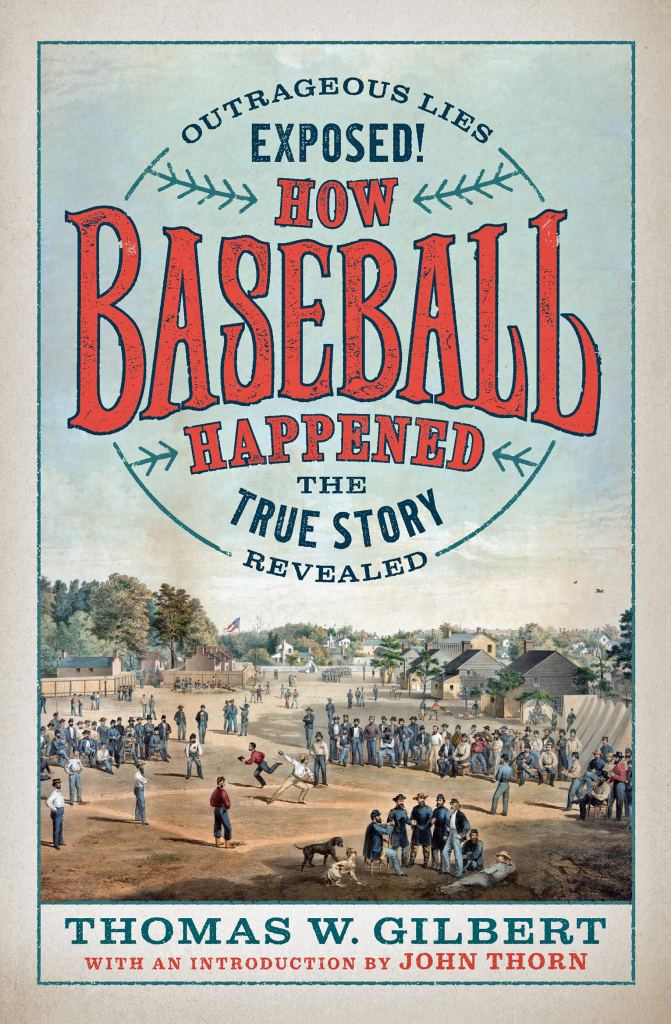
How Baseball Happened:
Outrageous Lies Exposed! The True Story Revealed
The author:
Thomas W. Gilbert
The publishing info:
David R. Godine, Publisher
384 pages
$27.95
Released Sept. 15, 2020
The links:
At the publisher’s website
At Amazon.com
At BarnesAndNoble.com
At Powells.com
At Indiebound.org
At the author’s website
The review in 90 feet or less
There’s the quote attributed to W.C. Fields: “If you can’t dazzle them with brilliance, baffle them with bullshit.”
The story of baseball’s brilliant genesis through the centuries has carried with it a stench of baffling bullshit, infrequently challenged, often lazily perpetuated to make the game more palatable to those who wish to know just enough of its origins to sound efficiently educated.

As the 2005 book by Harry G. Frankfurt came out called “On Bullshit,” and became a New York Times bestseller with the investment of just $8.95, we learn more about the who, what, when, where, how and why bullshit occurs.
In the opening stanza of this nine-chapter dissertation project by Gilbert, Frankfurt’s words resurface. There are lies about baseball happened. There are even damn lies. Then there’s complete bullshit.
“As central as baseball is to the American experience, you might expect that basic questions like where baseball came from, who first played it, and why would have been settled by now. But they aren’t …the majority of Americans who are not trained historians remain confused by the layers of bullshit burying baseball’s true origins.”
Furthermore, in a dedicated sidebar labeled simply as “Bullshit,” Gilbert continues to question how the myth of Abner Doubleday doing many things in his life but never claiming to invent baseball somehow “persisted for decades even though it couldn’t have withstood the most superficial fact-checking.”
The Doubleday story is, in essence, a bullish tale we really need to wipe clean, because it has become, as Frankfurt wrote, the result of a “lack of connection to a concern with truth – this indifference to how things really are.”
Gilbert is so not indifferent to this subject, he’s going to make us sit down, listen, and try to fix it.
In a grand fashion.
In a tone that’s courageous as it is concise, Gilbert does his research – again, stuff that’s been out there before that doesn’t seem to matter – and presents it in a scholarly approach that’s as enlightening as it is entertaining.
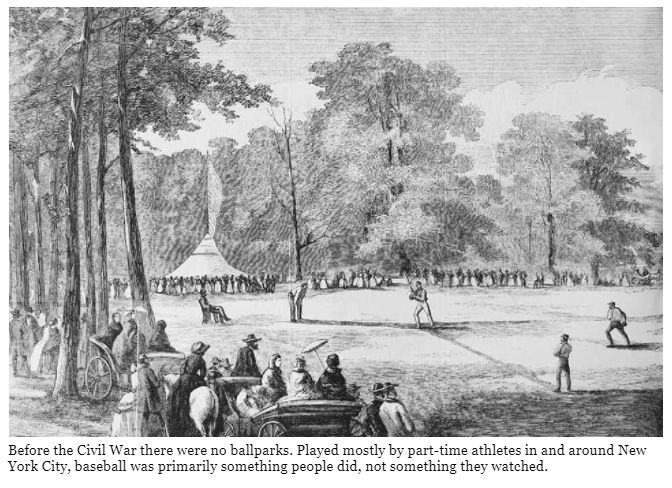
Starting with a timeline to show how he would cover the game’s evolution from the time John Stevens launches a ferry service between Hoboken and New York City in 1821 through the considered launch of the modern National League in 1876, our nation’s centennial year, Gilbert’s portrait of an amateur game that should be celebrated and held in higher regard to any myth making stands as the newest test of time-honored traditional mishmash. In between all that, and also duly noted, things such as a cholera epidemic happens, the first penny newspapers came into being, the Astor Theater Rio kills 30 people, the end of volunteer firefighting in New York City and Brooklyn occurs, and Octavius Catto is assassinated on Election Day in Philadelphia.

Gilbert can both lecture and become playful with how we should reconstruct history without rewriting it. He can reference other attempts to make the game’s origins more clear, such as David Blocks’ 2005 book, “Baseball Before We Knew It,” but still add more layers and combustion to push the train of knowledge forward.
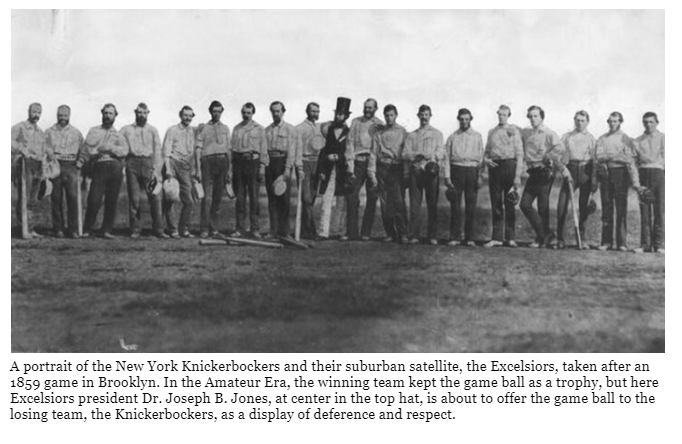
There are reasons of truth and justice to honestly flesh out the stories of the Brooklyn Exceliors, in chapter five flowing into chapter six about the game’s first star pitcher, James Creighton, who died at age 21in 1862 from “strangulation of (the) intestine,” as Gilbert notes from the Death Certificate #3586 in the city of Brooklyn archives as handwritten by J. Byrne, M.D.. Gilbert even adds: “A bad way to go.”
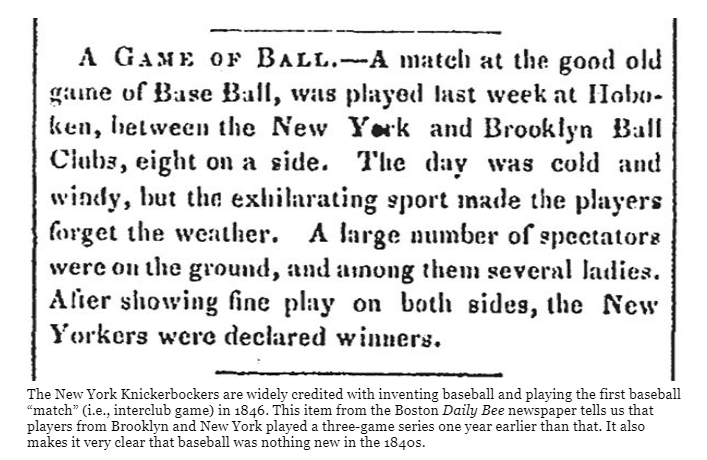
We need to acknowledge how journalists created baseball for its newspapers to fashion a need for more readership. There’s a desire to find out more about the social group known as the “emerging urban bourgeoisie,” and why, “not an elegant phrase, … it is accurate,” and a cause to make Gilbert shorthand it to EUB in subsequent references.
As it says on page 181 about why and how New York was the game’s true center point:
The rivalry between New York City and Brooklyn clubs is the oldest, longest and most important of any sports rivalry in American history. It sold the first tickets to a baseball game. It lives on today in the Dodgers-Giants rivalry on the West Coast and the Mets-Yankees rivalry on the East. It is the watershed event to which we can trace the triumph of the American sports movement and baseball’s arrival as a national sport … Was Brooklyn the real birthplace of baseball? If by baseball you mean baseball as the modern sport, and by birthplace you mean the home of the first fans and the first ballpark, then the answer is yes. It happened in Brooklyn – not the 1947 film with Frank Sinatra and Jimmy Durante, but the beginning of modern professional sports.”
The essence can be captured by a masterful graphic spanning pages 230 and 231 about “How Baseball Expanded,” from its New York foundation in Brooklyn and NYC out to Chicago (1856), to Boston and Detroit (1857), even to San Francisco (1858) before it landed in St. Louis (1859).
In the same vein, a chart on page 229 shows how there are at least 13 men who have been called “The Father of Baseball” in some way, shape or form.
Curious?
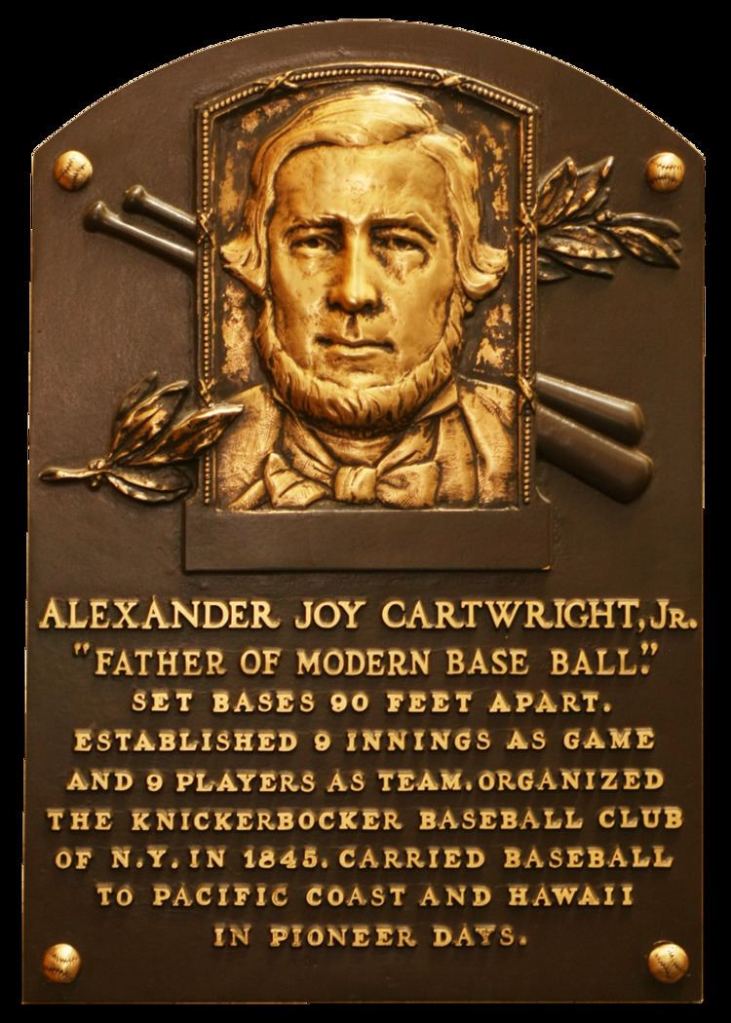
Aside from Doubleday, or Alexander Joy Cartwright, Jr. (see his official Baseball Hall of Fame plaque), or sportswriter Henry Chadwick (with a famous tombstone in Brooklyn’s Green-Wood Cemetery), there is also Robert Ferguson, Billy McMahon, John Joyce, Doc Adams, Duncan Curry, Harry Wright, T.G. Van Cott, Albert Spaulding, Louis Wadsworth and William Wheaton.
Wait, Wil Wheaton, the actor? Was it a big-bang theory?
No. But at this point, why not throw him in among the stars.
How it goes in the scorebook
In this book’s forward, MLB historian John Thorn might best summarize why this is necessary, and how it comes to be, even as he has done some exploration into this topic before:
“My own ‘Baseball in the Garden of Eden‘ (as the game moved from Europe and Africa to America … addressed the what, i.e., the facts surrounding the game’s beginnings rather than what the self-annoited fathers of the game wished us to believe. Gilbert addresses how baseball happened and, delightfully, its anagram of who.
” ‘How Baseball Happened’ is a brilliant new approach to our game and its author tells a hundred stories you haven’t heard before … How is baseball history to be written henceforth? Like this.”
Note, Gilbert tells you stories. He’s not selling you on them.
How we value that is worthy of expressing our thanks.
And while we’re here, can we also give credit for a typeface? Jerry Kelly, the book’s designer and typographer, picked Miller, Myriad and Scotch fonts to give is a masterful historical feel. It matters when it’s done correctly.
Also
== The Pandemic Book Club did a Q&A with Gilbert at this link.
More recent books one may want to pursue in this journey
== “The Making of Modern Baseball: Over 100 Years of Change That Formed America’s Favorite Pastime,” by Frank P. Jozsa (Feb., 2020)
== “The Workingman’s Game: Waverly, New York, the Twin Tiers and the Making of Modern Baseball, 1887–1898,” by William H. Brewster (Nov. 2019)
== “Baseball in Europe,” by Josh Chetwynd, a former staff writer for The Hollywood Reporter, who revises his 2008 book




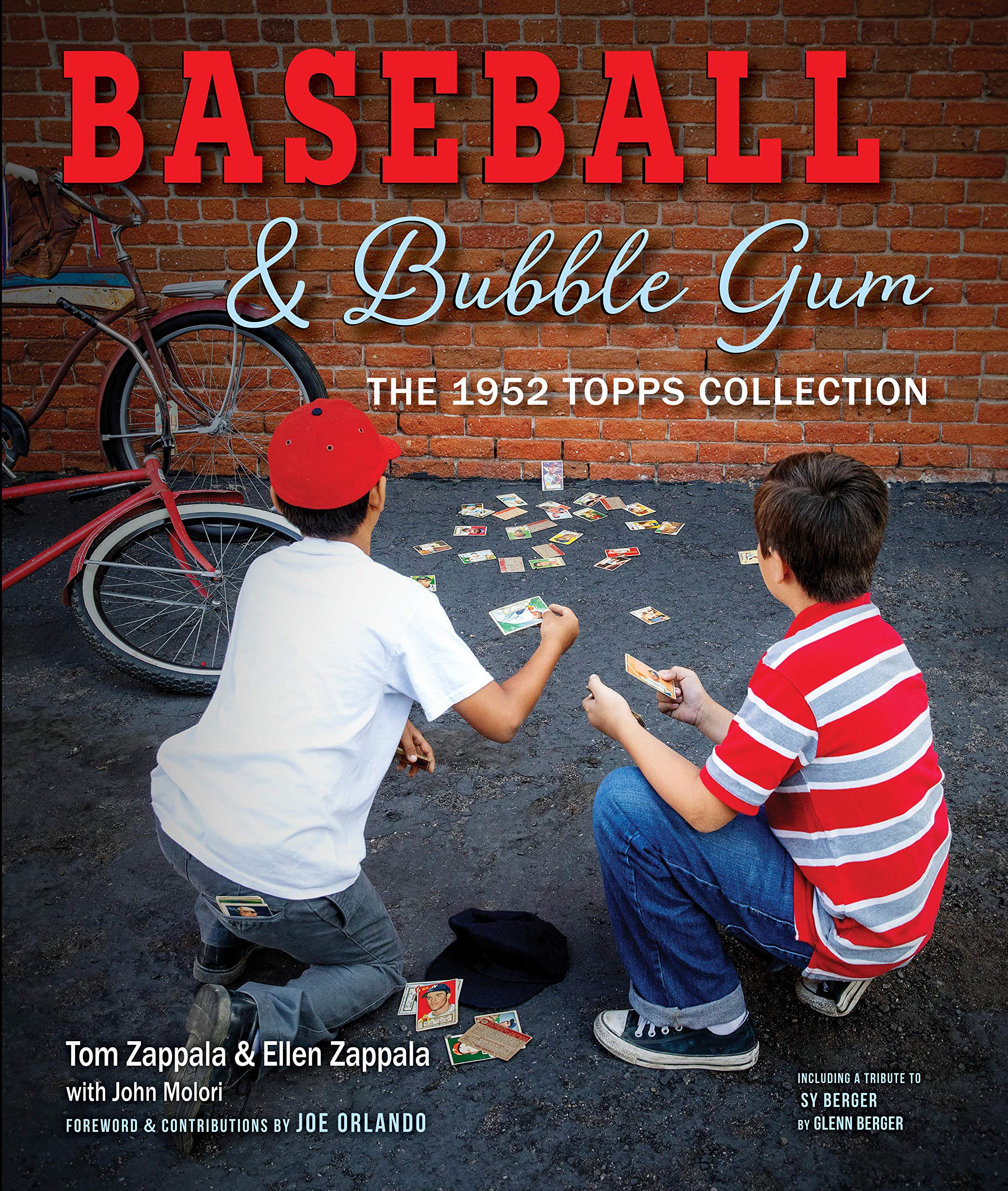 The authors:
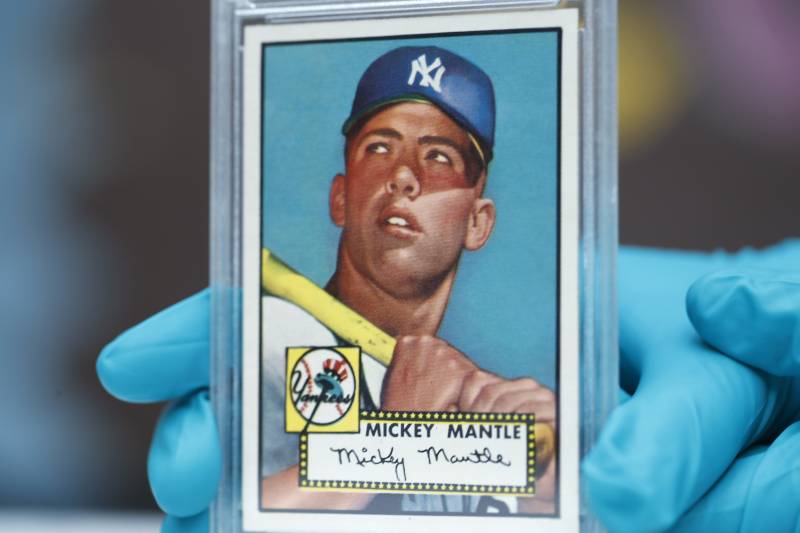
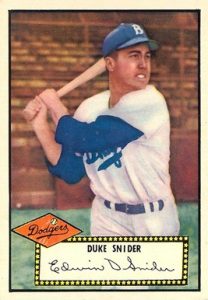 At least Mays was included in that set, in his second major-league season. Ted Williams, Stan Musial and Whitey Ford are not. Williams and Musial had a contractual obligation to the other card company, Bowman. Ford was off in the Korean War and didn’t play that season. But 26 other future Hall of Fame were in that set, highlighted by Mickey Mantle. And Jackie Robinson. Bob Feller. Duke Snider (in action, when that often isn’t what is used for players in this set). Also are the rookie cards for Eddie Matthews and Hoyt Wilhelm.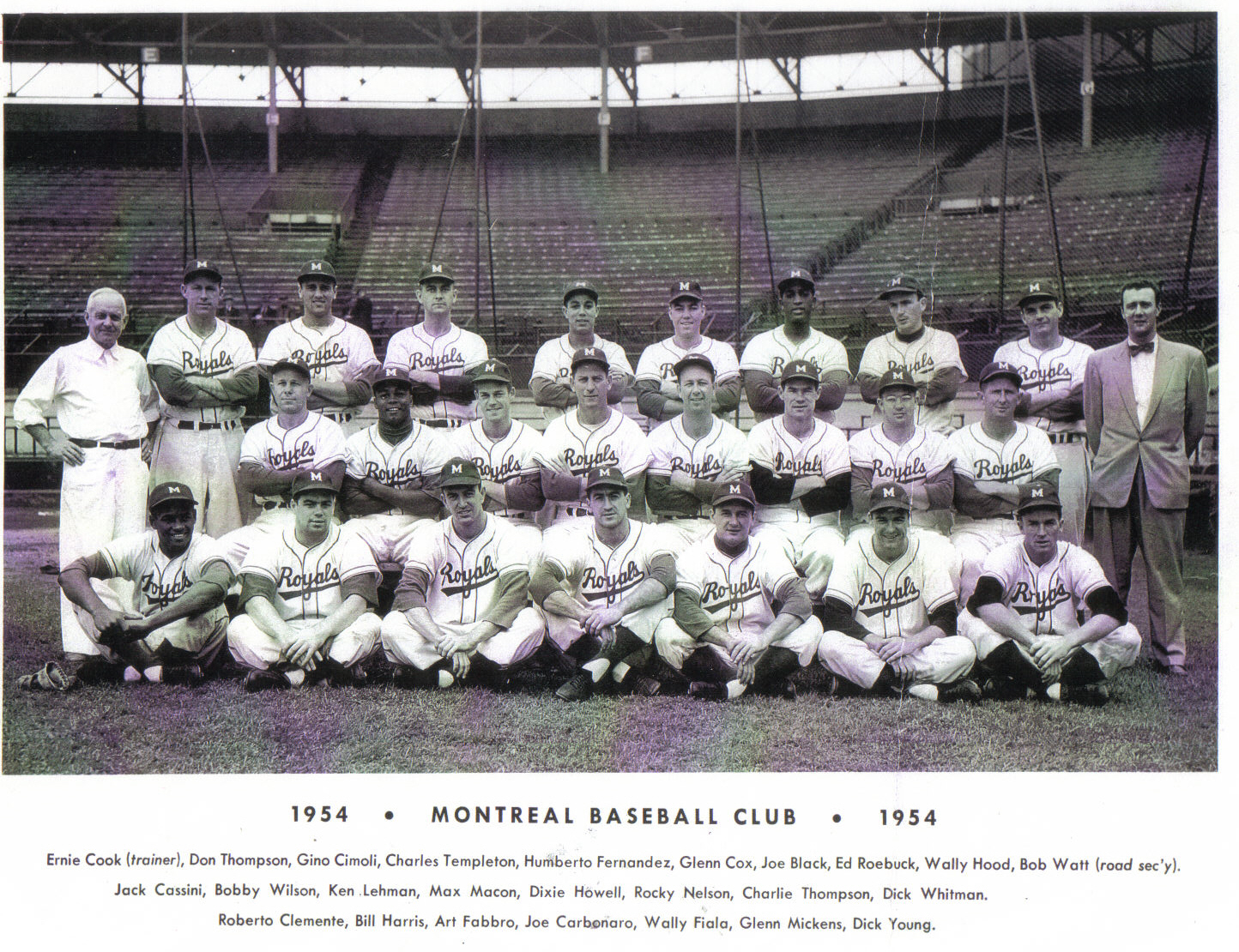
 Tom Hoffarth's The Drill: More Farther Off the Wall