Booker Brown, USC football Joe Carollo, Los Angeles Rams Jim Brown, UCLA football
The not-so-obvious choices for No. 63:
Mike McDonald, Los Angeles Rams Greg Horton, Los Angeles Rams Corey Linsley, Los Angeles Chargers
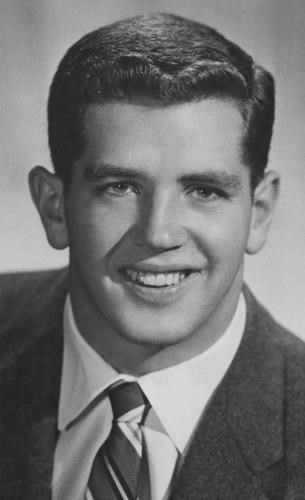
The most interesting story for No. 63: Jim Brown, UCLA football offensive lineman via L.A. Loyola High (1954 to 1955) Southern California map pinpoints: Los Angeles, Westwood, Glendale
Jim Brown helped make history, perhaps by accident, or by good fortune, as part of UCLA’s most unique 1954 national championship football team.
Decades later, Brown tackled an idea on how to preserve the team’s history, for the good fortune of those who came decades later.
A 6-foot, 204-pound right guard on an explosive line that paved the way for coach Red Sanders’ Single-Wing offense, Brown capped off a two-year run with the Bruins as an All-American in 1955. The teams he was on during his time went 18-2 and won two Pacific Coast Conference titles.
Sanders once referred to Brown as “one of the best football players we have had at UCLA. He has never played a poor game. As an all-around guard, he doesn’t back up from anyone. I haven’t seen anyone whip him yet across the scrimmage line. … In addition, you’ve never heard (Brown) complain or alibi or explain. He just goes out and gives his team the best he has.”
When Brown was inducted into the UCLA Athletic Hall of Fame in 2001, it was noted that he also played rugby for the Bruins and was part of its ROTC program. Instead of signing with the NFL’s Chicago Cardinals, who drafted him in 1956, Brown went to the U.S. Army and became commissioned as a Second Lieutenant.
When Brown died at his home in Glendale in 2022 at age 87, survived by his wife of 66 years, Merrilyn, who was a UCLA song girl when they married in 1956, he took pride in having five children, 12 grandchildren and two great-grandchildren.
Brown left not just his own life story, but those of his teammates from that Bruin era.
Sidney Wicks, UCLA basketball Bob Welch, Los Angeles Dodgers Cody Bellinger, Los Angeles Dodgers Jean-Sebastien Giguere, Anaheim Mighty Ducks Christian Okoye, Azusa Pacific College football
The not-so-obvious choices for No. 35:
Tank Younger, Los Angeles Rams Loy Vaught, Los Angeles Clippers Rudy LaRusso, Los Angeles Lakers Ron Settles, Long Beach State football Mark Eaton, UCLA basketball
The most interesting story for No. 35: Petros Papadakis, USC football tailback (1996 to 2000) via San Pedro High and Peninsula High of Palos Verdes Southern California map pinpoints: San Pedro, Palos Verdes, Hollywood, Los Angeles (Coliseum, Sports Arena)
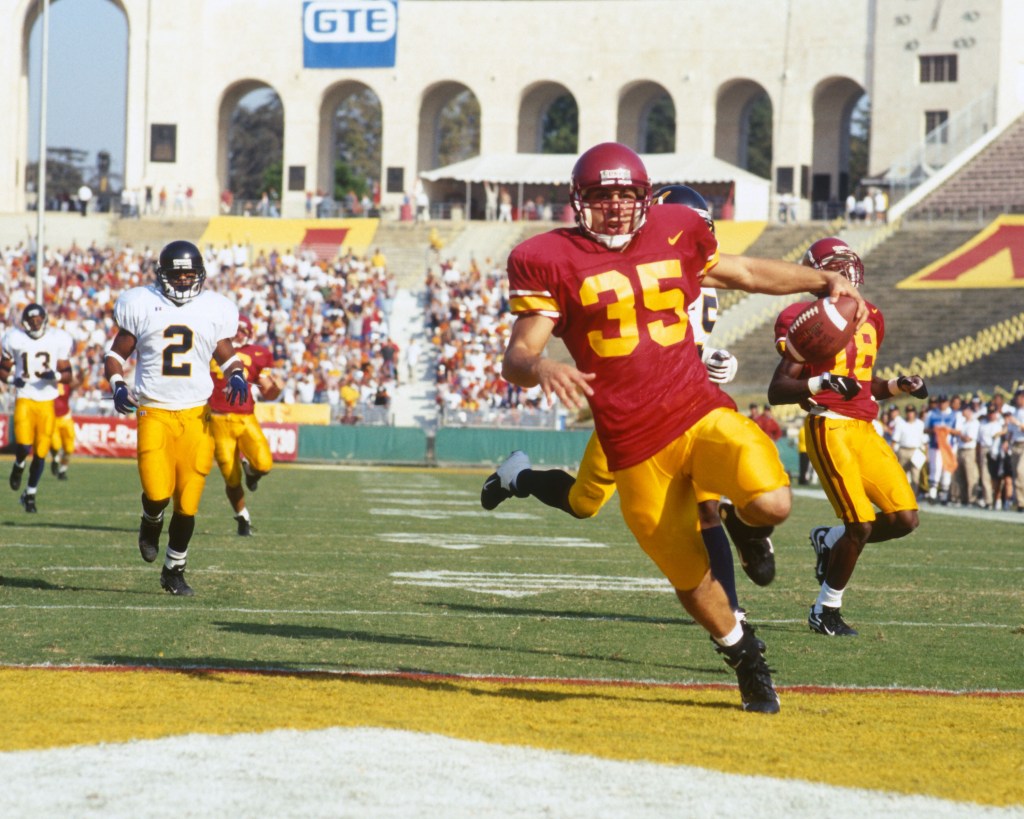
Oct. 15, 1998: On USC’s third play from scrimmage in the first quarter, Trojans junior tailback Petros Papadakis finishes off a 65-yard touchdown run against Cal at the Coliseum (top, and below). Papadakis had 13 carries for 158 yards in his greatest statistical performance of his USC career in a 32-31 Week 6 loss. (Photos by Jon Soohoo/USC)
Any sort of perfunctory profile of Petros Papadakis becomes the proverbial Sisyphean pursuit. Hopefully we don’t have to Greek-splain too much here.
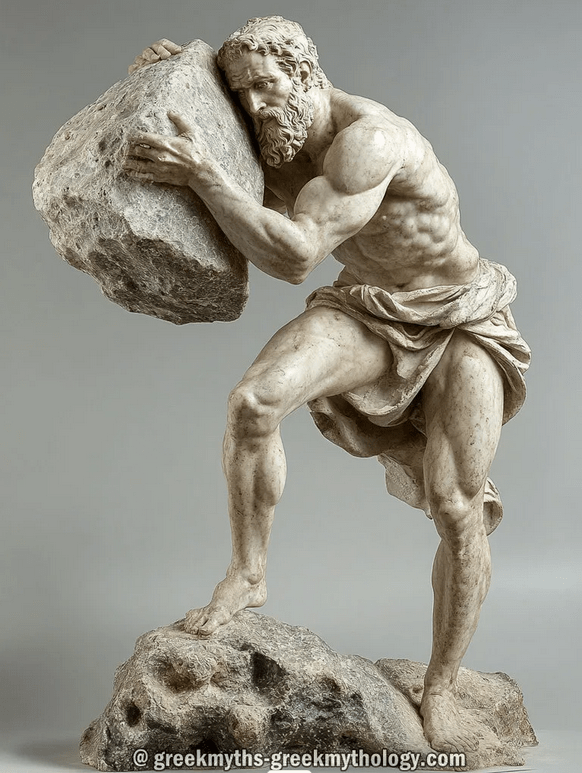
Sisyphus, the first king of Ephyra, found his eternal fate in Hades rolling a huge boulder endlessly up a hill, only to see it come back down at him. Every time he made progress and got on a roll, it reversed on him like a Looney Tunes cartoon. The whole thing seemed so Kafkaesque that French philosopher Albert Camus, writing “The Myth of Sisyphus” in 1942, elevated him to some absurd hero status in Greek mythology.
Something that Papadakis might find relatable.
When Papadakis gets on his own a roll, cutting it up on KLAC-AM (570)’s afternoon sports-talk drive-time “Petros and Money Show,” there is far less sports and much more drive to just being a voice for “la raza.” It’s a focus on a feeling of being in “la ciudad” with Papadakis, as familiar as he is bombastic, just the person in the passenger seat making observational conversation to it real.
He is part of USC football legacy, a linage of Cardinal and Gold athletes whose performance has been documented in Los Angeles’ grand Coliseum. Papadakis’ work ethic formed at his family’s famously iconic San Pedro Taverna, as he went from dishwasher to waiter to spending all his earnings for the night back on his guests to make sure they went home happy.
Maybe Papadakis became an accidental broadcaster, but it’s a career that likely defines him as much if not more than anything else. Once a Trojan workhorse in the USC backfield, he is the sometimes-hoarse former Trojan on the dashboard radio. A Red Bull in a china shop of hot topics. The connoisseurs of SoCal sports who enjoy conquering as much as consuming any kind of history lesson are better for it.
Fox Sports’ Petros Papadakis, left, with USC head football coach Lane Kiffin in 2011.
Back to the profile: Papadakis has provided quips along the way to make his story even more cohesive:
Juan Marichal’s matriarchal Hall of Fame plaque in Cooperstown seems to have one dandy of a typo.
After all he accomplished for the San Francisco Giants in a 16-year MLB life, the last line of his career ledger reads: “Los Angeles N.L., 1975”
It’s because that actually happened.
What a kicker to a spiteful spit take.
When The Associated Press posted a story prior to the 1975 season, explaining how the nastiest of the rival Giants had accepted a one-year, $60,000 contract with the intent of actually trying to help the Dodgers win games, the lede read: “Baseball, like politics, apparently makes strange bedfellows.”
The Los Angeles Times’ Jim Murray launched into his own interpretation a week later: “There’s a new game in town today. It begins, ‘Juan Marichal, playing for the Dodgers, is like …’ And you supply your own punch line.” Murray’s suggestions included: “Like King Faisal at a bar mitzvah … like Brezhnev at a White House prayer meeting … In the view of most Dodger fans, Juan Marichal belongs in the Nuremberg trials, not in Dodger Blue.”
Long Beach Press-Telegram columnist Bud Tucker added his lamentation: “It wouldn’t matter if the guy could win 25 games. Adolph Hitler is Adolph Hitler and Juan Marichal is Juan Marichal.”
Herald-Examiner columnist Melvin Durslag once wrote: “If all the Dodger hitters that Marichal has put in the dirt were laid end-to-end, they would stretch from Chavez Ravine to Santo Domingo.”
Marichal flipped the script during a game at Candlestick Park in 1965. He would be forever linked with Dodgers catcher John Roseboro.
Somehow, they came out of it better. A story of forgiveness, friendship and the foundation of what sports can do to heal all wounds. Even those generated by swinging a bat at an another man’s head.
Donnie Moore: California Angels Lester Hayes: Los Angeles Raiders Ron Artest/Metta World Peace: Los Angeles Lakers Kermit Johnson: UCLA football, Southern California Sun, out of Blair High of Pasadena
The not-so-obvious choices for No. 37:
Bobby Castillo: Los Angeles Dodgers Ron Washington: Los Angeles Angels manager Tom Seaver: USC baseball Ken McBride: Los Angeles Angels
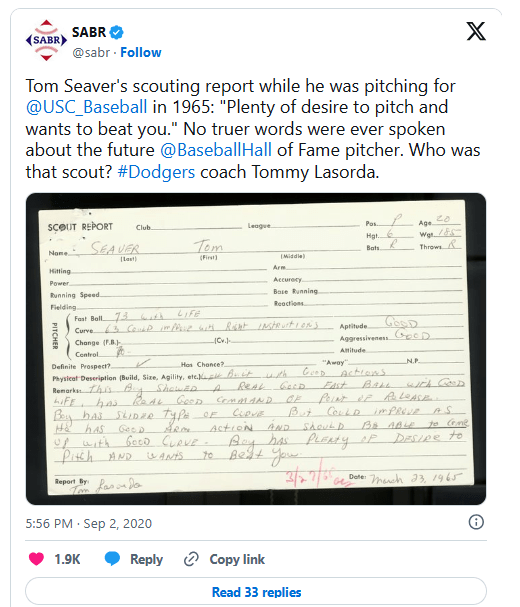
The most interesting story for No. 37: Tom Seaver: USC baseball pitcher (1965) Southern California map pinpoints: Twentynine Palms, Los Angeles (USC), Manhattan Beach
Tom Seaver was a stellar bridge player. And bridge can be a tricky card game.
The trick is to gather the fewest the number of tricks bid by those playing together as partners at a four-person table. The rules seem simple, but mastering the strategy and complexity takes time. Intelligence and patience are rewarded.
That’s Tom Seaver, USC student.
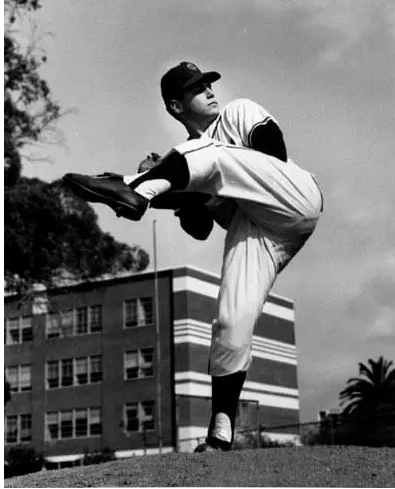
USC pitcher Tom Seaver, 1965.
As pre-denistry major — he sensed he might need a fallback career — Seaver often found himself with a group of friends at the popular 901 Club on Jefferson Blvd., famous for its hamburgers and beer. It’s been called the “9-0” since the late 1940s.
This gave Seaver a place to bridge build a career as a deep thinker.
In the abridged version of how Seaver slithered his way out of USC, could have build a bridge to becoming a Los Angeles Dodger, but crafted a Hall of Fame career as a player elsewhere speaks more to his way of playing cards close to the uniform.
Tom Seaver was already concerned about where he future would take him when the Vietnam War came onto his radar in 1962.
He wasn’t keen on being drafted for the military out of Fresno High, where he just finished his senior baseball season with a modest 6-5 record, making the Fresno Bee All-City team. There were no pro offers to field. No college interest.
Seaver’s idea to instead enlist in the U.S. Marine Corps Reserves in 1962 and ’63 led to bootcamp at Twentynine Palms, in the heart of Mojave Desert. He had to gain extra weight and strength. As it turned out, that would help him throw a more effective fastball and slider.
“The best thing that happened to me was a strenuous summer job in which I had to lift heavy crates that brought raisins in from the fields,” he explained in his 1973 book, “Pitching with Tom Seaver.” “A machine emptied the raisins but somebody had to get the empty boxes off and they were heavy. They were called ‘sweat boxes,’ which was exactly right. I was actually smaller than almost everybody in high school but that job and the six months I spent in the Marine Corps build up my whole body.”
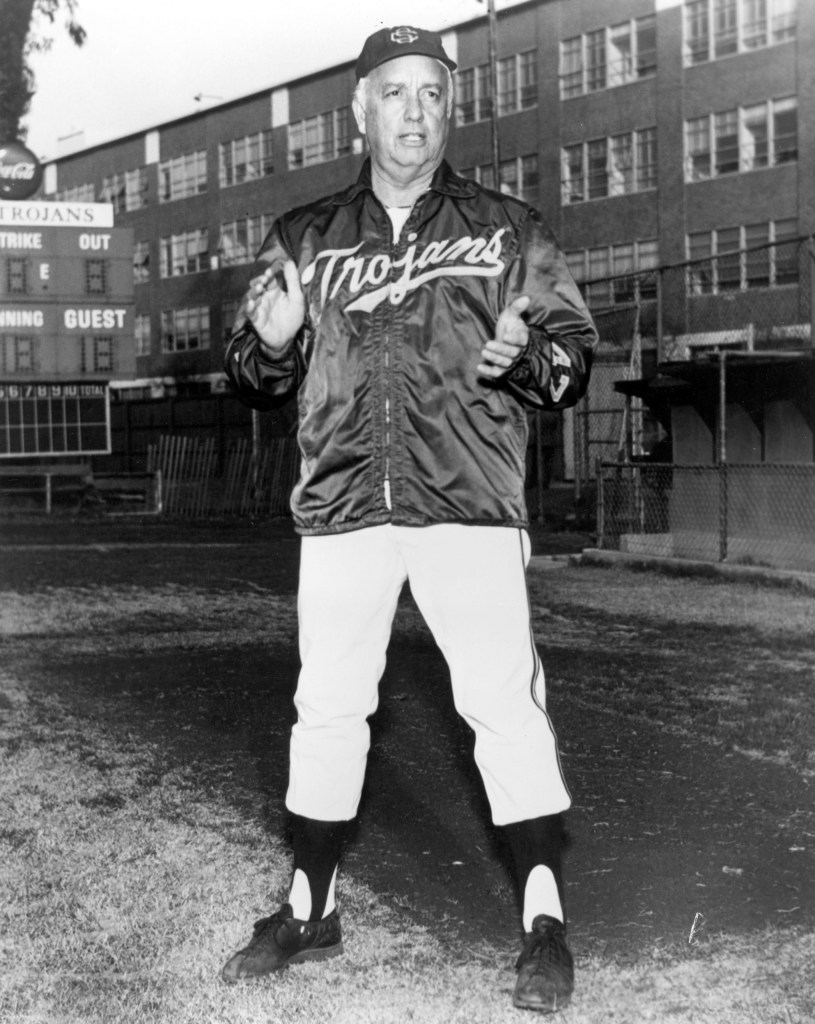
Rod Dedeaux.
Seaver pitched one freshman season at Fresno City College and sported an 11-2 record. USC, the perennial NCAA title team under Rod Dedeaux (see SoCal Sports History 101 bio for No. 1), led to the coach calling Seaver the “phee-nom from San Joaquin.”
The Dodgers’ interests might have got in the way, too. Reports vary, but they were said to be ready to give Seaver a $2,000 deal — maybe $3,000 — in 1964. This would be the final year before the MLB Draft and teams were free to negotiate at will.
Seaver declined. He went panning for gold elsewhere.
Dedeaux’s deal was to give him one of his USC baseball full scholarships if he first pitched in Alaska Summer League of ’64. Dedeaux worked out a deal for Seaver to join the Alaska Goldpanners. Seaver, then 19, experienced his first Midnight Sun Game in Anchorage — the 10:30 p.m. start on June 21 for the summer solstice that has become part of baseball lore.
In 19 games, with five starts, Seaver struck out 70 in 58 2/3 innings, posting a 6-2 mark with one save and 4.70 ERA. Later that summer, he played for the Wichita Glassmen in the National Baseball Congress World Series in Wichita, Kansas. That’s when he hit a grand slam in a game where he had been called in as a relief pitcher. Seaver called it one of his baseball career highlights.
USC had Seaver slotted as its No. 3 starter on a staff that included junior Bob Selleck, the 6-foot-6 older brother of eventual USC basketball, baseball and volleyball player (and actor) Tom Selleck (see Selleck’s bio for No. 42).
When USC started practices in March of ’65, it was said that some of Seaver’s teammates suggested he start lifting weights to increase his upper body strength, which matched up to his already impressive leg mechanics. That was said to be the starting point of Seaver’s ultra-effective drop-and-drive delivery. His fastball went up from 85 mph to the mid-90s in that time.
Yasiel Puig, Los Angeles Dodgers Bruce Matthews, USC football
The not-so-obvious choices for No. 66:
Andrew Bogut, Los Angeles Lakers Myron Pottios, Los Angeles Rams Tanner Scott, Los Angeles Dodgers Carl Weathers, Long Beach City College football
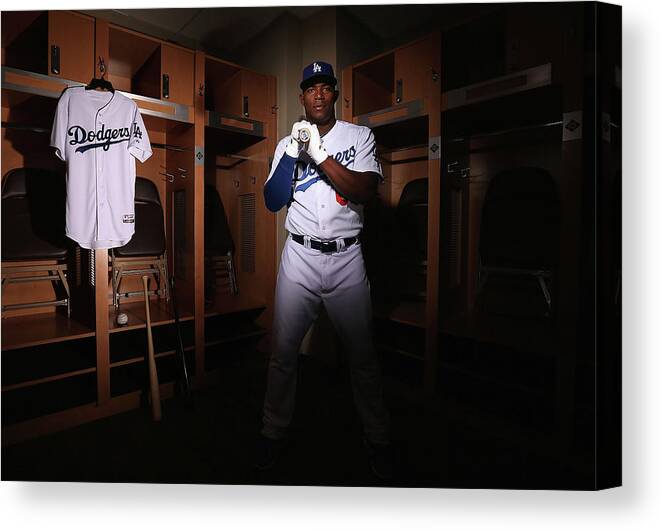
The most interesting story for No. 66: Yasiel Puig, Los Angeles Dodgers outfielder (2013 to 2018) Southern California map pinpoints: Los Angeles (Dodger Stadium), Rancho Cucamonga
In Yasiel Puig’s 2013 rookie season, a recreation of an iconic illustration in the children’s book, “Charlotte’s Web” made its way onto social media. In the book, Charlotte the spider was trying to raise attention for her barnyard friend, Wilbur the pig, and spins a message into her web that says “SOME PIG.” Barry Goldberg, whose “Barry’s World” online store sold “wacky, surreal and wholly unique gifts,” saw that the illustration on his site was altered. “It looks like somebody took original and altered it to add an extra letter,” the New Jersey businessman told us in an email. “To be honest, I’ve never even hear of Mr. Puig.”
An immigrant’s journey, seeking a place in the United States, seeking politically motivated asylum or otherwise, can be a harrowing tale.
Yasiel Puig has his own disturbing version. All in the name of baseball.
(Photo by Justin Edmonds/Getty Images)
It reads as bizarre, in some ways, as the way he arrived with the Los Angeles Dodgers in June of 2013, just one year after he survived a journey from Cuba to Mexico to the U.S. to finally arrive in Southern California.
June of 2012 was said to be the fifth time Puig tried to escape from his native land, navigate the Caribbean waters, pay off coyotes, and head go north. By some reports, he may have attempted and failed this task more than a dozen times before that.
A Santeria priest was said to have started Puig’s final trip with a blessing that included a splash of rum and a sprinkle of chicken blood. Puig and two others climbed aboard a tiny speed boat, which eventually went adrift when it ran out of gas. It forced them to wade ashore through crocodile-infested waters. They were confused as they were held captive by a Mexican-based trafficking ring on an island off the coast of Cancun. They awaited a $400,000 payment from a small-time crook in Miami so they could proceed by whatever means next.
Weeks later, Puig would sign a seven-year, $42 million deal with the Dodgers. It was based on speculation as much as seeing him once take batting practice session to assess his abilities, let alone try to verify his age.
As the MLB essentially endorses human trafficking, what are the risk-rewards when hearing Puig’s tale. Depends on who you ask. It brought Los Angeles the next big “wow” gate attraction, an enigmatic 22-year-old what elicited comparisons to Bo Jackson by Dodgers manager Don Mattingly.
He had an aura, a smile and child-like personality compared to Magic Johnson.
Dodgers scouting director Logan White believed Puig could be the LeBron James of baseball.