Blog

No. 7: Todd Marinovich

This post is part of a media project called SoCal Sports History 101: The Prime Numbers from 00 to 99 that Uniformly, Uniquely and Unapologetically Reveal The Narrative of Our Region’s Athletic Heritage. Pick a number, and consider the list of athletes attached to it. Who wore it best? Or, what’s the most compelling story linked to it? Any person, place or thing is in play with Southern California connections. Star power, transformational achievement, longevity, notoriety and quirkiness all factor in. Whatever leads to a lively discussion and interpretation.

The most obvious choices for No. 7:

Bob Waterfield: UCLA football; Los Angeles Rams
Steve Yeager: Los Angeles Dodgers
Lamar Odom:
Los Angeles Clippers; Los Angeles Lakers
Matt Barkley: USC football
Don Rogers: UCLA football

The not-so-obvious choices for No. 7:

Todd Marinovich: Mater Dei High football, Capistrano Valley High football
Mark Harmon: UCLA football
Jay Schroeder: UCLA football
Kemer Brett: El Segundo High baseball
George Brett: El Segundo High baseball
Andrew Shue: Los Angeles Galaxy

The most interesting story for No. 7:
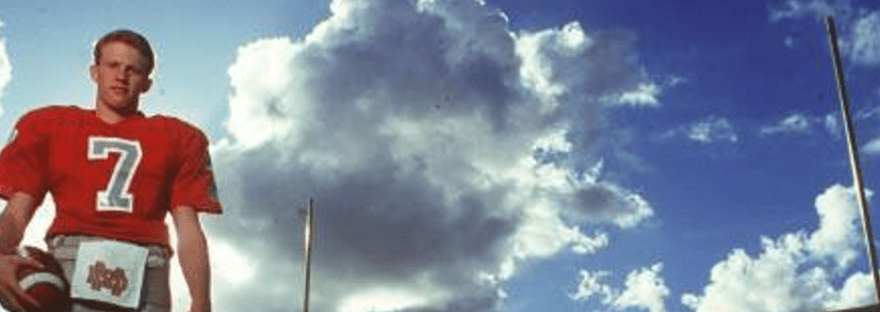
Todd Marinovich, Santa Ana Mater Dei High School and Capistrano Valley High football quarterback (1985 to 1989), USC football quarterback (1988 to 1990), Los Angeles Raiders quarterback (1991 to 1992), Los Angeles Avengers quarterback (2000 to 2001)
Southern California map pinpoints:
Mission Viejo, Santa Ana, Los Angeles (Coliseum, Staples Center), Newport Beach, Irvine, Indio

Reference books on the subject:
Marinovich: Outside the Lines in Football, Art and Addiction,” by Todd Marinovich with Lizzy Wright, 2025


Proceed with caution if Todd Marinovich is your poster boy for youth sports’ ultimate “cautionary tale.” It’s old news at this point.

Going back to his time as a high school quarterback in Orange County and setting California state high school passing records, Marinovich would end up finding more extreme highs and lows playing at USC, then the NFL’s Los Angeles Raiders, a return to L.A. for a time with an Arena League team to support a drug habit, and eventually landing on a Palm Springs football field near the age of 50 still trying to find himself.

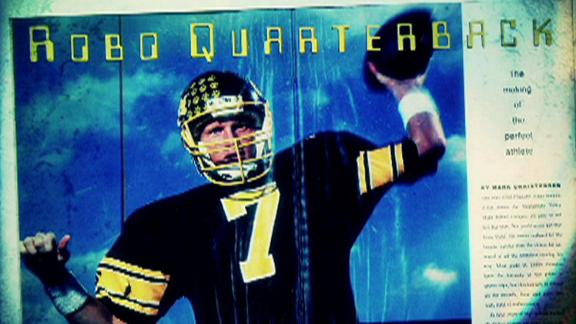
But the national narrative starting with him as “Robo Quarterback” or “Bred to be a Superstar” seems too simplistic all this time later.

A tale as old as time, this needs a refresh.

In a 2019 piece for the Chicago Tribune, Rick Telander cozied up to the “cautionary tale” reference dissecting Team Marinovich and all that happened in the public eye:

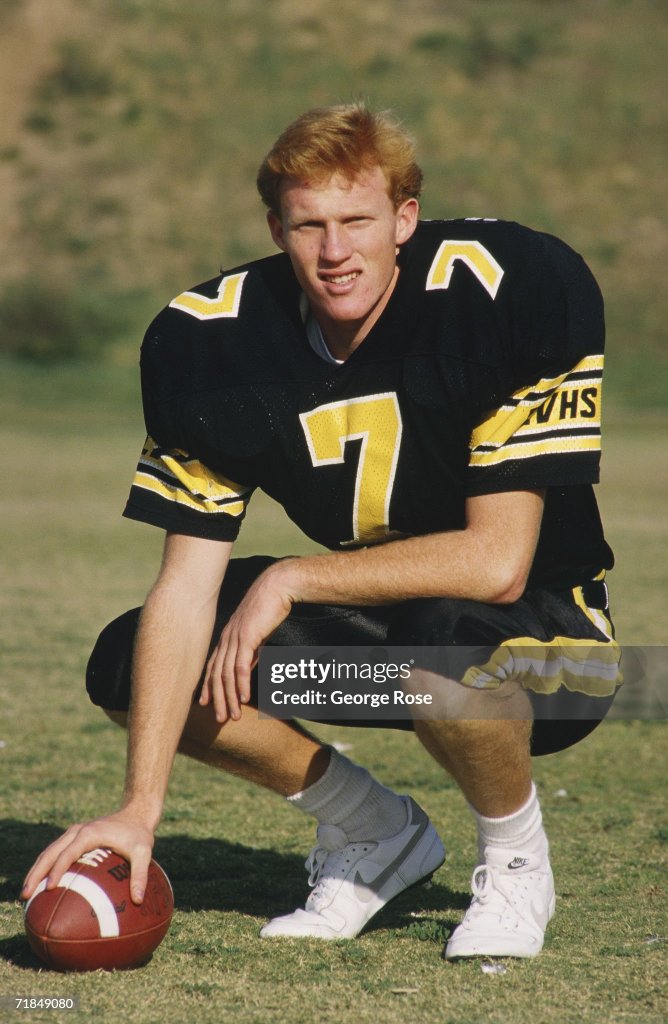
Todd Marinovich at Capistrano Valley High School in 1987. (George Rose/Getty Images)

You’ll recall that Todd was the young man manipulated from birth (actually pre-birth) by his father to be the best, purist, greatest quarterback the world had ever seen. Marv had played football at USC, and he wanted, for reasons buried deep within his own inadequacies, to create a boy who would have the sporting genetics for quarterbacking and be trained incessantly, focused unfailingly and driven like a sled dog toward the apex of the country’s most popular game.”

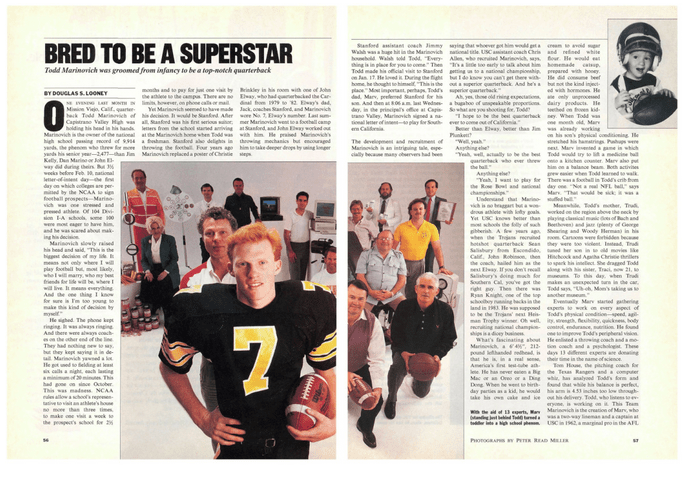
Telander had just read something in Sports Illustrated by Michael Rosenberg titled “Learning To Be Human Again.” As if Marinovich was in some reverse metamorphic process. Rosenberg made a purposeful revisit to the 1988 Sports Illustrated spread Doug Looney laid out titled “Bred to be a Superstar” that magnified the whole social science shebang and led to judgement of the Marinovich Parental Method as a doomed-to-fail methology.

Before that piece, California magazine had dropped the headline “Robo QB: The Making of the Perfect Athlete.” A People magazine profile in 1987 followed.

That was the fragile framework created for Todd Marinovich, no matter where he went from there. The poor kid, readers could easily conclude. Talented, kind-hearted, fun-loving, well mannered. Able bodied.

Call Child Protective Services.

We seem to have the idea that one who is abused and manipulated as a kid is set up to abuse himself later in life and continue a genetic pattern of human frailty. Unless that person figures things out with help, counseling and avoiding some sort of tragic ending.

Maybe the “worst sports father” adjective just won’t go away years later. Even if his father literally went away.

But Todd Marinovich can explain better how it happened with him as a willing participant, trying to navigate the life of a high school kid in full media spotlight, and how it really turned out.

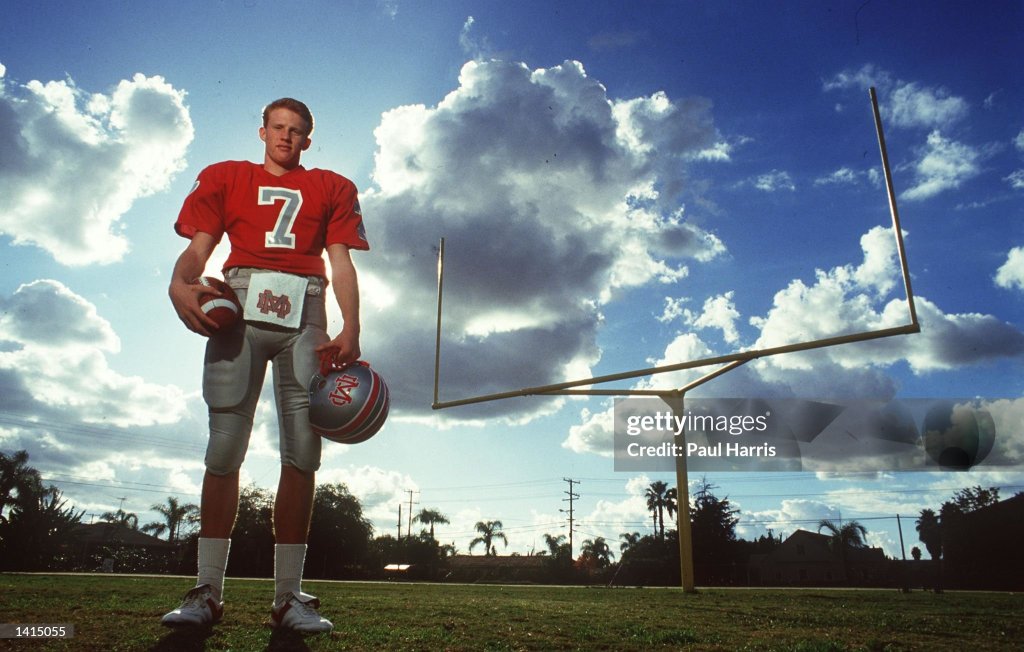
Todd Marinovich as a Mater Dei High School quarterback in 1986 in San Juan Capistrano. (Paul Harris/Getty Images)

That Todd Marinovich was born on the Fourth of July in 1969 may have added to the storyline that started with him on a All-American pathway.

He played a lot of sports, perhaps exceeding most in basketball, but football would be the real test. First were the years at Mater Dei High in Santa Ana, a football factory that had produced Heisman Trophy winners before and after Marinovich’s brief appearance there. That was followed by a surprise transfer to Capistrano Valley in Mission Viejo.

The switch to Capo Valley by his father Marv would be one of things listed on his parents’ separation filing in the courts. Todd has no say in it. He would live with his dad an an in-law quarters at the house of head coach Dick Enright, likely a CIF violation.

While wearing No. 7, Marinovich went up against rival quarterback Bret Johnson in 1987 when ESPN televised its first-ever high school game, between Capo Valley and El Toro.

Continue reading “No. 7: Todd Marinovich”

No. 90: Andrei Voinea

This post is part of a media project called SoCal Sports History 101: The Prime Numbers from 00 to 99 that Uniformly, Uniquely and Unapologetically Reveal The Narrative of Our Region’s Athletic Heritage. Pick a number, and consider the list of athletes attached to it. Who wore it best? Or, what’s the most compelling story linked to it? Any person, place or thing is in play with Southern California connections. Star power, transformational achievement, longevity, notoriety and quirkiness all factor in. Whatever leads to a lively discussion and interpretation.

The most obvious choices for No. 90:

Larry Brooks, Los Angeles Rams
Mike Wise, Los Angeles Raiders

The most interesting story for No. 90:

Andrei Voinea, California School of the Deaf Riverside football center, offensive lineman, tight end (2021 to 2022)

Southern California map pinpoints:
Riverside, Burbank

Reference books on the subject:
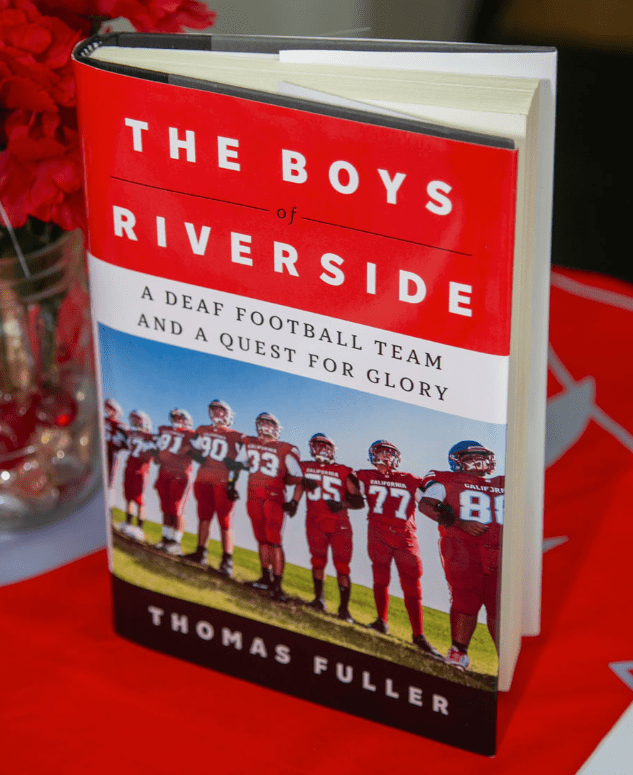
The Boys of Riveside: A Deaf Football Team And a Quest for Glory,” by Thomas Fuller, 2024


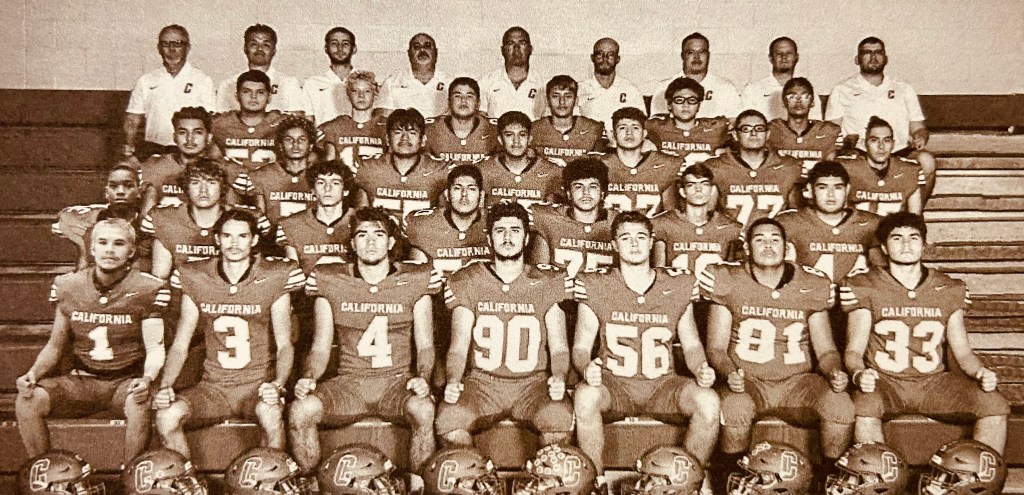
In the 2022 team photo of the California School of the Deaf Riverside high school football squad, No. 90 Andrei Voinea is front and center.

The starting center on the offensive line by season’s end, Voinea may not have been the most athletic or talented of a team that would go on to win a championship, but he was the biggest and perhaps the quickest learner, with a computer science mind and newfound appreciation for how he could converse with classmates.

The position of center who starts the play is vital, not only in an eight-man football alignment where the line works harder on protection after the snap. But, as the name of the school indicates, unique communicate is needed before and after the snap. It’s a skill set that starts in the school’s classrooms, social networking, and transfers to the football team’s collective success.

That photo also shows Trevin Adams, No. 4, the team’s quarterback/linebacker captain, next to Voinea. Adams is the son of the head coach, Keith Adams, up there in the back row, five in from the left. Trevin’s younger brother, freshman Kaden, was his backup at quarterback.

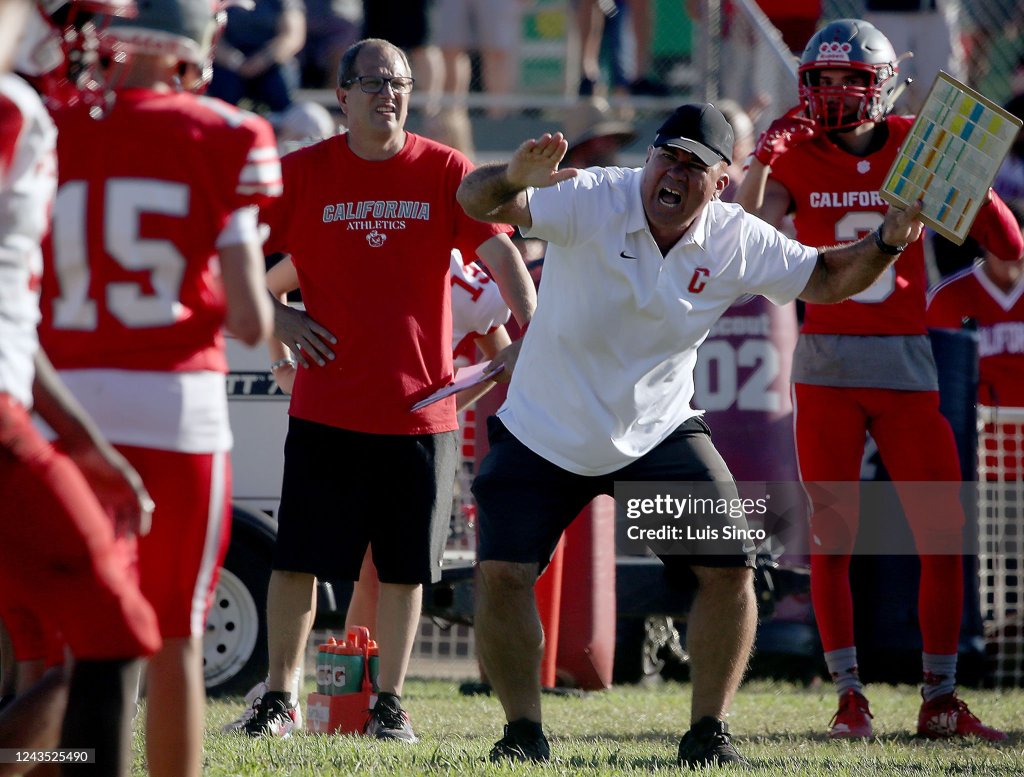
California School For The Deaf Riverside head coach Keith Adams explains a strategy to the team during a game against the Florida School For The Deaf and Blind on Saturday, Sept. 24, 2022, in Riverside. (Luis Sinco / Los Angeles Times via Getty Images)

Jory Valencia, No. 3, is next to Adams, the team’s 6-foot-3 senior captain at wide receiver and cornerback. His grandfather Seymour Bernstein came to the school in 1958 and coached football. His parents, Jeremias and Scarlett, both attended CSDR and excelled in sports, as did his older brother Noah and his uncles Joshua Valencia, Jonathan Valencia, Steve-Valencia-Biskupiak and Ethan Bernstein.

Next to Valencia is Felix Gonzales, No. 1, the team’s most outstanding player and another senior captain. By the end of the season, Gonzales was recovering from a leg injury and couldn’t make the team picture. The school deftly edited him in digitally for this team shot.

All of them and more make up the central casting of the 2024 book, “The Boys of Riveside: A Deaf Football Team And a Quest for Glory.” Note on the cover: Voinea, fourth in from the left, linking arms with teammates.

New York Times writer Thomas Fuller introduces Voinea and his teammates who, coming out of a COVID confusion that shutdown all the school’s sports, happened to be at the right place at the right time to make California School of the Deaf Riverside a rather improbable California Intercollegiate Federation (CIF) Southern Section champion.

“It was so quintessentially American,” Fuller, struck by the students’ perseverance, eventually described it to People Magazine. “A team that had endured seven decades of losing seasons was now beating the pants off of all their opponents.”

Listen as these Cubs roar.

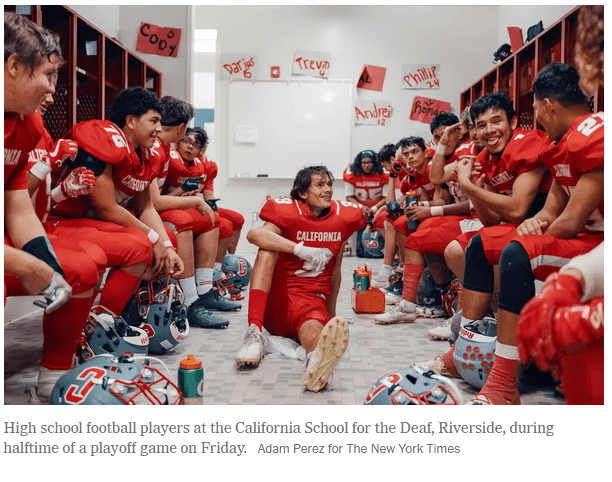
Above: Jory Valencia (3) sits in the middle of the locker room with CSDR teammates in a New York Times photo.
On the wall behind them are posters of players’ names and numbers. One of them is “Andrei 12.”
Voinea wore No. 12 as a junior (as well as when the team was on the road and needed a white jersey) because “Tom Brady was my favorite player in the NFL,” he said.
He wore No. 90 more in his senior year, admitting “it sounds bigger and more fitting for my size, considering most of the big guys in the NFL chose higher jersey numbers.”
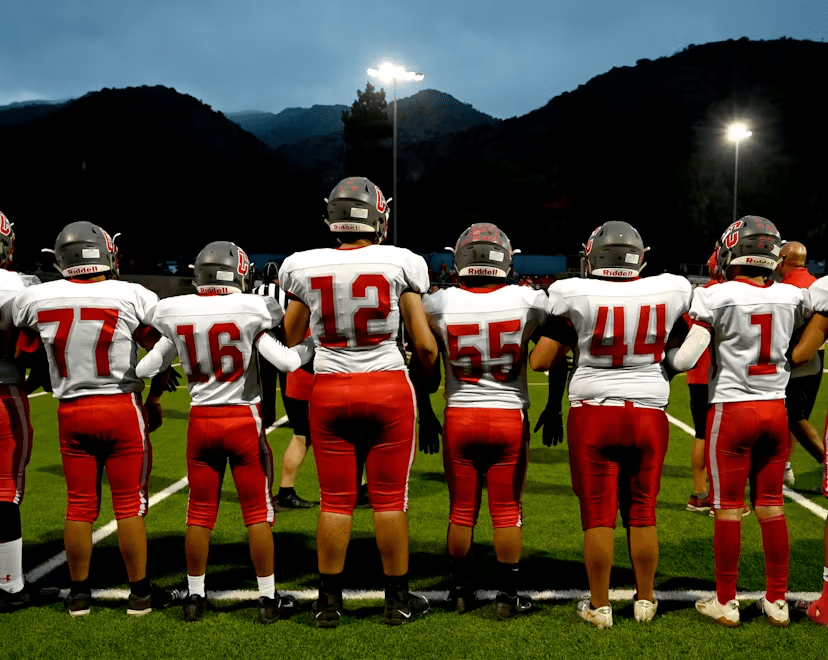
Below: A photo of Voinea wearing No. 12 during a game at Avalon High on Catalina Island.

A year earlier, in 2021, the Cubs made noise as the first in the school’s 68-year history to advance to a section championship game. Scores of local and national media outlets came along for the ride and a storyline that was too good to pass on — a team of deaf players, at a school with more than 50 years of losing seasons, rose up out of COVID and did something remarkable.

Even though CSDR lost that title game, 74-22, to Faith Baptist of Canoga Park, the 2022 team went all the way on a 12-0 run, avenging the defeat with a convincing 80-26 win over the same Faith Baptist program.

Continue reading “No. 90: Andrei Voinea”

No. 99: Carlos Estéves, Charlie Sheen, and Ricky Vaughn

This post is part of a media project called SoCal Sports History 101: The Prime Numbers from 00 to 99 that Uniformly, Uniquely and Unapologetically Reveal The Narrative of Our Region’s Athletic Heritage. Pick a number, and consider the list of athletes attached to it. Who wore it best? Or, what’s the most compelling story linked to it? Any person, place or thing is in play with Southern California connections. Star power, transformational achievement, longevity, notoriety and quirkiness all factor in. Whatever leads to a lively discussion and interpretation.

The most obvious choices for No. 99:

Wayne Gretzky, Los Angeles Kings
Aaron Donald, Los Angeles Rams
Manny Ramirez, Los Angeles Dodgers

The not-so-obvious choices for No. 99:

Hyun Jin Ryu, Los Angeles Dodgers
Denis Bouanga, LAFC

The most interesting story for No. 99:
Charlie Sheen, as Ricky “Wild Thing” Vaughn, Cleveland Indians relief pitcher, from the movie “Major League” (1989) and “Major League II” (1994)
Southern California map pinpoints:
Santa Monica, Malibu, Hollywood

Reference books on the subject:
The Book of Sheen: A Memoir,” by Charlie Sheen, 2025


Carlos Estévez, Charlie Sheen and Ricky Vaughn walk into a bar …

The hope is at least one of them comes out alive.

This seems to add up to more than just two-and-a-half men, but the algebra and physics are far more complicated.

Carlos Estévez, as known to his friends when he grew up playing in Malibu Little League, the Pony-Colt transition time, and then on the Santa Monica High baseball team, was good ol’ Charlie. His true center.

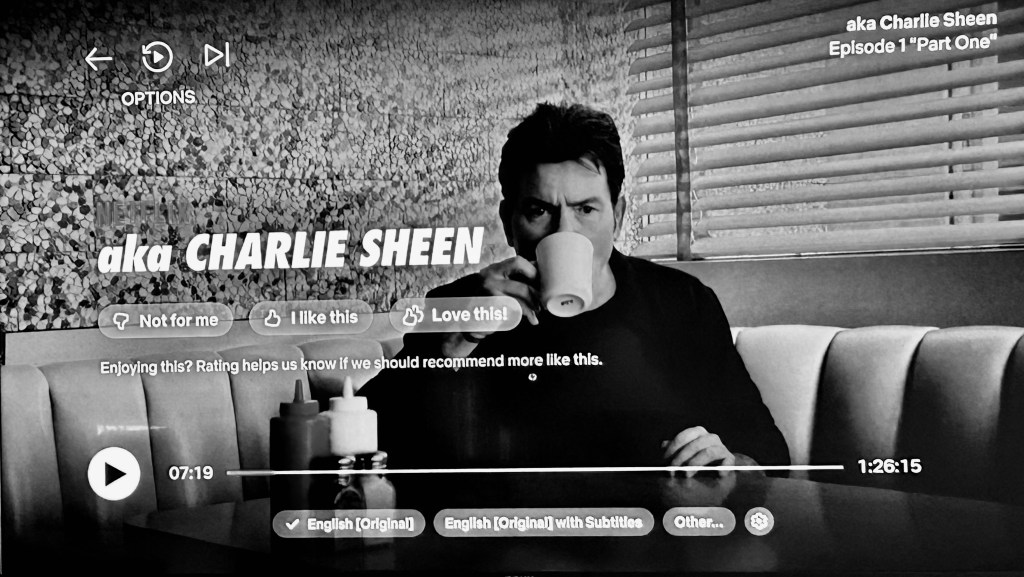
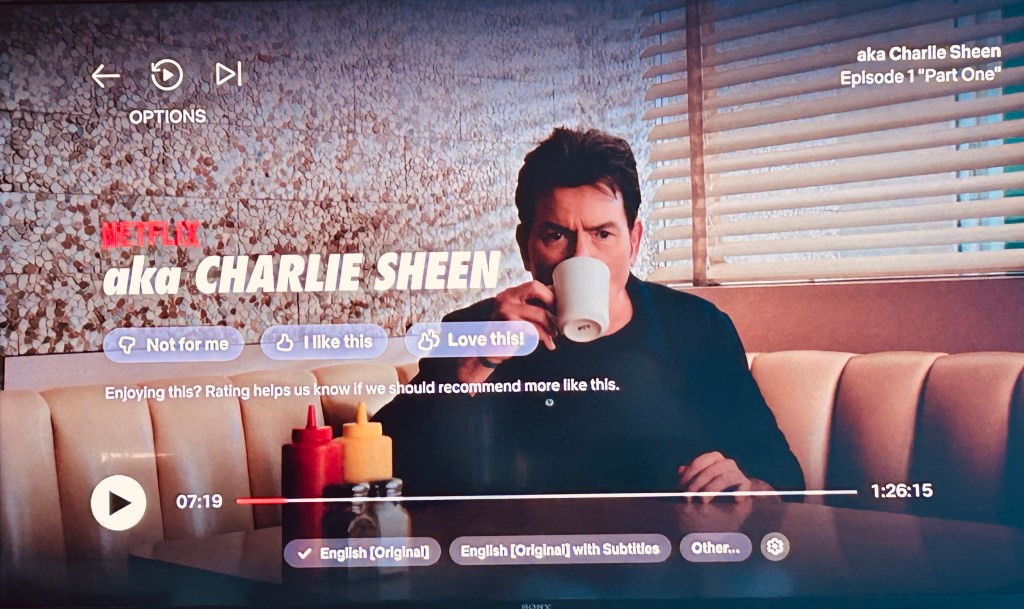
Charlie Sheen, his Hollywood flip-side, is best explained in a 2025 Netflix documentary appropriately titled, “aka Charlie Sheen.” Good time Charlie. You know him to some degree, and then you don’t.

Ricky Vaughn, a role Sheen played as the steel-focused wild-child relief pitcher in the 1989 film “Major League,” amplified his Hollywood persona. It would have a notable ripple effect within the culture of Major League Baseball bullpens. Art reflecting life reflecting relief artists.

All the way down to wearing No. 99 for some psychological advantage when staring down a tepid hitter in the late innings.

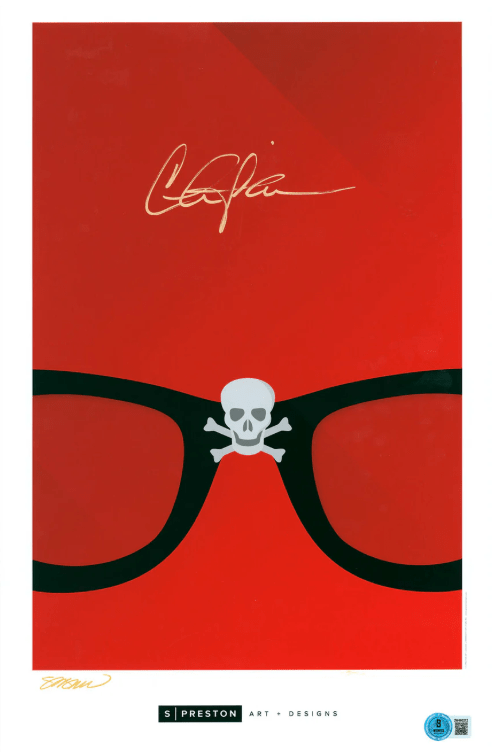
There is an art to understanding this “concept” of the Estévez/Sheen/Vaughn triumvirate. Forget what you think you know.

Part of the minimalist art collection of S. Preston at his gallery. This one is currently sold out.

“I think there’s so many stories and many ingrained images in people’s minds about the concept of me,” Sheen says in the documentary, sipping something from a coffee cup while seated in a booth at Chips diner across the street from a Catholic church in Hawthorne. This is where Sheen is making his confession.

“(People don’t even) think of me as a person. They think of me as a concept or a specific moment in time.”

The end point to this series — starting at 00 and finding the last two digits here — makes this our obvious.

Ricky “Wild Thing” Vaughn is called in to provide the Hollywood ending.

Crazy and all.

Charlie “Wild Man” Estévez/Sheen gets credit for the save, and a tip of the coffee cup tor those who has saved him countless times.Grab a beverage and we’ll see where it leads.


Baseball is the connective tissue in Project Estévez/Sheen/Vaughn. That becomes the theme when sorting through film, TV, tabloids, depositions, affidavits and general convoluted hearsay. Whenever Estévez/Sheen needed the serenity, security and sweet spot of baseball, troubles became secondary.

There’s the famous Jim Bouton quote: “You spend a good piece of your life gripping a baseball and in the end it turns out that it was the other way around all the time.”

Estévez/Sheen might relate to that in a different way.

Continue reading “No. 99: Carlos Estéves, Charlie Sheen, and Ricky Vaughn”

No. 69: Chase de Leo

This post is part of a media project called SoCal Sports History 101: The Prime Numbers from 00 to 99 that Uniformly, Uniquely and Unapologetically Reveal The Narrative of Our Region’s Athletic Heritage. Pick a number, and consider the list of athletes attached to it. Who wore it best? Or, what’s the most compelling story linked to it? Any person, place or thing is in play with Southern California connections. Star power, transformational achievement, longevity, notoriety and quirkiness all factor in. Whatever leads to a lively discussion and interpretation.

The most obvious choices for No. 69:

Sebastian Joseph-Day, Los Angeles Rams and Los Angeles Chargers

The not-so-obvious choices for No. 69:

Chase De Leo, Anaheim Ducks
Al Barry, Los Angeles Chargers via USC

The most interesting story for No. 69:
Chase De Leo, Anaheim Ducks center (2023-24)
Southern California map pinpoints:
La Mirada, Norwalk, Whittier, Anaheim


The preamble

Jerry Seinfeld, who needs his sense of humor to remain a New York Mets fan as well as sticking to the idea that so many are just “rooting for laundry,” uses his 2020 book “Is This Anything?” to clear out his joke file as well as examine the evolution of material.

One of his riffs documented is about a time in our existence when, before caller ID became a thing, we had to punch in *69 — also known as Star-69 — to find out whose call we just missed with some identification, and they we decide if we wanted to call them back.

“I thought it was a little hostile to the calling party. Someone calls. They hang up. You hit that *69. ‘Nice try, creep. Oh, I know all about your little call. …’

“And 69?

That’s the number they pick for this thing?

So that means there isn’t one person at the phone company that went to junior high school? How did that slip through an entire organization?

“If you worked at the phone company, and you heard they were doing this … wouldn’t you walk into the meeting and go, ’69? Are you kidding me? That’s the number you guys came up for the new feature? What the hell is going on here?’

“ ‘We’re the phone company. We can pick any number we want. 68. 70.’

” ‘I can’t wait to hear what you got for 3-Way Calling’.”

In the grand scheme of nothing, what does 69 have to do with anything? It’s a callback to immature double entendre, the ding-dong-ditch in a world of too much Beavis and Butthead. The argument could be made that 69 is really a single entendre. Of, just an appetizer.

Scanning the rosters in the entire history of Southern California sports, only a handful of athletes have dared to wear No. 69. You figure enough of them actually asked for it. They just didn’t get it. On several levels.

Some have pulled it off better than others, but in the sports numbering system, there’s no real star No. 69. It’s more an asterisk. Who’s really trying to be the biggest asshat?

Continue reading “No. 69: Chase de Leo”

No. 63: Jim Brown

This post is part of a media project called SoCal Sports History 101: The Prime Numbers from 00 to 99 that Uniformly, Uniquely and Unapologetically Reveal The Narrative of Our Region’s Athletic Heritage. Pick a number, and consider the list of athletes attached to it. Who wore it best? Or, what’s the most compelling story linked to it? Any person, place or thing is in play with Southern California connections. Star power, transformational achievement, longevity, notoriety and quirkiness all factor in. Whatever leads to a lively discussion and interpretation.

The most obvious choices for No. 63:

Booker Brown, USC football
Joe Carollo, Los Angeles Rams
Jim Brown, UCLA football

The not-so-obvious choices for No. 63:

Mike McDonald, Los Angeles Rams
Greg Horton, Los Angeles Rams
Corey Linsley, Los Angeles Chargers

The most interesting story for No. 63:
Jim Brown, UCLA football offensive lineman via L.A. Loyola High (1954 to 1955)
Southern California map pinpoints:
Los Angeles, Westwood, Glendale

Reference books on the subject:
UCLA Football – 1954 National Champions: To Know a Man – Know His Memories,” by Jim Brown, 2006


Jim Brown helped make history, perhaps by accident, or by good fortune, as part of UCLA’s most unique 1954 national championship football team.

Decades later, Brown tackled an idea on how to preserve the team’s history, for the good fortune of those who came decades later.

A 6-foot, 204-pound right guard on an explosive line that paved the way for coach Red Sanders’ Single-Wing offense, Brown capped off a two-year run with the Bruins as an All-American in 1955. The teams he was on during his time went 18-2 and won two Pacific Coast Conference titles.

Sanders once referred to Brown as “one of the best football players we have had at UCLA. He has never played a poor game. As an all-around guard, he doesn’t back up from anyone. I haven’t seen anyone whip him yet across the scrimmage line. … In addition, you’ve never heard (Brown) complain or alibi or explain. He just goes out and gives his team the best he has.”

When Brown was inducted into the UCLA Athletic Hall of Fame in 2001, it was noted that he also played rugby for the Bruins and was part of its ROTC program. Instead of signing with the NFL’s Chicago Cardinals, who drafted him in 1956, Brown went to the U.S. Army and became commissioned as a Second Lieutenant.

When Brown died at his home in Glendale in 2022 at age 87, survived by his wife of 66 years, Merrilyn, who was a UCLA song girl when they married in 1956, he took pride in having five children, 12 grandchildren and two great-grandchildren.

Brown left not just his own life story, but those of his teammates from that Bruin era.

Continue reading “No. 63: Jim Brown”