
This post is part of a media project called SoCal Sports History 101: The Prime Numbers from 00 to 99 that Uniformly, Uniquely and Unapologetically Reveal The Narrative of Our Region’s Athletic Heritage. Pick a number, and consider the list of athletes attached to it. Who wore it best? Or, what’s the most compelling story linked to it? Any person, place or thing is in play with Southern California connections. Star power, transformational achievement, longevity, notoriety and quirkiness all factor in. Whatever leads to a lively discussion and interpretation.
The most obvious choices for No. 8:
Kobe Bryant: Los Angeles Lakers
Troy Aikman: UCLA football
Steve Young: Los Angeles Express
Drew Doughty: Los Angeles Kings
Teemu Selanne: Mighty Ducks of Anaheim
Reggie Smith: Los Angeles Dodgers
The not-so-obvious choices for No. 8:
John Roseboro: Los Angeles Dodgers
Tommy Maddox: Los Angeles Xtreme via UCLA football
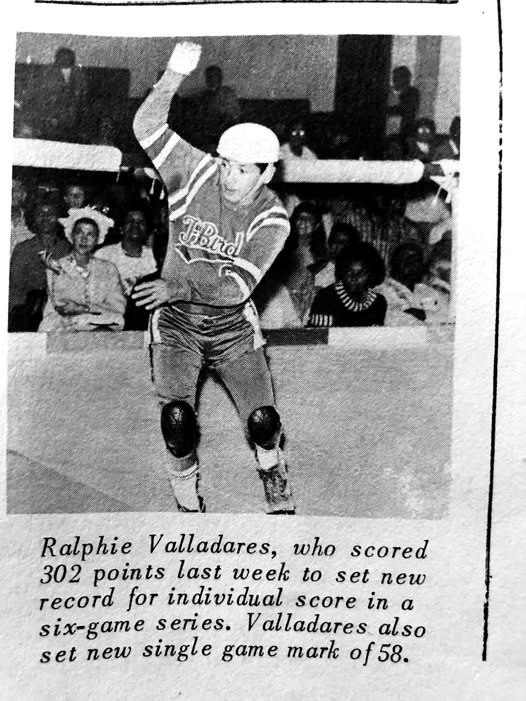
Ralphie Valladares: Los Angeles Thunderbirds
Darryl Strawberry: Crenshaw High baseball
The most interesting story for No. 8:
Ralphie Valladares, Los Angeles Braves (1953 to 1959); Los Angeles Thunderbirds (1961 to 1993)
Southern California map pinpoints:
Inglewood, Pico Rivera, Los Angeles (Olympic Auditorium)
Reference books on the subject:
“Rolling Thunder: The Golden Age of Roller Derby & The Rise And Fall of the L.A. T-Birds,” by Scott Stephens, 2019
“Roller Derby Requiem,” by Ed Koch, 2014
In the real-deal world of Roller Derby, Ralphie Valladares delivered validation, valor and viscosity. To any fan pulling for the underdog, he delivered a trace of Prince Valiant.
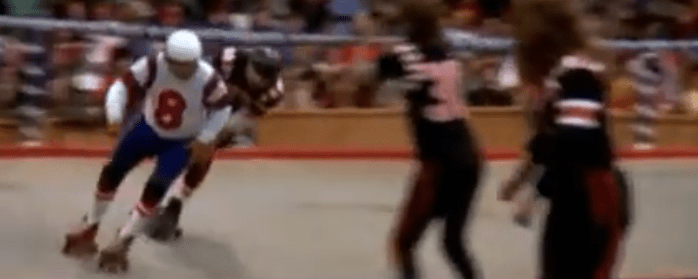
No. 8 wasn’t just gritty great, he could flat-out skate. A lightning-fast playmaker for the red, white and blue Los Angeles Thunderbirds. A group of diverse and equally dynamic team of men and women. He, and they, were an abject reflection our city’s inclusive melting pot and its blue-collar mentality. Valladares knew how to flip the script — whatever the script called for on that night at the Olympic Auditorium — and his followers were with him every turn of the wheel.
It’s valid to say Valladares was the first high-profile, relatable Latino sports star in Los Angeles, coming in some 20 years before Fernando Valenzuela and his mania turned the 1980s upside down. Even then, Valladares was still around to see what kind of magic his sport could squeeze out for a generation at the height of the roller disco scene.
He brought showmanship and pop culture value, much like an audience would find watching with the Harlem Globetrotters or the Savannah Bananas.
There was art, merit and an authentic skill set necessary.
As kids figured ways to replicate Roller Derby on the playgrounds, maybe wearing those a Dodger give-away batting helmets and hand-me-down four-wheeled clay skates an older sister might have once worn dreaming to be a figure skater on asphalt, this exercise took talent. Or else you’d be left as just another skid mark.
It felt as if it Three Stooges rough-house theater, cartoon characters come to life. The merriment of a merry-go-round full of arm whips, flying elbows and heavy pouncing. It was wrapped up by the theatrics of an obnoxious infield interview, a folding chair thrown, a table turned over in faux anger. It was their outlet, and it was ours to watch and root on.
Of all the things we were captivated by on TV — and at some point, it took adjusting a tin-foil wrapped TV antenna on the black-and-white Zenith set to find which UHF station actually delivered the taped Sunday-night action between 7 and 9 p.m. — this one had a scoreboard. So it had to be real. Even if it was a rudimentary graphic popping up full screen to clarify what we saw had the merit of someone keeping track of it, like an Dodgers baseball game or USC football game.
We counted on someone keeping track of what was happening on the track.
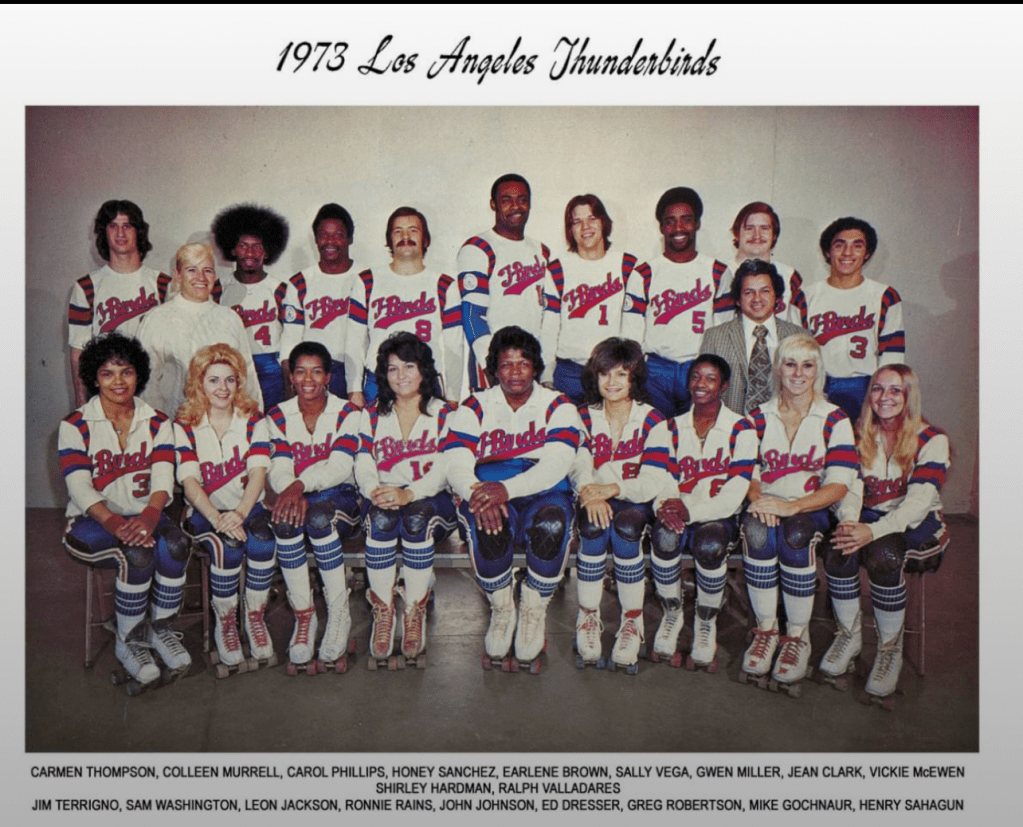
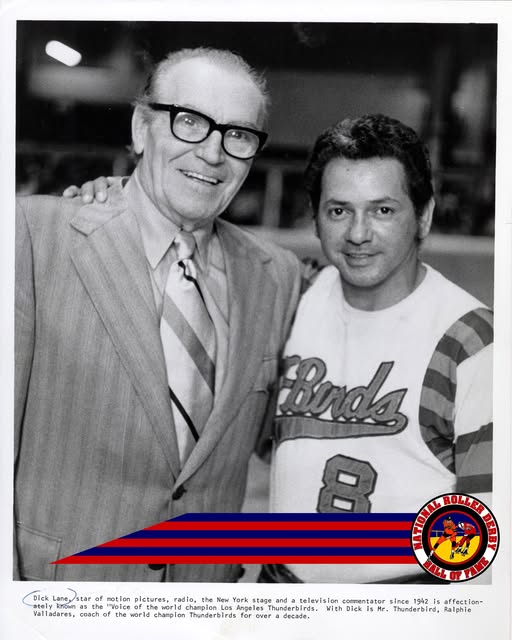
For some 50 years, Valladares played the part of player, coach and manager, spanning the rise in 1950s to the decline in the early ’90s in a sport that may have kept changing venues and teams, but it always had Dick Lane as the Professor Harold Hill character, barking out the Richmond-9-5171 phone number to lure anyone over to the otherwise sketchy Olympic Auditorium in downtrodden downtown L.A.
We can still hear Lane screeching: “There goes Little Ralphie Valllladarrezzzzzz on the jam!!”
That was our jam.
Valladares was said to be the sport’s all-time leader in whatever important numbers they had created — matches played, career points, points scored in a single game, or bruises distributed. The ageless wheelman had the entire sweet spot of its history.
“Ralphie Valladares was the first and last T-Bird star,” wrote Scott Stephens, a longtime fan, one-time Roller Games skater and author of the 2019 “Rolling Thunder: The Golden Age of Roller Derby & The Rise And Fall of the L.A. T-Birds.”
Yet none of this happens if Valladares’ athletic career goes a different direction. He dreamed of becoming a championship jockey who rode championship thoroughbreds near his home at another famous oval, Hollywood Park. But something else rolled him into a much different arena.
Continue reading “No. 8: Ralphie Valladares”
