Blog

No. 94: Don Yi

This post is part of a media project called SoCal Sports History 101: The Prime Numbers from 00 to 99 that Uniformly, Uniquely and Unapologetically Reveal The Narrative of Our Region’s Athletic Heritage. Pick a number, and consider the list of athletes attached to it. Who wore it best? Or, what’s the most compelling story linked to it? Any person, place or thing is in play with Southern California connections. Star power, transformational achievement, longevity, notoriety and quirkiness all factor in. Whatever leads to a lively discussion and interpretation.

The most obvious choices for No. 94:

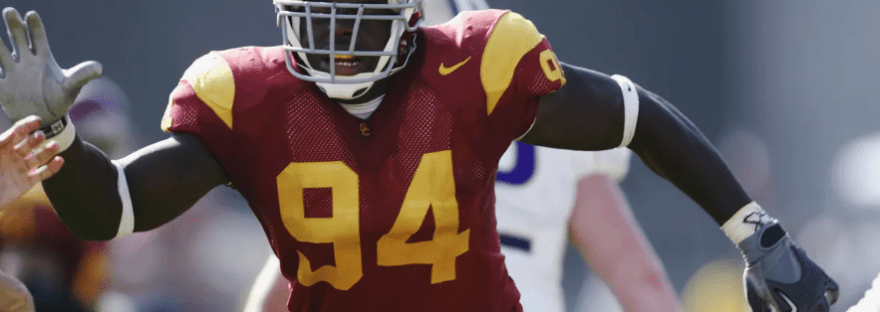
Kenechi Udeze, USC football
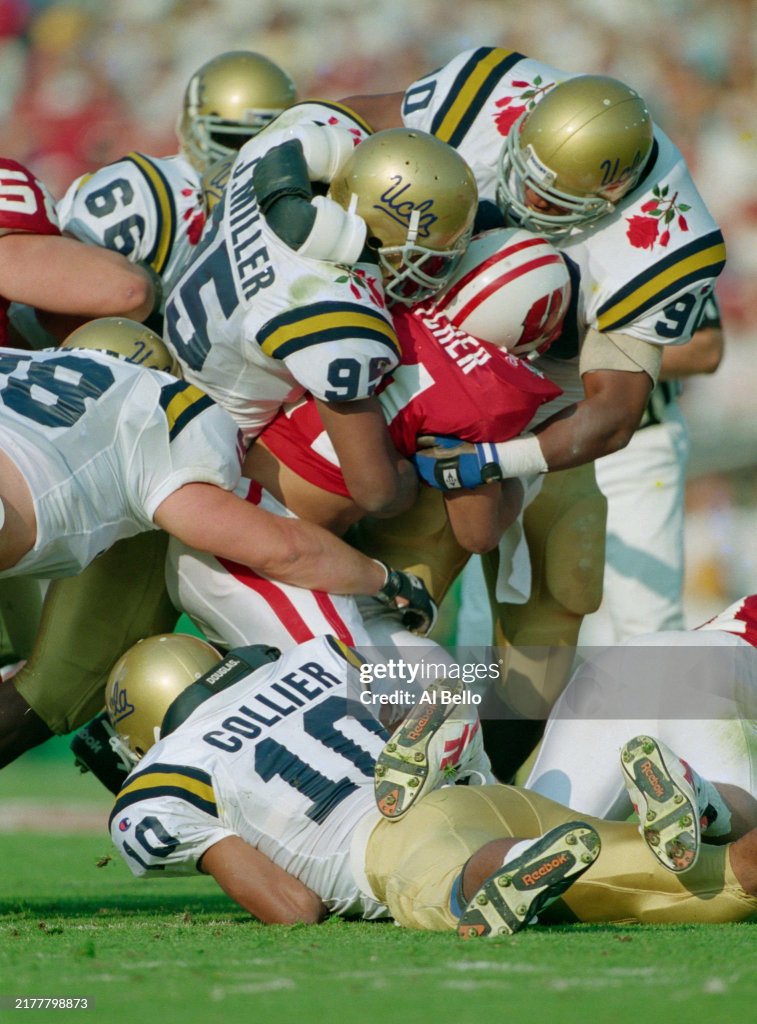
Paul Bergmann, UCLA football
Mateen Bhaghani, UCLA football

The not-so-obvious choices for No. 94:

Terry Crews, Los Angeles Rams

The most interesting story for No. 94:
Don Yi, Korean language interpreter for Los Angeles Dodgers pitcher Chan Ho Park (1994)
Southern California map pinpoints:
Lakewood, Glendale, Los Angeles (Dodger Stadium)


The 1994 Major League Baseball season started with Don Yi wearing the No. 94 jersey for the Los Angeles Dodgers.

It wasn’t necessarily the Year of Yi in Dodgertown that particular season, but numerically, it made sense.

While Yi was neither bat boy, ball dude nor clubhouse attendant, the 31-year-old UCLA graduate and computer programmer spoke South Korean. The Dodgers in general, and Chan Ho Park, more specifically, could use Yi’s skill set.

As an important part of a contract stipulation when the Dodgers signed a $1.2 million landmark deal with the 20-year-old pitcher, announced at a press conference at a hotel in Koreatown, the team would provide an interpreter.

Where Yi came into the picture, it’s somewhat a mystery.

Park, as the first MLB player brought in from South Korean player, needed to acclimate and assimilate. Yi was there to accomodate. This new-fangled job would evolve, or go sideways, on a daily basis.

It started with this: What is Park’s name?

The first time Yi was in full uniform as the team arrived its Vero Beach, Fla., training camp in March of ’94, reporters and teammates wanted to know what to call him.

“Some people are calling him Mr. Ho,” said Yi.

Dodgers broadcaster Ross Porter called him “Park Chan-ho,” as per Korean custom to use the family’s given surname first. Park asked if Yi could help him get the media covering him to “Americanize” his name.

Once that box was checked, what else might get found in translation?                         

Continue reading “No. 94: Don Yi”

No. 92: Rich Dimler

This post is part of a media project called SoCal Sports History 101: The Prime Numbers from 00 to 99 that Uniformly, Uniquely and Unapologetically Reveal The Narrative of Our Region’s Athletic Heritage. Pick a number, and consider the list of athletes attached to it. Who wore it best? Or, what’s the most compelling story linked to it? Any person, place or thing is in play with Southern California connections. Star power, transformational achievement, longevity, notoriety and quirkiness all factor in. Whatever leads to a lively discussion and interpretation.

The most obvious choices for No. 92:

Rich Dimler, USC football, Los Angeles Express

The not-so-obvious choices for No. 92:

Harrison Mevis, Los Angeles Rams
Rick Tocchet, Los Angeles Kings
Don Gibson, USC football

The most interesting story for No. 92:
Rich Dimler, USC football nose guard (1975 to 1978), Los Angeles Express defensive tackle (1983 to 1984)
Southern California map pinpoints:
Los Angeles, Glendale, Inglewood, Hawthorne, Torrance, Rancho Palos Verdes


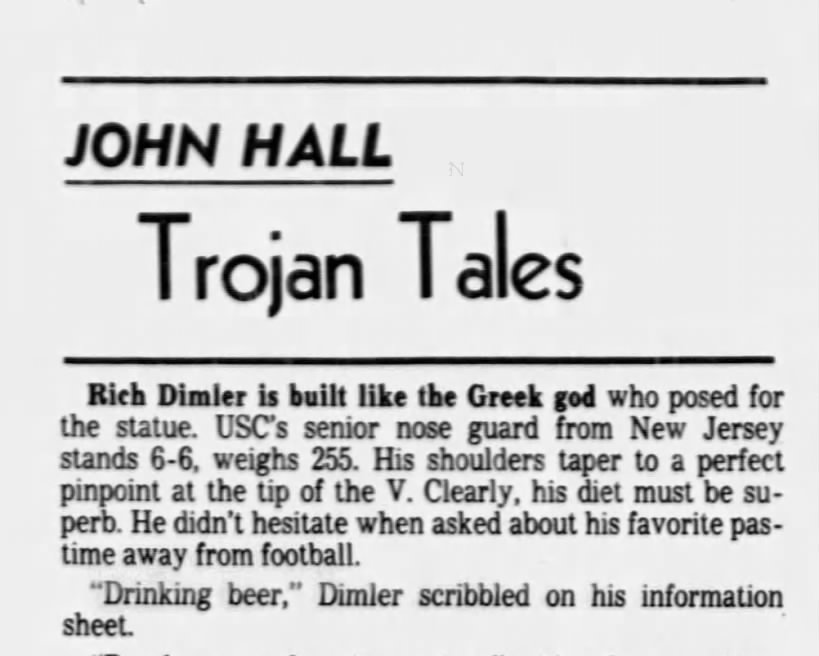
Los Angeles Times, Sept. 8, 1978.

Raise a glass to Rick Dimler. With caution.

The fact he made it through 44 years of roughhousing, and once heralded by USC defensive line coach Marv Goux as “the toughest player I’ve seen in 22 years of coaching” while playing on four straight Trojan bowl victories, is worthy of a toast.

But then again, there was the time when his home town in New Jersey tried to throw a parade in his honor, and it didn’t end well.

Homecomings can be problematic if the honoree celebrates too early and too often.

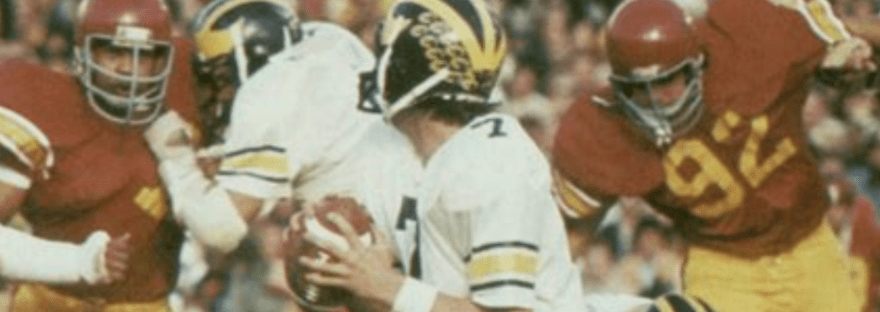
In March of 1979, Dimler was living off the fame of finishing his four years of football at USC, capped off by a 12-1 season, co-captain of the defensive squad that was highly effective in a Rose Bowl win over Michigan, and giving the Trojans a national championship in the eyes of many voters of such polls.

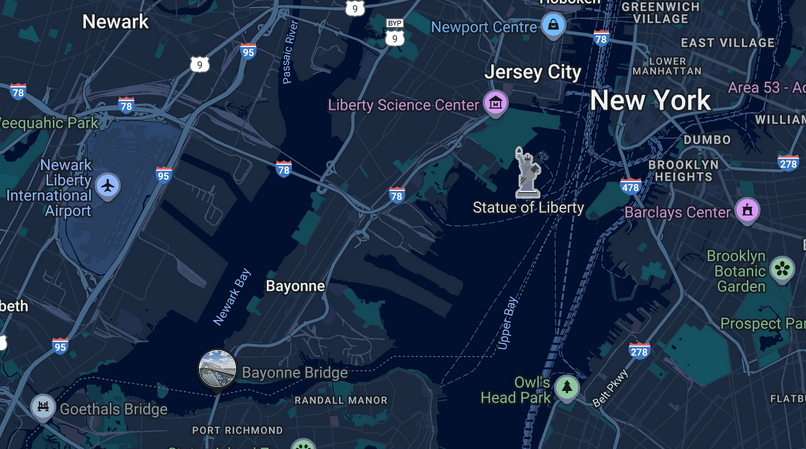
At this point, Dimler was back visiting friends and family in Bayonne, New Jersey. The cityfolk were finalizing plans for what would be Rich Dimler Day — a parade in his honor, a key to the city, the red-carpet treatment. Beers hoisted and thrown back as he could now look forward to what the NFL might bring.

The party was set for April, but, again, Dimler put himself in a situation that had penalty flags flying all over the place.

On March 12, Bayonne police say they saw Dimler in a car racing another car right down Broadway through the city, and started chasing him at 2 a.m. Dimler, according to the authorities, ran three red lights trying to escape. The other car got away. Dimler was hauled in.

At that point, the 6-foot-6, 260-pound Dimler had a dim view on how this might be a teachable moment.

“I’ll have your jobs; I’ll have both your jobs!” Dimler was said to have screamed at the officers, pushing one of them away. He was eventually accused of striking a patrolman in the chest at police headquarters and deemed “unruly” while in the jail cell.

“He flunked his breathalyzer test in flying colors,” said Lt. Vincent Bonner said in newspaper accounts. The .22 result was well above the legal limit of .15.

As soon as Dimler was out on bail facing charges of assault and battery and creating a disturbance, reporters covering the incident discovered he had been arrested just a month earlier in Los Angeles on driving under the influence, but no charges were filed.

Those digging further into his legal history found a disturbing incident in 1973, the year before he left New Jersey to attend USC, when Dimler, then 17, was acquitted of a death by auto charge in juvenile court. He had been charged of hitting and killing a 10-year-old girl as she crossed the street, and he left the scene. All that happened at the time was getting put on probation.

Bayonne City Councilman Donald Ahern — who happened to be Dimler’s high school coach in the mid-’70s — was asked about how all this might tarnish te upcoming day in his honor.

“He’s a good kid with a good heart; I’d be the last guy to leave the ship for that kid,” said Ahern.

If Dimler needed another character witness, in November of ’78, USC coach John Robinson was telling the Los Angeles Times’ John Hall about how the season had been progressing with Dimler in command of the defense.

“If they ever draw up a blueprint for the ideal leader,” Robinson said, “that’s Dimler.”

Continue reading “No. 92: Rich Dimler”

No. 8: Ralphie Valladares

This post is part of a media project called SoCal Sports History 101: The Prime Numbers from 00 to 99 that Uniformly, Uniquely and Unapologetically Reveal The Narrative of Our Region’s Athletic Heritage. Pick a number, and consider the list of athletes attached to it. Who wore it best? Or, what’s the most compelling story linked to it? Any person, place or thing is in play with Southern California connections. Star power, transformational achievement, longevity, notoriety and quirkiness all factor in. Whatever leads to a lively discussion and interpretation.

The most obvious choices for No. 8:

Kobe Bryant: Los Angeles Lakers
Troy Aikman: UCLA football
Steve Young: Los Angeles Express
Drew Doughty: Los Angeles Kings
Reggie Smith: Los Angeles Dodgers

The not-so-obvious choices for No. 8:

John Roseboro: Los Angeles Dodgers
Tommy Maddox: Los Angeles Xtreme via UCLA football
Ralphie Valladares: Los Angeles Thunderbirds
Teemu Selanne: Mighty Ducks of Anaheim
Darryl Strawberry: Crenshaw High baseball

The most interesting story for No. 8:
Ralphie Valladares, Los Angeles Braves (1953 to 1959); Los Angeles Thunderbirds (1961 to 1993)
Southern California map pinpoints:
Inglewood, Pico Rivera, Los Angeles (Olympic Auditorium)

Reference books on the subject:
Rolling Thunder: The Golden Age of Roller Derby & The Rise And Fall of the L.A. T-Birds,” by Scott Stephens, 2019
Roller Derby Requiem,” by Ed Koch, 2014


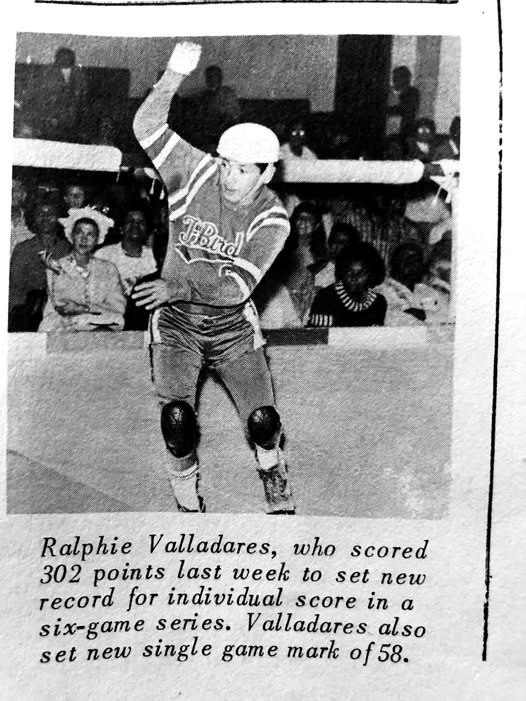
In the real-deal world of Roller Derby, Ralphie Valladares delivered validation, valor and viscosity. To any fan pulling for the underdog, he delivered a trace of Prince Valiant.

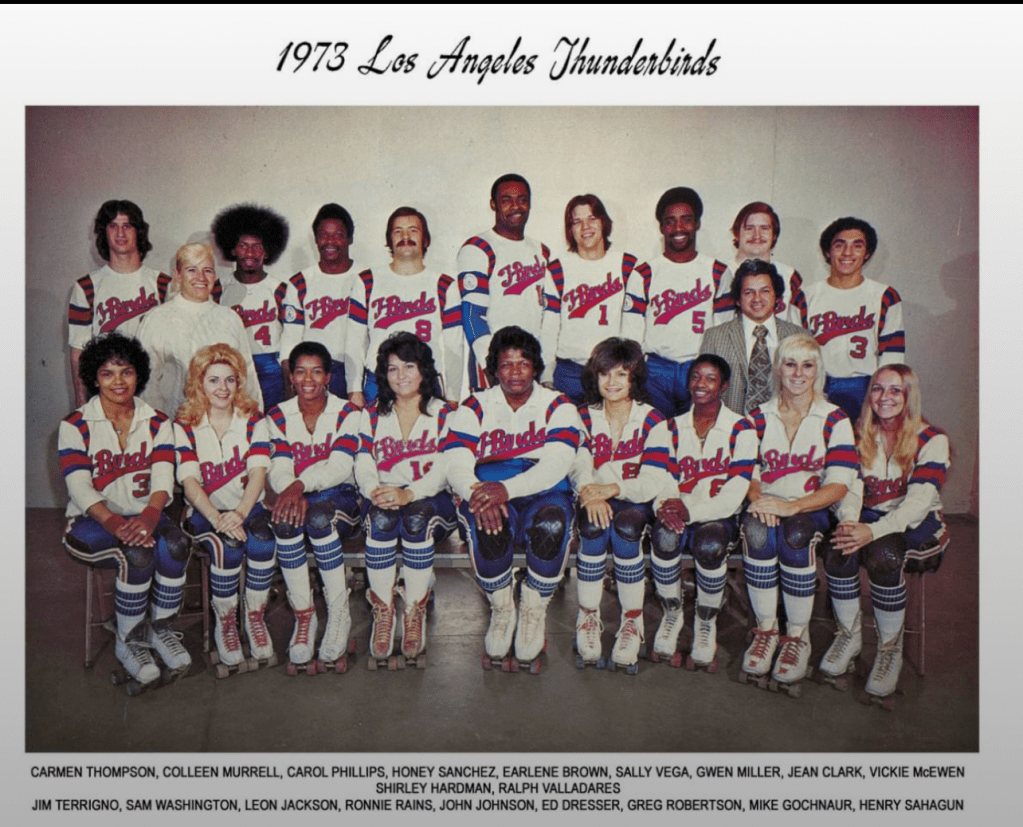
No. 8 wasn’t just gritty great, he could flat-out skate. A lightning-fast playmaker for the red, white and blue Los Angeles Thunderbirds. A group of diverse and equally dynamic team of men and women. He, and they, were an abject reflection our city’s inclusive melting pot and its blue-collar mentality. Valladares knew how to flip the script — whatever the script called for on that night at the Olympic Auditorium — and his followers were with him every turn of the wheel.

It’s valid to say Valladares was the first high-profile, relatable Latino sports star in Los Angeles, coming in some 20 years before Fernando Valenzuela and his mania turned the 1980s upside down. Even then, Valladares was still around to see what kind of magic his sport could squeeze out for a generation at the height of the roller disco scene.

From the 1968 Roller Derby Gazette/Joseph Peters “Who’s Who in Roller Derby” Facebook page

He brought showmanship and pop culture value, much like an audience would find watching with the Harlem Globetrotters or the Savannah Bananas.

There was art, merit and an authentic skill set necessary.

As kids figured ways to replicate Roller Derby on the playgrounds, maybe wearing those a Dodger give-away batting helmets and hand-me-down four-wheeled clay skates an older sister might have once worn dreaming to be a figure skater on asphalt, this exercise took talent. Or else you’d be left as just another skid mark.

It felt as if it Three Stooges rough-house theater, cartoon characters come to life. The merriment of a merry-go-round full of arm whips, flying elbows and heavy pouncing. It was wrapped up by the theatrics of an obnoxious infield interview, a folding chair thrown, a table turned over in faux anger. It was their outlet, and it was ours to watch and root on.

Of all the things we were captivated by on TV — and at some point, it took adjusting a tin-foil wrapped TV antenna on the black-and-white Zenith set to find which UHF station actually delivered the taped Sunday-night action between 7 and 9 p.m. — this one had a scoreboard. So it had to be real. Even if it was a rudimentary graphic popping up full screen to clarify what we saw had the merit of someone keeping track of it, like an Dodgers baseball game or USC football game.

We counted on someone keeping track of what was happening on the track.

Ralphie Valladres, in suit and tie, as the Thunderbirds coach.

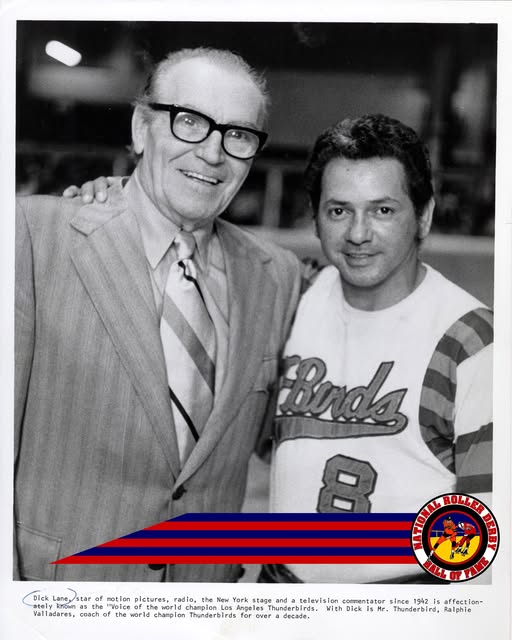
For some 50 years, Valladares played the part of player, coach and manager, spanning the rise in 1950s to the decline in the early ’90s in a sport that may have kept changing venues and teams, but it always had Dick Lane as the Professor Harold Hill character, barking out the Richmond-9-5171 phone number to lure anyone over to the otherwise sketchy Olympic Auditorium in downtrodden downtown L.A.

We can still hear Lane screeching: “There goes Little Ralphie Valllladarrezzzzzz on the jam!!”

That was our jam.

Valladares was said to be the sport’s all-time leader in whatever important numbers they had created — matches played, career points, points scored in a single game, or bruises distributed. The ageless wheelman had the entire sweet spot of its history.

“Ralphie Valladares was the first and last T-Bird star,” wrote Scott Stephens, a longtime fan, one-time Roller Games skater and author of the 2019 “Rolling Thunder: The Golden Age of Roller Derby & The Rise And Fall of the L.A. T-Birds.”

Yet none of this happens if Valladares’ athletic career goes a different direction. He dreamed of becoming a championship jockey who rode championship thoroughbreds near his home at another famous oval, Hollywood Park. But something else rolled him into a much different arena.

Continue reading “No. 8: Ralphie Valladares”

No. 24: Kobe Bryant

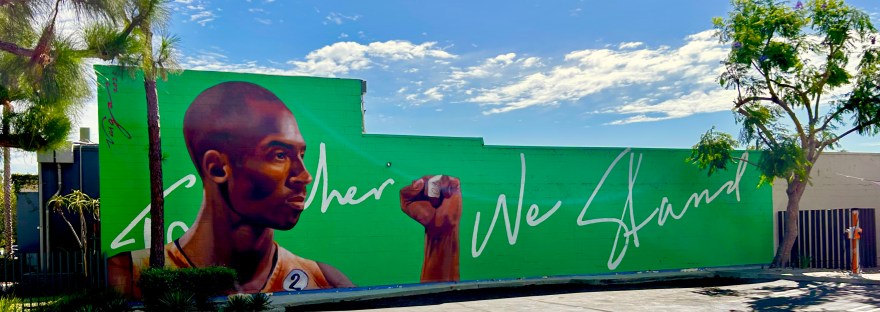
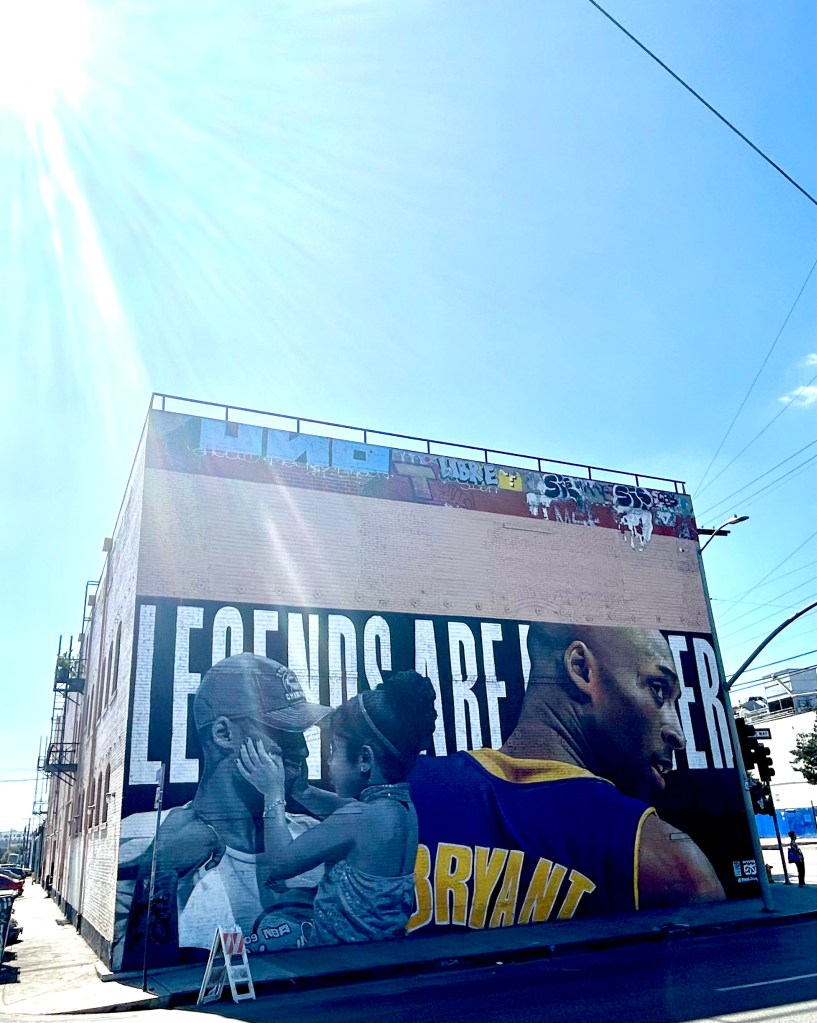
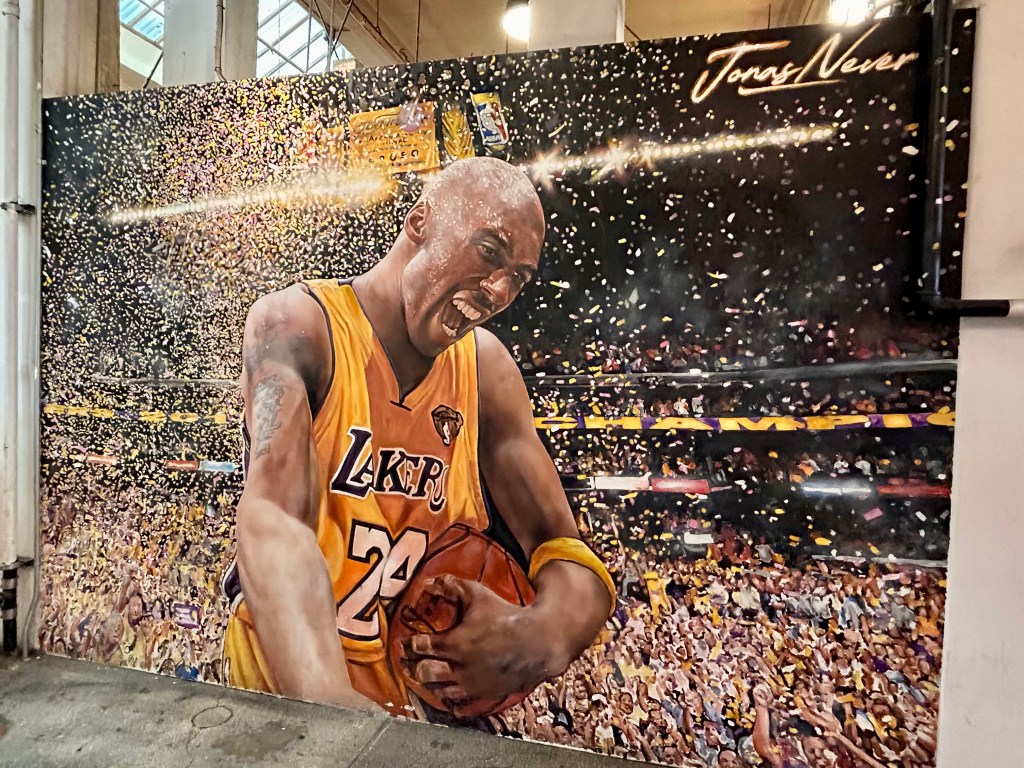
Mural above: On the north side of Beyond Productions on Jefferson Blvd. in Culver City.

This post is part of a media project called SoCal Sports History 101: The Prime Numbers from 00 to 99 that Uniformly, Uniquely and Unapologetically Reveal The Narrative of Our Region’s Athletic Heritage. Pick a number, and consider the list of athletes attached to it. Who wore it best? Or, what’s the most compelling story linked to it? Any person, place or thing is in play with Southern California connections. Star power, transformational achievement, longevity, notoriety and quirkiness all factor in. Whatever leads to a lively discussion and interpretation.

The most obvious choices for No. 24:

Kobe Bryant: Los Angeles Lakers
Walter Alston: Los Angeles Dodgers
Freeman McNeil: UCLA football
Dwayne Polee: Manual Arts High basketball

The not-so-obvious choices for No. 24:
Marion Morrison: USC football

The most interesting story for No. 24:
Kobe Bryant: Los Angeles Lakers guard (2006-07 to 2015-16); Also wore No. 8 (1996-97 to 2005-06)
Southern California map pinpoints:
Los Angeles (Staples Center), Long Beach, Newport Beach, Thousand Oaks

Reference books on the subject:
Mamba & Mambacita Forever,” by Vanessa Bryant, 2025
Mad Game : The NBA Education of Kobe Bryant,” by Roland Lazenby, 1999
“Showboat: The Life of Kobe Bryant,” by Roland Lazenby, 2016


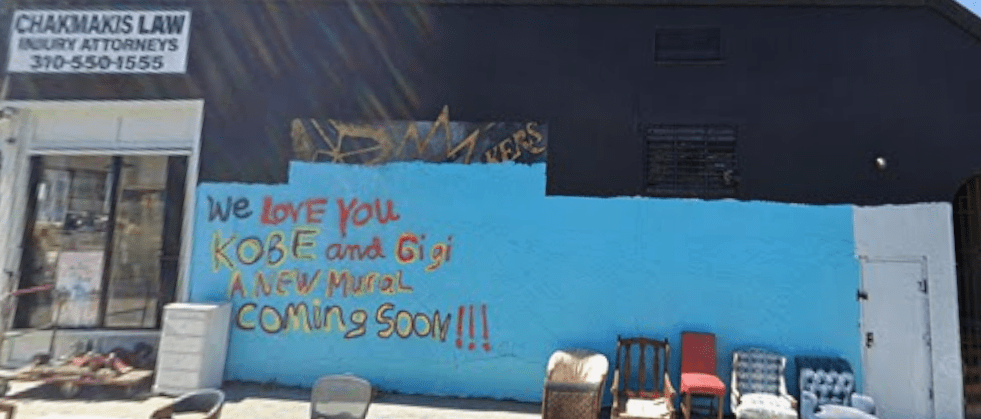
Above: Preparations for a Kobe Bryant mural at 1299 West Blvd., near the corner of Pico Ave., in Los Angeles (via Google Maps).
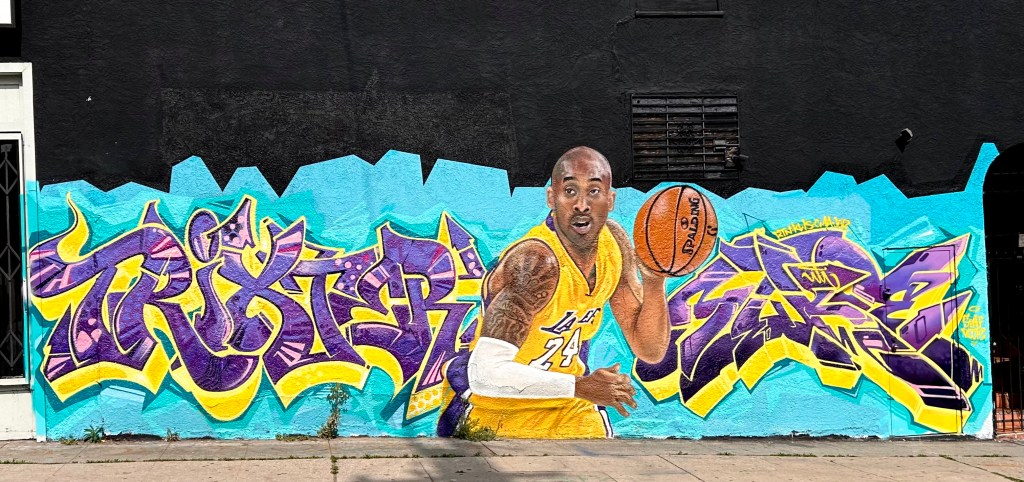
Below: The finished product.

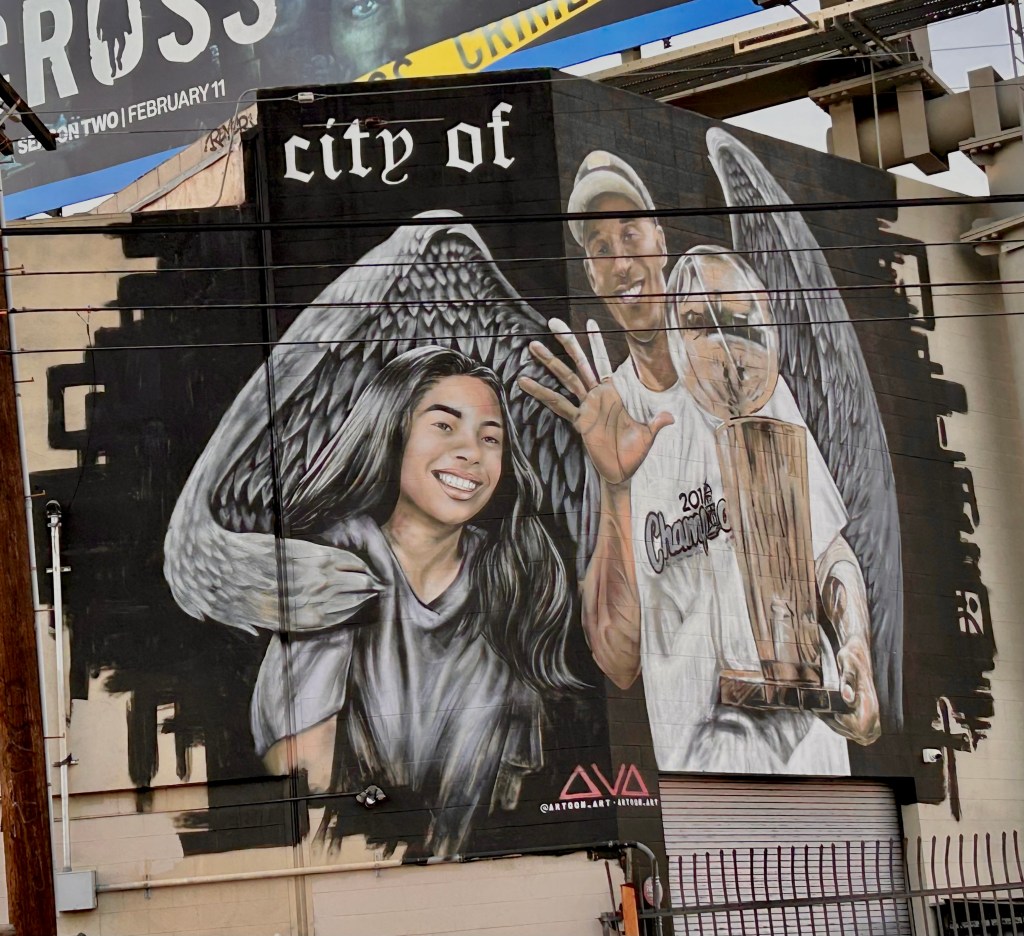
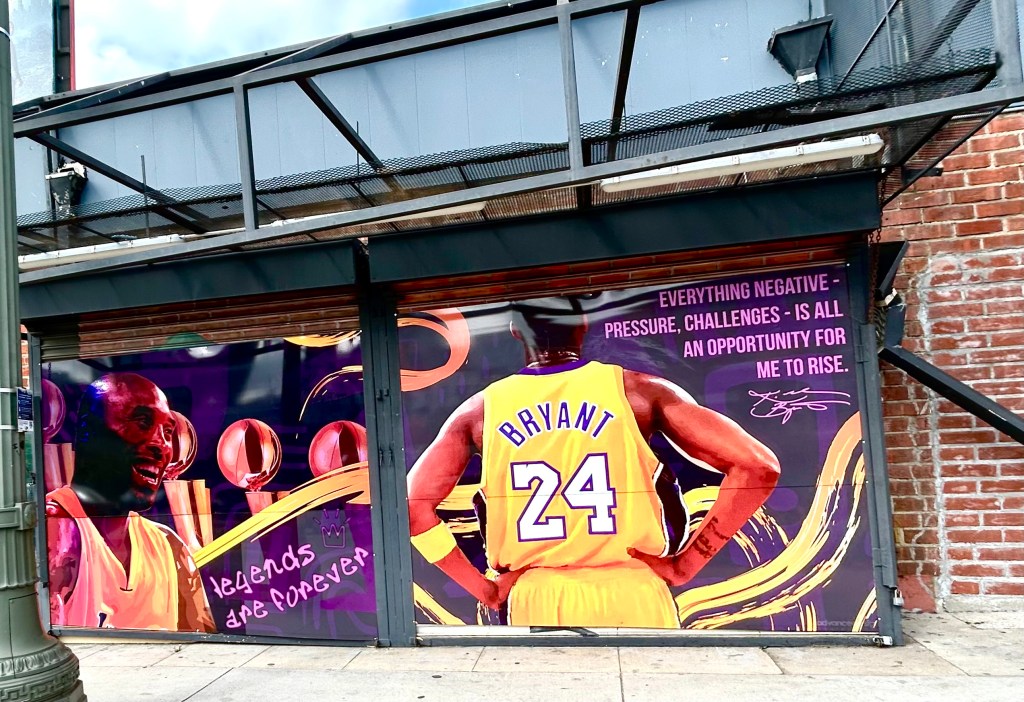
Momba murals, we have come to call them, are brilliantly splashed across the sides of hotels, apartment complexes, auto-part dealers, pawn shops and abandoned warehouses.

Whatever happens to bring artistic inspiration. And a drive to finish it.

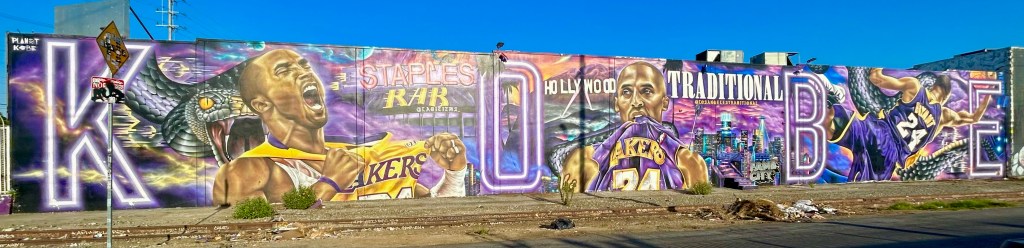
A Kobe Bryant mural created on the side of the Traditional Dispensary canibus store in a highly industrial part of Los Angeles on Olympic Boulevard near Alameda Avenue, visible along a stretch of railroad track.

They provide varied interpretation, a longing for artists wanting to honor Kobe Bryant and, often, his daughter, Gianna as well.

This image has an empty alt attribute; its file name is img_4491.jpg
A sun-splashed mural of Kobe and Gianna Bryant on 4th Street in the Little Tokyo/Boyle Heights neighborhood of Los Angeles, between Alameda and Seaton.

They have become as much a part of the city’s artistic canvas as much as a place to stop and reflect, to ponder “what if” as well as what was. To channel something even more than our eyes can take in.

On Venice Blvd., in Los Angeles near the intersection of La Cienega Ave.

They have become a coping mechanism, first for the artists who deigned them as an expression of grief mixed with tribute. And then a relief for pedestrians or those who catch a glimpse in a car passing. They’re too large to miss, too important to ignore, too many to embrace perhaps without feeling overwhelmed.

At what was once a vibrant newsstand on the corner of Beverly Glen Blvd., and Santa Monica Blvd., this mural covers the spot.

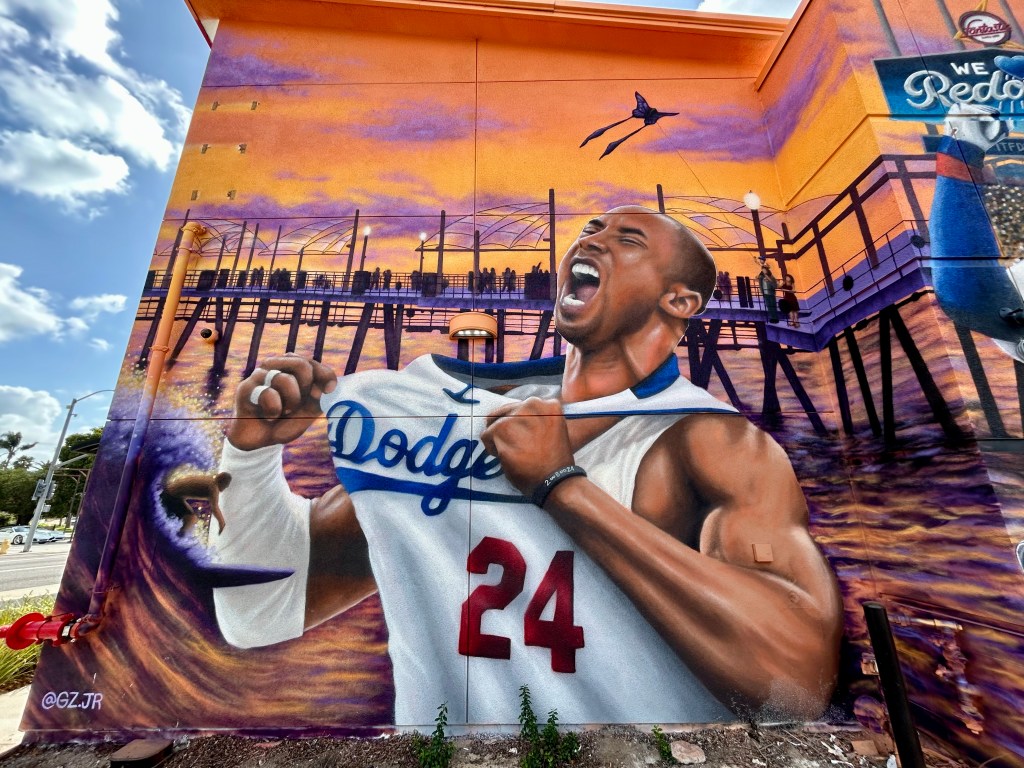
One of Bryant hoisting an Academy Award, lined up against his NBA title trophies. Two of them at the world-famous Venice Beach near their outdoor courts. Another wearing a Dodgers’ No. 24 uniform and sharing space with Shohei Ohtani.

This image has an empty alt attribute; its file name is img_4639-1.jpg
A mural of Kobe Bryant wearing a Dodgers’ No. 24 uniform as part of a larger mural with Dodgers players at a drive-through hamburger stand in Redondo Beach on Pacific Coast Highway includes Bryant wearing a black wristband that honor the numbers 2, 8 and 24.

“Kobe and Gianna Bryant are everywhere in Los Angeles,” Vanessa Bryant writes in “Mamba & Mambacita Forever,” her 2025 book. “They watch over pickup games in Venice. They light up the interminable traffic on La Brea and take up an entire block in Elysian Valley; they hover Inglewood, Downey, Glendale and Hollywood. Their faces have become part of Los Angeles.”

Inside a bustling Grand Central Market on South Broadway, one can stop and admire this Jonas Never mural with a Villa’s Taco sampler trio plate in one hand and an Oaxacan Horchataan in the other.

They aren’t numbered and catalogued as if part of a unique L.A. County art gallery. They are free public art. No. 24, No. 8, No. 2. Those numbers matter most.

Websites dedicated to these works claim, as one called KobeMural.com says, they can verify nearly 350 renditions just in the greater Los Angeles area. There are more than 450 in the United State. Plus another 175 prominently are around the globe.

They are relentless. Like Kobe Bryant.

Continue reading “No. 24: Kobe Bryant”

No. 12: Richard Nixon

This post is part of a media project called SoCal Sports History 101: The Prime Numbers from 00 to 99 that Uniformly, Uniquely and Unapologetically Reveal The Narrative of Our Region’s Athletic Heritage. Pick a number, and consider the list of athletes attached to it. Who wore it best? Or, what’s the most compelling story linked to it? Any person, place or thing is in play with Southern California connections. Star power, transformational achievement, longevity, notoriety and quirkiness all factor in. Whatever leads to a lively discussion and interpretation.

Vlade Divac, Los Angeles Lakers
Charles White: USC football
Dusty Baker: Los Angeles Dodgers
Tommy Davis: Los Angeles Dodgers
James Harris: Los Angeles Rams
Juju Watkins: USC women’s basketball
Dwight Howard: Los Angeles Lakers

The not-so-obvious choices for No. 12:

Gerrit Cole: UCLA baseball
Denise Curry: UCLA women’s basketball
Joe Namath: Los Angeles Rams
Pat Riley: Los Angeles Lakers
Randall Cunningham: Santa Barbara High football

The most interesting story for No. 12:
Richard Nixon: Whittier College football offensive tackle (1930 to 1933), via Fullerton High and Whittier High
Southern California map pinpoints:
Yorba Linda, Fullerton, Whittier, San Clemente

Reference books on the subject:
RN: The Memoirs of Richard Nixon,” by Richard Nixon, 1978
In the Arena: A Memoir of Victory & Defeat & Revival,” by Richard Nixon, 1990
Richard Milhous Nixon: The Rise of An American Politician,” by Roger Morris, 1990
Being Nixon: A Man Divided,” by Evans Thomas, 2015
Richard Nixon: The Life,” by John A. Farrell, 2018


Richard Nixon was having a viral Instagram moment in the spring of 2026. We saw an alert from a story posted on LAMaterial.com. It warned: “Gen Z is Nixonmaxxing hard af.”

The Richard Nixon Foundation, a nonprofit that runs the Nixon Presidential Library in Yorba Linda jointly with the federal government, had been cranking out a steady stream of steamy viral content — sleek, sexy edits of archival footage set to trending music. It looked more like promo material for a hip-hop artist than a disgraced, long-deceased president. 

“The Gen Z-coded videos show Nixon leading crowds of suited men to Biggie’s ‘Hypnotize,’ and delivering speeches in packed stadiums to ‘WE ON GO’ by the rapper BIA,” wrote Tomo Chien. “In the videos, Nixon projects what one commenter called ‘absolute aura,’ and the foundation has more than doubled its Instagram following to 105,000 in the last year.”

That led to a limited run of “Nixonmaxxing” hats quickly selling out to those who choose to sell out.

“Alternative histories of Watergate are as old as the scandal itself,” Chien added. “Theorists across the political spectrum have long suggested, without solid evidence, that the infamous burglary was staged by the CIA in an effort to oust Nixon, or that the ensuing scandal was largely the work of vindictive deep state actors who wanted him out. But the Gen Z-focused content by the Nixon Foundation epitomizes a new strain of Watergate revisionism that began around the start of Donald Trump’s first presidency.”

This came at a point in Americana when it it’s easier to manipulate facts and disguise it as “new truths.” When the oxymoron known as Artificial Intelligence can artfully spit out tropes that appear to fortune-cookie someone’s name, likeness and image into a palatable memory bank deposit.

Fifty years after Watergate, and all that word meant in the English language by this point, some were trying to twist the idea that it’s not really all that offensive in the pursuit of life and liberty for whatever we consider to be U.S. citizens. Look at it another way, in proportion to what else was going on, and this was simple misstep toward progress, as some with Oval Office-adjacent access might throw up in the spirit of being overaggressive and diligent in getting something done for the good of the masses.

If the Nixon Foundation needs more material to mine and remaster, check the files of all the sports-related things Richard Nixon leaned into. It wasn’t just a way to scratch his competitive itch. Wins, losses and Christian Dior ties from Bloomingdales is a framework for some, like Nixon, in how you move from the idea of “it’s how you play the game” to “if you’re not cheating you’re not trying.”

In the history of political arena, warriors had to eat or be eaten. Nixon’s days as a legislative gladiator on the grandest stage always had sports as its foundational drive. Even if it ultimately led to imperfect execution by someone who may have considered himself to be athletically driven to win at all costs.

If Nixon’s disdain for being labeled a loser led to his ultimate downfall, give the blame, or credit, the sporting live he grew up with in Southern California.


Victories were unimpeachable in Richard Milhous Nixon’s view of life and legacy.

The fact he lost the 1960 Presidential Election doesn’t always show that, according to the scoreboard, he lost by just a mere 0.17 points in the popular vote. There was no allegations of improprieties or fraud.

When he lost the 1962 California governor’s race, it was by five points. He just didn’t clock-manage apparently.

None of this would define him, Nixon decided. He once declared to the media after that gubernatorial defeat that “you won’t have Nixon to kick around anymore.” But then he made a comeback of epic proportions. If done strategically, wins could eradicate losses and rewrite the narrative.

Winning the 1968 election to become the 37th President of the United States meant Nixon could go into victory formation. Four years later, a landslide re-election in 1972, winning by nearly 18 million votes.

A win-at-all-costs mindset in the context of how to one-up the competition might be easiest to trace to a frustrated athletic career. That’s when he once wore No. 12 for the Whittier College football team, and had photos to back it up.

Born on a lemon ranch in Yorba Linda in 1913, Richard was a name given to him by his parents in honor of Richard the Lionheart. As the King of England, Richard’s 10-year run as a fearless military leader cemented his legacy during the Third Crusade. He was eventually imprisoned by his enemies, paid a ransom, returned home, went back into another battle and retreated into exile. He was also known to be a lyric poet and a hero of troubadours.

Nixon was 12 years old when a spot found on his lung caused doctors to discourage him from playing sports. There was a family history of tuberculosis — an older and younger brother died from it. Turned out, it was just scar tissue from an early bout of pneumonia.

Nixon grew up at a time he would later refer to as being surrounded by “forgotten Americans,” with those buried under a “silent majority” of hard-working church folks just chasing a dream.

He saw potential in his competitive nature to try out for JV football at Fullerton High. His claim to fame at that point in his life was being in the same circle as Arky Vaughn, the future Baseball Hall of Famer. Nixon claimed he and Vaughn played Pee Wee Football together. When Vaughn was posthumously voted into Cooperstown in 1985, Nixon was said to have sent a letter to his daughter explaining that while he was a backup tackle on the Fullerton JV team, Vaughn was the star halfback, someone who was “fast, hard-nosed and even then a real professional.”

After Nixon transferred closer to home at Whittier High to start his junior year, the best he could do was act as a student manager for the athletic teams.

At Whittier High, he ran for class president but lost to a candidate he would describe as “an athlete and personality boy.”

At the start of the Great Depression in 1930, Nixon wanted to go to Harvard or Yale, but stayed closer to home. Whittier College allowed him to pursue a history degree — and it was intimate enough to where he could not just play football, but also try out for basketball and track.

The NCAA Division III private school east of Los Angeles was founded in 1887. The teams nicknames, the Fighting Poets, came from Quaker poet John Greenleaf Whittier.

Nixon’s more celebrated victories would come on the Whittier debate team. Maybe that helped him form better arguments with his coaches about getting more playing time.

Continue reading “No. 12: Richard Nixon”