
This post is part of a media project called SoCal Sports History 101: The Prime Numbers from 00 to 99 that Uniformly, Uniquely and Unapologetically Reveal The Narrative of Our Region’s Athletic Heritage. Pick a number, and consider the list of athletes attached to it. Who wore it best? Or, what’s the most compelling story linked to it? Any person, place or thing is in play with Southern California connections. Star power, transformational achievement, longevity, notoriety and quirkiness all factor in. Whatever leads to a lively discussion and interpretation.
The most obvious choices for No. 91:

Kevin Greene, Los Angeles Rams
Sergei Fedorov, Anaheim Mighty Ducks
Leo Carlsson, Anaheim Ducks
Tim Wrightman, UCLA football via Mary Star High
The most interesting story for No. 91:
Dino Ebel, Los Angeles Dodgers coach (2019 to present), Los Angeles Angels coach (2006 to 2018)
Southern California map pinpoints:
Barstow, Bakersfield, Rancho Cucamonga, Dodger Stadium, Angel Stadium

Barstow, a spry Mojave Desert city with just enough space for a few key street lights to warn motorists at a major railroad crossing that there’s a 120-car train about to pass so you might just shut off your engine, has become one of the most important pivot points on California’s section of the esteemed Route 66. It’s right there in the song lyrics, a shout-out between Kingman and San Bernardino.
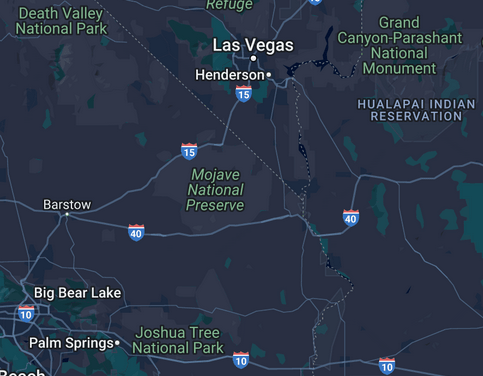
From all points east, motorists thread their way through Needles and land on this 40-square-mile spot. Then, it’s decision time for where to pivot next for a mirage of blissfulness. On what is now called Highway 40, the diversion is either a) go north on the 15 to Las Vegas; b) go south on the 15, eventually hit the 10 and end up in Palm Springs, c) continue on to the Santa Monica Pier and find the end of the Mother Road.
Dino Ebel can help direct traffic. Able, ready and more-than-willing to throw up the stop sign or wave someone on to get home safely. That’s him with the blue hard-helmet.
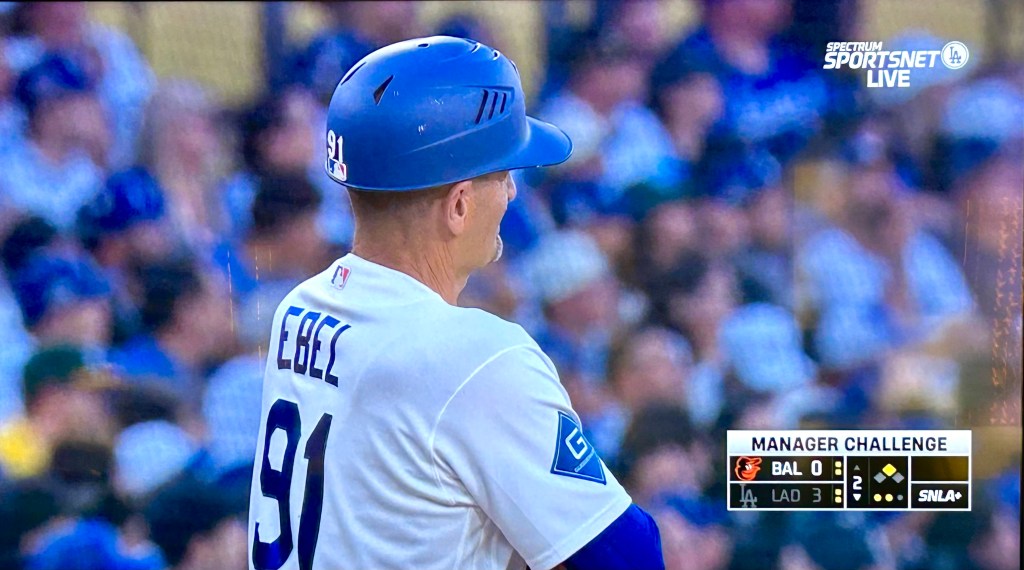
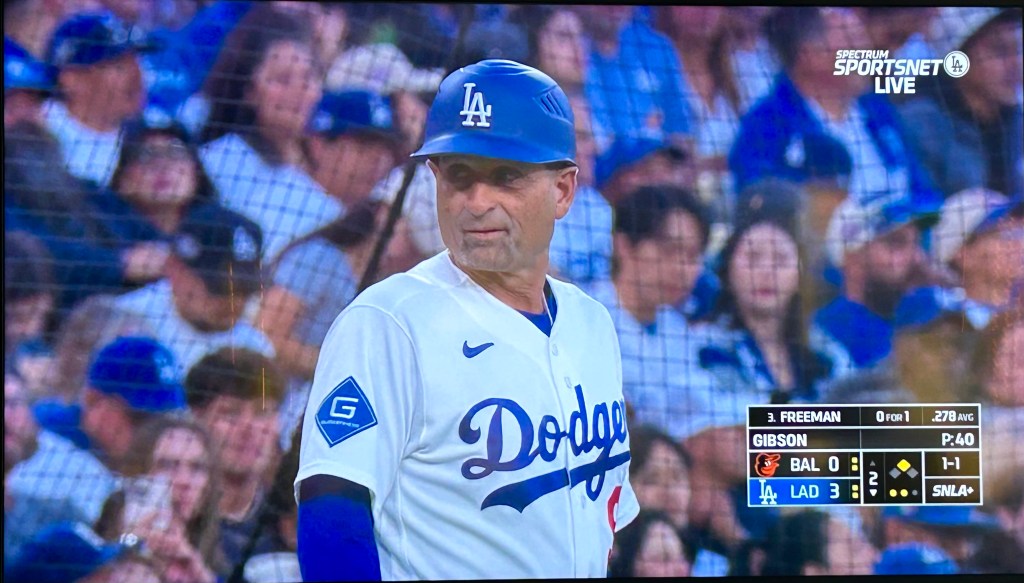

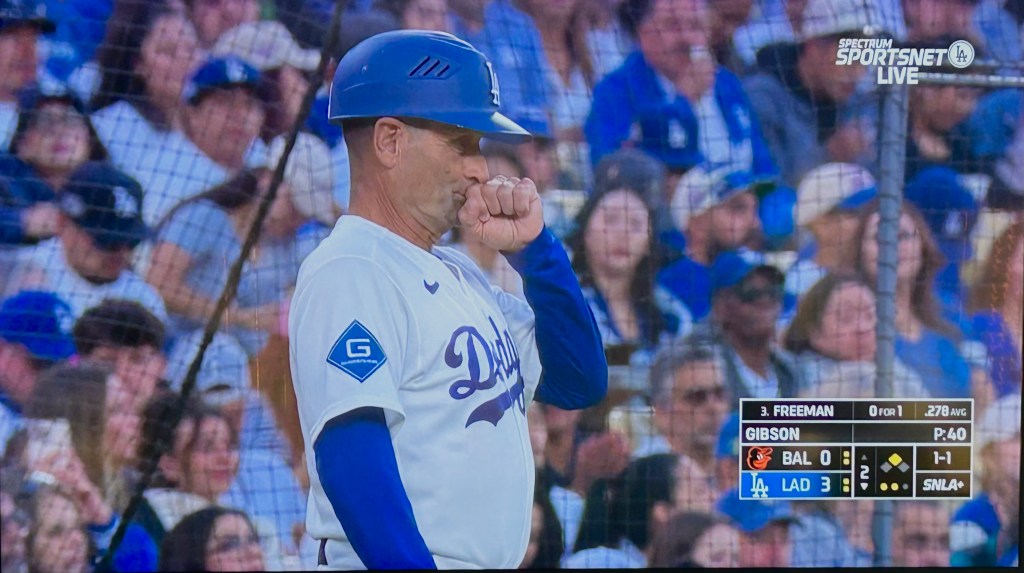
Someone who did the math during the 2019 MLB season calculated that, by mid-June, the Dodgers had put aboard 1,756 base runners. Only six had been thrown out at home plate. If they made baseball cards with stats for third-base coaches, that would get him to the All-Star Game. But he’s been able to be a regular there on his own merits, and the Dodgers’ annual October success rate.
“I honestly haven’t seen anyone better in baseball taking hold of third base,” Dodgers manager Dave Roberts has said.
Risk/reward has no middle ground. Ebel has become that kind of experienced gatekeeper. And, ultimately, the communicator without a yellow vest for easy spotting. Processing all sorts of data in a split-second of head space — a base runner’s runner’s speed, the arm strength of the outfielder who just took possession of the ball in play, how many outs and which inning we exist in, seeing where are the cut-off men are situated, does this run matter in the grand scheme of the game … That’s just the basics when a ball is in play.
Otherwise, it’s communicating to a batter and runner that a hit-and-run play is on. Or a bunt. Or a take. All based on a series of deceptive touching the chest, cap, leg, belt or face.
Between innings, he’s managing defensive positioning from the dugout.
Never a time to pat yourself on the back for making the right call. Always a target if someone is thrown out.
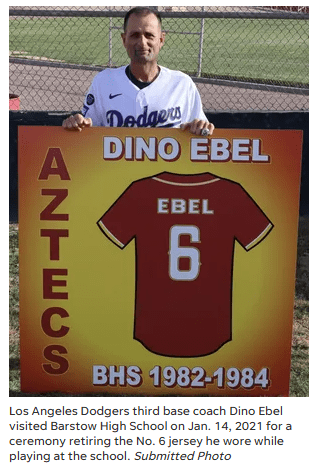
For the entirety of the 21st Century, the Dodgers and Angels have Ebel to thank for his service.
The Dodgers had first claim on him, as an undrafted player out of college, grooming him as a minor-league instructional coach and eventual manager.
The Angels borrowed and promoted him, giving him a 15-year run.
The Dodgers got him back, and dividends have been paid with divisional, league and World Series titles.
Ebel can now be retrofit as a Barstow landmark, bigger than the Baker thermometer, or the Zzyzx Road sign that points out to nowhere in the Mojave Desert.
He’s in the San Bernardino Valley College Hall of Fame in 2012. His No. 6 was retired by the Barstow High Aztecs a year earlier. The spoils of a 2020 Dodgers World Series title, breaking open any local debate about when to claim ownership of his starting point.

As co-MVP of the San Andreas League during his senior year in 1984 at Barstow High — the other guy who shared it must be lost to history — Ebel hit .409 with six homers and 19 RBIs as a middle infielder. He was also 7-2 record on the mound and a 2.78 ERA. Now you understand his ability to throw pre-game batting practice, or serve it up for Home Run Derby.
After playing for a couple of conference championship seasons at San Bernardino Valley College, where he posted a .295 average, Ebel signed a letter of intent to go to Cal State Fullerton. But a transcript review revealed he was one class credit short. Hold up.
So, Philadelphia drafted him in the 27th round of the 1986 MLB Draft. Check the runner.
Ebel diverted to Florida Southern in Lakeland, Fla. There, he was part of the Moccasins’ 1988 NCAA Division II title team, second-team All-American with a .365 batting average. Stand up double.
After his senior season, where he had become a multi-tasking second baseman/shortstop/third baseman, Ebel signed with the Dodgers, undrafted, in 1988. His connection to that point in time was watching Kirk Gibson’s Game 1 walk-off homer at a friend’s house in Barstow while eating pizza. Ebel said he immediately felt like he was a part of the team.
Six seasons later in the minor leagues — a Dodgers’ Rookie Gulf Coast League Player of the Year in Sarasota, then at single-A Bakersfield and Vero Beach, double-A San Antonio and reaching two games at triple-A Albuquerque at the end of the 1991 season — his playing days had peaked. Maybe he was in the Dodgers system at the same time with future stars such as Pedro Martinez, Mike Piazza and Raul Mondesi, but he wasn’t that elite.
Ebel was pushed to learn the defensive nuances of every infield position from then-Dodger infield coordinator Chico Fernandez. He was taught instincts and preparation from former Dodgers longtime third base coach Joe Amalfitano.
At some point, the 25-year-old Ebel figured out he wasn’t going to get much farther than a round-trip ticket back to Bakersfield. He played ball in the ’89, ’90 and ‘91 off seasons for the Adelaide Giants of the Australian Baseball League, a Dodger affiliate, to stay sharp.
“I didn’t want to bounce around the minor leagues,” Ebel said. “Maybe that dream of getting to the big leagues might have come true, but I said I’m going to buckle down, and if I can’t make it as a player, I’m going to make it as a coach. You set goals for yourself and the goal was, if I’m going to start a coaching career, then the goal was to get to be in a Dodger uniform and be a part of that coaching staff.”
That year, Ebel toured the Dodgers’ farm system as a player-coach, a term lasting four seasons. Dodgers farm director Charlie Blaney saw the way Ebel connected with players, serving as a mentor to some. He was impressed.
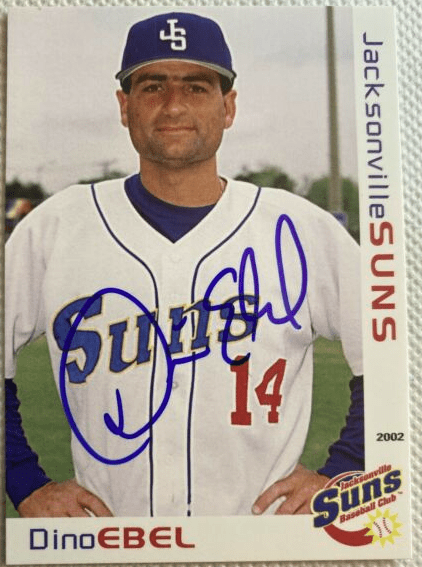
Ebel moved into full-time coaching for the San Bernardino Spirit (1995) and San Antonio Missions (1996). When Del Crandall resigned in the middle of a 13-game losing streak for the San Bernardino Stampede in ’97, Ebel stepped in and led the team to the championship series.
From 1998 to 2004, Ebel posted a 531-496 record as a minor-league manager in the Dodgers’ system. During that span, the Dodgers’ parent team hadn’t reached a World Series. Player development was scrutinized.
Mike Scioscia, who by that time became the Angels’ manager when it appeared the Dodgers didn’t quite value his input, knew of Ebel while both were in the Dodgers’ system. Scioscia brought in Ebel for his staff as a coach in 2006. Ebel first managed the franchise’s Triple-A Salt Lake Stingers (formerly known as the Buzz, known thereafter as the Bees) to a 79-65 mark. The roster included future big-leaguers Adam Kennedy, Ervin Santana, Joe Saunders, Casey Kotchman, Dallas McPherson and Curtis Pride.

Wearing No. 12 (and later No. 21) as he found a spot in the Angels’ third-base coaching box startign in 2013, Ebel was given free reign be an extension of Scioscia as having the mindset of an aggressive, National League type approach on the basepaths.
Ebel would also endear himself to Angels stars Vlad Guerrero and Albert Pujols by throwing them BP — eventually called on by each when they competed in the annual Home Run Derby during the All Star Game. Pujols even gave Ebel a new blue Corvette for helping him in 2021.
Ebel was recognized by his loud whistles to signal defensive alignments from the dugout. His return to the third-base coaching spot in 2018 would be his last year with the Angels — as well as Scioscia’s final year as manager. Ebel interviewed for the open Angels’ managerial job, but it was given to Brad Ausmus.
In 2019, as the Dodgers saw their third-base coach Chris Woodward leave in 2019 to become manager of the Texas Rangers, Ebel got a callback.
“I was so thrilled,” Ebel said, accepting the No. 12. “When I got that call from Andrew Friedman asking me to join their staff, I can’t even explain it, it was exciting for me to just know I’m going to put that Dodger uniform back on and be on that Major League field at Dodger Stadium every day.”
Two World Series rings were generated in the first five seasons Ebel made Dodger Stadium his home base. He was also back pitching in the 2024 Home Run Derby, trying to help the Dodgers’ Teoscar Hernandez.
When the Dodgers acquired outfielder Joey Gallo in 2022, and he requested wearing No. 12, Ebel switched to No. 91. Why? The Artesia Freeway that he may have traveled? He became the first in Dodgers’ history to wear it.
“Dino is one of the best, if not the best, third base coaches in the game,” Roberts said, noting that Ebel has been asked as well to be the U.S. World Baseball Classic coach in 2023 and ‘26. “(it is about his) experience, his preparedness and ability to connect with players and teach them. He’s very well-versed, a person who’s loyal and was a Dodger.”
Ebel returns to Barstow every off season to work with local kids in baseball clinics. He has become known for for his 30-minute, four-mile runs every morning at the gym, followed by a trip to Starbucks for four tubs of oatmeal, a handful of blueberries and walnuts.
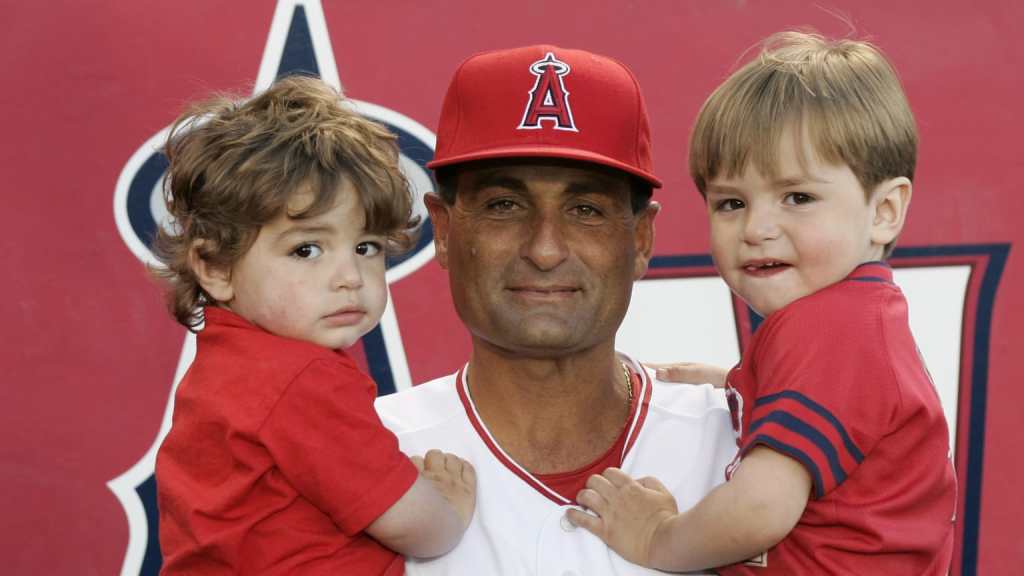
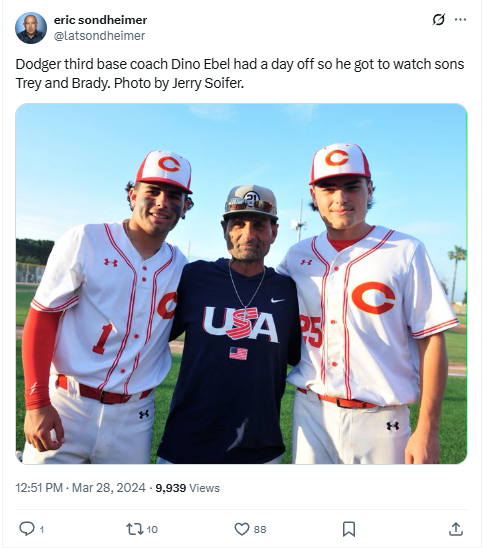
The baseball success of Ebel’s two have also been newsworthy, as Dino and his wife Shannon now live in Rancho Cucamonga.
Brady and Trey Ebel were a year apart playing at Corona High, having arrived as a pair of transfers from Etiwanda High. At one point in 2023, the two were hitting a combined .720 for the team.
Brady, a left-handed hitting shortstop and pitcher, finished his senior season as a Top 100 prospect for the 2025 MLB draft. At 6-foot-3 and 185 pounds, Brady had a commitment to LSU but was drafted No. 32 overall in July ’25 by the Milwaukee Brewers. He signed for $2.75 million and has played at Single A Carolina.
In March of 2026, Brady hit a home run in a spring training game for Milwaukee against the Dodgers. Dino Ebel missed it — he was with Team USA participating in the World Baseball Classic during the Cactus League matchup.

Dino had checked the score of the game at one point and saw the Dodgers ahead 7-0. He didn’t realize the Brewers scored 10 in the fifth inning. Brady’s homer gave Milwaukee its 19th run of the game. Milwaukee won 24-7.
Dino Ebel was watching it on the MLB Network, but it then switched to another spring training game, so he had to find it on an audio stream.
“I told Brady, I said, ‘Hey, it’s just a spring training game. Don’t mean nothing. It’s a practice home run.’ But I’ll tell you what, I was a happy father,” said Dino. “Just all the work the kid has put in, he’s gaining strength, he’s 18 years old, he was just sent out to Low-A where last year he left off in the Carolina League. He had a great Spring Training, so he’s in a good mindset and I’m happy for him.”
Brady Ebel was one of three Corona High players picked in the first round of that MLB draft — the first time in the 60 years of the draft history that a trio from the same high school were chosen.
Trey, a middle-infielder with a commitment to Texas A&M, is closer in size to his father at 5-foot-10 and 165 pounds as he graduated from high school in 2026. In the June ’26 draft, Trey was the No. 25 overall pick, in the first round, also by Milwaukee.
Brady was watching a live feed of the draft on the scoreboard when MLB Commissioner Rob Manfred announced the Brewers’ pick. A moment later, the brothers connected via FaceTime to share an unforgettable moment.
“We’re going to play together, man!” Brady said. “Oh my God. Look at you, man. Wow. We did it, bro!”
Suddenly, he was overcome with emotion.
“I’m excited, man,” Brady said.
The entire family felt that way.
“My mom came up to me and said, ‘Watch this video,’” Trey said. “It broke me down, seeing him cry. All the years of us competing against each other and trying to make each other better. Then it happened, and to see his reaction, it was beautiful.”
Trey Ebel ranked 107th on MLB Pipeline’s pre-Draft rankings, but the Brewers valued him much higher among this year’s class of eligible players. Both Ebel brothers played for years on the Brewers’ development teams.
“Trey owned it, and he did it when he was 16,” said Brewers special assistant Corey Rodriguez, who helps run the team’s Area Code teams and Fall teams, which have been stocked with young Draft hopefuls over the years from Christian Yelich to Brice Turang. “He’s a winning player. He’s different from Brady in terms of how he gets to it, but he gets there. He’s always been a hit collector.”
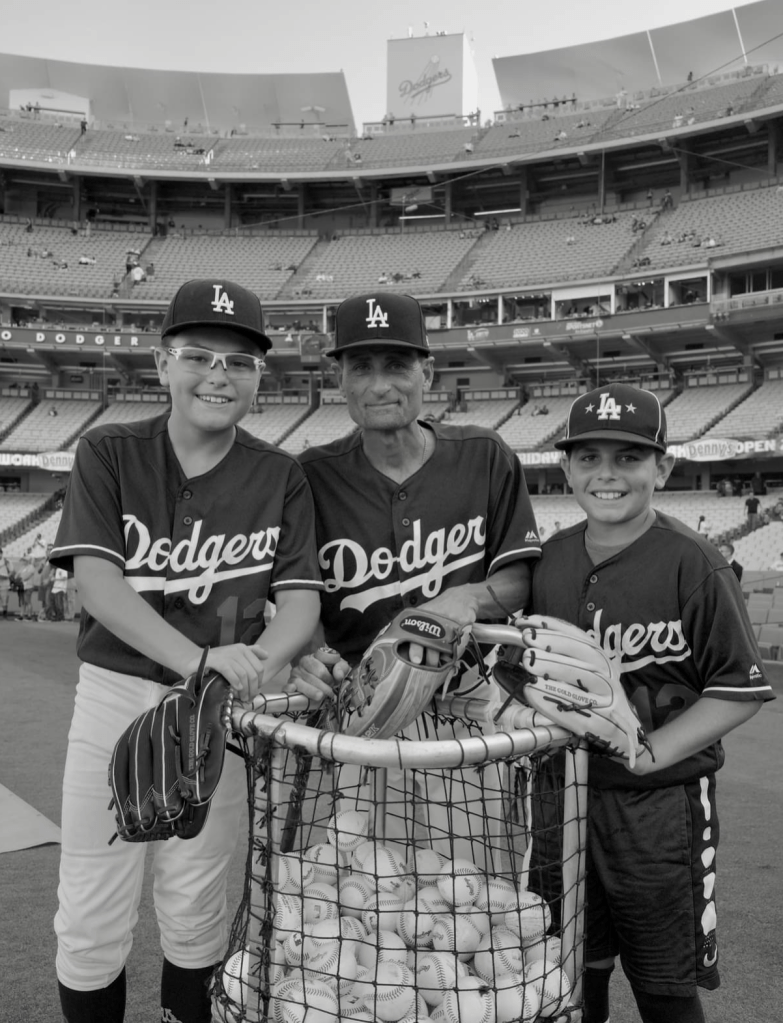
Back in 2019, the two sons started tagging along with their dad to Dodger Stadium, take ground balls on the infield and shag in the outfield during batting practice.
“Watching those guys do it every day, just being able to be in the clubhouse and walk around and see how guys act, has helped me and my brother a lot,” Brady said. “I take pieces from everybody.”
“As a dad, I love it, because I get to spend more time with them, and I get to watch them get better,” Dino said. “The process of watching them work with major league players is something I’ll never forget.”
Shohei Ohtani should feel as much as a son to Ebel as his own two. A rookie with the Angels in 2018 when Ebel coached third base for the team, Ohanti was reunited with Ebel in 2024 as a Dodgers.
The two still needed to get on the same page quickly.
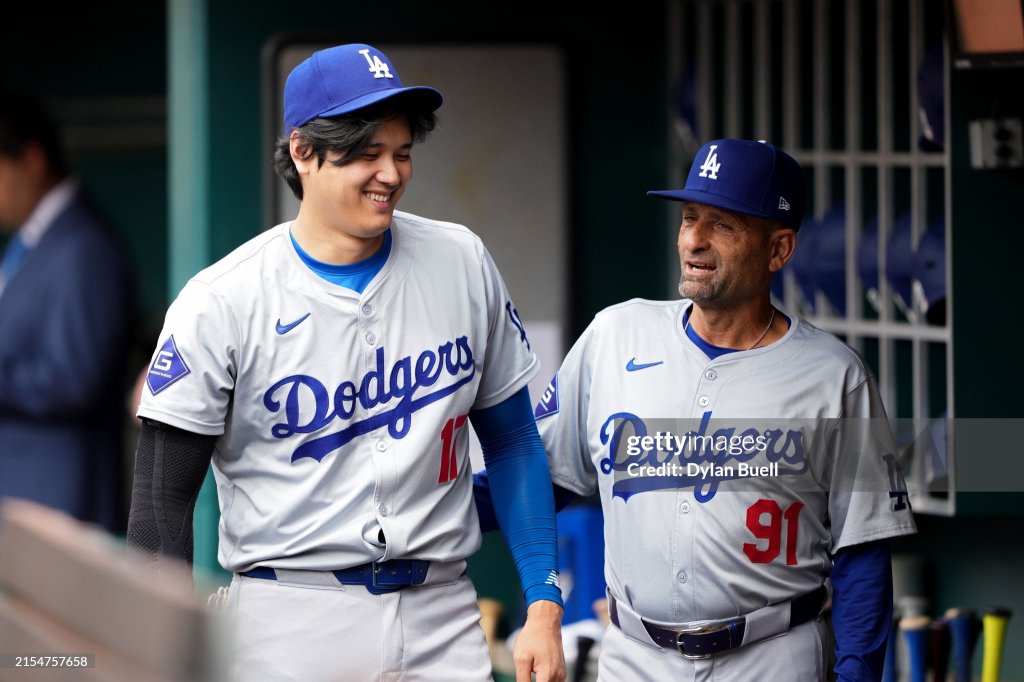
In Ohtani’s first home game at Dodger Stadium, in his first at-bat, he drove a ball to right field. Ebel tried to hold him up at second base. Ohtani kept coming. Suddenly, he was standing in front of third base — a base already occupied by teammate Mookie Betts, who Ebel held up.
Ohtani later said he just assumed Betts would score from first base on the hit. But there were no outs.
Ebel’s mindset was having Betts at third and Ohtani at second would have provided No. 3 hitter Freddie Freeman with many opportunities. Ebel, positioned down the third-base line toward home plate, wasn’t sure if St. Louis outfielder Jordan Walker could make a strong throw to the plate if he was to send Betts. But since Ohtani couldn’t find Ebel in his line of vision as he went from first to second, he just kept running and was tagged out.
“He was like, ‘I gotta learn from this’,” Ebel said of Ohtani, after talking to him and interpreter Will Ireton when the inning ended. “He’s never a guy who is gonna turn away a time to learn. So I thought it was good on his part. And it was good for me, learning again how fast he is.”
It’s always a teachable moment for Ebel.

During the same week when Ebel’s son Brady was drafted — and having missed the Dodgers’ final game before the All-Star break in San Francisco so he could be home for the draft party — Dino Ebel went to Atlanta to be with the Dodgers coaching crew for the 2025 MLB All Star Game.
The exhibition was tied 6-6 after nine innings. A new rule went into effect: A three-round “swing off” home-run contest between three hitters from the NL and AL would decide it. What did any of that mean?

For Ebel, it meant he was sent out as the pitcher for the NL team, hoping to get roped. First hitter Kyle Stowers of Miami managed one homer. Second hitter Kyle Schwarber got three homers in three swings, bringing the NL from two down to one ahead. The NL didn’t have to use its last hitter, Pete Alonzo, because it built a big enough lead when the AL hitters fell short.
Some suggested Ebel be listed as the winning pitcher in the box score.
“What an exciting moment, I think, for baseball, for all the people that stayed, who watched on television, everything,” Ebel said. “That was pretty awesome to be a part of … I had like 10 throws just to get loose. And then it’s like, ‘Let’s bring it on.’ “
Barstow was named after William Barstow Strong, president of the Atchison, Topeka and Santa Fe Railway in the late 1800s when the first official post office was established. There’s a song about that railway, too. Officials decided to use his middle name, Barstow, since his last name had already been used in two other railroad outposts in Kansas and Oklahoma, both branded as Strong City.
The area has gone by names such as Grapevine, Camp Sugarloaf, Fishpond and Waterman Junction before that. Barstow Strong seems most appropriate these days.
Ebel got a reminder of how far he had come in his career in 2022. Nearly 40 years after playing Little League Baseball with Ebel in Barstow, Lee Schroeder reconnected with him at a Dodgers-Brewers game in Milwaukee.
“Back in the ’70s, there were two season-ending Little League Tournaments where Dino played for East Barstow and I played for West Barstow, ” Schroeder told the Victorville Daily Press. “It was a great rivalry where our teams fought hard to win. I think we lost in ’77 and they won the following year.
“(After alerting a Dodgers official about their arrival), Dino comes out and says ‘You’re Lee, aren’t you?’” Schroeder said. “I introduced Dino to (my son) Austin, then we chatted for about 10 minutes just like old friends.”
Austin Schroeder said it “was amazing to be in this big ballpark, watching Dino and my dad talking about old times.”

When he was conducting one of his Barstow clinics in 2019, Ebel explained his philosophy as a coach. It also applies to how he views life.
“It’s always been three things for me: Communicate, build the relationship and trust factor,” Ebel said. “Once you get those three things in place, and the player knows you care, it just makes it easier. That’s how it’s always been with me.”

Who else wore No. 91 in SoCal sports history? Make a case for:
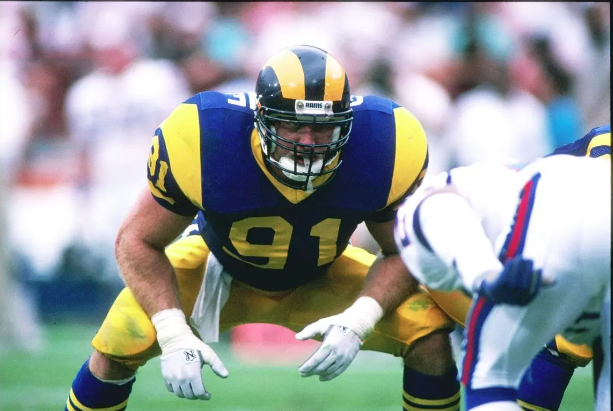
Kevin Green, Los Angeles Rams linebacker/defensive end (1985 to 1992)
Best known: En route to a 2016 induction into the Pro Football Hall of Fame, Greene and his long blond locks were a fifth-round draft pick of the Rams (113th overall) in the 1985 selection out of Auburn. A left-defensive end for the Rams, he didn’t earn the first of his 160 career sacks in an ’85 playoff game against Dallas, and didn’t start a game for head coach John Robinson for his first three seasons. By ’88, he led the Rams with 16 ½ sacks, second in the league to Reggie White, with 4 ½ of them coming against San Francisco’s Joe Montana in a key late-season game the Rams needed to win to make the playoffs. In a three-year period from 1987 to 1990, he had 46 sacks, more than any other NFL player in that span, thriving in a Fritz Shurmer five-linebacker defense that highlighted Greene’s speed and pass-rush abilities. The Rams’ change in 1991 to Jeff Fisher as the defensive coordinator moved Green to a right defensive end, and he moved around in 3-4 and 4-3 alignments with only three sacks. His 10 sacks in 1992 got him onto Sports Illustrated Paul Zimmerman’s annual All-Pro team because of the added skills he brought to the Rams with new defensive coordinator George Dyer under new head coach Chuck Knox. But given the chance to become a free agent, he gravitated to the Pittsburgh Steelers in 1993 to return to left outside linebacker. In a 15-year career that included stops in Carolina and San Francisco, with five Pro Bowls and a member of the NFL’s 1990s All-Decade Team, Greene was his team’s top sack leader for 11 of those seasons, retiring third all-time in sacks, plus 23 forced fumbles and five interceptions. Greene died of a heart attack in 2020 at age 58. The Rams offered a statement in that Greene “defined what it means to be a Los Angeles Ram, on and off the field, elevating everyone around him through his extraordinary leadership and commitment to serving others.”
Not well remembered: The 6-foot-3, 247-pounder who grew up in an Army family was in the U.S. National Guard while in college, learning to become paratrooper.

Sergei Fedorov, Mighty Ducks of Anaheim center (2003-04 to 2005-06):
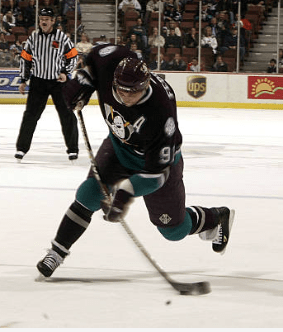
Best remembered: After winning three Stanley Cups, a league MVP award, tw0 Hart Trophies as the league’s best defensive forward and six All-Star seasons during his first 13 years with the Detroit Red Wings, the 33-year-old Fedorov came to Anaheim for a five-year, $40 million agreement, turning down a four-year, $40 million or five-year, $50 million deal to stay in Detroit, according to sources. Fedorov had 400 goals and 554 assists in the bank already. The Russian star was reunited in Anaheim with Ducks GM Bryan Murray, his first NHL coach, just as the Ducks were coming off their first Stanley Cup Final appearance and had lost star left wing Paul Kariya as a free agent to Colorado. Playing with Teemu Selanne and Scott Niedermayer, Fedorov led the Ducks in goals (31) and points (65) his first season, playing 80 games, but Anaheim missed the playoffs. After playing in five games into the 2005-06 season, the Ducks decided to trade him — to Columbus, for Tyler Wright and rookie Francois Beauchemin. The Ducks were already in a salary dump with the new NHL cap in place. Anaheim won the Stanley Cup the next season without him. And after an 18-year career (wearing No. 91 every season) that ended in Washington, Fedorov made it into the Hockey Hall of Fame in 2015 and into into the International Ice Hockey Federation Hall of Fame in 2016.
Not well remembered: Federov became the first Russian to reach the 1,000-point plateau in NHL history, a feat he accomplished while with the Ducks on Feb. 14, 2004, registering an assist against Vancouver.
Leo Carlsson, Anaheim Ducks center (2023-24 to present):
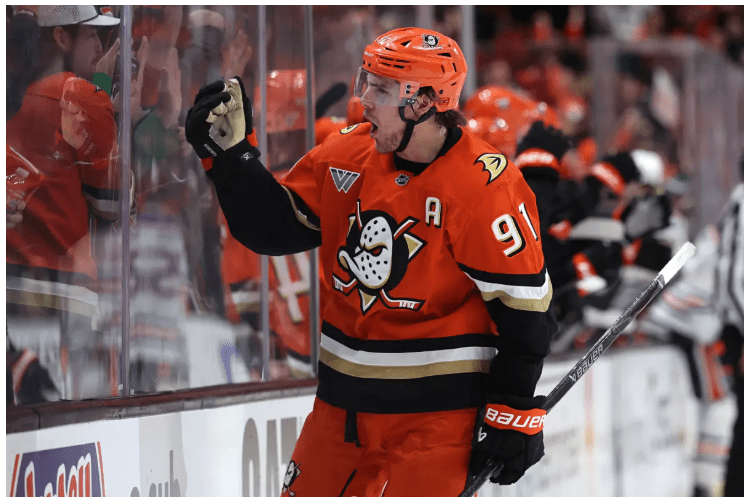
If NHL followers might not sure they knew who this 21-year-old from Karlstad, Sweden weren’t sure who Carlsson was for the last three seasons with the Ducks, they were as of July 2026 when he became the NHL’s highest-paid player under a five-year, $90-million deal that matched what had been offered to him by the Philadelphia Flyers. Carlsson signed the Flyers’ offer sheet as a restricted free agent after a year of fruitless negotiations with Anaheim general manager Pat Verbeek. The $18 million average annual value surpassed the salary of Minnesota’s Kirill Kaprizov, who would have been the NHL’s highest-paid player at $17 million. The Ducks would have received four first-round draft picks from Philadelphia if they hadn’t matched the offer sheet. “Matching the offer sheet was an easy decision, as Pat has intelligently left enough cap space to give us the ability to retain Leo,” said Ducks billionare owners Henry and Susan Samueli said in a statement. “We have extremely high expectations for Leo. We firmly believe he will continue his strong growth trajectory and become one of the truly elite centers in the league while continuing to make a strong impact in our community.” Carlsson was the No. 2 choice in the 2023 draft. He scored 67 points in 70 games during the 2025-26 season despite being limited for a lengthy stretch by a leg injury, and he added 11 points in 12 games during his first postseason experience.
Tim Wrightman, UCLA tight end (1978 to 1981) via Mary Star of the Sea High School in San Pedro (1974 to 1977):
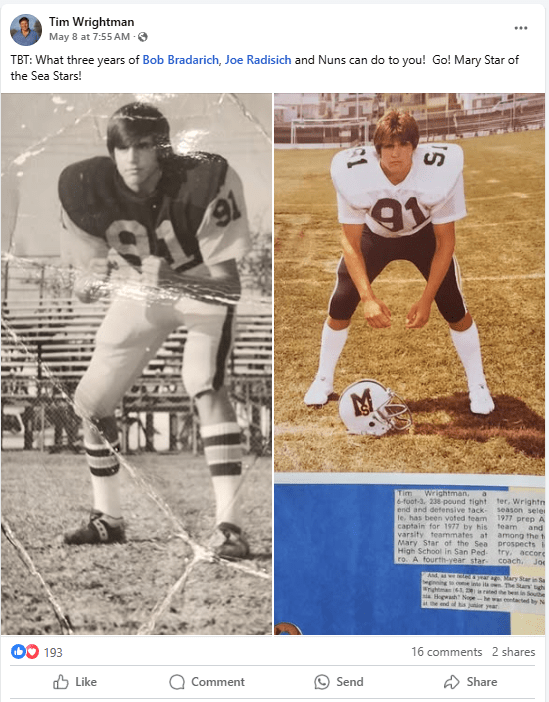
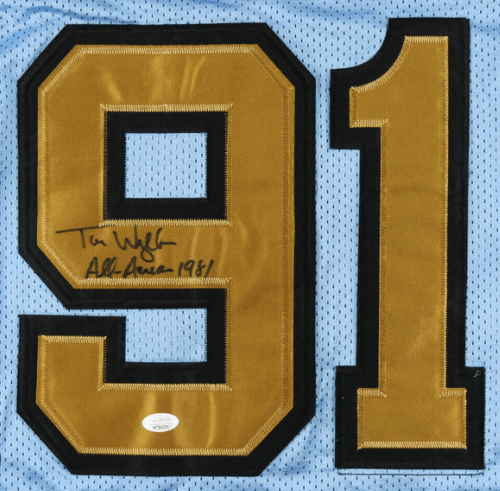
Best known: Inducted into the UCLA Athletic Hall of Fame in 1999, Wrightman came out of Mary Star of the Sea High in San Pedro to lead the Bruins in receiving in ’79. He was second-all time in the program when he left, logging 73 catches for 947 yards and 10 touchdowns in 44 games. A third-round pick by the NFL’s Chicago Bears, the 6-foot-3, 237-pounder instead went to the USFL’s Chicago Blitz. That made him the first NFL draft pick to actually take up a contract with the upstart spring league. When the USFL folded, Wrightman went to the Bears in 1985 and was part of their Super Bowl team.
Anyone else worth adding?