No. 35: Petros Papadakis

This is the latest post for an ongoing media project — SoCal Sports History 101: The Prime Numbers from 00 to 99 that Uniformly, Uniquely and Unapologetically Reveal The Narrative of Our Region’s Athletic Heritage.  Pick a number and highlight an athlete — person, place or thing — most obviously connected to it by fame and fortune, someone who isn’t so obvious, and then take a deeper dive into the most interesting story tied to it. It’s a combination of star power, achievement, longevity, notoriety, and, above all, what makes that athlete so Southern California. Quirkiness and notoriety factor in. And it should open itself to more discussion and debate — which is what sports is best at doing.

The most obvious choices for No. 35:

= Sidney Wicks, UCLA basketball
= Bob Welch, Los Angeles Dodgers
= Cody Bellinger, Los Angeles Dodgers
= Jean-Sebastien Giguere, Anaheim Mighty Ducks
= Christian Okoye, Azusa Pacific College football

The not-so-obvious choices for No. 35:

= Tank Younger, Los Angeles Rams
= Loy Vaught, Los Angeles Clippers
= Rudy LaRusso, Los Angeles Lakers
= Ron Settles, Long Beach State football

The most interesting story for No. 35:
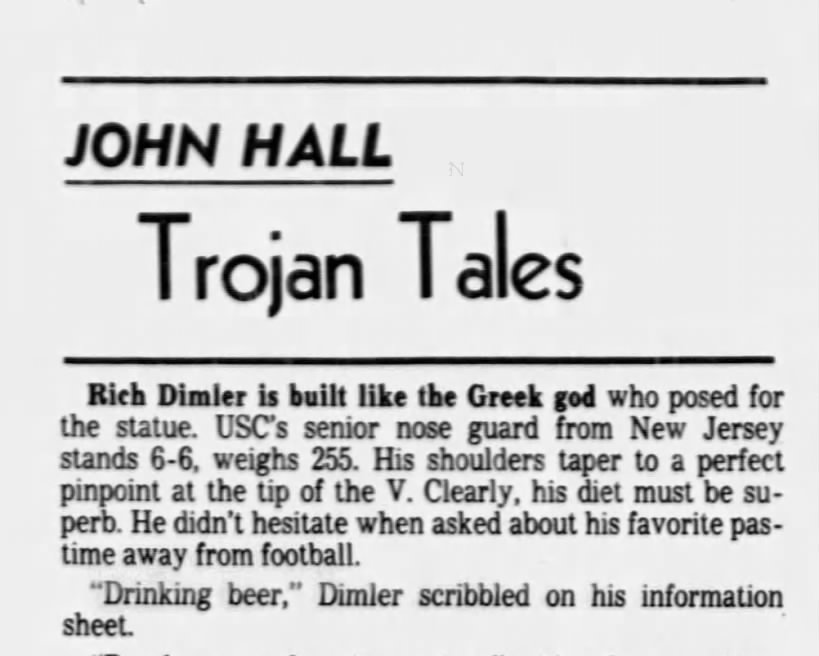
Petros Papadakis, USC football tailback (1996  to 2000)
Southern California map pinpoints:
San Pedro, Palos Verdes, Hollywood, Los Angeles (Coliseum, Sports Arena)


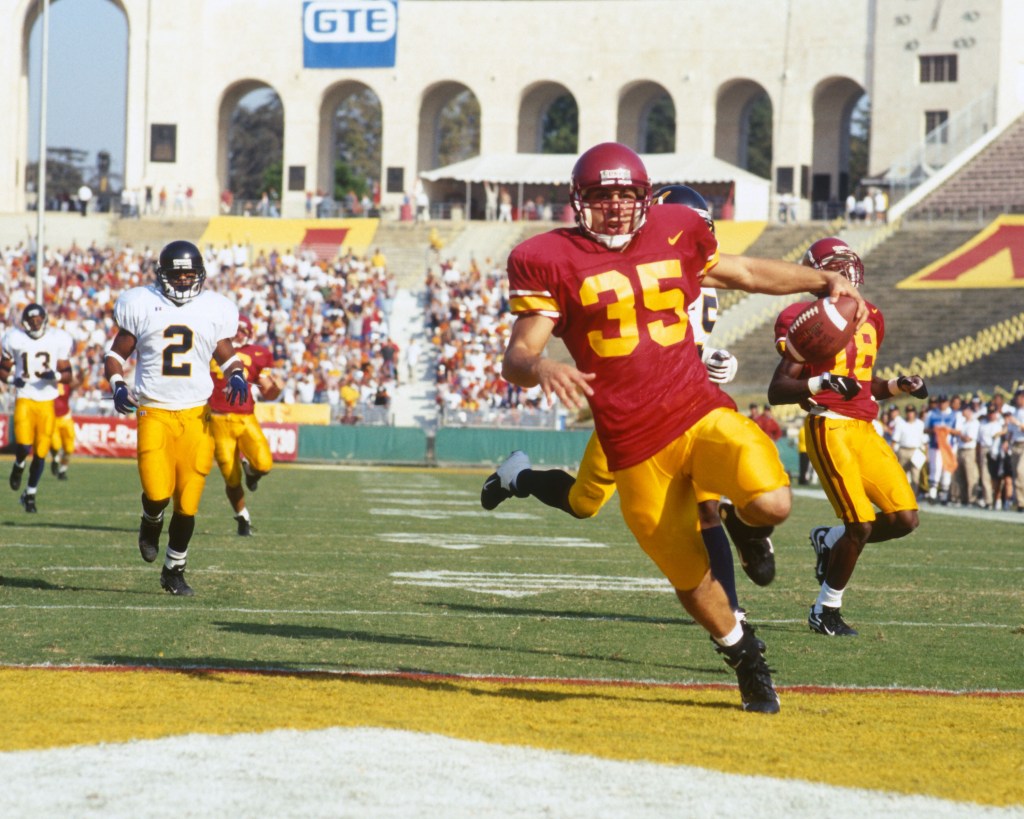
Oct. 15, 1998: On USC’s third play from scrimmage in the first quarter, Trojans junior tailback Petros Papadakis finishes off a 65-yard touchdown run against Cal at the Coliseum (top, and below). Papadakis had 13 carries for 158 yards in his greatest statistical performance of his USC career in a 32-31 Week 6 loss. (Photos by Jon Soohoo/USC)

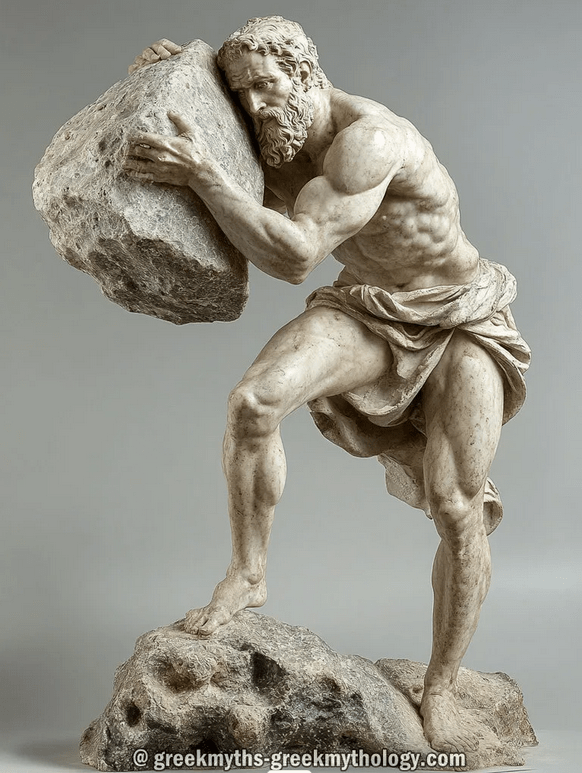
Any sort of perfunctory profile of Petros Papadakis becomes the proverbial Sisyphean pursuit. Hopefully we don’t have to Greek-splain too much here.

Sisyphus, the first king of Ephyra, found his eternal fate in Hades rolling a huge boulder endlessly up a hill, only to see it come back down at him. Every time he made progress and got on a roll, it reversed on him like a Looney Tunes cartoon. The whole thing seemed so Kafkaesque that French philosopher Albert Camus, writing “The Myth of Sisyphus” in 1942, elevated him to some absurd hero status in Greek mythology.

Something that Papadakis might find relatable.

When Papadakis gets on his own a roll, cutting it up on KLAC-AM (570)’s afternoon sports-talk drive-time “Petros and Money Show,” there is far less sports and much more drive to just being a voice for “la raza.” It’s a focus on a feeling of being in “la ciudad” with Papadakis, as familiar as he is bombastic, just the person in the passenger seat making observational conversation to it real.

He is part of USC football legacy, a linage of Cardinal and Gold athletes whose performance has been documented in Los Angeles’ grand Coliseum. Papadakis’ work ethic formed at his family’s famously iconic San Pedro Taverna, as he went from dishwasher to waiter to spending all his earnings for the night back on his guests to make sure they went home happy.

Maybe Papadakis became an accidental broadcaster, but it’s a career that likely defines him as much if not more than anything else. Once a Trojan workhorse in the USC backfield, he is the sometimes-hoarse former Trojan on the dashboard radio. A Red Bull in a china shop of hot topics. The connoisseurs of SoCal sports who enjoy conquering as much as consuming any kind of history lesson are better for it.

Fox Sports’ Petros Papadakis, left, with USC head football coach Lane Kiffin in 2011.

Back to the profile: Papadakis has provided quips along the way to make his story even more cohesive:

Continue reading “No. 35: Petros Papadakis”

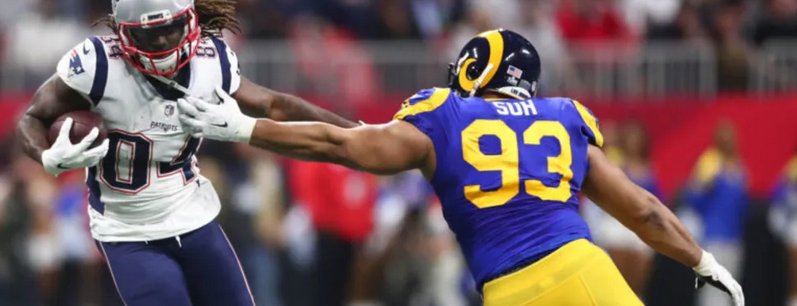
No. 93: Ndamukong Suh

This is the latest post for an ongoing media project — SoCal Sports History 101: The Prime Numbers from 00 to 99 that Uniformly, Uniquely and Unapologetically Reveal The Narrative of Our Region’s Athletic Heritage.  Pick a number and highlight an athlete — person, place or thing — most obviously connected to it by fame and fortune, someone who isn’t so obvious, and then take a deeper dive into the most interesting story tied to it. It’s a combination of star power, achievement, longevity, notoriety, and, above all, what makes that athlete so Southern California. Quirkiness and notoriety factor in. And it should open itself to more discussion and debate — which is what sports is best at doing.

The most obvious choices for No. 93:
= Ndamukong Suh, Los Angeles Rams
= Greg Townsend, Los Angeles Raiders

The most interesting story for No. 93:
Ndamukong Suh, Los Angeles Rams nose tackle (2018)
Southern California map pinpoints:
Inglewood (SoFi Stadium)


For all the unnecessary roughness during a 13-year NFL career — the down-low, scandalized way he treated opposing players — Ndamukong Suh never got sued.

Maybe the league’s witness protection program wasn’t all that great. Or, maybe because, deep down, he was really a super nice guy whose actions off the field spoke louder than his red-flag existence on the gridiron of employment?

In nearly 200 regular season games, including three Super Bowls, another handful of playoff appearances, five times added to a Pro Bowl squad, and a handful of exhibition games where rules still applied, the 6-foot-4, 313-pound Suh leveraged his abilities to earn about $163 million in salary. That included $14 million that the Los Angeles Rams gave him to join their organization in 2018, a strategic move to free up the often double-teamed All Pro defensive end Aaron Donald.

Now subtract more than $400,000 for all the fines and lost pay checks Suh incurred.

“Some may say (his penalty payments were) a bargain to pay in light of what he had earned — all the intimidation that came from his reputation,” USA Today columnist Mike Freeman wrote when Suh, in a rather poignant social media post, announced in July of 2025 he was officially retired from the NFL at age 38.

Continue reading “No. 93: Ndamukong Suh”

No. 41: Glenn Davis

This is the latest post for an ongoing media project — SoCal Sports History 101: The Prime Numbers from 00 to 99 that Uniformly, Uniquely and Unapologetically Reveal The Narrative of Our Region’s Athletic Heritage.  Pick a number and highlight an athlete — person, place or thing — most obviously connected to it by fame and fortune, someone who isn’t so obvious, and then take a deeper dive into the most interesting story tied to it. It’s a combination of star power, achievement, longevity, notoriety, and, above all, what makes that athlete so Southern California. Quirkiness and notoriety factor in. And it should open itself to more discussion and debate — which is what sports is best at doing.

The most obvious choices for No. 41:
= John Lackey, Anaheim Angels
= Jerry Reuss, Los Angeles Dodgers
= Elden Campbell, Los Angeles Lakers
= Glen Rice, Los Angeles Lakers and Clippers

The not-so-obvious choices for No. 41:
= Glenn Davis, Los Angeles Rams
= Ken Norton Jr., UCLA football
= Jeff Shaw, Los Angeles Dodgers

The most interesting story for No. 41:
Glenn Davis, Los Angeles Rams running back (1950 to 1951)
via Bonita High
Southern California map pinpoints:
Claremont, La Verne, Pomona, Los Angeles Coliseum, La Quinta


Glenn Davis’ 1946 Heisman Trophy sits in the main office at Bonita High School in La Verne, rather unassuming in a glass case, with all sorts of newspaper clippings behind it to help explain what it means. It’s near is the Smudgepot Game Trophy — to some, carrying more importance for bragging rights.

Upon further examination, there’s a small addition made to the plaque that wasn’t on the original when it was presented to Davis, who, at that time, was just the 12th recipient in the award’s history.

The Army tailback had finished as the Heisman runner up as a sophomore and as a junior as the sport kept going on during World War II. At last, “Mr. Outside” had had sole possession of the title of outstanding college football player in the United States as deemed by the Downtown Athletic Club of New York City.

Now, in the bottom left corner, Davis may not have known that his high school alma mater added the notation: “Bonita High School 1940-1943.”

To the kid known as the “Claremont Comet,” that mattered. To the school, it was an honor and a matter of pride.

“I don’t think there’s too many high schools in the country with a Heisman Trophy in their possession,” said then Principal Bob Ketterling, who arrived a couple of years after the handoff. “People walk by and do a double-take.”

For historians of high school sports in Southern California, this was validation. Davis was the first Heisman Trophy winner with roots in the California Interscholastic Federation’s Southern Section.

And, eventually, to the Los Angeles Rams, it meant bringing a home-town star back in the spotlight where he would play in two championship games during his only two NFL seasons.

Continue reading “No. 41: Glenn Davis”

Nos. 68 and 86: Mike and Marlin McKeever

This is the latest post for an ongoing media project — SoCal Sports History 101: The Prime Numbers from 00 to 99 that Uniformly, Uniquely and Unapologetically Reveal The Narrative of Our Region’s Athletic Heritage.  Pick a number and highlight an athlete — person, place or thing — most obviously connected to it by fame and fortune, someone who isn’t so obvious, and then take a deeper dive into the most interesting story tied to it. It’s a combination of star power, achievement, longevity, notoriety, and, above all, what makes that athlete so Southern California. Quirkiness and notoriety factor in. And it should open itself to more discussion and debate — which is what sports is best at doing.

The most obvious choices for No. 68:
= Keith Van Horn, USC football
= Mike McKeever, USC football
= Frank Cornish, UCLA football
= Ross Stripling, Los Angeles Dodgers

The most obvious choices for No. 86:
= Marlin McKeever, USC football, Los Angeles Rams
= Jack Bighead, Pepperdine football; Los Angeles Rams


The most interesting story for No. 68 and No. 86:
= Mike McKeever, USC football offensive and defensive guard (1957 to 1960)
= Marlin McKeever, USC football offensive and defensive end / fullback / punter (1957 to 1960); Los Angeles Rams tight end / linebacker (1961 to 1966, 1971 to 1972).

Southern California map pinpoints:
South Los Angeles, the Coliseum, Montebello, Long Beach


You betcha, the way Marlin and Mike McKeever’s lives started made for a nifty ice breaker when Groucho Marx had them on his TV show in March of 1961.

So it was during a blizzard on New Year’s Day 1940, on the plains in Cheyenne, Wyoming, when Marlin arrived first. Mike followed 10 minutes later.

The thing is, their parents were told by the doctor to only expect a girl. Just one at that.

“They already named her — Mary Ann I believe,” Mike told Groucho with a chuckle as he and Marlin, along with their new brides, Judy and Susie, made to NBC Studios in Hollywood for a filming of what was then called “The Groucho Show,” an offshoot of the more famous title “You Bet Your Life.”

Their days as USC All-American football giants had just ended. When the 1960 season ended, they had a double wedding ceremony at St. Vincent de Paul Catholic Church in L.A., just blocks away from the USC campus. Later that month, they were drafted by the Los Angeles Rams.

Groucho Marx took a puff of his cigar, sized up the pair of crew-cut, 6-foot-1 and 225-pounders, and remarked: “Imagine getting all set for a baby girl named Mary Ann and suddenly these two show up.”

Groucho was fascinated with how their parents distinguished the two. Marlin said it was by writing their names in Mercurochrome on their stomachs.

“How do you know they weren’t confused?” Groucho asked. “How do you know they didn’t paint the wrong name?”

Mike spoke up: “I’ve thought about that — it’s pretty depressing so I don’t think about it too much.”

Added Marlin: “He can’t think too much, that’s the problem.”

Suddenly, they were the Smothers Brothers.

As Marlin’s wife Susie listed all the twins’ list of achievements at USC, Groucho had to ask: “Well how do you know all this?”

“I kept a scrapbook,” she replied.

A stuffed duck looking like Grouch dropped down from the ceiling to fanfare. She had said the secret word — book. When George Fenneman doled $50 each to the men, to split the $100 prize, they handed it over to their wives.

They were, after all, Academic All-Americans too.

The background

From a Life magazine 1959 profile on the McKeever twins at USC.

The McKeevers were most definitely the biggest men on campus at Mount Carmel High in South L.A. from 1953 to ’57.

The all-boys Catholic school took over 70th Street between Hoover and Vermont, just 20 years old at the time. The Carmelite Order that would later found Crespi High in Encino made sports an integral part of its curriculum to attract students.

Continue reading “Nos. 68 and 86: Mike and Marlin McKeever”

No. 71: John Ferraro

This is the latest post for an ongoing media project — SoCal Sports History 101: The Prime Numbers from 00 to 99 that Uniformly, Uniquely and Unapologetically Reveal The Narrative of Our Region’s Athletic Heritage.  Pick a number and highlight an athlete — person, place or thing — most obviously connected to it by fame and fortune, someone who isn’t so obvious, and then take a deeper dive into the most interesting story tied to it. It’s a combination of star power, achievement, longevity, notoriety, and, above all, what makes that athlete so Southern California. Quirkiness and notoriety factor in. And it should open itself to more discussion and debate — which is what sports is best at doing.

The most obvious choices for No. 71:

= Brad Budde: USC football
= Tony Boselli: USC football
= Kris Farris: UCLA football
= Joe Schibelli: Los Angeles Rams

The not-so-obvious choices for No. 71:
= John Ferraro: USC football
= Randy Meadows: Downey High football

The most interesting story for No. 71:
John Ferraro: USC football offensive lineman (1943-1944, 1946-1947)
Southern California map pinpoints:
Cudahy, L.A. Coliseum, Los Angeles City Hall


The cover of the 1946 Street & Smith’s Football Pictorial Yearbook asks readers to spend a quarter of a dollar for its preview the upcoming college football season. On this “national gridiron review,” John Ferraro offers a million-dollar glare.

The only hint on the cover that it’s him comes from a small caption off his right shoulder that reads “FERRARO U.S.C.” In the table of contents, his full name appears along with the photographer who took the special Kodachrome shot.

Ferraro had earned attention as a USC All-American tackle in ’43 and ’44. Now he was coming back to play after military duty during World War II in 1945. There were others to consider for the preview cover — Army’s Glenn Davis, “Mr. Outside” out of Bonita High in La Verne who had finished second in the Heisman Trophy in ’44 and ’45 would finally win it outright in ’46. Teammate Doc Blanchard, “Mr. Inside,” who won the Heisman award in ’45, and would finish fourth in ’46.

But the publishers picked Ferraro. Kodachome had that affect, apparently. And maybe the regional interest.

“If any tackle in this land of ours has ever played better ball, he must be Superman and Hercules rolled into one,” Braven Dyer bravely wrote for Los Angeles Times in 1944 after Ferraro pushed the Trojans to a 28-21 victory at the Coliseum over the San Diego Naval Training Station Bluejackets. “When Big John goes to work, he’s dynamite.”

That was part of the journalism superlative use in that time, and at the Times.

But the part that holds true today: If any Los Angeles civic leader is tenacious enough to accomplish something for the good of the town, he or she could be measured up to John Ferraro, a Rose Bowl legend and U.S. Navy vet rolled into one, and the one who started the heritage of USC standout linemen sporting the No. 71.

Continue reading “No. 71: John Ferraro”