
This post is part of a media project called SoCal Sports History 101: The Prime Numbers from 00 to 99 that Uniformly, Uniquely and Unapologetically Reveal The Narrative of Our Region’s Athletic Heritage. Pick a number, and consider the list of athletes attached to it. Who wore it best? Or, what’s the most compelling story linked to it? Any person, place or thing is in play with Southern California connections. Star power, transformational achievement, longevity, notoriety and quirkiness all factor in. Whatever leads to a lively discussion and interpretation.
The most obvious choices for No. 21:

Eddie Meador: Los Angeles Rams
Michael Cooper: Los Angeles Lakers
LenDale White: USC football
Wally Joyner: California/Anaheim Angels
Maurice Jones-Drew: UCLA football
Jim Hardy: USC football and Los Angeles Rams
The not-so-obvious choices for No. 21:
Alyssa Thompson: Angel City FC
Zack Greinke: Los Angeles Dodgers
Walker Buehler: Los Angeles Dodgers
Milton Bradley: Los Angeles Dodger
The most interesting stories for No. 21:
Sean Burroughs: Long Beach Little League baseball (1992 and 1993), Long Beach Wilson High baseball (1995 to 1998)
Jeff Burroughs: Long Beach Little League baseball (1963); Long Beach Wilson High baseball (1965 to 1969)
Southern California map pinpoints:
Long Beach
Reference books on the subject:
“The Little Team That Could: The Incredible, Often Wacky Story of the Two-Time Little League World Champions,” by Jeff Burroughs with Tom Hennessey, 1994
“Jeff Burroughs’ Little League Instructional Guide,” by Jeff Burroughs, 1990
“Seasons in Hell: With Billy Martin, Whitey Herzog and ‘The Worst Baseball Team in History’ – The 1973–1975 Texas Rangers,” by Mike Shropshire, 1996
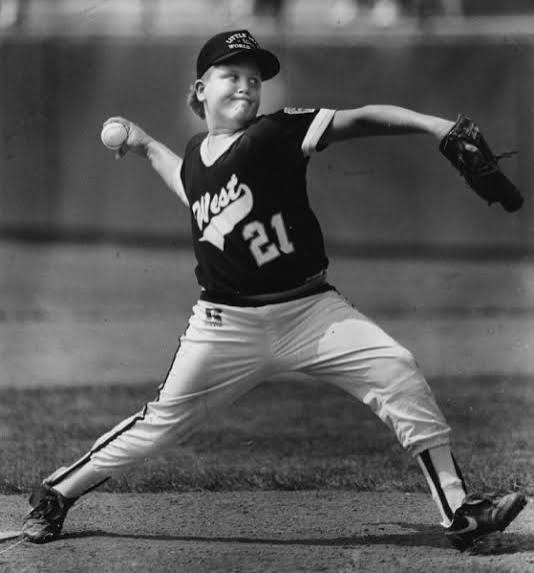
Debbie Burroughs said exactly what you’d expect as someone’s protective mother and faithful wife.
“Let’s focus more about the ups than the downs,” she said, as I explained to her in August of 2013 that I was compiling a look back at the 20 years since her son, Sean, and her husband, Jeff, were part of Long Beach Little League’s back-to-back World Series celebrations in Williamsport, Pennsylvania.
We could minimize some of the details about Sean’s comeback from an assortment of personal issues. At that time, he was back in the Los Angeles Dodgers’ minor league system, in Double-A, up against it at age 33. Maybe there was pathway back into a sport that had become his identity.
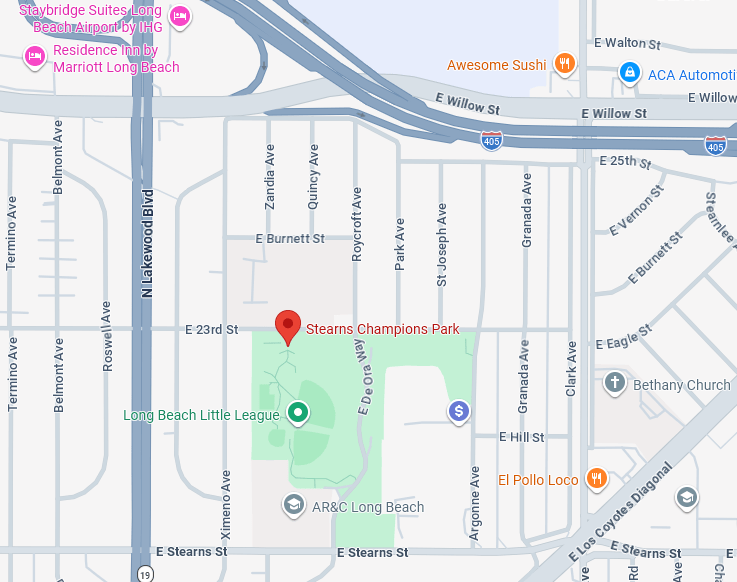
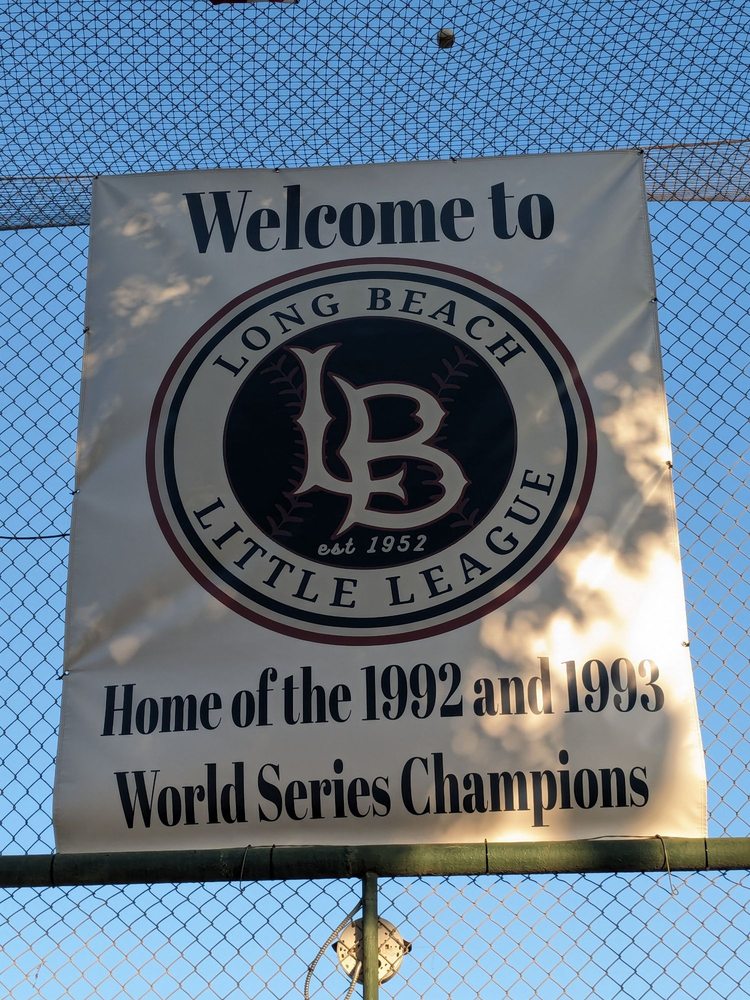
Stearns Park, home of Long Beach Little League tucked away amidst Lakewood Boulevard, the 405 and the Los Coyotes Diagonal, south of the Long Beach Airport runway, had been the baseball haven for Jeff and Sean Burroughs as they learned the game. Like a diamond handed down through generational caretaking.
They both grew up to learn the sport with their parents and friends and teammates, then gravitate over on the other side of Los Alamitos Traffic Circle and launch down Pacific Coast Highway to find Long Beach Woodrow Wilson High, across the street from the well-used Blair Field. It sent them both into a Major League Baseball career arc.
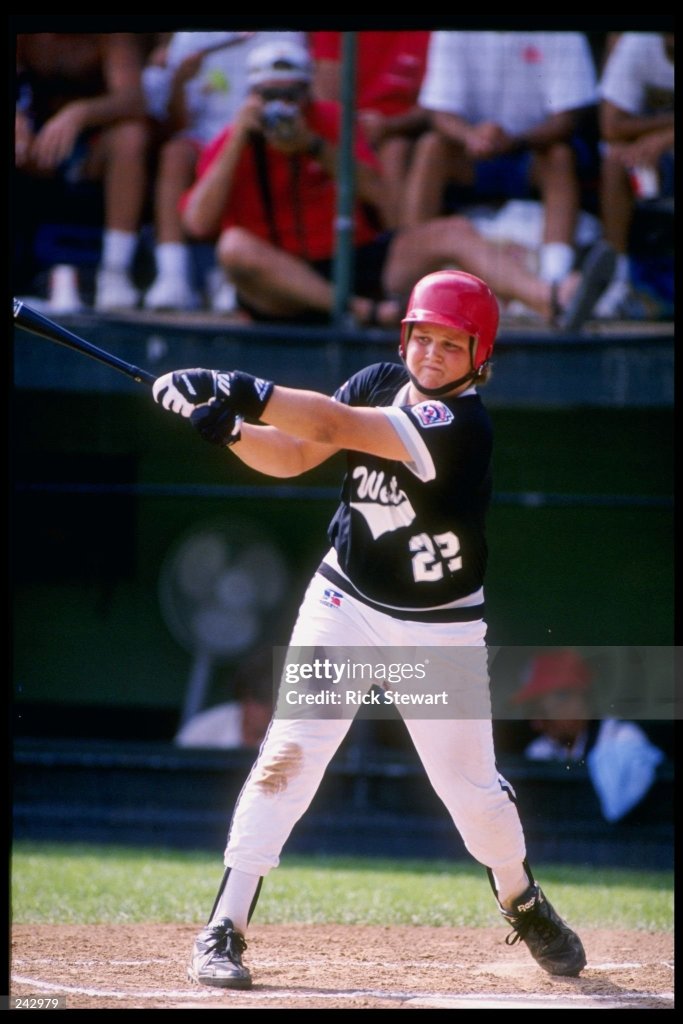
Jeff’s calling card became the 1974 American League’s Most Valuable Player Award, twice named to the MLB All-Star team of each league. The last of his 16 seasons was with Toronto, coming up a game short of going to the World Series.
Sean’s seven years of MLB play showed a lot of early promise, but an injury, trades and releases marked the journey. An addiction to pain killers were not helpful.
Jeff and Sean, as the father-son combo and favorite sons of Long Beach, could reflect two decades later on what they went through.
It may have brought joy, but there was a tragic end when, late in a May day afternoon in 2024, word spread that Sean had died at age 43.
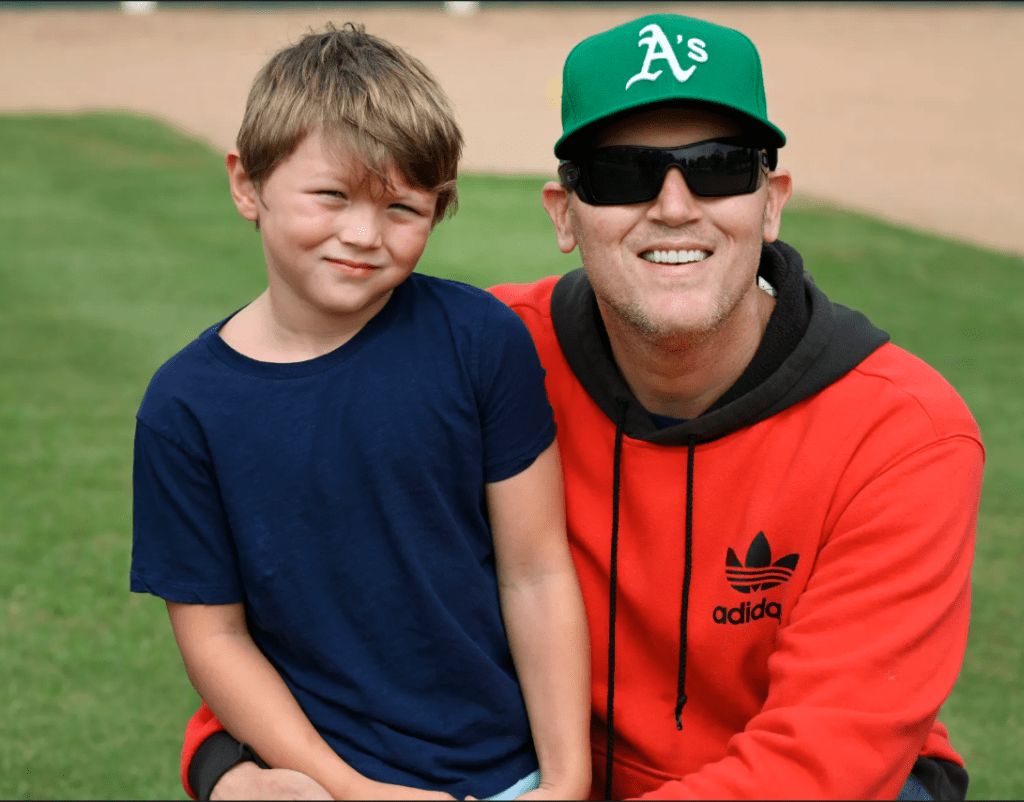
In a circle-of-life moment, he was at Stearns Park to drop off Knox Burroughs, his 6-year-old son and Jeff and Debbie’s grandson, for his Little League game. Sean was an assistant coach for his son’s team. But when he wasn’t there for the first pitch, some were concerned and started looking for him. They found him down in the parking lot and called 911.
Debbie would send a text to the local newspapers to confirm that Sean died of cardiac arrest from a fentanyl overdose.
Sean’s obituary included how he wasn’t just a Little League darling of 1992 and ’93, but also the first to go on from that achievement and add an U.S. Olympic gold medal, in 2000.
But that all seemed like a lifetime ago.
“Sean was a legend in LBLL and the baseball community,” said Long Beach Little League president Doug Wittman.
One day he was playing catch and hitting balls pitched to him by David Letterman on his “Late Night” show in New York, joking bout how he’d like to grow up to be a gynecologist.
He had literally been handed a key to the city of Long Beach. He couldn’t lock away some demons.
Ted Williams himself once referred to Jeff Burroughs as “the greatest young hitter I’ve ever seen,” after the Washington Senators made him the No. 1 overall pick out of Long Beach Wilson High in the 1969 MLB Draft. Williams would be his first big-league manager. Burroughs was grateful for that arrangement.
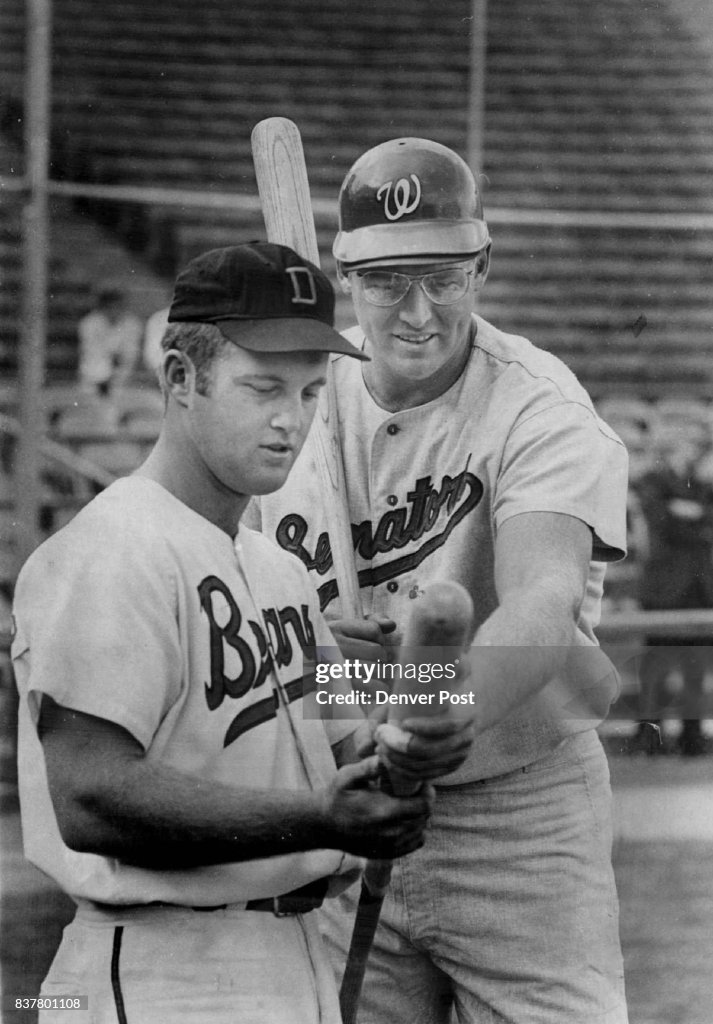
Burroughs had just won the CIF-Southern Section 4A Player of the Year Award, hitting .567 overall (33 for 58, as well as 27 for 46 in Moore League play for a .587 mark), as his team won its league title. Future MLB player Bobby Grich was a teammate. Just the latest in the city’s roll call of players with pro baseball careers.
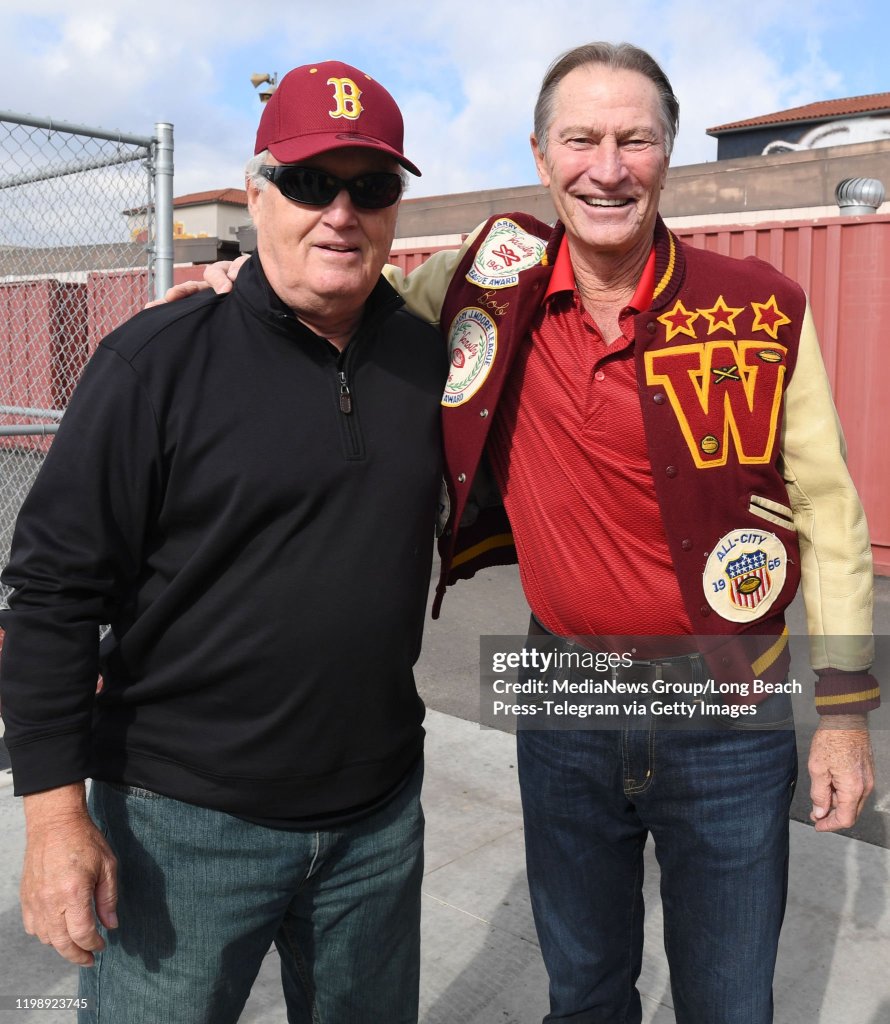
Knee surgery set Burrough’s high school career back as far as him playing football or being on the track team, but baseball was his sweet spot, as a pitcher and hitter.
A scholarship to Arizona State was on the table when Burroughs decided to take a $88,000 signing bonus and became a Senator. Washington’s interest in Burroughs piqued after they gave him a semi-private tryout in a very public place — Anaheim Stadium, when the Senators were in town to face the Angels — and he launched a few batting practice balls out into the parking lot.
Almost a year later, in July of 1970, the 19-year-old made his first big-league appearance, playing right field at the Senators’ Robert F. Kennedy Stadium home, facing Milwaukee’s Al Downing. Burroughs admitted he wasn’t ready for all this, went just 2-for-12 during that 10-day window, and was sent back to the minors for more acclimation.
There were another 59 games of big-league learning in 1971 before Burroughs and his teammates were uprooted when the franchise relocated to Arlington, Texas, in 1972 to become the Texas Rangers. His game-winning two-run homer off Minnesota’s Bert Blyleven in May of that season was one of his few highlights. He not only battled some back issues, but the reality that he was now trying to impress new manager Whitey Herzog. He missed Williams.
“We had our differences,” Burroughs said, “but I have to say that Ted Williams taught me to think at the plate a little more — that hitting isn’t just walking up there and taking three swipes.'”
In first full season in 1973, Burroughs challenged Reggie Jackson for the AL home run lead, slugging 30 to go with 85 RBIs and .279 average.
Before the 1974 season, Dodgers general manager Al Campanis admitted he tried to pull off a trade with Texas to get Burroughs, willing to give up both Claude Osteen and Willie Davis. The Dodgers ended up sending Osteen to Houston for outfielder Jimmy Wynn, and Davis to Montreal for relief ace Mike Marshall.
Burroughs’ second full season otherwise had some real headline-grabbing moments.
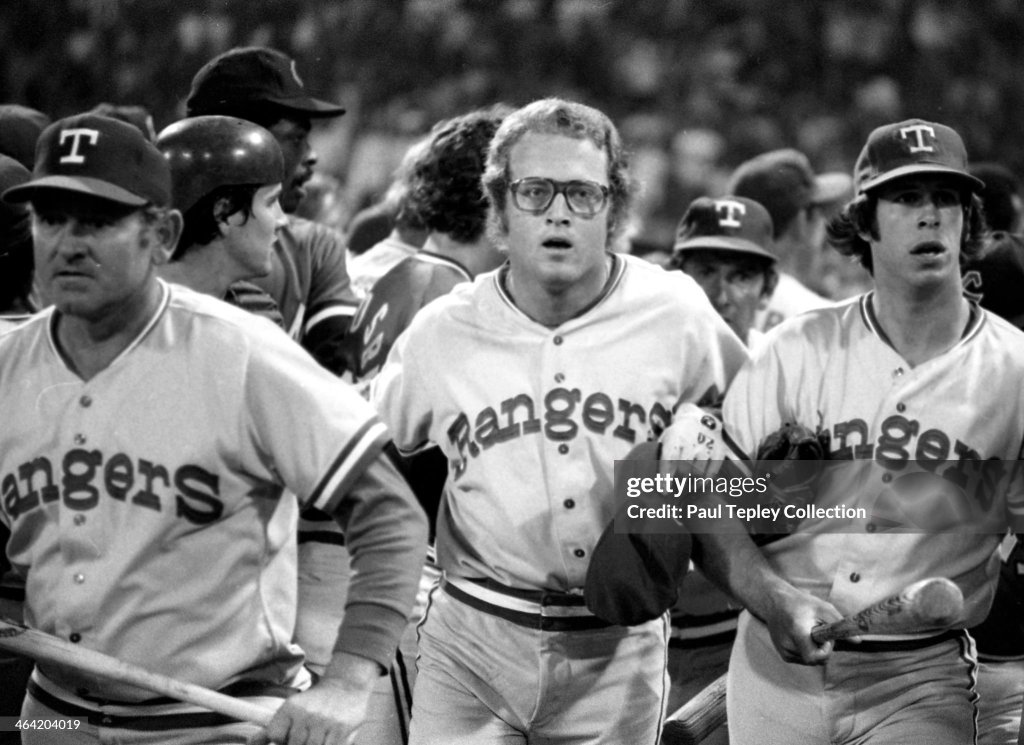
In June, he was a focal point during an unnerving “10-Cent Beer Night” promotion that the Cleveland Indians staged at their home park. As the crowd got unruly, a fan jumped out and tried to take Burroughs’ cap in right field. When Burroughs tried to fend him off, it ignited a free-for-all, and he ended up jamming his left thumb. His batting average had been at a season-high .332 before that series.
By July, he was voted into a starting spot in the American League lineup for the All-Star Game.
“Burroughs has a great future,” Rangers manager Billy Martin said of him at the All Star break.
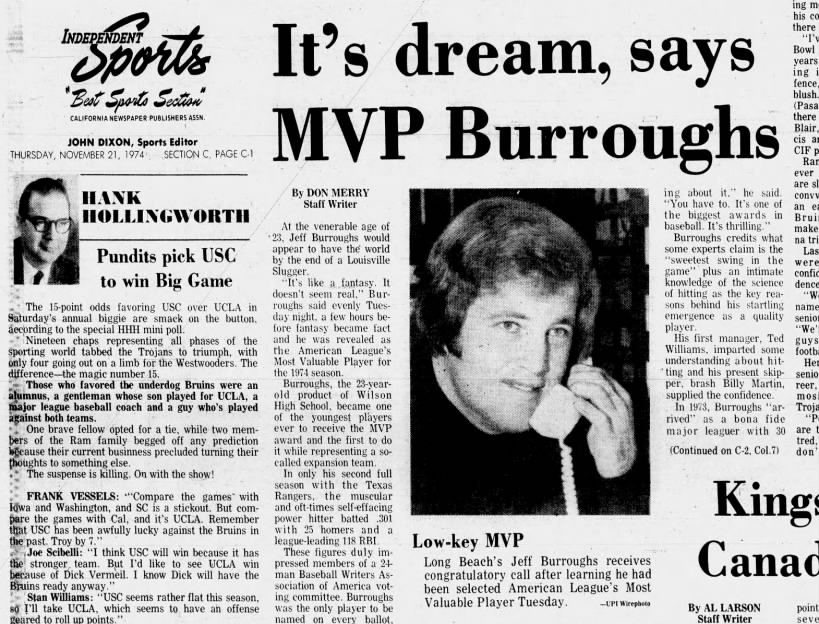
Burroughs’ AL-leading 118 RBIs paired up with 25 homers and a .301 average, and he took all 24 first-place ballots in the AL MVP voting. He was also AL Player of the Year by The Sporting News. In retrospect, his 3.6 WAR wasn’t as glossy as several below him in the balloting who exceeded 7.0, but that stat wasn’t a thing to consider then. The RBIs were a reflection that the Rangers’ second-place finish in the AL West standings gave Burroughs a solid platform.
“He’s got so much potential it’s unreal,” said Rangers shortstop Jim Fregosi of the 23-year-old.
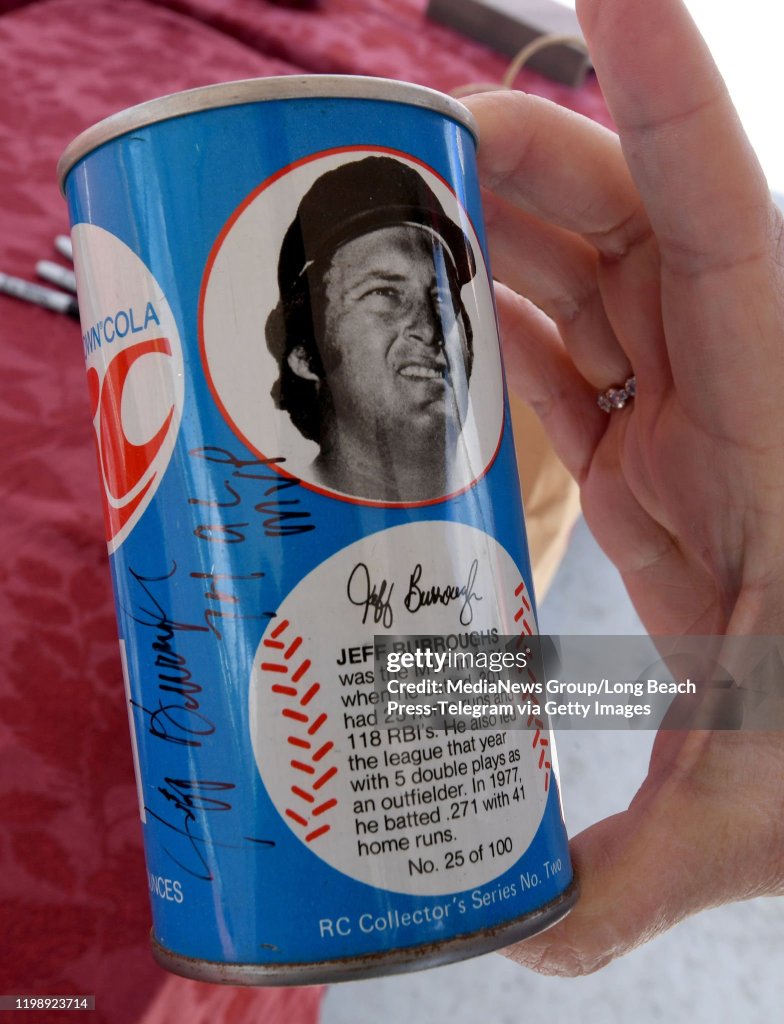
Burroughs’ approach for the 1975 season was to seek more power production. He hit 29 homers to go with 94 RBIs, but his average dropped to .226 with a league-worst 155 strikeouts. The 1976 season saw his homers drop to 18.
After buying a home in Arlington, the 26-year-old was justifiably upset when the Rangers traded him to the Atlanta Braves on December 9 for five players and $250,000. Rumors had been they were trying to send him to the California Angels in exchange for Nolan Ryan, but a Ryan injury held the deal up.
With a new three-year Braves’ extension and a no-trade provision under the watch of owner Ted Turner, Burroughs hit a career-best 41 homers and drove in 114 in his first year in the National League in 1977. He made the 1978 NL All Star team leading the league with a .432 on-base percentage — he was passed by in that lineup with a league-high 114 walks to go with his .301 batting average. His home run totals in ’78, ’79 and ’80 barely passed that high-water mark of 41 from ’77 and he battled more injuries.
His dismal start to the 1980 season under new manager Bobby Cox saw him benched at times in favor of up-and-coming Dale Murphy. Burroughs’s highlight that season was breaking up a not-hit attempt by the Dodgers’ Jerry Reuss with a seventh-inning double in June.
As the 1980 season ended, the best news Burroughs had was the birth of his second son, Sean, on September 12. But the family would be on the move. Jeff was traded to Seattle for 1981 (where he had a three-homer, six-RBI game in August in Minnesota), and had three more seasons in Oakland, reunited with manager Martin.
His final year in Toronto was back with Bobby Cox as a part-time DH for a team that won the AL East in 1985 but lost in seven games to Kansas City for the right to face St. Louis in the World Series. He hit the last six of his 240 career homers and was done at age 34.
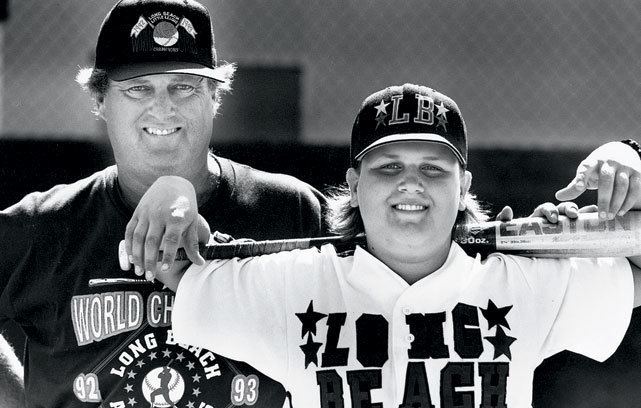
The family’s journey back to Long Beach, to the neighborhood where Jeff grew up, was intentional. Jeff was a local hero, playing a lot of golf, even more ocean fishing, trying to find more purpose in his life.
That seemed to come whenever the local Little League season started back at Sterns Field.
Jeff could impart his knowledge as coach of his son’s teams. Oldest son, Scott, was on the Long Beach Little League 1991 team that advanced out of its region.
The first real test for the team came before nearly 10,000 fans in San Bernardino during the Little League Western Championship tournament. Long Beach trailed Hawaii, 2-1, going into the top of the sixth and final inning, against Hawaii’s top pitcher Lanakila Niles. Long Beach was down to its last strike — Ryan Beaver was up with a 1-2 count.
“The kids were really moaning and groaning at that point,” said manager Larry Lewis. “I kept trying to rally them, saying that as long as we have one out left, one strike left, we still have a chance. But they weren’t listening too well.”
Beaver drove a long fly ball to right field and the Hawaii center fielder appeared to leap and catch it to end the game. But the Long Beach fans 15 rows deep in right center burst out in celebration when they saw the ball pop out and over the fence for a home run.
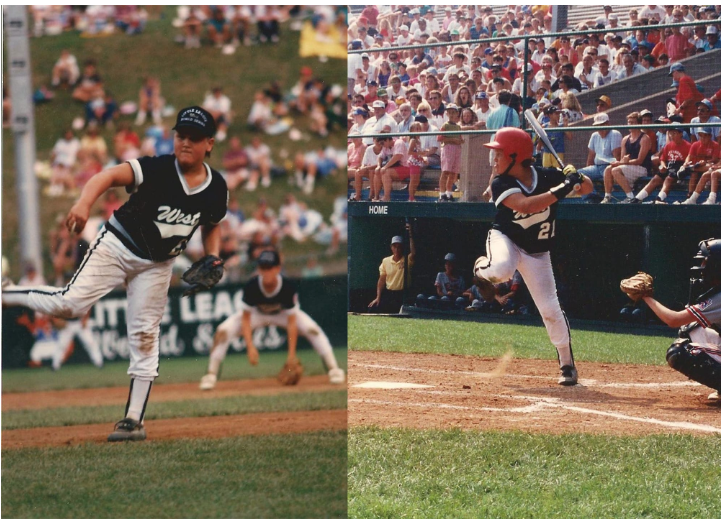
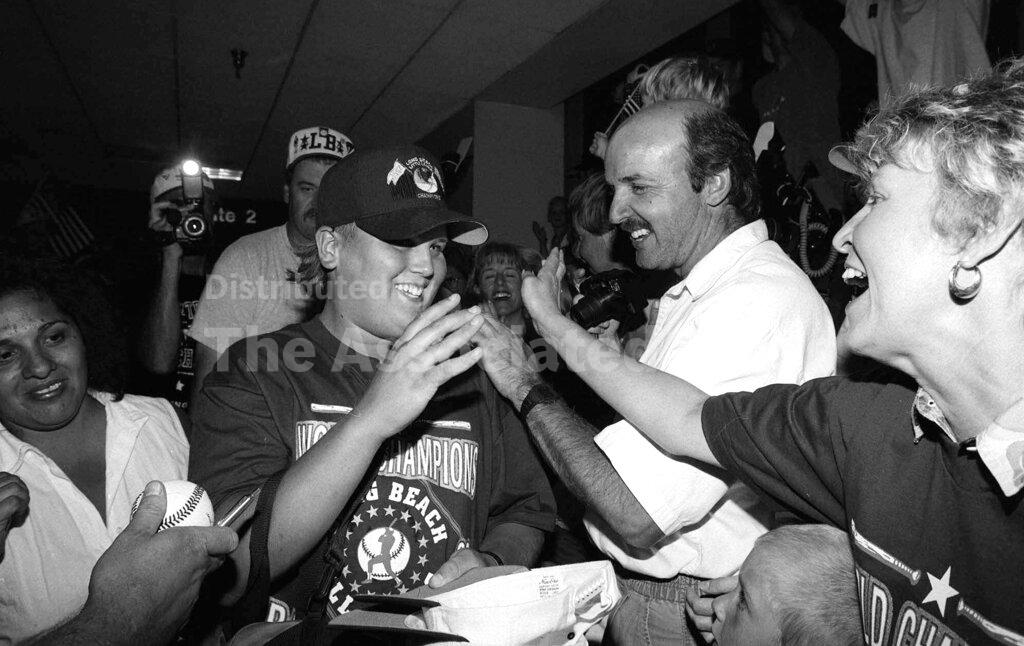
Sean Burroughs was up next with the game tied and started pounding his bat hard on the plate. It was a ritual the 11-year-old said he did during the year when trying to “channel the home-run gods.”
Burroughs smashed a home run to left field for a 3-2 lead. In the bottom of the sixth, Burroughs was back on the mound. With two out, Hawaii loaded the bases. Burroughs enduced a strike out on a 3-2 pitch to give Long Beach the win.
Long Beach got to Williamsport and fought through winning the U.S. bracket — Beaver hit a home run to give his team a 1-0 win in that title game. They then faced Zamboanga City in the Philippines in the overall championship. Sean, who had 16 homers in the tournament, including two grand slams, with a .640 average, plus eight wins on the mound, went 1-for-4 with a run scored as the shortstop and leadoff hitter in that title game. But the Far East won, 15-4.
Or did they? It was discovered a few weeks later by the local media that the team had eight players ineligible players on the roster, over the age limit and not living within the city boundaries. So Long Beach, which had a 12-0 run to reach the tournament, would come away with a spotless 17-0 overall mark after the forfeit was recorded.
The team already had a heroes’ welcome when they returned to Long Beach as the U.S. champs with a parade through the city. The team got a call from Vice President Dan Quayle while they were celebrating at Cirivello’s pizza parlor. .
But they didn’t get the full experience of a World Series title embrace.
“The kids have learned that if you follow the rules and don’t mouth off … don’t complain, you’ll come out on top,” Debbie Burroughs said in an Associated Press story in late September.
“Things are back to normal, we’re busy,” Sean, then at Will Rogers Middle School, also said in the story.
Sandi Lewis, wife of manager Larry, added: “The kids of course just wanted to be kids and they let most of this stuff just roll off them. They weren’t feeding into any of it, they were the same old kids and most of them wanted to get back to surfing and boogey boarding.”

Their resolve was to go back and try to win it all again. The odds of one of the almost 8,000 teams who play in the Little League worldwide claiming one title is far-fetched enough. But two in a row?
“Sean Burroughs was probably the most famous Little League Player ever at the age of 12,” said Larry. “Everyone knew who he was, and we sort of had an advantage going into that 1993 season because many of the kids were afraid of him.”
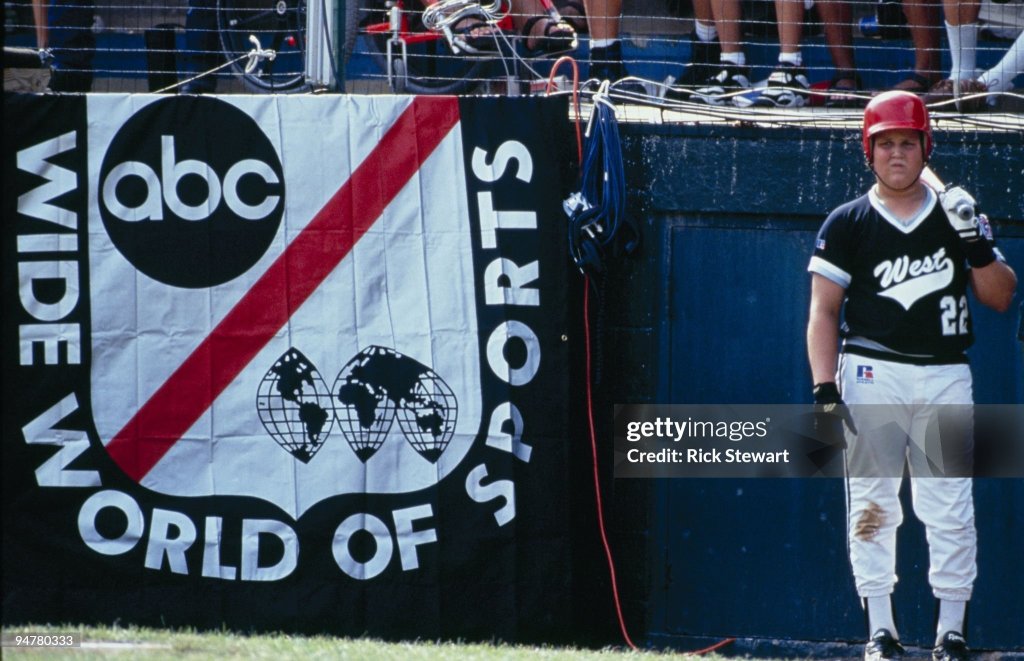
Sean was one of four who bridged the 1992 and ’93 teams, as 11-year-olds going onto 12. There was also twins Chris and Kevin Miller and Alex DeFazio. Ten new players were on the ’93 team, including Larry’s son, Timmy.
Pitching three consecutive no-hitters going back to the West Regional final, Burroughs capped off with the last in the 11-0 U.S. championship game. He was the sixth player to throw two shutouts in a series and the second with two no-hitters, getting 16 strike outs among the 18 outs over six innings. He was the first American-born player to get that done as well. Sean put together a 13-0 record on the mound during the entire playoff run, hit 17 homers and batted nearly .700.
Long Beach’s 3-2 triumph over the Latin America team from Chiriqui, Panama happened when Jeremy Hess, nicknamed “Winnie the Pooh” in local media coverage because of his small statue, came up with the bases loaded and two out in the sixth inning and delivered a game-winning single off the wall in right field. Sean, ineligible to pitch after winning the U.S. title game, was 0-for-1 with two walks, a run scored, and two errors at shortstop.
Long Beach won 20 games and lost just once to get to that title. Their only set back was against Thousand Oaks Little League in a regional double-elimination Southern California Regional, a 16-1 drubbing. Long Beach came back back a couple of days later to eliminate Thousand Oaks.
“You know, I always thought lightning couldn’t strike twice in the same place,” said Lewis. “But I guess that is a falsity, because we sure did it.”
Over the two summers, the Long Beach All-Teams that Sean Burroughs played on, and Jeff Burroughs coached on, went 37-1.
Jeff, who in 1990 wrote a Little League coach instructional guide based on his experiences, aired it out in full “Bad News Bears,” non-PC form when he summarized the experience in “The Little Team that Could: The Incredible Often Wacky Story of the Two-Time Little League Word Champs” in 1994 with local Long Beach scribe Tom Hennessy. It serves as a time capsule for that run.
The author bio on the back flap lists Jeff as the one telling a “once-in-a-lifetime adventure not only as coach but as the father of the team’s star pitcher, Sean, perhaps the most ballyooed 12-year-old ballplayer of all time.”
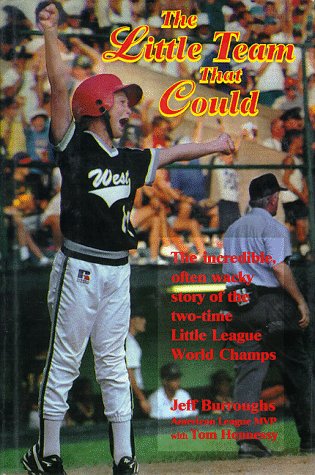
“As some of you might guess, coaching Little League is a thing you do when life gets dull and you decide to spice it up by risking your job, marriage, car, lower back, community standing, credit rating, financial security and sanity,” Jeff wrote on page 5. “Nothing in my 1,689 major-league games prepared me for the greater challenges of the smaller league.”
Like, a kid, Charlie Hayes, who Jeff stumbled upon at 3 a.m. when going to the bathroom at the Williamsport dorm.
The kid was sleeping in a trash can.
“You woke me up,” he admitted to the coach.
“Charlie, what in the world are you doing in the trash can?” Jeff asked.
“It’s comfortable,” he said.
“Realizing there was no future in this conversation, I turned out the light and went back to bed,” Burroughs wrote.
Jeff’s chapter that focused on Sean included how his wife, Debbie, had been cheering from the stands during his first 8-0 no-hitter: “C’mon, Burly!” It was nickname Sean “earned by virtue of his bulk,” Jeff admitted about his son, all 5-foot-4 and 125 pounds.
At one point, Long Beach Press-Telegram writer Dave Cunningham asked Jeff if he could get a hit off Sean.
“I wouldn’t face Sean,” said Jeff, age 42 at the time. “I’d beg off. It would be too embarrassing if I couldn’t hit off him.”
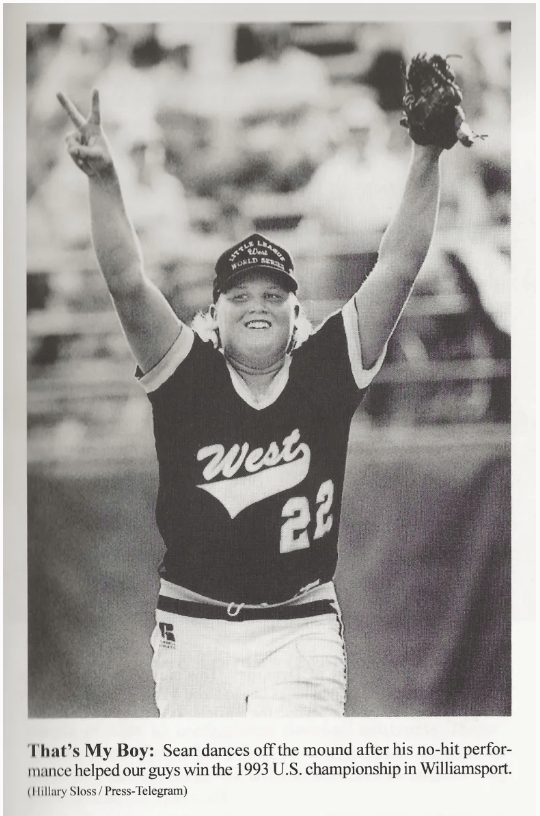
Jeff shed more light on Sean’s makeup, calling him “a rambunctious guy and a rattle-thrower almost from the day he showed up, never a discipline problem but sort of ‘normal wild,’ if that makes sense. The lad was always getting into things, always teasing his older brother (by 13 months) … By the time he was 3, he was throwing and catching hard.”
Jeff said Debbie had a better explanation for Sean’s talents: “If you wanted to paint a picture or sing a song, you couldn’t do either of those things because those aren’t the gifts God gave you. God gave you the ability to play baseball.”
Jeff sensed that Sean was sensitive but also mature, humble and self-aware.
“My own major-league career means nothing to him,” Jeff said. “He treats me like any kids treats his dad — essentially with total disgust. Maybe we’re lucky because I have been in the big leagues. Other parents may try to live vicariously through the baseball success of their kids. But I don’t have to … I think I’m better known now as Sean Burroughs’ father than he is known for being Jeff Burroughs’ son.”
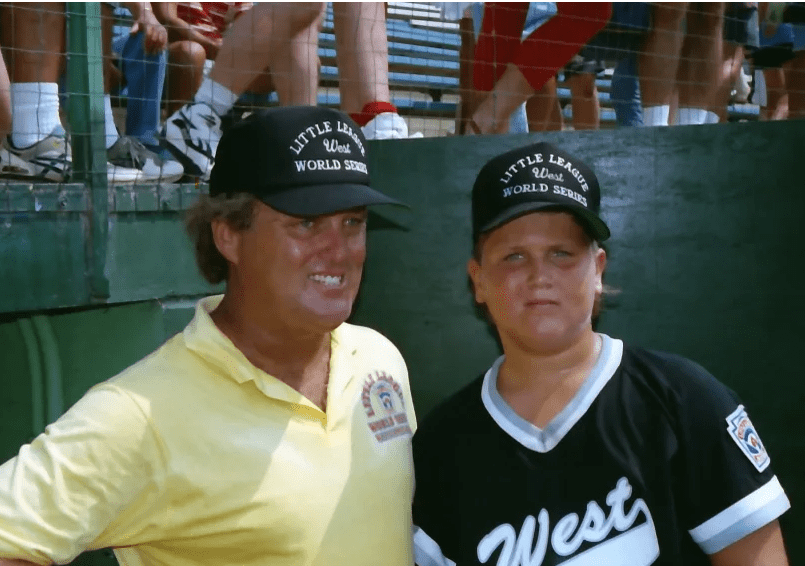
Even so, as Jeff added, when Sean made him livid by after getting caught setting off a fire alarm in the dorms late at night after the World Series win.
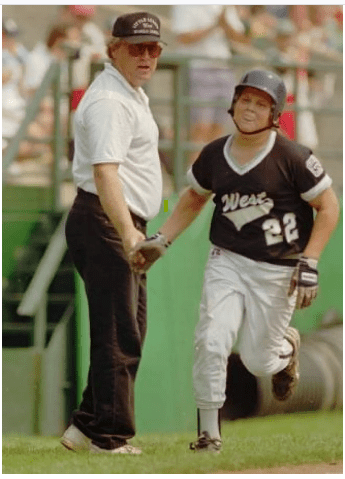
(Carol Francavilla / Associated Press)
Jeff was content being the assistant coach to manager Larry Lewis. The two met years earlier when they both enrolled their children at Bayshore Preschool, and they had become fast friends.
Jeff didn’t need the hassle of trying to appease the parents; Larry, a lawyer, could handle that.
Jeff said the only real difference of opinion he had with Larry trying to decide when to use Sean down the stretch. Jeff thought it was best to use him in the U.S. title game rather than trying to save him for a potential World Series game two days later. Larry wanted to save Sean for a championship and use Brady Werner in the U.S. title game.
“I thought if Sean did not pitch and we lost, I would never live it down,” Jeff wrote. “Finally as we had done hundreds of times before we reached an agreeable decision.”
Sean’s no-hitter was saved because a scoring error — against him. At one point, a ground ball was hit back to him, but it glanced off his glove and went to second baseman Chris Miller. He threw late to first. It was ruled an error on Sean — and he owned it.
He also owned the moment. Or the two years of moments.
“Oh yeah, definitely a fun time, hanging out with my buddies, just pure baseball,” Sean would recall in 2013, admitting he carried around his favorite troll doll for good luck, which the mothers on the team took as a team mascot.
“Back when you didn’t care about the stats, you went to the beach to bake in the sun in the morning, came home for lunch, then hit the field to see if we could score more runs than the other team. And we usually did.”
Fame in the early 1990s, a pre-social media age when pressures weren’t often put on kids until TV came into play, is something Sean could process well later.
“I think the most important thing to remember about Little League is not to take everything too seriously,” he said. “Sometimes the kids can get too flashy when they see themselves on TV. That’s part of the fun, I guess, but at the same time, you can’t get away from the most integral part of the game – winning as a team. If you go 0-for-4 and your team wins, that’s what matters.”
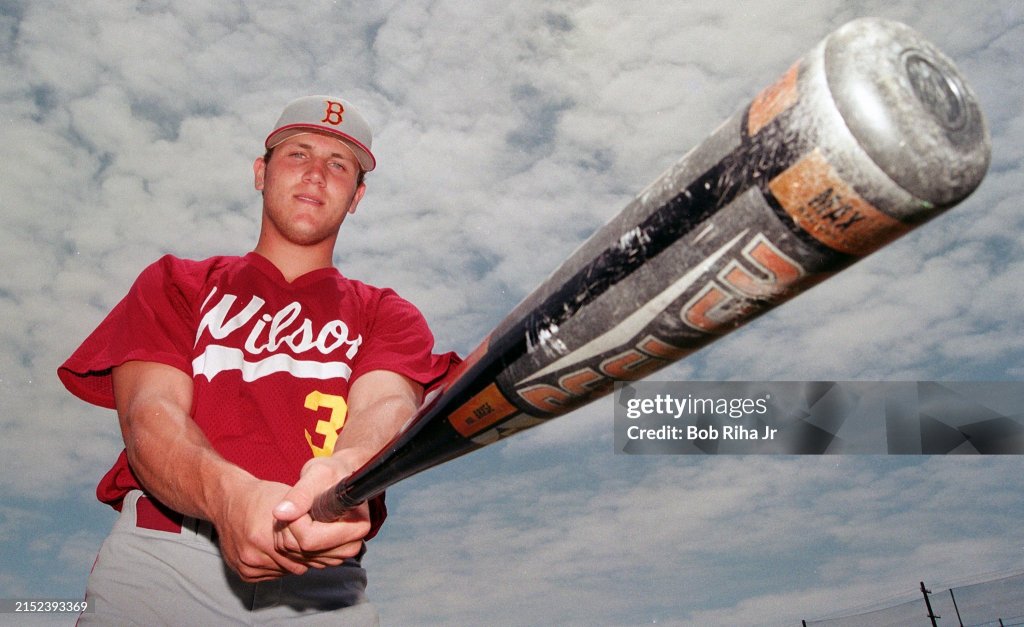
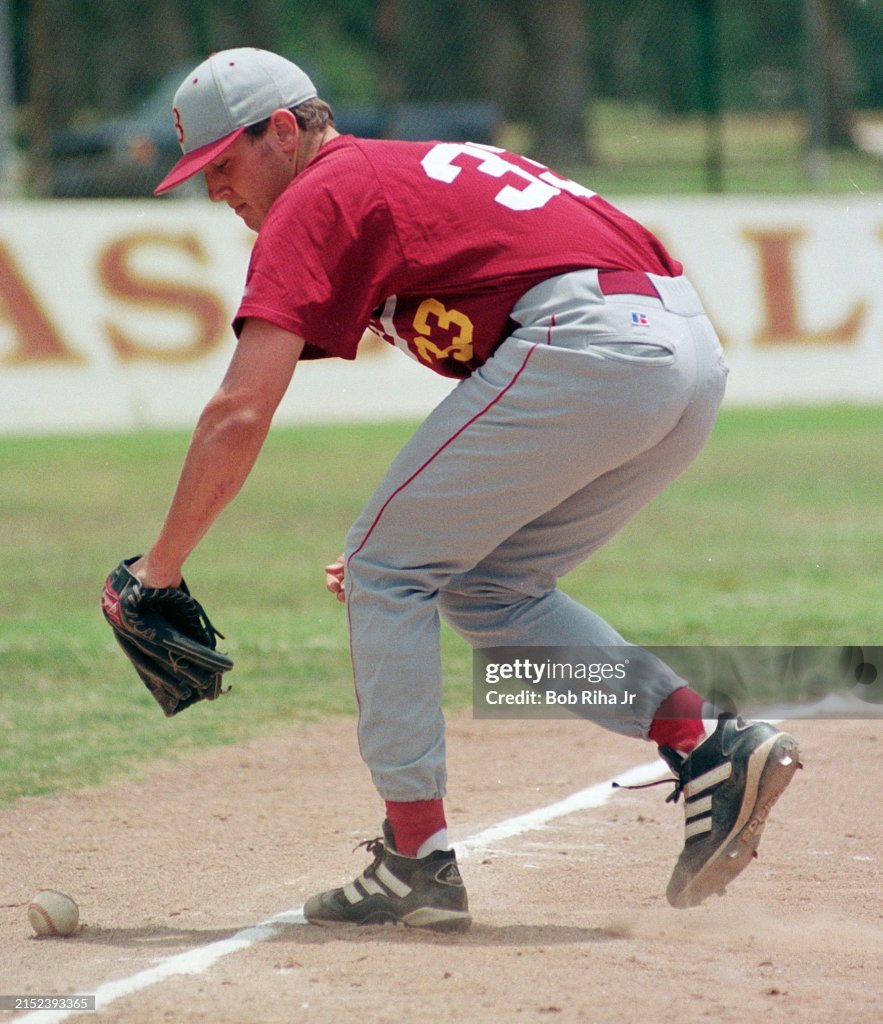
Sean Burroughs’ growing up in baseball led to him following his Little League chapter with a stellar career at Long Beach Wilson High, capped off in a senior year hitting .528 with seven home runs and 38 RBIs in 29 games.
He had a scholarship offer to USC when he was taken with ninth overall pick in the 1998 MLB draft by the San Diego Padres, a favorite of general manager Kevin Towers. Burroughs signed a $2.1 million bonus and some were already calling him the franchise’s “best hitting prospect since Tony Gwynn,” another Long Beach baseball legend.
Two summers later, Sean emerged as the MVP of the All Star Future’s Game in Atlanta. The U.S. roster included C.C. Sabathia, Mark Buerhle, Barry Zito, Josh Hamilton and Vernon Wells. Burroughs went 3-for-4 at the plate and cut down a runner at home after a fine defensive play at third base to keep the game tied in the top of the eighth inning.
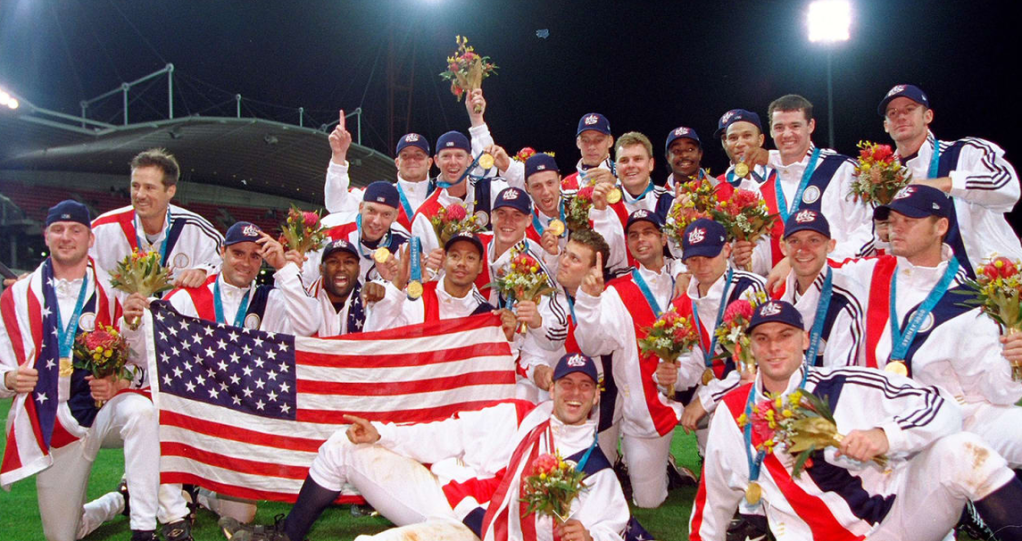
Then, that September, wearing wearing No. 10 as part of Team USA, he was on the gold medal-winning 2000 Sydney Olympics baseball team with manager Tommy Lasorda. Shutting out Cuba in the final, the U.S. avenged its only loss in the tournament and went 8-1.
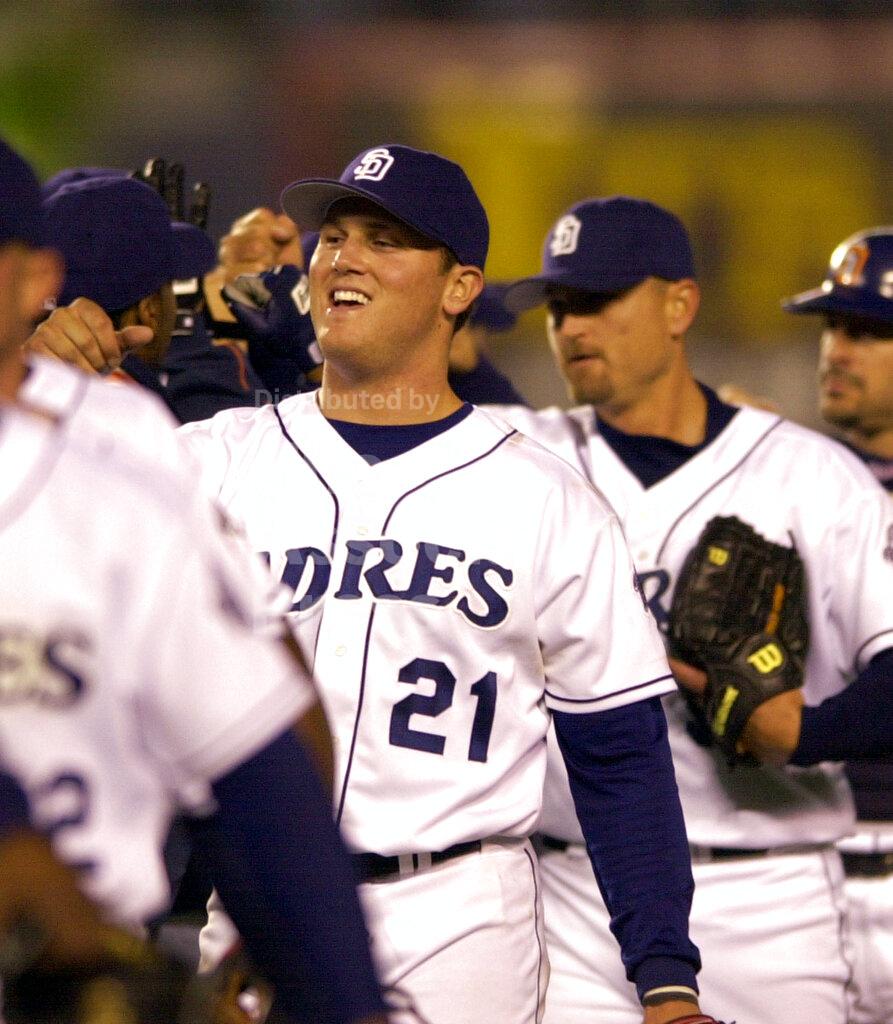
Burroughs had earned the Padres’ organizational Player of the Year honor when he hit .359 with eight homers and 80 RBI for Fort Wayne of the Class A Midwest League and had a 23-game hitting streak before being promoted to Rancho Cucamonga of the Class A California League, where he went 10-for-23 in six games. He was hitting .291 with two homers and 42 RBI for Double-A Mobile prior to the Olympics.
From 2000 to 2002, Burroughs was in the top 10 of Baseball America’s Top 100 prospects.
Burrough’s first three MLB seasons for the Padres, between the ages of 21 and 23, saw him hit a steady .271, .286 and .298. While not showing much power, he was reliable in driving in runs and with his defense. He had a career-best seven homers in 2003, driving in 58 runs as the Padres’ leadoff hitter.
There was even a moment that came up in 2005 when he got back on the mound. On Sept. 20, in what would be a 20-1 loss the Padres suffered against the Rockies at Coors Field, Burroughs came in from third base to pitch, giving up four hits and the final three runs.
That Little League magic was so long ago.
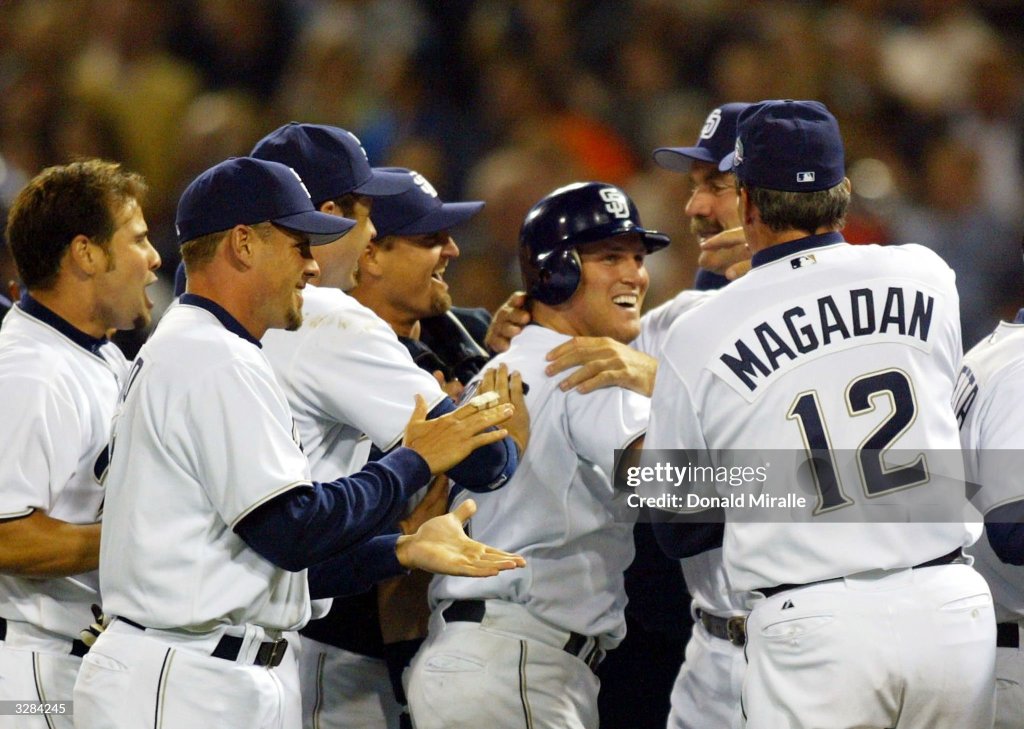
Then, injuries happened.
A slide into second base in a 2005 game between the Padres and Dodgers at Dodger Stadium didn’t feel right. It turned out Burroughs broke a blood capsule in the back of his leg.
Aggressive treatment was necessary to treat the circulation problem. He didn’t react well to it, his numbers slipped.
The Padres traded him to Tampa Bay in 2006. He signed as a non-roster invitee with the Seattle Mariners in December of 2006 before being released during the 2007 minor league season. He had a .312 lifetime batting average in the minor leagues, but nothing much to show for it.
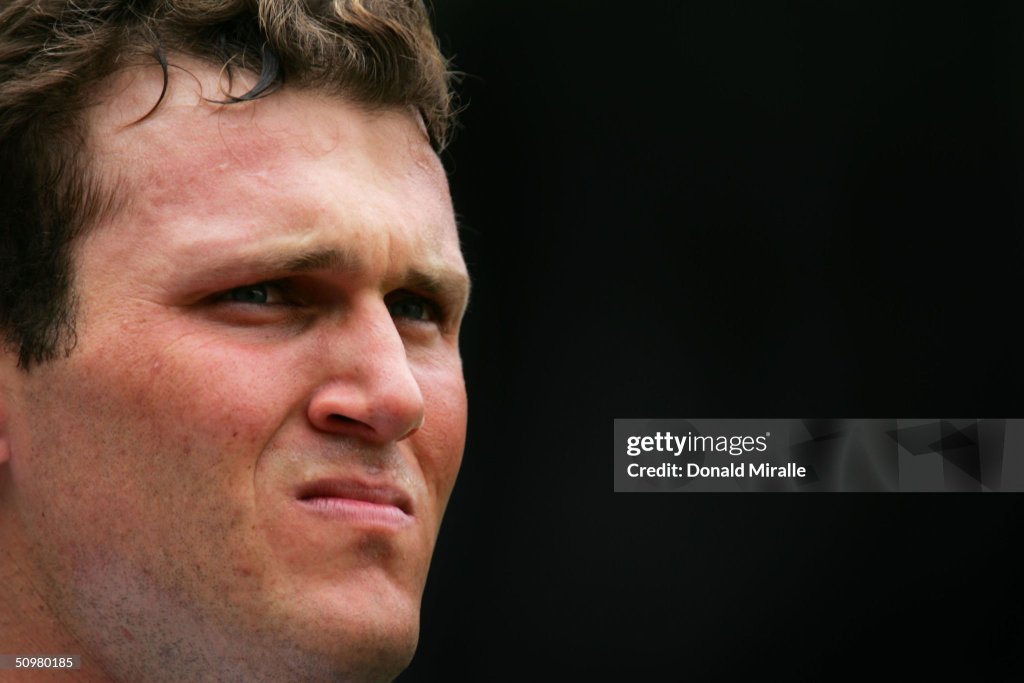
A broken Burroughs didn’t know where to turn. He spent the next three seasons detached from the game, admitting he couldn’t focus on priorities.
Burroughs described his experience as what Nicolas Cage’s character had in “Leaving Las Vegas” – blowing through his earnings, admitting to scrounging for food, existing on Slurpees and In-N-Out burgers, trying all kinds of drugs, bloating to more than 260 pounds and not recognizing himself in the mirror any longer.
In a 2011 interview with ESPN’s Jim Caple, Burroughs said he struggled with alcohol and drug abuse during his final seasons.
“I was hanging out with some bad people and had done some bad things,” Burroughs said. ““That was more important my last couple of years playing ball, and the last few years. I was kind of like a garbage can. Whatever I had or needed, I would find and take it. I wasn’t an out-of-town type of guy. Whatever I had or needed, I would find and take it. I would just try and fill myself with as much substances as I could, legally or illegally.”
In 2013, Burroughs told me: “I think I was just mentally and physically exhausted and I ventured out, not sure why. It’s just part of growing up, worrying about producing, living up to expectations.
“You’re in your 20s, you think you’re indestructible and nothing bad will happen to you – and that’s the farthest thing from the truth, whether you’re an athlete, a politician, a doctor or a lawyer.
“I learned the hard way. I still loved the game. I just had to get my head straight.”
After his family helped him pull his life together, Burroughs gave baseball another shot. He started working out with Chase Utley, a former Long Beach Little League pal, and got back in shape.
Arizona signed him — the general manager was Kevin Towers, who drafted him 12 years earlier. Burroughs hit .273 in 78 games and helped the Diamondbacks toward a playoff spot in 2011. It was the last time Burroughs would get close to another World Series — he went 1-for-3 in three games during a five-game series loss to Milwaukee.
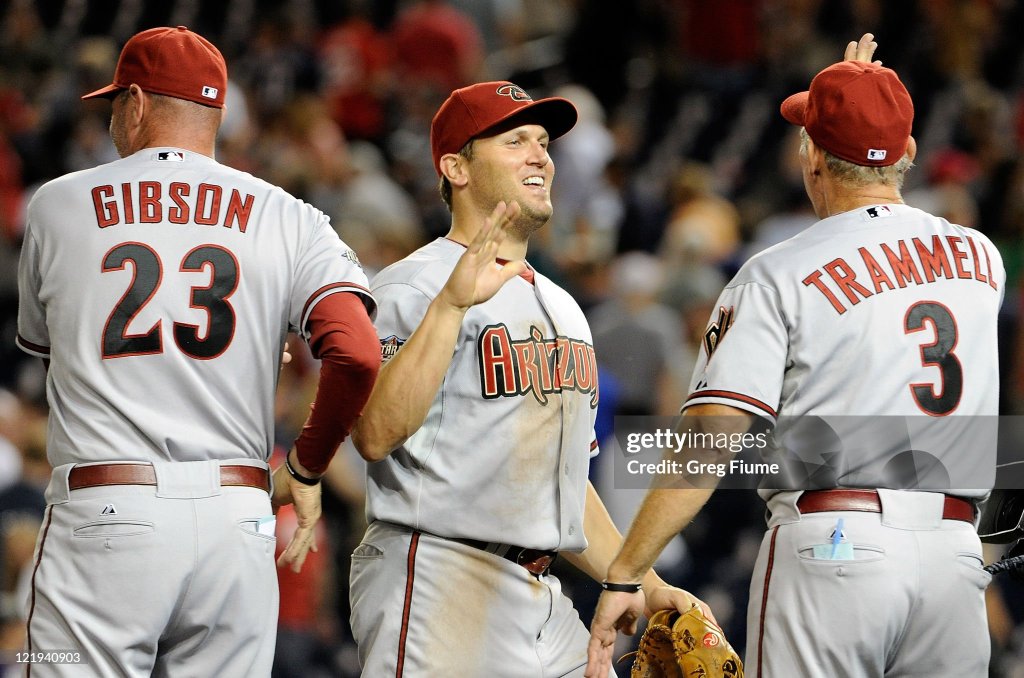
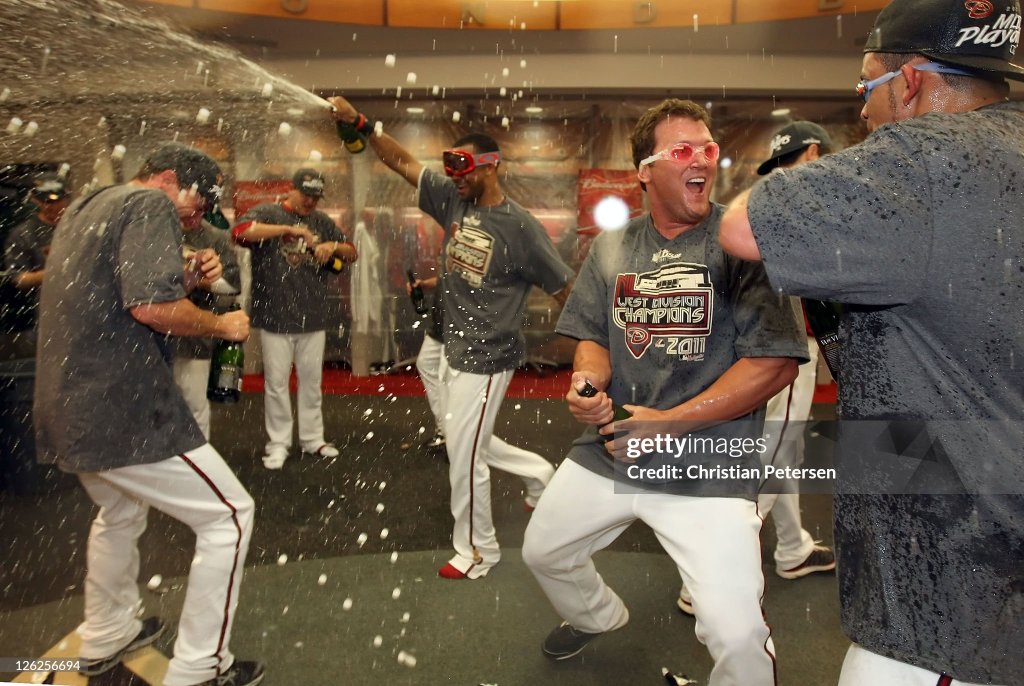
After his release, Burroughs thought he had a roster spot in Minnesota for 2012. Twins minor league coach Gene Glynn worked with Burroughs in the Venezuelan Winter League that off-season. Burroughs made the team’s Opening Day roster but was designated for assignment after appearing in just 10 games, going just 2-for-17 (.118). He finished out the year in Triple-A Rochester, batting .272 with 18 RBI across 67 games.
In April of 2013, the Dodgers gave him some hope.
After a month in extended spring training, Burroughs wasn’t given any guarantees when he was dispatched to the team’s Double-A Chattanooga Lookouts. One of his teammates was Yasiel Puig, and Burroughs could speak Spanish with him — his mother, Debbie, was a Spanish teacher.
The team anchored the bottom of the Southern League’s North division, eliminated long ago from the playoffs, but Burroughs kept looking for an opening.
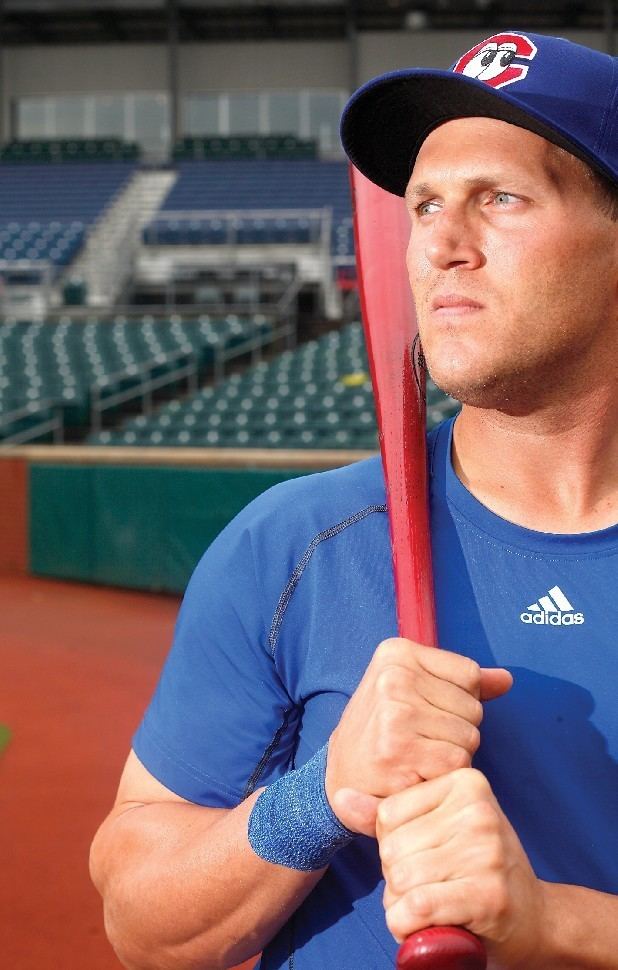
Burroughs’ Twitter account at the time with the Dodgers’ organization said he was “living the dream by hotel rooms and bus rides.”
That hardly made sense. But it was a sense of humor he used to keep him sane. There was always a shot he could be called up to the Dodgers in September as a left-handed hitting pinch hitter/infielder.
“The big leagues were all about charter flights and filet mignon, and now it’s 12-hour bus rides leaving a 1 a.m. after a game getting in at noon the next day, but I feel lucky to be playing with an organization like the Dodgers,” Burroughs said then. “It just comes down to still loving baseball, the camaraderie with the teammates, trying new things, making adjustments. How can that not still be a thrill?”
DeJon Watson, the Dodgers’ assistant general manager for player development, called Burroughs a “good citizen, works his tail off without complaining, great with the kids on that team, and a good fit in Chattanooga. His body has been breaking down a bit on the back end of the season. He’s still giving us everything he has.”
His parents knew the surroundings were good for him.
“As a mom, you always concentrate on the positives, and see the negatives as a learning experience,” Debbie Burroughs said at the time. “I think Sean’s very happy now. So many people still look up to him. He can talk to kids who’ve had the same problems he’s been though. He’s healthy. The Dodgers may cultivate him as a coach.”
“I love the camaraderie in the clubhouse,” Sean admitted, “but I do hang with the coaches more.”
Hampered by more hamstring and shoulder injuries, Burroughs hit just .219 without a homer in 57 games. He would never add to his MLB lifetime stats — 528 games, a .278 average with 12 homers and 143 RBIs.
“I’ve seen both sides of the spectrum, for sure,” he admitted. “I think a lot of the people here who maybe didn’t know me well at first have got closer and made this a positive experience. This is a tough game as it is. You can be going great sometimes and feel you’ve got it all together, and two days later, it feels like the first day of spring training.
“It’s about finding a positive outlook when things aren’t going well. Maybe I tried too many different approaches at the plate this year, and nothing really clicked. The last couple of weeks, I went back to my old self and I seemed to have been feeling better, stronger.”
When the Dodgers let him go, Burroughs played for the Bridgeport Bluefish of the Atlantic League from 2014 through 2017. His lowest batting average during those four seasons was .321 in 2015. Burroughs decided to walk away before the 2018 season — the mayor of the Connecticut city decided to convert the city’s ballpark into an amphitheater, forcing the Bluefish to find a new home.
It was time for Burroughs to go home. A place where his dad, Jeff, was now coaching 8-year-old Little Leaguers himself back at Stearns Park.
He had already talked about a time when he’d be out of the game, get married and start a family. He wanted to get an EMT license, which happened in 2018 when he began working as a security supervisor for Allied Universal.
“I think the most important thing to remember about Little League is not to take everything too seriously,” Burroughs said.
“Sometimes the kids can get too flashy when they see themselves on TV. That’s part of the fun, I guess, but at the same time, you can’t get away from the most integral part of the game – winning as a team. If you go 0-for-4 and your team wins, that’s what matters.
“That’s not only hard to instill into an 11- or 12-year-old – you’re so young, you don’t even know what’s going in your life, let alone baseball. But it’s also harder to understand as you get older. When you’re at this level of the minor leagues, you’re so focused on moving up, individual performance.
“I can look back to when I was 21 and in the big leagues, focused on holding my own, wanting to make people feel like they made the right decision about you.
“Sure, that can all build up. The stress of the world can take you down. You just have to figure out how to build yourself back up. I learned that it’s not how far you fall, it’s how you get back up.”
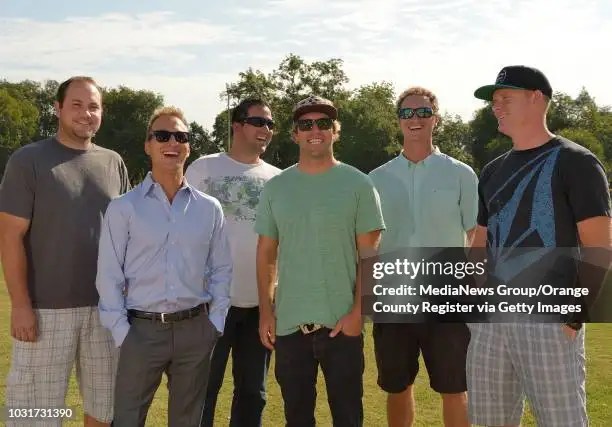
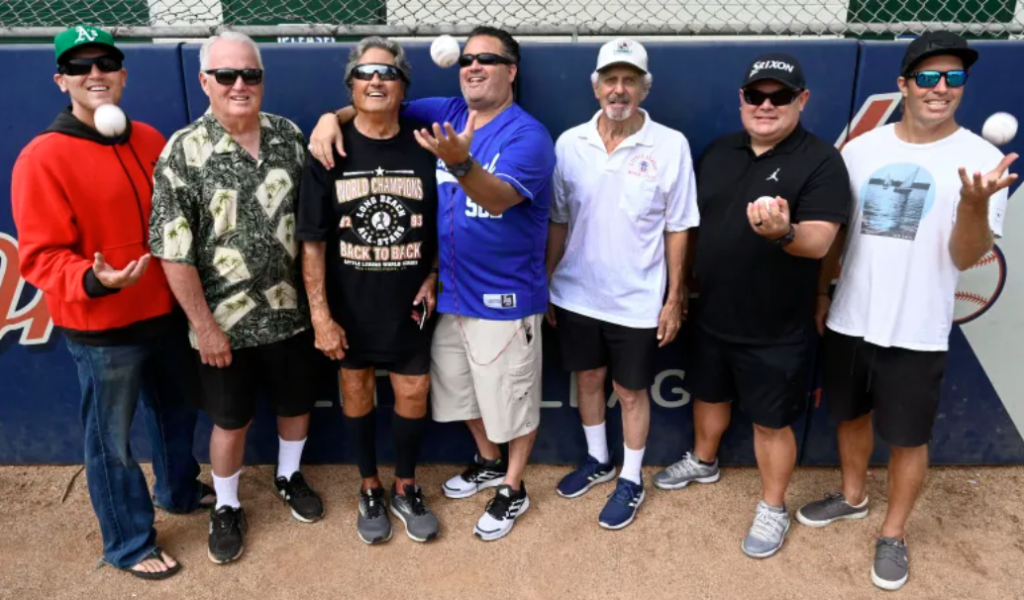
Sean Burroughs didn’t get back up when Long Beach Fire Department EMT workers tried to revive him in the parking lot of Stearns Champions Park in 2024 — the city had added “Champions” to the official name after the Little League title run.
When Burroughs was pronounced dead at the scene, Long Beach paused.
“It was very shocking,” Wittman said. “It’s a real sense of family at Long Beach Little League. So when we lose one of our own, it hurts.”
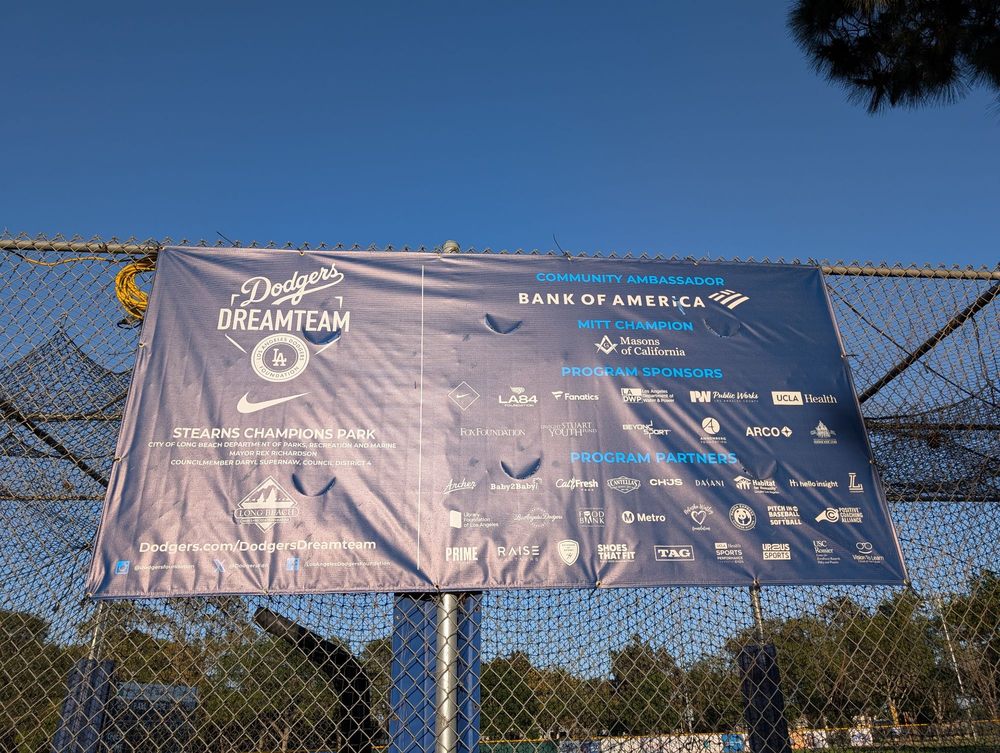
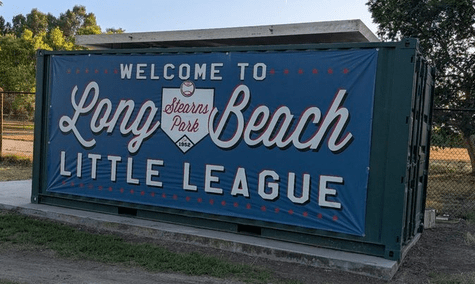
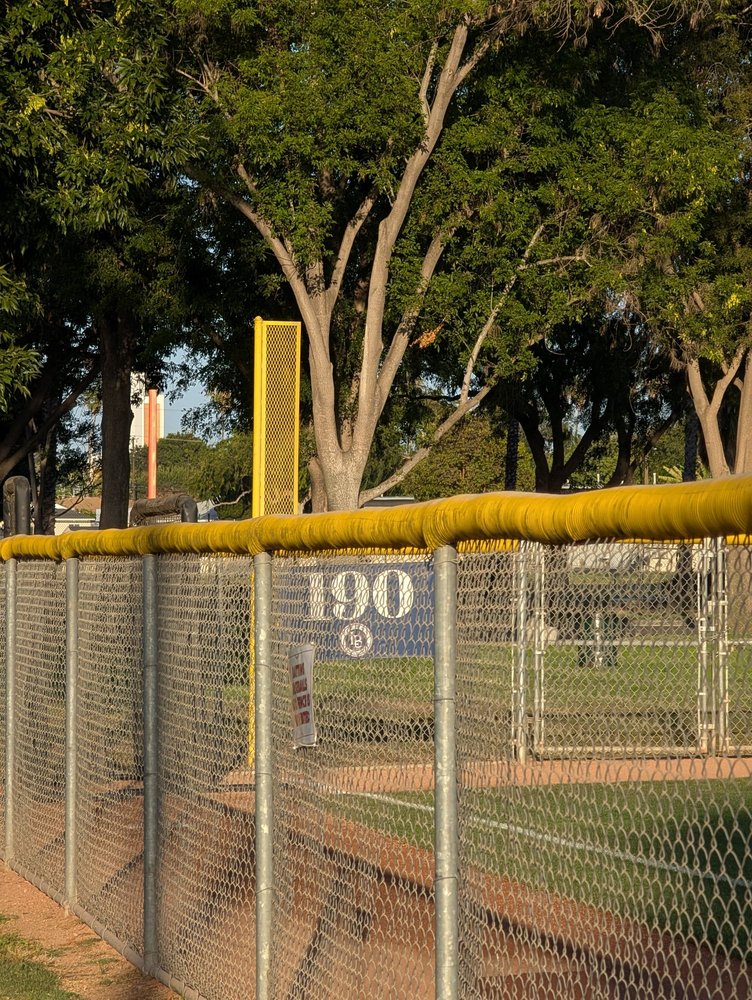
In 2023, on the 30th anniversary of the Long Beach Little League’s triumph, it would be Burroughs’ opportunity to relished in the moment with his friends.
The Long Beach Press Telegram’s Rich Archibold caught up with the team and pointed out how, back in ’93, the historic Long Beach Naval Station and Naval Shipyard were about to close, following the shutting down of the Naval Hospital. McDonnell Douglas was also cutting aviation jobs by the thousands.
Much of the pride in the city had evaporated. Until the Little League team gave them something to cheer about.
“After that game against Panama (to win it all in 1993), I told the players that they would never, ever forget that game,” Jeff Burroughs told Archibald near the pitching mound of Al Huntley Field.
“He is right,” said Sean.
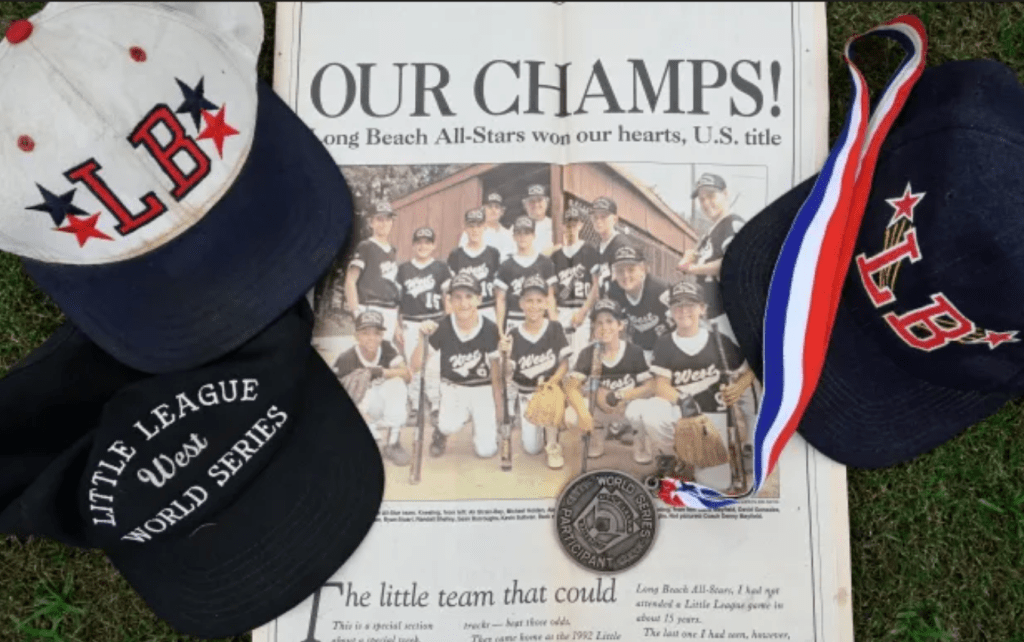
Dane Mayfield, who played on the 1992 team, said he remembered most the parade down Pine Avenue when that team returned home. A longshoreman at the Port of Long Beach, Mayfield said that time was unforgettable.
“People still talk to me about it,” he said.
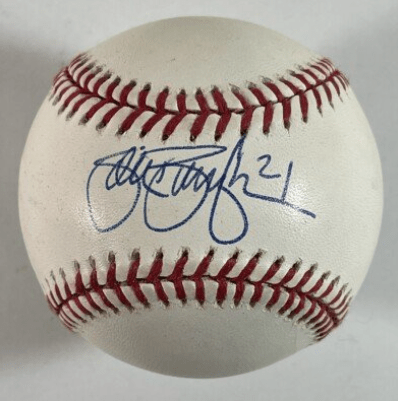
They still talk about Sean Burroughs as well. And his father, Jeff.
Jeff poignantly ended his “The Little Team That Could” chapter about Sean with this:
“Sean came off the mound after one of his no-hitters at Williamsport and walked right into my arms. I’ll carry that memory forever, but you will not find that moment recorded on the score sheets. They haven’t yet devised a scorekeeping symbol that means ‘one great kid hugging one dad with a lump in his throat’.”
SoCal and Little League history
In a 2025 piece by USA Today marking the “most iconic Little League World Series moments” since the championships started in 1947, Long Beach’s back-to-back titles came in at No. 1.
At No. 3 was the 2023 El Segundo Little League championship run led by Louis Lappe:
“What’s better than leading the LLWS tournament in both home runs and RBIs? How about winning the tournament with a walk-off home run? Lappe did absolutely everything for his California squad during the tournament, especially in the role of hero. It couldn’t have been more dramatic. California was leading Curacao in the championship game, 5-1 after four innings. In the fifth, Curacao hit a grand slam to tie the game. Lo and behold, Lappe led off the sixth inning. Fans leaned forward in their seats. Everyone was dead quiet when the announcer uttered a jinx for the ages, noting that Curacao had not surrendered a home run for the entirety of the Little League World Series. On cue, Lappe sent everyone home with a moonshot to left field.”
Lappe, already 6-foot-1 and 153 pounds at 12 years old, was not just head-and-shoulders above most of his teammates, but he could make eye contact with the team’s 53-year-old volunteer manager, Danny Boehle. Lappe’s victory lap was punctuated by launching himself into the air and landing on home plate.
“I was just looking for a good pitch,” Lappe told ABC after his Series-leading fifth home run over the team’s seven games. “My mentality was just get the next guy up and if we kept doing that, we would have won either way, but I’ll take the homer. When that pitch came, even before I hit it, I was like, ‘Oh!’ I was so excited and happy. When I got around to home plate, I made sure to touch it.”
Lappe’s teammates had already nicknamed him “The Natural.” Just 24 hours earlier, in the U.S. title game, Lappe hit a three-run homer in the fifth inning and struck out 10 batters in 5 1/3 innings on the mound for a 6-1 triumph against Needville, Texas. It was the fourth day in a row El Segundo won an elimination game — the same Needville sent it into the consolation bracket earlier in the week.
Lappe nearly didn’t show up for his final year of Little League eligibility. He played for a few years before, but sat out the season at age 11, deciding instead to focus on soccer, basketball and another travel baseball team. Lappe eventually asked Boehle if he would be OK to rejoin the program. Boehle said he was fully on board – enough to want to coach the team himself.
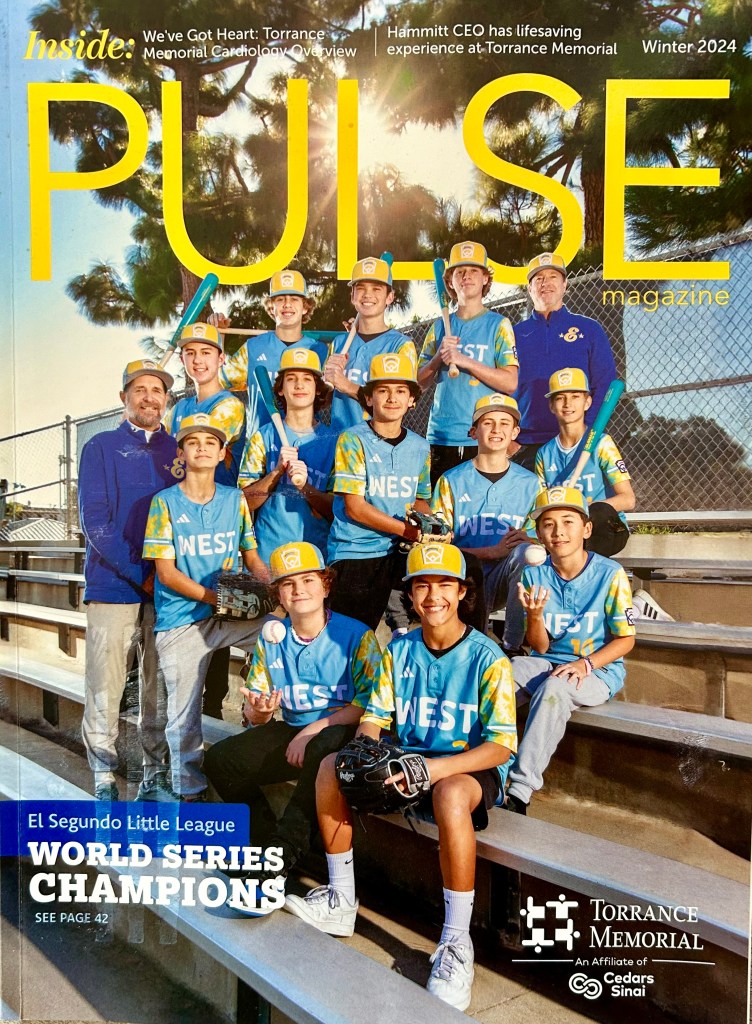
El Segundo won 20 out of 22 games in five local, state and regional tournaments in the summer of ’23. Its only other loss, aside from the first-round in Williamsport, was to the all-star team from Sherman Oaks, 4-3, in the opening game of the championship series in what would decide the Southern California State Tournament. El Segundo won the rematch, 3-2, later that day.
Of Lappe’s 10 hits in El Segundo’s seven games of the World Series, five were home runs. He also had 10 RBIs and scored eight runs. Teammate Brody Brooks, 3-for-3 with a homer in the U.S. title game, had 13 hits, 13 runs scored and five RBIs. In the title game, Brooks, the last of four El Segundo pitchers, was credited with the victory, pitching a hitless sixth inning, striking out two. The rest of the squad: Lennon Salazar, Finley Green, Lucas Keldorf, Colby Lee, Max Baker, Declan McRoberts, Ollie Parks, Crew O’Connor and Jaxon Kalish. All with the cool baseball names, right?
At George Brett Field, a group watched the Sunday title game on a large-screen TV some 2,600 miles away. Victory celebration plans for “Gundo” quickly followed.
The El Segundo players and coaches were not only celebrated with a city-wide parade, but visits to Dodger Stadium and a USC football game were part of it, while the players were about to return to school and perhaps some normalcy.
El Segundo is a Spanish word that translates to “The Second” in English. It is a reference to the second Chevron oil refinery, which helped create the town decades earlier. As Normar Garciaparra said when the team joined the Dodgers’ SportsNet LA pregame show: “It’s not El Segundo any more. It’s El Primero. They’re not second to anyone. Time to change the name.”
By February of 2026, Lappe, who grew to 6-foot-2 as a 15-year-old freshman third baseman, started his high school career at Harvard-Westlake School in Studio City. Boehle and four of Lappe’s El Segundo Little League teammates gravitated to rival Loyola High in L.A.

Since El Segundo Little League launched in 1954, no team from that baseball-enriched town had ever gone so deep in a tournament. There are plenty of high school titles to boast about at El Segundo High, especially when John Stephenson was the coach and future big-league careers were shaped there, starting with four Brett brothers.
Huntington Beach (2011, a 2-1 win over Japan) and Granada Hills (1963, a 2-1 win over Stratford, Conn.) are the other two Southern California teams who have won Little League titles. Irvine (1987), Northridge (1994), South Mission Viejo (1997) and Thousand Oaks (2004) also made it to the title game before coming up short. Chula Vista, near San Diego, won it all in 2009 and lost the 2013 international title game.
Little League in Southern California is rich in history. The Wrigley Little League in L.A. sits on the site of the old Wrigley Field, just East of the Coliseum. Many who play on that dirt and grass don’t even know of its connection to that time and place.
Long before Mone Davis, Southern California Little League history has the story of Victoria Brucker, No. 20 for the West Team, the first girl on an American squad in the World Series, representing San Pedro’s Eastview Little League in the summer of 1989. Their cleanup hitter as a 5-foot, 3-inch, 137-pound first baseman. Getting all the way to the U.S. semifinal game. Girls had only been playing Little League for 15 years prior to that moment. She is now a swimming coach in Hawaii.
As for famous athletes who have a connection to Little League in Southern California:
= Hall of Fame pitcher Jim Palmer, who grew up playing in the Beverly Hills American Little League. He moved to Whittier from New York when his widowed mother went to operate a dress shop. They moved to Beverly Hills in 1956. “We first lived at 145 S. Almont, then after my mother got remarried, my stepfather bought a house in Coldwater Canyon,” Palmer said. “But I kept going to Horace Mann (Elementary School) because I wanted to stay in school with my friends. They’d come to games driven by their chauffeurs, while I came on my bike after my paper route.”
= Dusty Baker, who managed the Houston Astros to the 2022 World Series, grew up playing Little League in Riverside. It led to a 19-year MLB career (12 with the Dodgers, and the 1981 World Series) and 20 years as a manager. In 2007, he was added to the Little League Hall of Excellence.
= Future MLB home run sluggers Dave Kingman and George Foster played in the same Hawthorne Little League together in the early 1960s. Kingman famously maintained that he still held the Little League home run record in Hawthorne for many years. “I hit 15 homers in about 15 games one year,” he told the New York Times in 1976. “I remember there was a drainage ditch about 50 feet beyond the left‐field fence and I put a few over the drainage ditch.” Foster once told The Sporting News in 1976 of that time: “Kingman hit 20 homers and I hit five one summer. I may catch up with him some day in homers, but don’t think I’ll ever catch up to him in height.”
= Matt Cassel was part of the ’94 “Earthquake Kids” from Northridge that won the U.S. bracket and lost to Venezuela 4-3 in the final. During his football career at USC, where he was a backup to Carson Palmer and Matt Leinart, Cassel was drafted by the Oakland Athletics in 2004, but he signed with the New England Patriots as a seventh-round draft pick in ’05 to back up Tom Brady. With Kansas City, Cassel made the Pro Bowl and retired after the 2018 season.
= Brian Sipe, who would have an NFL MVP season as a quarterback in Cleveland and retire as the franchise leader in passing yards and TDs, was part of the Northern Little League in El Cajon/La Mesa team that ran through the Little League World Series, winning a pair of games in extra innings before defeating Texas in the final to claim the championship.
= Actors Kevin Costner and Tom Selleck were added to the Little League Hall of Excellence. Coster, inducted in 2000, was recognized for his participation in Saticoy Little League in Ventura — where he once struck out 16 batters in a game and threw a couple no-hitters. Selleck, inducted in 1991, was an all-star pitcher with the Pioneer Little League of Sherman Oaks.
= Current MLB players with a connection to their local Little League includes Gerrit Cole (Western Little League in Tustin), Giancarlo Stanton (Tujuga Little League), Lucas Giolito (Santa Monica Little League), Nolan Arenado and Matt Chapman (Lake Forest Little League), Jack Flaherty (Southern Little League in Sherman Oaks), Christian Yelich (Thousand Oaks Little League), Nick Pratto (on the Huntington Beach Little League team that went to the Little League World Series in 2009), Hagen Danner (Ocean View Little League of Huntington Beach that went to the 2011 Little League World Series), Max Fried, Gabe Kapler and Torey Lovullo (Encino Little League), Pete Crow-Armstrong (Southern Little League in Sherman Oaks), and Freddie Freeman (Long Beach Little League).
Who else wore No. 21 in SoCal sports history?
Make a case for:
Eddie Meador: Los Angeles Rams cornerback/halfback/free safety (1959 to 1970):
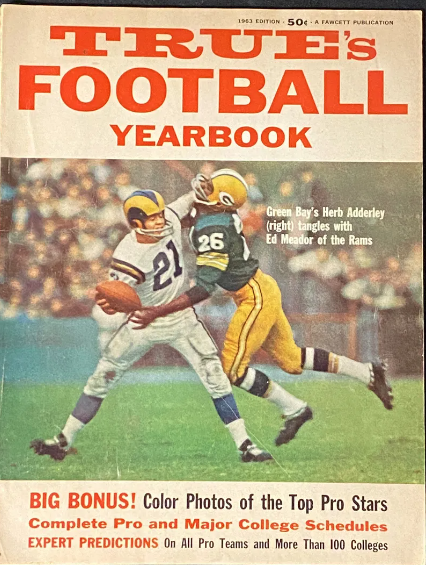
Best known: A six-time Pro Bowl selection, two-time first-team All NFL and one who continues to hold the Rams’ franchise records for interceptions (46, five returned for TDs). And blocked kicks (10). And fumble recoveries (18 from the opp0nents, plus four more of his own teammates). He was named to the Rams All-Time franchise teams when votes took place in 1970 and 1985. They referred him as “The Gremlin” for his relentless play. Because it’s all true.
He was also one of three safeties named to the NFL’s 1960s All Decade team with St. Louis Cardinals’ Larry Wilson and Green Bay Packers’ Willie Wood. Those other two are both enshrined in the Pro Football Hall of Fame in Canton, Ohio. Why Meador isn’t remains a topic of discussion.
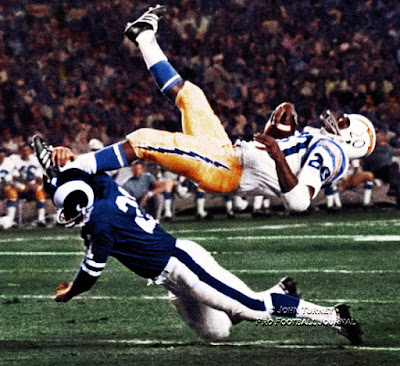
A website called EdMeador21.com once existed with a home page that read: Welcome to the Pro Football Hall of Fame Nomination site for Eddie Meador: Leader, Hero, Father, Athlete, Champion, Legend.
Meador’s son, Dave, was behind the Internet campaign.
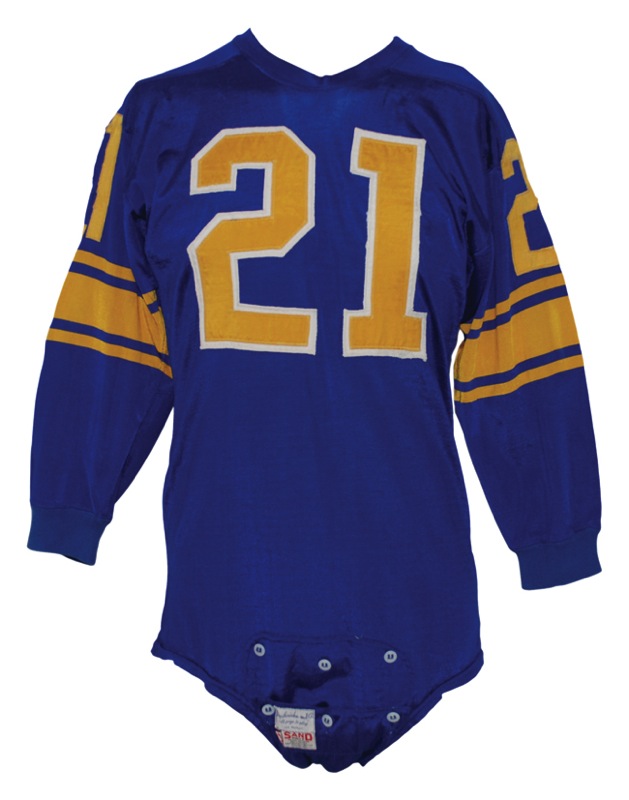
“The voters don’t remember watching him play,” Dave Meador said on a podcast a couple of months before his father’s September of 2023 passing. “And even if they were football fans, they weren’t necessarily watching the Rams or number 21 on the Rams at the age of 13, 10 or whatever. I think that’s a little bit of a barrier. Out of sight; out of mind.”
Going back to 2009, Meador’s lack of Hall induction was being processed and questioned.
From Bleacher Report: “It is astonishing that Meador has yet to be inducted into Canton. He has gone to the same amount of Pro Bowls as 15 other defensive backs that are already inducted. … Tackles were not a recorded statistic in his era, but he exceeded 100 tackles in several seasons. He once had 126 tackles in a 14-game season, which is an impressive rate for a free safety. He was fast, quick, tough, and smart. For all he did on the field, he did even more off the field. He was very active in charities, especially with the Special Olympics. His leadership abilities were seen from his days in college up until the day he retired from the NFL.”
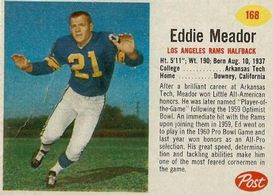
“I probably was as good a ballplayer as some of the people that’s already in there,” Meador told the Los Angeles Times in 2009, then at his home in Natural Bridge, Virginia, after years of living in Downey. “Maybe not, but I think that.”
The Rams got him as a relative bargain, the 80th overall pick in the seventh round of the 1959 NFL draft. The team’s 10th player chosen at that point. (FYI: The Rams later in Round 28 also took Rafer Johnson out of UCLA, No. 333 overall, but he had other plans).
Meador was simply an athlete — tailback, defensive back and kick returner for tiny Arkansas Tech. The pivot point in Meador’s time with the Rams came when head coach Harland Svare moved him from left cornerback to free safety.
Eventually, new defensive-minded head coach George Allen saw Meador, at the height of the Rams’ “Fearsome Foursome” days, as the one who the most fearless. Meador called the Rams’ defensive signals. During a run where he was named to five straight Pro Bowls from ’63 to ’68, he collected 24 interceptions and returned two for touchdowns.
Then-Rams assistant Jack Faulkner once told a reporter that the fresh-faced rookie Meador “looks like Mickey Rooney but hits like Jim Brown.”
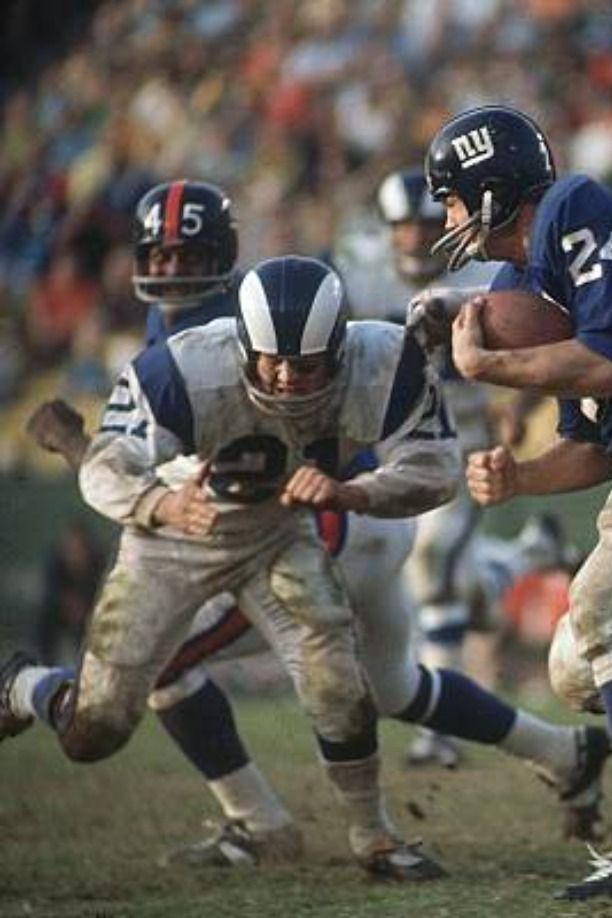
Meador also became a valued punt and kickoff returner. He for some reason felt responsible to be the holder on the field-goal unit team. Just in case.
Meador once explained how his versatility gave him an advantage during in a key win against the Philadelphia Eagles in 1969. Before he intercepted a Norm Snead pass and returned it 34 yards for a touchdown, he was the holder at a point when the Rams lined up for a field goal trying to erase a 10-0 deficit.
“I looked over at the linebacker on the other side,” Meador recalled, “and I said to myself, ‘I’m going to take this ball and run it.’ I about killed (kicker Bruce) Gossett when he came running in to kick it. By the time he got to me, I was up and taking off.”
For the last two years of his career, he was president of the NFL Players Association.
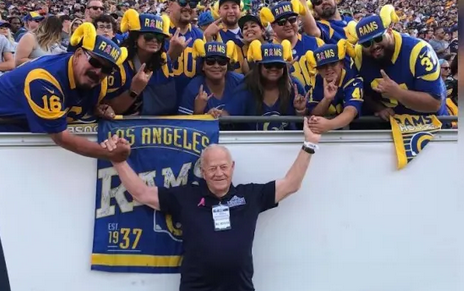
The Rams staged an Eddie Meador Day in 2018 at the Los Angeles Coliseum, where they played for a short while after moving back from St. Louis as their current home in Inglewood was being built. Meador stood in the end zone on the field he played on, waving to thousands of Rams fans and they chanted his name.
“If the Hall of Fame doesn’t happen in his lifetime or doesn’t ever happen, the L.A. Rams gave him a Hall of Fame moment,” said his daughter, Vicki.
Meador has been in the Pro Football Hall of Fame discussion in more recent years far more often now than when he finished 12 seasons with the Rams in 1970. He has made the Senior Blue-Ribbon Committee initial list for the Class of ’24 and ’25, survived a few cutdowns, but never made it to the final ballot.
In a 2023 Meador obituary written for the Los Angeles Times, Vicki also forwarded a photo of her dad wearing the Rams’ No. 21 jersey and his trademark Brill Cream hair cut:
A letter to the editor in the Times appeared days after the Meador’s obit from Richard Whorton of Studio City:

“I was a 12-year-old kid working as a water boy at Rams camp during the summer of ‘59 in Redlands. While being ignored by most of the veterans, one rookie was always cordial and went out of his way to make me feel like I was part of the team. It was Meador, who ended up being one of the greatest defensive backs in Rams history. He not only should be in the Hall of Fame, but if the Rams did the right thing they’d retire his No. 21!”
Another letter posted from reader Rick Magnante of Encino:
“Growing up in Los Angeles in the ‘50s and seeing my first professional football game at the Coliseum, I won’t forget those stars, the likes of Norm Van Brocklin, Elroy Hirsch, Jon Arnett, Les Richter and, of course, the undersized but truly appreciated Meador. In today’s game, the art of open-field tackling is a thing of the past. Meador stood out as singularly the best to date that I’ve ever seen. The fact that he is not in the Hall of Fame is hard to fathom. His career and numbers stand the test of time.
Michael Cooper: Los Angeles Lakers guard (1978-79 to 1989-90) via Pasadena High:
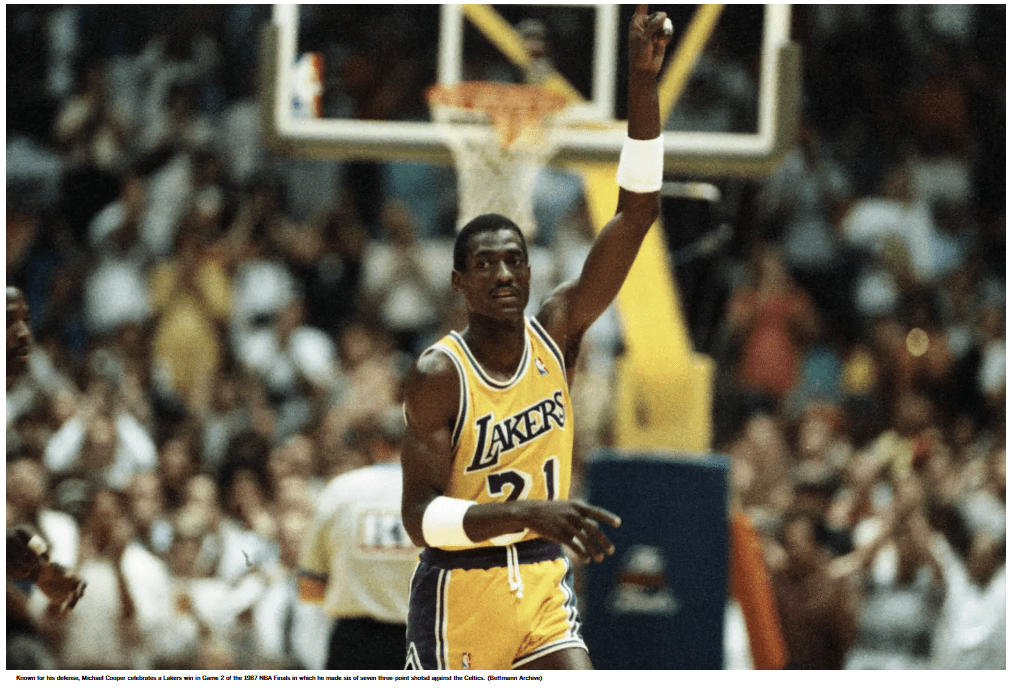
Best known: The spindly small forward/shooting guard who stood 6-foot-7 and may have weighed 175 pounds played all 12 of his pro seasons in L.A. during the Lakers’ Showtime Era, often matched up specifically against the opponent’s most dangerous offensive player — Boston’s Larry Bird, Chicago’s Michael Jordan, San Antonio’s George Gervin. The role Cooper filled on that Laker dynasty rewarded him with inclusion in the Naismith Memorial Basketball Hall of Fame’s Class of 2024. This, after becoming the Lakers’ third-round choice, No. 60 overall, in the 1978 NBA Draft out of the University of New Mexico. This was before Jerry Buss’ ownership, or the arrival of Magic Johnson. It was a piece of the “Showtime Era” that would reveal itself later with fans chanting “Cooop,” and Chick Hearn punctuating a dunk with a “Coop-A-Loop” declaration.
Bird deemed Cooper “the best defensive player who ever guarded me … I’ll take that to my grave with me.” Cooper said he developed that mindset early when Jerry West was the Lakers’ head coach at time time he joined the roster.
“I’m heading to training camp. I get to Loyola Marymount, and when I walk into the gym I see Kareem Abdul-Jabbar and Jamaal Wilkes and Norm Nixon. So, we get into practice and stuff. Jerry pulls me to the side and he goes, ‘Coop, I already have scorers. I got 30 points in Kareem. I got 27 to 28 from Jamaal Wilkes. I got 22 to 25 in Norm Nixon. There is not enough balls to go around for you to get shots. So, I need somebody to play defense.’
“So, I said, ‘Hey, I already got the fundamentals down. I got the aggressiveness down.’ And now I’ve been told that this was going to be my role. So, I took that to heart, embraced it, got better and better.”
Picked on the NBA’s All-Defensive team first team eight times and second team three times, Cooper was able to hoist the title of 1986-87 Defensive Player of the Year as the Lakers outlasted the Celtics in six games for the NBA title. Cooper’s most memorable offensive performance came in Game 2 of the 1987 Finals, when he drained a then-playoff record six 3-pointers and finished with 21 points and nine assists to give the Lakers a 2-0 series lead.
For the most part, Cooper came off the bench even as many remember him on the court for the bulk of the game’s minutes. Of 872 games played for the Lakers, only 94 were as a starter. But that was all part of the Lakers’ entertainment presentation. It allowed for him to be singled out with the chants of “Coooop” when he reported in from the scorers table and give the game some extra energy when needed.
The most games he started in a season was 20 of 82 games in the 1984-85 campaign. The NBA’s Sixth Man Award was established for the 1982-83 season. The best Cooper ever finished in the voting was his Defensive Player of the Year campaign in ’86-87 when he was off the bench for all but two of his 82 regular season games.
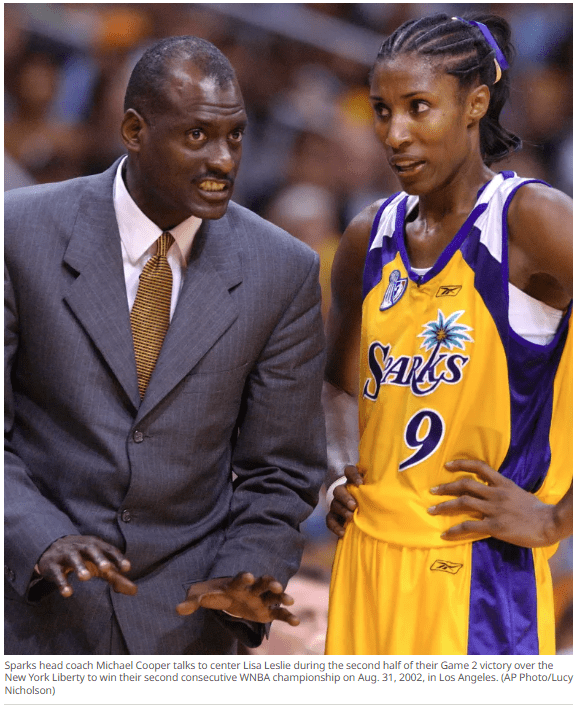
Following his playing career, Cooper served as a special assistant to Lakers general manager Jerry West for three years, joined the Lakers coaching staff for four seasons (1994-97) under Magic Johnson and Del Harris. As a head coach for eight season with the WNBA’s Los Angeles Sparks, he started as the league’s coach of the year in 2000. The team won two league titles (2001 and ’02) and one runner-up (2003) with a record of 178-88 (.699) in the regular season and 26-16 (.619) in the post season. He also had a four-year run as the USC women’s basketball coach (2009-13) with a record of 72-57 (.558). Currently, he serves as the head coach for Cal State L.A.
Cooper remains the only person to win a championship as a player or coach in the NBA, WNBA and NBA Developmeal League (the later with the Albuquerque Thunderbirds in 2006).
In a Los Angeles Time story headlined “Why Michael Cooper finally made it to Springfield,” the conclusion is that it was a long time coming as he became an overlooked but well-deserving candidate. The Basketball Hall has always been a reflection of a player’s entire career in the game — from high school to college to professional, to Olympics and international play, to contributing as a coach and executive. Cooper’s resume checks off several boxes.
Magic Johnson had become one of Cooper’s greatest allies in this process of vetting and discernment by a block of voters who the public doesn’t really know as much about. The same goes for the voters of the Pro Football Hall of Fame and Hockey Hall of Fame.
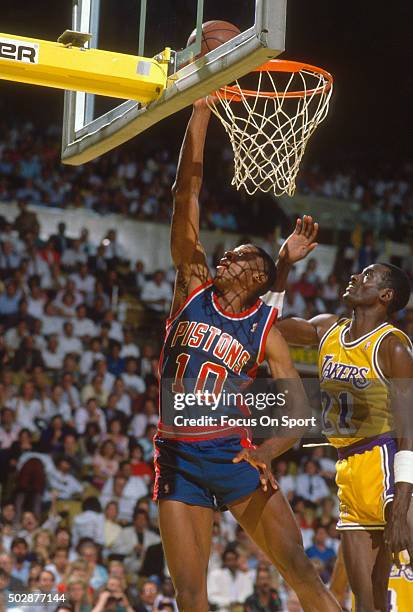
It will be noted Cooper is now one of 14 Hall of Famers who averaged fewer than 10 points (along with players like Dennis Rodman, Ben Wallace and Dikembe Mutombo. Cooper’s greatest offensive season was 11.9 points in ’81-82 season. But Rodman, Wallace and Mutombo were also named to NBA All Star teams. Cooper never had that.
Cooper said West once told him that you have to have at least been a former All-Star and All-NBA player to get your jersey retired with the Lakers. That didn’t happen. But with the Hall of Fame induction, the Lakers plan to retire Cooper’s No. 21 on Jan. 13, 2025 at Crypto.com Arena, joining Johnson, Kareem Abdul-Jabbar, Jerry West, Elgin Baylor, Kobe Bryant, Jamaal Wilkes, Wilt Chamberlain, Pau Gasol, Gail Goodrich, Shaquille O’Neal, James Worthy and George Mikan.
“When I sit there and they asked me to pull that rope, and I can finally see No. 21 up there in the rafters with everybody else, it’s going to be a moment because, if you know, dying is part of living. And one day we’re all going to leave this earth,” said Cooper. “But the one thing that I get the opportunity to leave for my grandkids, my great grandkids — even with the advancement of these arenas changing, and pretty soon the Lakers will have to get a bigger place and all that — but you know what, whenever they change this arena, they have to put that jersey up there. And my grandkids will be able to say, ‘You know what, that’s my grandfather up there.’ ”
Not well remembered: Wearing No. 42 at Pasadena High, Cooper credited high school coach George Terzian for teaching him the fundamentals, particularly playing defense with feet positioning instead of reaching with arms and hands. After two seasons at Pasadena City College, Cooper transferred to the University of New Mexico for his junior and senior seasons. In 1974, Michael Cooper and his Pasadena team was featured on the local favorite KNBC-Channel 4 High School Game of the Week, as it faced El Rancho. Cooper’s grandmother, who had glaucoma and couldn’t see the TV screen well, wondered if there was a way for him to stand out from the rest of the players on his team, making it easier for her to spot him. So Cooper wore high white socks, two sweat bands on his wrist and left his white tie strings hang out of his shorts. “I looked different,” Cooper recalled. “And I had the game of my life. I had 24 points, 15 rebounds, three dunks and like four or five blocks. That was going to be my attire from there on out. Whether I was with the Lakers or anybody, I was gonna wear long white socks, two sweatbands and my strings out.”
Wally Joyner, California Angels/Anaheim Angels first baseman (1986 to 1991, 2001):

Best known: The “Wallyworld” experience just blocks away from Disneyland during the late 1980s was something to behold. The baby-faced Mormon out of BYU came out of nowhere and was named to the AL All-Star team as a 24-year-old rookie — in the first two months of his big league career, he led the majors in homers. The Angels were just hoping he would be a suitable replacement for Rod Carew.
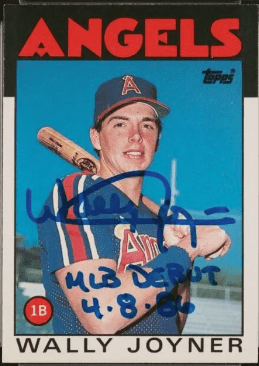
Joyner would finish with 22 HRs, 100 RBIs and a .290 batting average and runner-up to Jose Canseco (33 HRs, 117 RBIs, 15 SB) in the AL Rookie of the Year voting. If it makes a difference, Joyner finished eighth in the 1986 AL MVP voting; Canseco was 20th. That was also the only All-Star Game selection season Joyner would have in 16 MLB campaigns, ending back with the Angels in 2001 at age 39.
As Will Leitch once wrote about him: “If you were a kid in rural Illinois who collected baseball cards, suddenly no one was more important than Joyner. This was a player no one knew who was suddenly the most popular player in the sport. Getting his rookie card was like the Shroud of Turin, the briefcase in “Pulp Fiction” or the Maltese Falcon. Nobody cared about Jackson, Cal Ripken Jr. or Mike Schmidt. Joyner was all that mattered.”
In his second season, Joyner had a 34-homer, 117 RBI season and .285 average, with a career-best 4.1 WAR. But after six seasons, Joyner left, accepting a one-year, $4.2 million free agent deal with Kansas City — he stayed a Royal until they traded him after the ’95 season — instead of a four-year, $15.75 million deal from the Angels.

He didn’t want to leave.
“Wally Joyner stood at the press room podium at baseball’s winter meetings with tears in his eyes, unable to speak,” the L.A. Times’ Ross Newhan wrote in December, 1991. “The pressure of two months of futile negotiations, of a decision he never expected to have to make after six years with the Angels, was seeping out in an unexpected display of emotion. No one cries at leaving a last-place team, but … Wally Joyner did. Call that a crying shame.”
Not well remembered: Joyner came back to the Angels as a free agent in 2001 and took No. 5 — pitcher Shigetoshi Hasegawa had No. 21, but was released half-way into the season. The thrill was gone.
Jim Hardy, USC football quarterback / defensive back (1942 to 1944), Los Angeles Rams quarterback (1946 to 1948):
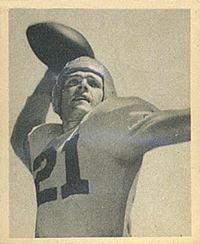
Best known: The Fairfax High standout who started going to Trojans games in 1931 at age 8 became the MVP of the 1945 Rose Bowl, throwing two touchdown passes and running for another in a 25-0 win over Tennessee despite battling a 101 fever the night before. Hardy also dropped three key punts for USC that landed on the Tennessee 5, 8 and 7 yard lines in succession. In Hardy’s senior season, he set USC passing records with 58 completions, 739 yards passing and 10 touchdowns. That came a year after he threw three touchdown passes in the Trojans’ 29-0 win over Washington in the ’44 Rose Bowl. He also had 13 career interceptions as a defensive back. He made it into the USC Athletic Hall of Fame in 1999 and the Rose Bowl Hall of Fame in 1994. Hardy, who also played third base for USC’s baseball team from 1944 to ’46, ended up with the Rams during their first three years in L.A. after a stint in the Navy. He became the general manager of the Los Angeles Coliseum from 1973 to 1986, which included the 1984 Summer Olympics. He was noted to be the “oldest living” USC and Rams player when he died at age 96 in 2019.
LenDale White, USC football running back (2003 to 2005):
Best known: Fifty-two rushing touchdowns in three seasons established a Trojan career record as the “Thunder” to Reggie Bush’s “Lightning” combination during the team’s span of national dominance. White ran for three TDs in USC’s 55-19 win over Oklahoma in the 2005 Orange Bowl, and a year later, he had three more TDs as USC lost to Texas 41-38 in the 2006 Rose Bowl. In that game, with 2:13 left in regulation and USC holding a 38-33 lead, the Trojans were at Texas’ 45-yard line and needed two yards on fourth down to keep possession and run out the clock. Everyone knew the handoff would be to White. It was. He came up a yard short. Texas got the ball and won the game. “There’s nothing I can do to shake that,” said White, who finished his USC career with a powerful 3,159 yards, averaging 5.8 yards a carry. “He was kind of a free spirit, marched to his own drum,” quarterback Matt Leinart once said of him. “But I’ll tell you what, man, when the lights turned on, that dude was one of the best football players I’ve ever played with. He was one of the best teammates I’ve ever played with.”
Maurice Jones-Drew, UCLA football running back (2003 to 2005):

Best known: Before coming to Westwood, the generously sized 5-foot-7 running back made himself known to Southern California football fans when he, as a high school junior, scored four touchdowns for Concord De La Salle in a 29-15 win over Long Beach Poly in 2001 during an epic matchup of No. 1 vs. No. 2 before 17,000 at Long Beach Veterans Stadium. Drew caught TD passes of 25 and 29 yards and ran in from 17 yards for another score to give De La Salle a 21-15 halftime lead. After Drew scored his first TD, he did a flip in the end zone, drawing a 15-yard unsportsmanlike conduct penalty. The game was such a TV success it led to more national coverage of high school football games.
During a career at UCLA he led the team in rushing all three years, set a school record in all-purpose yards (4,688), rushing yards from scrimmage (3,322), touchdowns (33), and an NCAA record of 28.5 yards per punt return. He was named to the UCLA Athletic Hall of Fame in 2017 — not overlooking the fact he set the school’s single-game rushing mark with 322 yards and five touchdowns against Washington in his sophomore year.
Not well remembered: During his junior (and final) year of 2005, Jones-Drew learned from Coach Karl Dorrell that his grandfather, Maurice Jones, died of a heart attack while at the Rose Bowl to see the UCLA-Rice game. Drew, who took the last name of his maternal mother but was raised by his maternal grandparents, had his name legally changed to Jones-Drew, and in the NFL was most often referred to as “MJD.”
Walker Buehler, Los Angeles Dodgers pitcher (2018 to 2024):

Best known: The last pitcher standing for the Dodgers when they won the 2024 World Series at Yankee Stadium in Game 5, Buehler preserved a 7-6 victory by striking out the last two Yankee hitters in the bottom of the ninth. This was just three days after he threw five shutout innings and got the win in Game 3 that put the Dodgers up, two games to one. That put him on a short list of eight players — since saves became an official stat in 1969 — who had both a win and a save in the same playoff series.
A two-time NL All Star, Buehler finished third in the 2018 NL Rookie of the Year voting (8-5, 2.62 ERA, 151 Ks in 137 innings). He missed the entire 2023 season with second Tommy John surgery and then went through a 2024 regular season with stats that didn’t show he was all that ready to come back — a 1-6 mark with a 5.38 ERA. But then came the post-season.
In the NLDS against San Diego, Buehler gave up six runs in five innings of his only start, Game 3, and took the loss as the Dodgers fell behind two games to one and appeared doomed. Somehow, they recovered.
In Game 3 of the NLCS against the New York Mets, Buehler started, and something interesting happened. After pitching from a full windup to the leadoff hitter, he settled into a stretch. With better body control, he threw four shutout innings, striking out six.
If injuries to Dodgers starters such as Tyler Glasnow, Clayton Kershaw and Michael Grove hadn’t occurred, Buehler may not have even been on the post-season roster, but there he was now in the World Series. He then became a free agent and went to Boston.
Not well remembered: Bueller wore No. 64 in eight appearances during his debut season of 2017 with the Dodgers — both Yu Darvish and Trayce Thompson had been sharing dibs on No. 21.
Zack Greinke, Los Angeles Dodgers pitcher (2013 to 2015):
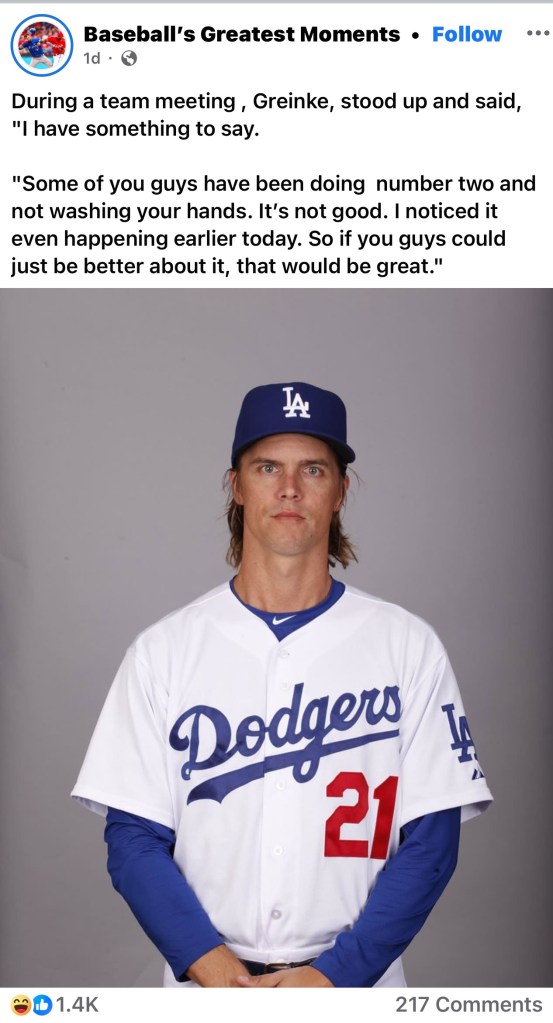
Best known: A year after he vacationed as a free agent with the Angels in Anaheim wearing No. 23, Greinke logged three standout seasons for the Dodgers, creating a formative top-of-the pitching rotation with Clayton Kershaw that many compared to the days of Koufax and Drysdale.
The eclectic and rather mysterious Greinke, a 2009 AL Cy Young winner with Kansas City, went to two All Star games with the Dodgers and posted a 51-15 record with a 2.30 ERA over that time, gaining Cy Young and MVP votes, plus a Silver Slugger and a two Gold Gloves. He had an NL-best 8.9 WAR when he finished 19-3 with a 1.66 ERA in 2015. That’s when his six-year, $147 million deal with the Dodgers reached the halfway point and gave Greinke the option to opt out. He did. He declined the Dodgers new six-year, $160 million deal, and off he went to Arizona for six years and $206 million. His time in Arizona went 3 1/2 season. He put in 20 seasons, finishing where he started with Kansas City at age 39 with a 2-15 record and 5.09 ERA.
Alyssa Thompson, Angel City FC forward (2023 to 2025):

Best known: The Gatorade National Player of the Year as a sophomore in 2021 out of Harvard-Westlake School in Studio City (48 goals, 14 assists in 17 games) had been playing on semi-pro teams since age 13 against college-aged players and signed an NIL deal with Nike at age 17 (along with her sister, Gisele) before becoming the youngest player ever drafted into the NWSL. The No. 1 overall pick by hometown Angel City FC in January of ’23 came with Thompson signing a three-year deal. In April, 2023, the third-generation Angeleno debuted with the U.S. Women’s National team (wearing No. 17) in the FIFA Women’s World Cup in Australia. In September of 2025, Thompson agreed to a five-year contract with Chelsea of the Women’s Super League for a $1.65 million transfer fee,the greatest in women’s soccer history. Thompson was the club’s all-time scoring leader with 21 goals in all competitions. Thompson has three goals and three assists in 22 games with the national team.
Tayshaun Prince, Dominguez High of Compton basketball (1996 to 1998):

Best known: Voted Mr. California Basketball, Prince — aka “Tay,” aka “Compton Kid” — won three CIF titles and back-to-back state titles during his time at Dominguez. The 1998 McDonald’s All-American led Dominguez to a 96-9 record, averaging 22.0 points, 9.8 rebounds, 4.0 blocks and 5.2 assists a game as a senior when the Dons went 32-3. As a junior, he averaged 20.0 ppoints, 10 rebounds, 5.0 blocks and 5.0 assists during a 30-4 season. A finalist for the Naismith Prep Player of the Year Award, he had a 3.3 GPA and was on the school’s honor roll for three years. Prince stayed all four years at Kentucky and was SEC Player of the Year as a junior (2001). He won an NBA title with Detroit (2004), was a four-time All-NBA Defense and won an Olympic gold medal for Team USA (2008). His No. 21 was retired by Dominguez High in 2023.

Dana Pagett, El Segundo High basketball (1963-64 to 1966-67); USC basketball (1968-69 to 1970-71):

Best known: The CIF-3A Player of the Year and second-team Parade All-American at El Segundo High was on coach Cliff Warren’s team that won 34 consecutive games before a 62-56 overtime loss to Monrovia in the Southern Section 3-A championship game. El Segundo won five tournaments that season and Pagett was named the most valuable player in four of them. While averaging 16.1 points and 10 assists a game as a senior, the Daily Breeze story announcing him as the South Bay Player of the Year on a team that included future NBA players Paul Westphal of Aviation and Stan Love of Morningside and future MLB pitcher Bart Johnson of Torrance included: “His assists often counted for twice as many points as he scored himself.” Said Warren: “He was the best player the South Bay ever had.” Pagett signed a letter of intent to go to West Virginia University, but he had a change of heart and stayed home, picking USC over UCLA. Pagett became a valuable third guard on the USC basketball team, still wearing No. 21, and playing behind Paul Westphal and Mo Layton. “He was the first recruit in the area to get away from John Wooden at UCLA,” Warren said. A 1971 NBA Draft pick by Philadelphia, Pagett signed with Portland and spent a year in the ABA with the Virginia Squires (1971-72). Still wearing No. 21.
Not well remembered: After working as an assistant coach at Loyola Marymount University and Long Beach State, Pagett went to Rancho Santiago Community College in Santa Ana and had a long run as a head coach starting in 1982. In 2006 Pagett was added to the Santa Ana College Athletic Hall of Fame for his 15-year run that included leading the Dons to the state tournament 11 times and claiming two titles.Pagett is Santa Ana College ‘s all-time winningest men’s basketball coach with a 323-165 record.
Nolan Cromwell, Los Angeles Rams defensive back / free safety (1977 to 1987):
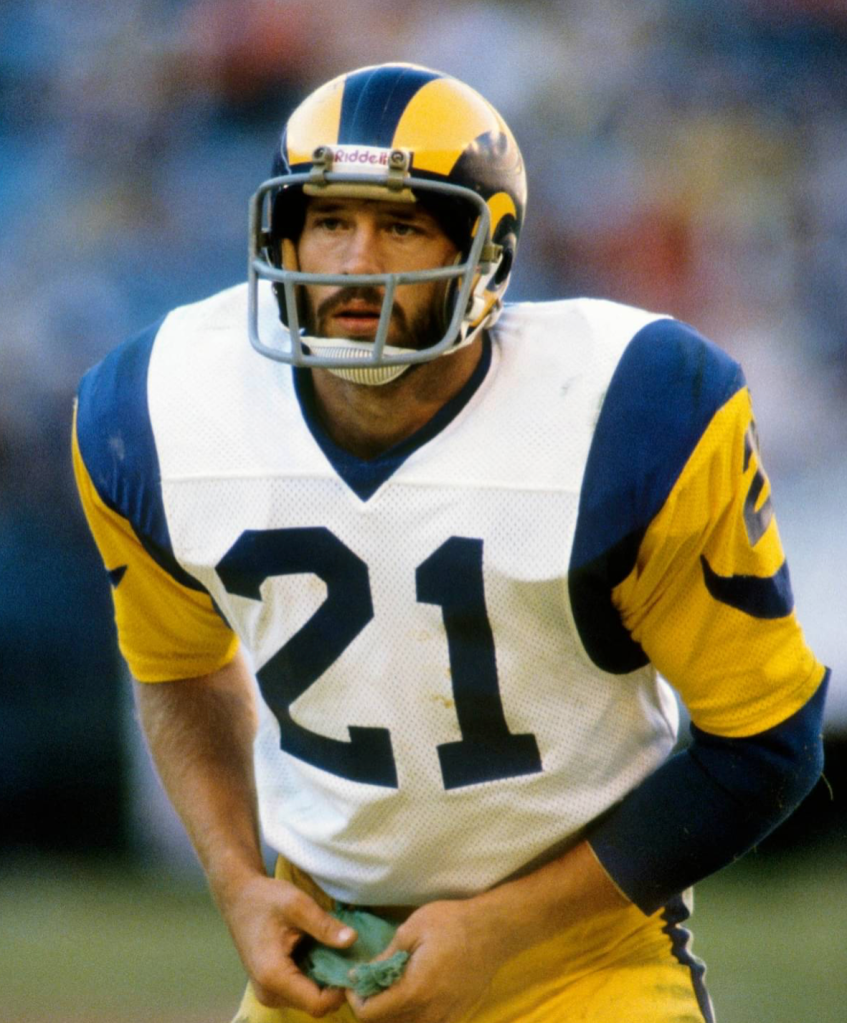
Best remembered: Seven years after Meador left the Rams, Cromwell, a converted quarterback from Kansas and Big 8 Offensive Player of the Year, took the number 21 and ran off another 11 years with the team, becoming a Pro Bowl player four seasons in a row (1980 to ’83) and collecting 37 interceptions, returning four for touchdowns. He also set a franchise record 671 in return yards and was a standout on special teams as a holder who could run the fake field goal. Cromwell made it onto the NFL’s All-Decade Team for the 1980s.
Lynn Cain, USC football fullback (1975 to 1978):
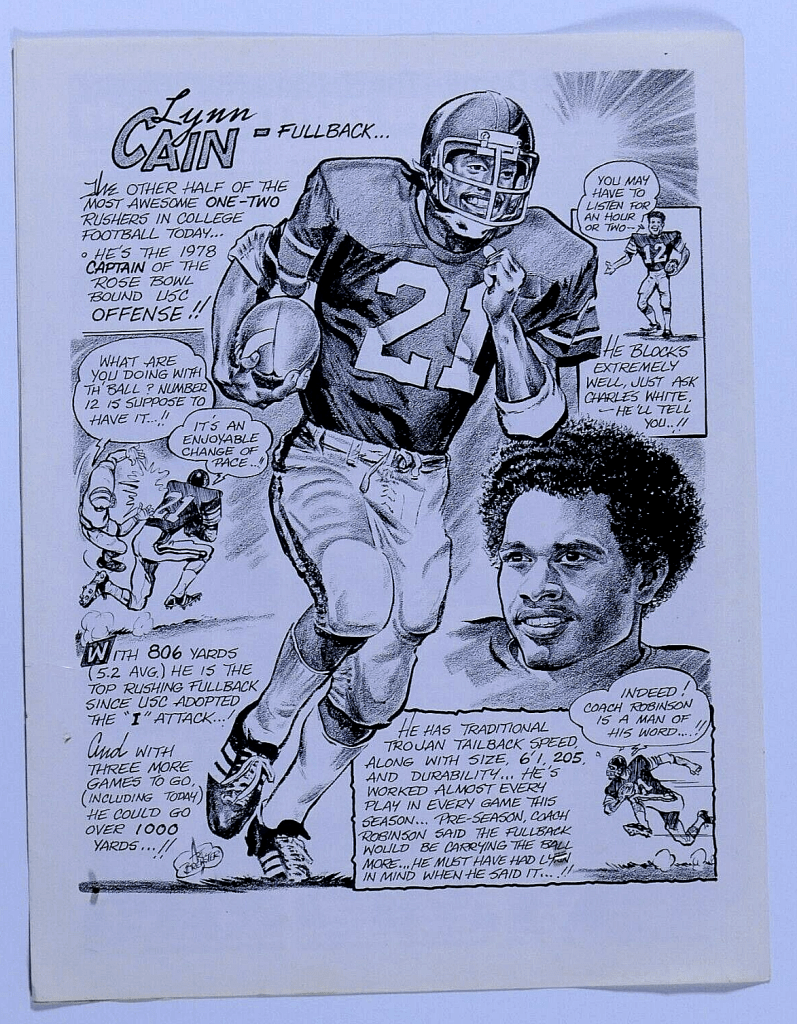
A heralded defensive back at L.A.’s Roosevelt High and then the California Community College State player of the Year in 1974 at East L.A. College, Cain arrived at USC to start at fullback blocking for tailback Charles White on the Trojans’ ’78 national championship team. After a seven-year NFL career (that included a stop with the Los Angeles Rams in 1985 wearing No. 31), he returned to coach at East L.A. College and L.A. Southwest College.
Steve Grady, USC football tailback (1966 to 1967): After distinguishing himself at L.A.’s Loyola High as a wingback and middle linebacker, where he ran for 2,097 yards and scored 217 points in 12 games as a senior on a CIF title team (wearing No. 36), the CIF State Player of the Year gravitated to Coach John McKay’s Trojans teams as the running back in between Heisman winners Mike Garrett and O.J. Simpson. He had a combined 519 yards and 1 TD in his career, with 108 yards coming in a win over Oregon as Simpson’s injury replacement. After a brief NFL stint, Grady returned to coach at Loyola High and was named its head coach in 1976, staying through 2004 with nearly 270 wins and CIF titles in 1990 and 2003. He was inducted into the CIF Southern Section Hall of Fame.
John Hadl, Los Angeles Rams quarterback (1973 to 1974): He put No. 21 on for two seasons between Eddie Meador and Nolan Cromwell — keeping the number he had for the 11 previous years with the San Diego Chargers — and was second in the MVP voting in ’73 when he led the team to a 12-2 mark and a Pro Bowl nomination. Hadl, also once a fabled quarterback at Kansas, was gone the next year to Green Bay. But Hadl would return to Los Angeles — as the coach of the United State Football League’s Express, as a mentor to rookie quarterback Steve Young.
Cliff Branch, Los Angeles Raiders receiver (1982 to 1985): The last four seasons of his 14-year NFL career, all with the Raiders, game him a platform to perform in L.A. With the ’83 Super Bowl champs he had a 99-yard TD reception from Jim Plunkett to help defeat the Redskins in Washington, D.C.
Shigetoshi Hasegawa, Anaheim Angels pitcher (1997 to 2001): What drove Shiggy to Anaheim was piling up a 57-45 record and 3.33 ERA during six seasons in Nippon Pro Baseball. The 28-year-old middle reliever didn’t net nearly the attention as other Japanese players did who came to the U.S., yet by the time he left the MLB in 2005, he logged nine seasons and had the most appearances by an Asian pitcher in the U.S. (517), far ahead of Hideo Nomo’s 323 in 12 seasons. Hasegawa is included in the book, “Hall of Name: Baseball’s Most Magnificent Monikers” by D.B. Firstman (2020) with the entry: “Four short yet lyrical syllables in the first name and four more int he last. The name looks daunting to pronounce but is actually reasonably easy once you hear it a couple of times. And speaking of hearing it, no less a public speaking authority than the late Yankees public address announcer Bob Sheppard deemed Hasegawa’s name as one of his favorites to say over the P.A. system.”
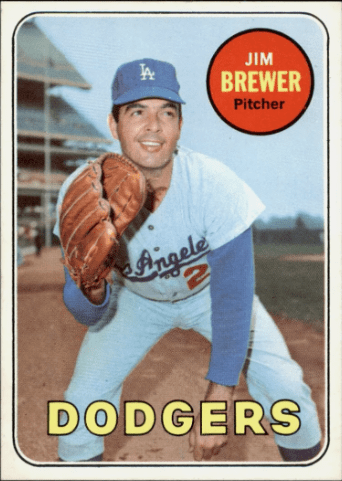
Jim Brewer, Los Angeles Dodgers pitcher (1964 to 1975), California Angels pitcher (1976): Back when recording a save was much more difficult algorithm to achieve, Brewer was the franchise leader with 126 when he retired, and he needed more than 800 innings and 300 games over a 12-year span to do that. He was also on the 1973 NL All-Star team at at a time when the Dodgers used to refer to the team’s bullpen as “The Brewery.” Brewer remains in the Top 5 of the franchise save leaders.
Mack Calvin, Los Angeles Lakers guard (1976-77): The Long Beach Poly prep star went onto Long Beach City College and then showed enough at USC over two seasons to become an NBA draft pick by the hometown Lakers, albeit the 14th round in 1969. The ABA’s Los Angeles Stars looked more attractive, and that’s where Calvin landed (wearing No. 20) with coach Bill Sharman. Calvin averaged 16.8 points per game to make the ABA All-Rookie Team, and the Stars went to the ABA Finals before losing to Indiana. He had a 44-point game during the division semifinals against Dallas and averaged 15.8 points and five assists a game in the six-game finals. Over the next five seasons with Florida, Carolina and Denver, Calvin was a five-time ABA All Star. The ’76-’77 season was split between Denver, San Antonio and finally the Lakers (for 12 games) before he was dropped from the roster and sat out a year. He came back for two more NBA seasons with Utah and Cleveland. As an assistant coach with the Los Angeles Clippers, Calvin took over as head coach for two games in 1992.
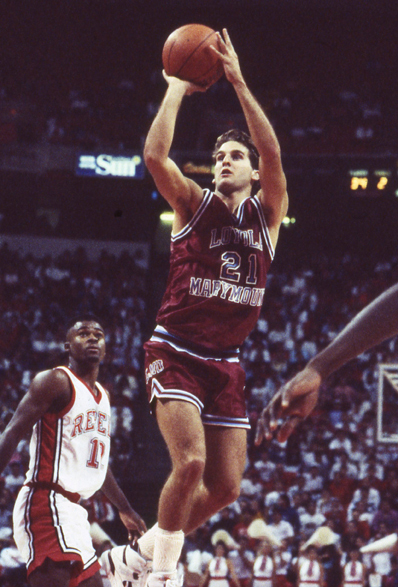
Jeff Fryer, Loyola Marymount University basketball guard (1986-87 to 1989-90): The 6-foot-2 sharpshooter out of Corona Del Mar High in Newport Beach, who led the nation as a junior with 126 3-point makes out of 334 attempts, set an NCAA record with 11 3-pointers made during the Lions’ 149-115 upset over defending champion Michigan in the 1990 second-round game played at Long Beach. Fryer’s 41 points led LMU as he attempted 15 3-pointers and also shot 15 for 20 in the game. During his four years starting at LMU, 940 of Fryer’s 1, 545 shots came from 3-point range and he established an NCAA career mark of 363 made 3-pointers. He was also 26-for-26 in free throws in the NCAA Tournament.
Have you heard this story
Tony Gwinn, Long Beach Poly High basketball (1973 to 1976):

The future Baseball Hall of Famer known as “Mr. Padre” from his career in San Diego had basketball on his radar as well. As a point guard on the Jackrabbits teams that went 30-1 his junior year and won the CIF-4A title before more than 10,000 spectators at the Long Beach Sports Arena, Gwynn’s team was considered the best in the state. They also went 23-7 his senior season and lost in the playoffs trying to repeat.
Gwynn, All-CIF Southern Section second team, went on to be an All-Western Athletic Conference basketball and baseball player at San Diego State.
Milton Bradley, Los Angeles Dodgers outfielder (2004 to 2005):
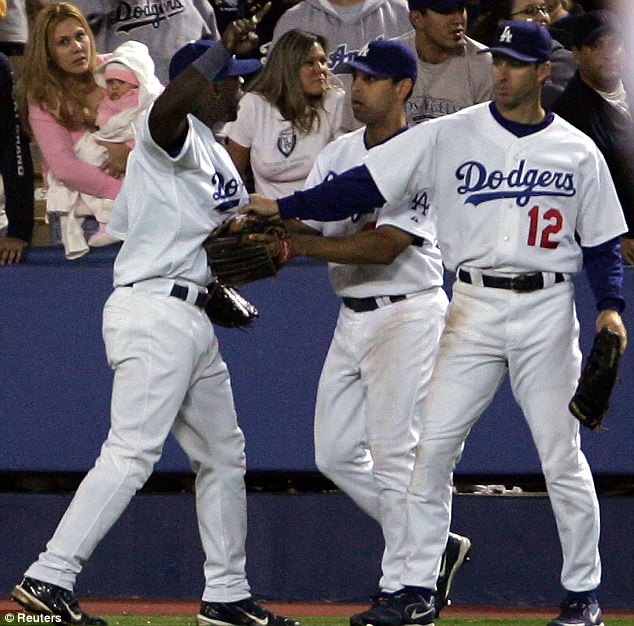
“Trouble” or “Anger Management” were not products that the Milton Bradley board game company created, but they could summarize the season-and-a-half this former Long Beach Poly High standout spend with the Dodgers, one of eight teams he suited up for in 12 years.
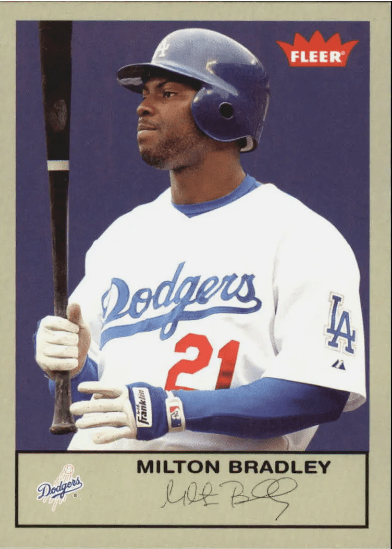
Bradley, whose birthday of April 15 was the same day all of MLB honors as Jackie Robinson Day, once said about how he had No. 21: “That’s the number they gave me in rookie ball, so I just kind of stuck with it. You know, you can’t wear 42 anymore, so I always said, 21 is half of 42; if I can be half of the player, half of the person, Jackie Robinson was, then I will have been a success. That’s my motto.”
His first major display of his volatile nature was being handed a four-game suspension by the league for throwing a bag of balls onto the field following his ejection from a game when he argued balls and strikes. He was suspended for the last week of the regular season on ’04 when he reacted to a fan who threw a bottle at him following an error by throwing it back at the fan and yelling at him, leading to another ejection. In October of ’04, during the NL playoffs, Bradley got into a clubhouse argument with the Los Angeles Times’ beat reporter. He returned in ’05 and hit.290 in 75 games before tearing knee ligaments. That offseason, the Dodgers swapped general managers, and Ned Colletti’s first deal was to swap out Bradley to Oakland for a prospect named Andre Ethier.
While Bradley was a Dodgers’ nominee for the Roberto Clemente Award for his work with the team’s non-profit foundation, he was accused of domestic abuse in 2005 (no charges filed), and more accusations after that, to the point where he was convicted of physically attacking his wife and was sentenced to 32 months in prison. In 2018, he remarried and was again charged with spousal battery, leading to probation and counseling. “When we traded for Milton, I think we knew everything that came along with it,” former Dodgers GM Paul DePodesta once told ESPN. “We knew the past, we don’t necessarily think that everything’s going to be completely different because he came to a different place. That’s fine. I would take nine Milton Bradleys if I could get them.” Or, maybe, one Either, who would play for the Dodgers all 12 of his MLB seasons with two All Star appearances, a Silver Slugger and Gold Glove.
Yu Darvish, Los Angeles Dodgers pitcher (2017):

The Japanese star import became available at the ’17 trade deadline as his Texas Rangers’s contract was coming up. The Dodgers rented him for three prospects. Darvish finished 4-3 with a 3.44 ERA in nine starts down the stretch, including an ERA of 0.47 ERA over 19 1/3 innings in his last three starts. In the NLDS and NLCS, he posted a win against Arizona and Chicago, allowing just two runs over 11 1/3 innings while striking out 14 and allowing one walk. But in Game 3 of the World Series at Houston, Darvish fell into the Twilight Zone — he lasted just one and two-third innings as the Astros posted four runs in the bottom of the second. It was the first time he failed to get a strikeout in an outing and he managed only one swinging strike in 49 pitches. Hear any trash cans banging? (Adding insult to it all, Houston’s Yuli Gurriel made a gesture in the dugout after hitting a home run, stretching the sides of his eyes and using the slur “chinito,” and received a five-game suspension by MLB Commissioner Rob Manfred — but still allowed to play in the World Series, so the punishment came to start the 2018 season). Darvish came back to start the decisive Game 7 at Dodger Stadium, quickly trailed 2-0, and a George Springer homer in the second inning meant Darvish again was gone after 1 2/3 innings. “If you ask me if I got hit in Game 7 because they stole signs, I don’t think so,” Darvish later said. Darvish’s Game 7 start was his last with the Dodgers. He signed a six-year, $126 million contract with the Cubs that offseason. Since reports of the Astros stealing signs emerged, Darvish said he has gotten apologies from Dodgers fans who blamed him for the losses. He responded: “I’m not looking for that. I don’t want them to change their minds.”

Dominique Wilkins, Los Angeles Clippers forward (1994): The eventual Basketball Hall of Famer who spent his first 12 seasons as The Human Highlight Film in Atlanta became the star attraction of another horror genre when Clippers GM Elgin Baylor decided to make a post ’94 NBA All Star Game trade for him. The Hawks gave up him and a 1994 first-round draft pick for All-Star Danny Manning, who was six years younger. Wilkins pulled on the No. 21 tank top and played out the final 25 games for the 27-55 Clippers, averaging 29.1 points a game, and left that summer to Boston. The Clippers used that pick from Atlanta (after taking Cal’s Lamond Murray at No. 7 overall) to select Louisville guard Greg Minor at No. 25, then traded him with Mark Jackson to Indiana for rookie Eric Piatkowski, Pooh Richardson and Malik Sealy.

Mark Pryor, USC baseball pitcher (2000 to 2001): After transferring from Vanderbilt, Prior led the Trojans to the College World Series in two straight years. As a junior, his 15-1 record and 1.69 ERA, plus 202 strikeouts in 138 innings with just 18 walks, won him the Golden Spikes Award. He struck out 10 or more hitters in a game 13 times, including a 13-strikeout effort against Georgia in the College World Series. His 202 strikeouts set a single-season record for the Trojans. He was the No. 2 overall pick by the Chicago Cubs in the 2001 MLB Draft, after Minnesota took home-town favorite Joe Mauer. Prior became the Dodgers bullpen coach in 2018 and took over as pitching coach in 2020 and had been wearing the No. 99 under his blue sweatshirt.

Liz Masakayan, UCLA women’s volleyball (1980 to 1984): She played Little League baseball in Santa Monica at age 10 — the first year girls were allowed to play because of Title IX. At Santa Monica High, she was on the first girls soccer team, ran track and also tried out for volleyball. At UCLA, she won the Broderick Award as the nation’s top volleyball player after the Bruins won the 1984 NCAA championship. Segueing into beach volleyball, Masakayan paired with Karolyn Kirby as one of the most dominant women’s teams, winning 29 tournaments. She and Elaine Youngs almost qualified for the 2000 Sydney Olympics. Masakayan ended up with 47 beach tournament wins and returned to coach at UCLA. She was inducted into the UCLA Athletic Hall of Fame in 1996.
We also have
Cliff Branch, Los Angeles Raiders receiver (1982 to 1985)
Ronny Turiaf, Los Angeles Lakers forward (2005-06 to 2007-08), Los Angeles Clippers forward (2012-13)
Kareem Rush, Los Angeles Lakers guard (2002-03 to 2004-05), Los Angeles Clippers guard (2009-10)
Eric Ball, UCLA football running back (1984 to 1988)
Shon Tarver, UCLA basketball forward (1990-91 to 1993-94)
Cedric Bozeman, UCLA basketball guard (2001-02 to 2005-06)
Kobe Brown, Los Angeles Clippers forward (2023-24 to 2025-26)

Anyone else worth nominating?

