No. 8: Ralphie Valladares

This is the latest post for an ongoing media project — SoCal Sports History 101: The Prime Numbers from 00 to 99 that Uniformly, Uniquely and Unapologetically Reveal The Narrative of Our Region’s Athletic Heritage.  Pick a number and highlight an athlete — person, place or thing — most obviously connected to it by fame and fortune, someone who isn’t so obvious, and then take a deeper dive into the most interesting story tied to it. It’s a combination of star power, achievement, longevity, notoriety, and, above all, what makes that athlete so Southern California. Quirkiness and notoriety factor in. And it should open itself to more discussion and debate — which is what sports is best at doing.

The most obvious choices for No. 8:

= Kobe Bryant: Los Angeles Lakers
= Troy Aikman: UCLA football
= Steve Young: Los Angeles Express
= Drew Doughty: Los Angeles Kings

The not-so-obvious choices for No. 8:

= John Roseboro: Los Angeles Dodgers
= Tommy Maddox: Los Angeles Xtreme
= Ralphie Valladares: Los Angeles Thunderbirds
= Teemu Selanne: Mighty Ducks of Anaheim

The most interesting story for No. 8:
Ralphie Valladares, Los Angeles Braves (1953 to 1959); Los Angeles Thunderbirds (1961 to 1993)
Southern California map pinpoints:
Inglewood, Pico Rivera, Los Angeles (Olympic Auditorium)


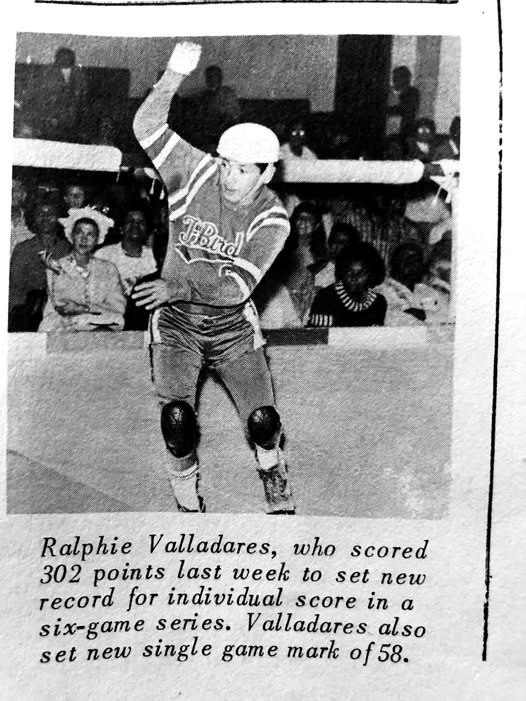
In what we saw growing up as a fantastic real-deal world of Roller Derby, Ralphie Valladares brought validation, valor and viscosity for those pulling for the underdog. Even a trace of Prince Valiant.

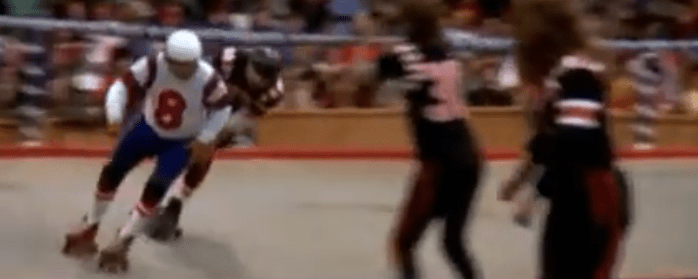
No. 8 wasn’t just gritty great, he could flat-out skate. A lightning-fast play maker for the red, white and blue Los Angeles Thunderbirds, our own very diverse and equally dynamic team of men and women. An abject reflection our city’s inclusive melting pot and blue-color mentality.

It was not a stretch to look back on Valladares as the first high-profile relatable Latino sports star in Los Angeles, some 20 years before Fernando Valenzuela and his mania turned up in the 1980s. At which point in time Valladares was still around to see what kind of magic his sport could squeeze out for this generation at the height of the roller disco scene.

From the 1968 Roller Derby Gazette/Joseph Peters “Who’s Who in Roller Derby” Facebook page

You couldn’t help but buy into the showmanship, and pop culture value, much like an audience would with the Harlem Globetrotters or the Savannah Bananas. There was art, merit and an authentic skill set necessary.

Even kids figured that out if they tried to replicate it on the playground wearing those plastic Dodger give-away batting helmets and hand-me-down four-wheeled skates an older sister might have once worn as a dream to be a figure skater on asphalt, it took talent or else you’d be just another skid mark.

We figured out this was a bit like Three Stooges rough-house theater, cartoons come to life. The merriment of a merry-go-round full of arm whips, flying elbows and heavy pouncing, wrapped up by the theatrics of an obnoxious infield interview and folding-chair throwing, turning over tables in faux anger, was an outlet.

This thing we were captivated by on TV — and at some point, we might have had to adjust tin-foil wrapped TV antennas on the black-and-white Zenith to find the UHF station actually delivering the Sunday night video taped action between 7 and 9 p.m. — also had a scoreboard. A rudimentary graphic popped up full screen to show that what we saw was as important as an MLB or college football game.

Someone was keeping track. We counted on that, too.

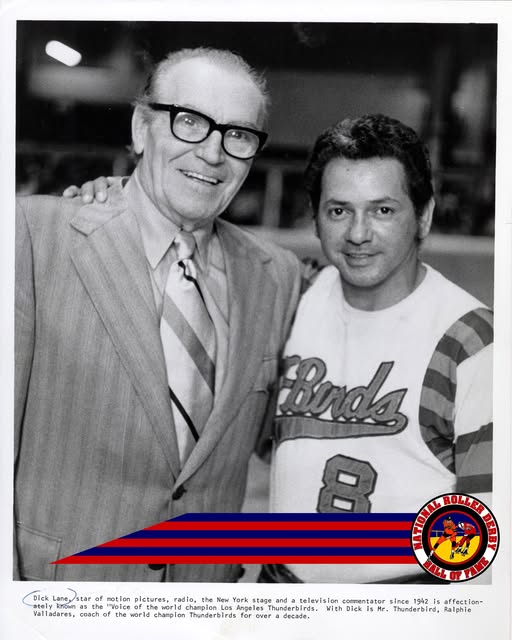
For some 50 years, Valladares played the part of player, coach and manager, spanning the 1950s to the early ’90s as the sport kept changing names and venues, something like a medicine show with Dick Lane as the Professor Harold Hill character, barking out the Richmond-9-5171 phone number to lure anyone into the otherwise sketchy Olympic Auditorium in downtrodden downtown L.A.

Lane was also the one screeching all too often: “There goes Little Ralphie Valllladarrezzzzzz on the jam!!”

That was our jam.

And while we all bought in on the statement that Valladares was the sport’s all-time leader in whatever made-up but important numbers they had created — matches played, career points, points scored in a single game, or bruises distributed — the ageless wheelman was all there for its seemingly entire sweet spot of history.

Scott Stephens, a longtime fan, one-time Roller Games skater and author of the 2019 “Rolling Thunder: The Golden Age of Roller Derby & The Rise And Fall of the L.A. T-Birds,” honestly wrote in his book: “Ralphie Valladares was the first and last T-Bird star.”

Yet none of this might have happened if Valladares had his athletic career go the way he thought it was heading. He dreamed of becoming a championship jockey riding thoroughbreds near his home at another famous oval, Hollywood Park. But something rolled him into a much different arena.

Continue reading “No. 8: Ralphie Valladares”

No. 35: Petros Papadakis

This is the latest post for an ongoing media project — SoCal Sports History 101: The Prime Numbers from 00 to 99 that Uniformly, Uniquely and Unapologetically Reveal The Narrative of Our Region’s Athletic Heritage.  Pick a number and highlight an athlete — person, place or thing — most obviously connected to it by fame and fortune, someone who isn’t so obvious, and then take a deeper dive into the most interesting story tied to it. It’s a combination of star power, achievement, longevity, notoriety, and, above all, what makes that athlete so Southern California. Quirkiness and notoriety factor in. And it should open itself to more discussion and debate — which is what sports is best at doing.

The most obvious choices for No. 35:

= Sidney Wicks, UCLA basketball
= Bob Welch, Los Angeles Dodgers
= Cody Bellinger, Los Angeles Dodgers
= Jean-Sebastien Giguere, Anaheim Mighty Ducks
= Christian Okoye, Azusa Pacific College football

The not-so-obvious choices for No. 35:

= Tank Younger, Los Angeles Rams
= Loy Vaught, Los Angeles Clippers
= Rudy LaRusso, Los Angeles Lakers
= Ron Settles, Long Beach State football

The most interesting story for No. 35:
Petros Papadakis, USC football tailback (1996  to 2000)
Southern California map pinpoints:
San Pedro, Palos Verdes, Hollywood, Los Angeles (Coliseum, Sports Arena)


Oct. 15, 1998: On USC’s third play from scrimmage in the first quarter, Trojans junior tailback Petros Papadakis finishes off a 65-yard touchdown run against Cal at the Coliseum (top, and below). Papadakis had 13 carries for 158 yards in his greatest statistical performance of his USC career in a 32-31 Week 6 loss. (Photos by Jon Soohoo/USC)

Any sort of perfunctory profile of Petros Papadakis becomes the proverbial Sisyphean pursuit. Hopefully we don’t have to Greek-splain too much here.

Sisyphus, the first king of Ephyra, found his eternal fate in Hades rolling a huge boulder endlessly up a hill, only to see it come back down at him. Every time he made progress and got on a roll, it reversed on him like a Looney Tunes cartoon. The whole thing seemed so Kafkaesque that French philosopher Albert Camus, writing “The Myth of Sisyphus” in 1942, elevated him to some absurd hero status in Greek mythology.

Something that Papadakis might find relatable.

When Papadakis gets on his own a roll, cutting it up on KLAC-AM (570)’s afternoon sports-talk drive-time “Petros and Money Show,” there is far less sports and much more drive to just being a voice for “la raza.” It’s a focus on a feeling of being in “la ciudad” with Papadakis, as familiar as he is bombastic, just the person in the passenger seat making observational conversation to it real.

He is part of USC football legacy, a linage of Cardinal and Gold athletes whose performance has been documented in Los Angeles’ grand Coliseum. Papadakis’ work ethic formed at his family’s famously iconic San Pedro Taverna, as he went from dishwasher to waiter to spending all his earnings for the night back on his guests to make sure they went home happy.

Maybe Papadakis became an accidental broadcaster, but it’s a career that likely defines him as much if not more than anything else. Once a Trojan workhorse in the USC backfield, he is the sometimes-hoarse former Trojan on the dashboard radio. A Red Bull in a china shop of hot topics. The connoisseurs of SoCal sports who enjoy conquering as much as consuming any kind of history lesson are better for it.

Fox Sports’ Petros Papadakis, left, with USC head football coach Lane Kiffin in 2011.

Back to the profile: Papadakis has provided quips along the way to make his story even more cohesive:

Continue reading “No. 35: Petros Papadakis”

No. 37: Tom Seaver

This is the latest post for an ongoing media project — SoCal Sports History 101: The Prime Numbers from 00 to 99 that Uniformly, Uniquely and Unapologetically Reveal The Narrative of Our Region’s Athletic Heritage.  Pick a number and highlight an athlete — person, place or thing — most obviously connected to it by fame and fortune, someone who isn’t so obvious, and then take a deeper dive into the most interesting story tied to it. It’s a combination of star power, achievement, longevity, notoriety, and, above all, what makes that athlete so Southern California. Quirkiness and notoriety factor in. And it should open itself to more discussion and debate — which is what sports is best at doing.

The most obvious choices for No. 37:

= Donnie Moore: California Angels
= Lester Hayes: Los Angeles Raiders
= Ron Artest/Metta World Peace: Los Angeles Lakers

The not-so-obvious choices for No. 37:

= Kermit Johnson, UCLA football
= Bobby Castillo: Los Angeles Dodgers
= Ron Washington: Los Angeles Angels manager
= Tom Seaver: USC baseball

The most interesting story for No. 37:
Tom Seaver: USC baseball pitcher (1965)
Southern California map pinpoints:
Los Angeles (USC), Manhattan Beach, Twentynine Palms


Tom Seaver was a stellar bridge player.

Bridge can be a tricky game. The trick is to gather the least the number of tricks bid by the partnership at the four-person table. The rules seem simple, but mastering the strategy and complexity of it all takes time and practice. Intelligence and patience are rewarded.

During his brief time as a USC student — a pre-denistry major, because he sensed he might need a fallback career — Seaver sometimes could be found with friends hanging out at the 901 Club on Jefferson Blvd., famous for its hamburgers and beer.

And bridge building, when he was there.

In the abridged version of how Seaver went from college baseball to a pro career, there should have been a simple bridge there for him to cross from USC to the Los Angeles Dodgers’ stellar starting rotation of the 1960s.

Instead, there was a toll to pay, and the Dodgers balked.

That’s where Seaver’s poker face came into play. A fantastic 2020 book by acclaimed author and former minor leaguer Pat Jordan revealed how deep a Seaver was. But when it came to his MLB future, Seaver wasn’t bluffing on contract demands. Eventually, both the Dodges and USC lost out.

As the Vietnam War started in 1962, Seaver wasn’t keen on being drafted out of Fresno High, where he just finished his senior baseball season with a 6-5 record but made the Fresno Bee All-City team. Still, he had no pro offers, nor any college interest.

So Seaver enlisted in the U.S. Marine Corps Reserves in 1962 and ’63, with bootcamp at Twentynine Palms. He realized eventually the extra weight and strength he gained in that training allowed him to eventually throw a more effective fastball and slider.

His roadmap to the bigs started with one season at Fresno City College as a freshman, then earning a scholarship to play at USC, the perennial NCAA title team under coach Rod Dedeaux (see SoCal Sports History 101 bio for No. 1).

After Seaver posted an 11-2 mark at Fresno City, the Dodgers were interested. But not more than $2,000 interested. Maybe it was $3,000. That was their reportedly their offer in 1964, the last time MLB teams would have the freedom to sign whomever they wanted before the draft kicked in.

Seaver declined the Dodgers’ gesture and went panning for gold elsewhere.

Dedeaux, who called Seaver the “phee-nom from San Joaquin,” agreed to give him one of his five USC baseball full scholarships — if Seaver first played in Alaska summer ball in ’64. Dedeaux worked out a deal for Seaver to pitch for the Alaska Goldpanners of the Alaska Baseball League, which showcased college talent. The 19-year-old experienced his first Midnight Sun Game in Anchorage — the 10:30 p.m. start on June 21 for the summer solstice that has become part of baseball lore.

In 19 games, starting five, Seaver was 6-2 with a save and 4.70 ERA to go with 70 strike outs in 58 2/3 innings. Later that summer, playing in an National Baseball Congress World Series in Wichita, Kansas, Seaver, now with the Wichita Glassmen, hit a grand slam in a game where he had been called in as a relief pitcher. Seaver would say that was one of his career highlights.

At USC, Dedeaux slotted Seaver as the Trojans’ No. 3 starter – also on the staff was junior Bob Selleck, the 6-foot-6 older brother of eventual USC basketball, baseball and volleyball player and actor Tom Selleck.

Continue reading “No. 37: Tom Seaver”

No. 53: Don Drysdale

This is the latest post for an ongoing media project — SoCal Sports History 101: The Prime Numbers from 00 to 99 that Uniformly, Uniquely and Unapologetically Reveal The Narrative of Our Region’s Athletic Heritage.  Pick a number and highlight an athlete — person, place or thing — most obviously connected to it by fame and fortune, someone who isn’t so obvious, and then take a deeper dive into the most interesting story tied to it. It’s a combination of star power, achievement, longevity, notoriety, and, above all, what makes that athlete so Southern California. Quirkiness and notoriety factor in. And it should open itself to more discussion and debate — which is what sports is best at doing.

The most obvious choices for No. 53:
= Don Drysdale, Los Angeles Dodgers
= Keith Erickson, UCLA basketball
= Rod Martin, Los Angeles Raiders

The not-so-obvious choices for No. 53:
= Jim Youngblood, Los Angeles Rams
= Lynn Shackleford, UCLA basketball

The most interesting story for No. 53:
Don Drysdale, Los Angeles Dodgers pitcher (1958 to 1969), California Angels broadcaster (1973 to 1981), Los Angeles Rams broadcaster (1973 to 1976), Los Angeles Dodgers broadcaster (1988 to 1993)

Southern California map pinpoints:
Van Nuys, Bakersfield, Hollywood, Los Angeles (Coliseum, Dodger Stadium), Anaheim


A mural at Dodger Stadium down the first base line for an exclusive section of field-level seats.

The dogma of Don Drysdale presents itself as an expanded truth-or-double-dog-dare discussion of the “Big D” legacy.

No question it covers Southern California culture, as well as pop culture, and the culture of a Hall of Fame athletic and broadcast career.

There are bigger-than-life discoveries about the 6-foot-6 right-handed sidewinder, a San Fernando Valley-grown kid who spent all 14 years of his big-league career with the Dodgers organization and circled back for his final six years on the planet broadcasting their games:

From the 1960 issue of Sport magazine, the self-authored story: “You’ve Got to Be Mean to Pitch”

Truth that’s been told: Don Drysdale led the league in putting the “mean” in what constituted a meaningful pitch.

Dare to discover: The dastardly stat was never kept, but if some SABR-cat researcher was compelled to go back and confirm, we’d suspect there was enough evidence to confirm he threw more brushback/purpose pitches during his 14-year career, all with the Dodgers, the last dozen in Los Angeles, than anyone else in his era.

He did hit 154 opponents, which breaks down into leading the majors for four seasons and the National League a fifth time. That can be interpreted from what Drysdale put out as his stated philosophy: You knock down/hit one of my guys, I knock down/hit two of yours.

The footnote to that: Why waste four pitches on an intentional walk with one pitch to the ribs will do? That line attributed to Drysdale may not take into the fact he did issue 123 IBB in his career.

Further research from Fangraphs on the essence of the “Two For One Special,” aka the “Drysdale Revenge Factor,’ shows of 18 times in his career where he hit two or more batters in a game. But deconstructing relative facts and figures from previous games and what else was happening is far more difficult to document. That mindset, however, leans into learning the art of intimidation by former veteran Brooklyn teammate Sal “The Barber” Maglie. Properly stated, it puts the idea in a batter’s mind that things could go south quick if you decided you owned the half of the 17-inch home plate that Drysdale decided was his for a particular at-bat.

“Batting against him is the same as making a date with the dentist,” Pittsburgh’s Dick Groat once said.

Added San Francisco’s Orlando Cepeda: “The trick against Drysdale is to hit him before he hits you.”

So, they knew the drill.

In a 1979 interview with the New York Times’ Dave Anderson, Drysdale said delivering the inside pitch was a “lost art” 10 years after his retirement.

“I just feel,” he was saying now, his right forefinger swirling the ice in his Scotch, “that when you’re pitching, part of the plate has to be yours. … The pitcher has to find out if the hitter is timid. And if the hitter is timid, he has to remind the hitter he’s timid.”

(Love that imagery).

Continue reading “No. 53: Don Drysdale”

No. 93: Ndamukong Suh

This is the latest post for an ongoing media project — SoCal Sports History 101: The Prime Numbers from 00 to 99 that Uniformly, Uniquely and Unapologetically Reveal The Narrative of Our Region’s Athletic Heritage.  Pick a number and highlight an athlete — person, place or thing — most obviously connected to it by fame and fortune, someone who isn’t so obvious, and then take a deeper dive into the most interesting story tied to it. It’s a combination of star power, achievement, longevity, notoriety, and, above all, what makes that athlete so Southern California. Quirkiness and notoriety factor in. And it should open itself to more discussion and debate — which is what sports is best at doing.

The most obvious choices for No. 93:
= Ndamukong Suh, Los Angeles Rams
= Greg Townsend, Los Angeles Raiders

The most interesting story for No. 93:
Ndamukong Suh, Los Angeles Rams nose tackle (2018)
Southern California map pinpoints:
Inglewood (SoFi Stadium)


For all the unnecessary roughness during a 13-year NFL career — the down-low, scandalized way he treated opposing players — Ndamukong Suh never got sued.

Maybe the league’s witness protection program wasn’t all that great. Or, maybe because, deep down, he was really a super nice guy whose actions off the field spoke louder than his red-flag existence on the gridiron of employment?

In nearly 200 regular season games, including three Super Bowls, another handful of playoff appearances, five times added to a Pro Bowl squad, and a handful of exhibition games where rules still applied, the 6-foot-4, 313-pound Suh leveraged his abilities to earn about $163 million in salary. That included $14 million that the Los Angeles Rams gave him to join their organization in 2018, a strategic move to free up the often double-teamed All Pro defensive end Aaron Donald.

Now subtract more than $400,000 for all the fines and lost pay checks Suh incurred.

“Some may say (his penalty payments were) a bargain to pay in light of what he had earned — all the intimidation that came from his reputation,” USA Today columnist Mike Freeman wrote when Suh, in a rather poignant social media post, announced in July of 2025 he was officially retired from the NFL at age 38.

Continue reading “No. 93: Ndamukong Suh”