


This post is part of a media project called SoCal Sports History 101: The Prime Numbers from 00 to 99 that Uniformly, Uniquely and Unapologetically Reveal The Narrative of Our Region’s Athletic Heritage. Pick a number, and consider the list of athletes attached to it. Who wore it best? Or, what’s the most compelling story linked to it? Any person, place or thing is in play with Southern California connections. Star power, transformational achievement, longevity, notoriety and quirkiness all factor in. Whatever leads to a lively discussion and interpretation.
The most obvious choices for No. 4:

Duke Snider: Los Angeles Dodgers
Byron Scott: Los Angeles Lakers
Rob Blake: Los Angeles Kings
Bobby Grich: California Angels
Russell White: Crespi High football
The not-so-obvious choices for No. 4:
Rodney Anderson: Cal State Fullerton
John Stevenson: El Segundo High baseball
Joe McKnight: USC football
The most interesting story for No. 4:
Zenyatta: Thoroughbred racehorse (2007 to 2010)
Southern California map pinpoints:
Arcadia (Santa Anita); Inglewood (Hollywood Park)
Reference books on the subject:
“Horse Racing Divas: From Azeri to Zenyatta, Twelve Fillies and Mares Who Achieved Racing’s Highest Honor,” by Bloodhorse Publications, 2011
“Zenyatta: Queen Z -the Legend,” by Patricia Probert Gott, 2017
Moments of Zenyatta have clearly blindside me. Occasionally, I’m driven to tears.
Not a super-keen follower of horse racing — baffled more by the mindset of parimutuel wagering and watching those consistently lose their disposable cash based on a hunch or banking too much on past performance data — I took it as a fun assignment to go out to the 2009 Breeders’ Cup at Santa Anita Park and capture the atmosphere. My focus was far more on who showed up for it, measure the interactions, watch money and drinks spill around the grounds.
It led to a time just sitting with actor Dennis Hopper to watch him handicap. That could have been the most memorable take away.
The sun was already in the right spot by the late Saturday afternoon, creating its usual magnificent mystique by using the San Gabriel Mountains as its palate, when a thoroughbred in pink and turquoise silks named Zenyatta, with master Mike Smith up top, created, for me, the most exhilarating, most Southern-California sports moment I ever witnessed.
In 2008, Zenyatta ran away with the Breeders’ Cup Ladies’ Classic at Santa Anita. The four-year-old came in undefeated but was facing the best field of her career, with four Grade I winning fillies shipping in from New York alone. Zenyatta broke last and trailed early before making up ground on the far turn and winning by a length and a half. She got a standing ovation.
In 2009, Moss dared to enter Zenyatta in the Classic, a field of the world’s most worthy males, of any age, size and nationality. A true world championship.
She would wear No. 4. A forgone conclusion perhaps in her mind. Maybe. We’ll never be able to ask her.
Such a Garbo move.

Jerry Moss, co-founder of A&M Records, pinned the name Zenyatta on a filly born in 2004. It was a tribute to one his musical clients, the Police. The lads from England with the ultra-hot modern reggae/pop rock sound came out in 1980 with the album, Zenyatta Mondatta.
Both Zenyatta and Mondatta were apparently invented portmanteau words by band member Stewart Copeland. “It’s not an attempt to be mysterious,” he said. “Just syllables that sound good together, like the sound of a melody that has no words at all has a meaning.
To the Moss family, it meant a zen-giving experience to the community.
It was strange to think I even saw the Police in concert — strangely, at a horse racing track. It was 1983, at Hollywood Park, during their Synchronicity Tour. They had to share the bill with Berlin, The Fixx and The Thompson Twins. Quite a venue not made for music. But it was a cosmic connection. Zenyatta and a race track were nearly two decades away from making history.
Here was Zenyatta’s chance to not only cap a perfect 5-0 season, but extend her career record to 14-0. Most all of those races were against her own gender.
She started the 2009 Breeders’ Cup classic last out of the gate.
She was nearly DQ’d with another horse.
She was 15 lengths back at one point in her first mile and a quarter.
Into the stretch, she was in the mix, but still seven length behind.
And then she won.
Trevor Denman’s goose-bump-raising call — “Un-be-lieve-able!” — echoed through the rising crowd noise. I witness the race by running, literally, as I was down the concourse aisle, picking it up from the turn, trying to run to the finish with her. This isn’t how reporters are supposed to act, or react, to a story breaking in front of them.
But this was Zenyatta.
As the grandstands shook from the momentous cheering, I saw a woman in full classic horse-racing attire – large hat, frilly dress, all dolled up – kneeling down to explain to her very young and equally dressed up daughter why everyone around them was acting somewhat insane.
“A girl … just beat … all the boys!” the mom screamed.
And then Bo Derek presented the winner’s trophy to the Moss family.
The Nov. 7, 2009 New York Times, under the headline “A Classic Ending to Zenyata’s Perfect Season,” gave Joe Drape space to write this:
“Zenyatta is a headstrong girl, and a big one, too. So when she balked entering the starting gate here Saturday, a gasp rippled through the grandstand. As she was awaiting the start of the Breeders’ Cup Classic, against the best male horses in the world at a distance she had never run, did she suddenly not want to race?
“Mike Smith, her jockey, smooched in, and she stood quiet. But outside, in Post 12, Quality Road was acting up. He bucked and spun, then broke through the gate. Finally he was scratched, and Zenyatta and the 11 other horses were backed out and their riders were asked to dismount.
“This was no way to start a mile-and-a-quarter race with a $5 million purse, a perfect 13-0 record and the bursting hearts of Zenyatta’s devoted followers on the line.
“When the gates finally popped open, Zenyatta stood there alone. It would be the last time she would look as if she did not belong with the best turf horses in North America, a couple of monsters from Europe, and the Kentucky Derby and Belmont Stakes champions.
“In fact, when it mattered most, in the lane, surrounded by a thundering herd, Zenyatta found another gear –no, another engine –and rolled from the rail to the widest path of all. She was large and in charge, and bounded down the Santa Anita Park racetrack as if she were on a trampoline.
“The Triple Crown winners got left first. Mine That Bird and Summer Bird, see you later. Rip Van Winkle and Twice Over, go back to Europe. The only horse left was Gio Ponti in the middle of the track. He is a salty colt who has won four Grade I races on the turf, and runs like a horse who loves what he does.
“He was running another big race now, but his jockey, Ramon Dominguez, was working hard with his hands and whip to keep it that way. Smith, on the other hand, was a passenger on Zenyatta. The only thing he was beating back was a smile.
“ ‘I believe if there was another horse ahead of him,’ Smith said of Gio Ponti, ‘she would have caught him, too. She still had run left.’
“The crowd of 58,000 was on its feet, and its full-throated roar made it clear that it, too, thought Zenyatta could keep going. In the grandstand, Jerry and Ann Moss, her owners, had tears welling, as did her trainer, John Shirreffs. The chart said Zenyatta won by a length and covered the mile and a quarter in 2:00.62.”
This was off the charts.

Zenyatta’s arrival at that moment in time may not have resurrected a angst-driven time in horse racing, but it gave it a boost of karma.
Some worried the sport was on life support at this point of the 21st Century. There was a pushback to sports gambling. A keen focus on animal rights. Disconnect from those who had money to own these creatures, using them as a way to feed their egos at the commoner’s expense. None of those things were new, just renewed, re-examined, reconsidered if this was part of how we wanted to entertain ourselves.
Los Angeles Daily News columnist Kevin Modesti wrote at the time that Zenyatta brought the biggest Santa Anita cheers since John Henry 25 years earlier, a reference to the legendary two-time Eclipse Award winning thoroughbred who ran a ridiculous 83 times in an eight-year career, winning 39, including the 1981 and ’82 Santa Anita Handicap.

Southern California’s contribution to a sport that saw its largest attention come in Kentucky, Maryland and New York during the May to June Triple Crown races needed Santa Anita to survive.
The 320-acre race track that opened on Christmas Day 1934 right in the middle of the Depression was too classy to just disappear when the sun set and darkness fell.
It once saw Seabiscuit, winner of the 1938 Hollywood Gold Cup at Hollywood Park, run his last race in the 1940 Santa Anita Handicap, with 68,000 zoned in. He not only became the richest horse of all time, appropriately wearing No. 1, but was transformed into a Hollywood movie idol decades later.
Because stories related to horses and horse racing can do that.
The Los Angeles Turf Club made Santa Anita the first formally-established racetrack in California– three years before Del Mar and four years before Hollywood Park. Its hey day was a place for Cary Grant, Clark Gable, Bing Crosby, Al Jolson, Betty Grable and Lana Turner — either as attendees or stock holders in the track. They scheduled seasons around the three key thoroughbred tracks so there was year-around action.
Less than 10 years after its opening Santa Anita was be close for seven months, converted into a holding place for United States Japanese citizens who didn’t understand why they were being treated as animals during World War II. This was an unimaginable internment camp, where 18,000 people from Los Angeles County were forced to live amidst the horse stables and additional barracks built.
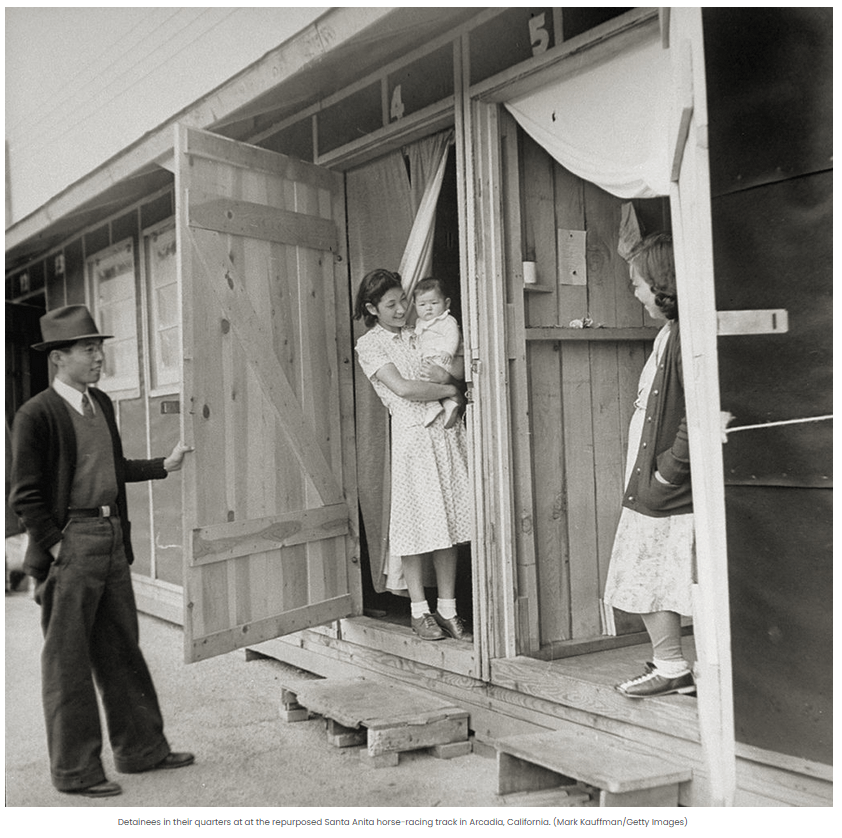
It was officially called the Santa Anita Assembly Area by President Franklin D. Roosevent’s Executive Order 9066. Santa Anita was turned over to the Wartime Civilian Control Administration. Six mess halls fed 3,000 daily at 33 cents per person. Showers were limited. Jobs created included a camouflage net factory. George Takei, as a young boy, was among them before he became a Hollywood actor.
It regally hosted the equestrian events at Los Angeles’ 1984 Summer Olympics.
In 2000, Santa Anita’s property was added to America’s “Most Endangered Historic Places” list, threatened by developer’s plans to turn it into something else seemingly more profitable. It was listed in the National Register of Historic Places in 2006.
In 2025, it served as venue for fire relief support, where victims of the massive wildfires that claimed thousands of homes in Brentwood, Malibu and Altadena could find help. Southern California Edison used the site as a basecamp to restore power to those affected.
It staged the third-ever Breeders’ Cup World Championships in 1986, and it has been the event home 11 times through 2025.
The Breeders’ Cup at Santa Anita provided many sorts of historic moments over the years. Another personal thrill was watching Jim Rome, the So Cal-bred sports-talk show host, own a horse called Mizdirection that won the 2012 and ’13 Breeders’ Cup Turf Sprint — another instance of a gray mare winning against a field of males. Rome had an owners share of Breeders’ Cup Classic favorite and then-undefeated Shared Belief in the 2014 race.
The shared belief in 2009 was Zenyatta had a hold on the racing world. A genuine Southern California experience. Fans in the grandstands wore T-shirts or carried signs that read “Girl Power.” Or “Hillary Who? Zenyatta: First Female President, 2012.”
Under a headline that screamed ‘YATTA, ‘YATTA, ‘YATTA!”, the Daily News’ Modesti wrote: “How do you know Zenyatta is a once-in-a-lifetime racehorse? You watch her effect on everyday people.”
In the afterglow of 2009, Zenyatta was on track to replicate the Classic feat a year later as the Breeders’ Cup moved to Louisville. She was still perfect — 19-0 — when she made her final Southern California appearance at Hollywood Park. It was October of 2010, and I wrote from the heart about my draw to this mare-thee-well as she easily won the Lady’s Secret Stakes at Oak Tree.
A month later, a male horse named Blame handed 6-year-old Zenyatta her first loss, in that Classic, beating her by a head. Can’t blame her for calling it a career after that.

Zenyatta, inducted into the Sarasota Springs, N.Y.-based National Horse Racing Museum Hall of Fame in 2016, left Southern California for breeding at Lane’s End Farm near Versailles, Kentucky in 2010.
Lenny Schulman wrote for Bloodhorse magazine in 2013:

“The mare had more human-like qualities than any horse in memory. She pranced and danced and pawed at the ground in the paddock, signifying she knew it was time to go out and perform. She had already been the center of dozens of charity events as her equipment was auctioned off to raise money for those in need while other donors paid money to come to her Hollywood Park barn and have a meal in her presence.
“Then there was the matter of her running style, loping along behind her field before igniting a sustained drive, employing huge strides to inexorably close the distance between herself and her targets. And there was her giant physical stature of more than 17 hands, the machinery from which those great strides sprung.
“For those of us who watch sports to see those rare athletes that are poetry in motion, Zenyatta running represented the same Godsend as watching Michael Jordan drive to the basket or Willie Mays sprint around the bases or Jim Brown shed a tackler and cut up field.”
On the last day of 2023, Los Angeles Times retired sports editor Bill Dwyre posted a look back on Zenyatta to mark her 20th birthday — she was actually born April 1, 2004, but all thoroughbreds are made a year older on Jan. 1. Dwyre’s best phrase-turning moments are when he recounted the 2009 and ’10 Breeder’s Cup Classics as “two of the most famous scenes in the history of the sport.”
He wrote about Zenyatta’s classic win in the ’09 Classic:
“Creaky old Santa Anita was about to have a resurrection. The Great Race Place would be great again, at least for a day. … The word ‘crescendo’ was crated for moments like this. The noise soared like a jet airplane on takeoff. Seldom have 58,000 people, uniformly this vocally delighted and expressive, produced such an ear-piercing sound. … Handkerchiefs waved, grown men cried and fathers and mothers put their children on their shoulders so they could get a better look at this wonder of the thoroughbred world.”
Town Policy: Another SoCal racing legend
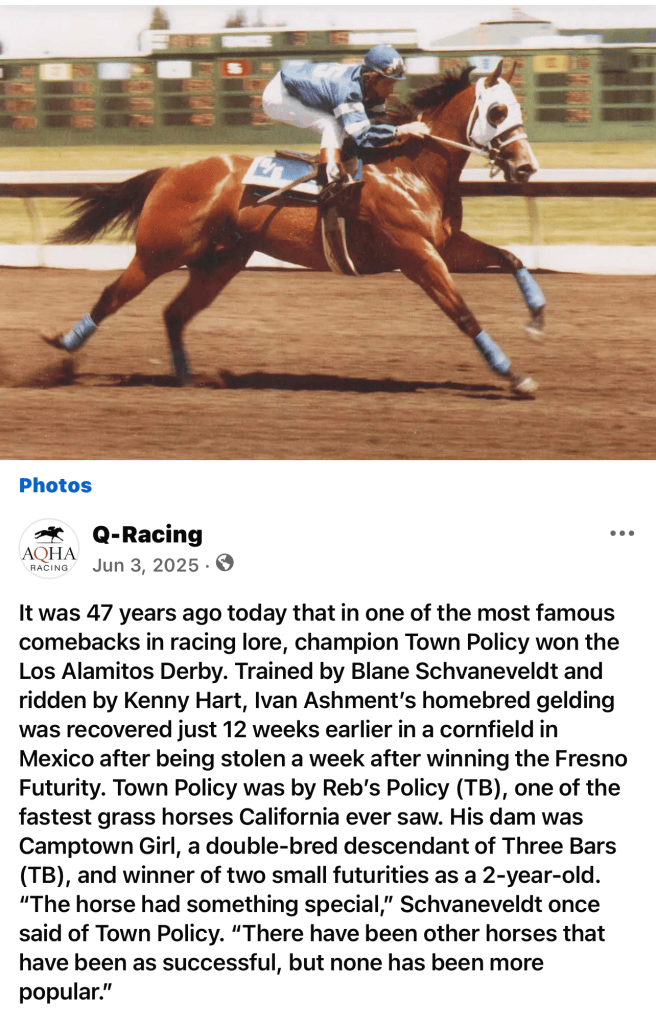
Santa Anita marches toward it’s 100th year of existence. Del Mar is pointed in that direction as well. Hollywood Park got in a good 75 in Inglewood before developers seized it.
One more place to race in Southern California can get lost in the freeway crossings.
Los Alamitos Race Track off the 405 Freeway in Cypress — a city made famous as the birthplace of Tiger Woods — came about as an informal match race venue on Frank Vessels’ ranch in 1947 and held its first official pari-mutuel meeting in 1951. When Hollywood Park closed, it had a major expansion for thoroughbred racing to stay in the Santa Anita/Del Mar circle.
Los Alamitos became more known for its quarterhorse and harness racing — distinct from the longer-running thoroughbreds. It’s like a drag race venue. Line up horses and let them go.
Town Policy won eight of his first nine races as a 2-year-old and was on pace to become the first to win $1 million at his age. Ivan Ashment, a wealthy potato farmer from Idaho, owned Town Policy. Blane Schvaneveldt was its legendary trainer who raised Town Policy from birth, having taken care of his mother, Camptown Girl. Kenny Hart was its well-known rider.
Town Policy was an 8-year-old gelding when he was laid to rest on the Los Alamitos infield track — the first horse given that honor.
The Los Angeles Times’ Steve Lowery wrote in 1989 about how Town Policy had inspired a book, a movie script, and brought an emotional reaction to “virtually everyone who came in contact with him.” What endeared his fans was the face he was shorter than most quarter horses, but had a bigger heart.
How could they not. Town Policy had once been stolen from his stable at Los Alamitos, in 1977. The FBI was on it for six months. Mexican police found it in the state of Durango in a cornfield with a man paid to just watch it. It was undernourished, scratched up, ribs showing, and surviving somehow with a 104-degree temperature. He was taken back to Los Alamitos for recovery.
The Los Alamitos Derby was the highest-profile event for 3-year-old quarterhorses was coming up, but how could Town Policy even be considered for such an event in his condition? Had he not disappeared he would be the overwhelming favorite for this race in 1978. Schvaneveldt entered him, but many thought it was just for sentimental reasons. Hart would ride him during training and see what might be a realistic assessment.
Town Policy not only ran the race, just 10 weeks after he was found near death, but blew by the field in a record time of 21.60 seconds, winning by 2 1/2 lengths.
“He took it as easy as breaking sticks,” Hart said in Lowery’s story.
“It was the loudest I’ve ever heard a crowd at Los Alamitos,” said Brad McKinzie, editor at Quarterweek magazine who drove from Arizona to see Town Policy run that race.
How does that story compare to anything else in sports? As if an Olympic sprinter couldn’t train for six months because he was held captive somewhere, but came back to win gold in the 100-meter dash? Kinda.
He who won 22 races but never quite got to a million dollars in earnings. But not far from it. He is the only horse to sweep Los Alamitos’ three major divisional races (Kindergarten Futurity, Los Alamitos Derby, and Vessels Maturity) in consecutive years as he ran five more years after that Los Alamitos Handicap miracle.
The longer he ran, the more his legend grew. Today, Los Alamitos has the Town Policy Handicap. He’s in the American Quarter Horse Hall of Fame in Amarillo, Texas.
Town Policy is a name that seems like it was pulled out of the pages of “To Kill A Mockingbird.” A guiding principle, a rule, an ethos, for a community to uphold. Los Alamitos upholds the story of its Town Policy. Just anyone anyone who saw him run.
Who else wore No. 4 in SoCal sports history?
Make a case for:
Duke Snider, Los Angeles Dodgers outfielder (1958 to 1962):
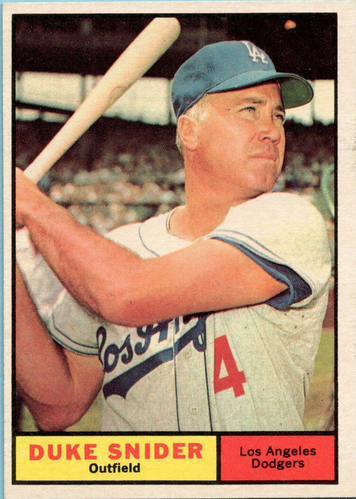
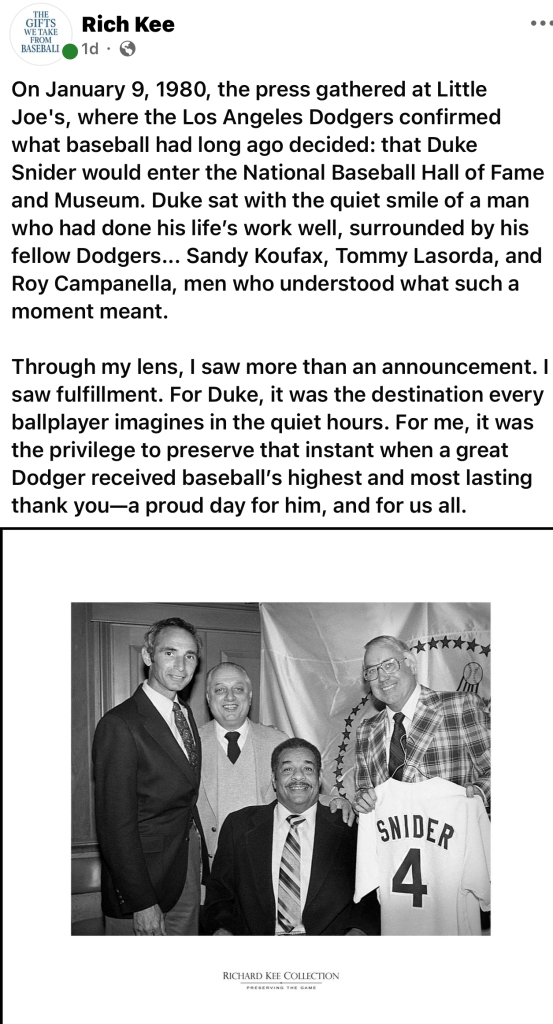
Best known: The franchise rightfully retired his number 4 for all this Compton native accomplished in Brooklyn, allowing the seven-time NL All-Star to take a career victory lap when the Dodgers relocated to Southern California. As Snider also stuck around until the first year at Dodger Stadium in 1962, a feeling as if the circle of Dodger life had been completed. He is one of a few who played for the Dodgers at Ebbets Field, the L.A. Coliseum and Dodger Stadium.
He remains the leader in home runs (389), RBI (1,271) and extra-base hits (814) — as well as 1,123 strike outs. He is also the only player to hit four home runs (or more) in two different World Series (1952 and ’55).
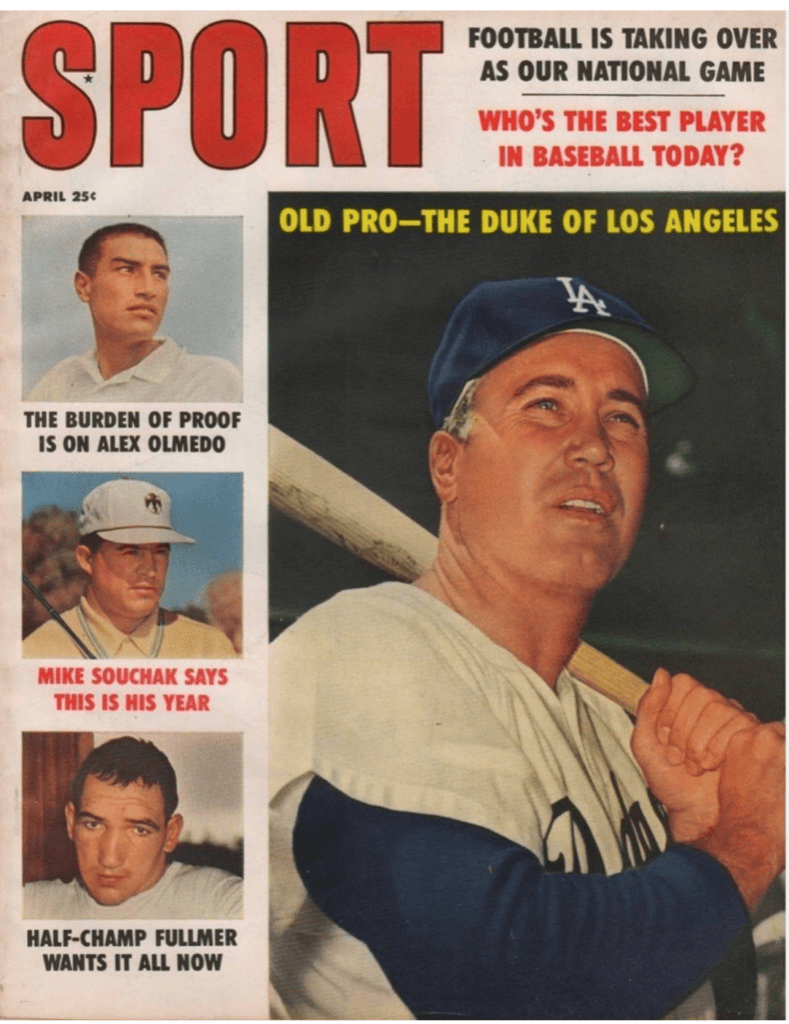
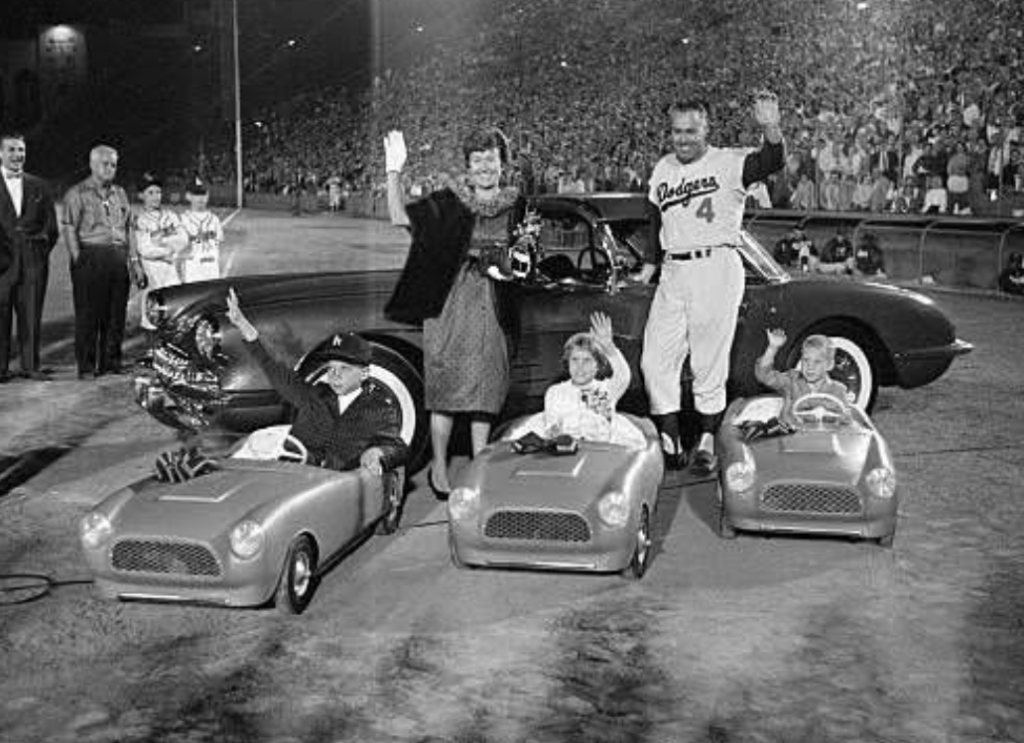
On Aug. 26, 1960, the Dodgers hosted a “Duke Snider Night” at the L.A. Coliseum for their seven-time NL All Star, as his wife, Beverly, waved to the crowd from a new Corvette, while his children enjoyed having their own smaller version of the cars. Snider was 35 in ’63 when he was purchased by the New York Mets as a good-will gesture. The Mets first gave him No. 11, then finally had him wear his famous No. 4 after it had been worn the first 72 games by Charlie Neal, Snider’s former Dodgers’ teammate, who was traded to Cincinnati in July. A year later, the San Francisco Giants purchased his contract and gave Snider No. 28 — the franchise already retired No. 4 for Mel Ott.
Not well remembered: The National Baseball Hall of Fame’s Class of 1980 inductee did not have his No. 4 retired by Dodgers during a major ceremony in 1972 that honored Nos. 42, 32 and 39 for Jackie Robinson, Sandy Koufax and Roy Campanella. The wait to retire Snider’s No. 4 — or at least keep it out of circulation — was long enough to where center fielder Bill North actually had it to wear in 1978.
Rob Blake, Los Angeles Kings defenseman (1989-90 to 2000-2001; 2006-07 to 2007-08):
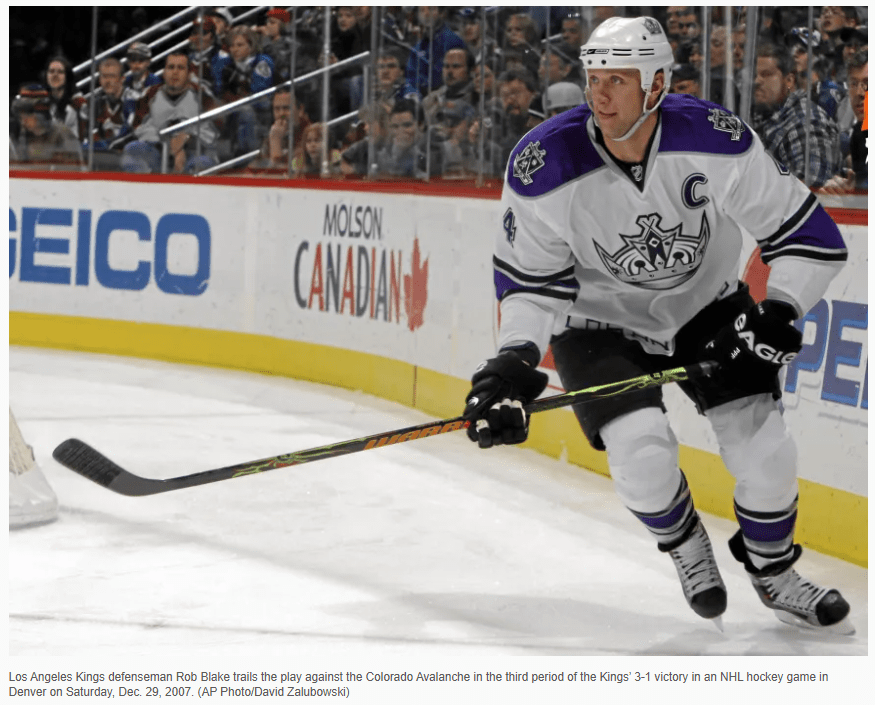
Best known: The seven-time All Star and 1997-98 Norris Trophy winner had his number retired by the Kings in 2015, a year after he was inducted into the Hockey Hall of Fame. In 1995-96, even as Blake suffered an injury that restricted him to six games, he was named the Kings’ new captain after Wayne Gretzky was traded to the St. Louis. Following five seasons playing in Colorado, Blake returned to L.A. and became captain again before the 2007-08 season. Playing 14 of his 20 NHL seasons as a King, he scored 161 of his 24o goals and had 333 of his 537 assists with the franchise in 805 games. After Blake became the Kings’ vice president and general manager in 2017, he lasted there until May of 2025. Listed at No. 89 in the book, “The Hockey 100,” the writeup for Blake includes: “When Blake arrived with the Kings after being chosen 70th in the 1988 draft, Los Angeles proved to be a completely foreign environment to a shy farm kid from Ontario. In time, Blake embraced all the city had to offer. He became an accomplished beach volleyball player and a fair-to-middling surfer. … ‘When we surf it’s probably whenI come up with my best ideas because I can clear my mind totally,’ he said. ‘When I can surf, there’s an energy to the water and an energy to working out.” (He) stepped into the lineup for the final four games of the (1989-90) season, plus eight more in the playoffs (and) teammate Wayne Gretzky memorably predicted a long and distinguished career for him, practically within minutes of seeing him play for the first time.”
Bobby Grich, California Angels second baseman (1977 to 1986):
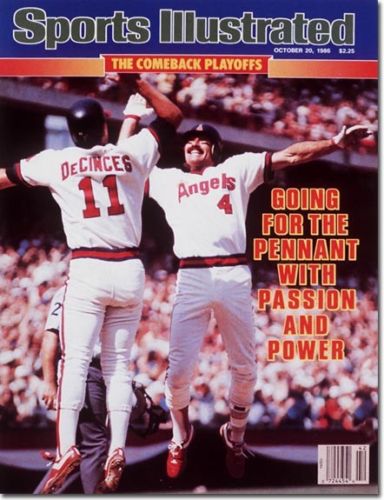
Best known: In 10 seasons with the Angels, Grich made three AL All Star games and was a key part of the teams that made it to the AL Championship Series in 1979, ’82 and ’86. The first inductee into the California/Los Angeles Angels Hall of Fame in 1989, Grich, a first-round draft pick out of Long Beach Wilson High by Baltimore and in the big leagues by age 21 amassing four Gold Gloves, also has had a case for Cooperstown based on his defense, power at his position, a perennial AL MVP candidate with the Angels and a career WAR of 71.1.
Not well remembered: In the strike-interrupted 1981 season, Grich’s 22 homers in 100 games tied for the AL lead, and he led the AL in slugging percentage, winning a Silver Slugger Award.
Byron Scott, Los Angeles Lakers guard (1983-84 to 1991-92, and 1996-97):
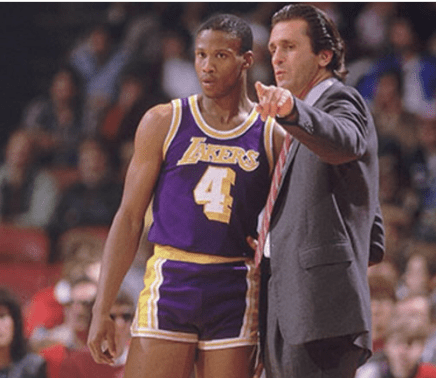
Best known: The Morningside High of Inglewood standout grew up down the street from the Forum and, after drafted No. 4 overall by San Diego, he was traded to the Lakers for star guard Norm Nixon and became a vital part of the Showtime 1980s, playing on three championship teams. A long-range shooter who also had remarkable leaping skills and defensive prowess, Scott led the Lakers in scoring with a career-best 21.7 points in 1987-88. Scott’s contribution to the Lakers in a return for the 1996-97 season was as a mentor to 18-year-old Kobe Bryant — whom Scott would then coach as the Lakers hired him after Mike D’Antoni from 2014 to 2016, and posted the worst record (38-126) of any coach in franchise history who was there more than two seasons.
Russell White, Crespi High football running back (1986 to 1988), Los Angeles Rams running back (1993):
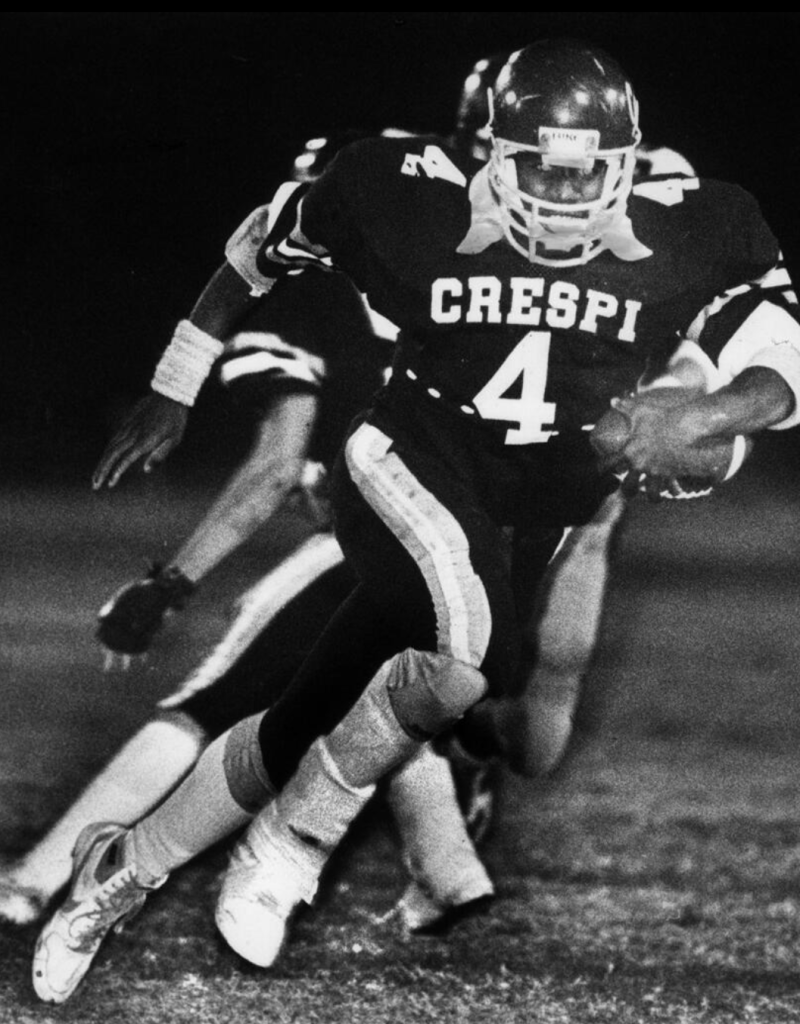
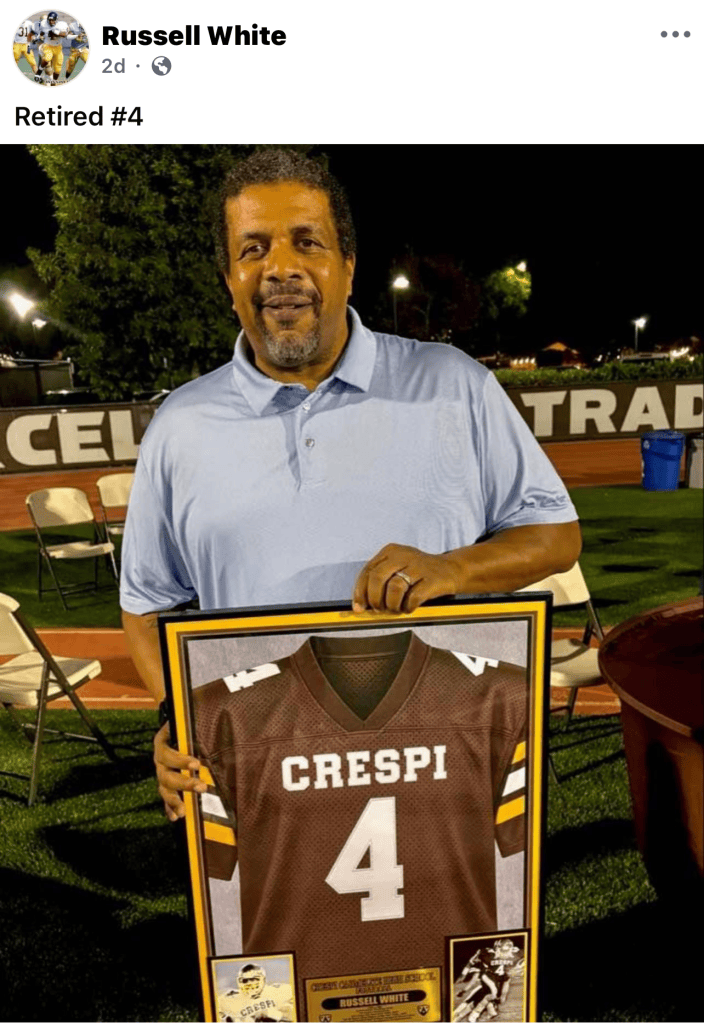
The nephew of former San Fernando High and USC Heisman winner Charles White set California state high school records with 5,998 yards rushing, 94 touchdowns and 568 points in three seasons. Born in Pacioma, Russell White’s sophomore season leading his team with 256 yards rushing in a 49-14 win over St. John Bosco in the Southern Section Division I football title game to finish 13-1, avenging a regular-season loss. No San Fernando Valley football team has won the Southern Section’s highest division before or since. Slowed by injuries as a senior, he gained 1,379 yards on the ground, caught 43 passes for 529 yards and scored 25 touchdowns and was included on the California all-state team. White’s three seasons at Cal from 1991 to ’93 wearing No. 4 produced numbers that made him the school’s all-time leading rusher with 3,367 yards, 15 games of 100-yards or more, 35 rushing TDs and a 5.1 yards-per-carry average. Rather than make himself available for the NFL draft in 1992 when he was All-American as a junior (1,177 yards, 241 attempts, 14 TDs), he stayed to earn a degree in social welfare, important to him as he struggled with academics due to dyslexia. “It’s something I have to prove to myself,” he explained during the ’91 bowl season. “Once I start something, I have to finish it, no matter (what) the other side of the table is offering me. I just felt like it was important that I get my degree. I came here and said I was going to get my degree and some people may not have believed me.” That decision may have resulted in him somehow slipping to the third round of the ’93 draft, taken by the Los Angeles Rams, but White could live with that. Wearing No. 44, he played in just five NFL games primarily as a kick returner and didn’t catch on with tryouts with Green Bay or San Francisco. White was the athletic director and head football coach at Desert Chapel High School in Palm Springs, winning two CIF titles. He became commissioner of the Oakland Section of the California State High School organization. A two-time Cal Hi Sports California High School Football Player of the Year, he was inducted into the inaugural California High School Football Hall of Fame in 2023 and Crespi High retired his No. 4 in 2026.
Trevor Ariza, Westchester High basketball (2000-01 to 2002-03), UCLA basketball (2003-04): California’s Mr. Basketball as a high school senior spent just one year at UCLA (11.6 points, 8.4 assists) before starting on an 18-season NBA career. That included two stops as a defensive specialist with the Los Angeles Lakers (2007-08 to 2008-09, wearing No. 3, and 2021-22, wearing No. 1).
Penny Toller, Long Beach State basketball guard (1986 to 1989): Considered one of the best ever collegiate players under future Hall of Fame coach Joan Bonvincini, Toller was inducted into the Long Beach State Athletic Hall of Fame in 1995 and had her No. 4 retired in 2007. During her career Long Beach State made it to the Final Four in 1987 and ’88 and she set records for career assists and career free-throws.
Evan Mobley, USC men’s basketball (2020-21): The 7-foot freshman from Rancho Christian High in Murietta lasted one COVID season, was named Pac-12 Player of the Year, Freshman of the Year, Defensive Player of the Year and second team All-American for leading the Pac-12 with 8.4 rebounds and 2.9 blocks a game to go with 16.4 points a game. In the conference tournament quarterfinals, Mobley had a career-best 26 points with nine rebounds and five blocks against Utah. His father, Eric, had been an assistant at USC since 2018 and this set the team up for an Elite Eight run before a loss to Gonzaga ended their season at 25-8. Mobley was the No. 3 overall pick in the 2021 NBA Draft by Cleveland.
Have you heard this one:

Rodney Anderson, Cal State Fullerton basketball guard (1999-2000):
Anderson, who grew up in South L.A. and starred at Washington High, played just one season as a freshman with the Titans, starting one game, averaging 3.4 points in 24 contests. Some 25 years later, his LinkedIn account identifies him as Dr. Rodney Anderson, Assistant Director for the Male Success Initiative at CSF. Anderson exists with an elaborate electronic chair that transports him to his shower, bathroom and gym, controlled by futuristic computer named Alexander who responds to his commands. In 2000, gang member’s bullets ended his basketball career in a case of mistaken identity. His framed jersey is next to him at the home he shares with wife Monique courtesy of ABC’s “Extreme Makeover: Home Edition,” Here’s more of the story. And one right after his injury. was appointed an athletics academic counselor at CSF in 2008, earning his master’s degree in counseling that year, and earned his bachelor’s degree in human services in 2005.
Jimmy Piersall, Los Angeles/California Angels outfielder (1963 to 1967):
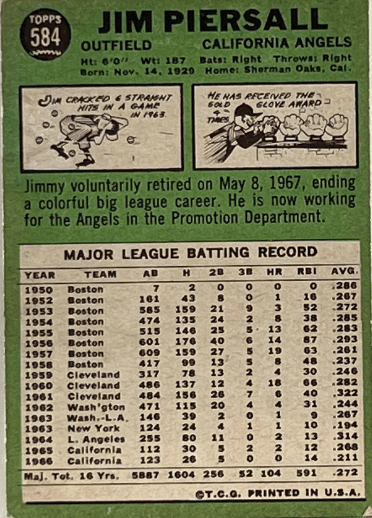
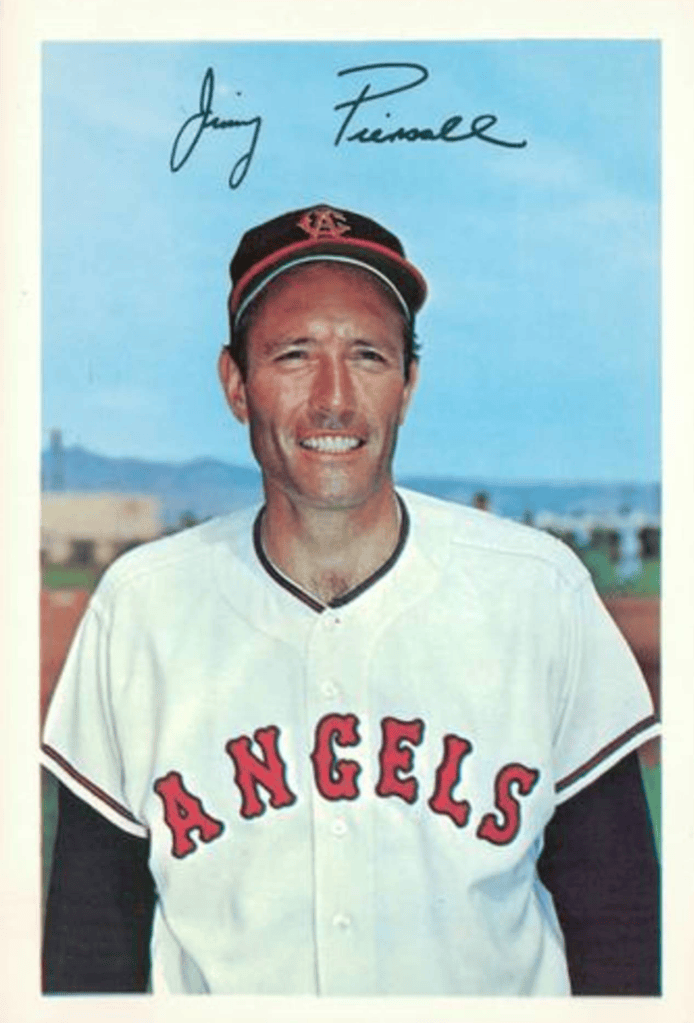
The Angels were the last of five teams Piersall played for in his 18 seasons, but one could have imagined more teams would have enjoyed having him on their roster based on … his “colorful” personality?
What was there to fear?
Flip his final 1967 Topps card over to show he was done by the time the card came out. He had done enough influencing the younger Angels players, like Jay Johnstone.
Johnstone became available to the Angels because the Mets released him. The Mets released him because of a game on June 23, 1963, when he ran backward around the bases after hitting his 100th career homer. He said he did it because he was upset that Mets teammate Duke Snider’s recent 400th career home run did not get enough media attention, so he wanted this one to make the front page of the New York newspapers. It did. Mets manager Casey Stengel was not amused and released Piersall just two days later. As noted in this SABR post about the event: “Piersall played in 13 more games for the Mets and, having batted only .194 for the team, was released on July 27. He signed with the Angels and played there until he was released on May 12, 1967. The landmark home run off (Philadelphia’s Dallas) Green was the only round-tripper he hit for the Mets. Piersall notched four homers with the Angels, circled the bases forward each time, and concluded his career with a total of 104 home runs.” His SABR bio also includes: “Piersall enjoyed his four years in California off the field. He took acting classes, which got him many roles in commercials and television shows. He appeared, mainly as himself, opposite Lucille Ball, Milton Berle, and Don Rickles on their programs. He hosted The Jimmy Piersall Show on radio station KABC six nights a week during the offseason. All of this fame garnered him many appearances at banquets and clubs during his days there.” For more, his two autobiographies: “Fear Strikes Out,” with Al Hirshberg (Atlantic, Little, Brown, 1955, which became the title of a film about him starring Anthony Perkins in 1957) and “The Truth Hurts” with Dick Wittingham (Contemporary, 1985).
Tony Conigliaro, California Angels outfielder (1971):
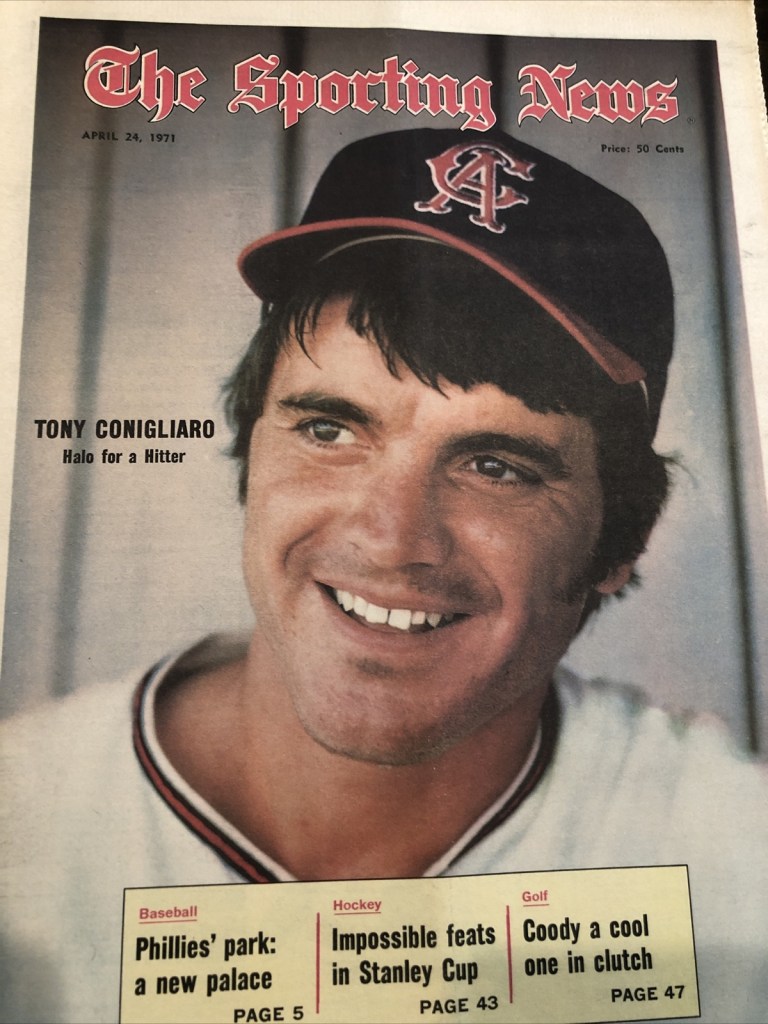
At age 26, still determined to recover from a horrible beaning he endured in Boston by Angels pitcher Jack Hamilton in August of 1967, Conigliaro came out with as 1970 book, “Seeing It Through: The Story of a Comback,” in a season where he hit 36 homers with 116 RBIs for the Red Sox. He was also playing with his brother, Billy. But that offseason, the Red Sox sent Tony to the Angels in a six-player trade. David Canteano wrote in a 1997 book “Tony C: The Triumph and Tragedy of Tony Conigliaro” that Conigliaro’s headaches returned as he hit just .222 with four homers and 15 RBIs in 74 games before the All Star break. “Some of the Angels lost patience with him and began to mock him,” Cateano wrote. “Finally, fed up, he packed his bags and left the team after the July 9 game, announcing his retirement. He told reporters that he simply couldn’t see well enough, but took the Red Sox off the hook for having dealt tarnished goods. “My eyesight never came back to normal. … I pick up the spin on the ball late, by looking away to the side. I don’t know how I do it. I kept it away from the Red Sox. … I had a lot of headaches because of the strain to see. … My search for that damn baseball.” In October 1973 he talked about wanting to try a comeback with the Angels in 1974, and the team asked him to play first at Triple A Salt Lake City, so he declined. The Angels gave him his outright release in November 1974 so he could rejoin the Red Sox for 21 games to start the 1975 season at age 30. He suffered a debilitating heart attack in 1982 and died at 45 in 1970.
Kevin Pillar, Cal State Dominguez Hills baseball center fielder (2008 to 2011), Los Angeles Dodgers outfielder (2022), Los Angeles Angels outfielder (2024) via Chaminade High:
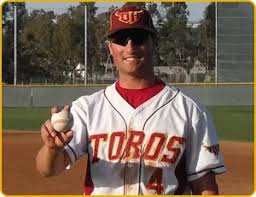
Born in Tarzana, Pillar had an All-CIF season hitting .463 as a senior at Chaminade High in West Hills and went to Cal State Dominguez Hills where he set an NCAA Division-II record in 2010 by hitting in 54 straight games. Toronto waited until the 32nd round — which doesn’t even exist any more — before drafting Pillar., where he managed to get in 13 seasons from 2013 to 2025, including 2022 with the Dodgers (wearing No. 11) and 2024 with the Angels (wearing No. 12). “The things that I’m most proud of is, first of all, that I made it,” Pillar told MLB.com in 2025. “I was drafted in the 32nd round, I was the 979th overall pick. I played at a Division II school. The fact that I even made it was an accomplishment. The fact that I survived 10 years and I’m part of that small fraternity is an amazing accomplishment.” He added that it helped growing up listening to Vin Scully call Dodgers games. “Vin Scully talked to me in my household. Growing up, he made me love baseball. He was part of the reason I felt like I could be a Major League Baseball player, because he would talk about the Major League Baseball players like they were no different than me. … There was always a part of me that he made believe that I could do it because of the way he talked about baseball players. It was kids that grew up in a household just like mine, played high school baseball just like I did, had other interests and hobbies. It never left me, being a fan, because I don’t think I was ever really expected to get to where I got to.”
Joe McKnight, USC football running back (2007 to 2009):
McKnight told reporters on National Signing Day that was influenced by going to USC instead of hometown LSU after speaking to former USC running back Reggie Bush — which would have been an NCAA violation until both parties said he didn’t happen. During his freshman season, McKnight painted “I need $” under his eye black to show a desire to play in the NFL and challenge the NCAA financial restrictions. In his junior and final USC season, it was reported that McKnight was granted free use of a 2006 Land Rover registered to a Santa Monica businessman, in violation of NCAA rules. USC did not clear McKnight to play in the 2009 Emerald Bowl, he passed on playing in a final year of eligibility and, with 2,213 yards rushing and 13 TDs in 36 games over three seasons, he was taken in the fourth round by the New York Jets in the 2010 NFL Draft. He died at age 28 on December 1, 2016 when he was fatally shot in what was called a road-rage incident in Louisiana.
John Stevenson, El Segundo High baseball coach (1960 to 2009):
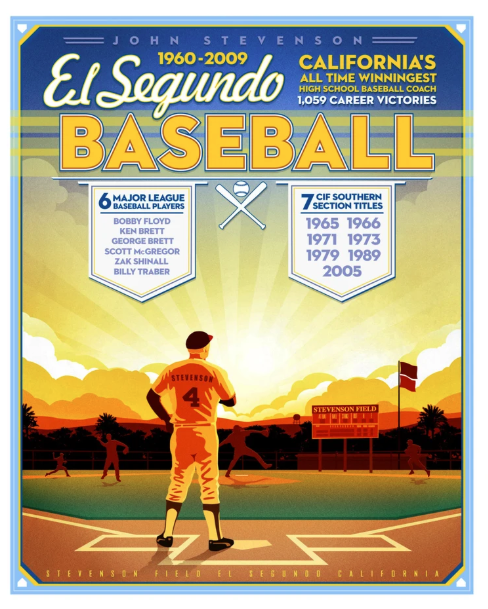
“El Segundo is a baseball town because of John Stevenson,” said Bobby Brett, one of four brothers to play for the coach from 1963 to 1971, going on to play at Cal Poly Pomona and signing with the Kansas City Royals. “John made good players great players. When you look at my brothers Ken and George, he made them major league players.”
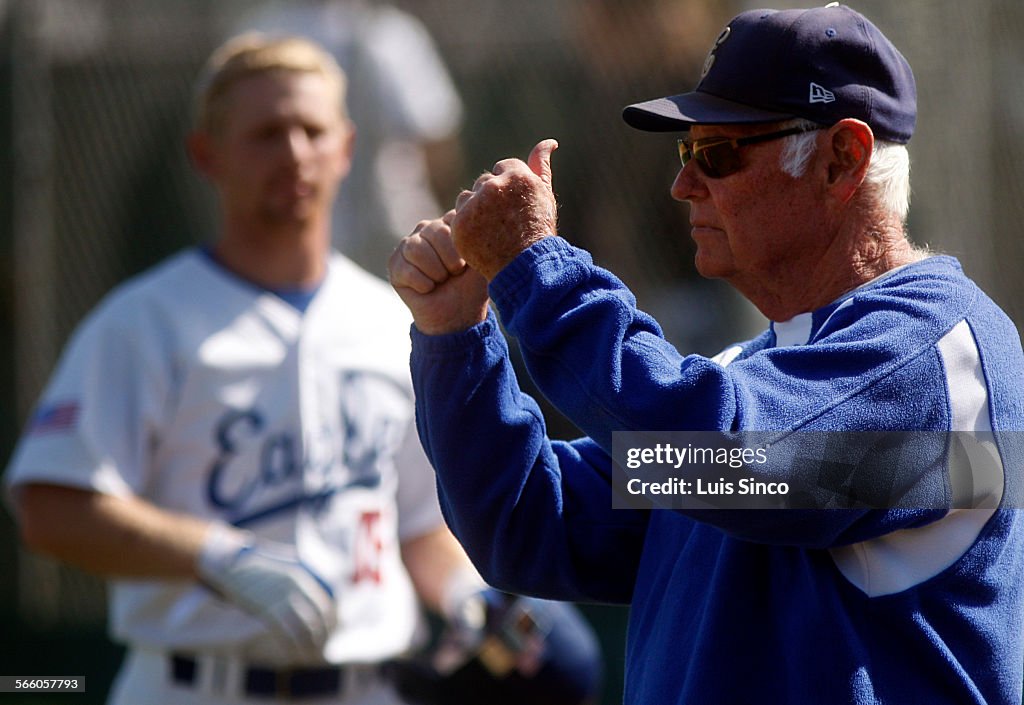
Stevenson, with his No. 4 jersey and might look like a high school version of Baltimore Orioles skipper Earl Weaver, amassed more victories than any other coach in the history of California — 1,059, against 419 losses. It started in 1960 with a head coaching tenure at age 26. “If I hadn’t won right out of the gate, I would have been history,” Stevenson said in 1989. “The people were very leery of me because, in their eyes, they had put all the effort into developing the kids. As time went on, they accepted me.”
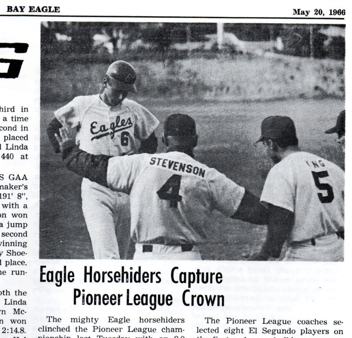
El Segundo teams reached the playoffs in 42 of Stevenson’s 50 years, winning 30 league championships and seven CIF titles in 13 appearances. Stevenson’s son, Eric, played second base on El Segundo’s 1989 CIF championship team. In March 2007, Stevenson won his 1,000th game becoming the first coach in California — and only the seventh in the nation — to accomplish the feat.
Born Oct. 22, 1933, Stevenson grew up in Manhattan Beach and attended Redondo High School (a catcher, Class of 1951). He also played at El Camino College (inducted into the school’s Hall of Fame in 1993) and then went to UCLA where he took a class taught by John Wooden. The legendary Bruins basketball coach influenced him as he took over the El Segundo baseball program as well taught geography for 30 years.
The 12 acres of Recreation Park at Grand Avenue and Eucalyptus Drive in El Segundo has volleyball courts, a paddle tennis court and a roller hockey rink, but it is best known for all its baseball field since the 1950s. John Stevenson Field, branded in 1992 for the Eagles high school games, is next to George Brett Field, named in 1999 where the Little Leaguers play.
This was after a Wilson sporting goods ad came into circulation:
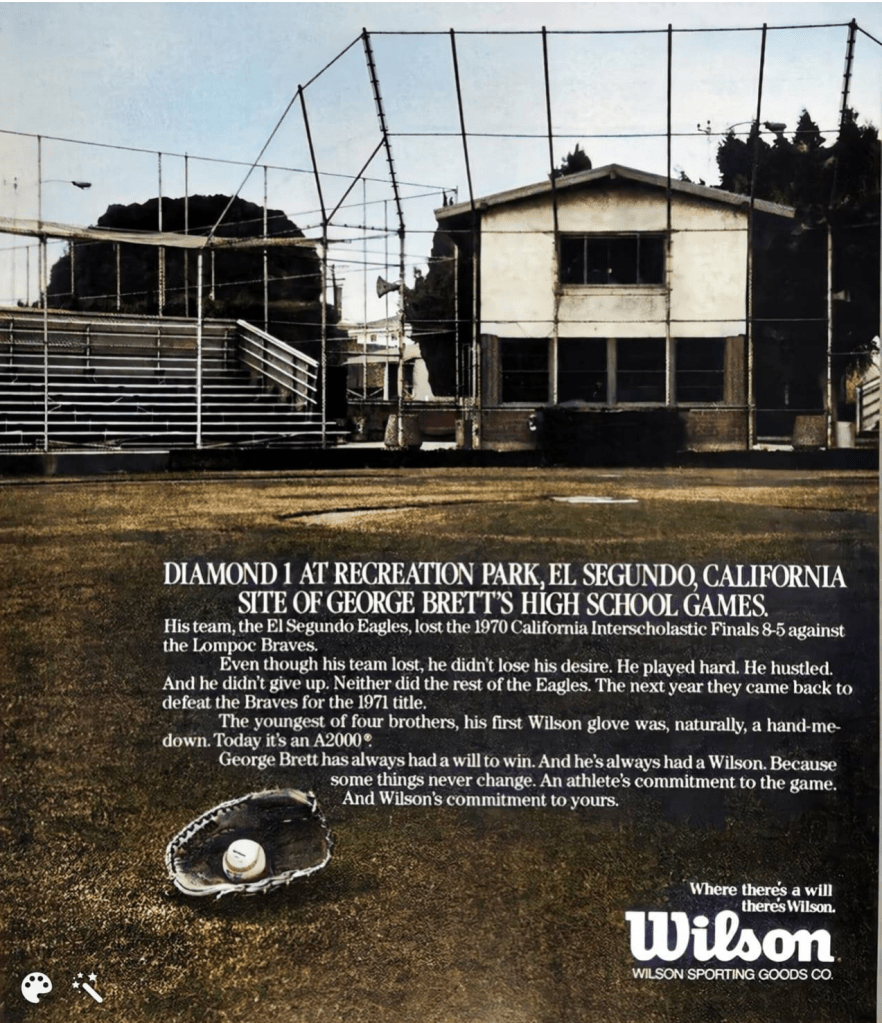
Stevenson’s teams included players such as George and Kemer Brett, older brothers John and Bobby Brett, as well as MLB pitcher Scott McGregor and MLB umpire Derryl Cousins. Stevenson was 76 when he died in 2010.
Chad Baker-Mazara, USC basketball guard (2025-26):
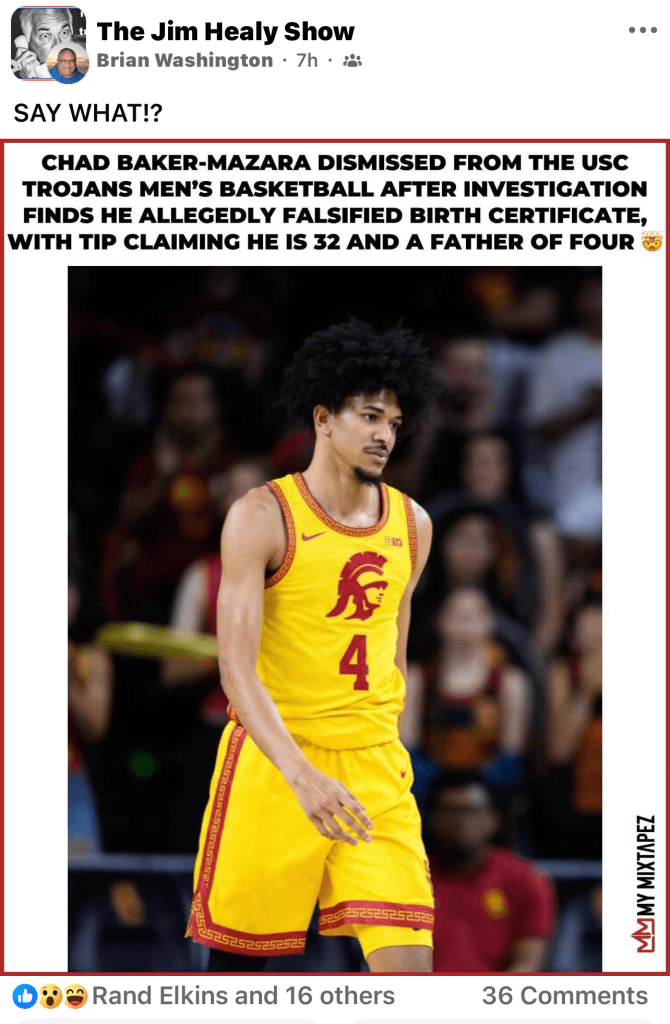
The last time Trojan basketball fans saw team-leading scorer Baker-Mazara on the court when he was left during a game against Nebraska. He then officially quit before the end of the season as the team was trying to secure a final spot in the NCAA Tournament. The school announced that the 6-foot-7, sixth-year senior playing for his fifth different school was no longer on the roster, and the Los Angeles Times reported that it was “the accumulation of issues that led to his exit.” He was USC’s top scorer at 18.5 points per game. The previous season he started on Auburn’s Final Four team but entered the transfer portal. He spent his freshman season at Duquesne, his sophomore year at San Diego State and then went to junior college before landing at Auburn to become an All-SEC honoree.
We also have:
Luke Walton, Los Angeles Lakers forward (2003-04 to 2011)
Ron Harper, Los Angeles Lakers guard (1999-2000 to 2000-01)
Alex Caruso, Los Angeles Lakers guard (2017-18 to 2020-21)
Greg Zuerlein, Los Angeles Rams punter (2018 to 2019, also in St. Louis from 2012 to 2017)
Aaron Afflalo, UCLA basketball guard (2004-05 to 2006-07)
Trevor Wilson, UCLA basetball guard (1986-07 to 1989-90)
Dave Hutchison, Los Angeles Kings defenseman (1974-75 to 1977-78)
Omar Gonzalez, Los Angeles Galaxy defender (2008 to 2015)
Gene Mauch, California Angels manager (1981 to 1982, 1985 to 1987)
Doug Rader, California Angels manager (1989 to 1991)
Anyone else worth nominating?


1 thought on “No. 4: Zenyatta”