
This post is part of a media project called SoCal Sports History 101: The Prime Numbers from 00 to 99 that Uniformly, Uniquely and Unapologetically Reveal The Narrative of Our Region’s Athletic Heritage. Pick a number, and consider the list of athletes attached to it. Who wore it best? Or, what’s the most compelling story linked to it? Any person, place or thing is in play with Southern California connections. Star power, transformational achievement, longevity, notoriety and quirkiness all factor in. Whatever leads to a lively discussion and interpretation.
The most obvious choices for No. 29:
Eric Dickerson: Los Angeles Rams and Los Angeles Raiders
Rod Carew: California Angels
Adrian Beltre: Los Angeles Dodgers
Tarik Skubal: Los Angeles Dodgers
The not-so-obvious choices for No. 29:
Eric Turner: UCLA football
Bobby Knopp: Los Angeles/California Angels
Harold Jackson: Los Angeles Rams
Billy Smith: Los Angeles Kings
The most interesting story for No. 29:
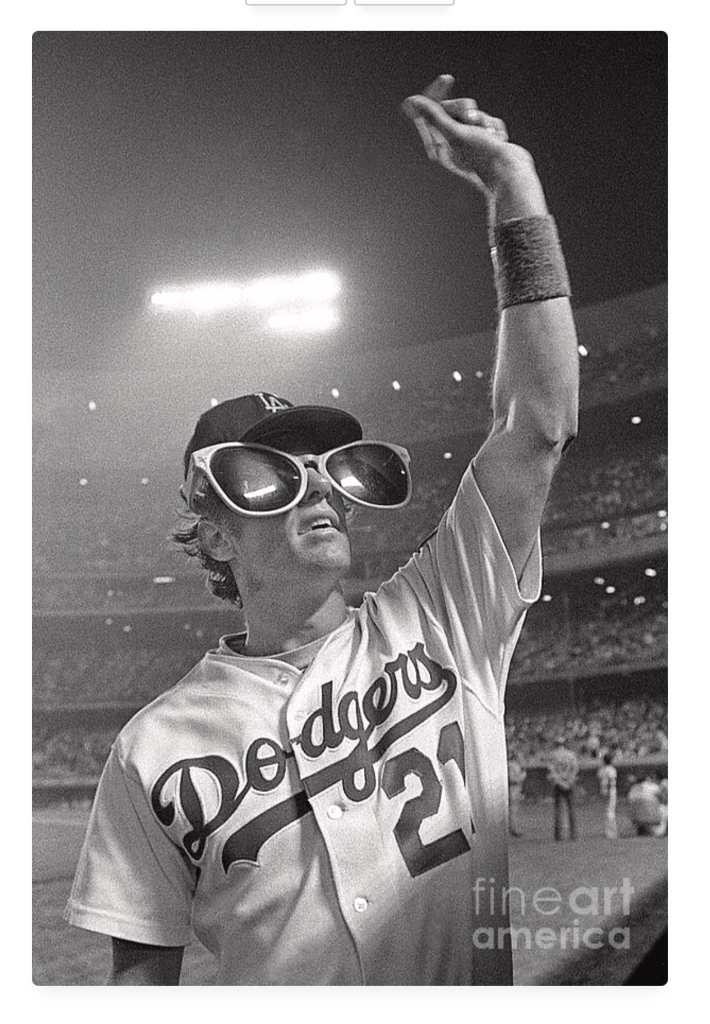
Jay Johnstone: Seattle Mariners leadoff hitter in the film “The Naked Gun: From the Files of Police Squad!” (1988), California Angels outfielder (1966 to 1970), Los Angeles Dodgers outfielder (1980 to ’82, 1985), via Edgewood High in West Covina.
Southern California map pinpoints:
Arcadia, West Covina, Anaheim, Los Angeles, Hollywood, Granada Hills, San Gabriel
Reference books on the subject:
“Temporary Insanity: The Uncensored Adventures of Baseball’s Craziest Player,” by Jay Johnstone with Rick Talley, 1985
“Over the Edge: Uncensored Exploits of Baseball’s Craziest Player,” by Jay Johnstone with Rick Talley, 1988
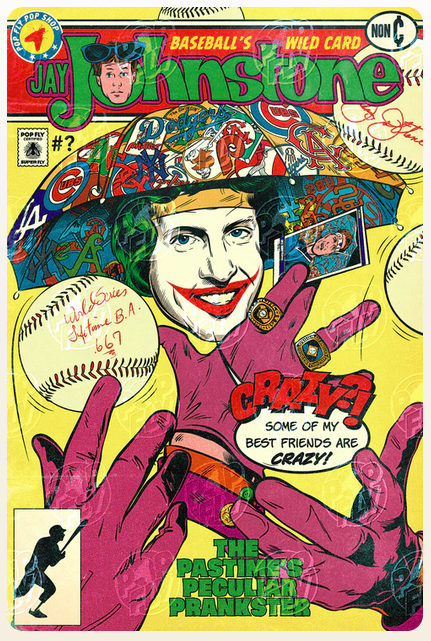
“Some of My Best Friends Are Crazy: Baseball’s Favorite Lunatic Goes in Search of His Peers,” by Jay Johnstone with Rick Talley, 1990
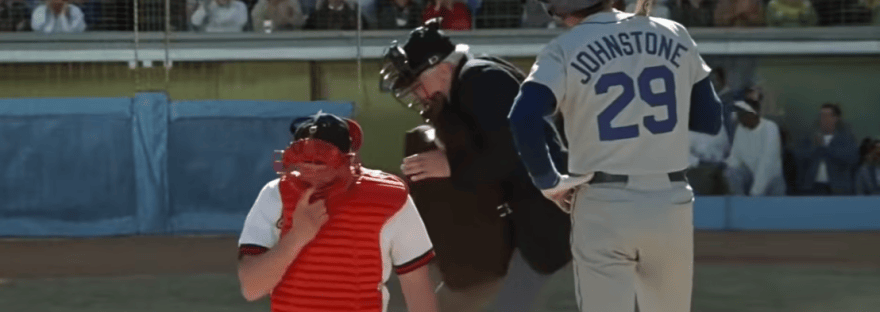
The second Jay Johnson stepped up to the plate at Dodger Stadium wearing No. 29 for the Seattle Mariners, the unraveling daffiness was just beginning.
Aside from the fact the Mariners were not one of the eight MLB teams Johnson suited up for during his 20 Major League Baseball seasons, which started as a member of the Angels of Los Angeles in the mid-1960s and ended with the Dodgers of Los Angeles in the middle of the 1980s. Or that of the seven jersey numbers he wore, No. 29 wasn’t one of them.
The most noticeable tell — Johnson was digging into the right-handed batter’s box, a place he never ventured as a natural left-handed swinger that he was, and didn’t seem to know how to hold his hands on the wood — could have been a reason for the umpire to check his bat to makes it wasn’t full of confetti.
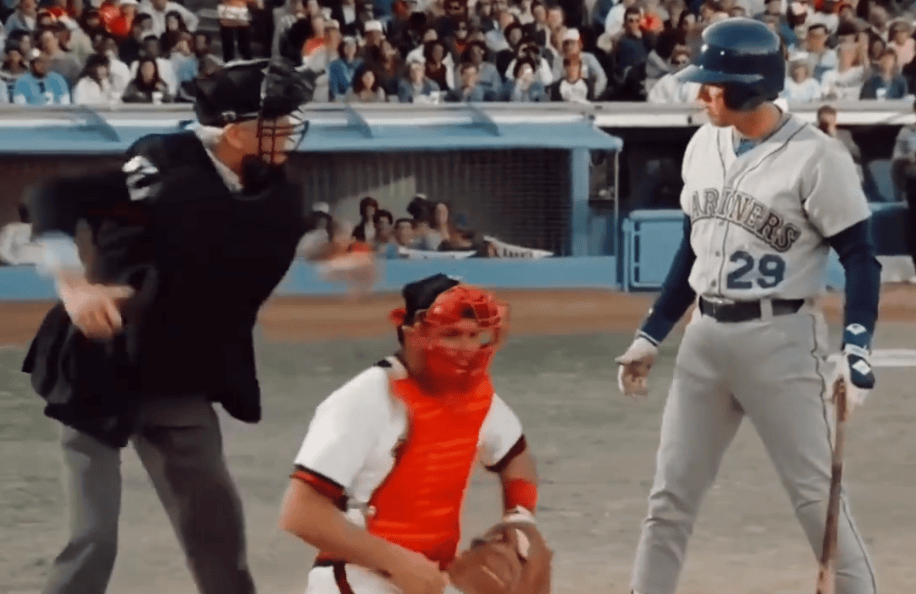
But it wasn’t just any home-plate ump sizing up this player with a generic oversized Little League helmet. It was Leslie Nielsen.
There may be no better package deal to best unpack Johnstone’s contribution to baseball — an ability to laugh at his own expense, by someone who was Type A in aspirational absurdity, and understood how to the jock in jocularity, and the player in playfulness. His absurd but credible role in “The Naked Gun: From the Files of Police Squad!” from 1988 will be around now forever.
Whether or not he followed the script, at least he tried to just be himself. His improv, as he once explained, might have actually improved the scene had the director just kept the cameras rolling.
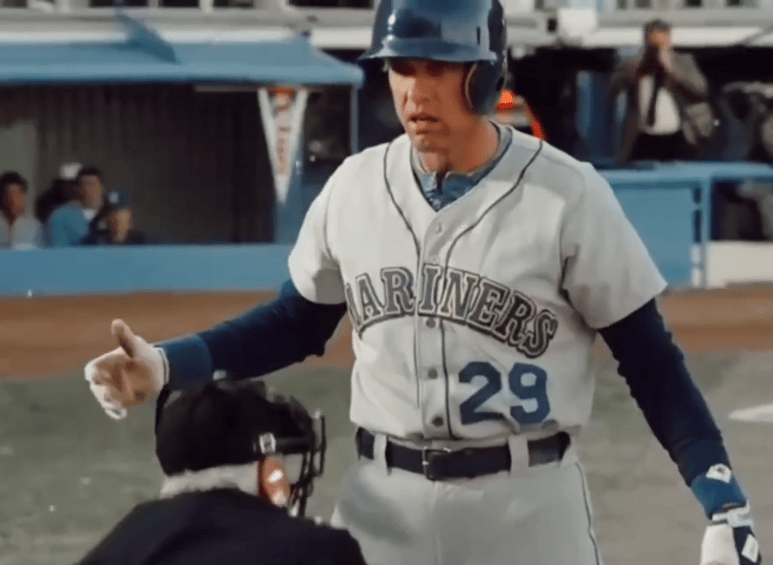
Larry Stone of the Seattle Times explained it this way: Jay Johnstone was a Seattle Mariner for one day. One at-bat, if you want to get technical. Surely, if you are of a certain age, you know where I’m going with this. Yet that lone cinematic plate appearance immortalized Johnstone in comedy history. Even if he did strike out while looking at three pitches. And, I promise, I’ll quit calling you Shirley — to cross-reference another classic Leslie Nielsen movie.
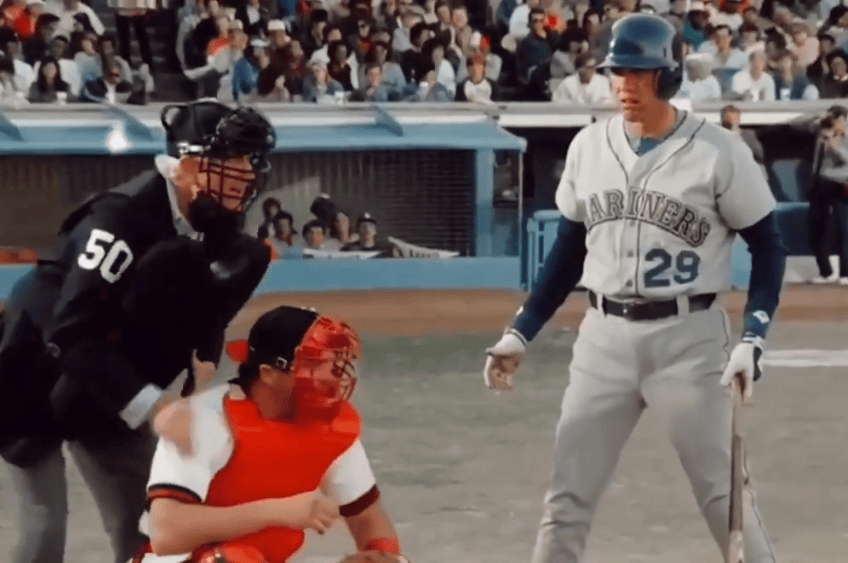
In a made-up game, facing a faux California Angels pitcher at Chavez Ravine, the more nonsensical the better.
Nielsen, as Lt. Frank Drebin, infiltrated the proceedings disguised as the plate umpire with the primary job to frisk every player — the assumption was one of them was involved in a plot to assassinate the queen of England, who for some reason was in attendance. Keep your eye on that zombied-out Angels DH wearing No. 44.
Johnstone said he didn’t hesitate when director David Zucker called to see if he’d like to be in the movie. He wasn’t the only big-leaguer — Reggie Jackson had a key role. Then there was O.J. Simpson, aka Nordberg, allowed to carry an actual weapon.
“It took six hours to film eight minutes,” recalled Johnstone.
At one point when Nielsen patted him down between pitches, Johnstone said his ad-lib cracked up his fellow actors.
“Zucker said, ‘Cut, cut, no lines!’ ” Johnstone recalled. “I said, ‘But it’s funny.’ He said, ‘I don’t care. No lines.’ They had to re-shoot.”
Johnstone explained how he was instructed to have the bat of his backswing smack Nielsen’s mask, sending him careening backward into the backstop screen.
“The first time, I didn’t hit him hard,” said Johnstone. “He said, ‘No, you’ve got to hit me. I want it to look real.’ So I cranked it up and whacked him. That’s what Leslie wanted, to make it look real.”
As for why he batted right-handed, Johnstone was told it was all about camera angles.
Then look at the fans in the stands. Maybe that’s the first test of how the COVID-19 cardboard cutout compromise came to be decades later.
“I said, ‘OK, because it’s the movies’,” recalled Johnstone of the non-fans.
Still not hearing the audience react had to make this a tough act for Johnstone. And a tougher act to follow.
For the first 81 games of his Triple-A career as part of the Los Angeles Angels’ franchise, Johnstone actually was a Seattle professional baseball player.
The 1966 Seattle Angels, eventual champions of the Pacific Coast League, remain the last team from the Emerald city to win a pro baseball championship. That alone made Johnstone a bit of a local legend.
On that roster that included a group of Angels’ veterans trying to claw their way back to the big leagues, Johnstone was with Rick Reichardt, Andy Messersmith, Rudy May, Marty Pattin and Clyde Wright trying to find the right pathway to the bigs.
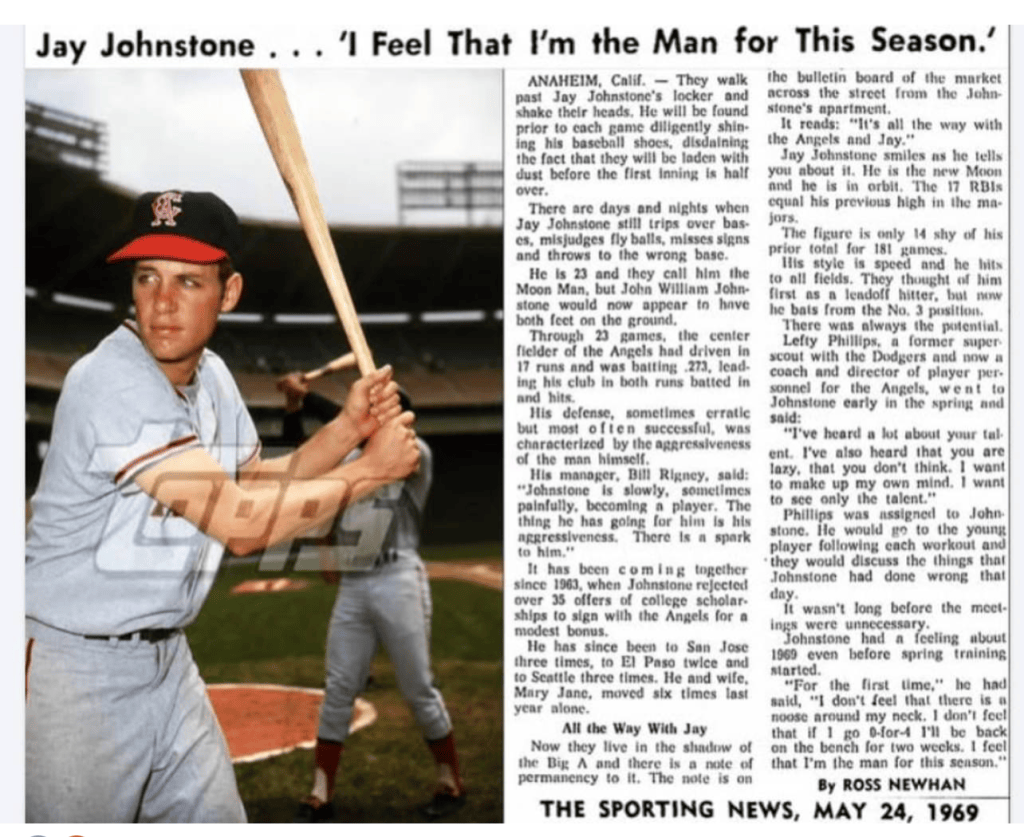
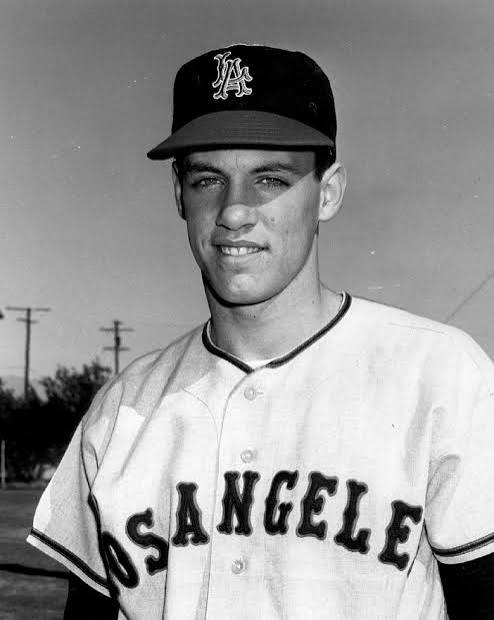
The Angels were able to sign the 17-year-old Johnstone to a $35,000 bonus out of Edgewood High in West Covina. He had been attracting college football recruiters for T-formation quarterback skills on the football team.
Born in Manchester, Conn., Johnstone moved West with his family when he was 3. His father, Jack, was in combat in the South Pacific with the U.S. Army in World War II. During the war, he met an Australian woman, Audrey Whebell, and they married. Jay was the oldest of their three kids, officially named John, after his dad.
According to his SABR bio, Johnstone told the Christian Science Monitor in 1968 that his father greatly influenced his competitive spirit.
“I’d get three hits in a Little League game and be afraid to face him. He’d want to know why I didn’t get four. I’d always know what his reaction would be.”
Jack Johnstone, once good enough to sign with the St. Louis Cardinals, he never got a chance to play pro ball because he went into the service.
A month before his 20th birthday, Jay Johnstone decided that, even though he was in the minor leagues, there was value enlisting to be in Marine Corps Reserve as a way to serve his country during the Vietnam War.
Sent back and forth between Seattle and Anaheim in ’67 and ’68, Johnstone eventually stuck the landing with the Angels full time in ’69. He was credited with preserving Wright’s no-hitter in the seventh inning against Oakland on July 3, 1970 when he chased down a fly ball hit by Reggie Jackson to straightaway center field just in front of the wall.
Johnstone had instinctual survival ability to remain on whatever MLB roster would have him over the years. Even when he once found himself back in Triple A at age 27 for Oakland’s Tuscon affiliate, and again at age 28 for Philadelphia’s Toledo affiliate, Johnstone not only didn’t quit, but he met the challenge, learning to play all three outfield positions, a little first base, refine the role of pinch hitter by being as loose as possible.
Or, what some may define as being eccentric. Not a surprise one of Johnstone’s biggest influences was Angels outfielder Jimmy Piersall, in a class by himself as far as going against the grain as he finished the last five of his 17 MLB seasons with the Angels from 1963 to ’67.
“Jimmy Piersall once told me that as long as it’s not derogatory, get your name in the paper any way you can,” Johnstone once said. “That’s never been my goal, but I never minded all the talk about being a flake.”
Bill Rigney, the Angels’ first manager, admitted: “I plead guilty to assigning Jay Johnstone and Jim Piersall as roommates. It was an easy decision. I didn’t want to screw up two rooms.”
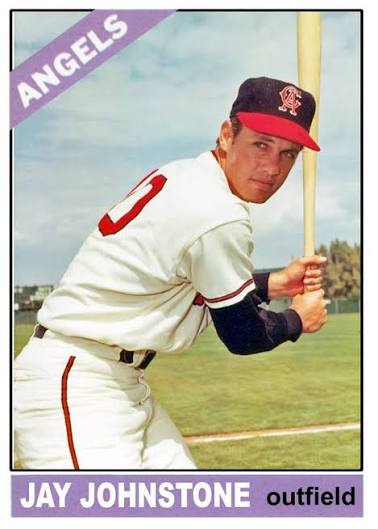
Maybe not such a coincidence that Johnstone’s lifetime batting average of .267 with 102 home runs was similar to what Piersall’s .272 mark and 104 homers.
As one scribe put it about Johnstone specifically but about clubhouse comedians in general: “A pop-off guy can’t be a pop-up guy.
At some point during his early years with the Angels, Johnstone was called “Moon Man,” as teammate Buck Rodgers said. One day Johnstone lost a ball in the sun, “but when he came back to the bench he said, ‘I lost it in the moon’,” said Rodgers.
Josh Wilker, author of “Cardboard Gods,” wrote in a 2009 post about Johnstone:
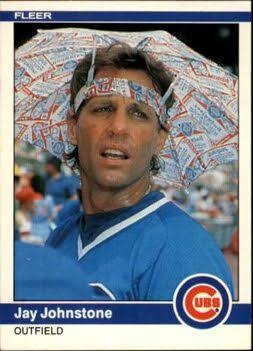
“(He) posed on a 1983 card wearing a Budweiser umbrella hat. I don’t have that card, but I understand that if one card had to be chosen to represent Jay Johnstone, one of the game’s more renowned pranksters, it would be the one that shows him to be sympathetic to the practice of imbibing intoxicants and ridiculously safe against accruing moisture on any part of his head or neck.”
In his first postseason appearance for the Phillies in 1976, Johnstone went seven for nine (hitting .778 with a 1.911 OPS) and three RBIs in a three-game National League Championship Series loss to Cincinnati. In the 1978 World Series, he became part of the New York Yankees team that outlasted the Dodgers for the title.
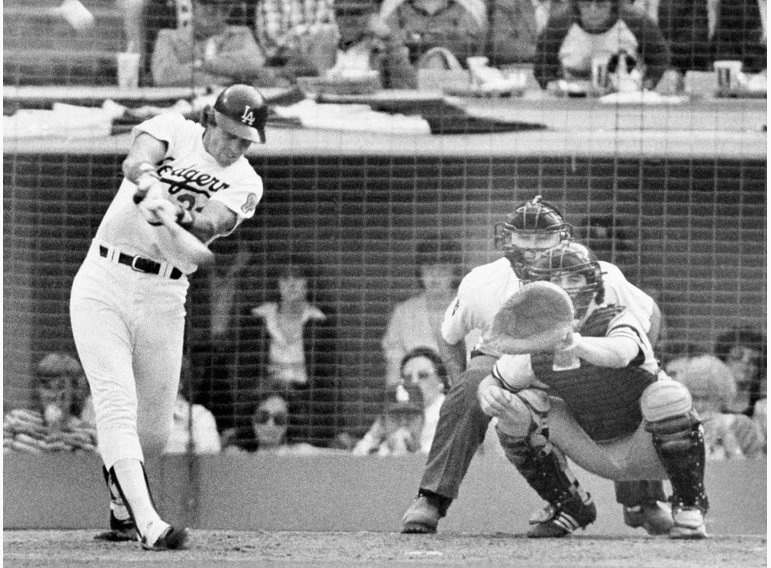
The roles reversed when Johnstone made his biggest contribution to the Dodgers in Game 4 of the 1981 World Series, on Oct. 24, against the Yankees. Trailing 6-3 in the sixth, Johnstone followed Mike Scioscia’s walk with a pinch-hit, two-run homer off Ron Davis to pull the Dodgers to within 6-5. The Dodgers won it, 8-7, to even the series, and went on to win the title in six games.
In that World Series, he hit .667 with a 2.333 OPS — because of course he did.
Fred Claire, a Dodgers general manager who was once the team’s vice president of public relations and marketing in 1981, recalled once heading from the field to the press box as a game was about to start when he saw Johnstone — in full uniform — ordering a hotdog from a concession stand outside the Dodgers clubhouse.
“I think the biggest contribution of Jay was just in keeping all the guys around him loose,” said Claire.
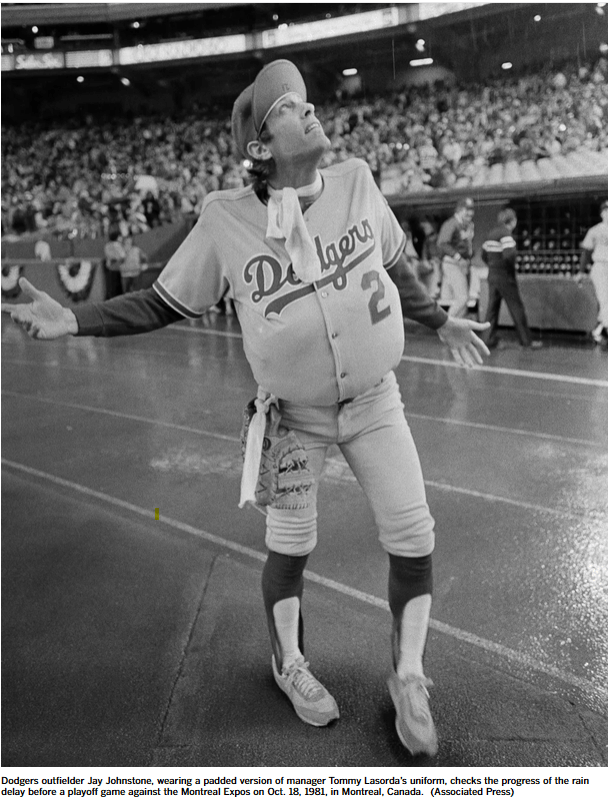
Johnstone may have been just one of the usual suspects if someone’s cleats were set on fire or their shower shoes were nailed to the floor. Johnstone got some credit when he and teammate Jerry Reuss once replaced all the celebrity photos in manager Tommy Lasorda’s office with pictures of themselves, plus relief pitcher Don Stanhouse. But more often than not, it could have instigated by Reuss, Rick Monday or Terry Forster.
Johnstone and Reuss famously jumped into a pair of groundskeepers uniforms and dragged the Dodger Stadium infield in the fifth inning of a game against Pittsburgh on Sept. 2, 1981. After they ran into the clubhouse to change back into their uniforms and return to the dugout, Lasorda send Johnstone up as a pinch hitter. He hit a sixth-inning home run off Pirates reliever Mark Lee to help secure a 6-2 win.
“Hey, Tommy,” he said afterward, “next time you need me, I’ll be down in the groundskeepers’ room.”
“Who in the history of baseball has dragged the infield in the fifth inning and hit a pinch-hit homer in the sixth?” asked Reuss.
Who else would take credit/blame during spring training for tying the door to the managers’ office to a palm tree, after putting dye in the shower head, removing the mouthpiece of the phone so Lasorda couldn’t call out for help, and then put a nail in his window so that it only opened a few inches. Johnstone’s heroic antics became legendary not just to teammates but anyone around him.
In his collection of photographs titled “The Dodger Collection,” former team photographer Rich Kee couldn’t help but included assorted images of Johntone being Johnstone. Including one with Johnstone, wearing a paper bag over his head, a bath robe opened up to reveal a Speedo pair of shorts and a drawing of a heart on his chest with “Mom” written inside. Another is of Johnstone trying to tear the Hollywood Stars jersey off comedian Robin Williams.
“Rich, grab this shot … ready?!” Kee explained in the book in text underneath a photo of Johnstone spread out on the ground at Dodger Stadium during what should have been a normal batting practice. “I quickly learned to expect the unexpected around Jay Johnstone. Case in point, as he lets go of a ball, his helmet and drops to the dirt at home plate … not to mention the menacing stare of the phantom pitcher that just nailed him. Jay being Jay.”
In a 2025 followup book of essays, “The Gifts We Take from Baseball,” Kee also wrote: “There was a secret treasure: A little concession stand up the ramp (near the home dugout) that never, ever had a line. It was the express lane to grilled Dodger Dogs … One night, Jay Johnstone himself; yes, that Jay Johnstone, prankster extraordinaire; was caught behind the grill in full uniform, apron and all, handing out hot dogs like he was auditioning for a second income. But that story will be shared another day.”
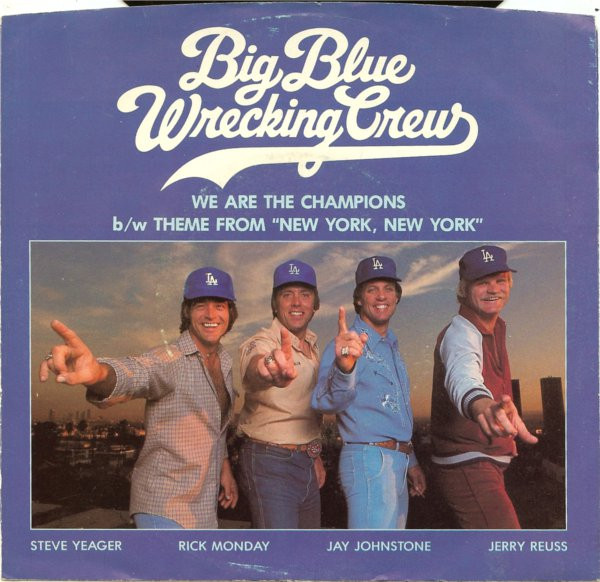
A month after the Dodgers 1981 World Series win, the quartet of Johnstone, Reuss, Monday and Steve Yeager took a photo together atop the Capitol Records building in Hollywood to become “The Big Blue Wrecking Crew,” and recorded a version of Queen’s “We Are the Champions” with “New York, New York” on the flip side of the 7-inch vinyl — the later, a tribute to the fact the Dodgers finally eliminated the New York Yankees in the strike-interrupted season. Somehow the four made appearances on the “Merv Griffin Show” and “Solid Gold.” Profits from sales of the single went to benefit the Children’s Hospital of Orange County.
“Yeager was by far the best singer,” Johnstone explained. “Of course that was after they added an echo chamber and backup singers to drown him out.”
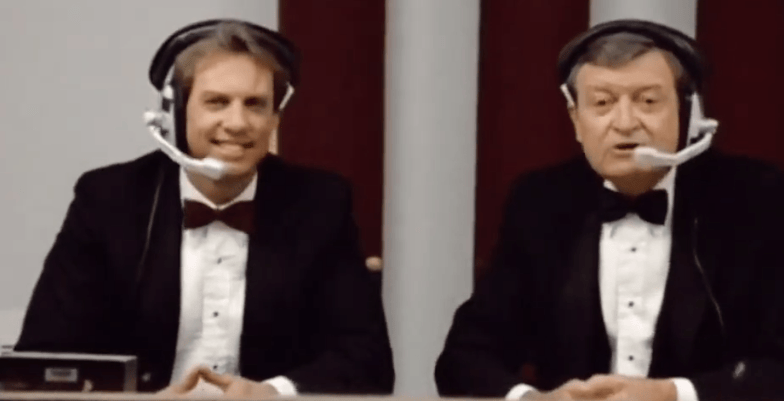
In retirement, Johnstone figured out how to re-invented himself as an ambassador for the game, doing TV appearances that allowed him to do far more tame pranking on unsuspecting foils. He briefly worked as a radio color commentator for the Yankees and Phillies. During an interview with Yankee players Deion Sanders and Mel Hall, he got them to uncover a restaurant bread basket cloth without them knowing it also contained a snake, getting both players to jumped out of their seats for a hidden camera.
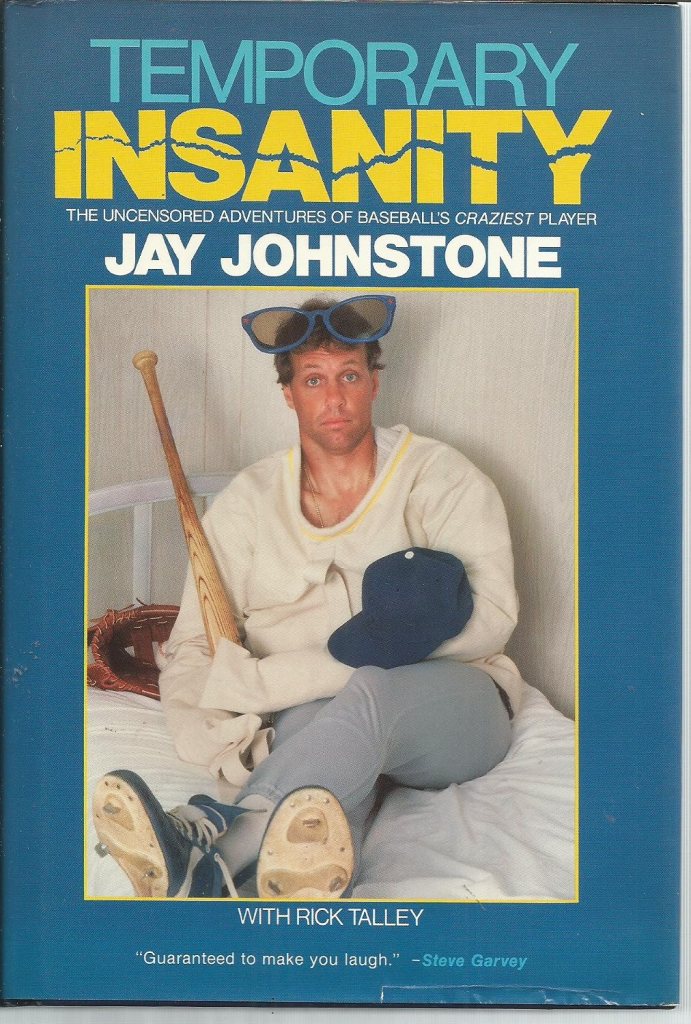
Johnstone wrote a 1985 book, which came out as he was still an active player at the end of his career, called “Temporary Insanity: The Uncensored Adventures of Baseball’s Craziest Player.”
“I’ll be honest,” Reuss said, “there was nothing temporary about it.”
He followed it with “Over the Edge” in 1988 and “Some of My Best Friends Are Crazy: Baseball’s Favorite Lunatic Goes in Search of His Peers” in 1990.
In the 1990s, Johnstone spent time visiting U.S. troops in Saudi Arabia, Kuwait and Germany. He held clinics in Japan with the World Children’s Baseball Federation and visited American children’s schools in London, Paris and Brussels. In 2010, he was a spokesman for Hope4Heroes, a nonprofit organization designed to benefit military veterans.
Reuss talked about Johnstone again: “There was also another side to Jay. The side he chose to keep private. He spoke at Little League banquets, gave impromptu batting tips to kids, made other appearances when no one else was available and was there when a friend needed a helping hand. That’s also Jay Johnstone.”
“When the game was on the line, he was able to transform that little 7-year-old child that was always in a playful mood into serious,” Monday said. “Jay was always bigger than life. If the team was in a spot where you felt your backs were against the wall, he was one of the reliable guys.”
In the fall of 2020, Johnstone was among the millions who didn’t survive the affects of COVID-19 and died at age 76. He had been suffering from dementia and was in a Granada Hills nursing home. He was buried at the San Gabriel Mission.
An obituary in the Los Angeles Times quote Mary Jayne Sarah Johnstone, his daughter: “COVID was the one thing he couldn’t fight. It’s really kind of shocking.”
She insisted her dad’s sense of humor only made their way to the park after he practiced them at home. There were rubber snakes in their pool and spiders by the bathtub. Her friends loved being around him because “he wanted to find the humor in life no matter how serious things got. That was his motto to everything, bring a smile to people’s faces. Everyone loved him.”
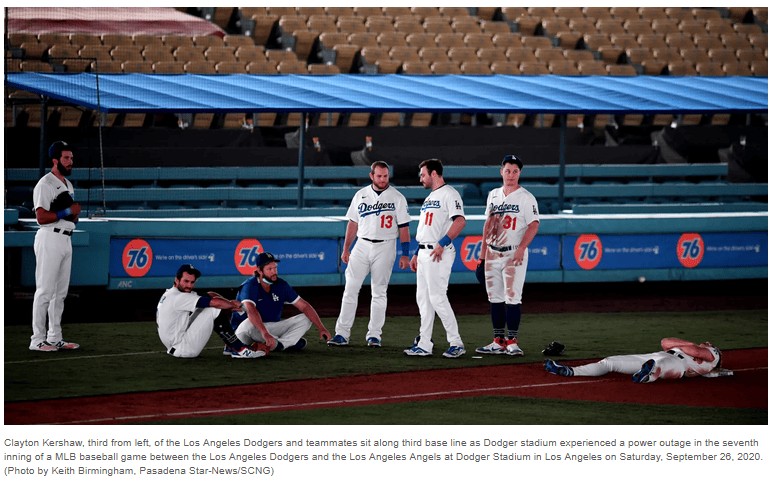
Take note: On the night Johnstone died, Sept. 26, a power outage occurred at Dodger Stadium. It happened during an actual game where Johnstone’s first team, the Angels, were playing his last team, the Dodgers. On the same field Johnstone was part of the “Naked Gun” filming.
The blackout lasted about 25 minutes. No fans were affected because games were still being played before cardboard cutouts in the stands. Kinda like in the “Naked Gun”?
Angels manager Joe Maddon called the scene “surreal.”
Monday knew better.
“He may have had a hand in it or a victory lap of remembrance,” said Monday, at the park as part of the Dodgers’ broadcasting team.
Surely, Johnstone had to be behind that blackout, at that place, with those teams, under those circumstances.
Surely, you jest?
Just don’t call him Shirley.
Author Susan Orlean once said: “I think from the beginning of its days, Los Angeles has been what happens when you take the map of the U.S. and you tilt it, and the kookiest, most eccentric, most interesting people roll to the southwest corner, and they end up in L.A. It’s the California gossamer. It’s the magic of the edge of the country, of a place where there’s gold in the hills, where people came to reinvent themselves.”
That was Johnstone.
Who else wore No. 29 in SoCal sports history?
Make a case for:
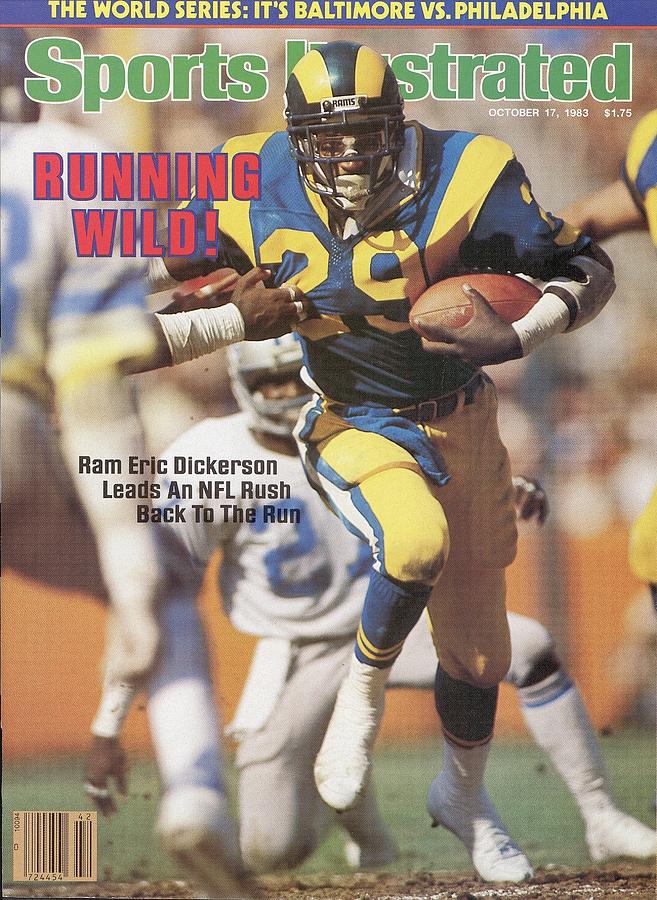
Eric Dickerson: Los Angeles Rams running back (1983 to 1987); Los Angeles Raiders running back (1992):

Best known: On Pro Football Reference.com, under players “whose career was of similar quality and shape,” Eric Dickerson is aligned at various points in his career with Franco Harris, Barry Sanders, Thurman Thomas, Tony Dorsett, Marcus Allen, Walter Payton, Emmitt Smith and O.J. Simpson. That may have undersold him. Dickerson’s ultimate parallel to Simpson is for breaking his single-season NFL rushing record and become the first to post a 2,000 yard season. Six Pro Bowls, five first-team All Pro selections and four rushing titles made Dickerson’s resume when he retired in 1993 with 13,259 yards. At the time, only Payton (16,726) had more yards.
A running style that almost made him look like a thoroughbred race horse shifting through the pack of competitors, Dickerson had just four-plus seasons in Los Angeles for the Rams, and none were in Los Angeles. His greatest single-season in yards came in 1984 as the team relocated to Anaheim.
Then came the most polarizing contract dispute that led to his departure.
Dickerson had a series of nicknames in his career. “Mr. Fourth Quarter,” because of his stamina; “Number One,” because he was often the first choice in the offensive play calling. He was also “Mr. Benny,” for his known frugality. For obvious reasons, he was also “The Dick.”
A bickersome Dickerson left Southern California in 1987, leaving the Rams in a ramshackle state for several years. His return to L.A. officially was as a member of the Raiders for one last hurrah in 1992. But 20 years after his NFL retirement, in 2016, after the Rams actually came back to L.A., Dickerson signed a one-day contract with the team so he could officially quit on his terms.
By then, who was paying attention?
Dickerson was third in the 1982 Heisman voting out of the “Pony Express” backfield of Southern Methodist University, twice leading the nation in rushing. In the 1983 NFL draft, Dickerson landed in the Rams’ laps at No. 2 overall because, in the famous “Year of the Quarterback,” Elway went No. 1 to Baltimore (then traded to Denver).
As a rookie, he piled up 1,808 yards and had a league-best 18 touchdowns. A year later came the NFL record of 2,105 yards rushing in 16 games, which adds up to 131 yards a game. A 5.6 yards per carry went with a league-best 14 touchdowns.
In 1985, Dickerson held out the first two games of the season in a public contract dispute. In a 2025 USA Today story about the NFL’s most notable holdouts in history, Dickerson remained at the top.
Even though he helped the Rams to the playoffs with 1,234 rushing yards and 12 touchdowns, the damage was seemingly done. In a full 1986 season at age 26, Dickerson piled up another 1,821-yard rushing season on a phenomenal 404 carries. For the third time in his first four seasons, he also went past 2,000 in total offense, leading the league each time.
As of 2025, three of the top 25 NFL single-season rushing seasons belonged to Dickerson. Those first four seasons as a Ram also accounted for about 7,000 yards rushing and about 1,600 carries. But when the 1987 season started, the Rams were again baffled by Dickerson’s latest training camp holdout. He was making $682,000. The Rams offered $975,000. It was short of the $1 million he felt he deserved.
After the first three games of Dickerson’s incessant complaining in the media, the Rams to trade him to Indianapolis in a blockbuster 10-player, three-team deal. The Rams hardly got a worthy haul, accepting Greg Bell and Owen Gill to fill his place in the backfield. The Colts gave Dickerson a four-year, $5.6 million deal.
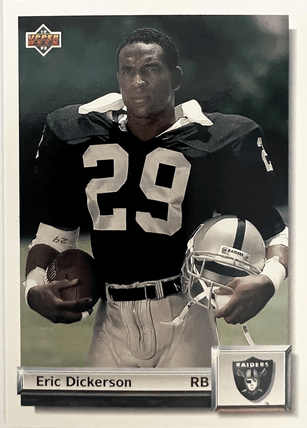
The Colts realized Dickerson was still “The Dick” when they suspended him for part of the 1991 season for “conduct detrimental to the team,” and traded him to the Los Angeles Raiders for the 1992 season. The Raiders only used him a situational running back, released him at age 32, and he signed with Atlanta, retiring four games into the 1993 season.
Hiss 2022 memoir, “Watch My Smoke,” where Dickerson is pictured in vintage 1980s NFL Jheri curls, came two years after he was named to the NFL’s 100th anniversary team. He gave him the space to vent about all that he felt was misinterpreted about his own life story.
As for why he wore No. 29, he once told me: “The numbers two and nine stand for my birthday … sort of. My birthday is actually Sept. 2 — or 9-2 — but that doesn’t work for a running back so I flipped the numbers around.”
It’s all about how the numbers work out for Dickerson in the end.
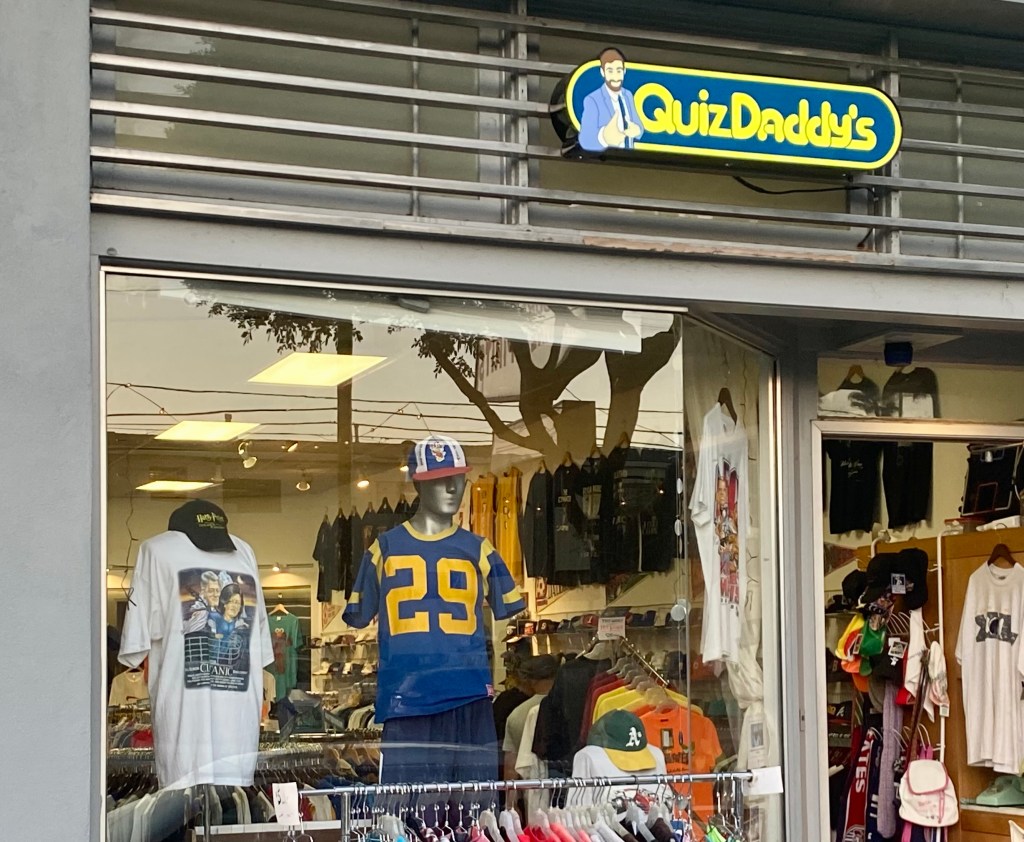
Rod Carew, California Angels first baseman (1979 to 1985):
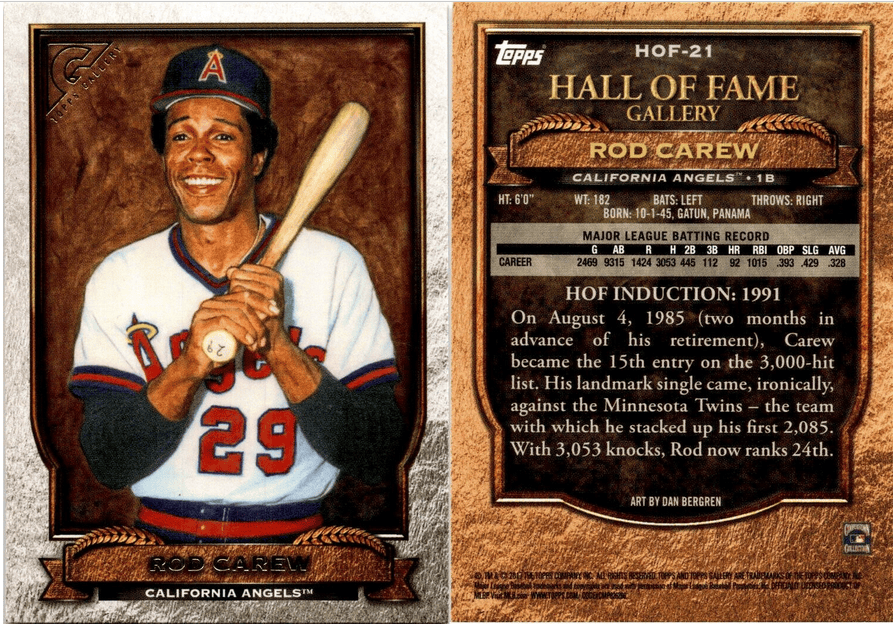
Best known: After 12 seasons in Minnesota, it could be said that Carew retired to Anaheim to collect his 3,000th hit and become an AL All-Star six more times. His .314 average with the Angels in 834 games didn’t tarnish a career mark of .328 when his Hall of Fame career was finished. The Angels retired his number in 1986 (before a game against the Twins) and, at the time, it was the first player number ever retired by the franchise (after No. 26 for owner Gene Mauch). During the ceremony he received a Los Angeles Rams football jersey number 29 from Eric Dickerson. Carew moved to Anaheim Hills after leaving the game as a coach.
Now well remembered: Carew wrote a book about miraculous post-playing career health issues, “One Tough Out: Fighting Off Life’s Curveballs.”
Adrian Beltré, Los Angeles Dodgers third baseman (1998 to 2004):

Best known: Beltré’s first seven MLB seasons started when he was (allegedly) aged 19 playing in Los Angeles. It ended with him establishing the then-franchise single-season home run record of 48 in 2004. That total also not only led the National League, but it propelled him into a free-agent frenzy — thanks to aggressive agent Scott Boras. After marginal stops in Seattle and Boston, Beltré became a Texas legend. As Mike DiGiovanna wrotes in the L.A. Times as the 2024 Hall ballots were being counted, Beltré was “considered a teenage prodigy” when he agreed to a $23,000 deal with the Dodgers in 1994. “There was little about his early career, marred by a birth-certificate issue and his slow recovery from a botched appendectomy in the Dominican Republic, which screamed surefire Hall-of-Famer,” wrote DiGiovanna. Beltre’s first five seasons with the Dodgers (’99 to ’03) were a less-than-impressive .262, with a .748 on-base-plus-slugging percentage and averaging just 16 homers and 65 RBIs a season. The Dodgers nearly lost him in 2000 when a Major League Baseball investigation found they had signed him before his 16th birthday. Beltré sat out the first six weeks of 2001 after undergoing surgery to close a wound in his large intestine, the result of an infection from an emergency appendectomy that January. Beltre’s 147 homers as a Dodger franchise player is 18th all time. Voted into the Baseball Hall of Fame with 95 percent in his first year of eligibility in 2024.
Not well remembered: Beltre was never was part of an NL All Star team as a Dodger even thought he was second in MVP voting in ’04 when he was fourth in the league hitting .334 and had 121 RBIs with a 1.017 OPS. The red flag was that Beltré played most of that season with bone spurs in his left ankle that required surgery after the season.
Eric Turner, UCLA football defensive back (1987 to 1990):
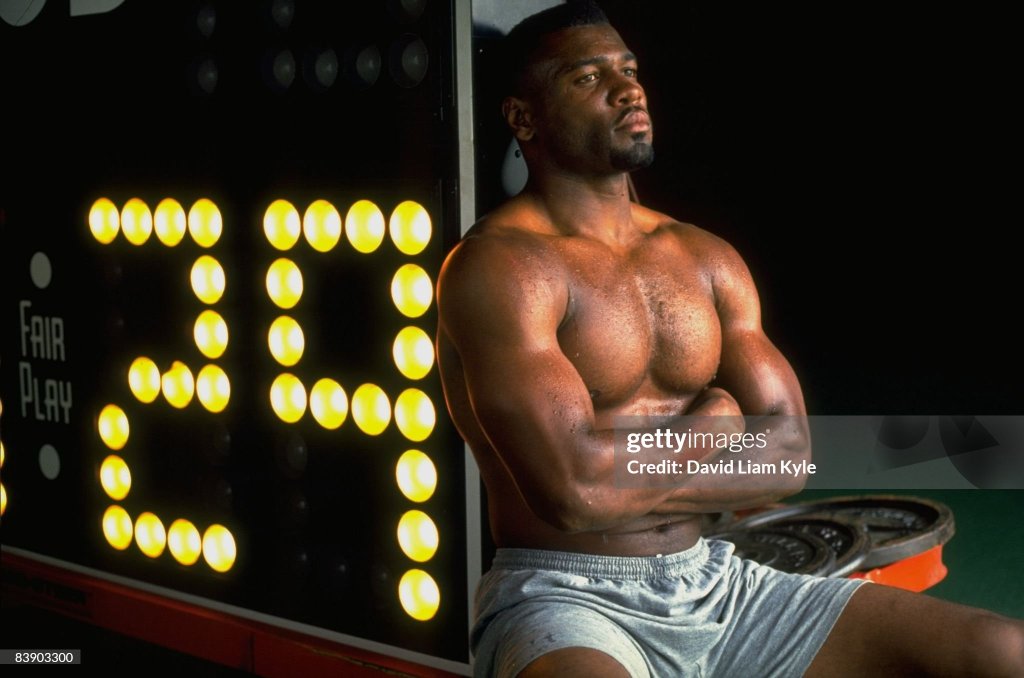
Best known: A three-year starter, Turner set a UCLA program record with 14 interceptions in 44 games, which led to him becoming the No. 2 overall pick in the 1991 NFL draft, the highest drafted defensive back in modern pro football history.
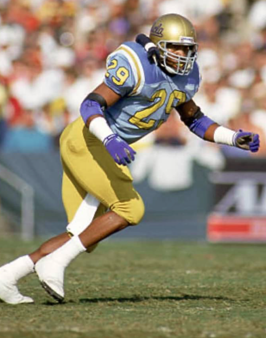
Out of Ventura High, where he not only was all-league in basketball but All-CIF in track as a sprinter rand long jumper, Turner led the school to three straight Channel League football titles as a running back (988 yards rushing and 14 touchdowns) and defensive back. He ran a 4.56 in the 40. At UCLA, Turner was nicknamed “E-Rock” and often compared to former Bruins greats Kenny Easley and Don Rodgers.
“Eric looks the way a man is supposed to look at the safety position,” said UCLA defensive backs coach Tom Hayes in 1987. “And he has the intensity to knock people around. When he hits you, you’re hit.” As UCLA held the nation’s No. 1 ranking during Turner’s sophomore year en route to a 10-2 finish, he was third on the team with 87 tackles and three picks, one returned 54 yards for a touchdown against Stanford. As a junior in 1989, he ranked second on the team with 141 tackles and gaining honorable mention All-America acclaim. A first-team All-American as a senior and voted UCLA’s Most Valuable Player on defense, Turner led the Bruins with 93 tackles and five interceptions. His late interception at Washington set-up Brad Daluiso’s game-winning field goal with 10 seconds remaining as the Bruins upset the No. 2-ranked Huskies, 25-22 on November 10.
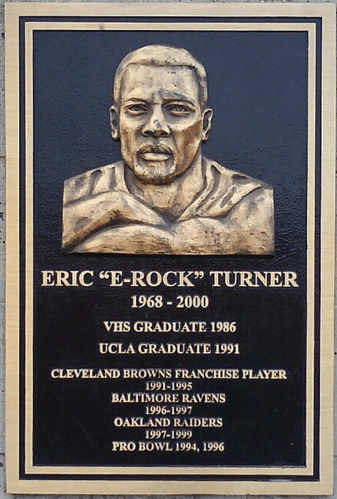
After nine years and two Pro Bowl appearances, it was revealed in the 2000 NFL offseason that Turner was battling abdominal cancer and he died in Thousand Oaks at age 31. The Ventura High field was named in his honor, he was inducted into the Ventura County Sports Hall of Fame in 2001, and then into the UCLA Athletics Hall of Fame in 2008. At the time of Turner’s death, he still ranked fourth in career tackles at UCLA (369). with 369, trailing only three-time consensus All-America linebacker Jerry Robinson (468), Rogers (405) and Easley (374), also a three-time consensus All-American.
In 2009, Turner’s son, E.J., who also prepped at Ventura High and played on the field named after his dad, made the UCLA football team and wore the No. 29. E.J. caught 32 passes for 378 yards and two TDs for Ventura as a senior.
Not well remembered: As the first half was coming to a close in the 1987 UCLA-USC game at the Coliseum, Eric Turner intercepted a pass from USC’s Rodney Peete at the goal line to not only prevent a Trojans touchdown, but he decided to try to return it. In what looked like a sure 100-yard pick-six, Peete ran him down and tackled him about 10 yards short of the end zone. The play went as an 89-yard return.
Bobby Knopp, Los Angeles/California Angels infielder (1964 to 1969), coach (1979 to 1996, 2014 to 2018):
Part of the franchise’s Hall of Fame for his career as a player and coach since 2013, Knopp starred in baseball, football and basketball at Montebello High and shined in American Legion baseball. The Milwaukee Braves signed him in 1956, and the Angels got him in the Rule 5 draft, seeing him as a defensive specialist working the double play combo with Jim Fergosi. He was named team MVP four times during his five-and-a-half seasons, leading AL second baseman in fielding percentage most times and winning three Gold Gloves and making the 1966 AL All-Star team. He was a fixture as the Angels’ first- and third-base coach for another 17 seasons through 1996 and then named infield coach for the team from 2014 to 2018.
Harold Jackson, Los Angeles Rams receiver (1968, 1973 to 1977):
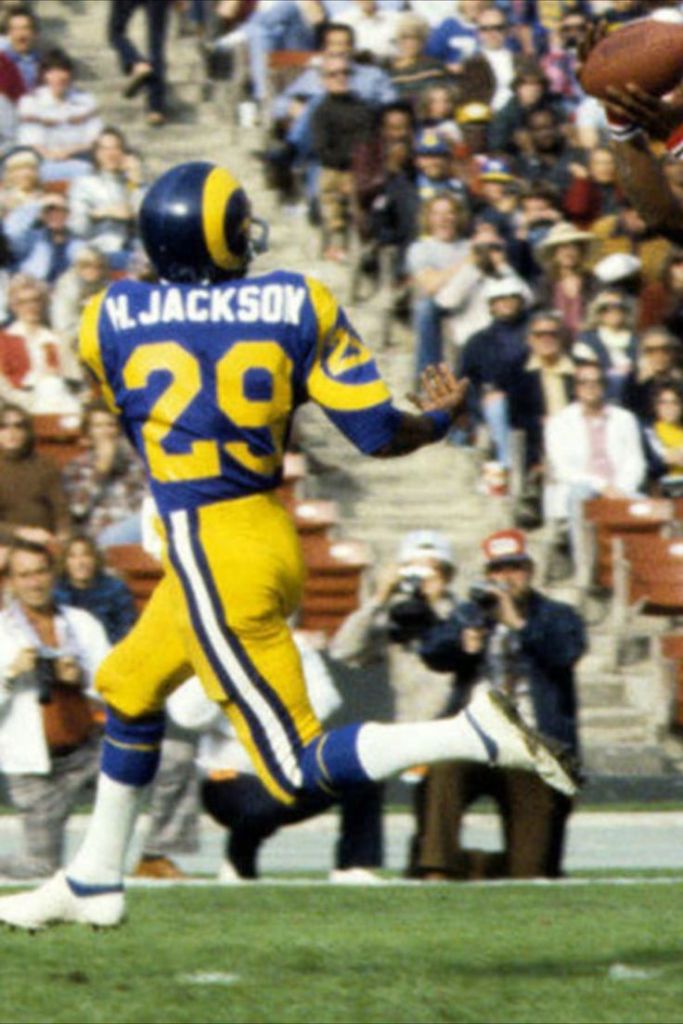
Best known: Three of his five Pro Bowls, more than 3,000 of his career 10,372 yards receiving and 36 of his 76 career touchdowns came with the Rams, where he began as a rookie No. 48 for just two games in 1968 before he was traded to Philadelphia and emerged as en elite receiver. The Rams re-acquired him in 1973 — but the price was quarterback Roman Gabriel. Statistically, Jackson’s greatest NFL game came against Dallas on October 14, 1973 when he caught seven passes for 238 yards and four touchdowns, which came amidst a streak of four games where he caught 13 passes for 422 yards and eight TDs.
Have you heard this story:
Billy Smith, Los Angeles Kings goalie (1971-72):
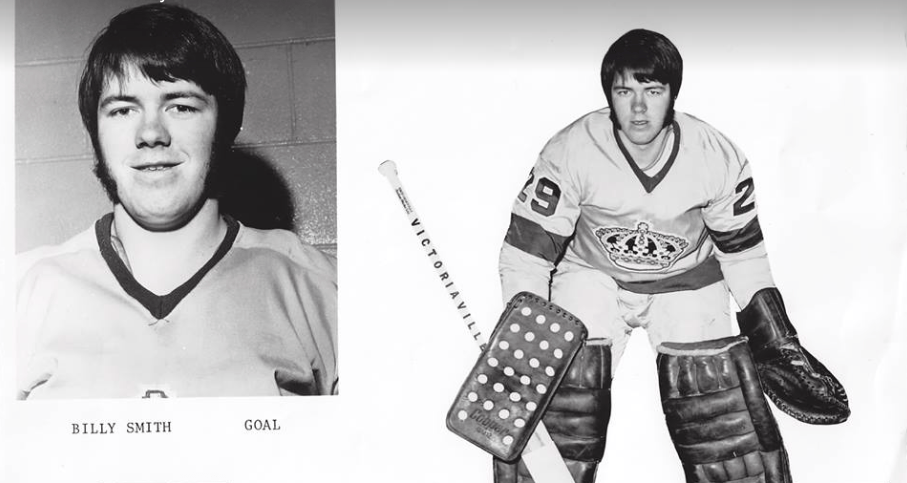
A fifth-round pick by the Kings in the 1970 draft, Smith got into five games as a rookie in the 1971-72 season, gave up 23 goals, and lost three times. As the No. 3 netminder behind Gary Edwards and Rogie Vachon, Smith was made available in the 1972 expansion draft, and the New York Islanders grabbed him. In 17 seasons there, the team won four Stanley Cups (1980, ’81, ’82 and ’83, and lost in ’84), Smith won the Vezina (in ’82), Jennings and Smythe (in ’83), went into the Hockey Hall of Fame in 1993. He was named to the NHL’s Top 100 players of all time in 2017, one of the 15 goalies honored.
Chuck Essegian, Los Angeles Dodgers outfielder (1959 to 1960):
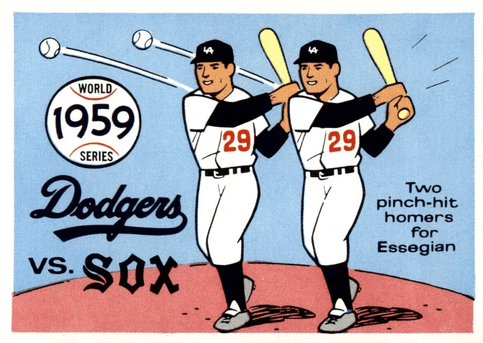
The L.A. Fairfax High grad came back to finish his career for his hometown team after the Dodgers moved from Brooklyn. Essegian made his mark hitting two pinch-hit home runs for the Dodgers during their 1959 World Series run, but he but wasn’t assured of a roster spot in 1960 until the end of spring training. The 28-year-old reserve outfielder wasn’t even listed in the opening game’s official program. As the Dodgers went into the 11th inning of the ’60 opener at the Coliseum against the Chicago Cubs, Essegian came off the bench to hit for starting pitcher Don Drysdale. Essegian connected on a two-out slider to deep left field for a walk-off homer in a 3-2 win before more than 67,000, giving him his third pinch-hit homer in three official times at bat.
Don Stanhouse, Los Angeles Dodgers pitcher (1980):
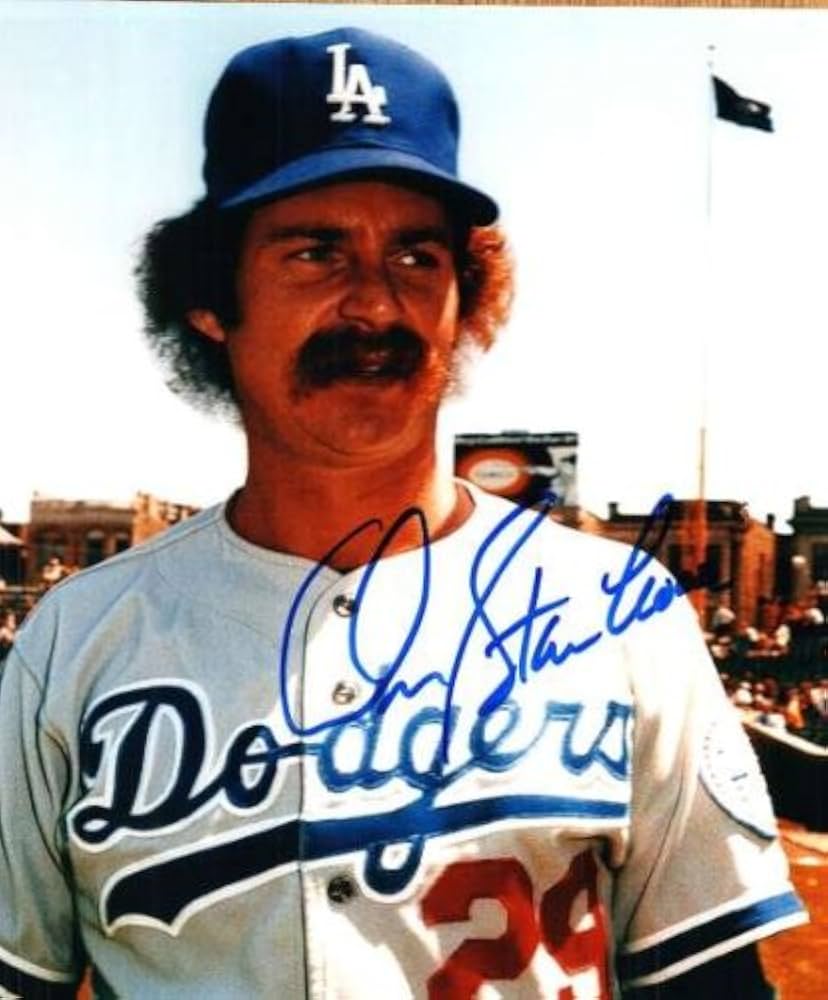
His eccentricity, bushy hair and extreme mustache preceded him to Los Angeles. As his SABR biography notes: Known as “Stan the Man Unusual” as well as “Fullpack” (a reflection of the number of cigarettes Orioles manager Earl Weaver would smoke while Stanhouse came into a game), Stanhouse was noted to arrive in spring training in a black Cadillac to match his outfit and the paint scheme of his apartment. He used to bring a stuffed gorilla to the games, perhaps the inspiration for the primal screams he would yelp as batting practice concluded and the game was about to start. Coming from his only AL All-Star team selection and from a Baltimore squad that had won the 1979 World Series, Stanhouse benefited from the Dodgers’ desperation to rebound from a losing season by getting a five-year, $2.1 million contract. After only four appearances for the Dodgers, Stanhouse spent the next three months on the disabled list. He ended up striking out only five batters in 21 relief appearances, posting a 2-2 record with seven saves and a 5.04 ERA. By the end of the season, rookie Steve Howe replaced him as the bullpen closer. The Dodgers released him before the 1981 season, where they went on to win a World Series and continued to pay his salary through 1984, by which time he had been retired for two seasons.
We also have:
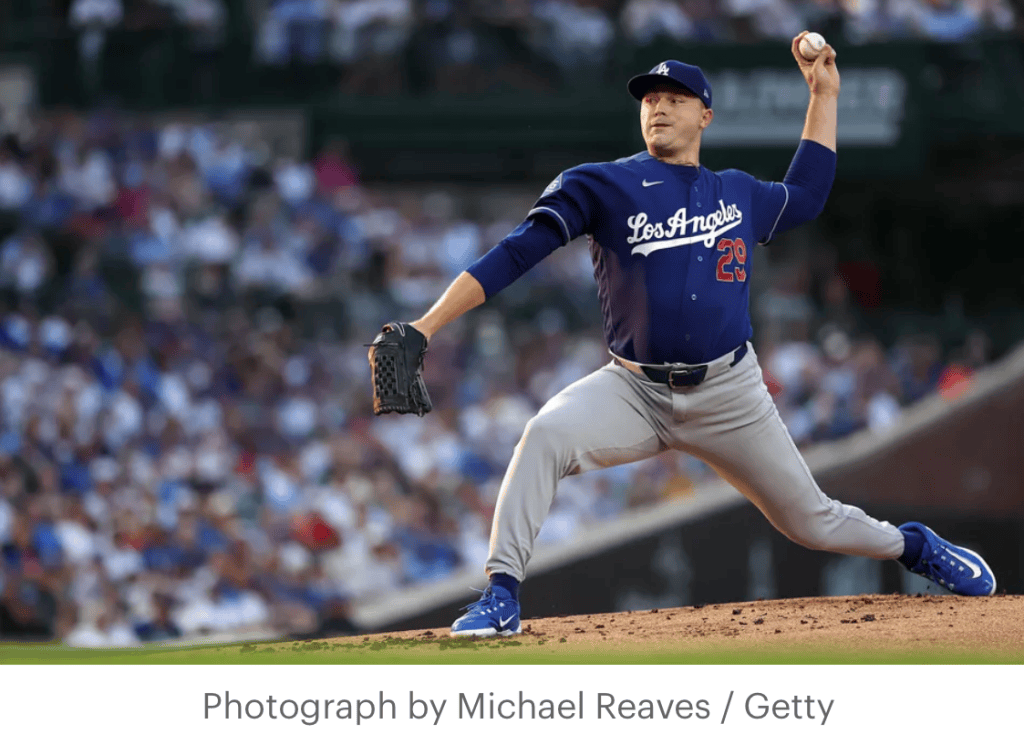
Tarik Skubal, Los Angeles Dodgers pitcher (2026)
Tommy McDonald, Los Angeles Rams receiver (1965 to 1966)
Tim Wallach, Los Angeles Dodgers third baseman (1994 to 1996, also wore No. 25 in 1993 and No. 23 for the California Angels in 1996)
Christian “Chicho” Arango, LAFC forward (2021 to 2022)
Anyone else worth nominating?


2 thoughts on “No. 29: Jay Johnstone”