
This post is part of a media project called SoCal Sports History 101: The Prime Numbers from 00 to 99 that Uniformly, Uniquely and Unapologetically Reveal The Narrative of Our Region’s Athletic Heritage. Pick a number, and consider the list of athletes attached to it. Who wore it best? Or, what’s the most compelling story linked to it? Any person, place or thing is in play with Southern California connections. Star power, transformational achievement, longevity, notoriety and quirkiness all factor in. Whatever leads to a lively discussion and interpretation.
The most obvious choices for No. 19:

Jim Gilliam: Los Angeles Dodgers
Butch Goring: Los Angeles Kings
Hal Bedsole: USC football
Fred Lynn: California Angels
Marco Danelo: USC football
The not-so-obvious choices for No. 19:
Mike Gillespie: USC baseball
Jim Fox: Los Angeles Kings
Larry Robinson: Los Angeles Kings
Dennis Dummit, UCLA football
Lance Rentzel: Los Angeles Rams
The most interesting story for No. 19:
Will Ferrell: Los Angeles Angels center fielder (2015), Los Angeles Dodgers pitcher (2015) via University High of Irvine football, basketball and baseball (1983 to 1985) and USC
Southern California map pinpoints:
Irvine, Hollywood, Los Angeles (USC, Coliseum, BMO Park)
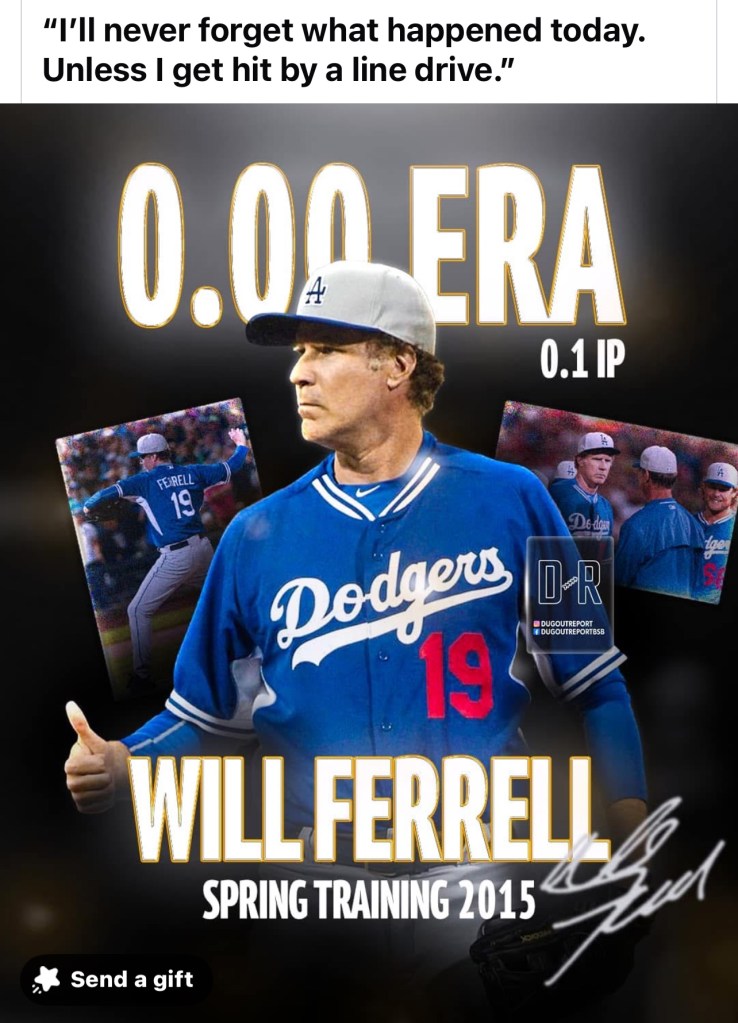
Official Baseball-Reference.com documentation is there for anyone needing verification: Will Ferrell, age 48, started and ended his Major League Baseball career as a player on March 12, 2015.
He was, for all intents and purposes, an pure exhibitionist.
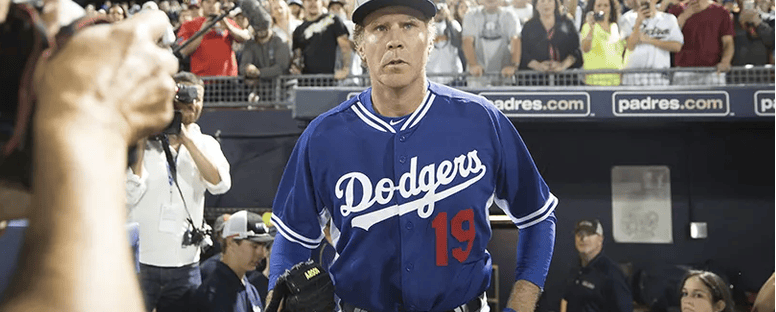
In a No. 19 jersey with nine of the 10 teams he joined that day, Ferrall played 10 different positions in five Cactus League exhibition games around Arizona. A campy stunt dreamed up to pay homage to Bert Campaneris’ promotional feat some 50 years earlier in September of 1965. Against the visiting Los Angeles Angels, Campaneris played all nine positions for the Kansas City Athletics, including pitching both right- and left-handed in the eighth inning. Campaneris wore No. 19 during all but one of his 19 seasons in the major leagues, including a time as a California Angels shortstop from 1979 to 1981.
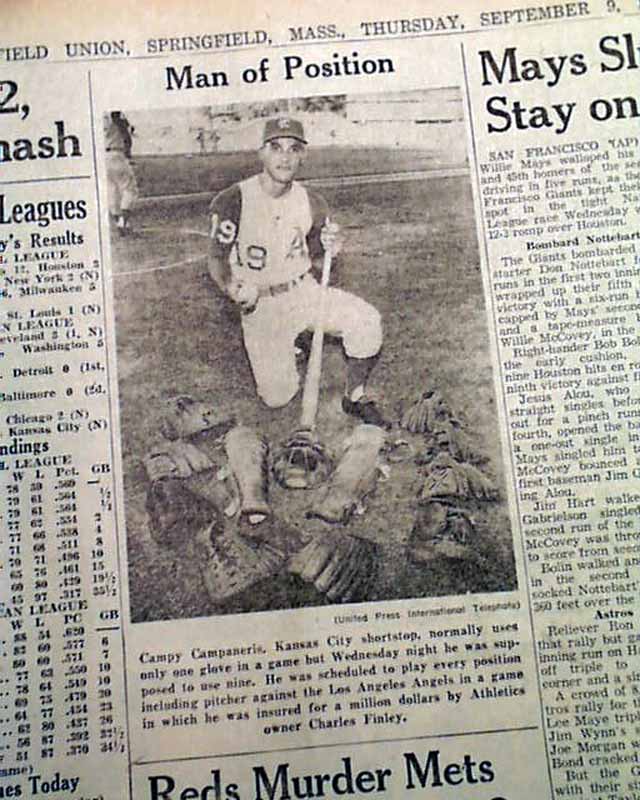
Perhaps Ferrell choose to overlook what eventually happened when Athletics owner Charles O. Finley staged “Campy Campaneris Night.” In that 1965 game, Campaneris, more than half of Ferrell’s age of 23 at the time, had to leave in the top of the ninth when he was injured playing catcher. The Angels’ Ed Kirkpatrick leveled him trying to score from third base on a passed ball. And the A’s lost in extra innings.
Personal glory sometimes has to over-shine team outcomes.
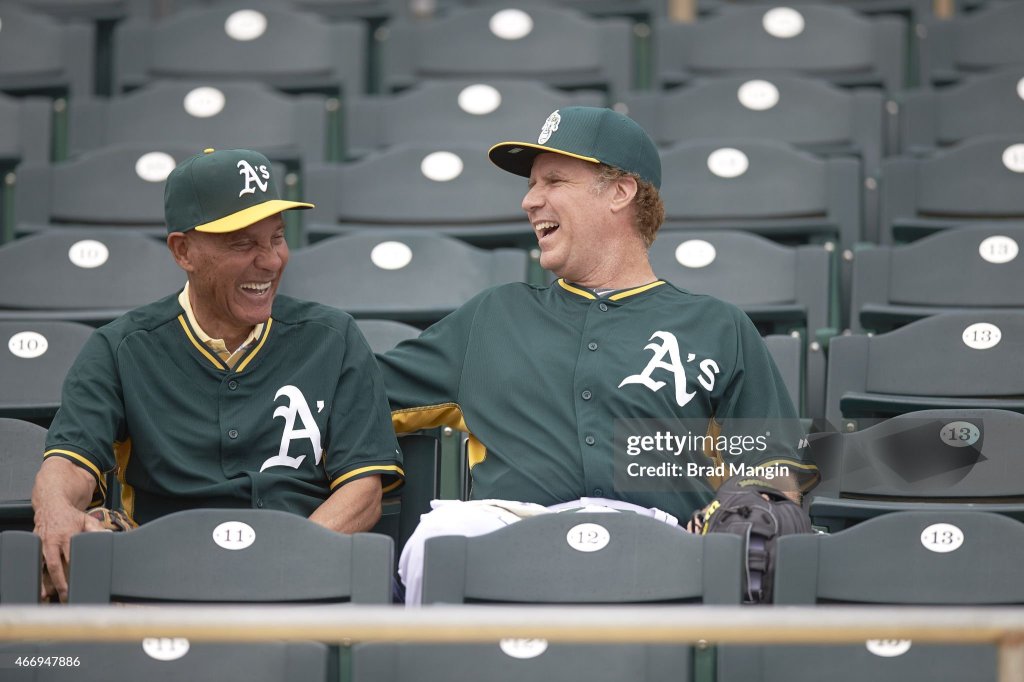
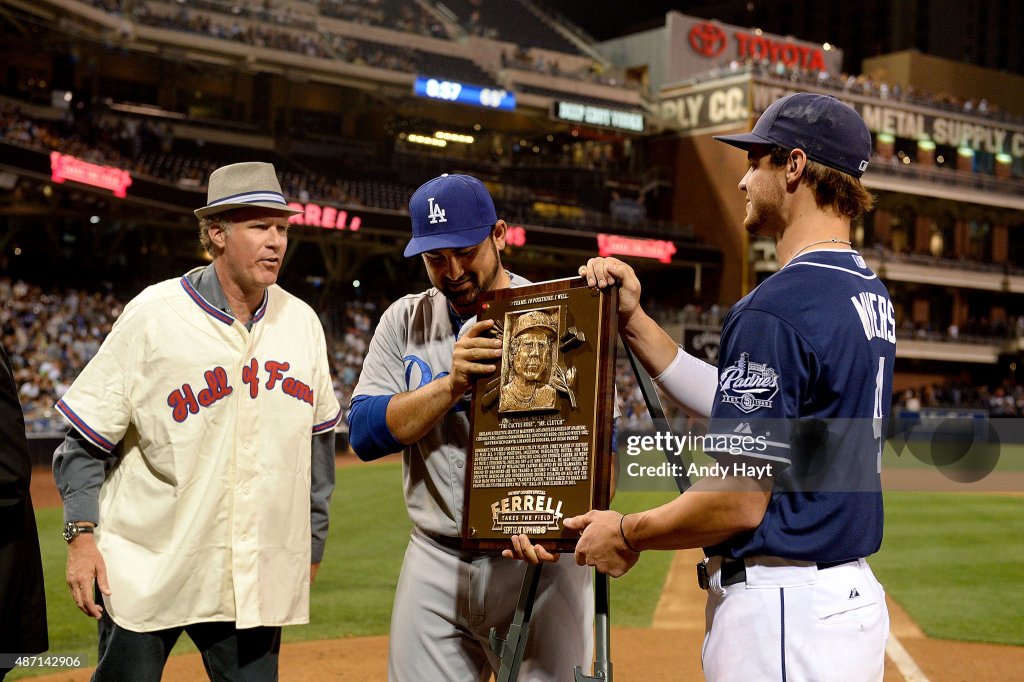
Of course, there was a Hollywood angle to all this. An HBO special, “Ferrell Takes the Field,” was created to document this day, and Ferrell took the field by storm. A lesser actor would have been derailed early on, not just by the ad-lip script but by a failure to handle it all without pulling a groin.
The schedule went:
12:05 p.m. — Seattle Mariners at Oakland Athletics (HoHoKam Stadium, Mesa)
1:10 p.m. — Chicago Cubs at Angels (Tempe Diablo Stadium)
2:10 p.m. — Cincinnati Reds at Arizona Diamondbacks (Salt River Fields at Talking Stick)
4:05 p.m. — San Francisco Giants at Chicago White Sox (Camelback Ranch, Phoenix)
6:15 p.m. — Dodgers at San Diego Padres (Peoria Stadium)
Ferrell notably played shortstop for Oakland in his first appearance to honor Campaneris.
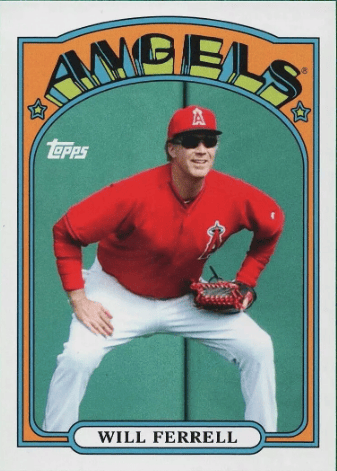
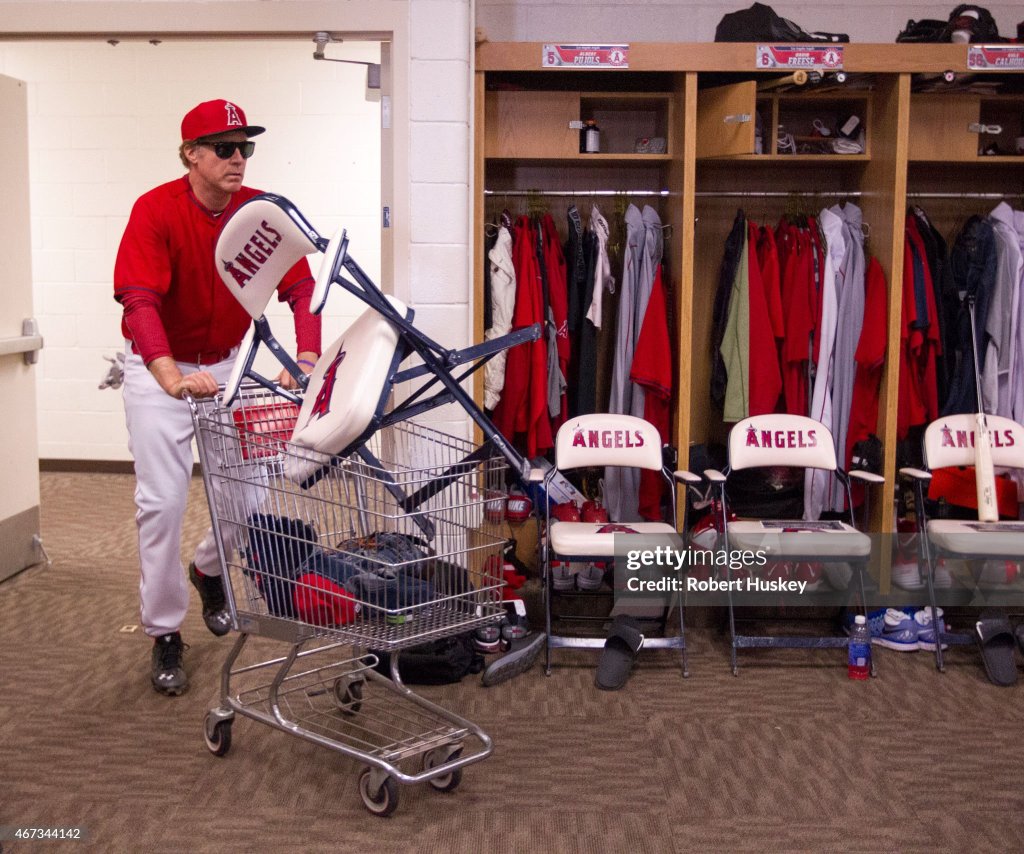
Then, decked out in his all-red Angels’ jersey — the franchise he followed most growing up in Orange County — Ferrell trotted onto the field and subbed in for Mike Trout as the center fielder in the top of the third. Who else gets to do that? Right away, he was forced to cleanly handle a line-drive hit at him by the Chicago Cubs’ Wellington Castro and hold him to a single.
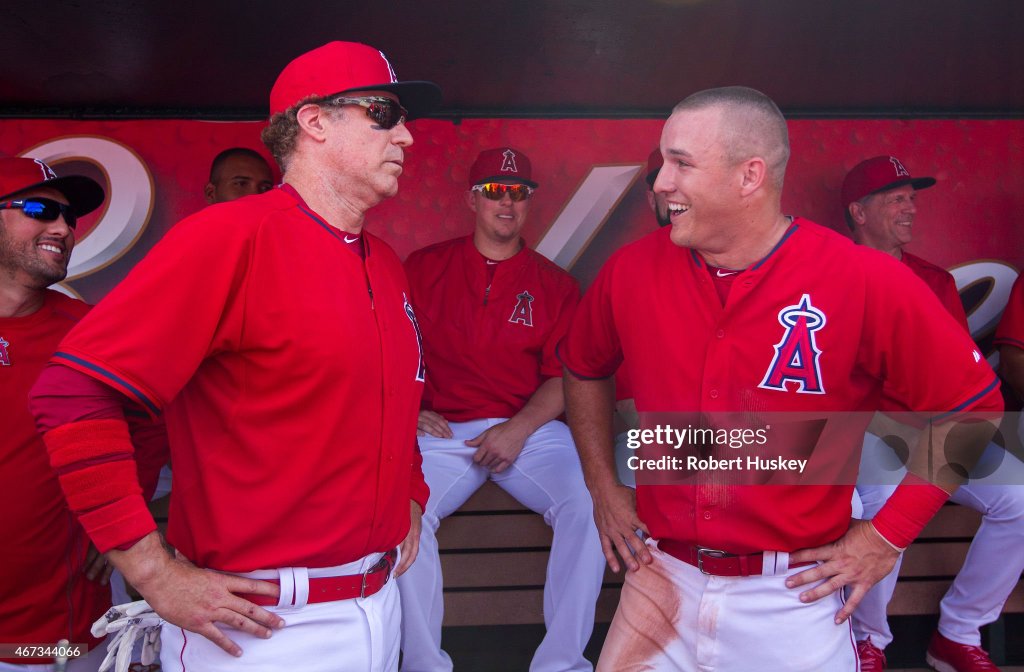
“He was trying to make people laugh the whole time,” Trout said. “Growing up watching him in movies and stuff, it’s pretty cool in real life.”
Soon, Ferrell switched uniforms, became the Cubs’ third-base coach and held up signs — actual, written signs, on cardboard. One said: “Swing as hard as you can.” Another read: “Remember, these games don’t count.”
During a four-run inning for the Cubs, Angels manager Mike Scioscia came to the mound to remove pitcher Frank Herrmann. Angels minor-league right-hander Zach Stewart struck him out on three pitches — the first two called, the last swinging.
“I just threw heaters,” Stewart said. “I tried to blow his doors off. … It would’ve been cool if he had come out in character as Ron Burgundy, though.”
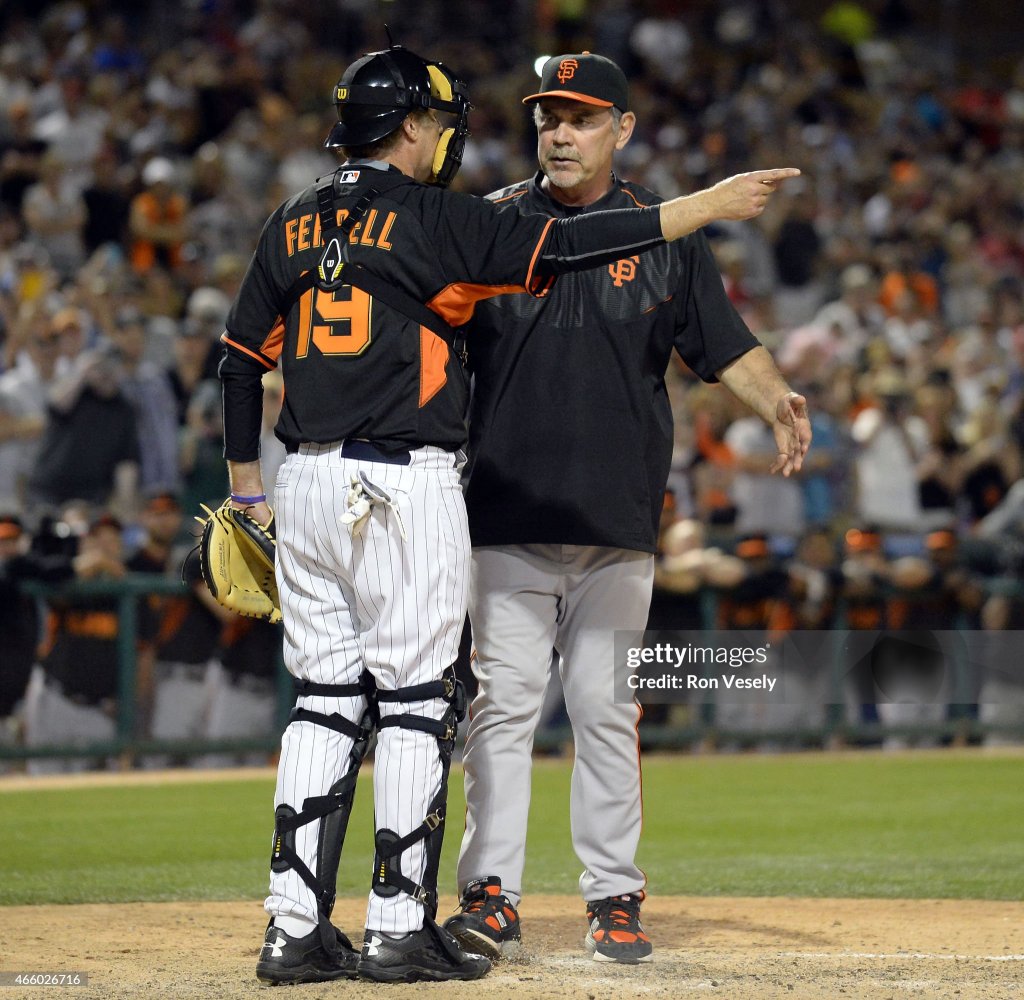
Ferrell also struck out later in an appearance for Chicago’s other team, the White Sox, as their DH, yet he managed to foul off a 92 mph pitch from the Giants’ Jean Machi. In that game, Ferrell also did put on the tools of ignorance and play catcher for San Francisco. He came out somehow injury free.
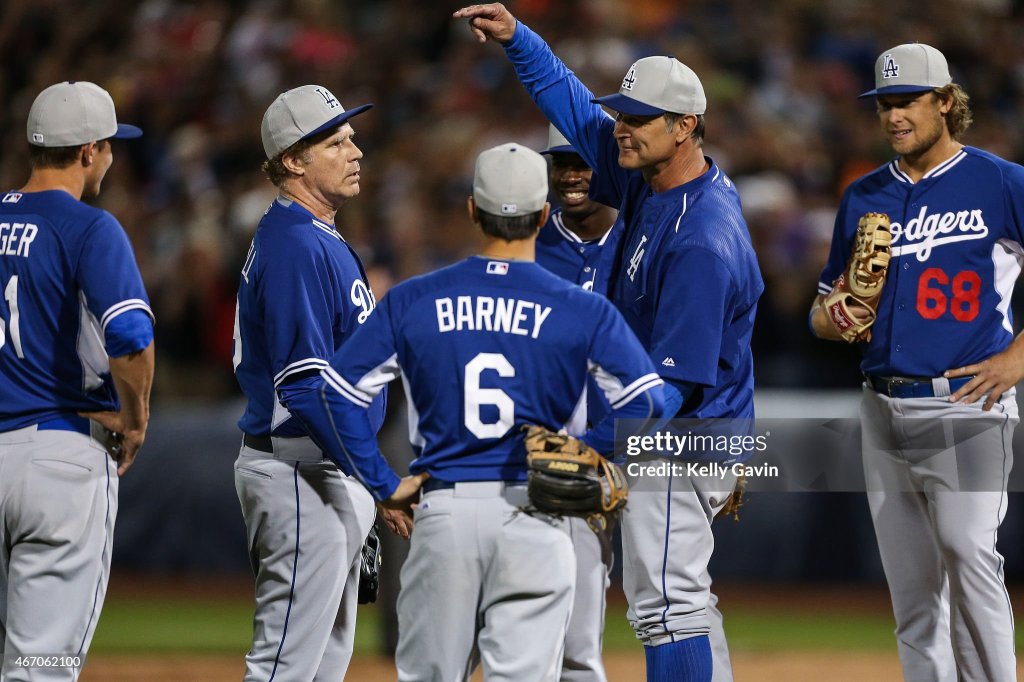
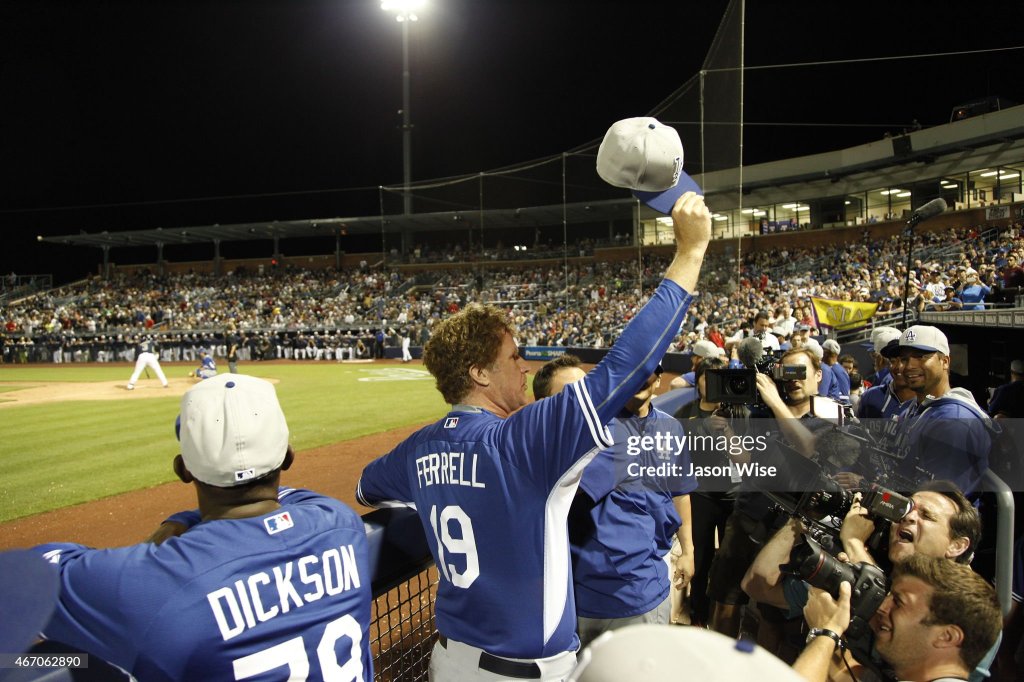
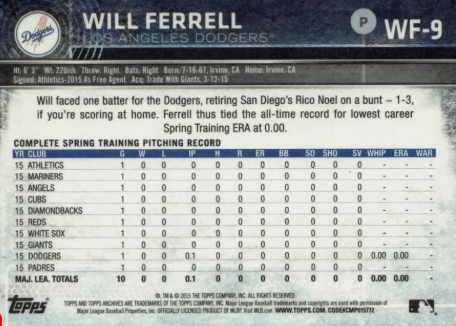
In the finale of his helicopter shuttle, Ferrell went to the Peoria Sports Complex and landed in time to become a relief pitcher for the Dodgers in the seventh inning. The Padres’ Rico Noel was sly. He tried to bunt. Ferrell deftly fielded it and threw him out. Dodgers manager Don Mattingly then came out and replaced him to cheers.
But Ferrell had one more appearance. He saved playing right field for the Padres as a tribute to Tony Gwynn, and switched out from No. 19 to take No. 20. Then again, the Dodgers had allowed him to wear the No. 19 that they had retired years ago forJim Gilliam.
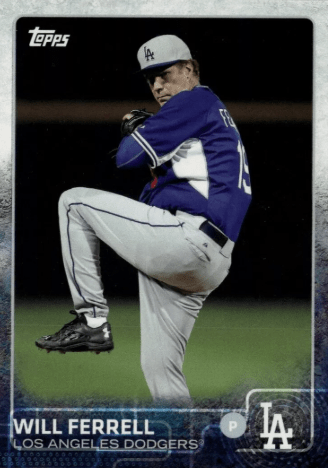
Farrell’s farewell included a set of Topps baseball cards to mark the occasion and prove it happened.
This all was so on brand with Ferrell. His improv nature. His athletic foundation. But he already somewhat proved that in the half-dozen films he made that involve sports themes.
It all goes back to trying to make his teammates laugh along with him on the playgrounds of Orange County and the locker rooms at University High in Irvine.
In the wild, wild world of Will Ferrell filmography, wait long enough and he’ll morph into a sports-guy parody, confusing the critics who don’t know how to measure that fine line between creativity and stupidity.
Take “Ferrell Takes The Field.” A review in The Guardian started: “Is this supposed to be Will Ferrell or something else? Is this a documentary or a mockumentary? … This is the latest in a string of genre deconstructions from the star who seems to be floundering around for something fun to to … Maybe Ferrell’s experiment isn’t facilitated by the fracturing of the television audience – maybe it’s actually some sort of meta-commentary about it. … From a simpler time when we sat down as a nation and watched one thing all together. The conventions became cemented in our subconscious. Perhaps these silly little projects are really Ferrell’s way to unify us once again by reminding us of all the things we shared. … Nah, he was probably just a little bit bored and between movies.”
The Free Press of Manitoba called Ferrell a “beloved but predictable doofus.” The reviewer concluded: “It winds up feeling like more of the same oblivious-dolt character that has been Ferrell’s default for years. For staunch fans of Ferrell’s comedy (this is) a home run. For everyone else, however, this well-intended effort will probably feel more like a ground-rule double, at best.” Remember, this is a polite Canadian way to size up the project.
For what it’s worth: Two days after Ferrell’s exhibition game appearance, former Oakland Raiders head coach John Madden told KPIX-TV about Ferrell’s stunt — “I hate it. That’s a lack of respect for the game and a [lack of] respect for what players have to do to get where they are.”
Footnote: Ferrell had once been in discussions to play Madden, who died in 2021, in a David O. Russell movie version of his life. But when the film “Madden” comes out this November, there will be Nicolas Cage in that lead role.
Daily Variety’s Brian Lowry noted that the backstory may have been worth discussing more — how Craig Pollard, a USC Delta Tau Delta fraternity brother of Ferrell’s, had his baseball career cut short by cancer and founded Cancer for College, to help support cancer survivors by bestowing scholarships. That’s what “Ferrell Takes the Field” was supposed to spotlight as game-used memorabilia from Ferrell’s appearances were auctioned on MLB.com.
A deep-dive August 2026 piece for The Ringer focused on the way Ferrell has leaned into his sports life during his creative process, starting by playing AYSO soccer, then turning to football, basketball and baseball at University High in Irvine.
As Pollard said: “He was so into sports. He’s just a natural athlete, so you could put him in badminton or racquetball or anything like that, and he’d perform.”
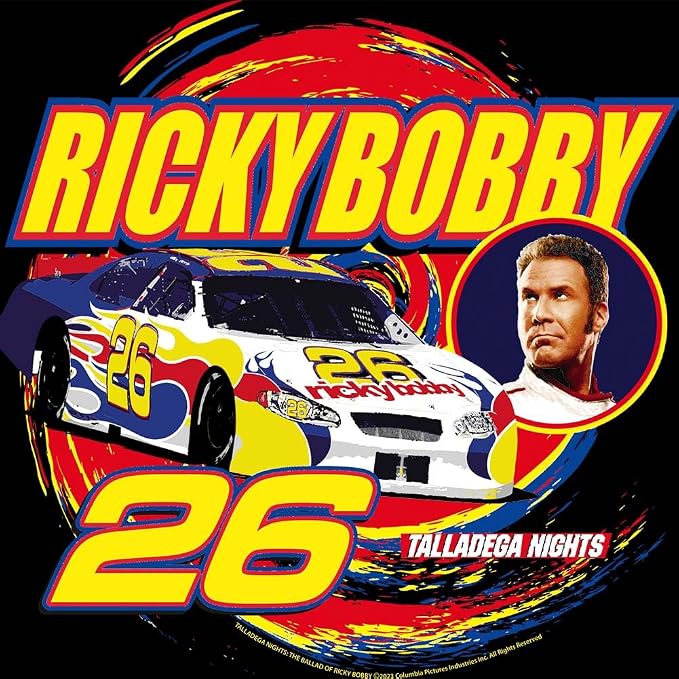
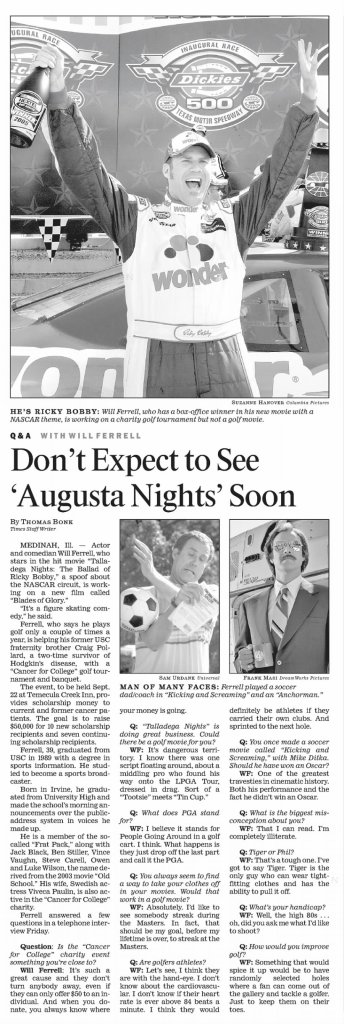
At his best, “Good Will” Ferrell fulfills his oath to movie ticket-buyers. He pulls off a gymnastics routine in “Old School” (2003). He jumps into the driver’s seat of an ego-maniac NASCAR lugnut in “Talladega Nights: The Ballad of Ricky Bobby” (2006). He figures out how to pull off an awkward figure skater trying to stick the landing in “Blades of Glory” (2007). He’s a geographically challenged, dribble-drive hoopster in the comic-rich ABA for “Semi-Pro” (2008). He’s a decent past-his-prime golfer named Lonnie “The Hawk” Hawkins in the latest Netflix series, “The Hawk” (2026).
Hollywood sports film coordinator Mark Robert Ellis says: “When you love sports like Will does, you get really comfortable making fun of the characters, making fun of the clichés, making fun of the serious dramatic moments that we expect in a sports movie, and then flipping them on their head. I think he relishes it.”
Put the relish on the hot dog, and you have a Ferrell sandwich. Jimmy Kimmel once introduced Ferrell on his show as “pound for pound, he may be the funniest based carbon lifeforms on the planet Earth.”
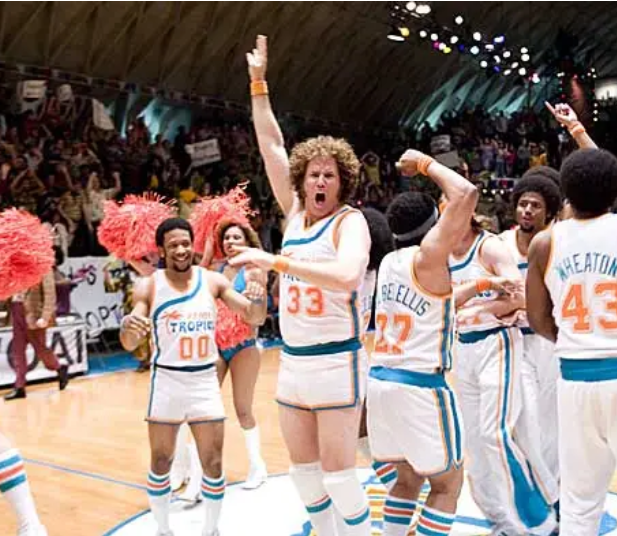
In 2008, Ferrell told the Orange County Register that the dullness of his environment also planted the seeds of his outlook on life: “Growing up in suburbia, in safe, master-planned Irvine, there was no drama so we had to create it in our heads. My main form of entertainment was cracking my friends up and exploring new ways of being funny. I didn’t have to have the survival mode instinct like other comics, who grew up in tough neighborhoods. I had the opposite. For me, I grew up in Mayberry, and the humor broke the boredom. And there was a lot to make fun of.”
Ferrell’s daily morning announcements over the Uni High public address system using disguised voices was a starting point. By playing sports, he figured out that any shortcomings he might have had could be masked with some dead-pan levity to the tense moments.
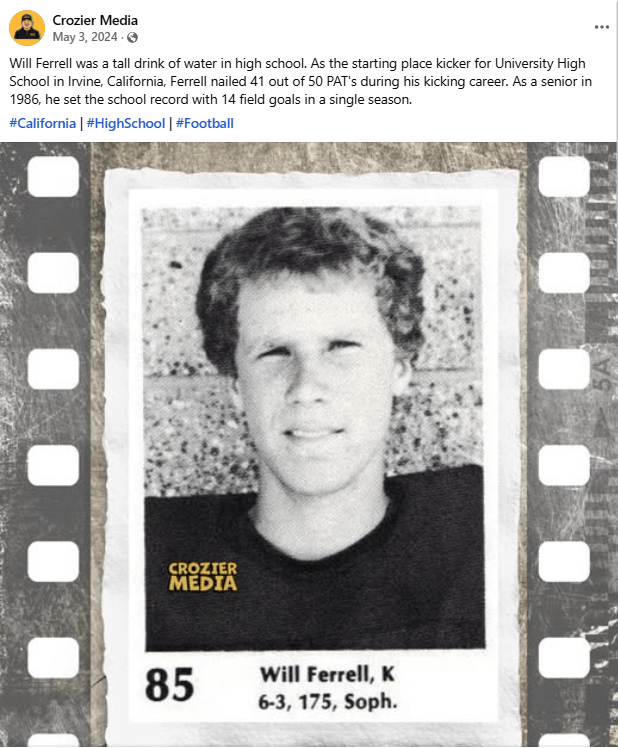
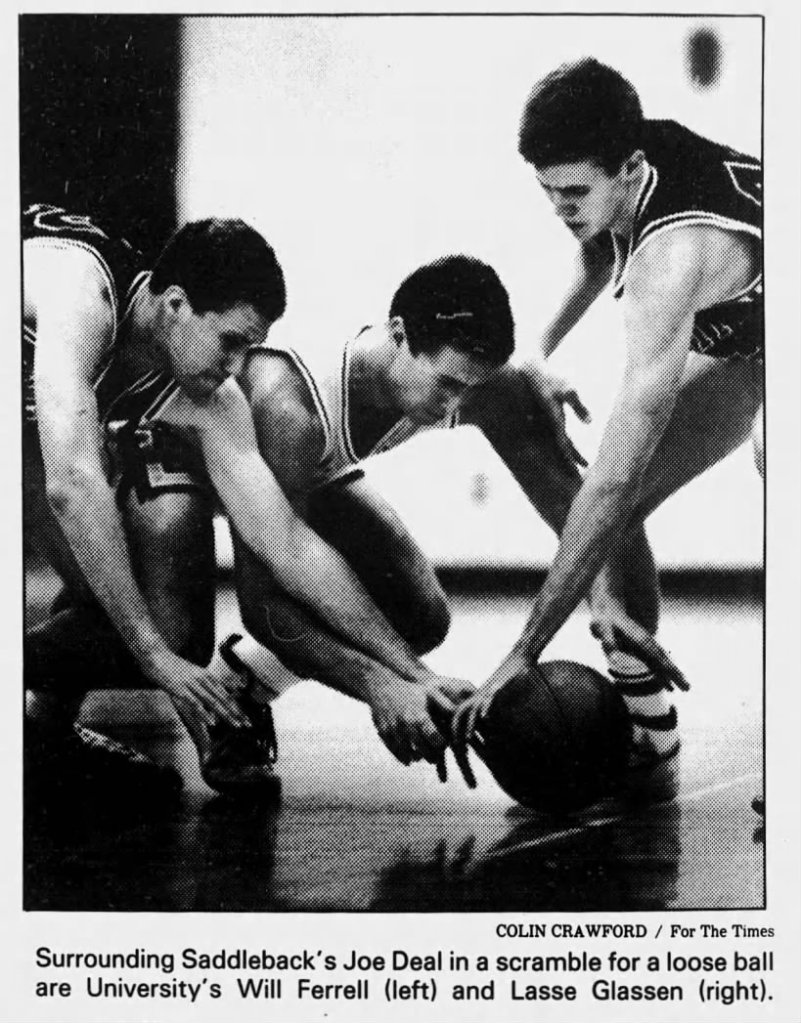
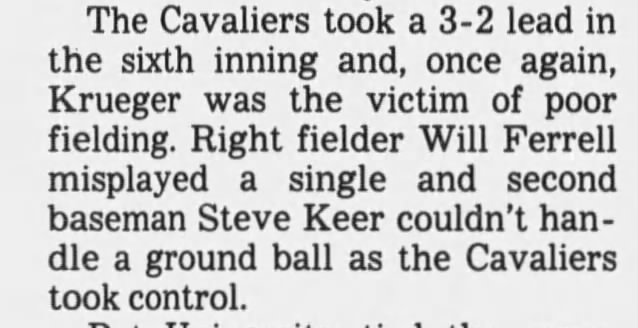
Leaning into his soccer abilities, Ferrell wore No. 85 to kick field goals at Uni High and act as a backup safety on the football team going back to his sophomore year of 1983. For proof, Ferrell often made it into the Los Angeles Times’ football game stories and summaries:
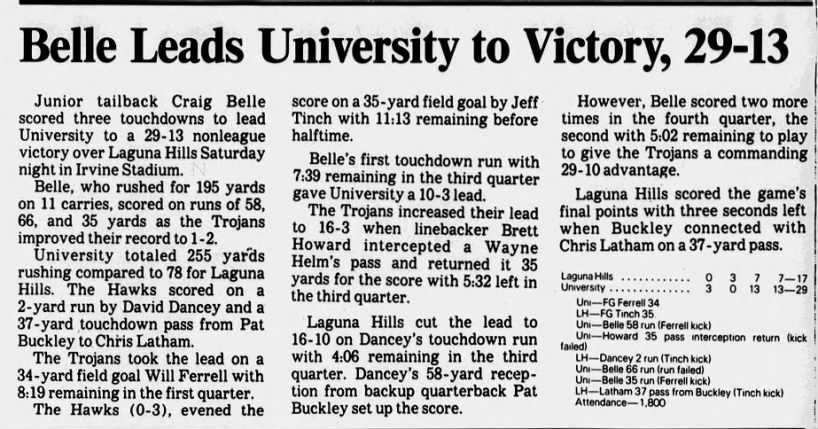
Ferrell’s first option was to see if he could go from being a Uni High Trojan and become a USC Trojan. As a football player, he had an unsuccessful walk-on tryout. But a degree in sports communication in 1990 still meant USC would take him places.
Option 2: Work as an anchor at ESPN. Imagine Ron Burgundy, “Anchorman,” alongside Keith Olbermann, trading chippy, quippy quips. Ferrell soon realized he didn’t have the ambition that others did to put in the work.
Option 3: You’re watching it. His IMDb.com bio lists his “trademark” characteristics as playing “childish, immature characters … often appears either naked or shirtless.” His “wild curly hair, piercing blue eyes and towering, slender frame” give him some built-in awkwardness to work with. He could impersonate Cubs broadcaster Harry Caray during a “Saturday Night Live” skit — not to mention all the other times he showed up as a rambunctious high school cheerleader, happily showing off his belly.
Or, any time he could just show up in a Speedo.
“I’m not really an exhibitionist,” Ferrell has said. “I’m drawn to the outrageous stuff because it’s fun, not because it’s some deep compulsion. I’m no tortured, anger-stoked, deeply neurotic comic. Just a pretty low-key normal guy. … But please keep it quiet, or I may never work again.”
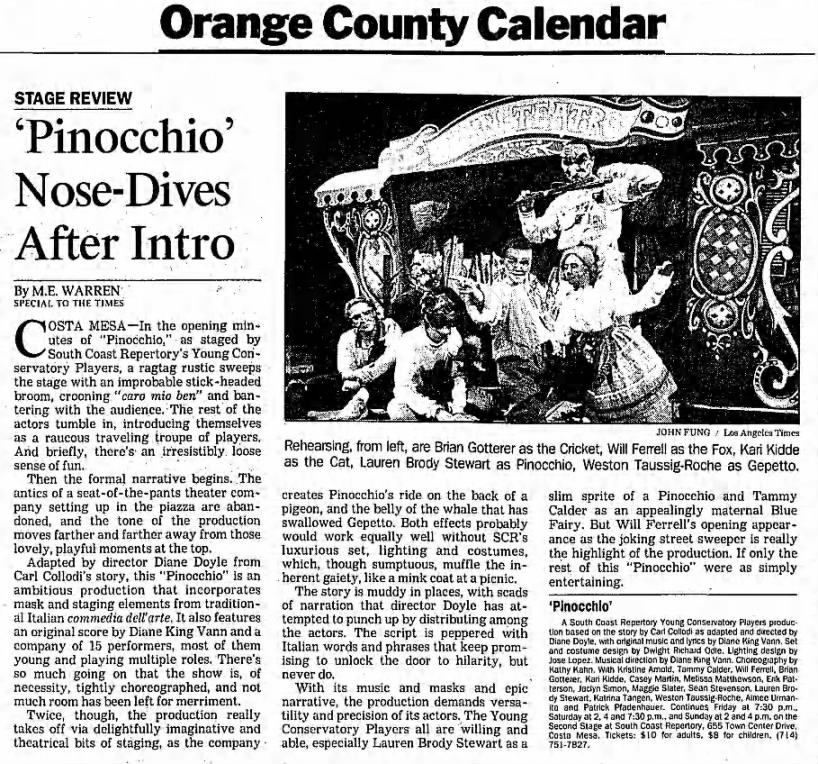
Finding work as a bank teller or answering calls at a phone bank helped Ferrell survive as he dove into working in local theater. One Los Angeles Times’ Calendar listing of events had him with four others performing stand-up at Black Angus Steakhouse in Buena Park in the early ’90s.
As a cast member of the Los Angeles comedy/improvisation group The Groundlings, Ferrell got a “Saturday Night Live” audition and became part of the cast for the 21st season in 1995.
Skits are one thing. What about the times Ferrell just shows up as a delicious surprise and inserts himself into an actual sporting event? He has mastered the art of a live sports prank bomb.
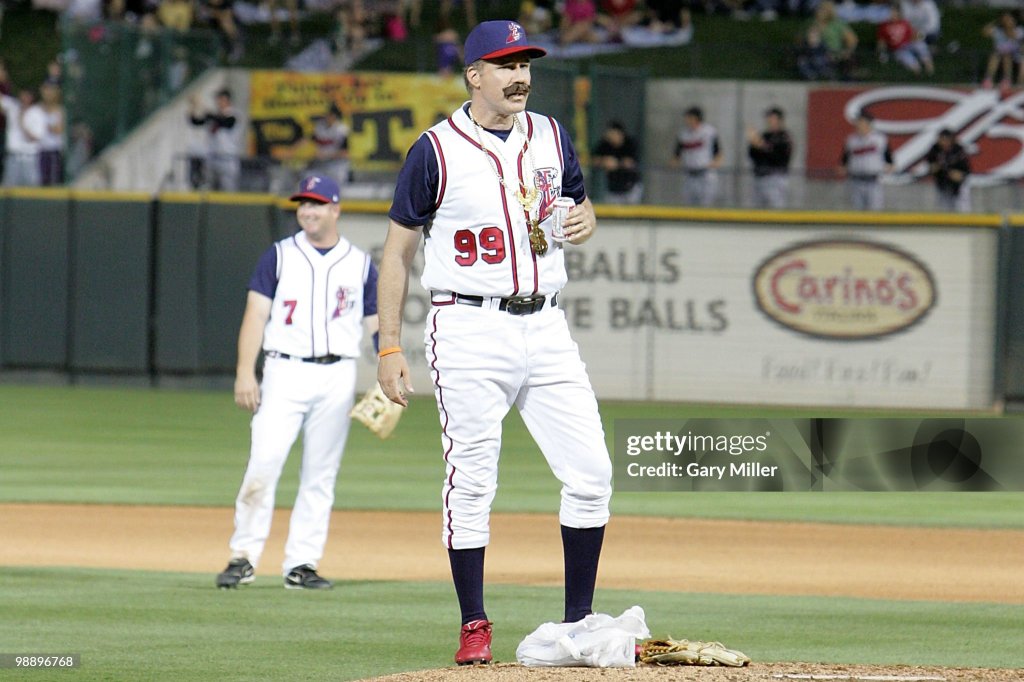
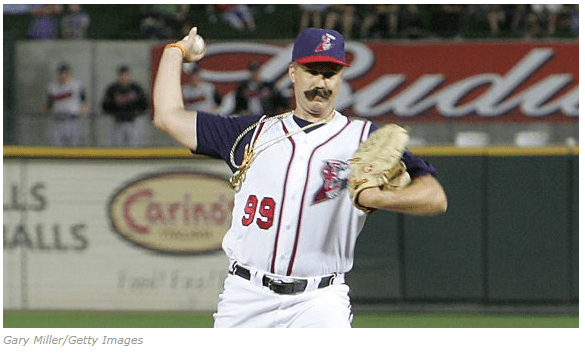
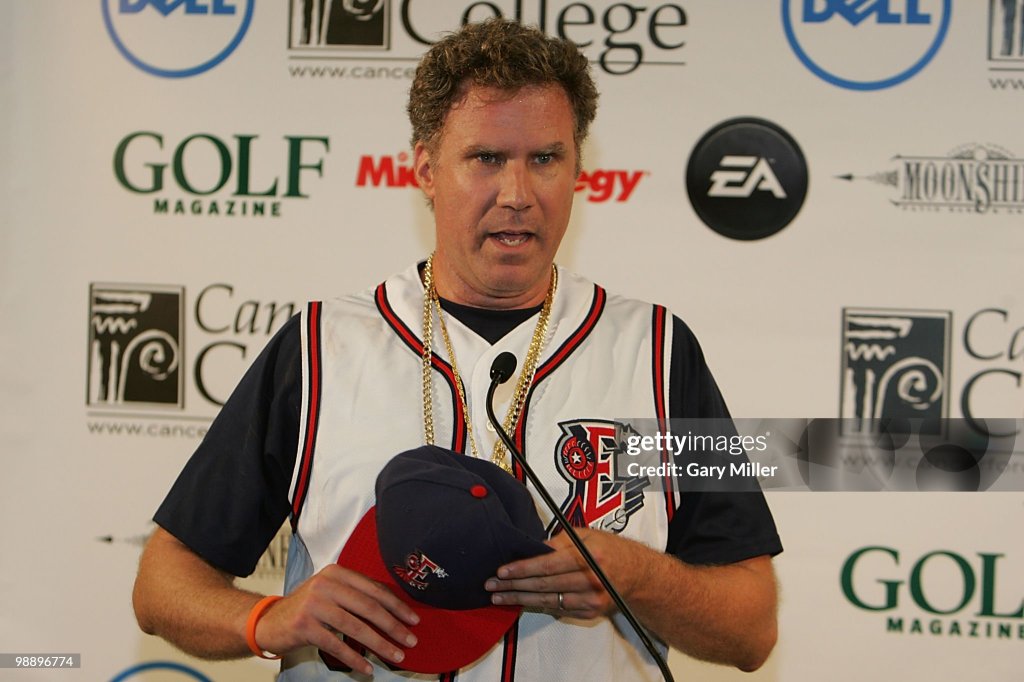
On a random night in 2010, Ferrell came out of the bullpen for the Triple-A Round Rock Express under the guise of someone named “Rojo” Johnson, complete with a backstory. He was a fire-balling phenom born in the U.S. but raised in Venezuela. He had been serving time in a central Texas prison for running a smuggling ring that imported rare and illegal species of reptiles. Upon his release, he joined the Express. Carrying with him a bag of beers, he threw his first pitch went behind the head of a Nashville Sounds’ batter and was immediately ejected.
As Ferrell/Johnson left the field, he scuffled with the umpire and sprayed the Sounds’ player with his beer.
Asked in 2011 to make a return to the Express, Ferrell/Johnson stood on his principles: “Rojo doesn’t play for an American League team. I don’t just pitch, I also hit. When the Express changed their affiliation from the Astros to the Rangers, I decided to hang up the cleats. I’m a National League guy.”
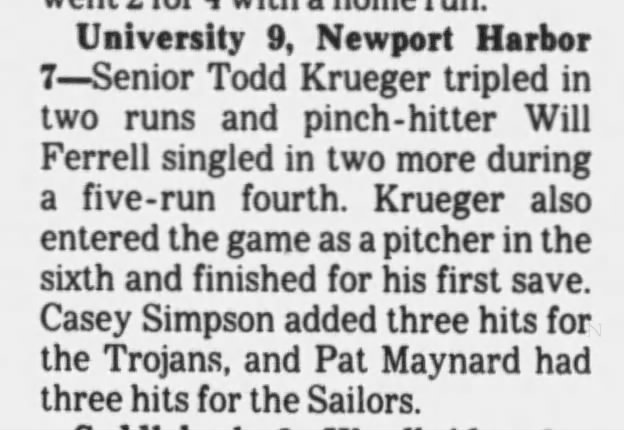
In a July 2026 episode of Netflix’s “Hot Ones: Extra Heat” taped at Pepperdine’s home baseball field in Malibu, Ferrell said his baseball career at Uni High consisted of getting 18 hits but also striking out 18 times. He also said he “wasn’t allowed to play center field,” just getting time in left or right field.
Can you believe any of that? These newspaper clips may add some credibility:
In February of 2013, Ferrell’s friends gifted him an authentic Staples Center red-coat security uniform and he snuck it into the arena. His name badge said “Ted Vagina.” While standing stone-faced on the baseline, Ferrell was approached by Shaquille O’Neal and an ad-lib was created. O’Neal was about to get up and leave anyway as it was the fourth quarter. What if Ferrell the usher ejected him instead? Ferrell complied.
“He was like, ‘I’m proud of you, man’,” Ferrell told the story during a June 2026 appearance on “Jimmy Kimmel Live.” “I said, ‘For what?’ He said, ‘No, just where your career has gone. I’m proud of you.’ And I’m like, ‘This is one of the funniest things I’ve ever done’.”
During the 2023 NHL playoffs between the Kings and Edmonton Oilers, Ferrell also showed up at his usual rink-side seats at Staples Center/Crypto.com Arena wearing checkered face paint in the Kings’ colors. That got him some TV time.
Then there was New Year’s Day 2026 when he arrived dressed as an NHL referee. He stood at one point at the glass in one of the corners pretending to officiate.
“I’ve always been in support of the NHL referees,” Ferrell said when interviewed on the Kings’ telecast. “In fact, I trained two of the guys out here. They are two of my prize students, Brandon and Francis. They’re calling a heck of a game.”
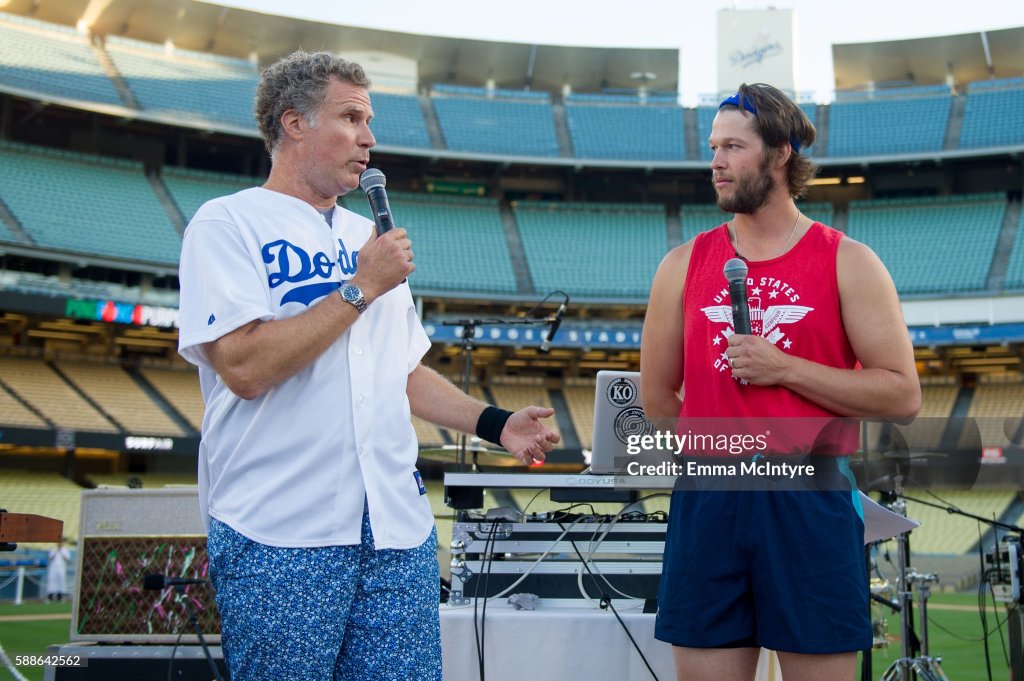
As one of the group of celebrity minority owners of the MLS’s Los Angeles Football Club, Ferrell famously released a live falcon as LAFC’s “honorary falconer” as part of the team’s first home opener in April, 2018 at Banc of California Stadium also also announced the lineups.
Ferrall announced the starting lineups at Dodger Stadium as well during the 2013 NLCS. In 2010, he attended the Home Run Derby at Angel Stadium, wearing a Bobby Grich patch on his blazer. Grich was his favorite player — and Ferrell said he honored him with a fake Grich-like mustache in “Anchorman.”
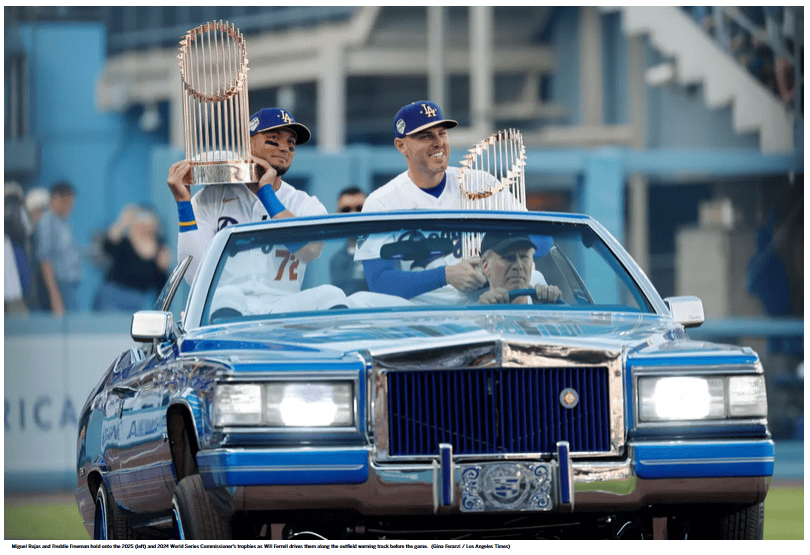
When the Dodgers celebrated Opening Day 2026, Ferrell was part of a pre-taped sketch shown on the video board as first searched Dodger Stadium for missing players and trophies. He then appeared driving a blue low-ride convertible with Freddie Freeman and Miguel Rojas in the back seats showing off the 2024 and 2025 World Series trophies.
As Conan O’Brien said during a 2011 ceremony where Ferrell was given the Mark Twain Prize for American Humor, his “unmatched level of total commitment” to his roles are what endear him to his fans.
“Why did it take so long?” Ferrell said in his acceptance speech. “You have to understand as a kid growing up in Irvine, California, where I would sit in my room … I had one dream. One singular focus. Even at the earliest age. I can remember wanting to do one thing, and one thing only. Sell insurance.”
He could have used a accidental dismemberment injury policy on Sept. 19, 2015.
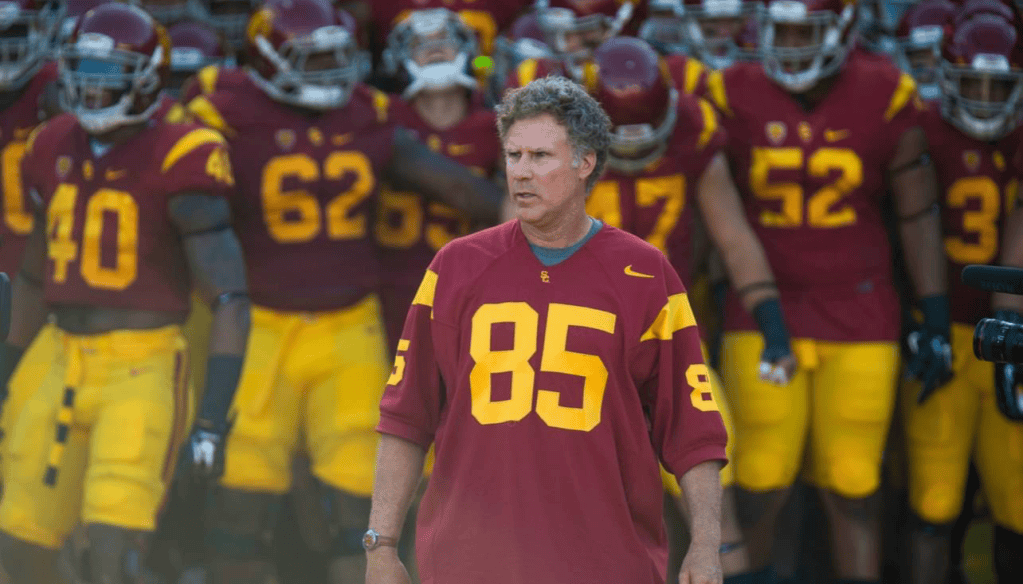
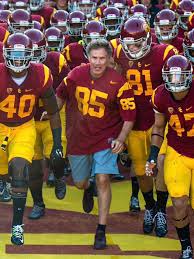
Ferrell was designated as the Trojan alum who would lead the football team out of the Coliseum tunnel and onto the field before their Pac-12 opener against Stanford.
Ferrell sported a No. 85 jersey, a throwback to his high school days.
He was nearly run over by the team as it charged into the field.
Seems like a sketch that could have been curated onhis own “Funny Or Die” website platform. In this case, would it have been funnier if he actually died? It was all just an extension of motivational stunts he would agree to do when Pete Carroll was the USC head football coach and invited him in for levity during practice.
Two seasons earlier, Ferrell led the Trojans marching band onto the field dressed as the school mascot — gladiator-style skirt and sandals, gold breastplate, a cape, and a warrior helmet with enormous plume. He carried a shiny sword, which at one point he spun around like a baton twirler.
In a 2025 Los Angeles Times business story about the ways artificial intelligence may influence future film making, Mark Goldstein, president and chief executive of the Burbank-based Central Casting said: “We have legendary people that started their career because they wanted to follow their dream to become an actor in Hollywood,” he said, ticking off the names of famous alumni such as Clark Gable, Carole Lombard, Brad Pitt … and Will Ferrell. “And we don’t see that changing.”
Nice company to have in a paragraph about Hollywood’s past, present and future.
When Ferrell appeared on “The Late Show with Stephen Colbert” in 2025, he submitted himself to the “Colbert Questionert,” seeking some deep thoughts to some of life’s most compelling inquiries. Yet, one commenter on YouTube said: “This is the first questionert where afterwards I feel like I know the guest even less.”
Because Ferrell always keeps us guessing. We never know what costume, or uniform, or jumpsuit he might end up wearing next, finding a way to take the field, roam the sidelines, or officiate an event.
And he doesn’t even need more cowbell.
Who else wore N0. 19 in SoCal sports history?
Make a case for:
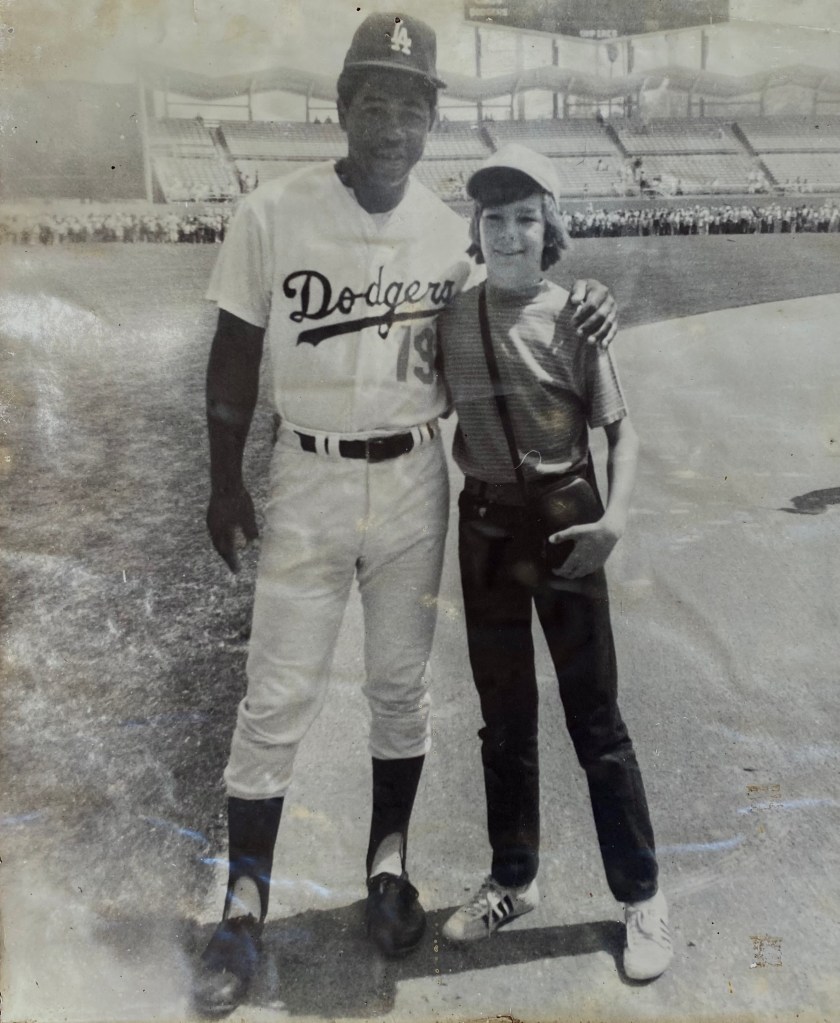
Jim Gilliam, Los Angeles Dodgers infielder (1958 to 1966), Los Angeles Dodgers coach (1964 to 1978):

Best known: His number 19 was retired by the franchise shortly before the 1978 World Series, a reflection of how much the organization appreciated his loyalty and ability to play nearly any positions — mostly second base, third base or left field — going back to his 1953 season in Brooklyn as the NL Rookie of the Year. Starting with the Baltimore Elite Giants of the Negro Leagues as a teenager, Gilliam came arrived five years after Jackie Robinson’s 1947 debut, and he stayed as a player through the 1966 World Series. During the Dodgers’ 1963 World Series run, Gilliam hit .282, with 77 runs, 60 walks and 19 stolen bases to place sixth in the NL MVP voting. While an active player in 1964, he started coaching first base, one of the first Blacks to do so. He started all seven games of the 1965 World Series against Minnesota having started the year as a retired player. His key defensive play of Game 7 perserved Sandy Koufax’s 2–0 shutout victory that won the World Series for the Dodgers. A four-time NL All-Star, Gilliam is the only Dodgers player other than Sandy Koufax to earn four World Series title rings (’55, ’59, ’63, ’65).

Not well remembered: In his 2025 book, “Jim Gilliam: The Forgotten Dodger” author Steve Dimore makes a case that surmises that Gilliam could have not only been the Dodgers’ first Black manager but the first in MLB history if the openings fell in his favor. It would have been most appropriate considering his connection with Robinson.
He was given the nickname Junior as a 16-year-old member of the Negro League’s Elite Giants, coming up in 1946, but also had the nickname “Devil” because of his pool hall prowess.
Butch Goring, Los Angeles Kings center (1969-70 to 1979-80):
Best known: After the 1977-78 season, Goring was the first NHL player to win the Lady Byng Trophy — the player who “exhibited the best type of sportsmanship and gentlemanly conduct combined with a high standard of playing ability” — and the Masterson Trophy — the player “who best exemplifies the qualities of perseverance, sportsmanship, and dedication to ice hockey.” His most famous moment on the ice for the Kings was in the 1975-76 playoff quarterfinal series against Boston, as he scored the overtime game-winning goals in Games 2 and 6.
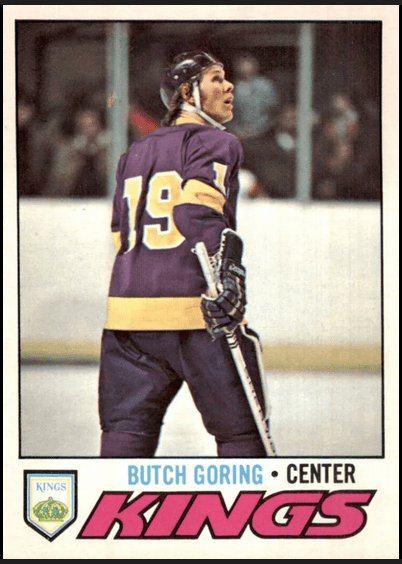
Goring scored 30 or more goals four straight seasons and had 20 or more goals in nine seasons for the Kings. On March 1, 1975, Goring had a four-goal game in a win over Minnesota. He had a career-best 87 points (36 goals, 51 assists) in 1978-79. His only All-Star game appearance came the next season in 1979-80 — just months before he was traded to the New York Islanders in exchange for defenseman Dave Lewis and right winger Billy Harris. At the time, Goring, who just turned 30, was the Kings’ franchise leader in goals (275), assists (384) and points (659) in the 736 games he played over 11 seasons. “I guess I’m disappointed that it didn’t work out Hollywood-style,” Goring said at the time of his trade. “When I thought about my career, I always had it in my mind that I hoped to play it out for the Kings.” Said Kings star center Marcel Dionne: “Butch was a sparkplug for us. I’ve seen him score some of the most spectacular goals that you can think of.
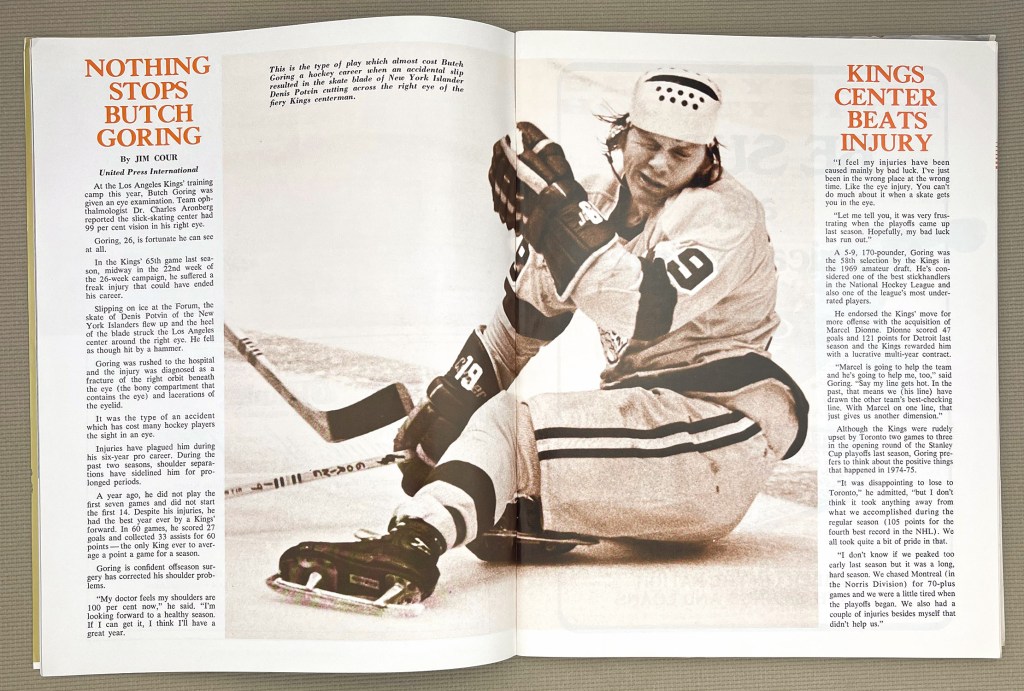
With the Islanders, Goring became part of four Stanley Cup championship teams in six seasons, as he flipped his No. 19 to No. 91, which the Islanders would retire. Upon leaving Los Angeles, Goring’s No. 19 was given to …
Jim Fox, Los Angeles Kings right winger (1980-81 to 1989 -90):
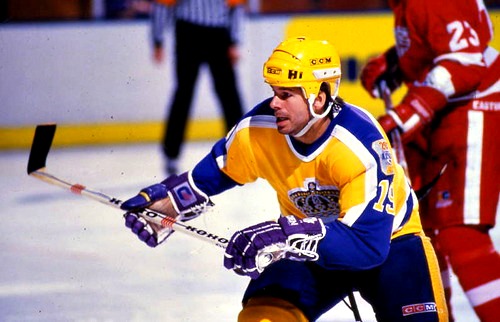
Best known: Fox’s 10-year career as a player saw him score 30 goals three times and retire in the Top 10 list of most all franchise offensive categories. From there, Fox became almost better as the team’s TV game analyst, including a 27-year run with Bob Miller that had the team’s 2012 and 2014 Stanley Cup title runs.
Not well remembered: Fox didn’t play during the 1988-89 season as he recovered from knee surgery. When he returned for 11 games of the ’89-90 season, he wore No. 4 because the team and he agreed to relinquished his No. 19 jersey to …
Larry Robinson, Los Angeles Kings defenseman (1989-90 to 1991-92):
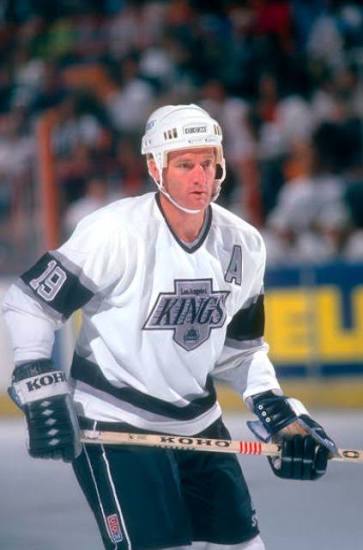
Best known: The Kings acquired the eventual Hockey Hall of Fame defenseman from Montreal after his 17 seasons and six Stanley Cup wins there. Nicknamed “Big Bird” for his 6-foot-4 and 225-pound frame, Robinson’s three seasons in L.A. was capped off by an All-Star game selection at age 40. Robinson’s name appears on the Stanley Cup 10 times: Six as a player, three as a coach or assistant coach and once as a scout. The Kings hired him as their head coach in 1995 after he was with the New Jersey Devils. His four-year term: 122-161-45, making the playoffs once. He is listed at No. 24 in “The Hockey 100” book of all-time players in 2026.
Not well remembered: Robinson came to the Kings two years after he badly broke his leg at 36 playing polo — aka, hockey on horseback. He was motivated to prove the Canadiens had given up on him too early and thought he was never going to recover. Robinson’s love of horses included teaming with Kings owner Bruce McNall to co-own a 6-year-old mare named Down Again that broke a 10-race losing streak and won the Monrovia Handicap at Santa Anita in 1990 as a 16-to-1 longshot. Perhaps his most impactful move in Southern California was opening a Play It Again Sports used equipment shop in Torrance, where signed copies of his book, “The Great Defender: My Hockey Odyssey” could be found.
Sean Avery, Los Angeles Kings left wing/center (2002-03 to 2006-07):
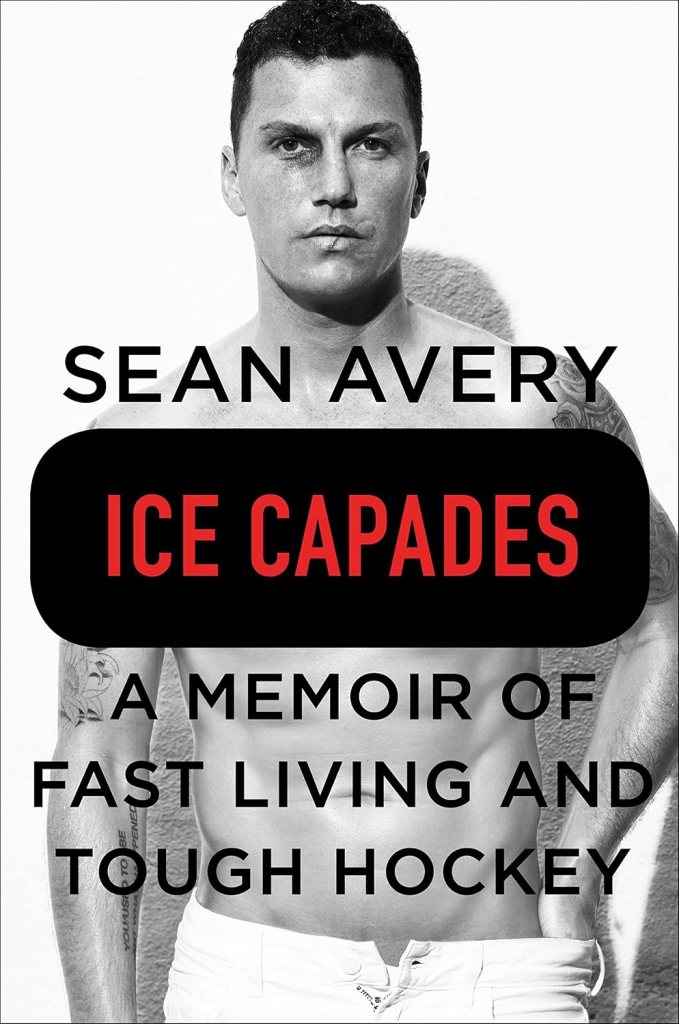
Best known: Perhaps the only thing that kept Avery from leading the NHL in penalty minutes for three straight seasons with the Kings was the fact that the 2004-05 campaign was canceled because of a labor dispute. It was bookended by Avery’s league-high 261 PIM in ’03-’04 and 257 PIM in ’05-’06. The 218 games he played over four-plus seasons resulted in 35 goals and 64 assists, and a +/- of minus-13. Traded away to the New York Rangers, Avery maintained a reputation for, as his Wikipedia pages notes, “controversial and disrespectful behaviour both on and off the ice, and having a agitating playing style that led to multiple teams waiving him and to having a contract terminated.” Over his 10-season NHL antagonist, Avery compiled more than six times as many penalty minutes (1,533) as he did points (247) and his actions with the Rangers in the 2008 Stanley Cup playoffs — facing and moving in front of Martin Brodeur to block the New Jersey Devils goalie’s vision — led to an unprecedented mid-series rule change by the league.
Not well remembered: Avery retired in 2012, moved to L.A. and gravitated toward modeling and acting, plus writing his 2017 book, “Ice Capades: A Memoir of Fast Living and Tough Hockey.” Director Christopher Nolan has come to add Avery in his action films, including “Oppenheimer” in 2023 and “The Odyssey” in 2026, the later of which he was cast as Laodamas, one of Odysseus’ muscular, helmet-clad men. As of ’26, Avery has appeared in 11 feature-length films. “I’m never going to stop,” he told the New York Times.
Hal Bedsole, USC football receiver (1961 to 1963):
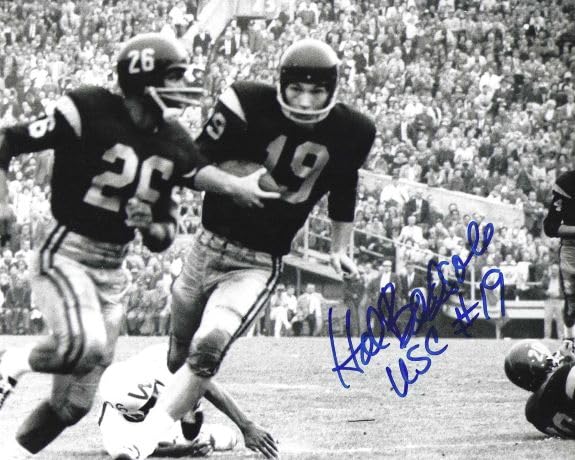
Best known: “Prince Hal” went from Reseda High to Pierce Junior College and into the USC Athletic Hall of Fame, the National Football Foundation Hall of Fame and inducted into the College Football Hall of Fame just prior to his death in December of 2017. The 6-foot-5, 230-pound Bedsole helped lead the Trojans to a 1962 national title, the first for John McKay, catching two touchdowns passes in USC’s win over Wisconsin in the 1963 Rose Bowl. The two-time first-team All AAWU and the first Trojan to have 200 receiving yards in a single game (201 against Cal in 1962, a school record for 21 years). He caught 82 passes for 1,717 yards and 20 touchdowns in his Trojan career, all school records at the time, and his 20.9 career average per reception remains a USC record (minimum 30 catches).
Not well remembered: Bedsole, the 1959 L.A. City Player of the Year, came to USC as a quarterback.
Dennis Dummit, UCLA football quarterback (1969 to 1970):
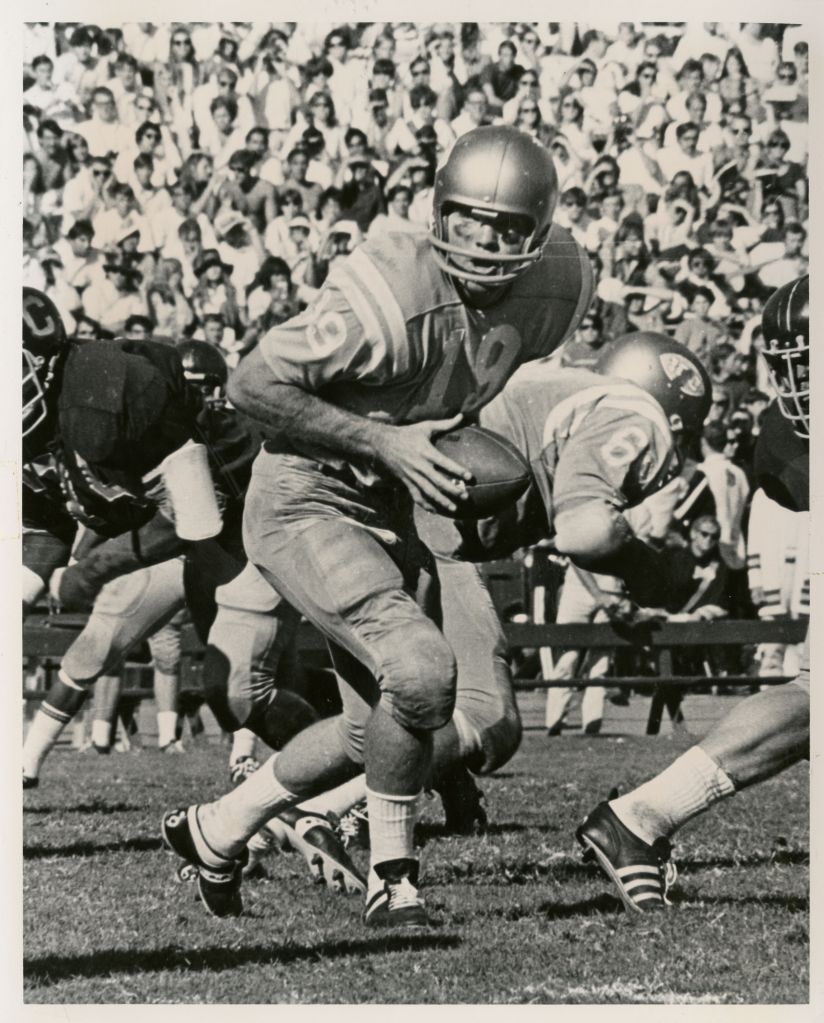
Best known: The Long Beach Wilson high grad spent two years at Long Beach City College and then set 14 records with the Bruins in 21 Pac-8 games, finishing as the top passer in the program’s history and two-time winner of the Red Sanders Award as the team’s MVP. At the time of his UCLA Athletic Hall of Fame induction in 2004, he was ranked as the No. 7 Bruin all-time passer with 289 completions out of 552 passes for 4,356 yards and 29 TDs. A National Football Foundation Scholar Athlete, Dummit was passed over in the NFL draft after his senior year, signed as a free agent with the Los Angeles Rams and played in a few exhibition games before going to the Canadian Football League and World Football League.
Not well remembered: From Dan Jenkins’ profile on Dummit for Sports Illustrated in late October of 1969 focused on the influx of JC transfers into the major college system: “First of all, nobody wanted Dummit when he got out of high school in Long Beach. Everybody wanted the guy who played ahead of him, a thrower named Bob Gritch (sic). UCLA signed Gritch (sic). But so did the Baltimore Orioles, and they paid him money…. Dummit, meanwhile, was talked to by Utah, Navy and Long Beach State and offered nothing. So he went to the community college … A good-looking, yellow-blond 6-footer, who wears a sweatband around his head to make his headgear fit, Dennis developed in the Jaycees as a passer, a cool, accurate thrower with what (UCLA coach Tom) Prothro calls “the best anticipation” of any passer he’s coached. Last December, Prothro knew he wanted Dummit — needed Dummit — and he got him. “We had to find a quarterback, and I went to the Jaycees to get one,” said Prothro. “I’m happy I found one with a 3.6 grade average as well as an arm.”
After Dummit led UCLA to a 6-0 start and a No. 6 national ranking, they suffered a 14-12 loss to USC. As Jenkins wrote for SI on Dec. 1: “All afternoon and evening the Wild Bunch bounced Dennis Dummit around the Coliseum floor like a double dribble, smothering him for loss after loss and forcing him to throw the football upward, downward and sideways.”
Fred Lynn, California Angels outfielder (1982 to 1984):
Best known: The El Monte High star turned down the chance to sign with the New York Yankees in 1970 out of high school and went to USC — first, to play wide receiver on the Trojans’ football team, part of the roster that won the 1972 Rose Bowl. Having become an All-American on the baseball team, Lynn was drafted by Boston in 1973 and, two years later, was the American League Rookie of the Year and AL MVP. Coming to the Angels in an ’81 pre-season trade where he was swapped for Joe Rudi and Frank Tanana, Lynn made three more straight AL All-Star appearances (to give him nine in a row), highlighted by hitting a grand slam in the 1983 game at Comiskey Park in Chicago.
Not well remembered: Lynn became the first (and still only) ALCS MVP from a losing team after he hit .611 (11 for 18 with two doubles, one HR and five RBIs to go with a 1.539 OPS) during the Angels’ five-game series defeat at the hands of Milwaukee in 1982. Also with the Angels, Lynn initially wore No. 8 in 1981 because Bert Campaneris had the No. 19 that Lynn wore in Boston.
Mike Gillsepie, USC baseball coach (1987 to 2006):

Best known: One of only two to play in and coach an NCAA championship baseball team, Gillespie came from Hawthorne High to play on USC’s 1961 NCAA title team, and then coached the Trojans to five Pac-10 titles and four College World Series appearances, winning it all in 1998 after going to the championship game in 1995. Gillespie, who won 763 games at USC and coached 42 All-Americans, was also successful as UC Irvine’s head baseball coach from 2008 to 2018. He was inducted into the American Baseball Coaches Association Hall of Fame in 2010 , the USC Athletics Hall of Fame in 2018 and had his No. 19 retired in 2022 and posted with a logo on the right-field fence next to Rod Dedeaux’s No. 1.
Bob Boyd, USC basketball center (1950-51 to 1951-52):
Best known: An All-CIF player at Alhambra High School, the 6-foot-6 center became more high-profile as the Trojans head basketball coach who won 215 games from 1966 to 1979 but was in only one NCAA Tournament because of conference rules. Boyd was USC’s most valuable player as a senior in 1952, averaging a team-best 12.2 points a game that season for Forest Twogood’s 16-14 team. Boyd also led Twogood’s ’50-51 team with 9.2 points a game.
Dave Weatherman, Cal State Fullerton pitcher (1978 to 1981):
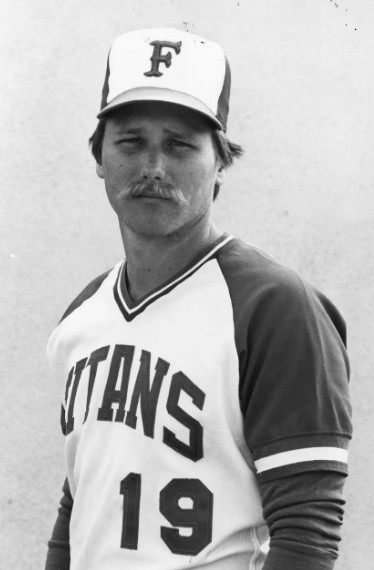
The winningest pitcher in school history threw a complete game as the Titans won their first College World Series title in 1979, a 2-1 victory over Arkansas. Weatherman, out of West Torrance High, had been knocked around in a win over Pepperdine in the semifinals and was pulled early, so coach Augie Garrido felt he was rested enough to start the next day without any rest. That capped his sophomore season with a 15-2 record and 3.09 ERA. He finished tops at Fullerton in innings pitched (453.1), wins (42) and complete games (25), following up a 9-3/2.90 ERA as a freshman with seasons of 8-3/3.24 ERA as a junior ant 10-3/3.90 ERA as a senior in 75 games with 61 starts.
Marcedes Lewis, UCLA football tight end (2002 to 2006):
Best known: Out of Long Beach Poly, named to the Parade magazine high school All-American team, Lewis was the first Bruin to win the Mackey Award as the nation’s tight end after making 58 receptions for 741 yards and 10 touchdown as a senior. In 32 stars of 49 games, Lewis, at 6-foot-6 and 261 pounds, set the UCLA school record for tight ends with 126 receptions as well as 1,571 yards and 21 TDs. The 28th overall pick in the 2006 NFL Draft by Jacksonville was inducted into the UCLA Athletics Hall of Fame in 2022.
Have you heard this story:
Mario Danello, USC football kicker (2003 to 2006):
Best known: Six days after USC’s win over Michigan in the 2007 Rose Bowl, where he connected on two 26-yard field goals and two of four PAT tries, Danello was found dead at the bottom of White Point Cliff near the Point Fermin Lighthouse in San Pedro. Two thousand people attended Danello’s funeral at Mary Star of the Sea Catholic church. As a sophomore in ’05 and a junior in ’06, the San Pedro-nativeo went from walk-on to scholarship to starter when he converted 26 of 28 field goals and made good on 127 extra points. He benefited from the high-powered Trojans’ offense in 2005 by setting NCAA, Pac-10 and USC records for PATs (83) and PAT attempts (86). The son of former NFL kicker Joe Danello, Marco was an All-L.A. City first team linebacker at San Pedro High as a senior in 2002.
In the 2007 season opener, as USC players wore a No. 19 sticker on their helmets, coach Pete Carroll and Athletic Director Mike Garrett presented a jersey to Danello’s parents. After the Trojans’ first touchdown against Idaho, the team lined up in PAT formation, with the holder kneeling, and took a five-yard delay of game penalty as a tribute as they stood still, waiting for the kicker to come on the field.
Curtis Pride, Anaheim/Los Angeles Angels outfielder (2004 to 2006):
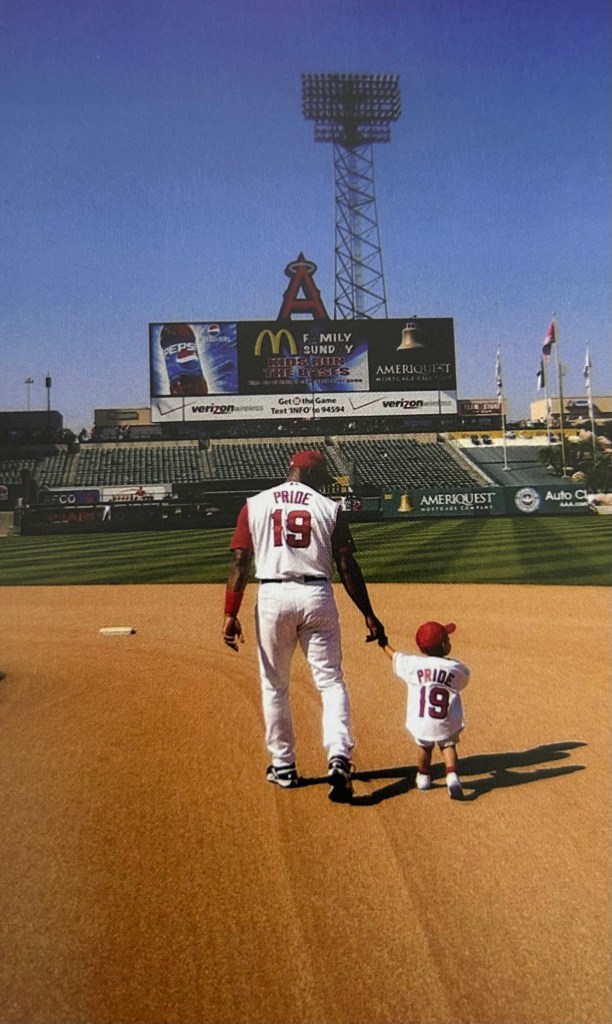
Audiologists found Curtis Pride to be 95 percent deaf in both ears at birth as a result of his mother having rubella while she was pregnant. Yet he would play professional baseball for 23 years, including parts of 11 seasons at the major-league level. A left-handed-hitting outfielder had 199 big-league base hits, 50 coming off the bench, and 29 as a pinch-hitter. In 1995, Pride received the Tony Conigliaro Award to honor a player who overcame “an obstacle and adversity through the attributes of spirit, determination, and courage,” all trademarks of Conigliaro. In 1997, after the Detroit Tigers released him, the Boston Red Sox picked him up, but gave him only two at-bats. The first resulted in a pinch-hit home run at Fenway Park. It is curious that Pride wasn’t given more opportunities to show his athletic skills. Asked if he thought his deafness played a role, Pride said he wouldn’t speculate if there may have been some discriminated. “Teams appreciated my ability on the field, and more importantly, I was a very good team player,” he said, included in his Society of American Baseball Research biography. He wrote his own autobiography in 2025: “I Felt the Cheers: The Remarkable Silent Life of Curtis Pride” and has admitted: Yes, he read lips, as opposing pitchers eventually found out when they tried to do mound visits with coaches and catchers.
Lance Rentzel, Los Angeles Rams receiver (1972 to 1974):

No. 19 turned out to be Rentzel’ss NFL comeback jersey — the number he wore earlier in his career with Dallas and Minnesota, and then donned for one last year with the Rams after serving a 10-month suspension by the NFL for what was deemed “conduct detrimental to the league.” Rentzel, convicted of marijuana possession, was already on probation for an indecent exposure charge that went back to 1970 when he was with the Cowboys, which led to a disorderly conduct charge against him in 1966. Trying to reboot his image, Rentzel was given No. 13 by the Rams in 1971. He led the team in receptions with 38. While with the Rams, he was the subject of a long 1972 feature story in Sport magazine — “The Story Behind His Fight For Respect” –which led to his autobiography, “When All The Laughter Died in Sorrow.” Rentzel died in June of 2026 at age 82.
Louis Lappe, El Segundo Little League pitcher/shortstop (2023):
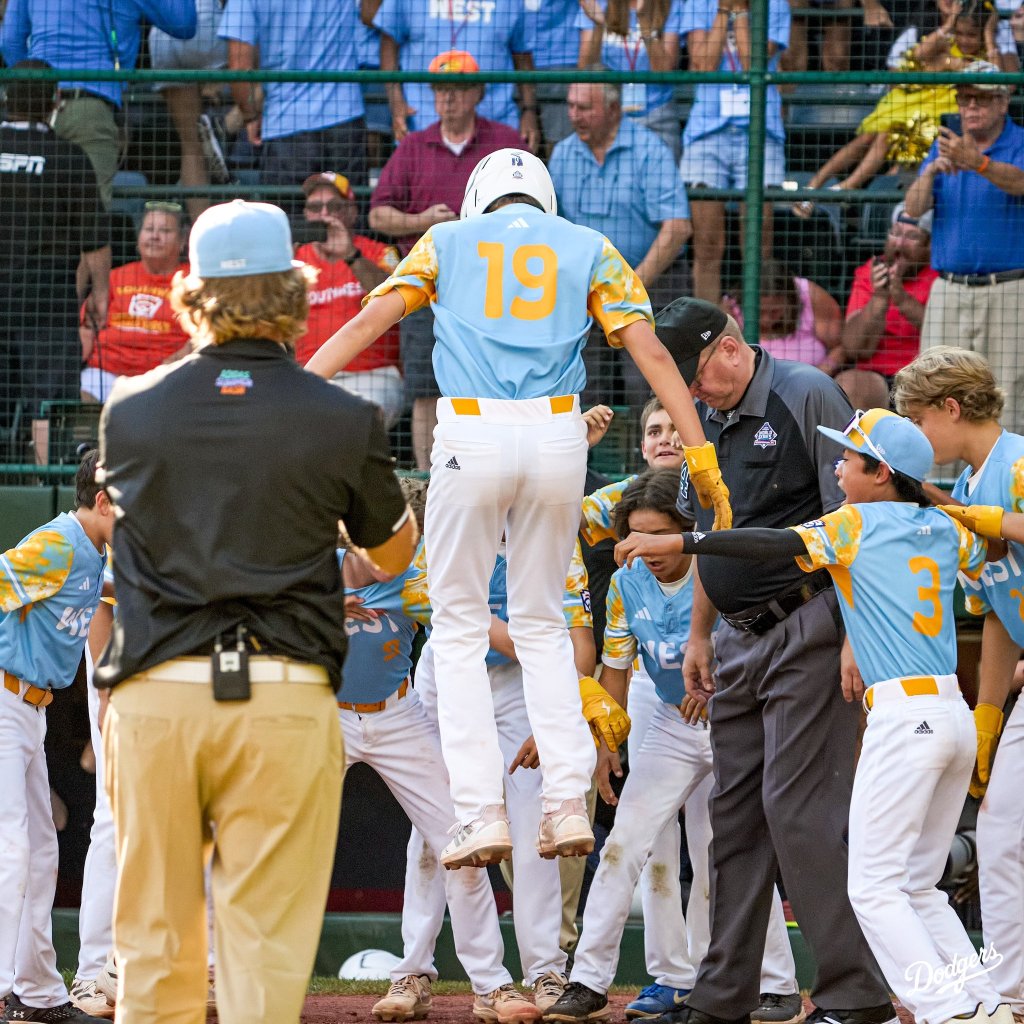
Lappe’s home run in the bottom of the sixth inning of the Little League World Series championship gave his El Segundo Little League team the title in 2023. The 6-foot-1 and 153 pound 12-year-old hit a three-run homer in the fifth inning and struck out 10 batters in 5 1/3 innings on the mound during the U.S. title game win over Needville, Texas. It was the fourth day in a row El Segundo won an elimination game. Lappe went on to play high school at Harvard-Westlake and play on the 15U team for USA Baseball. More on Lappe and the history of SoCal in the Little League World Series on the post honoring Sean Burroughs at No. 21.
Lamar Willis, Compton College football receiver (2025):
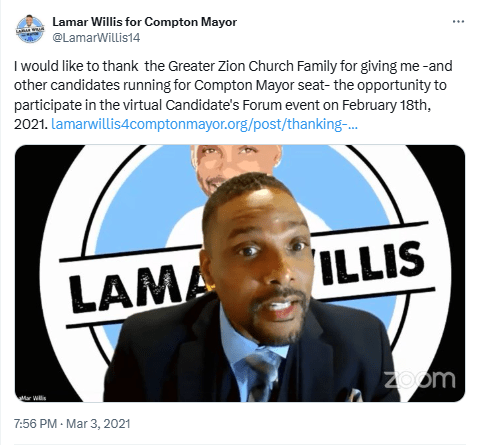
In 2025, the Compton College football program was in danger, again, of being canceled for budget reasons, lack of victories and general disinterest. The community kept rallying to keep it alive. It needed players. It took all comers. Willis, who last played at Bellflower High and was coaching football as late as 2014, was recruited to play at age 45. He would join his son, Josiah, who wore No. 20 and played defensive back fresh out of Cerritos High. Willis played in two games during Compton’s 0-10 season as (the last two games were losses by forfeit). This is the same Lamar Willis who once ran for mayor of Compton in 2021. Among Willis’ teammates on this Compton team was 50-year-old linebacker Orson Villalobos (his bio is on the No. 50 post).
We also have:
Jeff Dankworth, UCLA football quarterback (1974 to 1976)
Alex Hannum, USC basketball forward (1943, 1946 to 1947)
Remy Hamilton, Los Angeles Avengers kicker (2002 to 2007)
Dante Bichette, California Angels outfielder (1988 to 1990)
Bill Munson, Los Angeles Rams quarterback (1964 to 1967)
Note: Chargers receiver Lance Alworth did not play for Los Angeles in 1960 but joined the team a year later en route to a Hall of Fame career in San Diego.
Anyone else worth nominating?
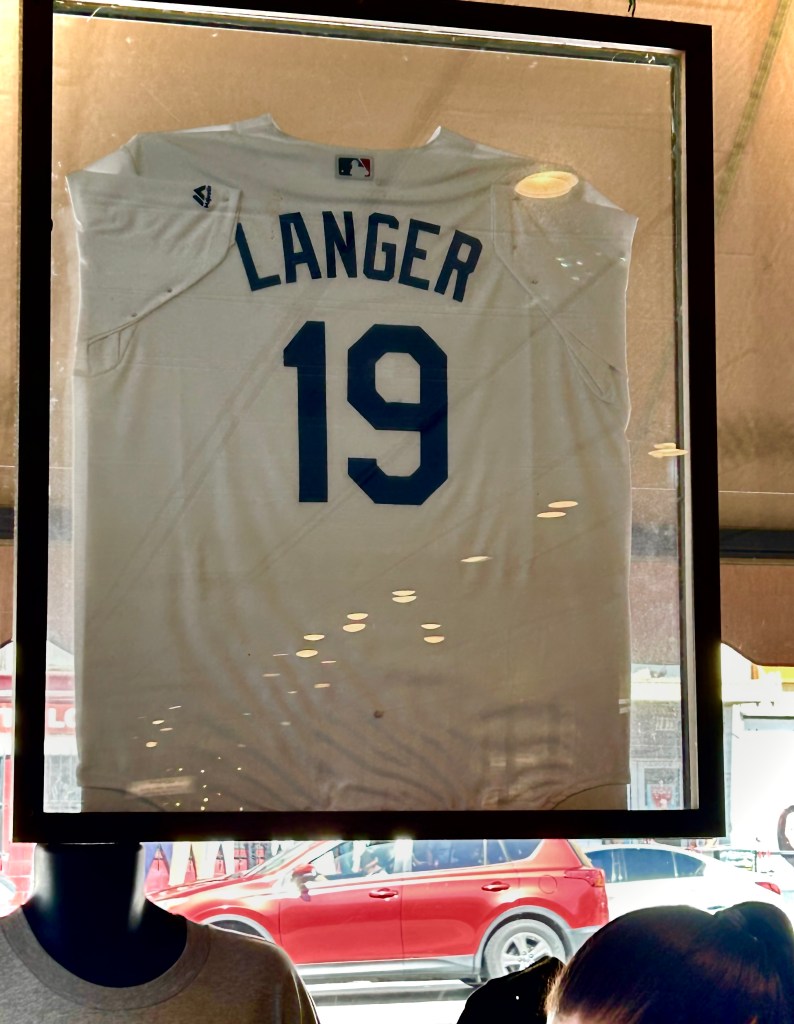


1 thought on “No. 19: Will Ferrell”