

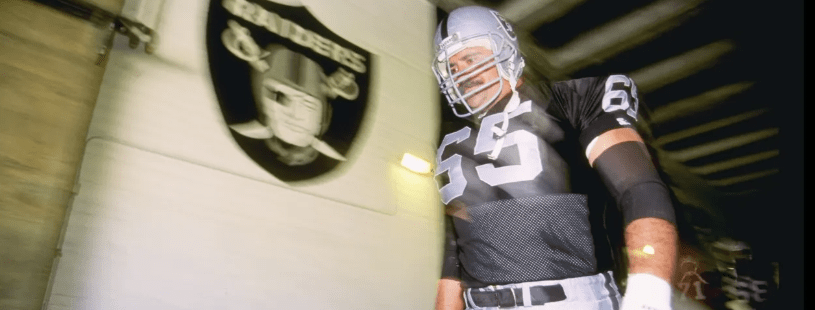
This is the latest post for an ongoing media project — SoCal Sports History 101: The Prime Numbers from 00 to 99 that Uniformly, Uniquely and Unapologetically Reveal The Narrative of Our Region’s Athletic Heritage. Pick a number and highlight an athlete — person, place or thing — most obviously connected to it by fame and fortune, someone who isn’t so obvious, and then take a deeper dive into the most interesting story tied to it. It’s a combination of star power, achievement, longevity, notoriety, and, above all, what makes that athlete so Southern California. Quirkiness and notoriety factor in. And it should open itself to more discussion and debate — which is what sports is best at doing.
The most obvious choices for No. 65:
= Max Montoya: UCLA football; Los Angeles Raiders
= Tom Mack: Los Angeles Rams
= Mickey Marvin: Los Angeles Raiders
The most interesting story for No. 65:
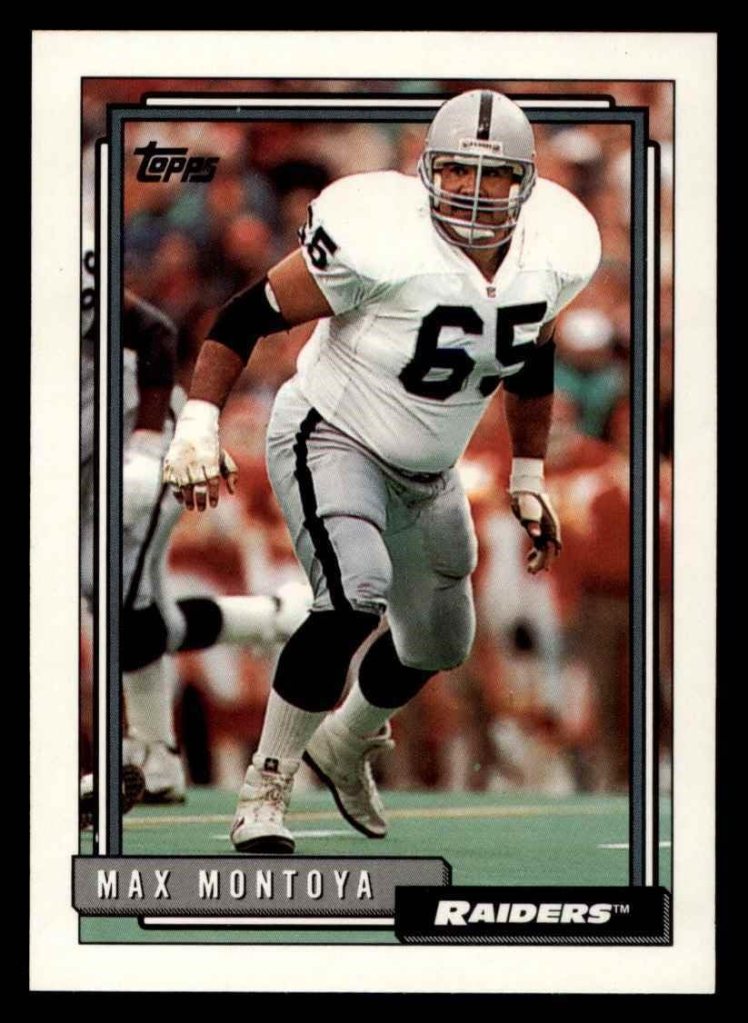
Max Montoya, Los Angeles Raiders offensive guard (1990 to 1994) via La Puente High,Mt. San Antonio College (1974 to 1975) and UCLA (1976 to 1978)
Southern California map pinpoints:
Montebello, La Puente, Westwood, Los Angeles (Coliseum)
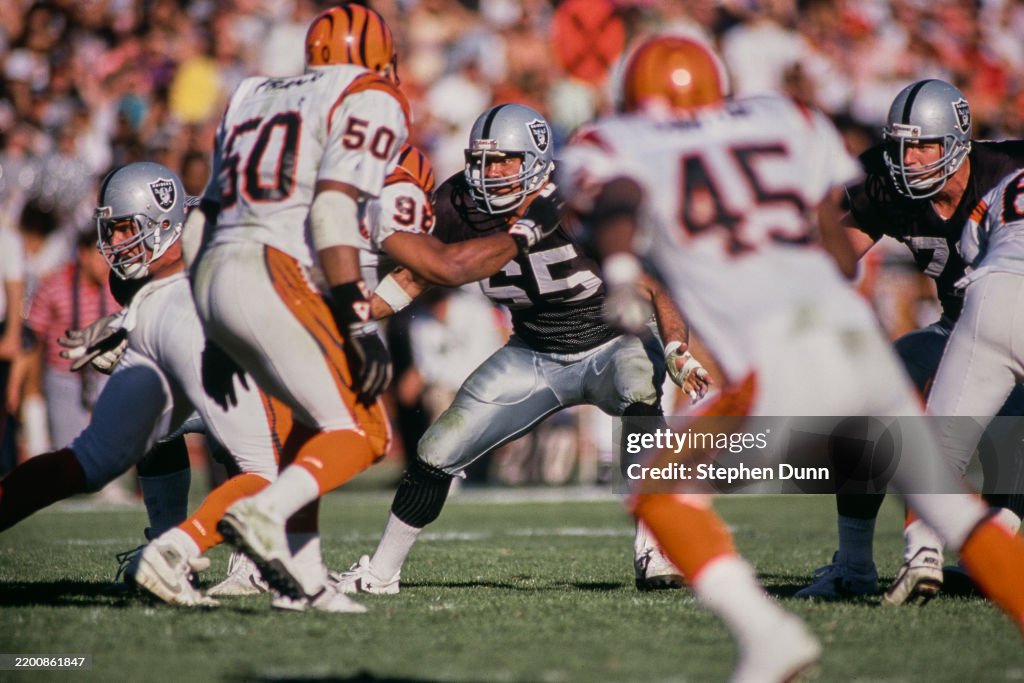
Max Montoya has yet to max out on Hall of Fame membership cards.
In the bio that went with his 2019 induction into the Salon de Ia Fama Latinoamericano del Deporte — also known as the Latin American International Sports Hall of Fame — it is noted that Montoya also has a place in the California Community College Football Coaches Association Hall of Fame (1994), the Mount San Antonio College Athletic Hall of Fame (1992), the California Community College Athletic Association Hall of Fame (3C2A) (2000), and the National Hispanic Sports Hall of Fame (2012).
Perhaps all that’s missing at this point is inclusion in UCLA Athletic Hall of Fame? Anywhere else?
Consider that 6-foot-5, 282 pounder born in Montebello couldn’t play varsity football or basketball as a senior at La Puente High after doctors detected a heart murmur.
“It was weird, something I had to outgrow, take all kinds of tests and couldn’t clear,” Montoya explained in 2021 as a guest on the “In the Trenches with Dave Lapham” podcast.
Montoya’s high school athletic journey was a process of stops and starts. He couldn’t play the freshman football season because he broke his collar bone. As a sophomore and junior, he made it onto the football team and thew the shot put, besting at 55 feet and setting a school record. Then came the senior year rest period.
Having the heart to play in the trenches is what got Montoya through it all.
Still wanting to compete, Montoya admitted he was “very raw” when he decided to play at Mt. San Antonio College in Walnut. He didn’t start as a freshman but emerged as a team leader and credited offensive line coach Ralph Craig for teaching him how approach the position.
“Max always worked hard even back then,” Mt. SAC Coach Bill Fisk, an assistant when Montoya played there, told the Los Angeles Times. “He was just a big guy who kept getting better and better.”
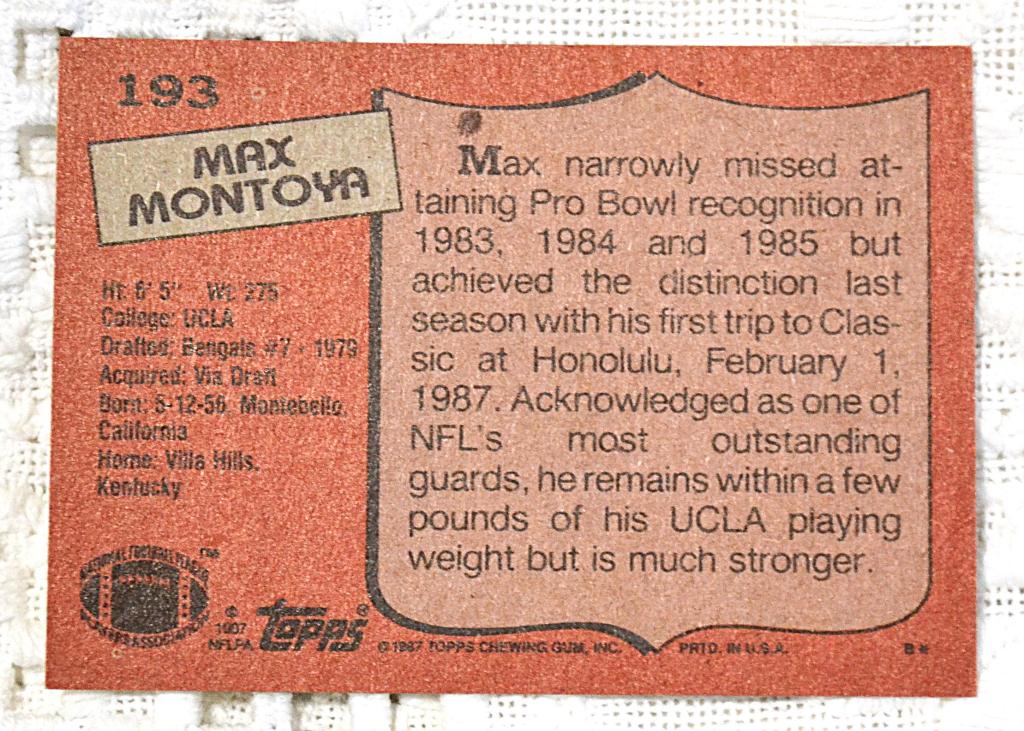
Montoya had been recruited to UCLA by then-head coach Dick Vermeil, but when Vermeil left to the NFL’s Philadelphia Eagles, Montoya signed a letter of intent to play at Colorado. It took incoming UCLA head coach Terry Donahue convinced Montoya to stay at home, even if it meant sitting out the 1976 season.
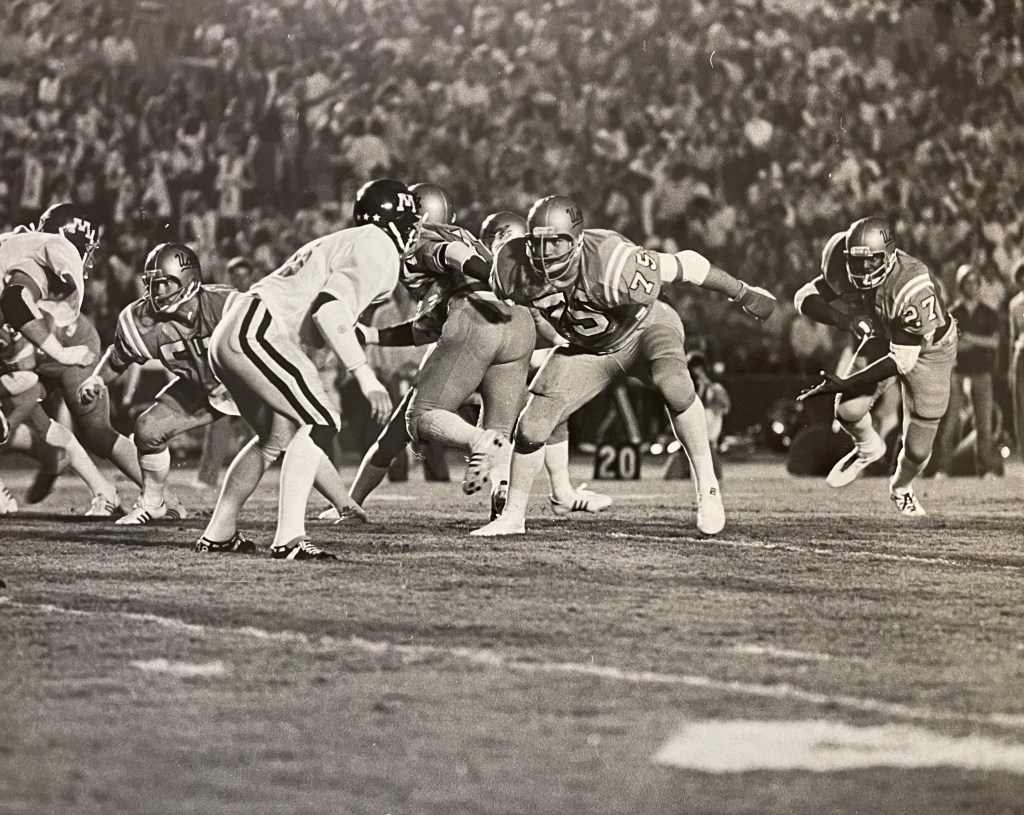
But for ’77 and ’78, wearing No. 75, Montoya became a two-year starter at weakside tackle with the Bruins. As a senior, he ended up with second-team All-Pac-10 honors as UCLA went 8-3-1 and tied Arkansas in the ’78 Fiesta Bowl. He was also named UCLA’s recipient of the George W. Dickerson Award (outstanding offensive player in the UCLA-USC game) and played in the Japan Bowl All Star game.
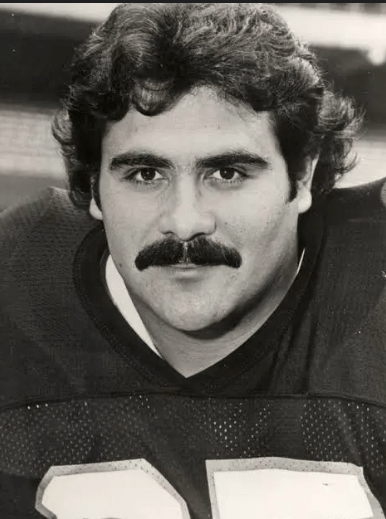
Thinking he might either go to Dallas or Seattle, Montoya was surprised to be a seventh-round pick, 168th overall, by the Cincinnati Bengals in the 1979 NFL Draft. Frank Gansz, who had been UCLA’s offensive line coach in 1976 and ‘77 when Montoya was in Westwood, was now the Bengals’ special teams and tight ends coach in 1979 and endorsed the selection of Montoya.
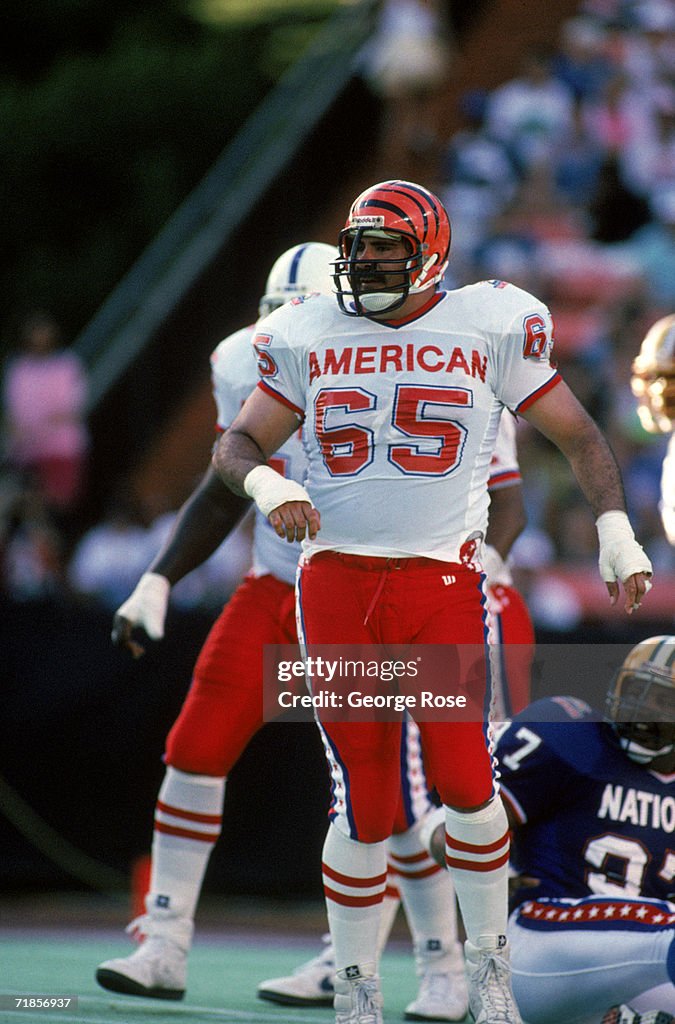
Who knew Montoya would last 11 seasons there, play in three Pro Bowls, be part of two Super Bowl teams (in 1982 and ’89, both losses to San Francisco) and Pro Football Reference would have him part of its first team All 1980’s team. Montoya was also on the Bengals’ 40th and 50th anniversary teams.
All the while he steadied an offensive line rubbing shoulders with future Hall of Famer Anthony Munoz, who played for USC while Montoya was at UCLA.
“Funny how fate goes,” Montoya said of teaming with Munoz for nine seasons. “Two big Mexicans from Los Angeles end up not only on the same team but on the same line. Who’d have thought it?”
“In the era we played in, (Montoya) was, from a pass protector and a pulling guard, as good as there was,” said Lapham, a center on that Bengals’ line, in the Cincinnati Enquirer celebrating the franchise’s 50th year in 2017. “Big barrel-chested upper body. Just stoned guys. He was phenomenal in that regard. In a 10- and 20-yard area, he was cat-quick. He was quick as hell. Always ran great pass courses when he was a pulling guard. Max would get nasty when he had to get nasty. He definitely wasn’t taking anything from anybody.”
Perhaps Montoya’s greatest contribution to Cincinnati during that time was opening his own Mexican restaurant. It was called “Montoya’s.”
“All our customers from Cincinnati are from the Southwest,” Montoya told the Los Angeles Times in 1990. “They come in and say, ‘Oh my God, thank you for this place’.”
That led to his interest in investing in franchises for Penn Station restaurant chain through the Midwest and East Coast.
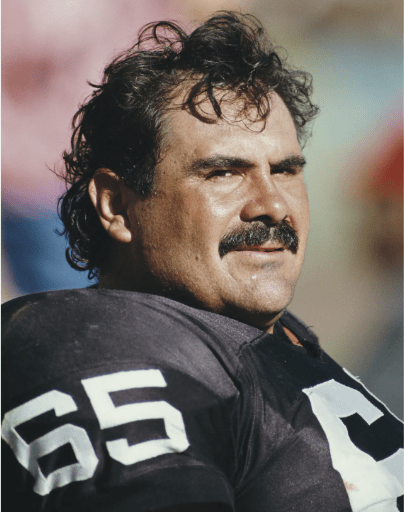
Maybe it seemed as if Montoya would finish his career with Cincinnati, but the Bengals left him unprotected in the summer of 1990, making him what was called a Plan B free agent. The Raiders of Los Angeles came in with a two-year, $1.45 million deal — the greatest amount ever paid a Raider offensive lineman.
Montoya lasted five seasons with the Raiders, a starter in every season but his last. In October of 1993, Montoya reached his 200th NFL game in a Monday Night contest at Denver.
“If you play 10 games in this league, it is considered a milestone,” said Raider Coach Art Shell, who played in 207 during his Hall of Fame career. “It’s a testimony for Max that he’s been around 15 years now. He’s just an old dog still hunting who still has a little bark in him. … He’s a tough guy who still loves to play the game. It’s a credit to his ability and his wanting to play the game.”
Montoya also made the Pro Bowl that ’93 season at age 37, starting all 16 games.
In June of 1994 when the Raiders convened for a three-day mini-camp in El Segundo, Montoya wasn’t there — Shell told the media that Montoya had decided to retire. But a month later, Montoya showed up after Shell talked him into returning as a backup guard, center and even tackle on the line, as well as be the back-up snapper on kicks and punts. It was a role Shell had himself with the Raiders in 1982 that kept him around as a vital veteran presence.
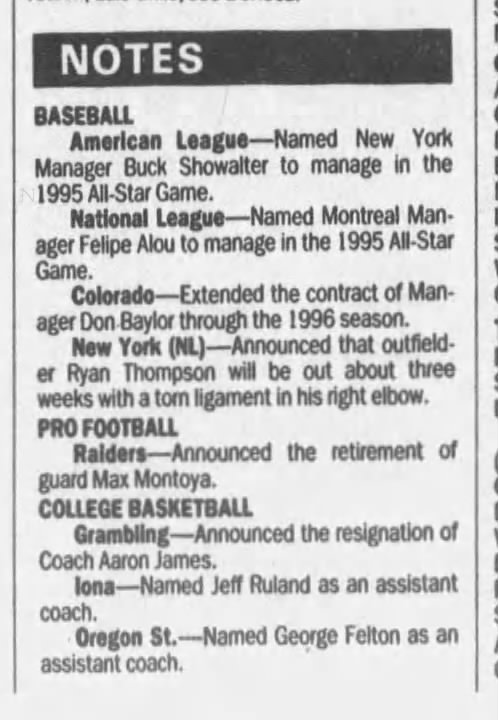
“When they called and explained to me they thought of me as an insurance policy, I knew it was something I was willing to do,” Montoya said. “And the one thing, even thought I’ve been to two Super Bowls (with the Bengals), I’ve never won a championship ring. With this team, I might get that chance.”
Montoya played in 13 games that year, none as a starter, as the Raiders missed the playoffs with a 9-7 record.
Still, in his 16 NFL seasons, Montoya started 195 of 223 games.
Reflecting on his career, Montoya said his full-circle NFL moment came during the New York Giants-New England Patriots Super Bowl XLVI in Indianapolis.
Montoya got to see his son, Matt, work the game as part of the video crew for NFL Films and his daughter, Alison (Matt’s twin sister), cover the game as a general assignment reporter for a Cincinnati Fox affiliate.
In 2019, Matt Montoya, still a multimedia freelancer, was a NFL production assistant working on the HBO series “Hard Knocks: Training Camp with the Oakland Raiders.” His work overlapped with having his father, Max, and his mother, Patty, become part of an episode when they attended the team’s alumni weekend at the Raiders’ Bay Area camp.
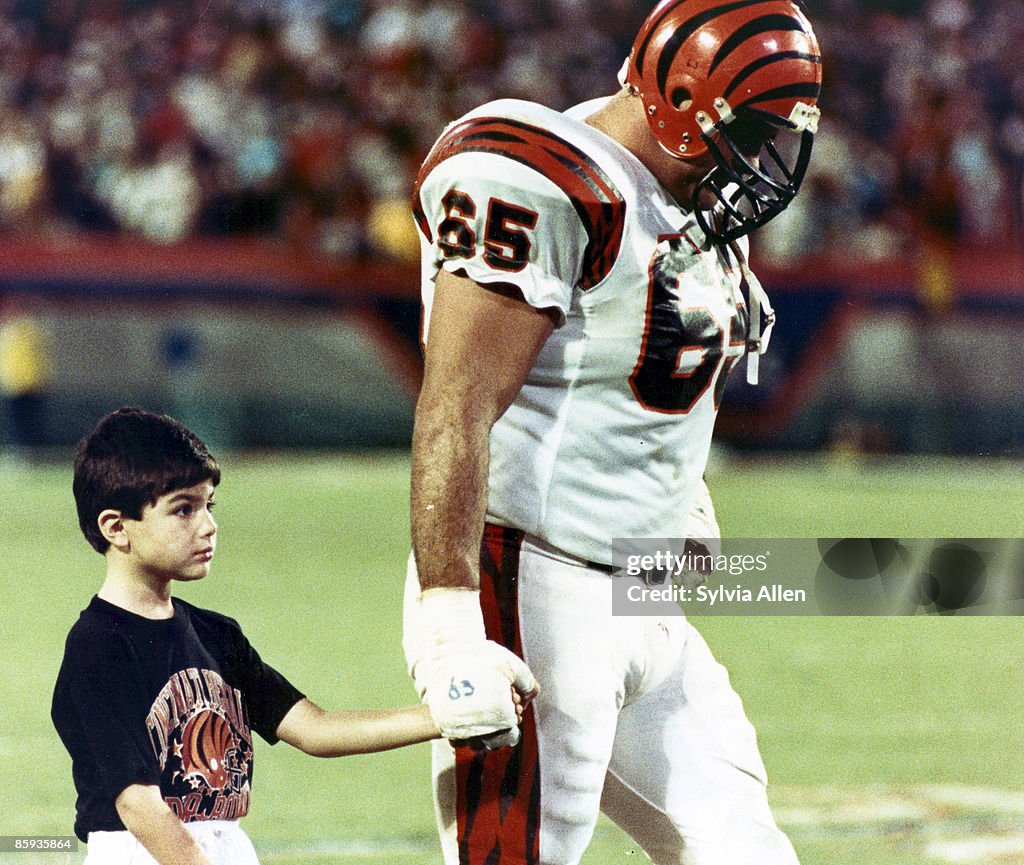
“I just have some snapshot memories of his time with the Bengals — no real fluid memories. I was so young,” Matt, whose dad coached him at Beechwood High in Fort Mitchell, Kentucky, told the San Jose Mercury News.
“But for those years in L.A., I was in the second-through-sixth grades. So I was old enough to go to practice and interact with some of the players. Here I was, just a snot-nosed kid, watching game tape with these giant men.”
Max Montoya said he watched the HBO series from his home in Hebron, Kentucky, where he raises horses.
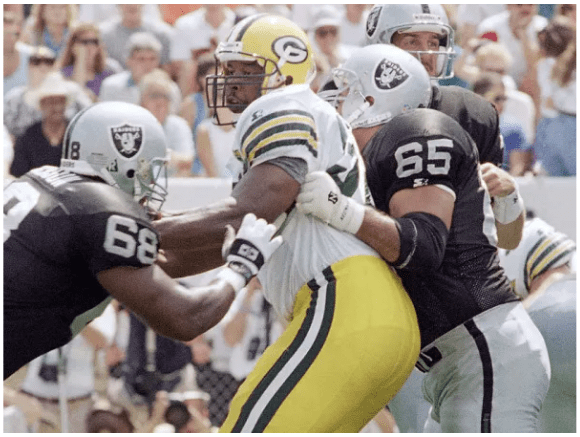
“I actually miss the f-bombs during practice,” Montoya said. “Everyone’s too politically correct these days. Hey, it’s football. Check your feelings at the door … I love that old-school stuff.”
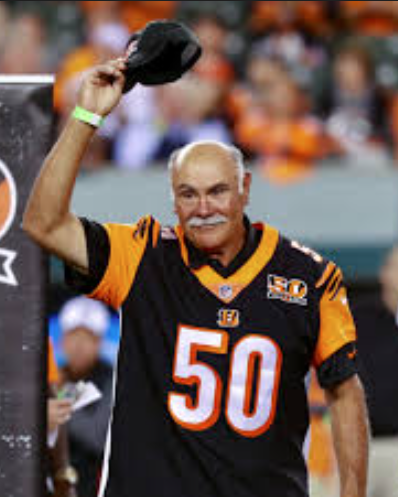
In 2017, marking the team’s 50th season of existence, Montoya was at the Bengals’ kickoff season event and was thinking out loud about how, in the Pro Football Hall of Fame history, only one member of Cincinnati’s teams were in Canton, Ohio.
“One Hall of Famer in 50 years?” Montoya said. “My gosh. There are a lot of great players that have never been to a damn playoff that should be in the Hall … Kenny Anderson … Isaac Curtis …”
Munoz himself suggested Montoya belonged there, with him, wearing a gold jacket.
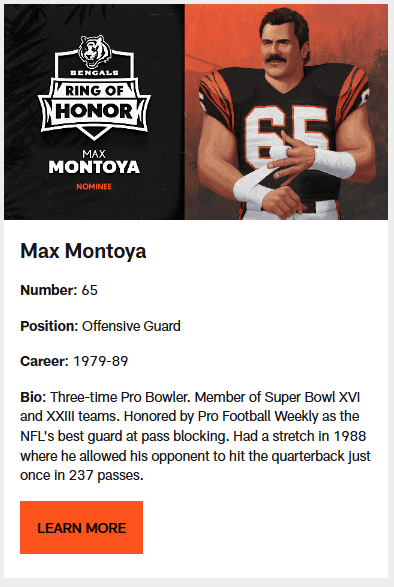
In 2021, the Bengals Ring of Honor launched with Munoz, coach Paul Brown, Ken Anderson and Ken Riley. By 2025, Lapham was added. Montoya has been on the ballot in recent years for Bengals season ticket holders to vote upon.
His Ring of Honor bio candidate includes: “Regarded as the greatest guard in franchise history, he parlayed brute strength, smooth feet and pure nasty at right guard … Had a stretch in 1988 where he allowed his opponent to hit the quarterback just once in 237 passes. … He and Munoz, the only Bengals offensive linemen to start in both Super Bowls, anchored the NFL’s second-ranked offense that went to Super Bowl XVI after winning The “Freezer Bowl,” the second coldest game in NFL history that featured the sleeveless Bengals offensive line manhandling the Chargers in a 27-7 victory.”
“It’s nice,” Montoya said, “to be remembered as a good player.”
Who else wore No. 65 in SoCal sports history?
Make a case for:
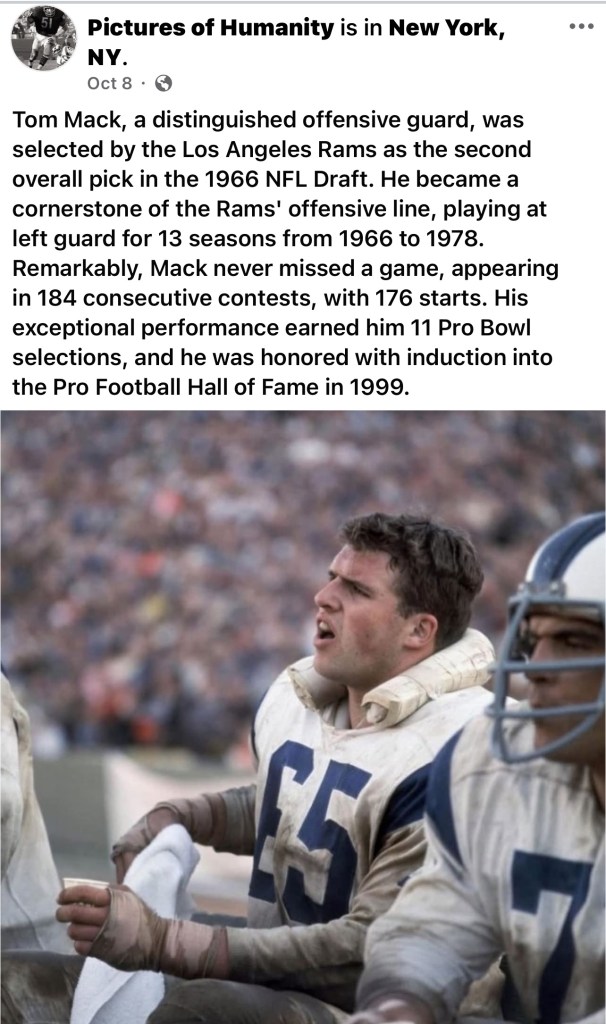
Tom Mack, Los Angeles Rams offensive left guard (1966 to 1978):
Well known: Of the 305 players taken in the 1966 NFL Draft, Tom Mack remains the only one who made it to the Pro Football Hall of Fame. The Rams’ second-overall pick out of Michigan (behind Atlanta taking linebacker Tommy Nobis), Mack was an 11-time Pro Bowl starter in 13 seasons, playing in 184 games in a row and starting 176 of them. As a 23-year-old rookie in 1966, Mack was the left guard on a line with Ken Iman, Joe Schibelli and Charlie Cowan whose job it was to protect quarterback Roman Gabriel. That core four stayed together through the 1974 season – a year where Mack had four fumble recoveries as James Harris moved into the starting quarterback role. Mack lasted until he was age 35 blocking for Pat Haden on a Rams’ team that went 12-4 and won the NFC West but lost the conference championship to Dallas. The Rams had a 129-48-7 record during Mack’s time, winning eight division titles and playing in four NFC championship games. Mack was selected first-team All-Pro four times, second-team All-Pro four times and All-NFC eight times.
Not well remembered: In the Rams’ 14-10 NFC championship game loss to Minnesota in December of 1974, with a wind chill of 19 in Minneapolis, a controversial penalty call in the third period against Mack cost his team a potential touchdown. The Rams had the ball at the 1-yard line on second down when the Vikings’ Alan Page made contact with Mack. The referee flagged Mack for illegal procedure, a five-yard penalty. TV replays showed that Mack had not moved. After the game, Mack said “I don’t think I moved, Alan took a calculated gamble on the play is what I would guess.” Teammate Pat Curran said: “The only movement I saw was (Jim) Marshall and Page (and) when the officials said number 65 (Mack), I could not believe it.” The Rams came away with no points on that possession. With the Rams third-and-goal from the 2 yard line two plays later, Harris’ pass to tight end Pat Curran was tipped and intercepted by Willy Hilgenberg in the end zone for a touchback. The Vikings’ Fran Tarkenton took his team 80 yards for a touchdown and 14-3 lead.
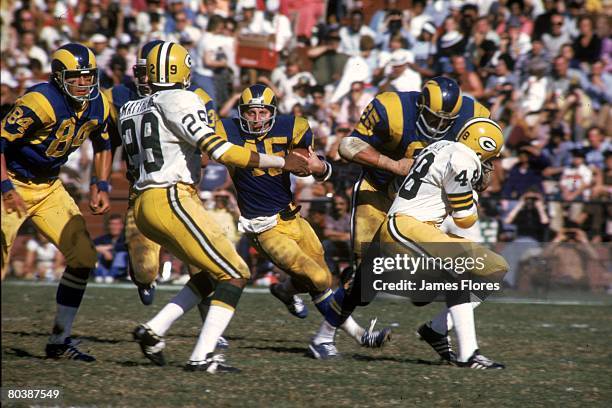
Mickey Marvin, Los Angeles Raiders offensive guard (1977 to 1987):
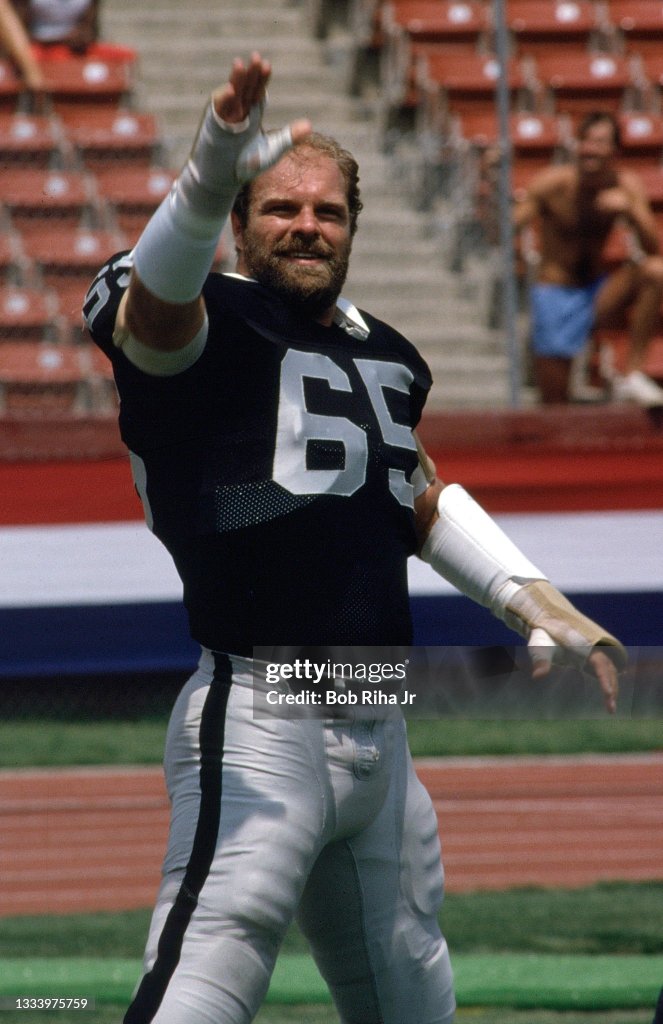
Marvin started 108 of the 120 regular season games he played in for the Raiders, starting at right guard in 11 playoff games, including Super Bowls XV and XVIII. Part of an offensive line that blocked for Hall of Fame running back Marcus Allen, Marvin, diagnosed with ALS in 2015, died in March of 2017 at age 61. In 2016, he was given the Fritz Pollard Lifetime Achievement by the NFL, having also served nearly 30 years as a Raiders scout.
Paul Gervase, Los Angeles Dodgers relief pitcher (2025):
By making one appearance in the 2025 season — he faced nine Colorado Rockies batters in Denver on August 20, spanning the sixth-to-eighth innings, recording two strike outs, one hit and one earned run during an eventual 8-3 loss — Gervase became the tallest pitcher in franchise history, standing 6-foot-10.
Anyone else worth nominating?

 Tom Hoffarth's The Drill: More Farther Off the Wall