No. 88: Billy Don Jackson

This is the latest post for an ongoing media project — SoCal Sports History 101: The Prime Numbers from 00 to 99 that Uniformly, Uniquely and Unapologetically Reveal The Narrative of Our Region’s Athletic Heritage.  Pick a number and highlight an athlete — person, place or thing — most obviously connected to it by fame and fortune, someone who isn’t so obvious, and then take a deeper dive into the most interesting story tied to it. It’s a combination of star power, achievement, longevity, notoriety, and, above all, what makes that athlete so Southern California. Quirkiness and notoriety factor in. And it should open itself to more discussion and debate — which is what sports is best at doing.

The most obvious choices for No. 88:
= Tim Rossovich, USC football
= Phil Nevin, Los Angeles Angels manager
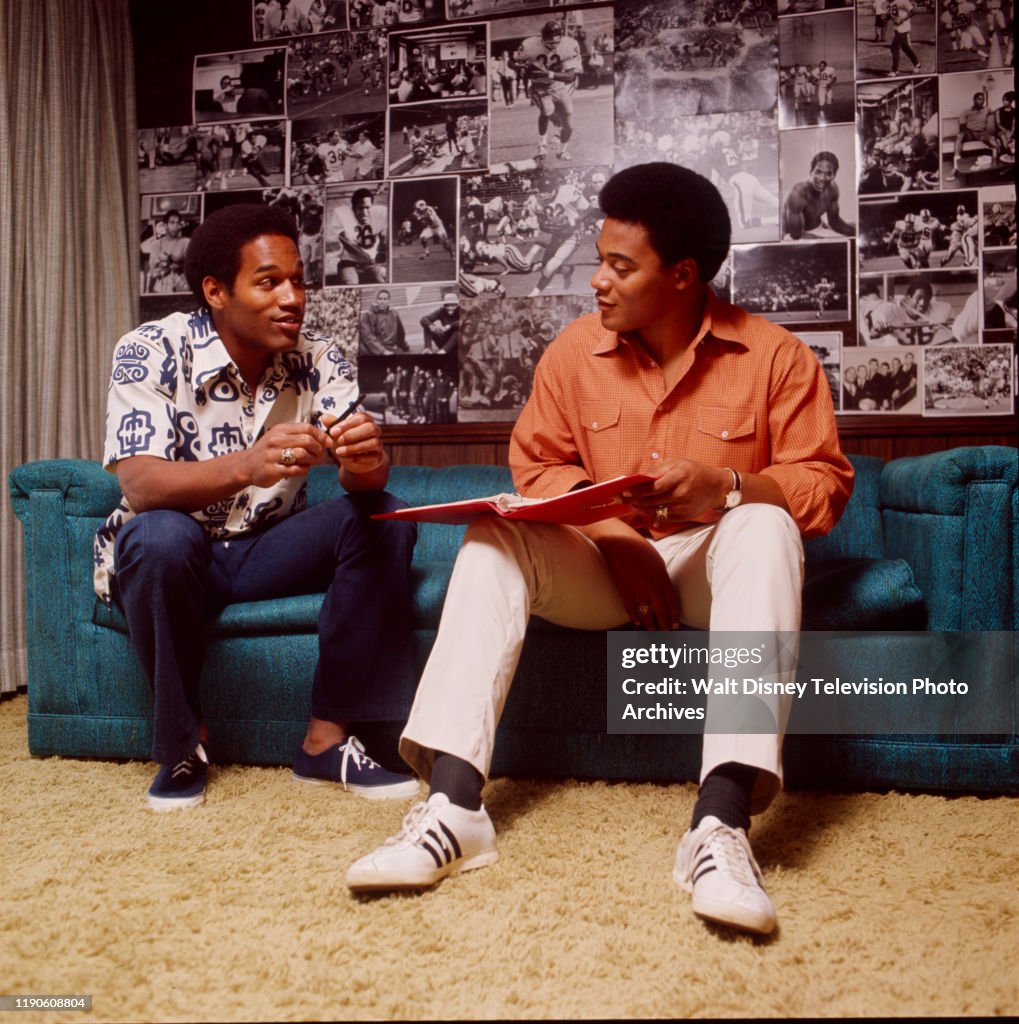
= Billy Don Jackson, UCLA football
= Preston Dennard, Los Angeles Rams

The most interesting story for No. 88:
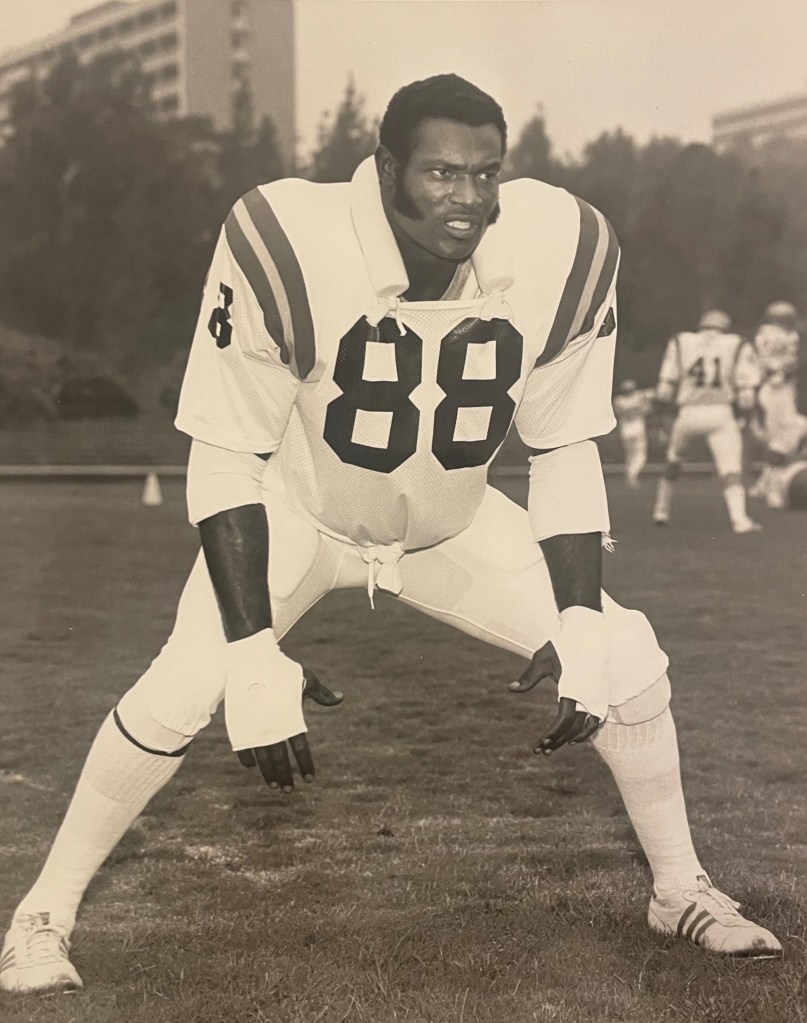
Billy Don Jackson, UCLA defensive lineman/linebacker (1977 to 1979)
Southern California map pinpoints:
Westwood, L.A. Coliseum, Los Angeles Superior Court


All these years later, do you have a better read on what happened to Billy Don Jackson at UCLA in the late 1970s? Even now, it might be wise to review all the evidence.

A heralded high school recruit from football-rich Texas who stepped right in as a freshman starter on Terry Donahue’s UCLA squad, Jackson was voted by his teammates to receive the N.N. Sugarman Perpetual Trophy. It represents the player who exhibited the best spirit and scholarship.

Jackson won that twice. The second time was after his junior season, even after Donahue decided he had to punish him for missing classes with a four-game suspension at the end of the season, sending him to the scout team and effectively ending his college career.

There is also the Jackson who, once he was disengaged from Westwood, stood in Santa Monica Superior Court and heard a judge brand him as a “functional illiterate” during a testy sentencing hearing. Jackson had pleaded no contest to involuntary manslaughter in a botched drug deal.

“This young man cannot even read ‘see Spot run’,” the judge, Charles Woodmansee, continued in his diatribe.

“My God,” added prosecutor Marsh Goldstein, “they brought this kid to one of the top universities in the country and it takes a court order for him to properly to learn to read and write. … Billy Don Jackson is himself a victim — a victim of the shoddy system we call intercollegiate athletes. Hopefully somebody in college sports will learn something from this tragedy.”
Jackson became the humiliating yardstick for everything perceived wrong with college sports and a winning-at-all-costs approach. How someone could spend that long at a major university masquerading as a so-called “student-athlete” was a huge red flag.

UCLA took it as a gut punch. College sports took it as a wake up call, beyond simple damage control.

The truth was, and still is, that Jackson had a pronounced reading disability, similar to dyslexia, that was supposed to be addressed by UCLA’s academic department through tutoring and individual attention. It didn’t happen. Who’s at fault?

The collateral damage is that Jackson would be referenced time and again by those outraged about the exploitation of Black athletics at the expense of an education, setting off a sizeable ripple effect for overdue reform.

“The one consistent exception to the negative images presented of Blacks in the media has been the black male athlete,” UC Berkeley sociologist Harry Edwards said in a 1982 L.A. Times story that particularly used the Jackson case as the cautionary tale. “The message, though subtle, is clear: If you are Black and want respect, justice and equality of opportunity and reward from white America, become an outstanding athlete.”

But it really wasn’t that simple for Jackson, despite what may still linger in the court of public opinion.

The context

The Longview News-Journal, Oct. 5, 1976

Sporting a name that sounded like a country western crooner, Billy Don Jackson was born Jan. 29, 1959 and, though trying circumstances, grew into a highly-sought after, 6-foot-4, 280-pound athlete from Sherman High, about an hour’s drive north of Dallas and not far from the Oklahoma border.

Right in the glare of “Friday Night Lights” in Texas football.

Jackson’s college recruitment drew attention unto itself. Bear Bryant at Alabama and Barry Switzer at Oklahoma came calling. Representatives from all the Texas schools urged him to stay home with all sorts of incentive plans. When Jackson played in the 45th Texas High School Coaches Association North-South game in Dallas, it looked like Southern Methodist had the inside track.

To talk to him meant a physical visit to see his mother, Annie. The two lived with his grandmother in a federal subsided $27-a-month upstairs apartment in a housing project. They had no home telephone. Jackson’s parents divorced when he was 3 and he supported his family working full-time in the summer and part time during school.

“He’s only 17 but he’s probably twice that old,” said his high school coach Ed Hunt in 1977 during that recruiting process. “The things he’s going through right now are easy for him compared to what he’s been through. He’s had times when he’s had to worry about feeding his family.”

Jackson came into all with eyes wide open, as a wire service story reported on how he was processing all the sales pitches.

“These guys won’t tell you they’ll give you a car; they’ll be real subtle,” Jackson said. “A couple of them said they’d take care of my homework, give me a tutor, whatever. Make sure I don’t have to go to class, things like that. That ain’t the life for me. Those schools are out of the running. I don’t give them a second look. My father taught me to appreciate a hard day’s work.”

UCLA, trying to recruit more out-of-state talent after Donahue’s first season as a head coach in Westwood, had someone who Jackson could trust. Billie Matthews, a former quarterback at Southern University who coached high school ball in his native Houston, came to UCLA from Kansas in 1971 with head coach Pepper Rodgers and coached defensive backs for one season before concentrating on the running back position. He spoke Jackson’s language.

Aside from bringing Jackson into L.A. on a trip to show off the sunny weather on a day it had been snowing and dreary in his home town, he had a sit down lunch with then-Los Angeles mayor Tom Bradley, a UCLA alum.

Continue reading “No. 88: Billy Don Jackson”
No. 70: Al Cowlings

This is the latest post for an ongoing media project — SoCal Sports History 101: The Prime Numbers from 00 to 99 that Uniformly, Uniquely and Unapologetically Reveal The Narrative of Our Region’s Athletic Heritage.  Pick a number and highlight an athlete — person, place or thing — most obviously connected to it by fame and fortune, someone who isn’t so obvious, and then take a deeper dive into the most interesting story tied to it. It’s a combination of star power, achievement, longevity, notoriety, and, above all, what makes that athlete so Southern California. Quirkiness and notoriety factor in. And it should open itself to more discussion and debate — which is what sports is best at doing.

The most obvious choices for No. 70:
= Marv Marinovich,
USC football
= Joe Madden, Los Angeles Angels
= Rashawn Slater, Los Angeles Chargers
= Harry Smith, USC football

The most interesting story for No. 70:
Al Cowlings, Los Angeles Rams defensive end (1975 and 1977) via USC (1968 to 1969)
Southern California map pinpoints:
USC campus, Los Angeles Coliseum, L.A. Superior Court, Hollywood, Brentwood via the 405 Freeway


Esteemed universities vested in the time-honored tradition of slapping names onto fancy buildings based on the whims of a wealthy donor will, at some point, have to justify a problematic choice.

Embedded in the thematic USC Village, the Hogwarts-eque collection of brick buildings that appear to be left over from the Harry Potter movie set, the Cowlings Residential College provides more than 700 rooms to sophomores, junior and seniors who, according to their parents, often cross the street to take classes on the campus that was established more than 100 years ago with for-real old buildings just south of this domestic tranquility.

That’s Cowlings, as in Al “A.C.” Cowlings.

His contributions to the school: Two years in the late ‘60s as an All-American football player. Hung out with a group of guys known as “The Wild Bunch.”

And before there was such a thing as ride-sharing services, Cowlings was the OG uber-Uber driver with his snappy white Ford Bronco, just a scream away from his best friend, O.J. Simpson. To wit, Cowlings once screamed through a cell phone to police in 1994 commandeering said vehicle in the most bizarre slow-speed car chase through Southern California: “My name is A.C.! You know who I am, goddammit!”

In the back seat was an emotionally unstable Simpson, which Cowlings said had a gun to his head.

Long, strung out documentaries, historical recreations for TV and volumes of published tell-all books have dissected the timeline where this incident fell on June 24, after Simpson was supposed to surrender himself to police as the primary suspect, based on evidence collected, in a double-stabbing murder of his former wife, Nicole Brown, and her friend, Ron Goldman.

A lot of it got rehashed and retrashed when when Simpson died in 2024. It now leaves Cowlings as the one to obfuscate whenever a spotlight returns to this sorrid saga.

But how this all happened — how A.C. and O.J. became BFFS — has its foundation in the ways teammates form a bond on an athletic field to achieve a common goal.

Jump in the car and we’ll explain as we’re driving.

The context

O.J. Simpson at home with Al Cowlings. (Photo by Disney General Entertainment Content via Getty Images)

Where ever O.J. Simpson went, A.C. Cowlings was close by.

As a wing man, a body guard, an errand runner, a de facto big brother — born in June of 1947, less than a month before Simpson.

Mostly, Cowlings idolized Simpson.

Continue reading “No. 70: Al Cowlings”

No. 62: Brent Boyd

This is the latest post for an ongoing media project — SoCal Sports History 101: The Prime Numbers from 00 to 99 that Uniformly, Uniquely and Unapologetically Reveal The Narrative of Our Region’s Athletic Heritage.  Pick a number and highlight an athlete — person, place or thing — most obviously connected to it by fame and fortune, someone who isn’t so obvious, and then take a deeper dive into the most interesting story tied to it. It’s a combination of star power, achievement, longevity, notoriety, and, above all, what makes that athlete so Southern California. Quirkiness and notoriety factor in. And it should open itself to more discussion and debate — which is what sports is best at doing.

The most obvious choices for No. 62:

= Bill Bain: USC football; Los Angeles Rams
= Al Krueger: USC football, Los Angels Dons

The most interesting story for No. 62:
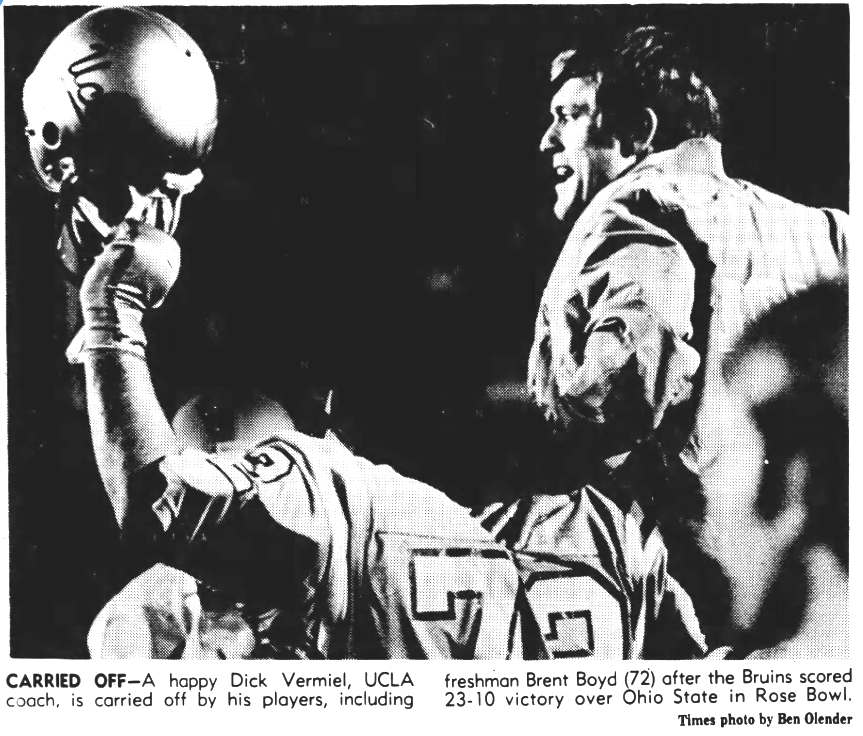
Brent Boyd, UCLA football offensive lineman (1975 to 1979) via La Habra
Southern California map pinpoints:
Downey, La Habra, Whittier, Westwood, Pasadena


Brent Boyd’s brain, bruised and battered, had finally betrayed him.

Headaches and memory loss. Dizziness and fatigue. MRIs and other medical tests couldn’t pinpoint what would be the early onset of dementia. That all came after a six-year run as an NFL offensive lineman — which, to the 6-foot-3, 286-pounder out of UCLA — felt like a lifetime ago.

Born in Downey and reared in La Habra, Boyd doesn’t think anything serious happened to him under the helmet as he learned the game at Lowell High in Whittier. He couldn’t recall any traumatic experiences during the four years he put in at UCLA, a career that started as a member of the 1976 Rose Bowl championship team and ended with him second-team All-Pac-10. He caught the attention of the Minnesota Vikings to make him a third-round NFL pick.

Wearing No. 62 as a 23-year-old rookie offensive lineman, trying to make a living as in pro football after forgoing a chance to go to graduate school at UCLA, Boyd got an on-the-job education about what a concussion felt like. Over and over.

Especially in how it was addressed and treated. Or wasn’t.

Boyd once explained his first experience during in the Vikings’ final exhibition game against Miami at the Orange Bowl:

“In the second quarter I got hit, knocked out. My teammates carried me to the sidelines and when I woke up, I was blind in my right eye. I started to panic.

“My coach came over and said, ‘Boyd, what’s the matter?’ I was still panicking and I said, ‘Coach I can’t see out of my right eye.’ And he said, ‘Well, can you see out of your left eye?’ And I said, ‘Well, yeah.’ And he said, ‘Get back in the game right now’.

“I had to finish the game unable to see out of my right eye. That situation was common.”

Boyd told that story, and many more personal experiences, during three appearances before U.S. Congressional committing hearings in Washington D.C. The televised events tried to get some answers about the NFL and brain injuries.

Boyd became Exhibit A for chronic traumatic encephalopathy — better known as CTE. His platform was as the founder of the NFL retired players advocacy group, Dignity After Football. It has become his LinkedIn professional title.

“Going into the NFL,” Boyd would say, “we knew we were going to play through pain, wind up as old men with bad knees, shoulders, other body parts. It was a risk, but we made an educated calculation and decided to play professional football. If I knew then what I know now, I wouldn’t have played.”

Continue reading “No. 62: Brent Boyd”

No. 64: Terry Donahue

This is the latest post for an ongoing media project — SoCal Sports History 101: The Prime Numbers from 00 to 99 that Uniformly, Uniquely and Unapologetically Reveal The Narrative of Our Region’s Athletic Heritage.  Pick a number and highlight an athlete — person, place or thing — most obviously connected to it by fame and fortune, someone who isn’t so obvious, and then take a deeper dive into the most interes story tied to it. It’s a combination of star power, achievement, longevity, notoriety, and, above all, what makes that athlete so Southern California. Quirkiness and notoriety factor in. And it should open itself to more discussion and debate — which is what sports is best at doing.

The most obvious choices for No. 64:
= Jack “Hacksaw” Reynolds, Los Angeles Rams
= Roy Foster, USC football

The not-so-obvious choices for No. 64:
= Damon Bame, USC football

The most interesting story for No. 64:
Terry Donahue, UCLA football defensive lineman (1965 to 1966), UCLA assistant football coach (1971 to 1973), UCLA football head coach (1976 to 1995)
Southern California map pinpoints:
North Hollywood, Sherman Oaks, Valley Glenn, Westwood, Pasadena (Rose Bowl), Los Angeles Coliseum, Westlake Village, Newport Beach


Terry Donahue seized the day when it came to Jan. 1 in the college football world.

The Pasadena stadium that helped create the bigness of national sports holiday has reciprocated its appreciation.

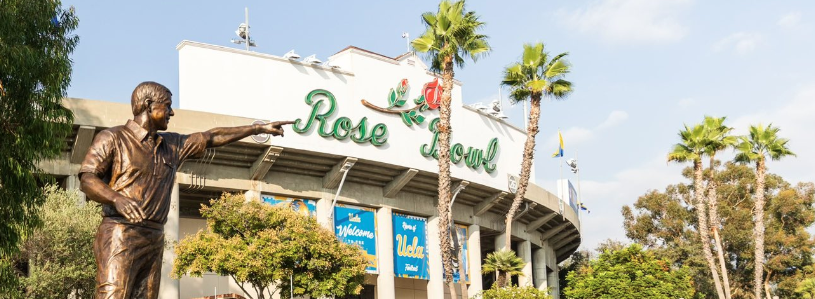
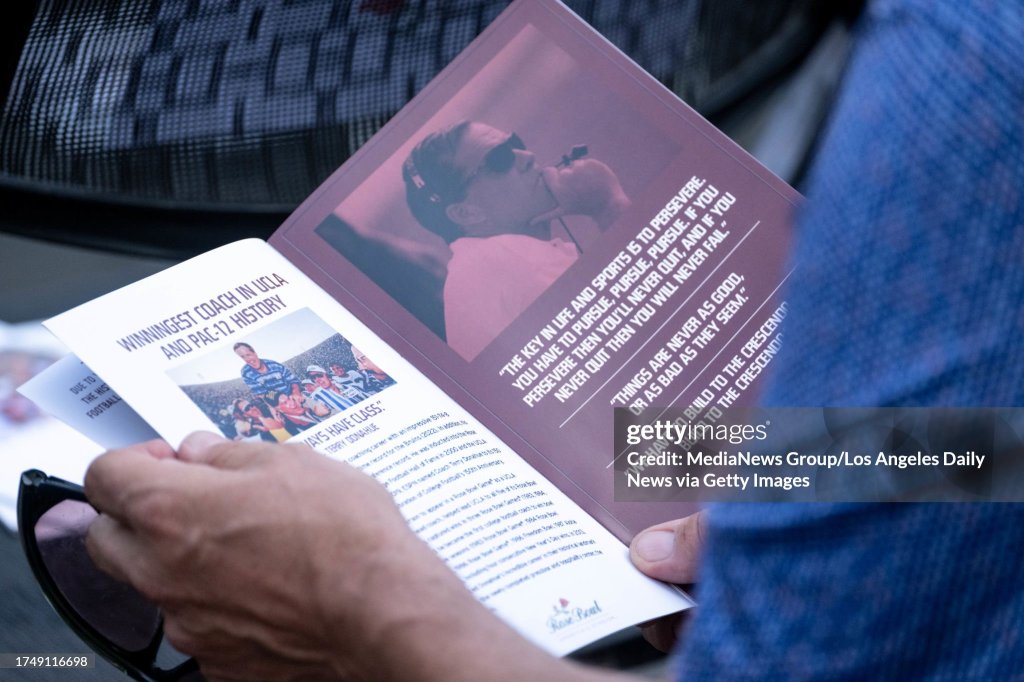
Since 2023, a statue of Donahue has been right inside Gate A of the Rose Bowl, near the ramp that leads down to the home team locker room. With his left arm, he points to the players’ entrance. At the base, 151 bronze roses purposefully are at his feet — one for each of the regular-season school-record victories he collected as UCLA’s head football coach in a 20-year span.

Guests look over the history of UCLA coach Terry Donahue at a ceremony unveiling a statue in his honor at the Rose Bowl in 2023. (Photo by David Crane/MediaNews Group via Getty Images)

This, on top of the fact that the Rose Bowl Press Box was renamed the Terry Donahue Pavilion some 10 years earlier, and The Rose Bowl Hall of Fame inducted him in 1997, two years after he was done coaching the Bruins.

The Rose Bowl Legacy Foundation noted when that statue was propped up that Donahue is the only person associated with the Pasadena landmark and its game itself as a player, an assistant coach and a head coach at his alma mater. And it happened six times.

The first may be the most inspiring and set the foundation for the future.

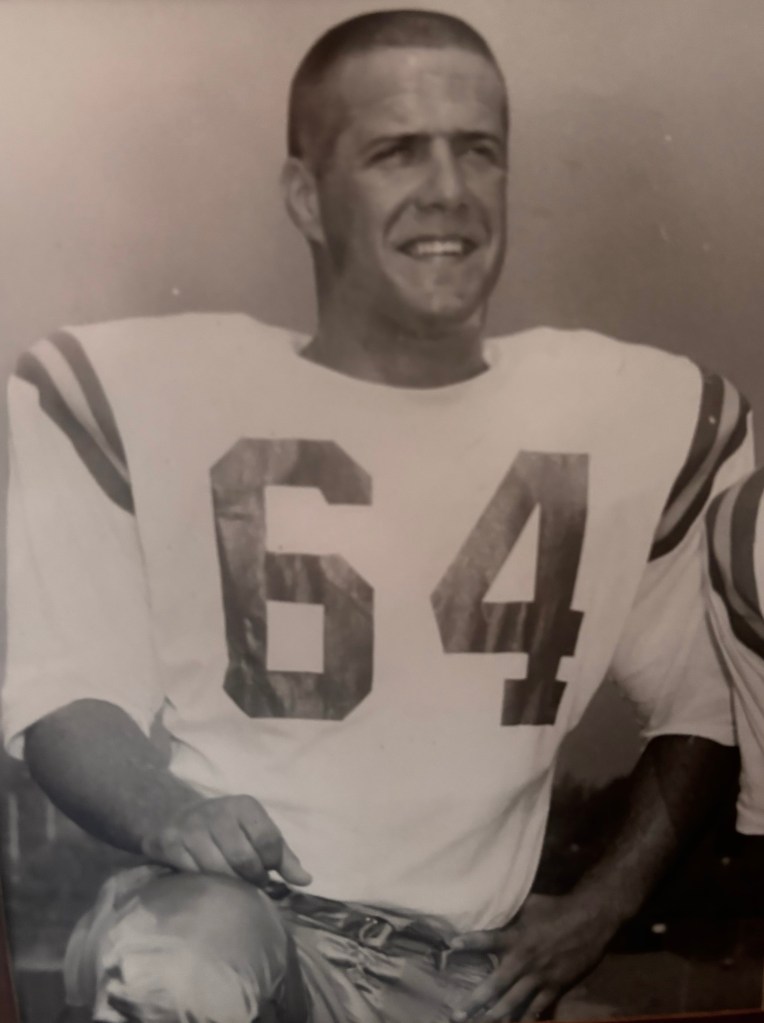
Jan. 1, 1966: UCLA toppled undefeated and No. 1 ranked Michigan State. Perhaps no one more than Donahue, wearing No. 64 on the defensive line, best represented the prevailing attitude that no one was going to intimate the so-called “Gutty Little Bruins.”

Continue reading “No. 64: Terry Donahue”

No. 41: Glenn Davis

This is the latest post for an ongoing media project — SoCal Sports History 101: The Prime Numbers from 00 to 99 that Uniformly, Uniquely and Unapologetically Reveal The Narrative of Our Region’s Athletic Heritage.  Pick a number and highlight an athlete — person, place or thing — most obviously connected to it by fame and fortune, someone who isn’t so obvious, and then take a deeper dive into the most interesting story tied to it. It’s a combination of star power, achievement, longevity, notoriety, and, above all, what makes that athlete so Southern California. Quirkiness and notoriety factor in. And it should open itself to more discussion and debate — which is what sports is best at doing.

The most obvious choices for No. 41:

= Jerry Reuss, Los Angeles Dodgers
= John Lackey, Anaheim Angels
= Elden Campbell, Los Angeles Lakers
= Glen Rice, Los Angeles Lakers and Clippers

The not-so-obvious choices for No. 41:

= Glenn Davis, Los Angeles Rams
= Ken Norton Jr., UCLA football
= Jeff Shaw, Los Angeles Dodgers

The most interesting story for No. 41:
Glenn Davis, Los Angeles Rams running back (1950 to 1951)
via Bonita High
Southern California map pinpoints:
Claremont, La Verne, Pomona, Los Angeles Coliseum, La Quinta


Next to Smudgepot Game Trophy — which, to some, carries more importance as far as bragging rights — Glenn Davis’ 1946 Heisman Trophy sits in the main office at Bonita High School in La Verne. It’s rather unassuming in a glass case, with all sorts of newspaper clippings behind it.

The Army tailback known as “Mr. Outside,” who had been on the outside looking in as he was the Heisman runner up as both a sophomore and a junior, became just the 12th recipient in the award’s history, having claim to the most “outstanding college football player in the United States” as deemed by the Downtown Athletic Club of New York City.

On Davis’ Heisman, there’s a small, noteworthy addition made to the original plaque in the bottom left corner. “Bonita High School 1940-1943.”

To the kid known as the “Claremont Comet,” that’s what most mattered. To the school, it was an honor to go with its pride.

“I don’t think there’s too many high schools in the country with a Heisman Trophy in their possession,” said then-Principal Bob Ketterling, who arrived a couple of years after the handoff. “People walk by and do a double-take.”

Davis was the first Heisman Trophy winner with roots in the California Interscholastic Federation’s Southern Section. It would be years later when, as a member of the Los Angeles Rams, the home-grown star was back in a spotlight, playing in two NFL championship games during his only two seasons.

Continue reading “No. 41: Glenn Davis”