"Everything comes to him who hustles while he waits." — Tommy Edison
Author: fartheroffthewall
Tom Hoffarth is a sports journalist in Los Angeles, born and raised (reared is the correct phrase, but it just sounds wrong) and specializing in the sports media business. A USC graduate from the School of Journalism (it still exists, somewhat) in 1984, he is also available for service at https://www.linkedin.com/in/tomhoffarth/
During the 2016 World Series broadcast, Fox Sports’ Ken Rosenthal wore a bow tie honoring Rod Carew and the American Heart Association’s “Heart of 29” campaign. Apparel is available through Twitter’s HopeActiveWear account and CarewMedicalWear.com
“Rod Carew: One Tough Out:
Fighting off Life’s Curveballs”
Rod Carew was a known fastball hitter – interestingly, at anything pitched anywhere except down the heart of the plate. That would freeze him up. His unorthodox crouch-and-finesse batting stance from the left side actually changed pitch by pitch. That made sense to him, signaling where he thought the pitch would be coming and adjusting — or forcing the pitcher to pitch to his stance and then adjust to that thinking.
Curve balls, literally and metaphorically, gave him heartache.
It seems he’s now finally able to adjust to some of life’s major change ups without knuckling under.
Fittingly from Triumph Books, here is a triumphant reflection that comes from the heart. Specifically, it comes after a delayed heart transplant that now 74-year-old received in 2016 and the astounding story that unfolded along the way.
There are only two previous books attributed to the Hall of Famer: A 1979 bio written with Ira Berkow, when the 33-year-old left Minnesota after 12 years and came to the Angels, and a 1986 instructional book, “Rod Carew’s Art and Science of Hitting,” with Frank Pace and Armen Keteyian, the year after Carew retired at age 39 and starting a new career as a hitting instructor. Both were re-released in the mid 2000s.
While we definitely were in need of a refresh, we had to wait until he had the fortitude to come through with it.
Carew breaks this all down in three stages. The first 160-plus pages recap a life we may have read about before, but he corrects inaccuracies — all about growing up in Panama near the famous canal, moving to Manhattan with his mother as a way to flee his father, signing with the Twins, curious about how he was referenced in the 1967 Baseball Digest as a “Panamanian Negro,” becoming disenfranchise by the baseball business, forcing a trade to Anaheim, then taking No. 29 into retirement by both franchises once he passed the 3,000-hit milestone in his final season, securing a Hall of Fame election in 1991.
(For the record: He was born aboard a racially segregated moving train in the town of Gatun. The doctor who tended to him was named Rodney Cline – where Rodney Cline Carew would get his first two names. But Carew clarifies he was actually delivered by a nurse named Margaret Allen. “Once the wails of a newborn rang out, the conductor summoned a physician from the white section – Dr. Cline, of source. While Dr. Cline became the inspiration for my name, Mrs. Allen became my godmother.”)
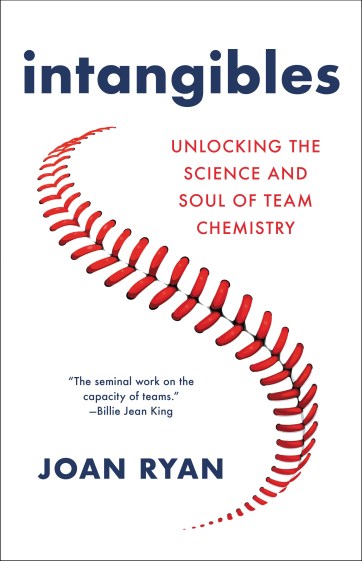
Nope, no way, no how did the Dodgers of 1988 have any business squashing the Oakland A’s in the World Series. But it happened. Nor did the Nationals of 2019 have any realistic chance of knocking out the two-time defending NL champion Dodger in the NLDS. It happened, too.
Now it’s a chance for Joan Ryan to peel back the onion.
By adding that satirical quip in the introduction of her book, Ryan gets to flex her investigative reporting skills she used for several decades as a San Francisco Chronicle columnist and self discover if there’s a tangible way to define and quantify what we all can talk about in esoteric terms as they pertain to success in team sports.
@GrandCentralPub is reissuing Little Girls in Pretty Boxes in July with a new introduction about @USAGym, Nassar and sexual abuse. Thank you to Olympian Jame Dantzscher @dantzscher — the first gymnast to file a civil suit against Nassar & @USAGym — for writing the foreword. pic.twitter.com/jlKyw8YIiR
And our heart remains with her personal story from 2009, “The Water Giver: The Story of A Mother, a Son, and Their Second Chance,” that focuses on her 16-year-old learning disabled son named Ryan (his dad, Joan’s husband, is acclaimed sports broadcaster Barry Tompkins) who fell off a skateboard, and she documents the medical ordeal that followed from crisis to crisis.
Since 2008, Ryan has been a media consultant with the San Francisco Giants, so it’s somewhat a natural she’s able to hold up the construction of the 2010 Giants roster that won the first of its three World Series titles in a five-year span as a test case about how team chemistry seems to have worked. This was, as described in Andrew Baggarly’s book, “A Band of Misfits.” Especially when she can compare that to the 2007 Giants roster that has been “cliquey and snippy as a middle-school cafeteria.” Three years later, there was a new openness, and the chaos subsided.
She starts with the premise that asks three questions:
How far would one go to watch Wood Bat League baseball?
Consider how Will Geoghegan is based in Rhode Island working for the weekly Independent covering University for Rhode Island and prep sports, as well as focusing on the Cap Cod League. The roadie he takes to Alaska and then veering south through Santa Barbara during the summer of 2016 kind of defines how much pine-tared affection he has for the subject. And a wish we could have tagged along.
We recall once talking to USC baseball coach Rod Dedeaux about the pros and cons of aluminum bats. At the time, Dedeaux was proudly getting around with a cane famously fashioned out of a wooden bat.
“You just get used to it, but I’d prefer wood bats any time,” he said as we watched a USC-UCLA game from Dedeaux Field.
Dedeaux had been one of the first major names to start funneling future Trojan players through the Alaskan Summer League experience – Tom Seaver, a recruit from Fresno City College, had yet to prove himself at this level and Dedeaux wanted to see if he was worthy of a scholarship, so the Alaska Goldpanners gave him a shot.
Dedeaux’s Alaskan pipeline was established.
While Geoghegan starts and ends his journey in his home turf of Cape Cod as well as venturing over to Newport, R.I., for more research, it’s his far-away trip to Fairbanks, Alaska on the summer solstice of June 21 for the Midnight Sun Game that brightens our day.
That’s followed up by a fascinating trip to Santa Barbara to document the success of the Foresters, a perennial National Baseball Congress World Series squad headed up by Bill Pintard, that reveals more about the California Collegiate League that spans from Long Beach to wine country has plenty of noteworthy talent as well to choose from. (Note: They also use flat-seemed baseballs).
A big shoe drops in the summer ball landscape. The Cape League will not play baseball this summer. https://t.co/72ZOWM3A5r
— Summer Baseball Nation (@Summer9Nation) April 24, 2020
Cape Cod visits make up three of the “nine days” as the title says, in addition to trips to Hampton, Va.; Washington D.C., Kenosha, Wisc. – places where college players get to play with other top talent in their region, specifically using wood bats so the pro scouts can have another frame of reference in their notes.
Some of it can be the stuff of movies.
So maybe “Summer Catch” with Freddie Prinze Jr. and Jessica Beal in 2001 didn’t circle the bases for you. It’s another of San Fernando Valley-based producer Mike Tollin’s sports-related themed movies that uses sports as a platform to tell another relationship story. Even as much of it was filmed in North Carolina. Yet, there’s Hank Aaron making a cameo as a scout. Too rich.
The Alaska trip is one we’ve had on a bucket list, particularity the Midnight Game, which we read now actually starts at about 10:30 p.m., leads to the crowd singing the Alaska state song in the inning closest to midnight, then takes a hiatus if the sun decides to disappear for an elongated dusk for a couple hours, with the knowledge it will come back quick enough. Listen, you’re less than 200 miles from the Arctic Circle, where ice fishing and curling should be king. But baseball is the kingfish during the longest day of the year, and it goes back more than 50 years and has survived some problematic hurdles of the modern world.
Geoghegan reminds us that the best-attended Midnight Game was in 1967, when 5,200 saw a USC product, Bill Lee, pitch against a team from Japan. Lee circled back 42 years later, in 2008, and at 61, threw six innings and got the win, before 4,900.
In the game Geoghegan saw, there was enough Southern California talent to note – pitcher Joe Fernandez was wearing a Compton Baseball sweatshirt before the game, a reference to the JC ball he played at El Camino-Compton Center. Second baseman Alex Mascarenas is a former UCLA football player who started two games at defensive back in 2011 before concussions led him to leave. He is trying to come back in baseball after having gone to Santa Ana College. Now he’s a Goldpanner, too. (Still wondering: Is he the head softball coach at Mt. SAC?)
(Spoiler alert: The game Geoghegan attends is suspended because of … get this … darkness. Or mostly thick clouds that won’t disperse until the next day. Which is actually the same day. So it is completed but … )
(Non-spoiler alert: W actually know someone who played in the Alaska Summer League … chew on that)
So if anyone wondered if I ever had hair. Alaska summer league. Palmer Giants ⚾️ pic.twitter.com/zU9Io6qOCA
In Santa Barbara, the Foresters play on the same field in Carpinteria as UCSB’s Gauchos, and the rosters over the years have been supplemented by USC and other college powerhouses. Of most interest is how Pintard created a method of tabulating an “Offensive Pressure” formula for his team to aim to achieve each game — an insightful way any coach can use a goal-orientated approach toward providing the best-chance elements of a game that will, percentage-wise, lead to a more likely victory (i.e.: earn nine “freebies” such as a walk, stolen base or error, create as many eight-pitch at-bats against opposing pitchers that lead past a 150 pitch-count thresholds, and it’s not easy to lose).
The theme Geoghegan discover unveiling in front of him becomes obvious:
I found great stories, surrounded by the same trappings that had always seemed so perfect. Big dreams. Small towns. Warm nights. Through the lens of nine days, a summer picture emerged.
Peaceful and profound in many ways. A rhythm of summer captured with the proper tone all while getting the best wood of the barrel of the bat, label up, on the right notes of information.
Just by reading, so many senses are revisited and reopened to similar experiences we’ve had a smaller, slower-paced ballparks around the country.
And if you crave more, Geoghegan has a website of his own, plus one dedicated to the Cape League called rightfieldfog.com. Catch it this summer, hopefully.
More reviews
== From Publishers Weekly: “The players only play for few months in these leagues before the short season ends, so Geoghegan offers only brief glimpses of the them, focusing more on the coaches, GMs, and owners, who, as locals or rooted transplants, have stronger ties to their communities. Though Geoghegan says the teams are all about community, there’s little about the fans, the families that host players, or what college kids do in, say, Fairbanks, Alas., for a summer. Geoghegan’s exploration of little-known baseball leagues is best suited for diehard baseball fans.”
Coming up related to wood bats
== “The Major League Baseball Bat, From Tree to the Swing, 19th Century to Today,” by Stephen M. Bratkovich, (McFarland, $29.95, 190 pages, due June 2020).
From the publisher: “Why do modern-day sluggers like Aaron Judge prefer maple bats over the traditional ash bats swung by Ted Williams and others? Why did the surge of broken bats in the early 21st century create a crisis for Major League Baseball and what steps were taken to address the issue? Are different woods being considered by players and manufacturers? Do insects, disease and climate change pose a problem long-term? These and other questions are answered in this exhaustive examination of the history and future of wooden bats, written for both lifelong baseball fans and curious newcomers.”
Exhaustive? It’s 190 pages.
More info
The California Collegiate League announced a new format for this summer, if there is play to be held: A three-Division (North, Central and South) set up with: North Division features the Healdsburg Prune Packers, Lincoln Potters, Solano Mudcats, and Walnut Creek Crawdads. Central Division teams include the San Luis Obispo Blues, Santa Barbara Foresters and Conejo Oaks. The South Division teams are the Arroyo Seco Saints, MLB Academy (Compton) Barons, and the Orange County Riptide.
In the time we’ve given ourselves to focus on acceptance of “The Resisters,” and what this dystopian look at a world that must include baseball because a bat and ball are part of its cover artwork, we’re not sure how far we want to stretch any bigger bang trashcan theories into what this premise promises to offer.
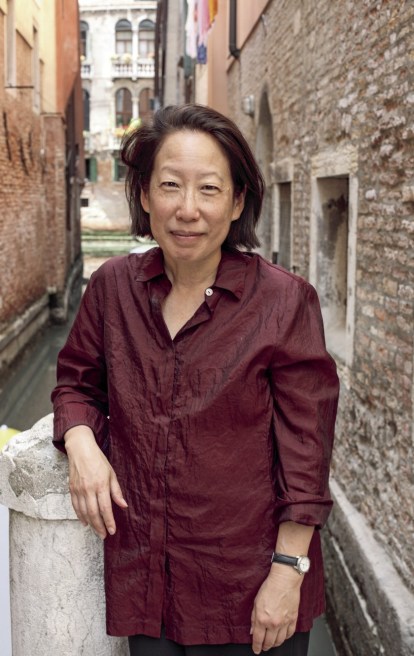
We did become enamored with the challenge of considering this after a review/interview in the L.A. Times by Bethanne Patrick that gave a better taste of what’s ahead:
“‘The Resisters’ is set in a near-future America, narrated by a man named Grant; he has a wife, Eleanor, and a daughter, Gwen. Citizens are now sorted into categories of ‘Netted’ — working, producing — and ‘Surplus’ — unemployed and relegated to floating ‘Flotsam Towns.’ Grant and Eleanor try to live off the grid, growing their own food because the free provisions doled out by the surveillance state (‘Aunt Nettie’) may be laced with sedatives or other drugs. “Gwen is a talented pitcher, and when her throwing arm draws the attention of the establishment, she’s offered a chance to attend ‘Net U’ for free, forcing the entire family to make some tough choices. “ ‘The bad news is that they are the underclass,’ Jen says, ‘but that’s the good news too, you know? This family has a lucky niche in the world I created, one they’ve done a lot with, which weirdly makes Gwen kind of — privileged is the wrong word — but [it] allows her to think differently’.”
We think differently frequently, yet resist change at almost every turn. Until we’re convinced it’s safe to go outside with our own devices.
There was one more reference point coming from Jane Leavy, whose recent work, “The Big Fella: Babe Ruth and the World he Created” remains a best-seller: “I love this novel as much as I fear the future Gish Jen has conjured in it.”
“Herman Munster, the forgotten Dodger,” by Eric Stephen of TrueBlueLA.com. For some reason they never called him “Babe” Herman, but he coulda been the greatest No. 37 in team history. We knew we could make you at least smile.
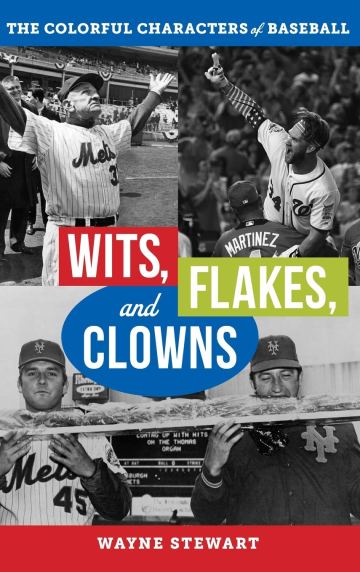
“Wits, Flakes, and Clowns:
The Colorful Characters of Baseball”
The author:
Wayne Stewart
The publishing info:
Rowman & Littlefield
$36
272 pages
Released March 11
The funniest thing we tried during this pandemic lock down was give ourselves a haircut. Even with adjustable beard trimmer, it looked like a kindergartner given his first pair of left-handed scissors and then trying to fix it with wheat paste as a styling gel.
Friends suggested we watch a YouTube video first, and “have the right tools.” My wife grabbed rose pruners and a slightly-used cat de-wormer to see if she could rescue it.
We expected to emerge with something between Howie Long and Howie Mandel, and a contract with Fox to air it.
One can cringe. Or find the humor in it.
Carl Erskine’s book on his life with the Dodgers arrived in 2000. He turned 93 last December.
“Humor is a side of baseball that I think is important,” Carl Erskine, the Dodgers pitching great, says in a back-cover blurb for this new book. “Stories in baseball are rampant. I don’t hear so much in football and basketball, but you get a baseball guy started and you’ll hear a lot of stories. There’s something magic about baseball. I think one thing about baseball that gets overlooked is the human side of players—and that’s what this book is all about.”
Even though we never thought of “Oisk” as a well-known good humor man — a nice fellow, expert on the harmonica, for sure — it’s nice to see him alive and quoted.
As for some of the lunatics we used to see in the Dodgers’ and Angels’ locker rooms. …
Our own haircut-in-the-bathroom incident gave us a flash back to a time going into the Dodgers clubhouse and watching Mickey Hatcher with a towel around the shoulders of a teammate, giving him a buzz haircut. Maybe it was some kind of charity thing. That’s being charitable. Anyone who knew Hatcher realized this couldn’t turn out well. While we can’t recall who was on the wrong end of this, he would likely want to remain anonymous.
In the 130-plus stories about those whose natural personality brought humor to the game — “a Whitman’s Sampler” of bios, as Stewart says — it’s not a surprise that few are Cooperstown Hall of Famers. Yogi Berra, Casey Stengel, Tommy Lasorda and Bert Blyleven fit that, which may explain why all were efficient communicators after their playing days.
Hatcher deserves to be in a Hall all his own.
As well as teammates like Jay Johnstone. And Fernando Valenzuela, perhaps one of the most mischievous troublemakers in the Dodgers’ 1980s decade. He’s not mentioned in this book.
For this project, the players have been divided into four categories: Pitchers, position players, “princes of Pranks and Zaniness” and honorary mentions. It has an introduction, a conclusion, notes, a bibliography, index and author bio.




 (For the record: He was born aboard a racially segregated moving train in the town of Gatun. The doctor who tended to him was named Rodney Cline – where Rodney Cline Carew would get his first two names. But Carew clarifies he was actually delivered by a nurse named Margaret Allen. “Once the wails of a newborn rang out, the conductor summoned a physician from the white section – Dr. Cline, of source. While Dr. Cline became the inspiration for my name, Mrs. Allen became my godmother.”)
 The author:
 But our trust goes back to the landmark book, “
 Since 2008, Ryan has been a media consultant with the San Francisco Giants, so it’s somewhat a natural she’s able to hold up the construction of the 2010 Giants roster that won the first of its three World Series titles in a five-year span as a test case about how team chemistry seems to have worked. This was, as described in Andrew Baggarly’s book, “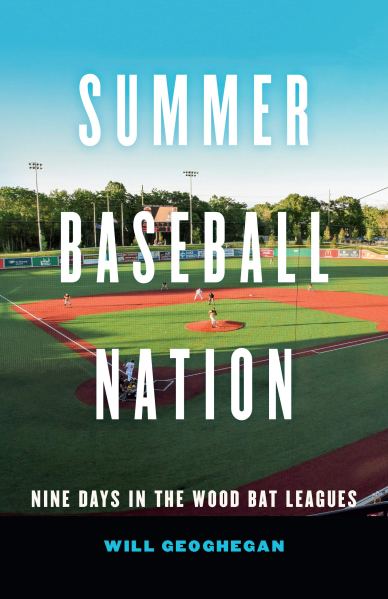
 Consider how Will Geoghegan is based in Rhode Island working for the weekly

 == “
== “ The California Collegiate League announced a

 We did become enamored with the challenge of considering this after a review/interview in the

 Hatcher deserves to be in a Hall all his own.
 Tom Hoffarth's The Drill: More Farther Off the Wall