"Everything comes to him who hustles while he waits." — Tommy Edison
Author: fartheroffthewall
Tom Hoffarth is a sports journalist in Los Angeles, born and raised (reared is the correct phrase, but it just sounds wrong) and specializing in the sports media business. A USC graduate from the School of Journalism (it still exists, somewhat) in 1984, he is also available for service at https://www.linkedin.com/in/tomhoffarth/
The Weekly World News reported this on March 4, 2020. It cites two researchers who discovered “Babe Ruth” was all a government hoax. Played by a vaudeville actor Fats Manahan. Someone may want to alert the current U.S. president who gave Ruth the Presidential Medal of Freedom in November, 2018. Read this for yourselves, people: https://weeklyworldnews.com/headlines/177978/babe-ruth-never-existed/
“The Babe”
The editors: Bill Nowlin and Glen Sparks, with Carl Reichers and Len Levine
The publishing info:
Society for American Baseball Research
$29.95
315 pages
Released October, 2019
When one decides it’s time to research the life, times and impact of the most important player in the 100-plus years of Major League Baseball, it becomes a Ruthian project.
For a long time, the two most revered hikes to the top of Mount Babe were by Leigh Montville (2006, “The Big Bam”) and Robert Creamer (1974, “Babe: The Legend Comes to Life”). Then came, for our enjoyment, a most creative sidetrack into how starpower created the image, led by Jane Leavy. She received the 2018 SABR Seymour Medal for “The Big Fella” best-seller (which we reviewed for the L.A. Times and also posted more Q&A, plus created a piece about it for the Long Beach Post). We’re also memorized at how the book cover ended up appearing — above left — versus how the photo may have been originally taken and presented. And the “NY” remained the game, eh?
These are examples of how the paragraphs woven together with research, purpose and prose end up as the foundation for fantastic reads, like documentaries on pages with new discoveries and redefining what we’ve heard and remembered.
But back at the quip and quotation quarry, the Society of American Baseball Research is where all the heavy steam shovel work happens. Sentences and paragraphs, numbers and nuances are mined, inspected, weighed and then categorized for future research use.
With this arrival of “The Babe,” which Leavy generously lends her appreciation of it in the forward, SABR’s fact-diggers display an archive of natural history, a wonderful starting place for anyone who wants to go to any point in the timeline of events in Ruth’s life, playing career, and early death at age 53 in 1948, and lay a foundation for what could be next.
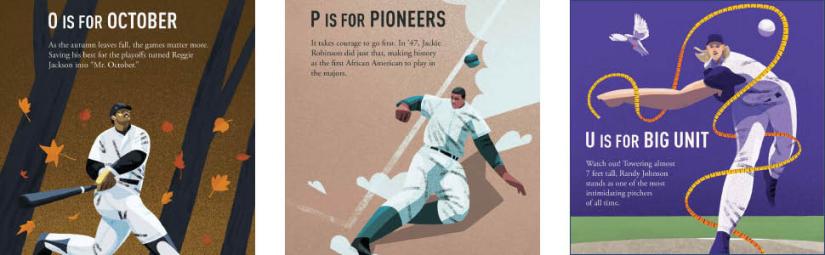
They’ve categorized this as a “juvenile non fiction.” Who are we kidding. It’s an art-deco, “Rocketeer” design book of epic proportions that will just happen to each a 2-year-old his or her ABCs even if they aren’t paying attention.
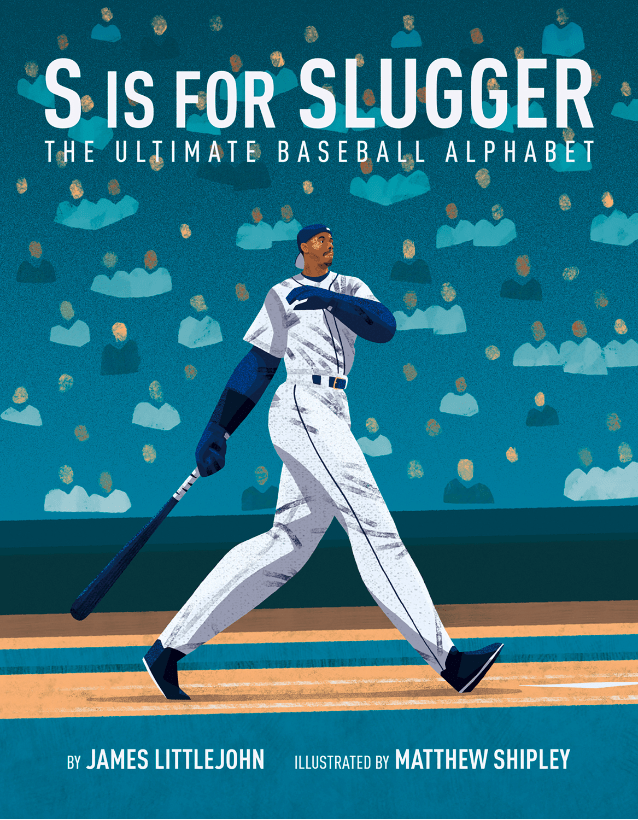
As the sports-centric Triumph publishing found a triumphant response from an author/illustrator team that has already collaborated on the NBA-driven “B Is For Baller,” from October, 2018, and then soccer-celebration of “G Is For Golazo,” from May, 2019, they pushed forward with an MLB version in time for the 2020 baseball season.
The one that so-far isn’t. When Plan A fails, there are 25 more to try, alphabetically.
Which means, of course, it’s the perfect moment for parents and kids to sit and look at the compelling drawings that go with the creative educational links for each of the sections, art work that says so much with bold and defined strokes, and text that sneaks in smiles for moms and dads to appreciate and go back to their childhood.
There is homages to current and former baseball deities, and the more clever they find ways incorporating history with fun, all the better for those involved in the consuming end of this.
The author and illustrator Q&A
James Littlejohn lives in Culver City but grew up in the Bay Area going to Oakland A’s games with his dad, and stuck his loyalties on Rickey Henderson. Matthew Shipley, from southern New Jersey, was raised on Philadelphia sports. We coordinated an email Q&A to see if we could get more background on how this alpha-omega process happens:
Having done this sort of project with soccer and basketball, you must have the collaboration method down pretty well? How does it work as to what ideas are sketched out based on what each want to contribute?
Littlejohn: Yeah, even though we’re on opposite sides of the country I think we’ve developed some artistic chemistry. I lead a little more on figuring out the word for each letter and the players we’d include and then Matthew takes over from there with the illustrations while dealing with my annoying feedback along the way.
Another Berra book is like … what’s the phrase … déjà vu all over again.
And we’re not even covering the plate of all the self-help/humor books you’ll come across when just googling this simple title.
It feels as if we just put down “Yogi Berra: Eternal Yankee” in March, 2009, Allen Barra’s 480-page piece de resistance that publisher W.W. Norton & Company called “a gripping biography.” It was difficult to forget, based on the weight and achievement of that project. Barra said his goal was to create the first comprehensive work about Berra, the “greatest ballplayer never to have a serious biography.”
(And, for what it’s worth, Berra is metaphorically lifting his mask off his face here).
And now comes this from Pessah, whose 2015 book, “The Game: Inside the Secret World of Major League Baseball’s Power Brokers” did extremely well peeling back the business of the game. That took him five years of research and more than 150 interviews, an achievement well worth the talents of one of the founding editors of ESPN the Magazine who was nominated for a Pulitzer Prize for editing and writing an examination into the role of racism in Major League Baseball.
We’re not against marketing, but it may seem odd that these publishers have decided to call Pessah’s work “the definitive biography” and a “transformational portrait.” The same publishing house already produced “My Dad, Yogi,” by Dale Berra in 2019, and “When You Come to a Fork in the Road, Take It!” in 2002, so it has a history in this Berra business.
In channeling his version of “Yogi,” Pessah goes 100 pages better than Barra, explaining how it took him four years and more than 150 interviews. In noting his sources, Barra’s “Eternal Yankee” is cited. But interestingly, no interview with Yogi’s son, Dale. Seems obvious, but then again …
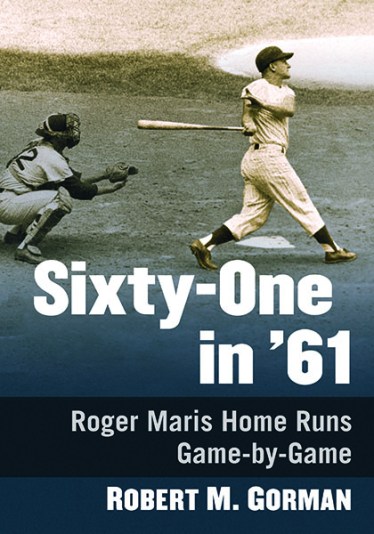
My date of birth occurred early on the morning on the eighth of June in ‘61. It will be noted in the context of this review, that was a day between Roger Maris hitting home run No. 17 in Game 49 against Minnesota and No. 18 in Game 52 against Kansas City, both at Yankee Stadium.
On June 8, Roger Maris dragged himself through an 0-for-8 day, a twi-night doubleheader against the Athletics that included a few rain delays. Yet, the whole thing still started at 6:02 p.m. in New York and ended shortly after 11 p.m.
In a true Hollywood scenario, Maris would have hit a homer that night at Wrigley Field in L.A., just miles from the hospital where I arrived that, at the time was near La Brea and Coliseum, at the base of Baldwin Hills.
It would have been against the Los Angeles Angels, also celebrating their first year of MLB existence.
As it turns out, Maris only hit two that memorable season at the L.A. friendly confines of Wrigley – both numerically significant. One against the Angels’ Eli Grba to deep left-center field on May 6, the 100th of his career (and third of the season). The other was off Ken McBride on Aug. 22, the 50th of the season.
The Angels’ temporary home field, as the team awaited the opening of Dodger Stadium to share it with the National League team, would surrender a major-league record 248 homers in 81 games. It was, for many reasons, the place of choice for the 1959-61 TV show, “Home Run Derby,” the campy black-and-white series that watched players like Aaron, Mantle, Mays and Killebrew launch homers onto 51st Street beyond the 345-foot power alley in left field.
(Nope, Maris never appeared on the show).
But because of all that Maris was up against that year – the theory that the AL was watered down due to expansion and all these smaller parks that played into his strength, and more would have rather seen the idolized Mickey Mantle instead be the one to challenge Babe Ruth’s single-season home run record (set in 154 games, instead of 162) – a book like Gorman’s comes in handy despite all that’s already been done about the man from Fargo, North Dakota.
We need facts, not myths, to explain this thing.
So here’s a retired university reference librarian from Rock Hill, South Carolina, who once won the SABR Baseball Research Award for his 2009 book with David Weeks, “Death at the Ballpark,” and was a 12-year-old fan of Maris during that ’61 season.
As an adult, Bob Gorman decided not enough had been documented about many of the particulars of that HR chronology.
While more than half the 48 pitchers who gave up homers to Maris that year gone to a greater place – as is Maris, who died in 1985 – Gorman managed to track down:
= Detroit reliever Terry Fox, now 84;
= Johnny James, now 86, a Hollywood High grad and USC player who split that season, his last in the big leagues, between the Yankees and Angels;
= Cleveland starter Dick Stigman, now 86.
Gorman also found Cleveland All-Star catcher John Romano, who died in Feb., 2019 at age 84.
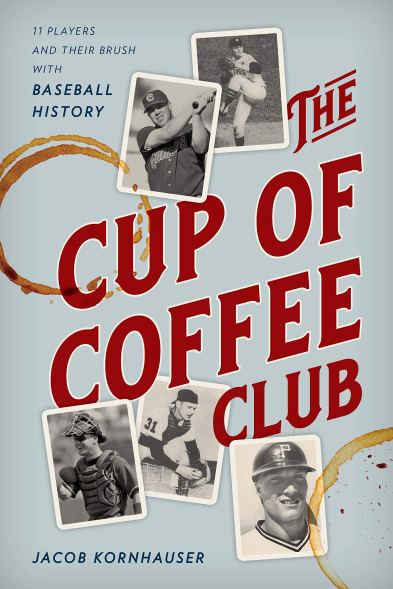
We’ll try to make this quick, efficient and caffeinated.
It’ll be sort like the single-day MLB careers of: = Charlie Lindstrom (Sept. 28, ’58)
= Roe Skidmore (Sept. 17, ’70)
= Larry Yount (Sept. 15, ’71)
= Gary Martz (July 8, ’75)
= Rafael Montalovo (April 13, ’86)
= Jeff Banister (July 23, ’91)
= Stephen Larkin (Sept. 15, ‘98)
= Jon Ratliff (Sept. 15, 2000)
= Ron Wright (April 14, ’02)
= Sam Marsonek (July 11, ’04)
= and Matt Tupman (May 18, ’08).
They’re the Moonlight Grahams of their time without a “Field of Dreams” context to evoke bittersweet nostalgia — they made it the big leagues, played once, then something weird happened.
The Baseball Encyclopedia is full of them, and it’s where many first learned of Graham, and fell for the nickname. The BaseballReference.com lists 535 pitchers and nearly as many batters (which seem to add up to 999) as a reference point. There are about 150 of them in the last 50 years alone, writes Kornhauser, tet, the 11 above is who the Chicago native and current producer at Fox Sports digital in L.A. decided to go after. They were available to still talk about what, the author calls, their “heartache of never making it back.”
The older brother of eventual Hall of Famer Robin Yount, and both from Taft High in Woodland Hills, says he rarely thinks about that day he was called in from the bullpen to pitch for the Houston Astros, hurt his arm while warming up, and never faced the Braves lineup of Felix Millian, Ralph Gahr and Hank Aaron in that ninth inning.
Thus, the 21-year-old is the only one in MLB history to officially enter a game and never perform.
He went back to Triple A for two lousy seasons, was traded to Milwaukee in 1974 — just as Robin was signing to play there as an 18-year-old out of high school.
Heartache? He became a fabulous real estate developer in Arizona, and still gets some credit for helping convince former MLB commissioner Bud Selig to finally put a team in Phoenix.
“My life couldn’t have been any better (after baseball,” he says. “I overachieved so much. All of that was just a moment in time.”
Others do lament their one-and-only shot.
Charlie Linstrom, a catcher in the Chicago White Sox organization, the youngest son of former Dodgers utility player and Hall of Famer Freddie Lindstrom, says on page 12: “The truth of the matter is once I got into professional baseball, I really didn’t like it that well.”
Bad example. How about Gary Martz, who had nine years in pro ball but just one MLB game. “Financially, even family-wise, it really took a toll on me. Overall, I’d probably have to say it wasn’t worth it. … I always said I wanted to be the next Mickey Mantle … He was a helluva a drinker and I think I might have been able to outdrink him.”
Some handle adversity differently.
Bannister overcame cancer and went onto manage the Texas Rangers. Larkin, nine years younger than his eventual Hall of Fame brother Barry, still enjoys the thrill of talking about the day he was called up to be in the same lineup with his sibling, on the last day of the 1998 season with the Cincinnati Reds, while Aaron and Brett Boone played the other two infield positions.
Rafael Montalovo came up in the Dodgers organization, got his one game in with Houston, then tried to come back nine years later as a Dodgers’ Replacement Player during the 1995 spring training season. (Which Mike Piazza writes about later in his autobiography: “Some of the replacement players — mainly, a pitcher named Rafael Montalovo, who pitched one inning for the Astros back in 1986 and hadn’t played organized ball in the States for three years — were saying things like they were going to have us five games in first place by the time we got back and we’d probably want to thank them … Does someone really think we’ll be rooting for these guys?”)
Fame comes in many forms. How could you not root for all them, all things considered, to at least reached the top of the mountain.



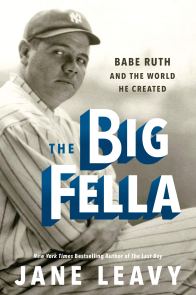
 For a long time, the two most revered hikes to the top of Mount Babe were by Leigh Montville (2006, “The Big Bam”) and Robert Creamer (1974, “Babe: The Legend Comes to Life”). Then came, for our enjoyment, a most creative sidetrack into how starpower created the image, led by Jane Leavy. She received the 2018 SABR Seymour Medal for “The Big Fella” best-seller (which we reviewed for the L.A. Times and also posted more Q&A, plus created a piece about it for the Long Beach Post). We’re also memorized at how the book cover ended up appearing — above left — versus how the photo may have been originally taken and presented. And the “NY” remained the game, eh?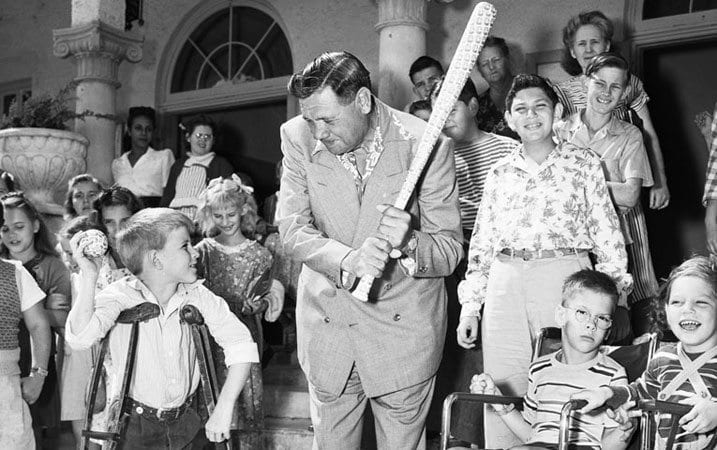
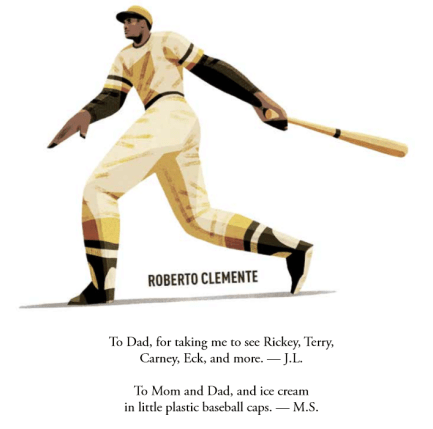 The illustrator:
 As the sports-centric Triumph publishing found a triumphant response from an author/illustrator team that has already collaborated on the NBA-driven “
 Which means, of course, it’s the perfect moment for parents and kids to sit and look at the compelling drawings that go with the creative educational links for each of the sections, art work that says so much with bold and defined strokes, and text that sneaks in smiles for moms and dads to appreciate and go back to their childhood.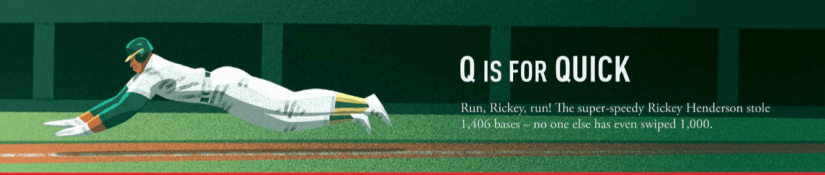
 Having done this sort of project with soccer and basketball, you must have the collaboration method down pretty well? How does it work as to what ideas are sketched out based on what each want to contribute?
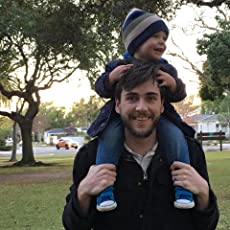 Littlejohn: Yeah, even though we’re on opposite sides of the country I think we’ve developed some artistic chemistry. I lead a little more on figuring out the word for each letter and the players we’d include and then Matthew takes over from there with the illustrations while dealing with my annoying feedback along the way.
  Shipley: There’s lots of back and forth through the whole process. I had a lot to say about the soccer book and I had to lean on James a lot for Slugger. And I can’t take credit for all the visual ideas, James has had some great ideas too and I just do my best to bring them to life. We balance each other out pretty well.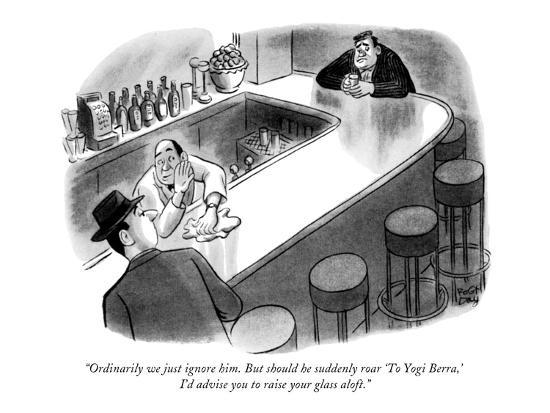

 It feels as if we just put down “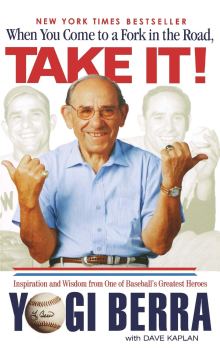
 We’re not against marketing, but it may seem odd that these publishers have decided to call Pessah’s work “the definitive biography” and a “transformational portrait.” The same publishing house already produced “

 In a true Hollywood scenario, Maris would have hit a homer that night at Wrigley Field in L.A., just miles from the hospital where I arrived that, at the time was near La Brea and Coliseum, at the base of Baldwin Hills.
 The Angels’ temporary home field, as the team awaited the opening of Dodger Stadium to share it with the National League team, would surrender a major-league record 248 homers in 81 games. It was, for many reasons, the place of choice for the 1959-61 TV show, “
 While more than half the 48 pitchers who gave up homers to Maris that year gone to a greater place – as is Maris, who died in 1985 – Gorman managed to track down:
 = Charlie Lindstrom (Sept. 28, ’58)
 The older brother of eventual Hall of Famer Robin Yount, and both from Taft High in Woodland Hills, says he rarely thinks about that day he was called in from the bullpen to pitch for the Houston Astros, hurt his arm while warming up, and never faced the Braves lineup of Felix Millian, Ralph Gahr and Hank Aaron in that ninth inning.
 Tom Hoffarth's The Drill: More Farther Off the Wall