

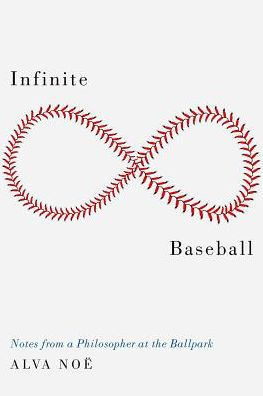
 The book:
“Infinite Baseball: Notes from a Philosopher at the Ballpark”
The author: Alva Noe
The publishing info: Oxford University Press, $21.95, 208 pages, released April 1.
The links: At the publisher’s website, at Amazon.com, at BarnesAndNoble.com, at Powells.com
The review in 90 feet or less
Our attempt each year is begin or close the 30-day series of baseball book reviews with some really deep thinking.
Use your brain. See how it connects to your heart.
This fits perfect into our philosophy. How else can we put it?
In 2018, we led off with “Why Baseball Matters” by Susan Jacoby, and ended with “If God Invented Baseball” by poet E. Ethelbert Miller.
In 2014, it was Hal Bodley”s “How Baseball Explains America.” The year before, it’s “Baseball as a Road to God” by John Sexton.
We ended 2010 with “Six Decades of Baseball: A Personal Narrative” by Bill Lewers, a dad who wanted to leave a document for his sons. A year earlier, the closer was “Parables from the Diamond: Meditations for Men on Baseball and Life” by Phil Christopher and Glenn Dromgogle.
(Apologies, but as we’ve recently learned, the reviews posted for those books above, except for 2018, have disappeared from the platform where they were posted. The platform, for that matter, was taken down by the original publisher. It’s too bad, really. Like a giant erase board, as if they didn’t exist in the first place. Let’s ponder that another day).
Noe, a writer and philosopher living in Berkeley, comes from the world of deep thinking, a contributor to the now defunct National Public Radio’s science blog “13.7: Cosmos and Culture” (www.npr.org/137) from 2010 to ’17. (At least they didn’t just tear the thing down and make it disappear. It’s still there. Thankfully.)
These are the best of his posts — we trust an editor may have also helped select, because the writer often doesn’t know which is his “best” until someone else says so — as they pertain to a few specific areas of what he observes about baseball. He breaks it into five main themes: The beauty of a “boring” game, why we keep score, baseball as its own language, the game’s “cyborg” nature, and then his personal memories. For Noe, it comes in the context of being a kid growing up in Greenwich Village with two artists as parents who didn’t believe in having a TV, only a radio. Which made following Mets games in the 1970s a bit antiquated. But you had to use your imagination.
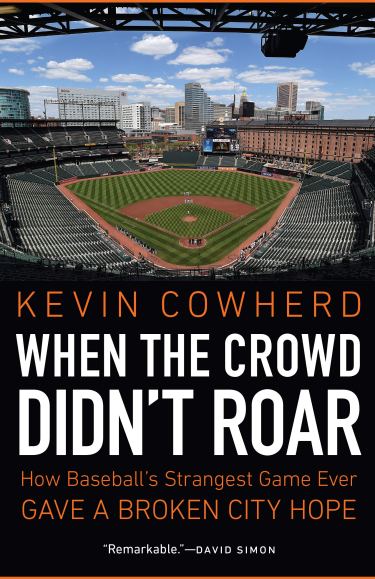 The book:
 The New York Times Magazine recently had a cover story: “
 Who’s up for a little Vlad Guerrero Jr.?
 The book:
 To get things playfully started, Selig opens by admitting to his squeamish nature toward watching Barry Bonds establish a new career home run record on his watch.
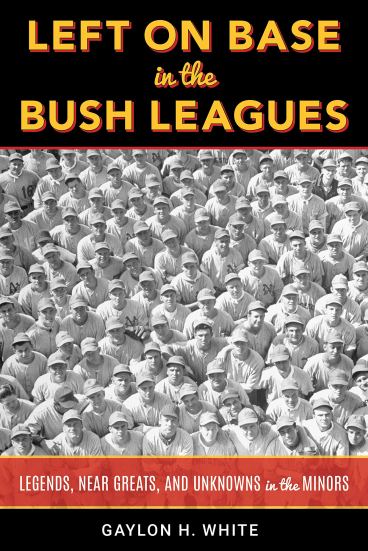 The book: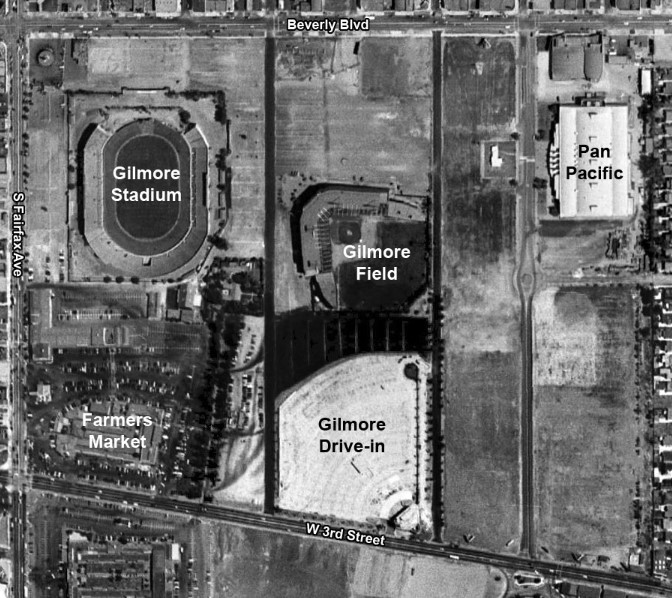
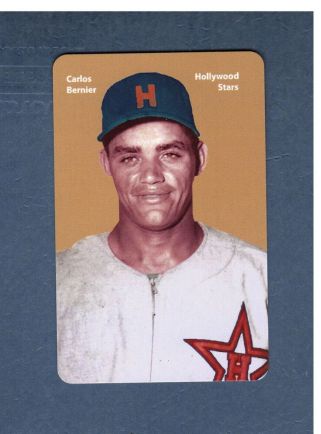 Bernier, in particular, was someone who Parker really wanted more closure, still disappointed the Stars franchise was forced to move to Salt Lake City in 1958 when the Dodgers arrived to claim the L.A. territory.
 Tom Hoffarth's The Drill: More Farther Off the Wall