Blog

No. 28: Jack Robinson

This is the latest post for an ongoing media project — SoCal Sports History 101: The Prime Numbers from 00 to 99 that Uniformly, Uniquely and Unapologetically Reveal The Narrative of Our Region’s Athletic Heritage.  Pick a number and highlight an athlete — person, place or thing — most obviously connected to it by fame and fortune, someone who isn’t so obvious, and then take a deeper dive into the most interesting story tied to it. It’s a combination of star power, achievement, longevity, notoriety, and, above all, what makes that athlete so Southern California. Quirkiness and notoriety factor in. And it should open itself to more discussion and debate — which is what sports is best at doing.
The most obvious choices for No. 28:

= Anthony Davis: USC football, Southern California Sun, Los Angeles Rams and Los Angeles Express
= Bert Blyleven: California Angels
= Albie Pearson: Los Angeles/California Angels
= Wes Parker: Los Angeles Dodgers
= Pedro Guerrero: Los Angeles Dodgers

The not-so-obvious choices for No. 28:

= Mike Marshall: Los Angeles Dodgers
= Rui Hachimura: Los Angeles Lakers

The most interesting story for No. 28:
Jack Robinson: UCLA football running back/defensive back (1939 to 1941)
Southern California map pinpoints:
Pasadena, L.A. Coliseum, Westwood


If the only number you associate with Jack Robinson is the No. 42 — the one he was randomly given by the Brooklyn Dodgers when he made his Major League Baseball debut in 1947 — that’s understandable.

The Pasadena native wore No. 42 for 10 seasons, none of them as a Dodger in Los Angeles, retiring just before their move. Forty-two has been codified as representing a man of social justice reform and restitution on behalf of the African American race.

Yet Robinson wouldn’t have been in that position had he not made a name for himself as an athlete — with his given first name of Jack — wearing No. 28 playing football at UCLA.

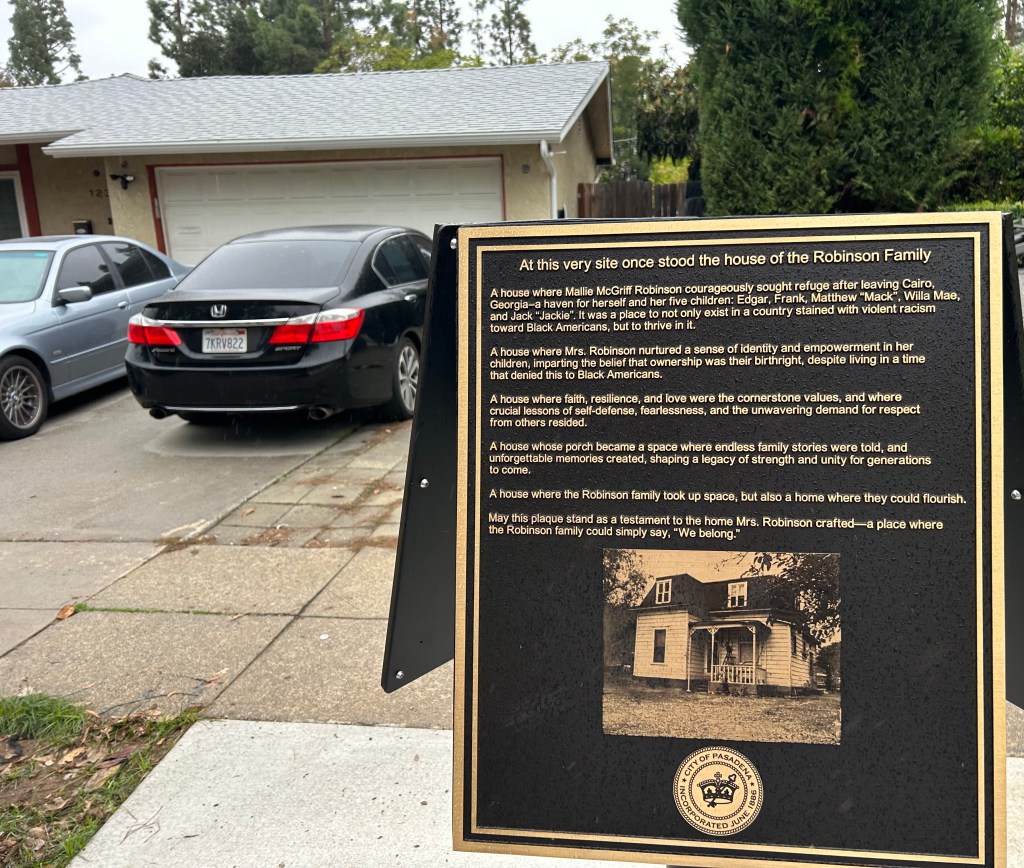
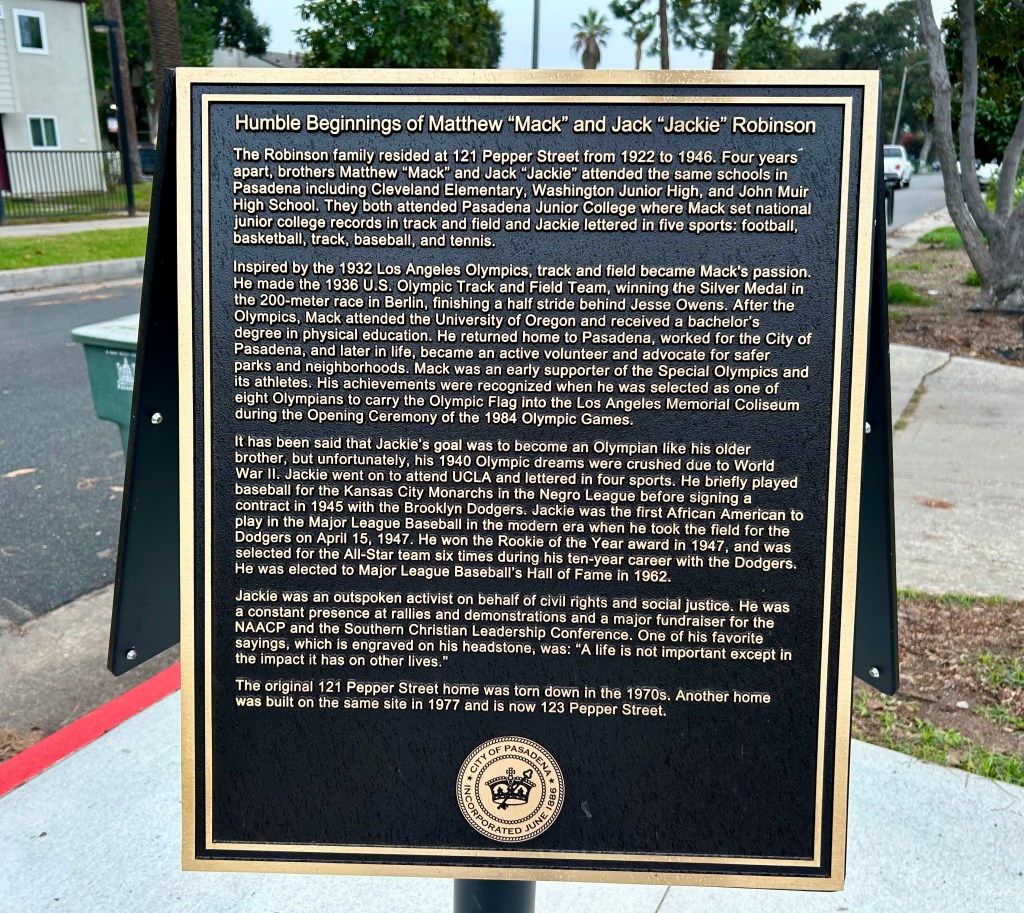
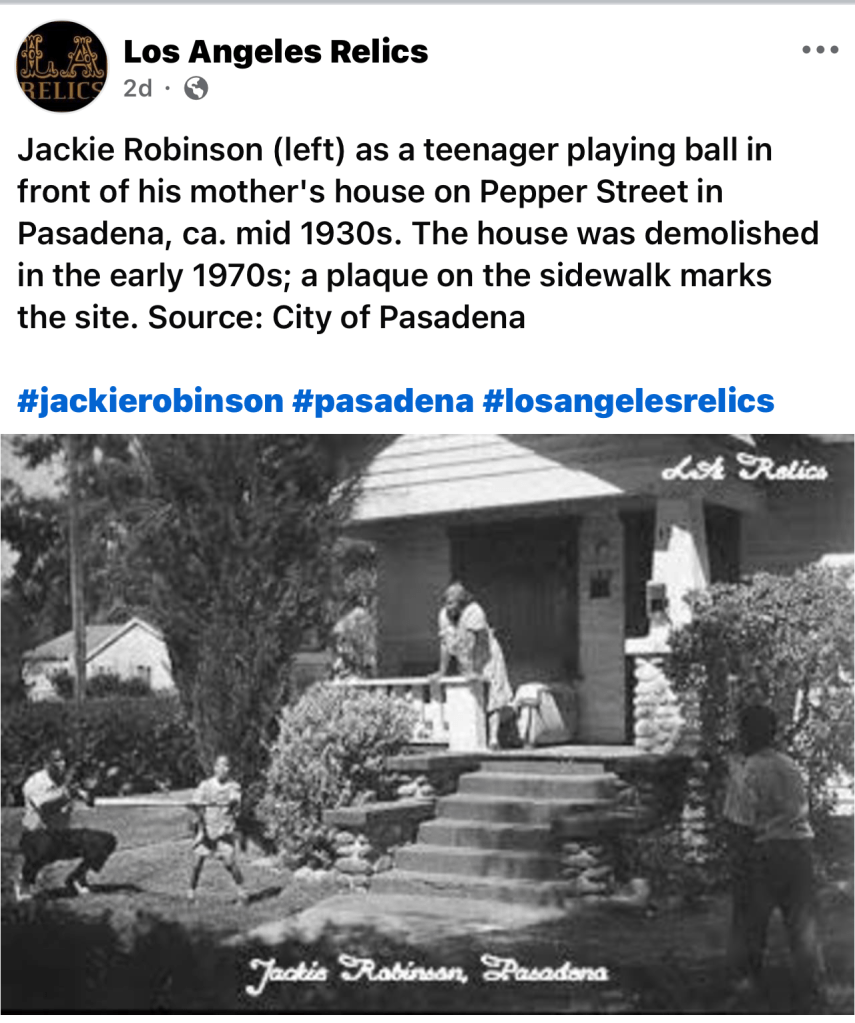
A four-sport athlete at John Muir High in Pasadena, Robinson moved onto Pasadena City College. His time at UCLA in Westwood was brief, but powerfully impactful.

What number did he wear for the UCLA baseball team during his only season of 1940? No one has evidence to show that it was 42. Or any other number. This appears to be the only photo of him in a Bruins baseball jersey, in the team photo, far left.

At Pasadena City College, according to the California Community Colleges website, Robinson batted .417 with 43 runs scored in 24 games in 1938.

UCLA records say Robinson posted a .097 batting average in 1940, which included getting four hits and stealing home twice among four bases stolen in one game. He also reportedly stole home 19 times.

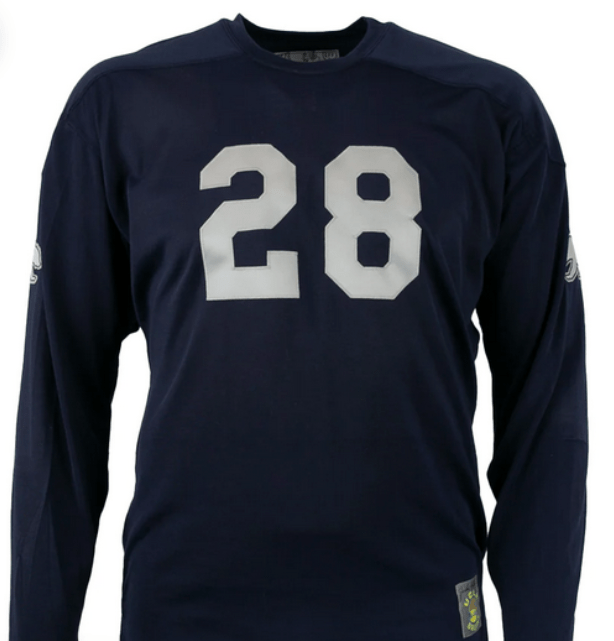
A Robinson UCLA replica football jersey sells at Ebbets Field Flannels (of all company names) for $350.

He wore No. 18 as a UCLA All-Conference basketball player. Yet as a football player, where Robinson made his most indelible mark, especially in Southern California.

At Pasadena Junior College, he wore No. 55 in football — that’s what he’s wearing on a statue outside the Rose Bowl honoring that part of his life. Robinson owns a school record for the longest run from scrimmage, 99 yards.

But for the two years he played at UCLA, No. 28 became quite magical.

Here’s a summary of Andy Wittry of NCAA.com pieced it together in 2024 through newspaper clippings:

Jackie Robinson is given his No. 28 jersey prior to the 1939 season. (Photo: UCLA Faculty Association Blogspot).
Continue reading “No. 28: Jack Robinson”

No. 25: Tommy John (and Dr. Frank Jobe)

This is the latest post for an ongoing media project — SoCal Sports History 101: The Prime Numbers from 00 to 99 that Uniformly, Uniquely and Unapologetically Reveal The Narrative of Our Region’s Athletic Heritage.  Pick a number and highlight an athlete — person, place or thing — most obviously connected to it by fame and fortune, someone who isn’t so obvious, and then take a deeper dive into the most interesting story tied to it. It’s a combination of star power, achievement, longevity, notoriety, and, above all, what makes that athlete so Southern California. Quirkiness and notoriety factor in. And it should open itself to more discussion and debate — which is what sports is best at doing.

The most obvious choices for No. 25:

= Gail Goodrich: UCLA basketball and Los Angeles Lakers
= Tommy John: Los Angeles Dodgers
= Jim Abbott: California Angels
= Troy Glaus: UCLA baseball and Anaheim Angels
= Norm Van Brocklin: Los Angeles Rams

The not-so-obvious choices for No. 25:

= Rafer Johnson: UCLA basketball
= Paul Westphal: USC basketball
= JK McKay: USC football
= Frank Howard: Los Angeles Dodgers

The most interesting story for No. 25:
Tommy John: Los Angeles Dodgers pitcher (1972-74, 1976-78), California Angels pitcher (1982 to 1985)
Southern California map pinpoints:
Inglewood (The Kerlan-Jobe Orthopaedic Clinic at Centinela Hospital, known today as the Cedars Sinai Kerlan-Jobe Institute in Santa Monica); Downey (Rancho Los Amigos Hospital); Los Angeles (Dodger Stadium), Anaheim (Angels Stadium)


Tommy John is interviewed by NBC’s Tony Kubek as the Dodgers compete against Oakland the 1974 World Series — without their ace, who shows off the long cast that had been put onto his left arm by Dr. Frank Jobe just weeks earlier.

Tommy John’s extensive statistical biography as posted on the Baseball Reference website shows 26 years as a Major League Baseball pitcher. It starts at age 20 in Cleveland in 1963. It goes to age 46 in New York in 1989.

The data is neatly split into two distinct hemispheres.

The first 12 include his first three year in Los Angeles. The last 14 start with his last three seasons as a Dodger, and includes a stint with the California Angels across town.

The line dividing the two in 1975 reads: “Did not play in major or minor leagues (Eponymous Surgical Procedure).”

If something is eponymous, it refers to a person, place or thing that something else is named after. Tommy John Surgery may be more ubiquitous than anyone considering it eponymous. We can buy something called Tommy John underwear. We might think it came from the official entry (along with the phonetics) in the Merriam-Webster dictionary:

The integrity of the Ulnar Collateral Ligament — aka, UCL — is often defined in MLB history as before or after Tommy John was connected to it. Someone had to be first, trusting a doctor creative and brave enough to try something. What did Tommy John have to lose?

Continue reading “No. 25: Tommy John (and Dr. Frank Jobe)”

No. 71: John Ferraro

This is the latest post for an ongoing media project — SoCal Sports History 101: The Prime Numbers from 00 to 99 that Uniformly, Uniquely and Unapologetically Reveal The Narrative of Our Region’s Athletic Heritage.  Pick a number and highlight an athlete — person, place or thing — most obviously connected to it by fame and fortune, someone who isn’t so obvious, and then take a deeper dive into the most interesting story tied to it. It’s a combination of star power, achievement, longevity, notoriety, and, above all, what makes that athlete so Southern California. Quirkiness and notoriety factor in. And it should open itself to more discussion and debate — which is what sports is best at doing.

The most obvious choices for No. 71:

= Brad Budde: USC football
= Tony Boselli: USC football
= Kris Farris: UCLA football
= Joe Schibelli: Los Angeles Rams

The not-so-obvious choices for No. 71:
= John Ferraro: USC football
= Randy Meadows: Downey High football

The most interesting story for No. 71:
John Ferraro: USC football offensive lineman (1943-1944, 1946-1947)
Southern California map pinpoints:
Cudahy, L.A. Coliseum, Los Angeles City Hall


The cover of the 1946 Street & Smith’s Football Pictorial Yearbook asks readers to spend a quarter of a dollar for its preview the upcoming college football season. On this “national gridiron review,” John Ferraro offers a million-dollar glare.

The only hint on the cover that it’s him comes from a small caption off his right shoulder that reads “FERRARO U.S.C.” In the table of contents, his full name appears along with the photographer who took the special Kodachrome shot.

Ferraro had earned attention as a USC All-American tackle in ’43 and ’44. Now he was coming back to play after military duty during World War II in 1945. There were others to consider for the preview cover — Army’s Glenn Davis, “Mr. Outside” out of Bonita High in La Verne who had finished second in the Heisman Trophy in ’44 and ’45 would finally win it outright in ’46. Teammate Doc Blanchard, “Mr. Inside,” who won the Heisman award in ’45, and would finish fourth in ’46.

But the publishers picked Ferraro. Kodachome had that affect, apparently. And maybe the regional interest.

“If any tackle in this land of ours has ever played better ball, he must be Superman and Hercules rolled into one,” Braven Dyer bravely wrote for Los Angeles Times in 1944 after Ferraro pushed the Trojans to a 28-21 victory at the Coliseum over the San Diego Naval Training Station Bluejackets. “When Big John goes to work, he’s dynamite.”

That was part of the journalism superlative use in that time, and at the Times.

But the part that holds true today: If any Los Angeles civic leader is tenacious enough to accomplish something for the good of the town, he or she could be measured up to John Ferraro, a Rose Bowl legend and U.S. Navy vet rolled into one, and the one who started the heritage of USC standout linemen sporting the No. 71.

Continue reading “No. 71: John Ferraro”

No. 98: Parnelli Jones (and J.C. Agajanian)

This is the latest post for an ongoing media project — SoCal Sports History 101: The Prime Numbers from 00 to 99 that Uniformly, Uniquely and Unapologetically Reveal The Narrative of Our Region’s Athletic Heritage.  Pick a number and highlight an athlete — person, place or thing — most obviously connected to it by fame and fortune, someone who isn’t so obvious, and then take a deeper dive into the most interesting story tied to it. It’s a combination of star power, achievement, longevity, notoriety, and, above all, what makes that athlete so Southern California. Quirkiness and notoriety factor in. And it should open itself to more discussion and debate — which is what sports is best at doing.

The most obvious choices for No. 98:

= Tom Harmon: Los Angeles Rams halfback

The most interesting story for No. 98:
Parnelli Jones, race car driver (1949 to 1973)
Southern California map pinpoints:
San Pedro, Torrance, Palos Verdes Estates, Rolling Hills, Gardena (Ascot Park)


Parnelli Jones shows off his book in 2013. (Photo by The Daily Breeze).

In the preface to his 2013 memoir, Parnelli Jones recalls a time where he didn’t really fight the law, and the law didn’t win either. But it made for a great story.

It was 1964 and, as he wrote, “my name had really gotten around. I’d won the Indianapolis 500 in ’63, which earned me a lot of attention in the media. That was true pretty much everywhere, especially in Southern California because from the time I’d started racing I listed Torrance as my hometown.”

He was “honking down” the Long Beach Freeway, the 710, in a Ford Fairlane given to him by stock car owner Vel Miletich, who would be his partner in a chain of tire stores and car dealerships as well as engineer vehicles for his career with the Vels’ Parnelli Jones Racing team.

“This Fairlane had a souped-up engine with three carburetors. Vel said it would pass anything on the road; I told him in passed everything but a gas station,” Jones continued.

Admitting he was “cruising along pretty fast” when he saw the blue lights of a California Highway Patrol car in his rear-view mirror.

“I pulled over and started digging for my license and registration. I had it ready for the patrolman when he walked up to my door.

” ‘You were going pretty fast,’ he said. ‘Who do you think you are, Parnelli Jones?’

“Later on, I had a few incidents similar to that one, but there’s nothing like hearing a line like that for the first time. It was such a kick that for a moment I wasn’t even mad at myself for getting stopped.

“I handed the cop my papers and said, ‘As a matter of face, I am Parnelli Jones.'”

Which made for a great book title released 50 years after that ’63 Indy win, when he commandeered the No. 98 Willard Battery Special roadster owned by J.C. Agajanian that may have been leaking oil but it still slid past the competition for another piece of lore in The Greatest Spectacle in Racing.

That also opened the eyes and ears of car-crazy Southern California.

While his surname may have been a fairly common, even for a someone who uncommonly raced everything from old jalopies at Carrell Speedway in Gardena, NASCAR four-door stocks in Daytona, Trans-Am titles, even a dune buggy championship in the Baja 1000.

It was his nickname that shot him forward.

Too many knew him by his first name, Rufus. Parnell was his middle name. His mother, Dovie, named him after Rufus Parnell, a judge who she worked for in Arkansas.

When he was 17 and legally too young to race cars, he and his friends came up with a name that wouldn’t be too recognizable. His friend Billy Calder would tease him that a girl in school named Nellie liked him, so somehow Calder took Jones’ middle name and started call him “Parnellie.” In 1951, Calder was also in charge of lettering the race car. Painting the driver’s name on the door, next to their No. 66, Calder one day came up with the alias “Parnellie Jones.”

“We lost the ‘e’ somewhere along the way,” Jones adds in the preface, “but I’ve been ‘Parnelli’ every since.”

He made quick work of it.

Continue reading “No. 98: Parnelli Jones (and J.C. Agajanian)”

No. 52: Keith Wilkes / Jamaal Wilkes

This is the latest post for an ongoing media project — SoCal Sports History 101: The Prime Numbers from 00 to 99 that Uniformly, Uniquely and Unapologetically Reveal The Narrative of Our Region’s Athletic Heritage.  Pick a number and highlight an athlete — person, place or thing — most obviously connected to it by fame and fortune, someone who isn’t so obvious, and then take a deeper dive into the most interesting story tied to it. It’s a combination of star power, achievement, longevity, notoriety, and, above all, what makes that athlete so Southern California. Quirkiness and notoriety factor in. And it should open itself to more discussion and debate — which is what sports is best at doing.

The most obvious choices for No. 52:
= Keith Wilkes: UCLA basketball
= Jamaal Wilkes: Los Angeles Lakers/Clippers
Marv Goux: USC football
Jack Del Rio: USC football
= Khalil Mack: Los Angeles Chargers

The not-so-obvious choices for No. 52:
Happy Hairston: Los Angeles Lakers
Burr Baldwin: Los Angeles Dons
= Eddie Piatkowski: Los Anglees Clippers

The most interesting story for No. 52:
Keith Wilkes: UCLA basketball forward (1971-72 to 1973-74)
Jamaal Wilkes: Los Angeles Lakers forward (1977-78 to 1984-85); Los Angeles Clippers forward (1985-86)
Southern California map pinpoints:
= Santa Barbara; Westwood (UCLA); Inglewood (Forum)


Jerry West, James Worthy, Jamaal Wilkes, Elgin Baylor, and Kareem Abdul-Jabbar pose during the jersey retirement ceremony of Jamaal Wilkes at Staples Center on December 28, 2012 (Photo by Andrew D. Bernstein/NBAE via Getty Images)

Before he was Jamaal, he was Keith. And before that, Jackie.

Before he was smooth as “Silk,” he was a little corny as  “Cornbread.”

Two weeks before Keith Wilkes’ UCLA No. 52 was retired at Pauley Pavilion in January 2013, Jamaal Wilkes’ Lakers’ No. 52 was put up on the wall at Crypto.com Arena in December of 2012. Somehow, the No. 52 he wore for the Clippers in the waning days before his retirement from the NBA isn’t worthy of retirement also.

It was 18 years before he was inducted into Springfield’s Basketball Hall of Fame in 2012 that he was already in Westwood’s UCLA Athletic Hall of Fame.

Most all of it, the deadly results of aside-winding shot that looked as if he was flyfishing made Lakers broadcaster Chick Hearn used to call it another “20-foot layup.”

Continue reading “No. 52: Keith Wilkes / Jamaal Wilkes”