Blog

No. 40: Billy Bean

This post is part of a media project called SoCal Sports History 101: The Prime Numbers from 00 to 99 that Uniformly, Uniquely and Unapologetically Reveal The Narrative of Our Region’s Athletic Heritage. Pick a number, and consider the list of athletes attached to it. Who wore it best? Or, what’s the most compelling story linked to it? Any person, place or thing is in play with Southern California connections. Star power, transformational achievement, longevity, notoriety and quirkiness all factor in. Whatever leads to a lively discussion and interpretation.

The most obvious choices for No. 40:

Elroy Hirsch: Los Angeles Rams
Frank Tanana:
California Angels
Troy Percival: California/Anaheim Angels
Bartolo Colon:
Anaheim/Los Angeles Angels

The not-so-obvious choices for No. 40:

Karl Morgan: UCLA football
Manu Tuiasosopo:
UCLA football
John Vallely:
UCLA basketball

The most interesting story for No. 40:
Billy Bean, Los Angeles Dodgers outfielder (1989), Loyola Marymount outfielder (1983 to 1986) via Santa Ana High
Southern California map pinpoints:
Santa Ana, Westchester, Dodger Stadium

Reference books on the subject:
“Going The Other Way: Lessons From A Life In and Out of Major-League Baseball,” by Billy Bean, 2003.


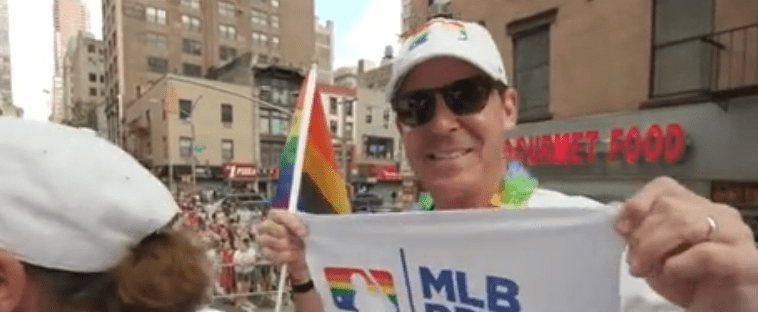
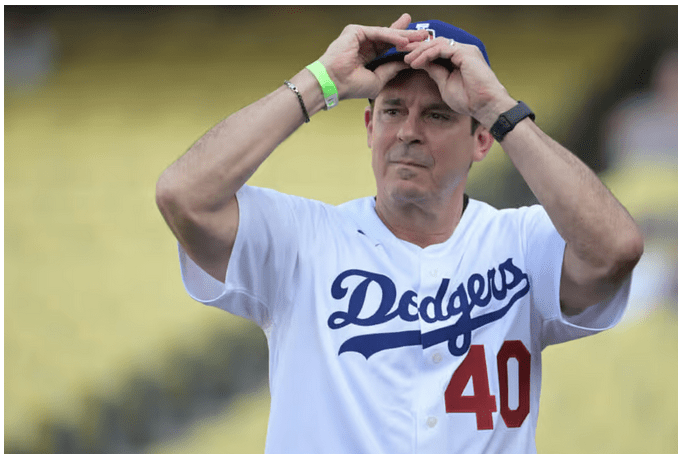
Billy Bean, June 2023 (Jayne Kamin-Oncea / USA Today)

When the Los Angeles Dodgers fumbled their way through a regrettably controversial Pride Night event at Dodger Stadium in June of 2023, Billy Bean wasn’t going to shy away from any of it.

Bean pulled on his Dodgers’ No. 40 jersey — the number he wore during his one and only season with the team in 1989 as a reserve outfielder — because however convoluted the meaning of this night had become, misunderstood by those who had to have their own opinions, intentions be damned from the previous dozen times this has been celebrated, Bean was going to give it all his positive energy no matter if misguided protestors marched outside the park.

That was likely the last time many in the organization saw him.

Just two months later, he was diagnosed with acute myeloid leukemia. He revealed the diagnosis during the MLB’s Winter Meetings in December and vowed to help with a “Stand Up To Cancer” fundraiser.

He had been awaiting a bone marrow transplant when, after a year-long battle, Bean died at his New York home on August 6, 2024. He was 60.

The photo of Bean wearing No. 40 was atop his New York Times/Athletic obituary, which explained how he “played a groundbreaking role in pushing MLB to reshape its relationship with the LGBTQ community.” He had been actively serving as the MLB’s Senior Vice President for Diversity, Equity & Inclusion and Special Assistant to the Commissioner as a way to amp up “visibility of LGBTQ issues in the sport and deliver education initiatives to players and front offices throughout the game.”

Bean never asked for this job. He just sort of evolved into it.

As the sport did around him.

Continue reading “No. 40: Billy Bean”

No. 36: Roy Gleason

This post is part of a media project called SoCal Sports History 101: The Prime Numbers from 00 to 99 that Uniformly, Uniquely and Unapologetically Reveal The Narrative of Our Region’s Athletic Heritage. Pick a number, and consider the list of athletes attached to it. Who wore it best? Or, what’s the most compelling story linked to it? Any person, place or thing is in play with Southern California connections. Star power, transformational achievement, longevity, notoriety and quirkiness all factor in. Whatever leads to a lively discussion and interpretation.

The most obvious choices for No. 36:

Bo Belinsky: Los Angeles Angels
Don Newcombe: Los Angeles Dodgers
Jered Weaver: Long Beach State, Los Angeles Angels, via Simi Valley High
Jeff Weaver: Los Angeles Dodgers, Los Angels Angels, via Simi Valley High

The not-so-obvious choices for No. 36:

Frank Robinson: Los Angeles Dodgers
Jerome Bettis: Los Angeles Rams
Fernando Valenzuela: California Angels
Greg Maddux: Los Angeles Dodgers

The most interesting story for No. 36:
Roy Gleason: Los Angeles Dodgers outfielder (1963) via Garden Grove High
Southern California map pinpoints:
Garden Grove, Los Angeles (Dodger Stadium)

Reference books on the subject:
Lost in the Sun: Roy Gleason’s Odyssey from the Outfield to the Battlefield,” by Roy Gleason as told to Wally Wasniak and Mark Langill, 2005


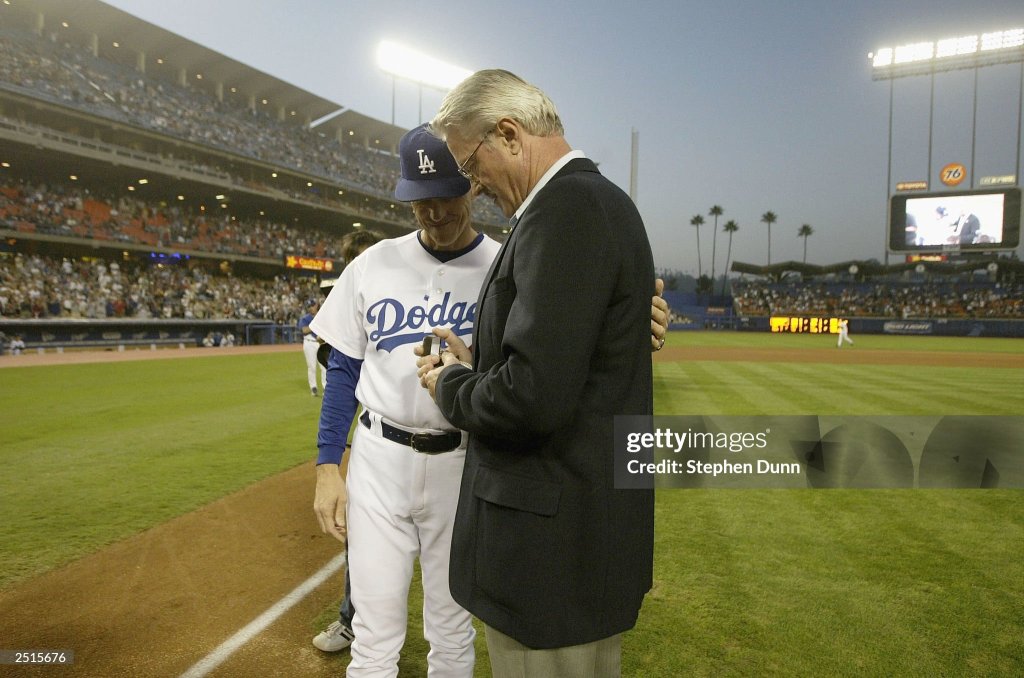
Roy Gleason looks at a replacement of the 1963 World Champion ring he was given by the Los Angeles Dodgers during a ceremony at Dodger Stadium, with manager Jim Tracy, before a game on Sept. 20, 2003. Gleason’s career was cut short by the Vietnam War, where Gleason received a Purple Heart and other decorations but never returned to baseball. The original ring was lost in Vietnam. (Photo by Stephen Dunn/Getty Images)

Roy Gleason made into eight games with the Los Angeles Dodgers during a September, 1963 callup, but the first seven were just for pinch-running duties. His one at bat, an eighth-inning stand-up double against Philadelphia against left-hander Dennis Bennett at Dodger Stadium, is documented in a box score. The 20-year-old hit a low inside fastball down the left field line.

That was it for the 6-foot-4, switch hitting Garden Grove High product who signed a $55,000 bonus baby contract in 1961. He had turned down a contract with the Boston Red Sox even after Ted Williams personally recruited him. But the Dodgers were concerned he was too much into the L.A. nightlife and wasn’t dedicated enough at that point.

The team was preparing for another trip to the World Series, eventually sweeping the New York Yankees in four straight. Gleason would be given a ’63 World Series ring for his contribution.

But he’d never play in the big league again. Especially after a trip to Vietnam.

He may have been a Dodger. But he wasn’t a draft dodger, even if it made no sense to him why the Army would come looking for him in 1967.

Continue reading “No. 36: Roy Gleason”

No. 13: Kenny Washington

This post is part of a media project called SoCal Sports History 101: The Prime Numbers from 00 to 99 that Uniformly, Uniquely and Unapologetically Reveal The Narrative of Our Region’s Athletic Heritage. Pick a number, and consider the list of athletes attached to it. Who wore it best? Or, what’s the most compelling story linked to it? Any person, place or thing is in play with Southern California connections. Star power, transformational achievement, longevity, notoriety and quirkiness all factor in. Whatever leads to a lively discussion and interpretation.

The most obvious choices for No. 13:

Wilt Chamberlain: Los Angeles Lakers
Kenny Washington: UCLA football, Los Angeles Rams
Paul George: Los Angeles Clippers
Cobi Jones: Los Angeles Galaxy

The not-so-obvious choices for No. 13:

Keenan Allen: Los Angeles Chargers
Max Muncy: Los Angeles Dodgers
Tank Younger: Los Angeles Rams
Cotton Warburton: USC football
Caleb Williams: USC football
Todd Marinovich: USC football

The most interesting story for No. 13:
Kenny Washington: UCLA football halfback (1937 to 1939); Hollywood Bears halfback (1940 to 1942); Los Angeles Rams running back (1946 to 1948), Los Angeles Angels infielder (1950) via Los Angeles Lincoln High
Southern California map pinpoints:
East Los Angeles; Hollywood; Westwood (UCLA); Los Angeles (Gilmore Stadium, Coliseum, Wrigley Field)

Reference books on the subject:
Walking Alone: The Untold Journey of Football Pioneer Kenny Washington,” by Don Taylor, 2022
The Black Bruins: The Remarkable Lives of UCLA’s Jackie Robinson, Woody Strode, Tom Bradley, Kenny Washington, and Ray Bartlett,” by James W. Johnson, 2018


On Sept. 29, 1946, Kenny Stanley Washington strapped on a modest, leather football helmet without a facemask — the one with the curved white horns of the Los Angeles Rams hand-painted on the side — and started the second half of the team’s season opener at the Coliseum against Philadelphia at quarterback.

Head coach Adam Walsh didn’t feel as if he had much of a choice. Starting quarterback Bob Waterfield was injured and backup Jim Hardy was ineffective.

The move made Washington the first Black player to reintegrate the NFL — seven months before his former UCLA teammate, Jack Robinson, made headlines integrating Major League Baseball across the way in Brooklyn.

It seemed as if Washington’s real time with history came six months earlier, when he signed a contract with the Rams after the franchise moved West from Cleveland.

“Kingfish” Washington, aka “Sepia Cyclone,” had already appeared at the Coliseum as the first All-American in UCLA football history, eventually becoming the school’s first College Football Hall of Fame inductee.

But now, at 28, the former star out of Lincoln High in East L.A., far from the athlete he used to be, was also the first professional Black athlete to appear on the progressive West Coast.

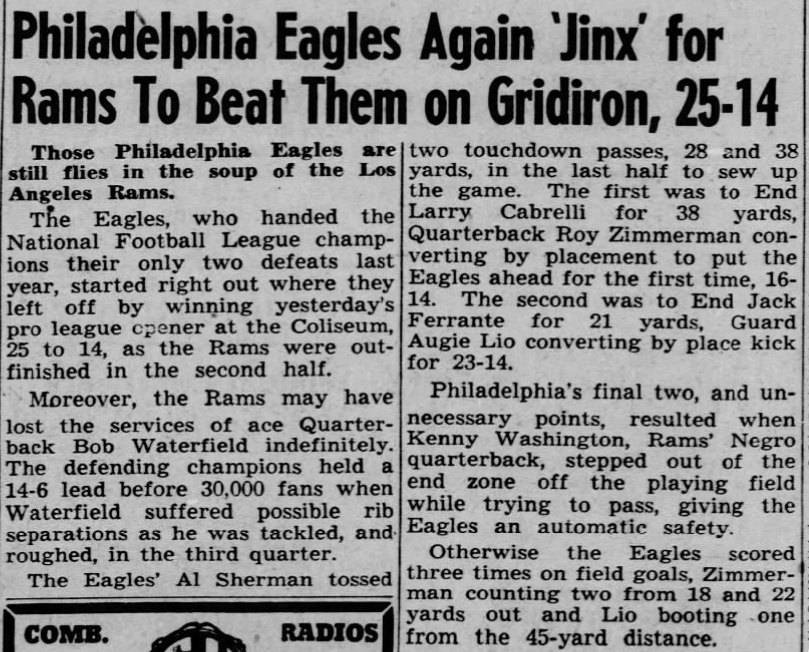
Los Angeles Times sports editor Paul Zimmerman made note that as 30,553 perspiring fans saw the world champion Rams make their first title defense in a 25-14 loss to the Eagles, Washington’s contribution to the final score was worth just a mention in the fifth paragraph under the subhead “Gift Pair”:

A story in the Los Angeles Valley Times barely noted Washington’s participation. It waited until the fifth paragraph to mention the “Rams’ Negro quarterback” — and then focused on a mistake he made:

Washington completed just one pass in seven attempts, netting 19 yards. He had no rushing totals. None of it blotted out more than a decade of an exclusionary, unwritten policy surrounding any NFL franchise signing anyone of a particular race.

These days, statues are still erected, stadiums are rebranded and museums are crated in Robinson’s name. In Lincoln Heights, at the intersection of North Broadway and Lincoln Park Avenue, not far from the Lincoln High football field, they’ve decided its worth having a square named after Washington. It wasn’t marked as such until 2014.

Considering the progression of each league and the sports’ national popularity, maybe Washington’s achievement didn’t match Robinson’s. But the truth is that Washington, had he not died far too young at age 52 in the summer of 1971 from a rare blood disorder, might have had more to say about it.

Tragically, his friend Robinson died about a year later at age 53. All that’s left now are changing narratives.

Yet it was Robinson who was once said: “Kenny Washington was the greatest football player I have ever seen. He had everything needed for greatness – size, speed and tremendous strength. … It would be a shame if he were to be forgotten.”

Continue reading “No. 13: Kenny Washington”

No. 28: Jack Robinson

This post is part of a media project called SoCal Sports History 101: The Prime Numbers from 00 to 99 that Uniformly, Uniquely and Unapologetically Reveal The Narrative of Our Region’s Athletic Heritage. Pick a number, and consider the list of athletes attached to it. Who wore it best? Or, what’s the most compelling story linked to it? Any person, place or thing is in play with Southern California connections. Star power, transformational achievement, longevity, notoriety and quirkiness all factor in. Whatever leads to a lively discussion and interpretation.

The most obvious choices for No. 28:

Anthony Davis: USC football, Southern California Sun, Los Angeles Rams and Los Angeles Express via San Fernando High School
Jack Robinson: UCLA football
Bert Blyleven: California Angels
Albie Pearson: Los Angeles/California Angels
Wes Parker: Los Angeles Dodgers
Pedro Guerrero: Los Angeles Dodgers

The not-so-obvious choices for No. 28:

Mike Marshall: Los Angeles Dodgers
Rui Hachimura: Los Angeles Lakers

The most interesting story for No. 28:
Jack Robinson: UCLA football running back/defensive back (1939 to 1941) out of Pasadena High and Pasadena City College
Southern California map pinpoints:
Pasadena, L.A. Coliseum, Westwood

Reference books on the subject:
The Black Bruins: The Remarkable Lives of UCLA’s Jackie Robinson, Woody Strode, Tom Bradley, Kenny Washington, and Ray Bartlett,” by James W. Johnson, 2018
I Never Had It Made: An Autobiography,” by Jackie Robinson as told to Alfred Duckett, 1972
Jackie Robinson: A Biography,” by Arnold Rampersad, 1991
Baseball’s Great Experiment: Jackie Robinson and His Legacy,” by Jules Tygiel, 1983


If the only number you associate with Jack Robinson is the No. 42 — the one randomly handed out by the Brooklyn Dodgers when he made his Major League Baseball debut in 1947 — that’s understandable and relatable.

The Pasadena native wore No. 42 for 10 MLB seasons, none of them in Los Angeles as a Dodger, retiring just before their move from Brooklyn. That decade was just enough time put in to meet the basic qualification for entrance into the Baseball Hall of Fame.

Forty-two has been codified to represent him Robinson as well as anyone who believes in social justice reform and restitution on behalf of the African American race.

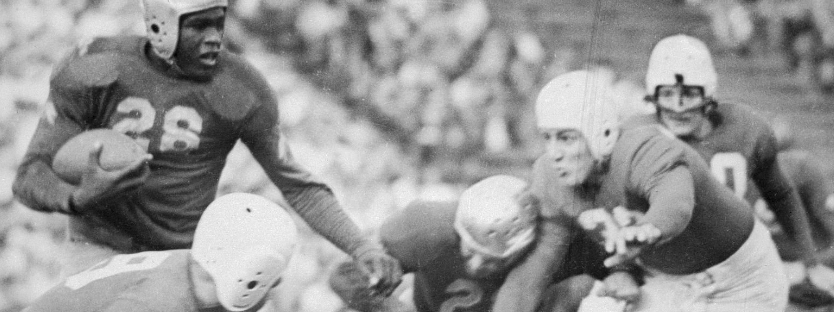
The thing is, Robinson wouldn’t have been in that position had he not made a name for himself as an athlete — with his given first name of Jack — wearing No. 28 and starring as a football player at UCLA.

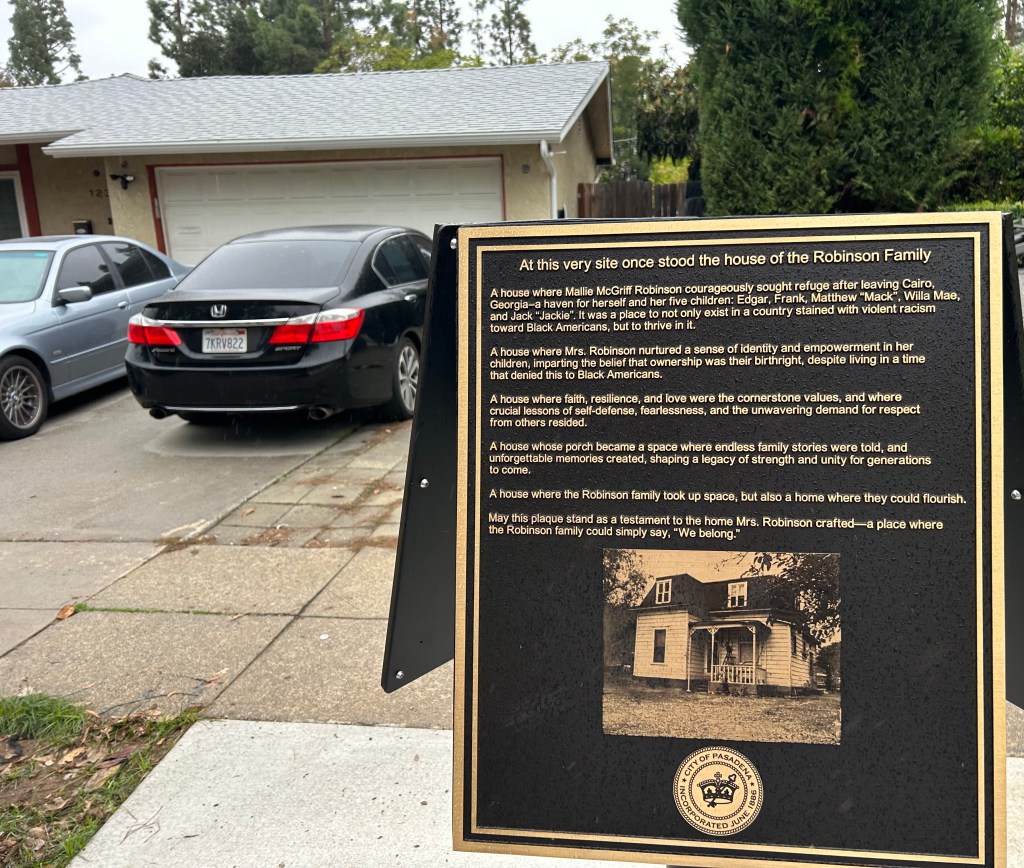
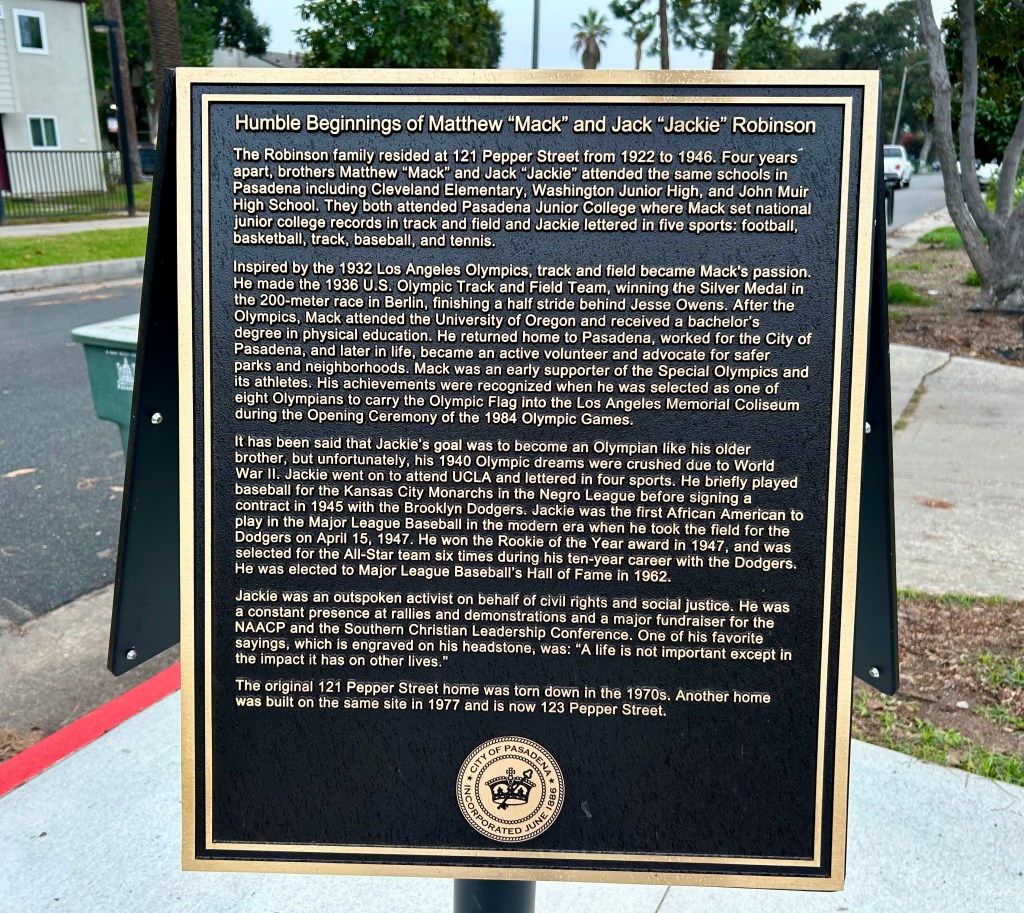
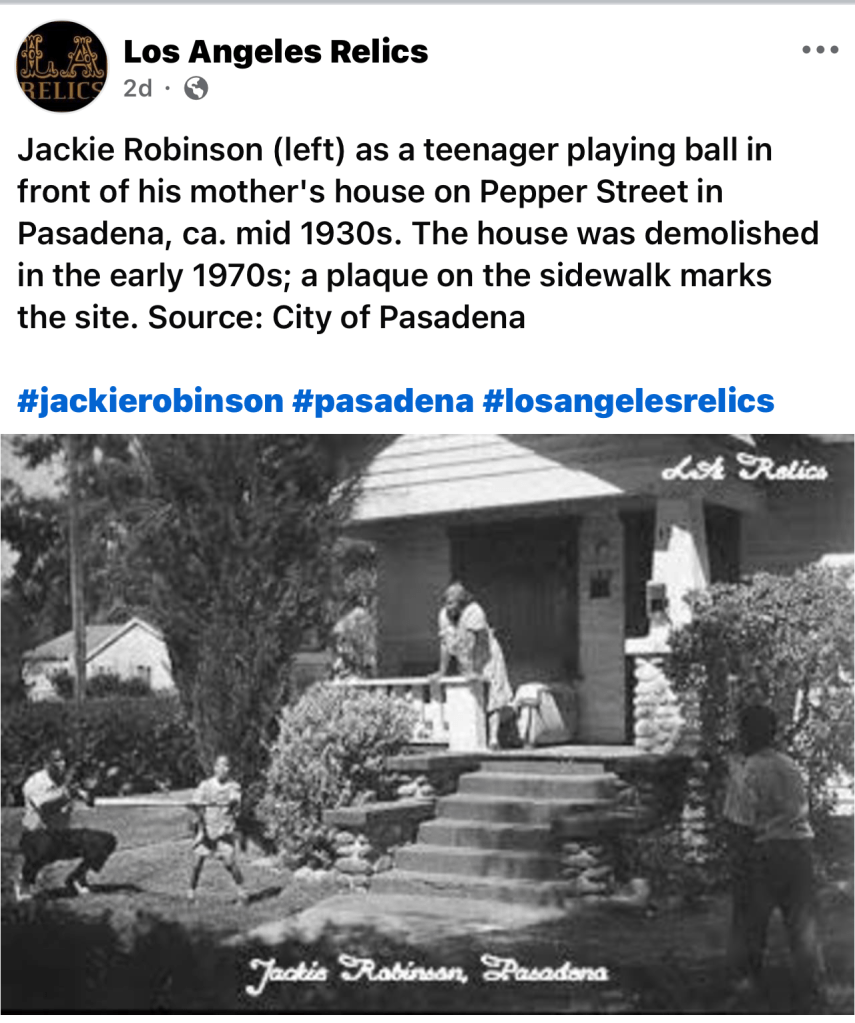
A multi-sided plaque sits on the curb at the property where 121 Pepper Street in Pasadena would have been Jack and Mack Robinson’s home growing up, from 1922 to 1946. The home site is less than two miles away from the Rose Bowl.

A four-sport athlete at John Muir High in Pasadena, Robinson first made his way to Pasadena City College. His time at UCLA in Westwood was brief, but impactful.

What number did he wear for the UCLA baseball team during his only season of 1940? No one has evidence to show that it was 42. Or any other number. This appears to be the only photo of him in a Bruins baseball jersey, in the team photo, far left.

At Pasadena City College, according to the California Community Colleges website, Robinson batted .417 with 43 runs scored in 24 games in 1938. UCLA records say Robinson posted a .097 batting average in 1940, which included getting four hits and stealing home twice among four bases stolen in one game. He also reportedly stole home 19 times.

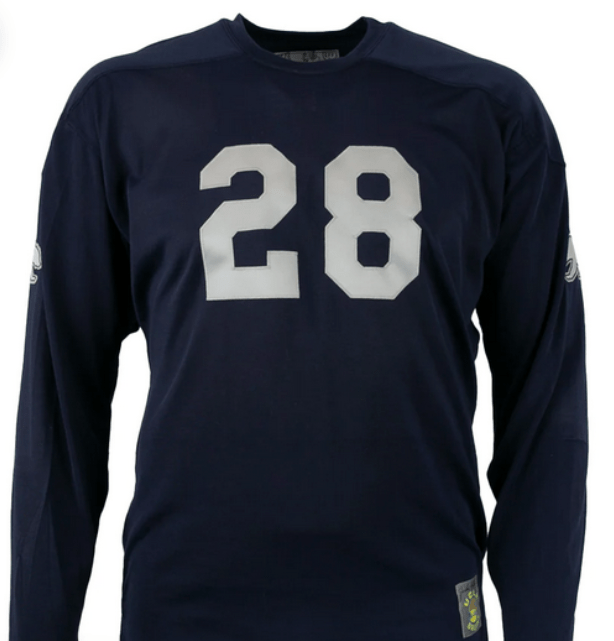
A Robinson UCLA replica football jersey sells at Ebbets Field Flannels (of all company names) for $350.

He wore No. 18 as a UCLA All-Conference basketball player.

As a football player, he made some extraordinary headlines.

First, at PCC, Robinson wore No. 55 in football — that’s what he’s wearing on a statue outside the Rose Bowl honoring that part of his life. Robinson still owns a school record for the longest run from scrimmage, 99 yards.

But for the two years he played football at UCLA, No. 28 became quite magical.

Here’s a summary of Andy Wittry of NCAA.com pieced it together in 2024 through newspaper clippings:

Jackie Robinson is given his No. 28 jersey prior to the 1939 season. (Photo: UCLA Faculty Association Blogspot).
Continue reading “No. 28: Jack Robinson”

No. 25: Tommy John and Dr. Frank Jobe (and Steve Busby)

This post is part of a media project called SoCal Sports History 101: The Prime Numbers from 00 to 99 that Uniformly, Uniquely and Unapologetically Reveal The Narrative of Our Region’s Athletic Heritage. Pick a number, and consider the list of athletes attached to it. Who wore it best? Or, what’s the most compelling story linked to it? Any person, place or thing is in play with Southern California connections. Star power, transformational achievement, longevity, notoriety and quirkiness all factor in. Whatever leads to a lively discussion and interpretation.

The most obvious choices for No. 25:

Gail Goodrich: UCLA basketball and Los Angeles Lakers
Tommy John: Los Angeles Dodgers
Jim Abbott: California Angels
Troy Glaus: UCLA baseball and Anaheim Angels
Norm Van Brocklin: Los Angeles Rams

The not-so-obvious choices for No. 25:

Rafer Johnson: UCLA basketball
Paul Westphal: Aviation High of Manhattan Beach, USC basketball
JK McKay: USC football
Frank Howard: Los Angeles Dodgers

The most interesting story for No. 25:
Tommy John: Los Angeles Dodgers pitcher (1972-74, 1976-78), California Angels pitcher (1982 to 1985)
Southern California map pinpoints:
Inglewood (The Kerlan-Jobe Orthopaedic Clinic at Centinela Hospital, known today as the Cedars Sinai Kerlan-Jobe Institute in Santa Monica); Downey (Rancho Los Amigos Hospital); Los Angeles (Dodger Stadium), Anaheim (Angels Stadium)

Reference books on the subject:
The Tommy John Story,” by Tommy and Sally John, with Joe Musser, 1978
The Sally and Tommy John Story: Our Life in Baseball,” by Tommy and Sally John, 1983
T. J.: My 26 Years in Baseball,” by Tommy John, with Dan Valenti, 1991
Athletic Forever: The Kerlan-Jobe Orthopaedic Clinic Plan for Lifetime Fitness,” by Frank Jobe, 1999
The Arm: Inside the Billion-Dollar Mystery of the Most Valuable Commodity in Sports,” by Jeff Passan, 2016
Minimize Injury, Maximize Performance: A Sports Parent’s Survival Guide,” by Dr. Tommy John with Myatt Murphy, 2018
The Tommy John Protocol: How to Rebuild Your Arm, Your Mind, and Your Faith,” by Tejay Antone, 2026


Tommy John is interviewed by NBC’s Tony Kubek as the Dodgers start the 1974 World Series against Oakland without their ace, who shows off the long cast that had been put onto his left arm by Dr. Frank Jobe just weeks earlier.

When Tommy John’s 26-season career totals as a Major League Baseball pitcher between 1963 and 1989 unravel like a sales receipt from CVS, there’s a breaking point. Scrunched into a Baseball Reference website template, and splits into two distinct hemispheres, the 1975 midway line/equator clearly reads: “Did not play – injured (Eponymous Surgical Procedure).”

Something is eponymous if a person, place or thing is named after someone. In the world of eponymics, Tommy John Surgery is right there in baseball lore with Lou Gehrig’s Disease, the Pesky Pole, the Mendoza Line or the Cy Young Award.

Since 2019, Merriam-Webster dictionary defined it, along with the proper phonetics:

The restoration hardware needed to rebuild the integrity of a Ulnar Collateral Ligament has declared Tommy John to be Patient Zero. Someone had, either out of desperation or a sense of adventure, to trust a doctor’s creative mind, and then be brave enough to try something unorthodox. Maybe it felt like a Thelma-and-Louise moment with their careers pointed toward the Grand Canyon.

All in all, what did Tommy John have to lose?

Continue reading “No. 25: Tommy John and Dr. Frank Jobe (and Steve Busby)”