
Blog

No. 31: Cheryl Miller and Reggie Miller

This post is part of a media project called SoCal Sports History 101: The Prime Numbers from 00 to 99 that Uniformly, Uniquely and Unapologetically Reveal The Narrative of Our Region’s Athletic Heritage. Pick a number, and consider the list of athletes attached to it. Who wore it best? Or, what’s the most compelling story linked to it? Any person, place or thing is in play with Southern California connections. Star power, transformational achievement, longevity, notoriety and quirkiness all factor in. Whatever leads to a lively discussion and interpretation.

The most obvious choices for No. 31:

Mike Piazza: Los Angeles Dodgers
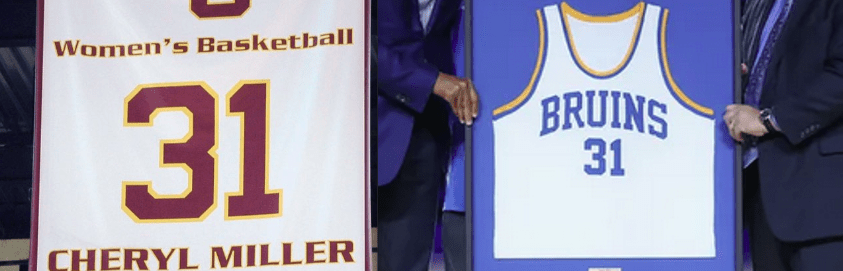
Cheryl Miller: Riverside Poly High basketball, USC women’s basketball
Ed O’Bannon: UCLA basketball
Reggie Miller: UCLA basketball
Kurt Rambis: Los Angeles Lakers
Dean Chance: Los Angeles/California Angels

The not-so-obvious choices for No. 31:

Carnell Lake, UCLA football
Karch Kiraly: UCLA volleyball
Chuck Finley: California/Anaheim Angels

The most interesting story for No. 31:
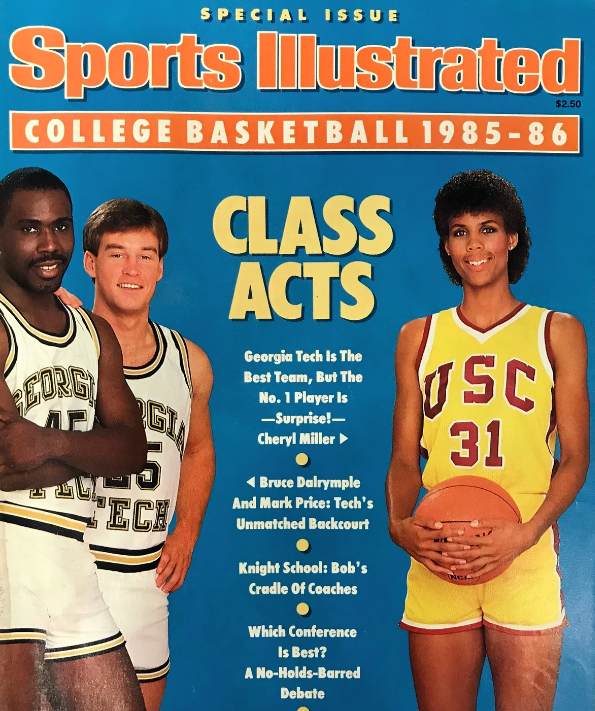
Cheryl Miller: USC women’s basketball (1981-82 to 1985-86) via Riverside Poly High
Reggie Miller: UCLA basketball (1983-84 to 1986-87) via Riverside Poly High
Southern California map pinpoints:
Riverside; Westwood (UCLA); downtown L.A. (USC)

Reference books on the subject:
I Love Being the Enemy: A Season on the Court with the NBA’s Best Shooter and Sharpest Tongue,” by Reggie Miller with Gene Wojciechowski, 1995


During the 2005 season, rumors percolated that Reggie Miller was ready to retire from the NBA after a hot-shot, 18-year run, all of them with the Indiana Pacers. He was coming up on 40 years old. It made sense.

TNT reporter Cheryl Miller denied the story was true.

She was even a bit adamant about it as she told her broadcasting partner on air to cease and desist with reporting such inaccurate information. Besides, if anyone should know, would be her.

Two weeks later, during a Lakers-Pistons telecast, Cheryl Miller reported on TNT that Reggie Miller would, in fact, be retiring. Reggie had told his coach, Rick Carlisle, first. Then he gave the scoop to Cheryl.

Proving again: Older sisters protect younger brothers, no matter what their age or their eventual Basketball Hall of Fame status.

For both of them.

Reggie Miller – aka Uncle Reg, The Knick Killer, Killa, Funk and Mighty Mouth, as they are listed on his BaseballReference.org biography – was born 19 months after his sister Cheryl. They were the last two of the five kids from Saul and Carrie Miller at their Riverside home. Included in that was oldest son, Darrel, a catcher for the California Angels (who wore No. 32, 1984 to 1988).

As basketball players, Cheryl was the bigger deal even if, at 6-foot-2, she was at least five inches shorter than pencil-thin Reggie in their adult lives.

It was Cheryl who once scored 105 points in a 32-minute game in 1982 for Riverside Poly High – the same night Reggie scored 40 in a game for the boy’s varsity team. Guess who got the bigger headlines?

In leading Poly to a 132-4 record, averaging 37.5 points a game, Cheryl was also said to be the first female player to dunk in a game. She was the national High School Player of the Year. As a junior and senior.

She picked USC to continue her play, a place making a name for itself with the McGee twins on the front line. USC won a national title her freshman year — the Trojans were 31-2. And in her sophomore year — the Trojans were 29-4. She took a detour to win a gold medal for US basketball in the 1984 Olympics in Los Angeles, and won the Naismith Player of the Year Award three times.

There’s little argument, even today, she is among the most dominant players in women’s basketball history. In October of 2025, in honor of the 50th anniversary of the women’s basketball poll, The Associated Press assembled a list of the greatest players since the first poll in 1976. Without ranking them, Miller was included on the AP first team with Caitlin Clark, Diana Taurasi, Brenna Stewart and Candace Parker.

“I grew up watching Cheryl Miller play,” said Chicago native Parker, who ended up a star with the WNBA’s Los Angeles Sparks. “She’d be No. 1. My dad was like ‘This is who we wanted you to be.’ I’m honored to be on this list with her.”

In March of 2020, HBO Sports created a documentary celebrating Miller, and it included NBA analyst Doris Burke exclaiming: “She was a bad … mother … fucker.” (Even if our story in the L.A. Times misconstrued that quote).

That nickname is not on any of Cheryl Miller’s internet biography stats pages. It should be.

Continue reading “No. 31: Cheryl Miller and Reggie Miller”

No. 26: Gene Autry

This post is part of a media project called SoCal Sports History 101: The Prime Numbers from 00 to 99 that Uniformly, Uniquely and Unapologetically Reveal The Narrative of Our Region’s Athletic Heritage. Pick a number, and consider the list of athletes attached to it. Who wore it best? Or, what’s the most compelling story linked to it? Any person, place or thing is in play with Southern California connections. Star power, transformational achievement, longevity, notoriety and quirkiness all factor in. Whatever leads to a lively discussion and interpretation.

The most obvious choices for No. 26:

Jon Arnett: USC football; Los Angeles Rams
DeShaun Foster: UCLA football
Chase Utley: Los Angeles Dodgers
Slava Voynov: Los Angeles Kings

The not-so-obvious choices for No. 26:

Kirk Altenberg: UCLA football
Willie Brown: USC football; Los Angeles Rams
Wendell Tyler: Los Angeles Rams

The most interesting story for No. 26:
Gene Autry: Los Angeles Angels inaugural owner (1961 to 1998)
Southern California map pinpoints:
Hollywood, Anaheim, Palm Springs

Reference books on the subject:
Back in the Saddle Again,” by Gene Autry with Mickey Herskowitz, 1978
Public Cowboy No. 1: The Life and Times of Gene Autry” by Holly George-Warren, 2007
New Deal Cowboy: Gene Autry and Public Diplomacy,” by Michael Duchemin, 2016
The Gene Autry Series,” by Bob Hamilton, W.H. Hutchinson, Snowden Miller, Cole Fannin and Lewis W. Patten, 1944 to 1957


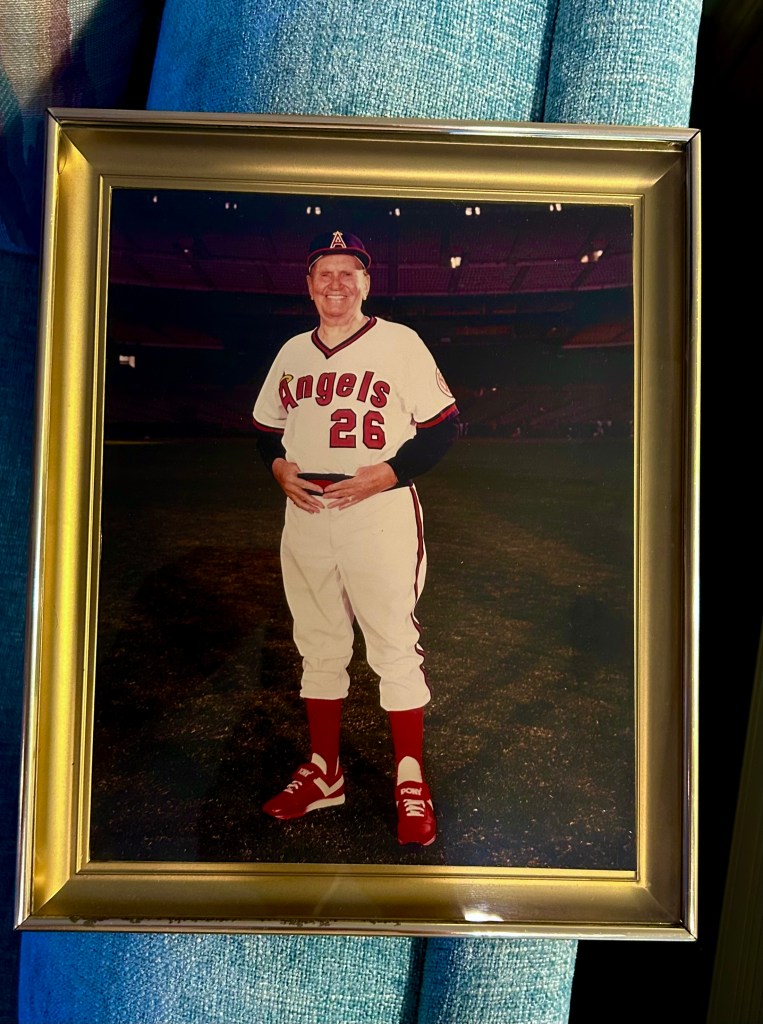
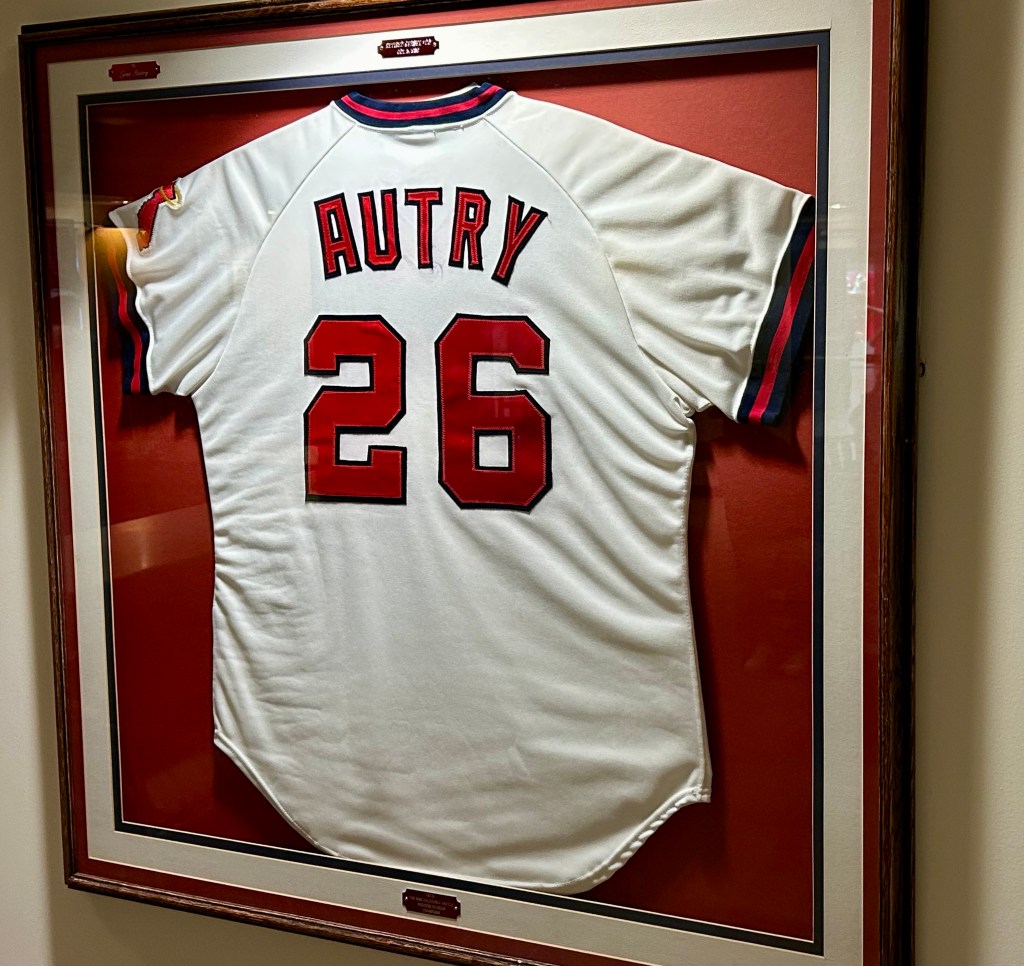
Somehow, in the chain of command involving the Los Angeles/California/Anaheim Angels franchise, there’s a No. 26 jersey handing in Gene Autry’s wardrobe closet that belongs to him.

More prominent, it’s framed on the wall in what is still preserved at Angel Stadium as the Autry Suite. In 2026, it was still there, spotlighted, more than 26 years after his passing?

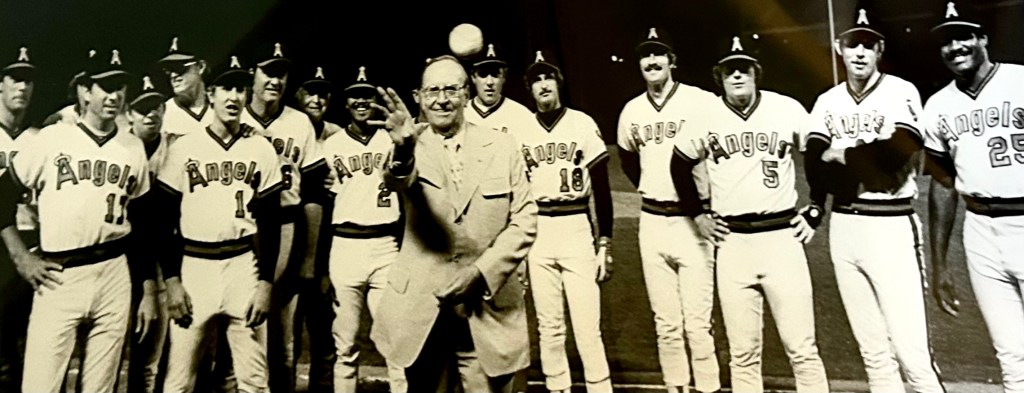
On the last day of the 1982 season, Oct. 3, after the Angels clinched the AL West title with a 93-69 mark, Autry was called out at the end of a pre-game ceremony.

The Angels’ roster at the time was dotted with highly-paid free agent acquisitions: Reggie Jackson, Rod Carew, Bobby Grich, Fred Lynn, Don Baylor, Doug DeCinces and Bob Boone. It also had Ken Forsch, Bruce Kison, and, for some reason, 41-year-old Luis Tiant available to pitch. All prime benefactors of Gene-Gene the ATM Machine.

A few had been around to be part of the 1979 team that won the AL West but lost out in their first real opportunity to go to the World Series, losing to eventual champion Baltimore in the playoffs. The Angel teams in between — 65-95, last place in ’80; 51-59, fifth place in the strike-interrupted season of ’81 — were miserable underachievers.

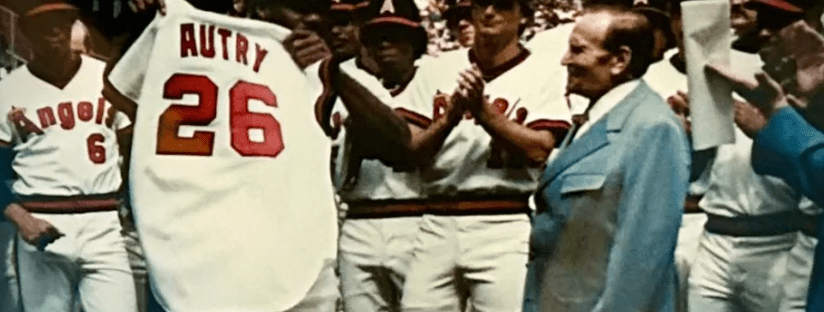
After a presentation where DeCinces was given the Owner’s Trophy as team MVP and Brian Downing was voted Most Inspirational, Autry was about to leave the field when the entire team then came out of the dugout. Baylor carried with a No. 26 Autry jersey.

That was the first uniform number retired by the franchise. It was taken off the back of injured pitcher Bill Travers, another free-agent bust, who wasn’t around to protest.

It seems sweet in a way the then-75 year old Autry pulled on the pull-over jersey and hitched up the sansabelt slacks to fill his latest role. Maybe it would have been more appropriate to give No. 61 — the year the team was created.

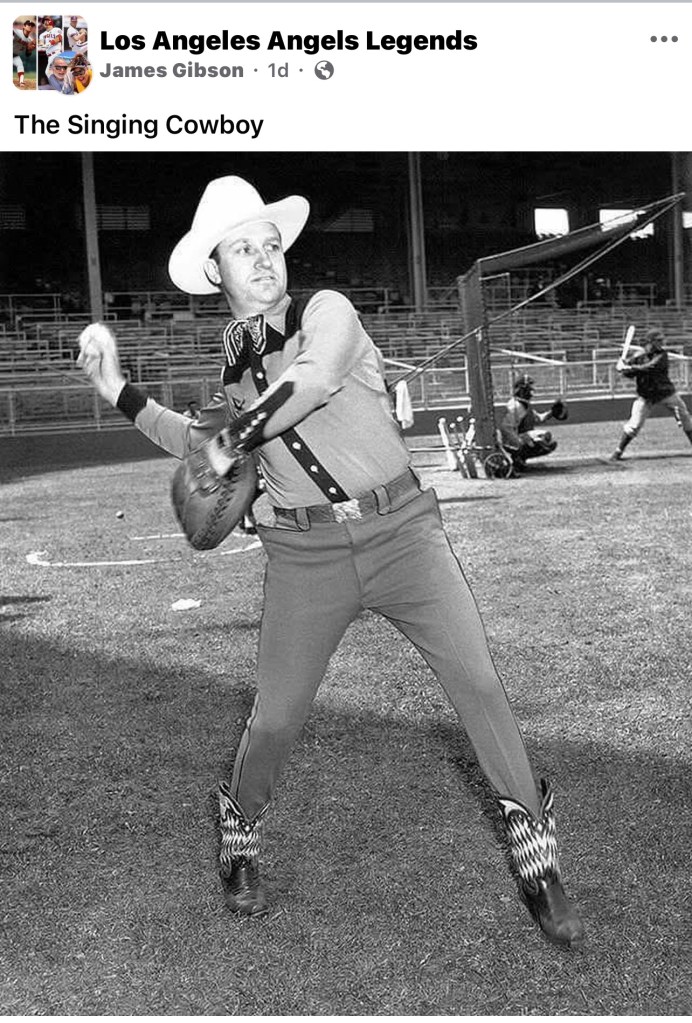
By that point, Autry was already a Hollywood success story, all dressed up as a cowboy, with real stirrups. Not the nylon baseball type.

That’s the visual we’d rather keep.

Continue reading “No. 26: Gene Autry”

No. 9: Lisa Leslie

This post is part of a media project called SoCal Sports History 101: The Prime Numbers from 00 to 99 that Uniformly, Uniquely and Unapologetically Reveal The Narrative of Our Region’s Athletic Heritage. Pick a number, and consider the list of athletes attached to it. Who wore it best? Or, what’s the most compelling story linked to it? Any person, place or thing is in play with Southern California connections. Star power, transformational achievement, longevity, notoriety and quirkiness all factor in. Whatever leads to a lively discussion and interpretation.

The most obvious choices for No. 9:

Lisa Leslie: Los Angeles Sparks
Paul Kariya:  Mighty Ducks of Anaheim
Matthew Stafford: Los Angeles Rams
Bernie Nicholls: Los Angeles Kings
Zlatan Ibrahimovic: Los Angeles Galaxy
Wally Moon: Los Angeles Dodgers

The not-so-obvious choices for No. 9:

Nick Van Exel: Los Angeles Lakers
Marquis Lee: USC football
Juju Smith-Schuster: USC football
Damon Allen: Cal State Fullerton football
Bryce Young: Mater Dei High football

The most interesting story for No. 9:
Lisa Leslie: Los Angeles Sparks (1997 to 2009) via USC and Morningside High
Southern California map pinpoints:
Inglewood, downtown Los Angeles (USC, Staples Center)

Reference books on the subject:
Don’t Let the Lipstick Fool You: The Making of a Champion,” by Lisa Leslie with Larry Burnett, 2008


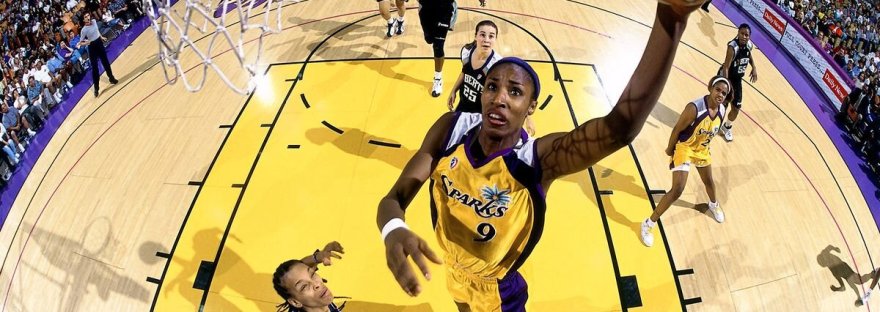
Lisa Leslie says she never felt entitled wearing No. 9.

But it would have been quite bold, and actually very cool looking back on it now, had she requested that now-retired number she wore for 12 years on her purple-and-gold Los Angeles Sparks jersey been represented in Roman numerals.

“I’ve called myself a Title IX baby — I’ve been called a lot of things — (but) to be one of the first children of Title IX, an amazing piece of legislation, has really changed my life and the path I’ve gone down,” she told us once.

The three-time WNBA MVP, eight-time All Star, three-time All Star MVP, eight-time All-WNBA first team member (and four time second-team member) and two-time WNBA Defensive Player of the Year to go with two WNBA championship as a representative of the Sparks was born on July 7, 1972 — just two weeks after the bill leveling the playing field for boys and girls sports was signed into law, and six days after it took effect.

Blessed with height and athletic skills is one thing. But timing is important as well.

The 37 words that reshaped the landscape of higher education go as: “No person in the United States shall, on the basis of sex, be excluded from participation in, be denied the benefits of, or be subjected to discrimination under any education program or activity receiving Federal financial assistance.”

It goes back to how the 14th Amendment of the Constitution and its Equal Protection Clause was draw up and ratified in 1868 in the post-Civil War era.

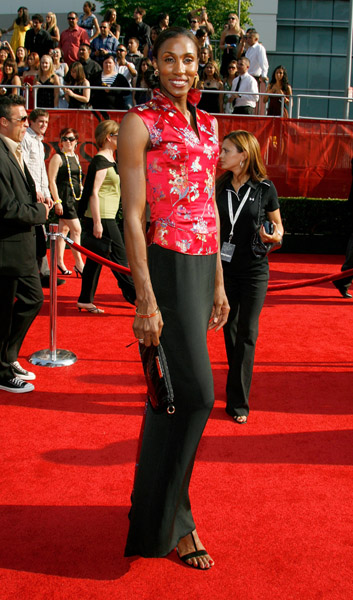
Lisa Leslie at the 2008 ESPY Awards at the Nokia Theater in L.A. Live in 2008.

Leslie said in the ninth grade during a civics classes at Morningside High in Inglewood, she read about Title IX in a textbook.

“When I was reading all this in ninth grade, I finally got it — sports are bigger than me,” she told us. “To me, that was my responsibility. Maybe it was the fact I had a really good history teacher. It changed my life.

“I remember feeling like, ‘Wow, if this didn’t exist, we couldn’t play?’ It was shocking. I’d only been into sports a few years at that point, starting with the seventh grade. I guess it made me realize how much of a privilege it was.

“But you know what – it’s almost like girls are brainwashed because we are made to feel as if: `You better be thankful that you can play’ and `This is a privilege, you don’t always get to do this.’ We believed it!

“That got me so much on track to focus on school – if you don’t get your grades up, you can’t play.”

She likely felt more empowered by it during her days representing the United States on four Olympic gold-medal basketball teams.

We’re all still learning how Title IX has shaken out on the sports landscape. But Leslie remains a powerful force in playing it forward.

Continue reading “No. 9: Lisa Leslie”

No. 10: Landon Donovan

This post is part of a media project called SoCal Sports History 101: The Prime Numbers from 00 to 99 that Uniformly, Uniquely and Unapologetically Reveal The Narrative of Our Region’s Athletic Heritage. Pick a number, and consider the list of athletes attached to it. Who wore it best? Or, what’s the most compelling story linked to it? Any person, place or thing is in play with Southern California connections. Star power, transformational achievement, longevity, notoriety and quirkiness all factor in. Whatever leads to a lively discussion and interpretation.

The most obvious choices for No. 10:

Ron Cey: Los Angeles Dodgers
Landon Donovan: Los Angeles Galaxy
Carlos Vela: LAFC
Norm Nixon: Los Angeles Lakers, Los Angeles Clippers
Willie O’Ree: Los Angeles Blades hockey
Gus Williams: USC basketball
Justin Herbert: Los Angeles Chargers
Pat Haden: USC football, Southern California Sun
Rick Neuheisel: UCLA football

The not-so-obvious choices for No. 10:

Mauricio Cienfuegos: Los Angeles Galaxy
Giovani dos Santos: Los Angeles Galaxy
Marta: Los Angeles Sol
Cooper Kupp: Los Angeles Rams
Lyman Bostock: California Angels
Justin Turner: Los Angeles Dodgers
Don Klosterman: Loyola University and Los Angeles Rams
Tom Dempsey: Los Angeles Rams

The most interesting story for No. 10:
Landon Donovan: Los Angeles Galaxy midfielder (2005 to 2014, 2016) via Redlands High and Redlands East Valley High School
Southern California map pinpoints:
Ontario; Redlands; Rancho Cucamonga; Carson (Galaxy Home Depot Stadium)

Reference books on the subject:
Landon: A Memoir,” by Landon Donovan, 2026


In early 2024, Landon Donovan lamented about the state of the Los Angeles Galaxy.

Once the brightest star in the Major League Soccer universe, the franchise had logged more losses than wins over previous last eight seasons and had been lapped, by almost measurements, by the expansion LAFC team across the city.

“It feels to me,” Donovan told the Los Angeles Times, “like the Galaxy has lost its soul.”

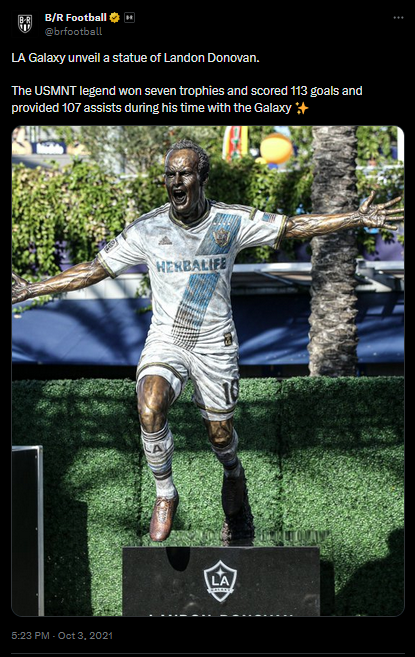
Such a soulful response from a home-grown talent that once kickstarted the Galaxy to the MLS Cup five times. To eight playoff eight runs. Who retired as the league’s all-time leading scorer. Whose league MVP Award is now named after him. Then there’s that oddly painted statue of him outside the Galaxy’s home field.

If Donovan’s words carry weight, it’s because he once carried the weight of the franchise, as well as the league, on a long sprint at a time when it needed someone to do the heavy lifting.

When he took ownership of the number 10 from 2005 to 2014 in Galaxy lore, at the core point of the 15 MLS seasons he has a player, it can be argued that he saved a league in danger of going bankrupt.

Donovan had a lot invested, having grown up on the AYSO fields of the Inland Empire. He was the face of U.S. soccer and its growth was marked by a chart of him.

Playing in the most World Cup games and scoring the most World Cup goals of any American. Diverting to the San Diego Sockers of the Major Arena Soccer League in 2019. Coaching the San Diego Loyal to the second-tier USL Championship, and the San Diego Wave of the National Women’s Soccer League, while adding his voice for Fox’s global coverage.

All that he’s carried on his shoulders is even more evident as he assesses his own life and what he might do to help others reach their ultimate goal of personal happiness.

Continue reading “No. 10: Landon Donovan”

No. 11: John Elway

This post is part of a media project called SoCal Sports History 101: The Prime Numbers from 00 to 99 that Uniformly, Uniquely and Unapologetically Reveal The Narrative of Our Region’s Athletic Heritage. Pick a number, and consider the list of athletes attached to it. Who wore it best? Or, what’s the most compelling story linked to it? Any person, place or thing is in play with Southern California connections. Star power, transformational achievement, longevity, notoriety and quirkiness all factor in. Whatever leads to a lively discussion and interpretation.

The most obvious choices for No. 11:

Anze Kopitar: Los Angeles Kings
Matt Leinart: Mater Dei High football, USC football
Pat Haden: Los Angeles Rams
Jim Everett: Los Angeles Rams
Jim Fergosi: Los Angeles/California Angels
Manny Mota: Los Angeles Dodgers
George Best: Los Angeles Aztecs

The not-so-obvious choices for No. 11:

Don Barksdale: UCLA basketball
Bill Sharman: USC basketball
Norm Van Brocklin: Los Angeles Rams
Dwight Anderson: USC basketball
Karl Malone: Los Angeles Lakers

The most interesting story for No. 11:
John Elway: Granada Hills High football quarterback and baseball pitcher (1977 to 1979)
Southern California map pinpoints:
Granada Hills; Northridge; Dodger Stadium

Reference books on the subject:
Elway: A Relentless Life,” by Jason Cole, 2021


Nov. 9, 1977, Valley News of Van Nuys.

John Elway’s 16-year NFL career, all with the Denver Broncos from 1983 to 1998: Back-to-back Super Bowl wins to close out the 20th Century and his playing days, including the game MVP Award in the final contest he played; 47 fourth-quarter comebacks; 300 touchdown passes; 51,475 yards passing (second all-time upon his retirement) and going into the Pro Football Hall of Fame in his first year eligible of 2004.

Elway’s four-year college career, all at Stanford from 1979 to 1982: Two-time Pac-10 player of the year, second in the Heisman voting as a senior, career passing leader with 9,349 yards and 77 touchdowns, No. 33 in ESPN’s list of the greatest 150 college football players in the game’s first 150 years, and No. 1 overall NFL Draft pick.

Elway’s three years at Granada Hills to end the decade of the ’70s, includes: “Oh, John, you are God’s gift to womanhood. You are the perfect specimen.”

Elway admitted to a Valley News of Van Nuys reporter in the fall of 1977 that some girl at school gave him that note in the hall, and then ran off before he could figure out who sent it. Elway, who had come to Granada Hills a year earlier as a sophomore, was still a bit shy and feeling his way around Southern California.

He outgrew that at some point.

John Elway, third from top row, if you must be directed to find him in this group.

Before he made No. 7 somewhat his identity in college and the NFL, before he was lumped into the most heralded athletes of his time, there was a vintage No. 11 Elway, both in football and baseball, who upon graduation was the focus of a Valley News story in its June 30, 1979 edition with the headline: “Is Elway best Valley athlete of all time?”

The questions still comes up in conversation 40 years later.

Los Angeles Times, June, 1979.

He didn’t win an MVP as a high school senior in football. His trophy came in baseball.

Elway’s Granada Hills High School senior class yearbook –the 1979 Tartan — has action shots of Elway playing football, basketball and baseball. There’s also the senior photo section, with John in his white suit and striped tie and large smile, next to his twin sister, Jana. Alphabetically, she came first.

They were actually considered “old” seniors,” born in late June, turning 19 right after that graduation. To all others in the high school athletic world of Southern California, maybe that didn’t seem quite fair.

In Elway’s high school yearbook from his junior year in 1978, with Jana again, next to him in their class shots, less dressed up and more “Fast Times at Ridgemont High” mode.

A classic shot of Elway in a football team photo shows him laughing out loud.

When you’re the son of a nomadic college football coach — John’s dad, Jack, brought the family to Northridge for a three-year run as the program’s head coach after he was a quarterbacks coach at Washington State — the fact you got to have three years at one school in Southern California was seen as something of a lucky break. Even when Jack left Northridge to take the head job at San Jose State in 1979, John stayed back to finish his high school at Granada Hills.

John Elway would consider going to nearby USC for college, but he gravitated to Stanford. He’d become the 1983 No. 1 overall draft pick of the NFL’s Baltimore Colts in a quarterback-rich field, nudge a trade to the Denver Broncos, and become one of the game’s legendary figures.

“John Elway was one of the single greatest athletes who ever lived,” says Adam Schefter, the ESPN NFL reporter, near the end of a 2025 Netflix documentary, “Elway,” that takes viewers through his life from high school to the Hall of Fame.

A 2004 Pro Football Hall of Fame inductee is celebrated as the only player in NFL history to pass for more than 3,000 yards and rush for more than 200 yards in the same season seven consecutive times. He is the second QB to record more than 40,000 yards passing and 3,000 yards rushing during his career.

He even got to play for his dad, who was as Stanford’s head coach starting in 1984.

But that time in Granada Hills … That’s when Elway cranked it up to 11.

Continue reading “No. 11: John Elway”