

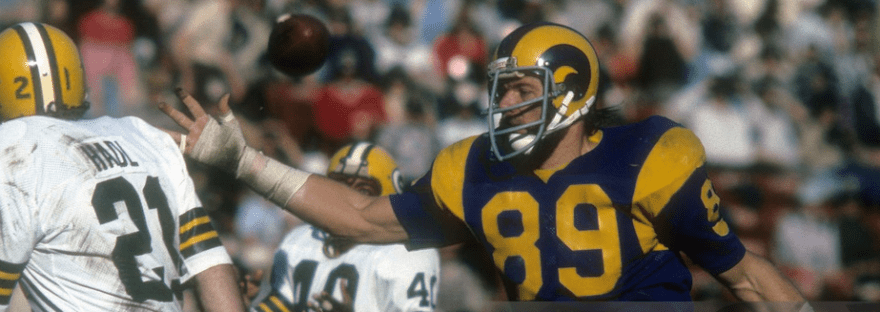
This post is part of a media project called SoCal Sports History 101: The Prime Numbers from 00 to 99 that Uniformly, Uniquely and Unapologetically Reveal The Narrative of Our Region’s Athletic Heritage. Pick a number, and consider the list of athletes attached to it. Who wore it best? Or, what’s the most compelling story linked to it? Any person, place or thing is in play with Southern California connections. Star power, transformational achievement, longevity, notoriety and quirkiness all factor in. Whatever leads to a lively discussion and interpretation.
The most obvious choices for No. 89:

Fred Dryer: Los Angeles Rams
Ron Brown: Los Angeles Rams
Charles Young: USC football
The not so obvious choice for No. 89:
Jack Bighead: Pepperdine football
Bobby Jenks: Los Angeles Angels
The most interesting story for No. 89:
Fred Dryer: Los Angeles Rams defensive end (1972 to 1981) via Lawndale High and El Camino College
Southern California map pinpoints:
Hawthorne, Lawndale, Torrance, Los Angeles (Coliseum), Long Beach, Hollywood
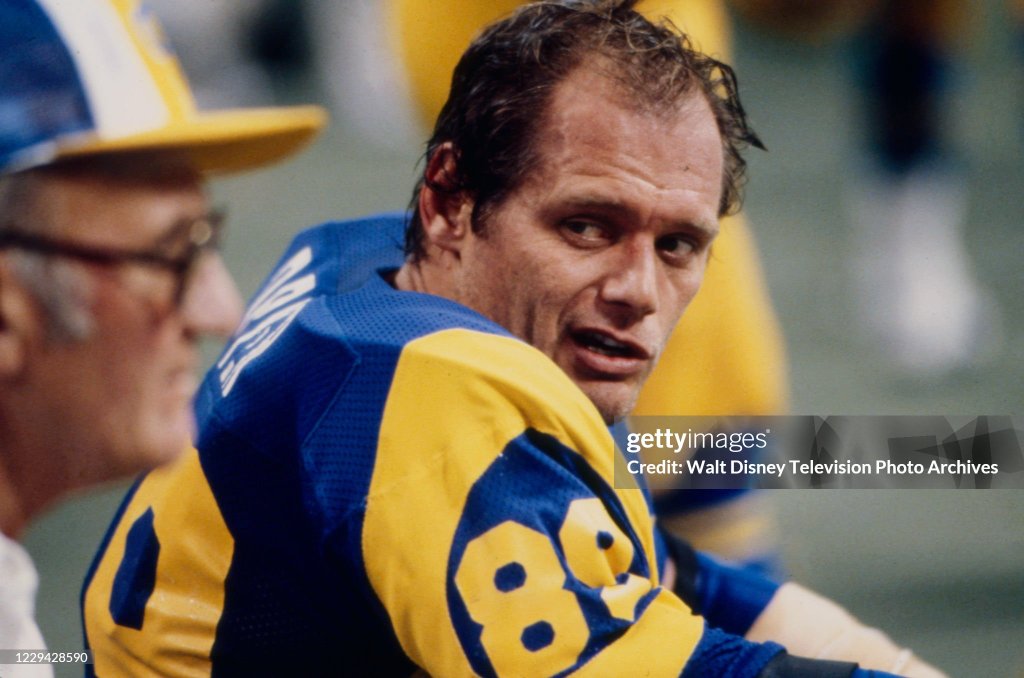
Came across a social media post once that observed actor Tommy Lee Jones “always looks like his son just told him he cooked a ribeye steak in an air fryer.”
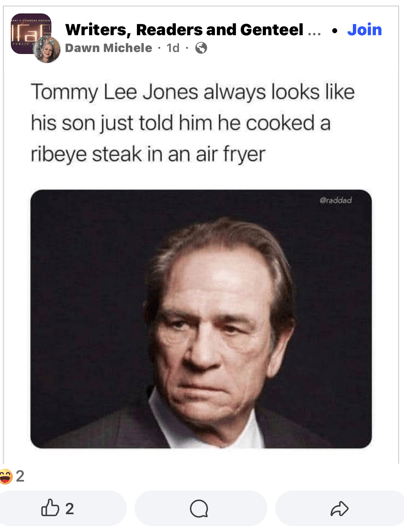
Fred Dryer could deliver the resting-face scowl no matter what role he was playing.
Two distinct versions of Dryer come to mind — the agitated, swift-moving Los Angeles Rams’ defensive end sideswiping an offensive tackle en rout to hunting down another quarterback, and the pretend LAPD private eye named “Hunter” who bent the rules when necessary. In each of those was an underpinning of “Dirty Harry” in motion. Or even of Tommy Lee Jones, either as Warden Dwight McClusky in “Natural Born Killers” or the villainous Two Face in “Batman Forever.”
Dryer had a job and a duty to perform it. In both cases. Vengeance could be a motivational tactic. He cleaned up messes, no matter how dirty or harry it became.
A day in court never seemed to bother him, either. Justice had to be serviced, whether Dryer was pushing back on a contract dispute as either a professional athlete or a popular thespian. Dryer pulled those levers of justice, his modus operandi, with or without a legal need to produce a habeas corpus.

There was a point at the height of his TV fame, almost a decade since the official end of his NFL career, when Dryer found himself in a huddle of entertainment industry writers. They soft-tossed him questions about how, as he was about to turn 42, he best self-identified at this point in his life.
Dryer tackled it all head on.
A headline in the Chicago Tribune seemed to make it clear: “Fred Dryer, Actor, Gives His Past A Punt.” It went on to explain:

“As the hard-boiled Rick Hunter, a Los Angeles homicide detective, Dryer projects an image that combines Steve McQueen’s rough sexiness with Clint Eastwood’s stoic demeanor. And Hunter shows just about as much respect for his suspects Constitutional rights as Eastwood’s Dirty Harry does.
“Dryer has a theory about why his acting career took off when so many of his colleagues’ fizzled.
“ ‘Most athletes fail at it because they don`t understand that when you come from a success in another area like sports, you have to leave the sports world behind. You have to kill the guy that made you a sports star and start over completely.
“Fred Dryer, football player, is dead. I put him away and started with this other guy.
“That means you don’t bring the ego you had in football with you. Without mentioning names, I see ex-football players who are just not willing to let go of (their athlete image), because if they lose that, who are they? You have to let go of your past before you gain something else.”
Dryer was just staying in character.
Considering he almost had the role of Sam Malone when the iconic TV series “Cheers” launched years earlier — imagine him as a happy ex-drunk? — the thought of hanging around a bar known as an ex-jock just wasn’t his idea of being pro active.
Continue reading “No. 89: Fred Dryer”
