
No. 3: Scott Weiland

This is the latest post for an ongoing media project — SoCal Sports History 101: The Prime Numbers from 00 to 99 that Uniformly, Uniquely and Unapologetically Reveal The Narrative of Our Region’s Athletic Heritage.  Pick a number and highlight an athlete — person, place or thing — most obviously connected to it by fame and fortune, someone who isn’t so obvious, and then take a deeper dive into the most interesting story tied to it. It’s a combination of star power, achievement, longevity, notoriety, and, above all, what makes that athlete so Southern California. Quirkiness and notoriety factor in. And it should open itself to more discussion and debate — which is what sports is best at doing.

The most obvious choices for No. 3:
Carson Palmer: USC football
Keyshawn Johnson: USC football
= Willie Davis: Los Angeles Dodgers
= Anthony Davis: Los Angeles Lakers
Candace Parker: Los Angeles Sparks
Chris Paul: Los Angeles Clippers

The not-so-obvious choices for No. 3:

= Josh Rosen: UCLA football
= Glenn Burke: Los Angeles Dodgers
= Steve Sax: Los Angeles Dodgers

The most interesting story for No. 3:
Scott Weiland: Edison High of Huntington Beach football quarterback (1982 to 1985)
Southern California map pinpoints:
Huntington Beach, Costa Mesa, Long Beach, Hollywood


The photo documents perhaps the only tangle circulated evidence that Scott Weiland played football — an aspiring quarterback trying to make his mark at Edison High School in Huntington Beach.

He kind of looked like a young Sean Salisbury — ready, willing and able to commandeer a team to success and fame. The hairstyle of the moment was helmet friendly.

Yet, the eventual lead voice and flamboyantly driving force in and out of Stone Temple Pilots, Velvet Revolver and Art of Anarchy, fired or otherwise bored with each venture, wouldn’t be on track to become the famous college football player as he once thought he’d like to be.

High school non-confidential: The teen years focused on self discovery, watching, listening, hatching experiments, hormones raging, expectations and lack of sleep leads to falling into groups of new fast friends and/or swallowed up by cliche cliques.

At a peak of his music fame in 2007, Weiland was asked in fan Q&A about his high school activities.

“What kind of self-respecting outcast were you?” he was asked.

He explained:

“One with a lot of cojones. I was never a jock, but I was an athlete, and I was good. (Edison High) had just won multiple state football titles; it was a hardcore football school. I had aspirations of going to Notre Dame, so I played quarterback. But also I was into music: I sang in the school choir; and the two worlds didn’t really hold hands skipping down the hallways. I got a lot of flak from the coach and the guys on the team. Then I formed a rock & roll band with my best friend, and at the start of the senior year, I decided that I was into music more.”

While there is the one football photo, there thousands more snapshots, videos and websites that celebrate Weiland’s legendary music work — nominated for six Grammys, winning two for Best Hard Rock Performance, selling 50 millions records and called a “voice of our generation” by Smashing Pumpkins’ Billy Corrigan.

Some critics might have thought his bands were “a shameless clone of such grunge leaders as Pearl Jam, Nirvana and Soundgarden.” But taken individually, Weiland was called “one of the towering figures in the history of rock” by Rolling Stone magazine.

Audiences and fans were captivated by a chaotic stage presence. He was a champion chameleon, amplified by a megaphone. All in all, he navigated the diversity of glam, and alt rock, and pop, and hair-metal ballads far better than he did toxic mix of drugs, alcohol and all else the came to consume him.

So when he died in 2015 of a drug overdose at the age 48, the question had to be asked: How will he be remembered?

We are left with shards of facts and quotes and guesses. And photos. Many provided by him.

Continue reading “No. 3: Scott Weiland”
No. 34: Fernando Valenzuela

This is the latest post for an ongoing media project — SoCal Sports History 101: The Prime Numbers from 00 to 99 that Uniformly, Uniquely and Unapologetically Reveal The Narrative of Our Region’s Athletic Heritage.  Pick a number and highlight an athlete — person, place or thing — most obviously connected to it by fame and fortune, someone who isn’t so obvious, and then take a deeper dive into the most interesting story tied to it. It’s a combination of star power, achievement, longevity, notoriety, and, above all, what makes that athlete so Southern California. Quirkiness and notoriety factor in. And it should open itself to more discussion and debate — which is what sports is best at doing.

The most obvious choices for No. 34:

= Fernando Valenzuela, Los Angeles Dodgers
= Shaquille O’Neal, Los Angeles Lakers
= Bo Jackson, Los Angeles Raiders

The not-so-obvious choices for No. 34:

= David Greenwood, Verbum Dei High and UCLA basketball
= Nick Adenhart, Los Angeles Angels
= Paul Pierce, Inglewood High, Los Angeles Clippers
= Paul Cameron, UCLA football

The most interesting story for No. 34:
Fernando Valenzuela, Los Angeles Dodgers pitcher (1980 to 1990)
Southern California map pinpoints:
Dodger Stadium, East L.A., Boyle Heights, Los Feliz, La Canada-Flintridge


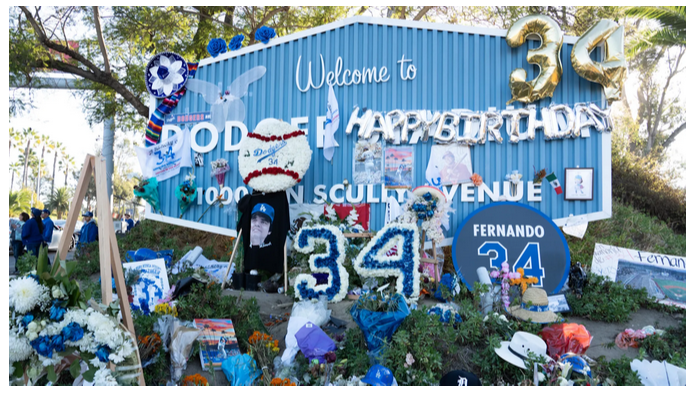
On November 1, 2024 — the first of the annual two-day celebration of Dia de la Muertos, a Latino-cultural event where family and friends gathering to pay respects to those close to them who have died — Fernando Valenzuela would have turned 64 years old.

But when he had died nine days earlier, it made that day, and the power of the event, even more poignant.

Valenzuela’s passing from a long bout with liver cancer came just two days before the Los Angeles Dodgers started the 2024 World Series against the New York Yankees. The Dodgers wore No. 34 patches on their shoulder in his honor.

By the time November 1 rolled around, the Dodgers were celebrating a five-game championship series victory, riding double-deck buses through the city. Many players, and fans, wore the familiar Valenzuela 34 jersey.

Also on that day, artist Robert Vargas finished the first of a three-panel project on the side of the Boyle Hotel, facing the First Street on-ramp to Interstate 101 in Boyle Heights. The multifaceted image of Valenzuela seemed to make him come to life again.

Scores of ofrendas poppedup up at the base of site, as well as near the freeway and the street. Same at Dodger Stadium and the roads leading into it.

Visiting the mural site almost became going to a religious shrine.

The experience ignited vivid memories of 1981, when fans of all backgrounds swarmed on Dodger Stadium to witness the then-20-year-old from Mexico who only spoke Spanish do things never seen before on a Major League Baseball diamond. Words, in any language, couldn’t describe it.

Especially, as this was happening on the site that once was a dilapidating housing complex for low-income Latino families who unceremoniously were evicted in the late ’50s when the City of L.A. gave the property to the Dodgers to build upon.

At the Vargas mural site, the drone of cars passing by on the freeway provided a constant soundtrack. It was broken up each day Vargas did the mural by a mariachi band, which came from nearby Mariachi Plaza, performed each day at 4 p.m. to give the artistic process a blessing.

“It’s about unity and representation and bringing different cultures together, which Fernando is still doing as we speak,” Vargas told reporters who called him off the scaffolding for interviews.

Boyle Heights born-and-raised, Vargas had, a few months earlier, depicted his vision of newest Dodger star Shohei Ohtani on the side of the Miyako Hotel in Little Tokyo. It was just a mile West of this Valenzuela site, across the bridge that spanned the Los Angeles River. The murals could now serve as cultural touchstones of the city.

As the mural inspired by “Fermandomania” was named “Fernandomania Forever, finished up by early November. To Vargas, and most others who ever saw him play, it reflects an inate feeling that Valenzuela will live forever in the minds of those who still talk about his feats in excited, as well as reverent, tones.

Continue reading “No. 34: Fernando Valenzuela”

No. 36: Roy Gleason

This is the latest post for an ongoing media project — SoCal Sports History 101: The Prime Numbers from 00 to 99 that Uniformly, Uniquely and Unapologetically Reveal The Narrative of Our Region’s Athletic Heritage.  Pick a number and highlight an athlete — person, place or thing — most obviously connected to it by fame and fortune, someone who isn’t so obvious, and then take a deeper dive into the most interesting story tied to it. It’s a combination of star power, achievement, longevity, notoriety, and, above all, what makes that athlete so Southern California. Quirkiness and notoriety factor in. And it should open itself to more discussion and debate — which is what sports is best at doing.

The most obvious choices for No. 36:
= Bo Belinsky: Los Angeles Angels
= Don Newcombe: Los Angeles Dodgers
= Jered Weaver: Long Beach State and Los Angeles Angels
= Jeff Weaver: Los Angeles Dodgers and Los Angels Angels
= Steve Bilko: Los Angeles Dodgers

The not-so-obvious choices for No. 36:
= Frank Robinson: Los Angeles Dodgers
= Jerome Bettis: Los Angeles Rams
= Fernando Valenzuela: California Angels
= Greg Maddux: Los Angeles Dodgers

The most interesting story for No. 36:
Roy Gleason: Los Angeles Dodgers outfielder (1963)
Southern California map pinpoints:
Garden Grove, Los Angeles (Dodger Stadium)


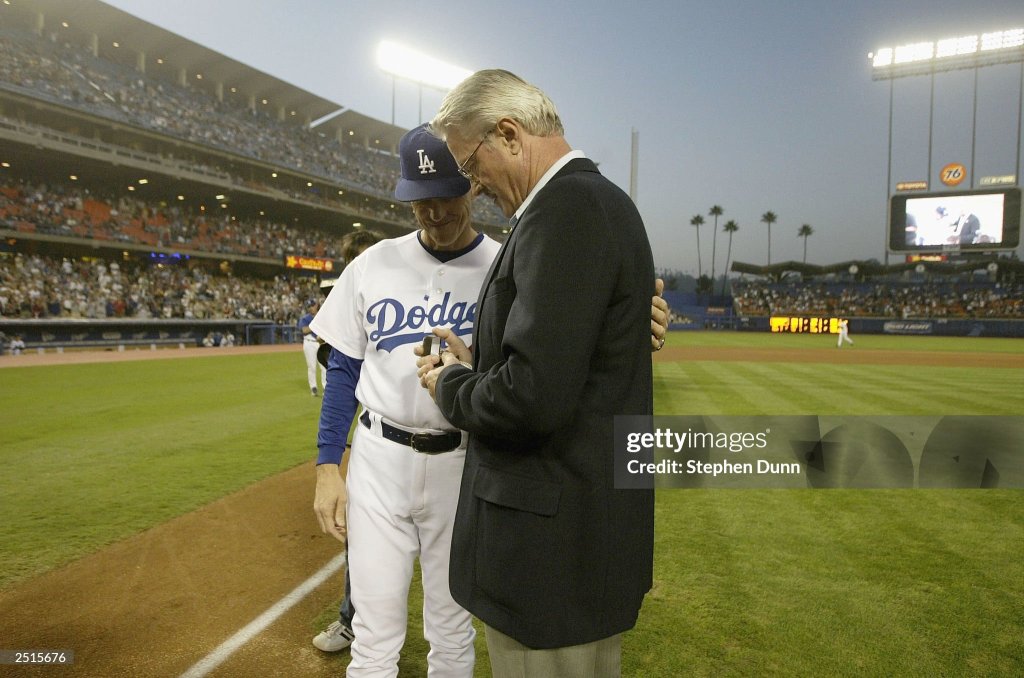
Roy Gleason looks at a replacement of the 1963 World Champion ring he was given by the Los Angeles Dodgers during a ceremony at Dodger Stadium, with manager Jim Tracy, before a game on Sept. 20, 2003. Gleason’s career was cut short by the Vietnam War, where Gleason received a Purple Heart and other decorations but never returned to baseball. The original ring was lost in Vietnam. (Photo by Stephen Dunn/Getty Images)

Roy Gleason made into eight games with the Los Angeles Dodgers during a September, 1963 callup, but the first seven were just for pinch-running duties. His one at bat, an eighth-inning stand-up double against Philadelphia against left-hander Dennis Bennett at Dodger Stadium, is documented in a box score. The 20-year-old hit a low inside fastball down the left field line.

That was it for the 6-foot-4, switch hitting Garden Grove High product who signed a $55,000 bonus baby contract in 1961. He had turned down a contract with the Boston Red Sox even after Ted Williams personally recruited him. But the Dodgers were concerned he was too much into the L.A. nightlife and wasn’t dedicated enough at that point.

The team was preparing for another trip to the World Series, eventually sweeping the New York Yankees in four straight. Gleason would be given a ’63 World Series ring for his contribution.

But he’d never play in the big league again. Especially after a trip to Vietnam.

He may have been a Dodger. But he wasn’t a draft dodger, even if it made no sense to him why the Army would come looking for him in 1967.

Continue reading “No. 36: Roy Gleason”

No. 25: Tommy John (and Dr. Frank Jobe)

This is the latest post for an ongoing media project — SoCal Sports History 101: The Prime Numbers from 00 to 99 that Uniformly, Uniquely and Unapologetically Reveal The Narrative of Our Region’s Athletic Heritage.  Pick a number and highlight an athlete — person, place or thing — most obviously connected to it by fame and fortune, someone who isn’t so obvious, and then take a deeper dive into the most interesting story tied to it. It’s a combination of star power, achievement, longevity, notoriety, and, above all, what makes that athlete so Southern California. Quirkiness and notoriety factor in. And it should open itself to more discussion and debate — which is what sports is best at doing.

The most obvious choices for No. 25:
= Gail Goodrich: UCLA basketball and Los Angeles Lakers
= Tommy John: Los Angeles Dodgers
= Jim Abbott: California Angels
= Troy Glaus: UCLA baseball and Anaheim Angels
= Norm Van Brocklin: Los Angeles Rams

The not-so-obvious choices for No. 25:
= Rafer Johnson: UCLA basketball
= Paul Westphal: USC basketball
= JK McKay: USC football
= Frank Howard: Los Angeles Dodgers

The most interesting story for No. 25:
Tommy John: Los Angeles Dodgers pitcher (1972-74, 1976-78), California Angels pitcher (1982 to 1985)
Southern California map pinpoints:
Inglewood (The Kerlan-Jobe Orthopaedic Clinic at Centinela Hospital, known today as the Cedars Sinai Kerlan-Jobe Institute in Santa Monica); Downey (Rancho Los Amigos Hospital); Los Angeles (Dodger Stadium), Anaheim (Angels Stadium)


Tommy John is interviewed by NBC’s Tony Kubek as the Dodgers compete against Oakland the 1974 World Series — without their ace, who shows off the long cast that had been put onto his left arm by Dr. Frank Jobe just weeks earlier.

Tommy John’s extensive statistical biography as posted on the Baseball Reference website shows 26 years as a Major League Baseball pitcher. It starts at age 20 in Cleveland in 1963. It goes to age 46 in New York in 1989.

The data is neatly split into two distinct hemispheres.

The first 12 include his first three year in Los Angeles. The last 14 start with his last three seasons as a Dodger, and includes a stint with the California Angels across town.

The line dividing the two in 1975 reads: “Did not play in major or minor leagues (Eponymous Surgical Procedure).”

If something is eponymous, it refers to a person, place or thing that something else is named after. Tommy John Surgery may be more ubiquitous than anyone considering it eponymous. We can buy something called Tommy John underwear. We might think it came from the official entry (along with the phonetics) in the Merriam-Webster dictionary:

The integrity of the Ulnar Collateral Ligament — aka, UCL — is often defined in MLB history as before or after Tommy John was connected to it. Someone had to be first, trusting a doctor creative and brave enough to try something. What did Tommy John have to lose?

Continue reading “No. 25: Tommy John (and Dr. Frank Jobe)”

No. 15: Ann Meyers Drysdale

This is the latest post for an ongoing media project — SoCal Sports History 101: The Prime Numbers from 00 to 99 that Uniformly, Uniquely and Unapologetically Reveal The Narrative of Our Region’s Athletic Heritage.  Pick a number and highlight an athlete — person, place or thing — most obviously connected to it by fame and fortune, someone who isn’t so obvious, and then take a deeper dive into the most interesting story tied to it. It’s a combination of star power, achievement, longevity, notoriety, and, above all, what makes that athlete so Southern California. Quirkiness and notoriety factor in. And it should open itself to more discussion and debate — which is what sports is best at doing.

The most obvious choices for No. 15:
Davey Lopes: Los Angeles Dodgers
= Shawn Green: Los Angeles Dodgers
= Ann Meyers: UCLA women’s basketball
= Tim Salmon: California/Anaheim/Los Angeles Angels
= John Sciarra: UCLA football
= Jack Kemp: Los Angeles Chargers

The not-so-obvious choices for No. 15:
= Vince Ferragamo: Los Angeles Rams
= Ryan Getzlaf: Anaheim Ducks
= Laiatu Latu: UCLA football
Darryl Evans: Los Angeles Kings
= Rich Allen: Los Angeles Dodgers

The most interesting story for No. 15:
Ann Meyers Drysdale: UCLA women’s basketball (1974 to 1978)
Southern California map pinpoints:
La Habra (Sonora High); Westwood (UCLA); Dodger Stadium


In a male-dominated, and often testosterone infested, sports coal mine, Ann Meyers accepted the ongoing challenge of being the female canary sent in to see if things were safe.

Time and time again, just give her a crack, and she’d find another way to kick it the door open.

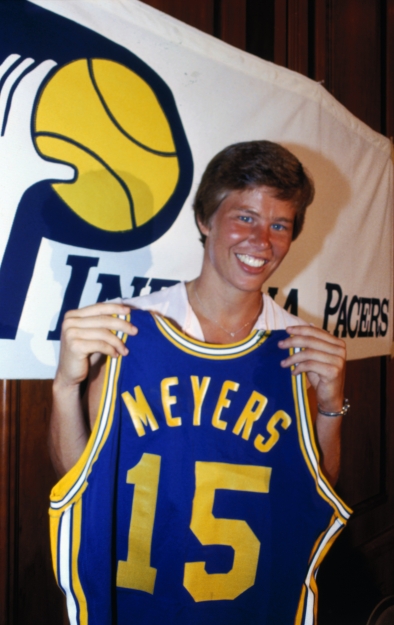
She must have felt 15 feet tall when the Indiana Pacers had her hold up one of its jerseys with her name across the No. 15 in September of 1979. The number was special to her. It’s what she wore the four previous seasons as barrier-breaking All-American guard at UCLA, coming off a 27-2 season with a team that won the AIWA title under Billie Moore.

After college graduation, the pride of Sonora High of La Habra had already declined signing with the Women’s Professional Basketball League, wanting to keep her amateur status for the 1980 Olympics. But world events were changing fast.

Continue reading “No. 15: Ann Meyers Drysdale”