No. 92: Rich Dimler

This is the latest post for an ongoing media project — SoCal Sports History 101: The Prime Numbers from 00 to 99 that Uniformly, Uniquely and Unapologetically Reveal The Narrative of Our Region’s Athletic Heritage.  Pick a number and highlight an athlete — person, place or thing — most obviously connected to it by fame and fortune, someone who isn’t so obvious, and then take a deeper dive into the most interesting story tied to it. It’s a combination of star power, achievement, longevity, notoriety, and, above all, what makes that athlete so Southern California. Quirkiness factors in. And it should open itself to more discussion and debate — which is what sports is best at doing.

The most obvious choices for No. 92:

= Rich Dimler, USC football, Los Angeles Express

The not-so-obvious choices for No. 92:

= Rick Tocchet, Los Angeles Kings
= Don Gibson, USC football

The most interesting story for No. 92:
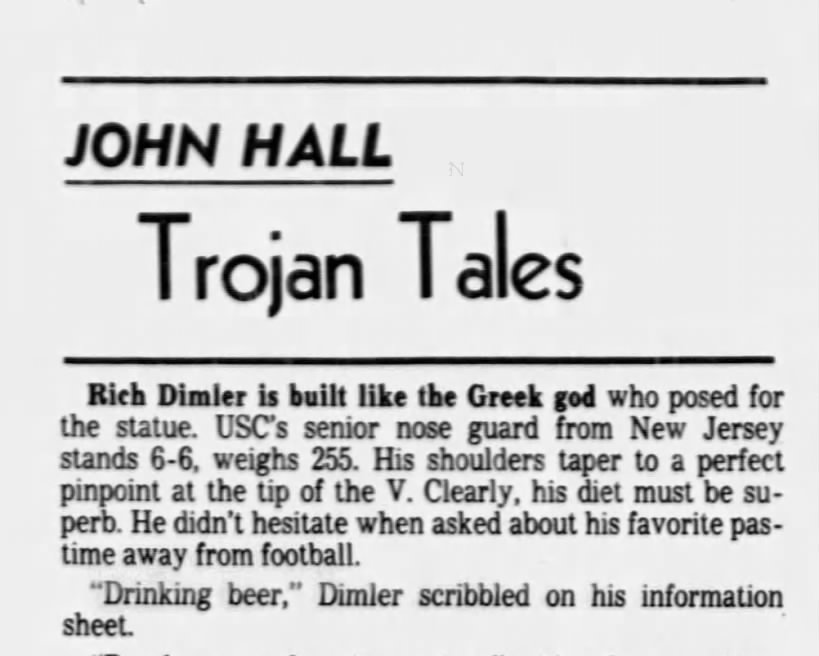
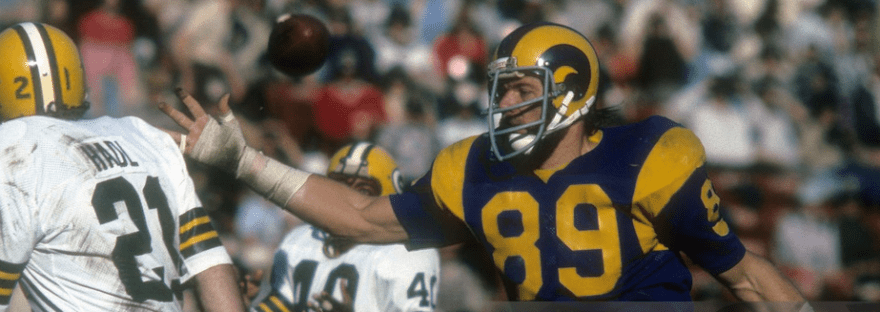
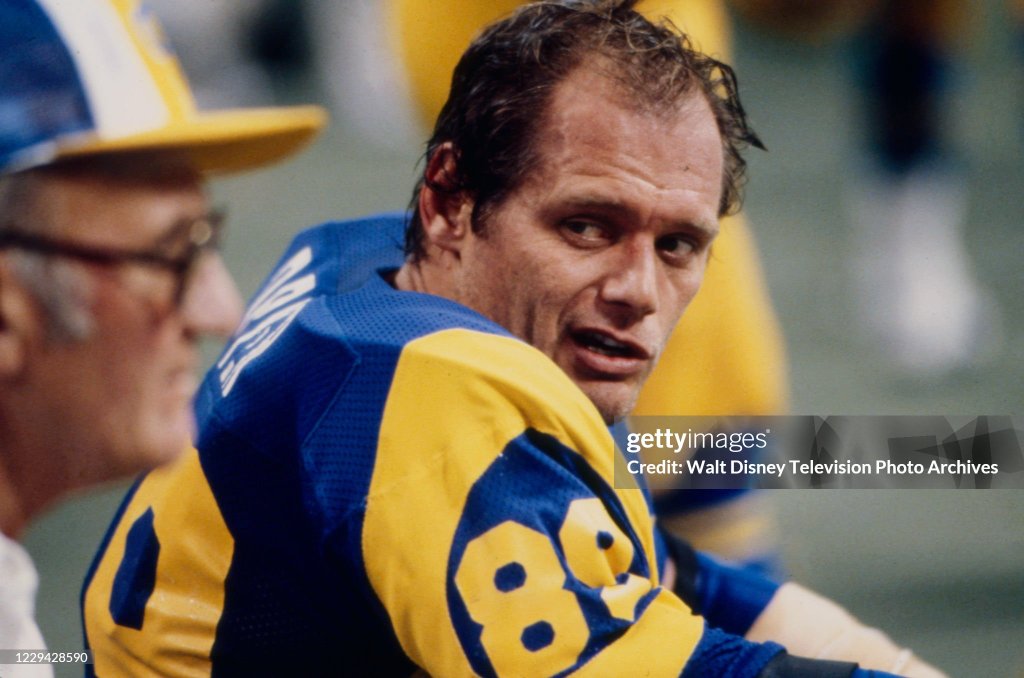
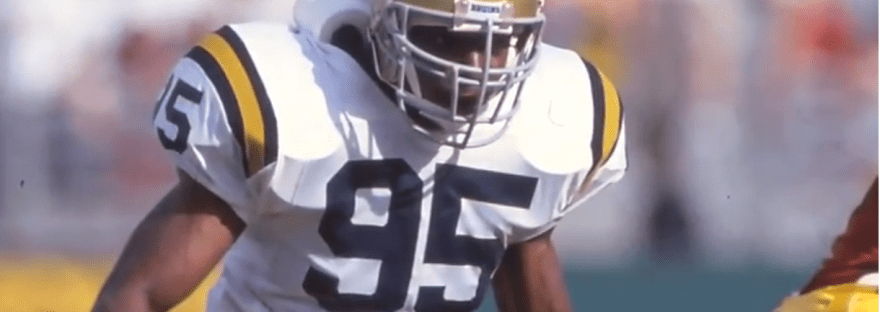
Rich Dimler, USC football nose guard (1975 to 1978), Los Angeles Express defensive tackle (1983 to 1984)
Southern California map pinpoints:
Los Angeles, Glendale, Inglewood, Hawthorne, Torrance, Rancho Palos Verdes


Los Angeles Times, Sept. 8, 1978.

Raise a glass to Rick Dimler. With caution.

The fact he made it through 44 years of roughhousing, and once heralded by USC defensive line coach Marv Goux as “the toughest player I’ve seen in 22 years of coaching” while playing on four straight Trojan bowl victories, is worthy of a toast.

But then again, there was the time when his home town in New Jersey tried to throw a parade in his honor, and it didn’t end well.

Homecomings can be problematic if the honoree celebrates too early and too often.

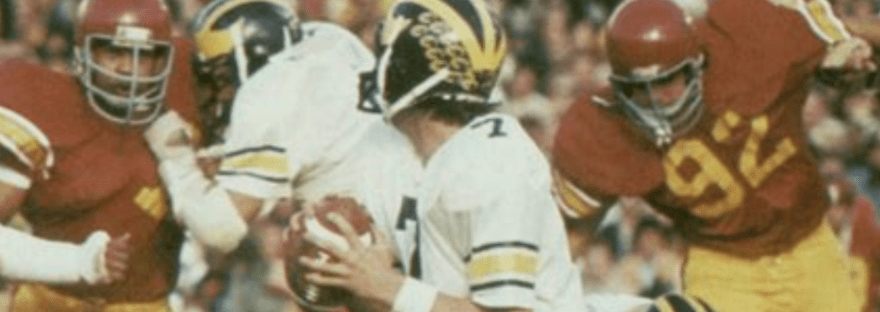
In March of 1979, Dimler was living off the fame of finishing his four years of football at USC, capped off by a 12-1 season, co-captain of the defensive squad that was highly effective in a Rose Bowl win over Michigan, and giving the Trojans a national championship in the eyes of many voters of such polls.

At this point, Dimler was back visiting friends and family in Bayonne, New Jersey. The cityfolk were finalizing plans for what would be Rich Dimler Day — a parade in his honor, a key to the city, the red-carpet treatment. Beers hoisted and thrown back as he could now look forward to what the NFL might bring.

The party was set for April, but, again, Dimler put himself in a situation that had penalty flags flying all over the place.

On March 12, Bayonne police say they saw Dimler in a car racing another car right down Broadway through the city, and started chasing him at 2 a.m. Dimler, according to the authorities, ran three red lights trying to escape. The other car got away. Dimler was hauled in.

At that point, the 6-foot-6, 260-pound Dimler had a dim view on how this might be a teachable moment.

“I’ll have your jobs; I’ll have both your jobs!” Dimler was said to have screamed at the officers, pushing one of them away. He was eventually accused of striking a patrolman in the chest at police headquarters and deemed “unruly” while in the jail cell.

“He flunked his breathalyzer test in flying colors,” said Lt. Vincent Bonner said in newspaper accounts. The .22 result was well above the legal limit of .15.

As soon as Dimler was out on bail facing charges of assault and battery and creating a disturbance, reporters covering the incident discovered he had been arrested just a month earlier in Los Angeles on driving under the influence, but no charges were filed.

Those digging further into his legal history found a disturbing incident in 1973, the year before he left New Jersey to attend USC, when Dimler, then 17, was acquitted of a death by auto charge in juvenile court. He had been charged of hitting and killing a 10-year-old girl as she crossed the street, and he left the scene. All that happened at the time was getting put on probation.

Bayonne City Councilman Donald Ahern — who happened to be Dimler’s high school coach in the mid-’70s — was asked about how all this might tarnish te upcoming day in his honor.

“He’s a good kid with a good heart; I’d be the last guy to leave the ship for that kid,” said Ahern.

If Dimler needed another character witness, in November of ’78, USC coach John Robinson was telling the Los Angeles Times’ John Hall about how the season had been progressing with Dimler in command of the defense.

“If they ever draw up a blueprint for the ideal leader,” Robinson said, “that’s Dimler.”

Continue reading “No. 92: Rich Dimler”

No. 35: Petros Papadakis

This is the latest post for an ongoing media project — SoCal Sports History 101: The Prime Numbers from 00 to 99 that Uniformly, Uniquely and Unapologetically Reveal The Narrative of Our Region’s Athletic Heritage.  Pick a number and highlight an athlete — person, place or thing — most obviously connected to it by fame and fortune, someone who isn’t so obvious, and then take a deeper dive into the most interesting story tied to it. It’s a combination of star power, achievement, longevity, notoriety, and, above all, what makes that athlete so Southern California. Quirkiness and notoriety factor in. And it should open itself to more discussion and debate — which is what sports is best at doing.

The most obvious choices for No. 35:

= Sidney Wicks, UCLA basketball
= Bob Welch, Los Angeles Dodgers
= Cody Bellinger, Los Angeles Dodgers
= Jean-Sebastien Giguere, Anaheim Mighty Ducks
= Christian Okoye, Azusa Pacific College football

The not-so-obvious choices for No. 35:

= Tank Younger, Los Angeles Rams
= Loy Vaught, Los Angeles Clippers
= Rudy LaRusso, Los Angeles Lakers
= Ron Settles, Long Beach State football

The most interesting story for No. 35:
Petros Papadakis, USC football tailback (1996  to 2000)
Southern California map pinpoints:
San Pedro, Palos Verdes, Hollywood, Los Angeles (Coliseum, Sports Arena)


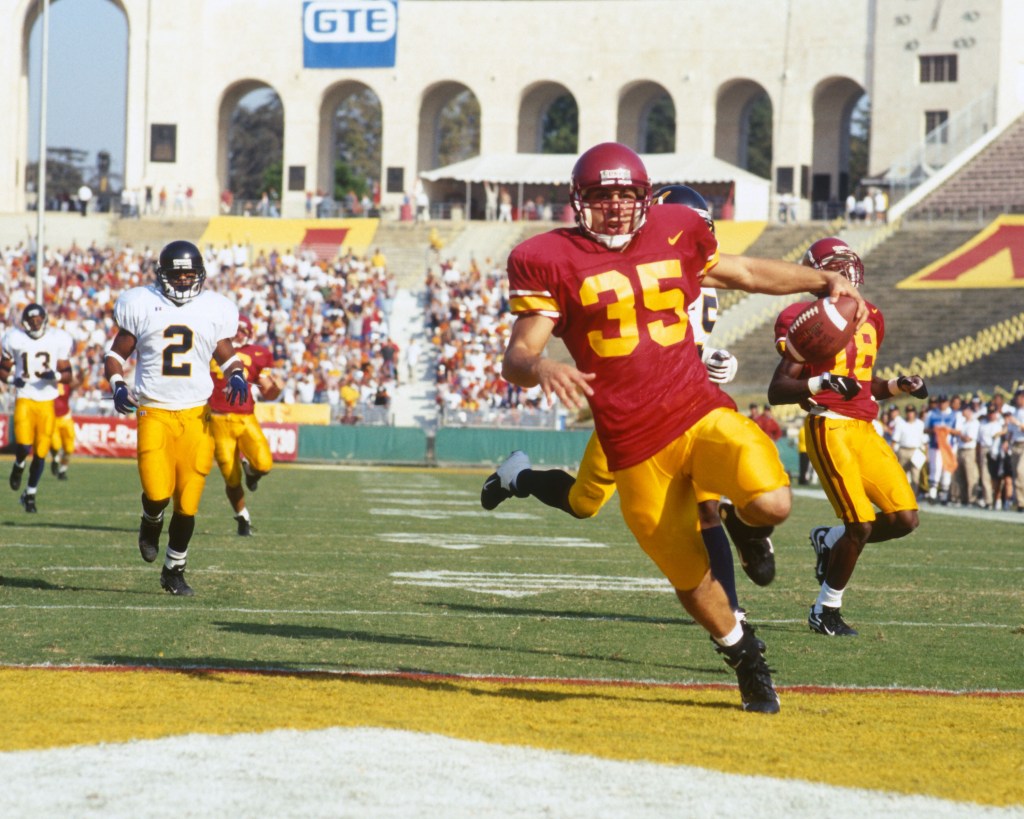
Oct. 15, 1998: On USC’s third play from scrimmage in the first quarter, Trojans junior tailback Petros Papadakis finishes off a 65-yard touchdown run against Cal at the Coliseum (top, and below). Papadakis had 13 carries for 158 yards in his greatest statistical performance of his USC career in a 32-31 Week 6 loss. (Photos by Jon Soohoo/USC)

Any sort of perfunctory profile of Petros Papadakis becomes the proverbial Sisyphean pursuit. Hopefully we don’t have to Greek-splain too much here.

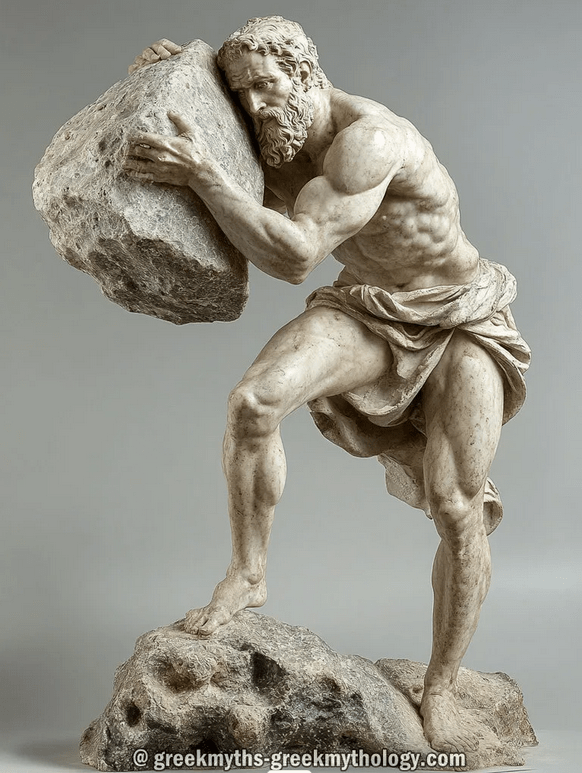
Sisyphus, the first king of Ephyra, found his eternal fate in Hades rolling a huge boulder endlessly up a hill, only to see it come back down at him. Every time he made progress and got on a roll, it reversed on him like a Looney Tunes cartoon. The whole thing seemed so Kafkaesque that French philosopher Albert Camus, writing “The Myth of Sisyphus” in 1942, elevated him to some absurd hero status in Greek mythology.

Something that Papadakis might find relatable.

When Papadakis gets on his own a roll, cutting it up on KLAC-AM (570)’s afternoon sports-talk drive-time “Petros and Money Show,” there is far less sports and much more drive to just being a voice for “la raza.” It’s a focus on a feeling of being in “la ciudad” with Papadakis, as familiar as he is bombastic, just the person in the passenger seat making observational conversation to it real.

He is part of USC football legacy, a linage of Cardinal and Gold athletes whose performance has been documented in Los Angeles’ grand Coliseum. Papadakis’ work ethic formed at his family’s famously iconic San Pedro Taverna, as he went from dishwasher to waiter to spending all his earnings for the night back on his guests to make sure they went home happy.

Maybe Papadakis became an accidental broadcaster, but it’s a career that likely defines him as much if not more than anything else. Once a Trojan workhorse in the USC backfield, he is the sometimes-hoarse former Trojan on the dashboard radio. A Red Bull in a china shop of hot topics. The connoisseurs of SoCal sports who enjoy conquering as much as consuming any kind of history lesson are better for it.

Fox Sports’ Petros Papadakis, left, with USC head football coach Lane Kiffin in 2011.

Back to the profile: Papadakis has provided quips along the way to make his story even more cohesive:

Continue reading “No. 35: Petros Papadakis”

No. 93: Ndamukong Suh

This is the latest post for an ongoing media project — SoCal Sports History 101: The Prime Numbers from 00 to 99 that Uniformly, Uniquely and Unapologetically Reveal The Narrative of Our Region’s Athletic Heritage.  Pick a number and highlight an athlete — person, place or thing — most obviously connected to it by fame and fortune, someone who isn’t so obvious, and then take a deeper dive into the most interesting story tied to it. It’s a combination of star power, achievement, longevity, notoriety, and, above all, what makes that athlete so Southern California. Quirkiness and notoriety factor in. And it should open itself to more discussion and debate — which is what sports is best at doing.

The most obvious choices for No. 93:
= Ndamukong Suh, Los Angeles Rams
= Greg Townsend, Los Angeles Raiders

The most interesting story for No. 93:
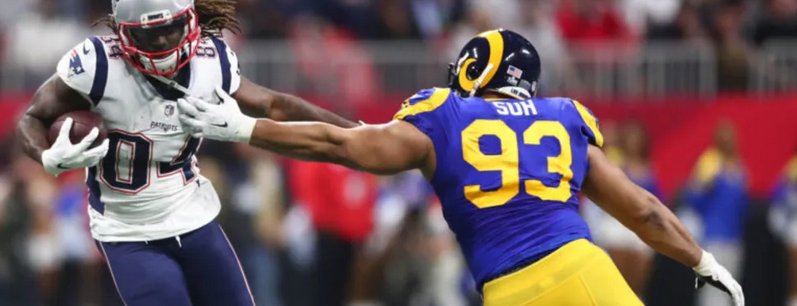
Ndamukong Suh, Los Angeles Rams nose tackle (2018)
Southern California map pinpoints:
Inglewood (SoFi Stadium)


For all the unnecessary roughness during a 13-year NFL career — the down-low, scandalized way he treated opposing players — Ndamukong Suh never got sued.

Maybe the league’s witness protection program wasn’t all that great. Or, maybe because, deep down, he was really a super nice guy whose actions off the field spoke louder than his red-flag existence on the gridiron of employment?

In nearly 200 regular season games, including three Super Bowls, another handful of playoff appearances, five times added to a Pro Bowl squad, and a handful of exhibition games where rules still applied, the 6-foot-4, 313-pound Suh leveraged his abilities to earn about $163 million in salary. That included $14 million that the Los Angeles Rams gave him to join their organization in 2018, a strategic move to free up the often double-teamed All Pro defensive end Aaron Donald.

Now subtract more than $400,000 for all the fines and lost pay checks Suh incurred.

“Some may say (his penalty payments were) a bargain to pay in light of what he had earned — all the intimidation that came from his reputation,” USA Today columnist Mike Freeman wrote when Suh, in a rather poignant social media post, announced in July of 2025 he was officially retired from the NFL at age 38.

Continue reading “No. 93: Ndamukong Suh”

No. 89: Fred Dryer

This is the latest post for an ongoing media project — SoCal Sports History 101: The Prime Numbers from 00 to 99 that Uniformly, Uniquely and Unapologetically Reveal The Narrative of Our Region’s Athletic Heritage.  Pick a number and highlight an athlete — person, place or thing — most obviously connected to it by fame and fortune, someone who isn’t so obvious, and then take a deeper dive into the most interesting story tied to it. It’s a combination of star power, achievement, longevity, notoriety, and, above all, what makes that athlete so Southern California. Quirkiness and notoriety factor in. And it should open itself to more discussion and debate — which is what sports is best at doing.

The most obvious choices for No. 89:

= Fred Dryer, Los Angeles Rams
= Ron Brown, Los Angeles Rams
= Charles Young, USC football

The not so obvious choice for No. 89:

= Jack Bighead, Pepperdine football
= Bobby Jenks, Los Angeles Angels

The most interesting story for No. 89:

Fred Dryer: Los Angeles Rams defensive end (1972 to 1981) via Lawndale High and El Camino College
Southern California map pinpoints:
Hawthorne, Lawndale, Torrance, L.A. Coliseum, Long Beach, Hollywood


The Rams’ Fred Dryer during an ABC’s “Monday Night Football” broadcast in 1979 against Dallas. (ABC via Getty Images)

Whatever version of Fred Dryer first comes to mind — the swift-moving Los Angeles Rams’ defensive end sideswiping an offensive tackle en rout to hunting down another quarterback, or a guy named “Hunter,” a fearless LAPD private who bent the rules when necessary as a TV character — there was always that underpinning of “Dirty Harry” in motion.

Dryer had a job and a duty to perform it. In both cases. Vengeance could be a motivational tactic. He cleaned up messes, no matter how dirty or harry it became.

A day in court never seemed to bother him, either. Justice had to be serviced, whether Dryer was pushing back on a contract dispute as either a professional athlete or a popular thespian. Dryer pulled those levers of justice, his modus operandi, with or without a legal need to produce a habeas corpus.

There was a point at the height of his TV fame, almost a decade since the official end of his NFL career, when Dryer found himself in a huddle of entertainment industry writers. They soft-tossed him questions about how, as he was about to turn 42, he best self-identified at this point in his life.

Dryer tackled it all head on.

A headline in the Chicago Tribune seemed to make it clear: “Fred Dryer, Actor, Gives His Past A Punt.” It went on to explain:

“As the hard-boiled Rick Hunter, a Los Angeles homicide detective, Dryer projects an image that combines Steve McQueen’s rough sexiness with Clint Eastwood’s stoic demeanor. And Hunter shows just about as much respect for his suspects Constitutional rights as Eastwood’s Dirty Harry does.

“Dryer has a theory about why his acting career took off when so many of his colleagues’ fizzled.

“ ‘Most athletes fail at it because they don`t understand that when you come from a success in another area like sports, you have to leave the sports world behind. You have to kill the guy that made you a sports star and start over completely.

“Fred Dryer, football player, is dead. I put him away and started with this other guy.

“That means you don’t bring the ego you had in football with you. Without mentioning names, I see ex-football players who are just not willing to let go of (their athlete image), because if they lose that, who are they? You have to let go of your past before you gain something else.”

Dryer was just staying in character. And considering he almost had the role of Sam Malone when the iconic TV series “Cheers” launched years earlier, the thought of hanging around a bar known as an ex-jock just wasn’t his idea of being pro active.

Continue reading “No. 89: Fred Dryer”

No. 41: Glenn Davis

This is the latest post for an ongoing media project — SoCal Sports History 101: The Prime Numbers from 00 to 99 that Uniformly, Uniquely and Unapologetically Reveal The Narrative of Our Region’s Athletic Heritage.  Pick a number and highlight an athlete — person, place or thing — most obviously connected to it by fame and fortune, someone who isn’t so obvious, and then take a deeper dive into the most interesting story tied to it. It’s a combination of star power, achievement, longevity, notoriety, and, above all, what makes that athlete so Southern California. Quirkiness and notoriety factor in. And it should open itself to more discussion and debate — which is what sports is best at doing.

The most obvious choices for No. 41:
= John Lackey, Anaheim Angels
= Jerry Reuss, Los Angeles Dodgers
= Elden Campbell, Los Angeles Lakers
= Glen Rice, Los Angeles Lakers and Clippers

The not-so-obvious choices for No. 41:
= Glenn Davis, Los Angeles Rams
= Ken Norton Jr., UCLA football
= Jeff Shaw, Los Angeles Dodgers

The most interesting story for No. 41:
Glenn Davis, Los Angeles Rams running back (1950 to 1951)
via Bonita High
Southern California map pinpoints:
Claremont, La Verne, Pomona, Los Angeles Coliseum, La Quinta


Glenn Davis’ 1946 Heisman Trophy sits in the main office at Bonita High School in La Verne, rather unassuming in a glass case, with all sorts of newspaper clippings behind it to help explain what it means. It’s near is the Smudgepot Game Trophy — to some, carrying more importance for bragging rights.

Upon further examination, there’s a small addition made to the plaque that wasn’t on the original when it was presented to Davis, who, at that time, was just the 12th recipient in the award’s history.

The Army tailback had finished as the Heisman runner up as a sophomore and as a junior as the sport kept going on during World War II. At last, “Mr. Outside” had had sole possession of the title of outstanding college football player in the United States as deemed by the Downtown Athletic Club of New York City.

Now, in the bottom left corner, Davis may not have known that his high school alma mater added the notation: “Bonita High School 1940-1943.”

To the kid known as the “Claremont Comet,” that mattered. To the school, it was an honor and a matter of pride.

“I don’t think there’s too many high schools in the country with a Heisman Trophy in their possession,” said then Principal Bob Ketterling, who arrived a couple of years after the handoff. “People walk by and do a double-take.”

For historians of high school sports in Southern California, this was validation. Davis was the first Heisman Trophy winner with roots in the California Interscholastic Federation’s Southern Section.

And, eventually, to the Los Angeles Rams, it meant bringing a home-town star back in the spotlight where he would play in two championship games during his only two NFL seasons.

Continue reading “No. 41: Glenn Davis”