

This is the latest post for an ongoing media project — SoCal Sports History 101: The Prime Numbers from 00 to 99 that Uniformly, Uniquely and Unapologetically Reveal The Narrative of Our Region’s Athletic Heritage. Pick a number and highlight an athlete — person, place or thing — most obviously connected to it by fame and fortune, someone who isn’t so obvious, and then take a deeper dive into the most interesting story tied to it. It’s a combination of star power, achievement, longevity, notoriety, and, above all, what makes that athlete so Southern California. Quirkiness and notoriety factor in. And it should open itself to more discussion and debate — which is what sports is best at doing.
The most obvious choices for No. 53:

= Don Drysdale, Los Angeles Dodgers
= Keith Erickson, UCLA basketball
= Rod Martin, Los Angeles Raiders
The not-so-obvious choices for No. 53:
= Jim Youngblood, Los Angeles Rams
= Lynn Shackleford, UCLA basketball
The most interesting story for No. 53:
Don Drysdale, Los Angeles Dodgers pitcher (1958 to 1969), California Angels broadcaster (1973 to 1981), Los Angeles Rams broadcaster (1973 to 1976), Los Angeles Dodgers broadcaster (1988 to 1993)
Southern California map pinpoints:
Van Nuys, Bakersfield, Hollywood, Los Angeles (Coliseum, Dodger Stadium), Anaheim
To tell the truth about the dogma of Don Drysdale, there’s a legendary aura of “Big D” that goes beyond bigger-than-life discoveries about the 6-foot-6 right-handed sidewinder, a San Fernando Valley-reared kid who spent all 14 years of his big-league career with the Dodgers organization, moved with them back to Los Angeles from Brooklyn, and spent the last six years of his life as a broadcaster with them.
See how this works:
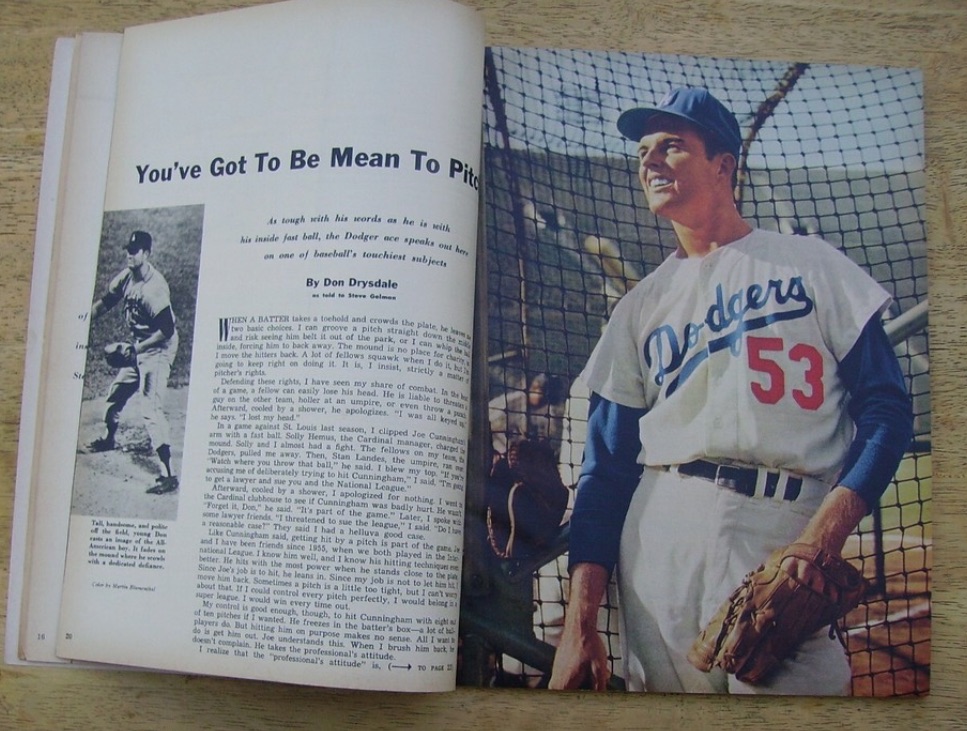
Truth that’s been told: Don Drysdale led the league in putting the “mean” in a meaningful pitch.
Dare to discover: If some SABR-cat researcher was compelled to look it up, we’d suspect there was enough evidence to confirm Drysdale threw more brushback/purpose pitches than anyone else in his era. Four times, he led the majors in plunking batters — 154 HBP in all, more than 10 a season, and an National League record at the time of his retirement in 1969. But it played into his philosophy: You knock down/hit one of my guys, I knock down/hit two of yours. If they are hit in the process, well …

Further research from Fangraphs on the essence of the “Two For One Special,” aka the “Drysdale Revenge Factor,”‘ shows that 18 times in his career, Drysdale hit two or more batters in a game. That mindset traces back to Drysdale’s by former veteran Brooklyn teammate Sal “The Barber” Maglie. Properly stated, it puts the idea in a batter’s mind that while the pitcher could claim ownership to half of the 17-inch home plate, you weren’t always sure which half Drysdale picked in that situation.
Batters knew the drill.
“Batting against him is the same as making a date with the dentist,” Pittsburgh’s Dick Groat once said. Added San Francisco’s Orlando Cepeda: “The trick against Drysdale is to hit him before he hits you.”
In a 1979 interview with the New York Times’ Dave Anderson, Drysdale, 10 years after his retirement, said delivering the inside pitch was a “lost art.”
“I just feel,” he was saying now, his right forefinger swirling the ice in his Scotch, “that when you’re pitching, part of the plate has to be yours. … The pitcher has to find out if the hitter is timid. And if the hitter is timid, he has to remind the hitter he’s timid.”
(Love that imagery).
Continue reading “No. 53: Don Drysdale” Tom Hoffarth's The Drill: More Farther Off the Wall