
“The First All -Star Game:
Babe Ruth, FDR, and
America at the Crossroads”
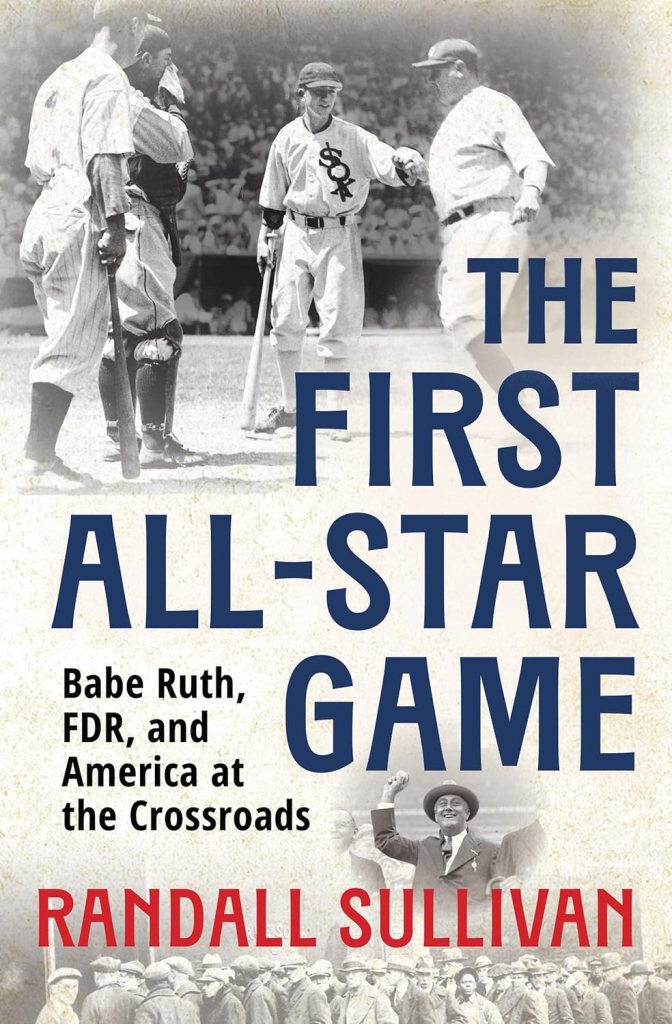
The author: Randall Sullivan
The details: Grove Atlantic, 496 pages, $30, to be released June 2, ’26
The links: The publisher, the author, Bookshop.org
A review in 90 feet or less:
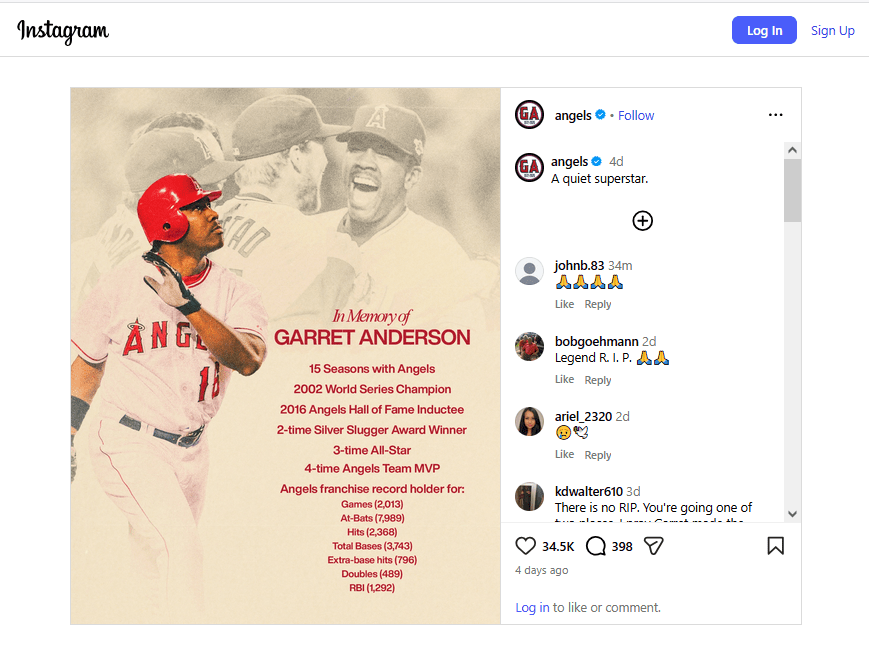
Hail and farewell, Garret Anderson.
The sudden death of the retired Angels’ outfielder at age 53 on April 16 at his home in Newport Beach from pancreatic issues was a real cause to pause.
GA gave us more than just general admission access to witness him as the only player to wear a team jersey spanning the California (1994-96), Anaheim (1997-2004) and revived Los Angeles (2005-2008) branding names. Which, coupled with his own rather common-man name, made it easier for him to slip under the national radar despite holding that unique spot in the franchise’s history.
The team’s current all-time leader in games played (2,013), hits (2,368), at bats (7,989), total bases (3,743), doubles (489), RBIs (1,292) and sacrifice flies (76), Anderson is momentary now tied with Mike Trout with most extra-base hits (796), second to Trout in runs scored (1,024), third in batting average (.290, behind Vlad Guerrero’s .319 and Rod Carew’s .314), and, if this comes as a surprise, he’s also third in home runs (272, behind Trout and Tim Salmon).
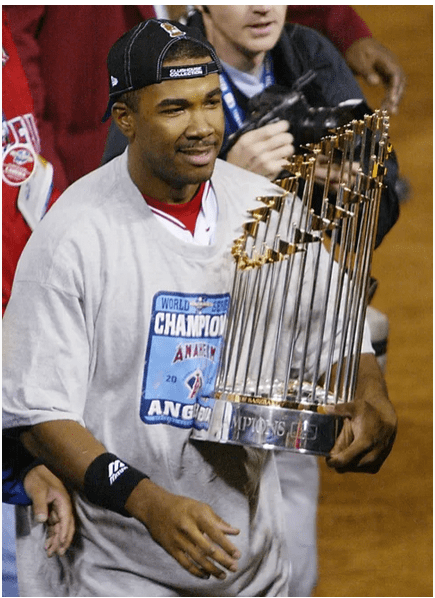
One other key thing perhaps overlooked when those writing about his legacy covered his “graceful and enduring” 17-season MLB career:
Anderson was the first player to ever win a World Series title, a Home Run Derby title and an All Star Game MVP within a one-year span.
Not so trivial.
In the 2002 World Series, ending with so far the only title in the Angels’ 66-year history, Anderson’s bases-clearing double in the third inning of Game 7 gave the Angels a cushion to ride over San Francisco.
In the 2002 playoffs, covering 16 games, he was 21 for 70 (.300) with two homers, 13 RBIs and 11 runs scored.
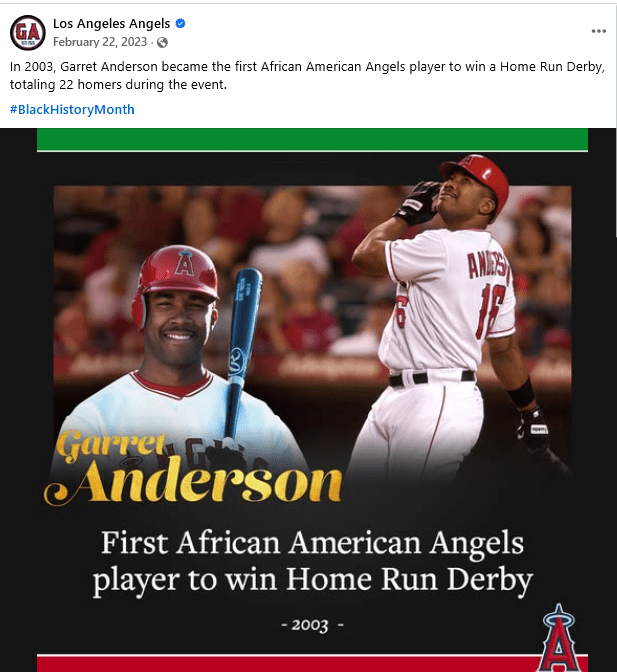
In the 2023 Home Run Derby, Anderson proved he belonged — he did have a career-best homer total for a season with 35 in 2000, a year when he only walked 24 times. Anderson outlasted Albert Pujols in the final round to win it, using efficiency to get the job done.
“I don’t look at myself as a home-run hitter, but I know I’m capable of hitting some balls out of the park, and it’s just another platform to go out and show America what I can do,’‘ Anderson said after the eight-man, three-round competition. “That swing I used is not a swing I try to use during the season. It was just strictly for trying to hit the ball over the fence. During the season, mentally and physically, I don’t do that. I look for mistakes and try to hit them hard.”
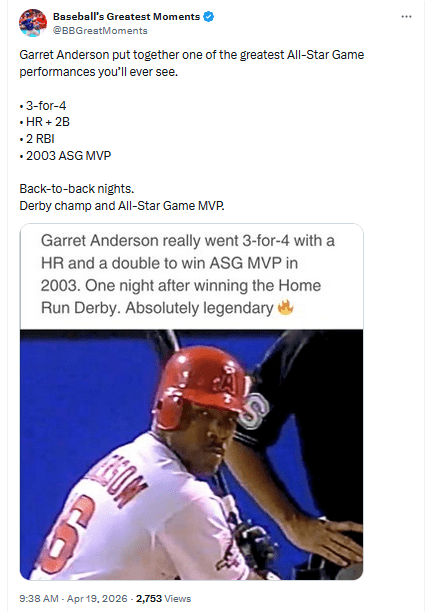
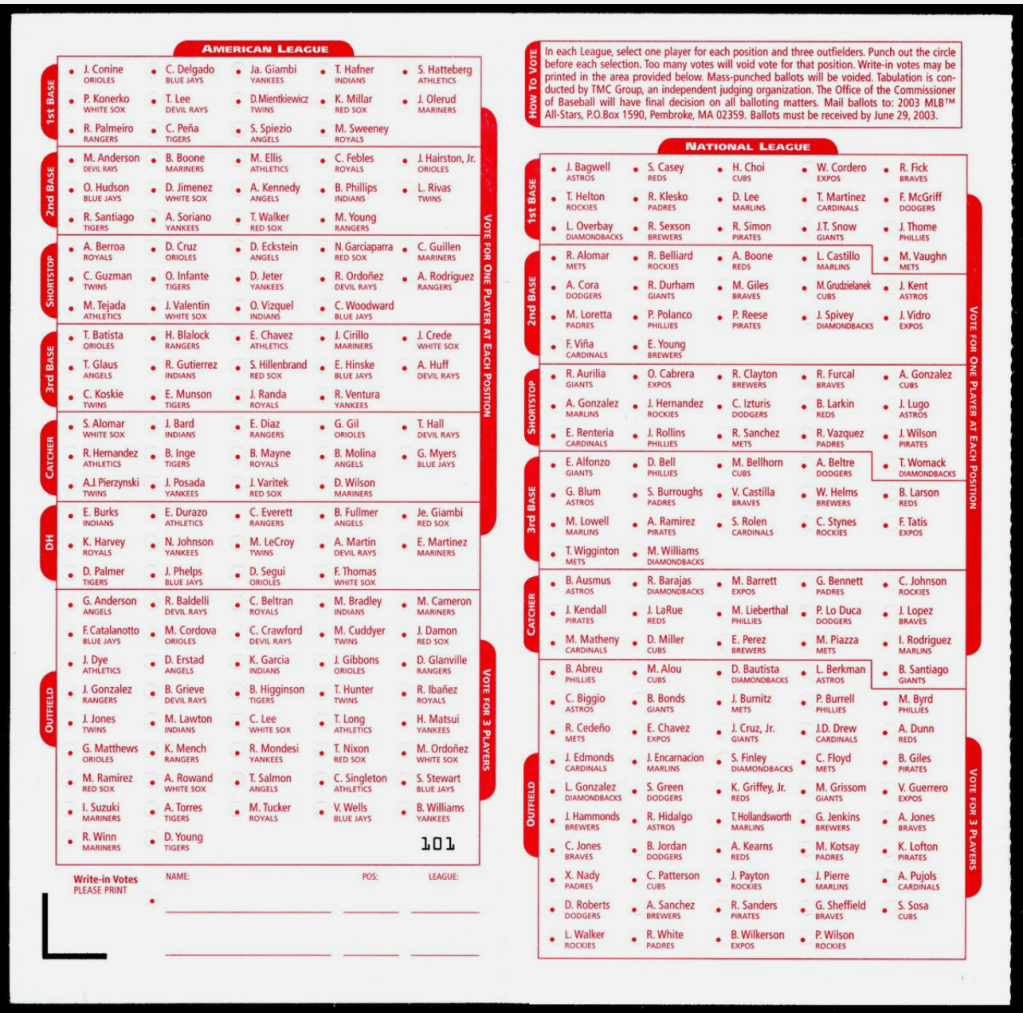
In the 2003 All Star Game, won by the American League, 7-6, Anderson went 3-for-4 with a two-run homer in the sixth inning and key double off Eric Gagne in the eighth to lead a comeback. That was after he led off the fourth inning with a single against Kerry Wood. Anderson, hitting.316 with 22 homers and 78 RBIs at the All-Star break, wasn’t supposed to be in the starting lineup. Added to the AL roster as a reserve, he was inserted to start and bat fifth by manager Mike Scoiscia in place of the injured Manny Ramirez.
That ’03 All-Star game included Pujols, Barry Bonds, Roger Clemens, CC Sabathia, Todd Helton, Scott Rolen, Andruw Jones, Billy Wagner, John Smoltz, Edgar Martinez, Ichiro Suzuki and Alex Rodriguez.
A fourth-round pick by the Angels out of Kennedy High in Granada Hills in 1990, where he was also a high-scoring guard on the basketball team, Anderson was second in the AL Rookie of the Year voting in 1995 and made two more All-Star teams. His best statistical season was during that 2002 title run — 29 homers, a lead-best 56 doubles, fourth in the AL MVP voting.
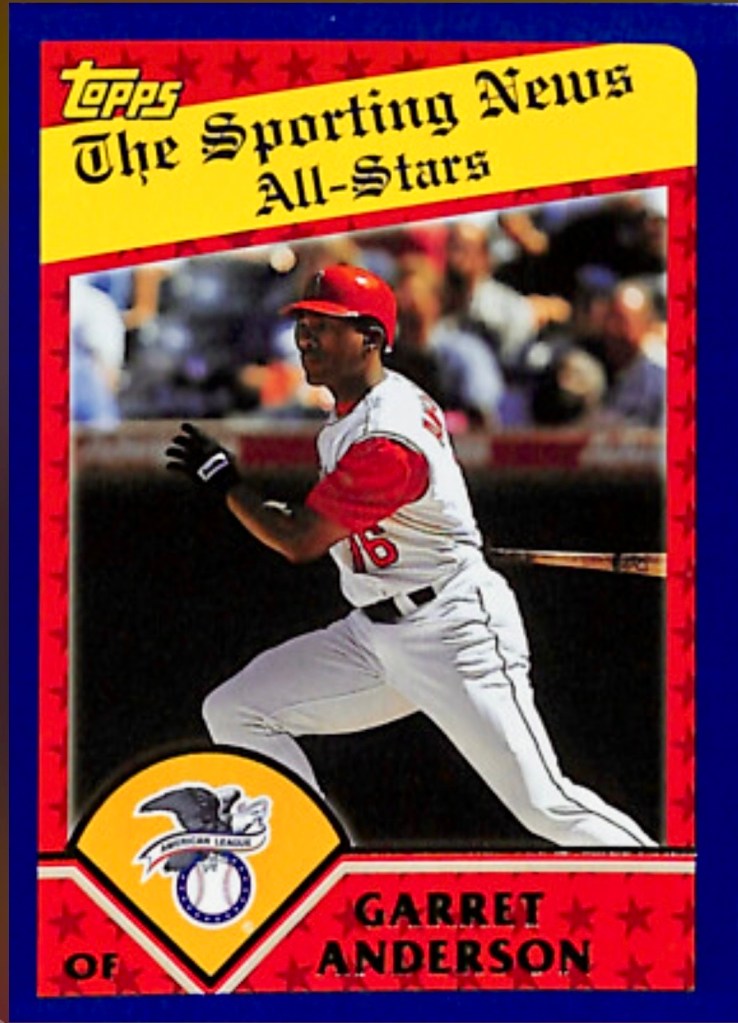
When it came time for local scribes who really knew him better to reflect on Anderson’s impact, columnist Mark Whicker wrote brilliantly:
“He didn’t really mind being misunderstood. For one thing it gave him room to take care of business. There was no way he’d be a team spokesman. Too presumptuous. But the closer people got to him, the more they heard his incongruously throaty laugh and heard his wide range of opinions. He was a cheery skeptic about the analytics “revolution” and never abandoned his method of swinging hard at the first thing he liked, yet striking out only 13.3 percent of the time. Fifty-one percent of his batted balls went up the middle, just like the coaches tell you.”
Former Los Angeles Times sports editor Bill Dwyre added that of the career stats Anderson had that really mattered, it was obvious he came up to hit. He never drew more than 38 walks in a season and never struck out more than 100 times.
He also noted that when Anderson retired and was eligible for the Baseball Hall of Fame consideration in 2016, he got just one vote. That represented 0.2% of the total. It also meant that he wasn’t even on the ballot the next year.
What an injustice. But not a surprise.
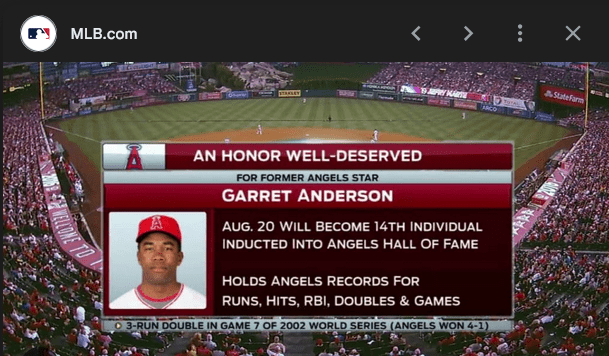
While Anderson was added to the Angels Hall of Fame in 2016, his No. 16 has yet to be retired.
It belongs up on the right-field wall, next to Jim Fregosi’s No. 11, Rod Carew’s No. 29, Nolan Ryan’s No. 30, Jimmie Reese’s No. 50, the No. 26 they’ve assigned to original owner Gene Autry, plus the No. 42 that’s there in all of baseball to represent Jackie Robinson.
GA, No. 16. Time to come through in the clutch now. Calling all Angels.
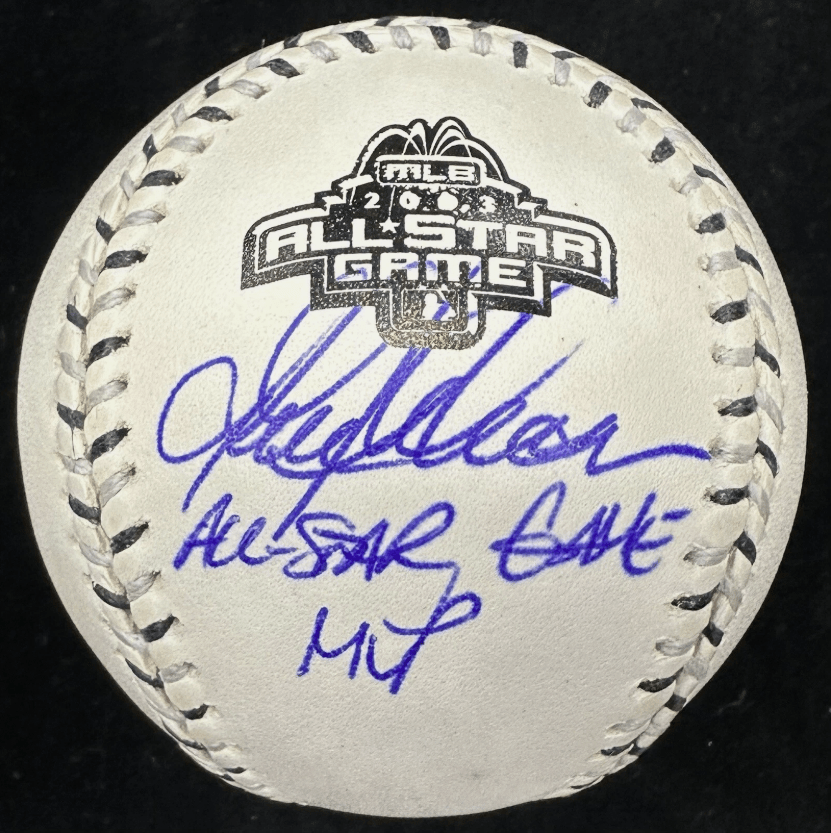
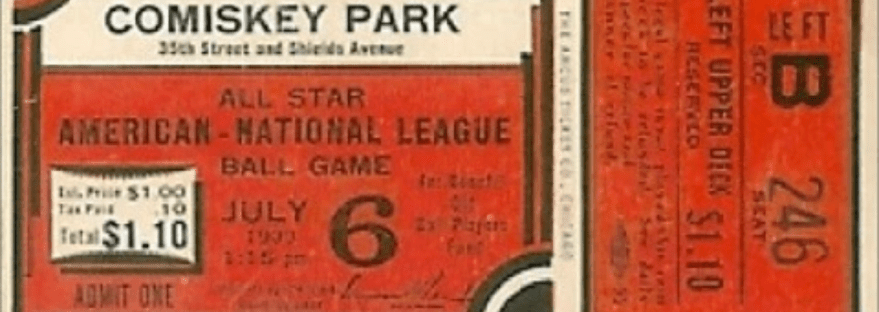
As hosts of that 2003 All Star game, the Chicago White Sox marked the 70th anniversary of the first gathering of the game’s elite in their previous home stadium of Comiskey Park.
The twist on that ’03 game — the winning team secured home-field advantage for the league once the World Series came around. That random rule came into effect because the ’02 All-Star Game in Milwaukee was its own shitshow, ending in a 7-7 tie and commissioner Bud Selig was left befuddled. (Anderson also played in that All-Star game, going 0-for-4 but driving in a run with a seventh-inning groundout and he moved a potential go-ahead run into scoring position with an 11th inning ground out).
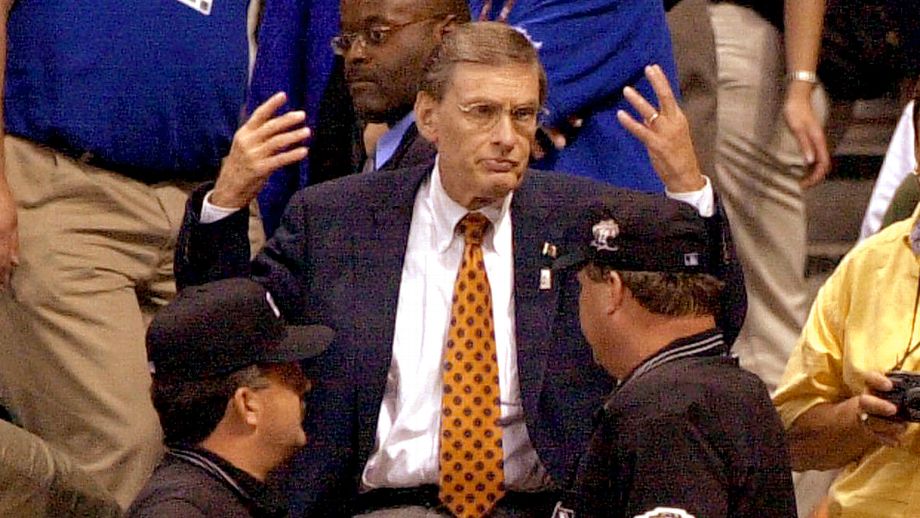
That rule giving away World Series home field was erased n 2016 after a Collective Bargaining Agreement stipulated that the team with the best regular-season record deserved that edge, not a silly exhibition game result.
But then there was that bizarre ending to the 2025 All Star Game in Atlanta. Imagine Babe Ruth, Lou Gehrig and Jimmy Foxx involved in “swing-off” to declare the winner. Well, that would be somewhat interesting. Instead, we’re still not sure how it’s recorded for posterity’s sake and it resulted in an MLB reporter covering that cockamamy mess with no choice but to create this accurate lede:
ATLANTA – The fly ball off Jonathan Aranda’s bat stayed in the park, and the National Leaguers assembled in front of the home dugout jumped for joy.
No All-Star Game had ever ended like this. No MLB game had. It was the sort of ending ordinarily reserved for Wiffle ball wonderment or our most bonkers baseball dreams.
When the NL blew a 6-0 lead and, the game was tied 6-6 after nine innings, manager Dave Roberts had to wrangle a group of players from his then-active roster to enter a six-man “swing-off” with whomever the AL had pre-designated from a list it drew up before the game in case of emergency.
Then the NL out-homered the AL, 4-3, in what the MLB story called a “tater-driven tiebreaker.” That allowed Kyle Schwarber to power up a three-for-three swing performance (since he was still around to do so after most of the stars and starters already checked out by then) and he claimed the Ted Williams All-Star Game MVP Award Presented by Chevrolet.
The event was bizarre enough in that it was the first All-Star Game to feature the automated ball-strike challenge system, which resulted in three erroneous calls getting overturned. Now it could be shown to be useful, perhaps normalized and rushed into use for the 2026 season.
Turning back the clock to 1933 isn’t easy, or necessarily making baseball great again.
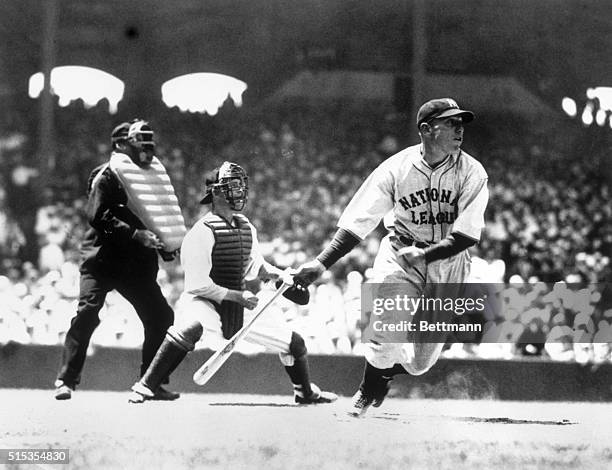
That inaugural event happened just a few years after the stock market crash, four months after Franklin D. Roosevelt took office, and Chicago’s most famous citizen, Al Capone, had just been shipped off to federal prison. Prohibition was months away from being repealed by the 21st Amendment.
That allows Randall Sullivan to begin his new book about all that factored into the staging of that inaugural All-Star affair — he barely mentions the game itself until perhaps page 100, and it isn’t fully broken down until Chapter 43 on page 354 — with this:
“The first Major League Baseball All-Star game likely never would have been played if not for a five-foot, one-inch Italian immigrant bricklayer with a bad stomach named Guiseppe Zangara, who on the morning after Valentine’s Day in 1933 decided to proceed with his plan to assassinate the new United States president-elect.”
An event such as this had been discussed for decades, but never came to fruition. How did finally happen at the worst part of the Depression seems as perhaps unfathomable as it was needed.
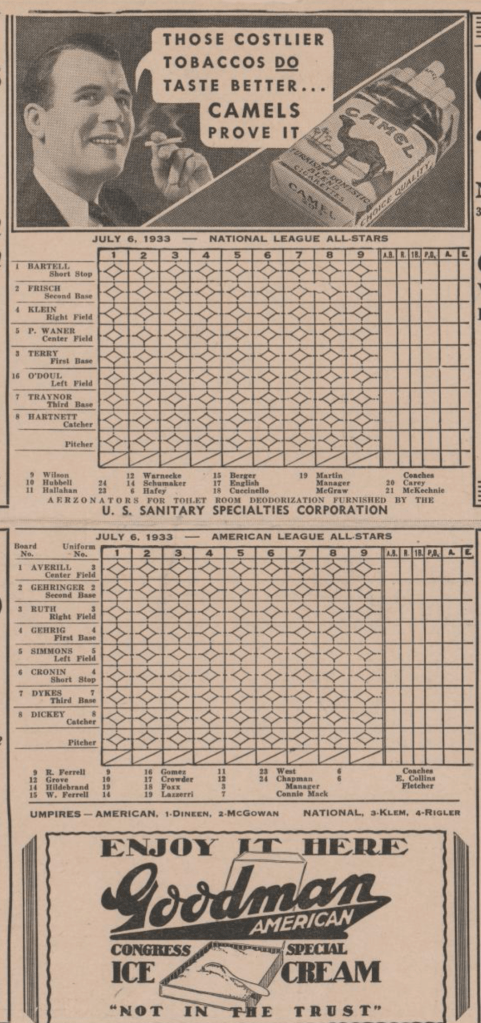
In concert with the World’s Fair happening in the Windy City, attractions were needed to bring attention and amusement. Baseball and the Hollywood film industry seemed to be the only two sectors of the American economy “to sail through the country’s financial crisis unscathed,” Sullivan notes on page 118, the start of Chapter 17. Ruth, who in 1922 received a whopping $52,000 paycheck, had seen it go up as high as $80,000 a year in 1930. It was scaled back in the economic aftermath to $75,000 for ’32, to $52,000 by ’33 and $35,000 in ’34 — all still the greatest salaries in the game. It all seemed trivial as Ruth had demanded “$60,000 or I’ll quit” in the spring training of ’32 and went off to mope.
The story of Chicago Tribune sports editor Arch Ward creating this event is, of course, covered, but not belabored as it has been in previous chronicling of the event. But the fact this was conceived as a one-off event, and is now closing in on 90 years of happening, shows its staying power despite all else watered down around its concept in modern-era, short-attention span theater.
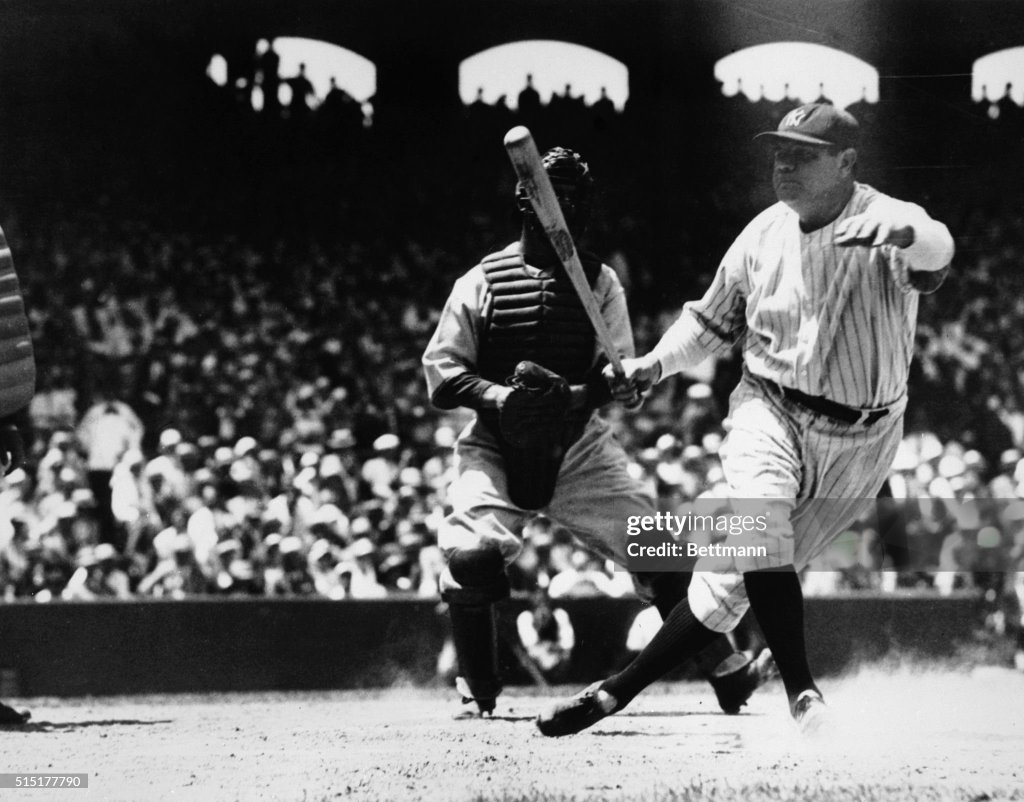
Ruth is remembered best in the 4-2 AL win for hitting a third-inning homer to deep right field off the St. Louis Cardinals’ Bill Hallahan, who didn’t make it out of that inning without getting an out. In a game that took just a few ticks more than two hours, Sullivan notes that “looking back, the narrative of The Game of the Century is largely anticlimactic after Babe’s home run. It may have seemed that way to fans even back in 1933, but almost certainly not to the players. With six innings left, the American League’s 3-0 lead was to them far more insurmountable.”
Even more interesting, the game changed home plate umpires, with Bill Klem moving in after doing first base the first half and taking an ear-full of grief from NL manager John McGraw, who had retired the year before from the New York Giants.
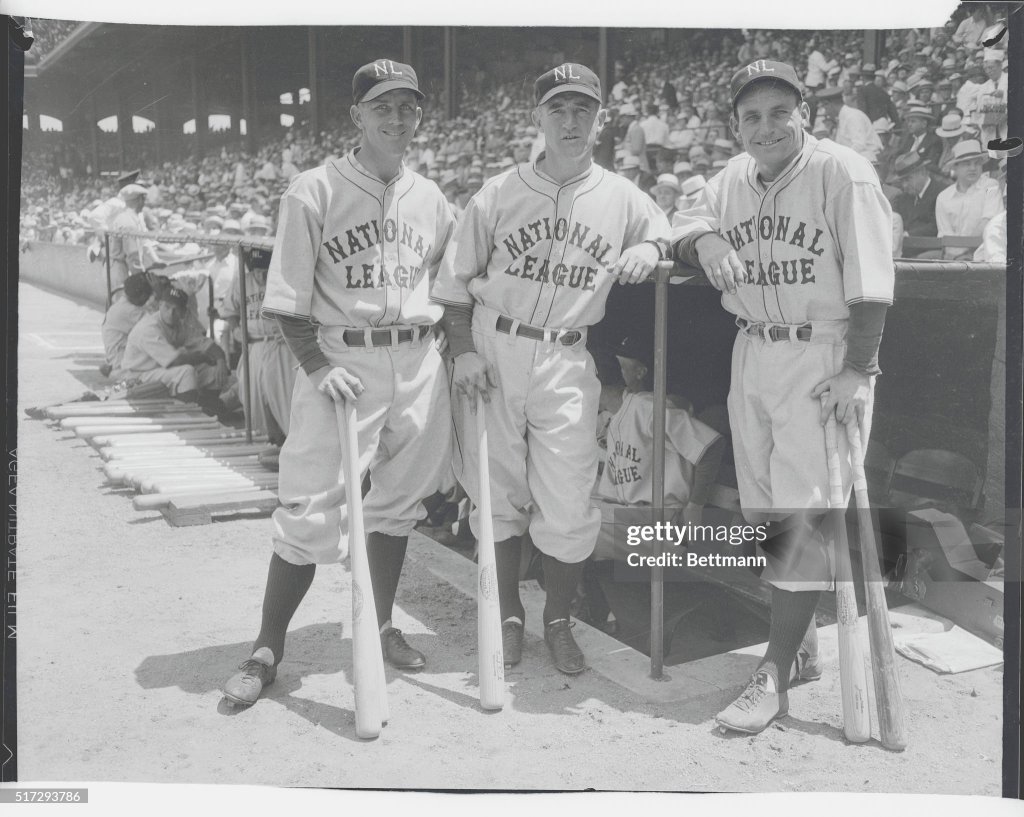
Someone we had never come across before reading this book — General Crowder, a Washington Senators pitcher who won an AL-best 26 games in 1932 and 24 more in ’33 — came on in relief for the home team and gave up the NL’s only two run during his stint over the fourth, fifth and sixth innings. He got neither the win (that was starter Lefty Gomez) nor the save (that was reliever Lefty Grove). Crowder did get the NL’s Lefty O’Doul to ground out starting the sixth inning.
The AL’s Lou Gehrig, of course, played the entire game at first base. But that meant no appearance by the Philadelphia A’s Jimmy Foxx, even as A’s manager Connie Mack was leading the AL squad.
What’s just as intriguing for Sullivan to cover starts with Chapter 33, where he begins:
“Dizzy Dean, Rogers Hornsby and Mel Ott weren’t the only great players left out of the Game of the Century. So were Satchel Paige, Mule Suttles, Cool Papa Bell and the incomparable Oscar Charleston.”
Segregation, despite no rule against Black players on MLB rosters at the time. As the newspapers across the country were compiling votes for this contest in Chicago, the Negro Leagues had their own stars to consider, and players like Ruth and Gehrig had competed with and against them during previous barnstorming. It’s also worth noting that at this moment, Sullivan writes that “sympatheic biographies describe Franklin Roosevelt’s positions on civil rights for African Americans as ‘cautious’ or ‘complex.’ He made no real efforts to break through segregation until he was in his third term as president.”
As a result, the Negro League had its own East-West All-Star Game, organized by Pittsburgh Crawfords owner Gus Greenlee — also held at Comiskey Park later that summer. Half as many fans turned out, but it still happened. Thank goodness.
How it goes in the scorebook:
Complete-game contextual victory.
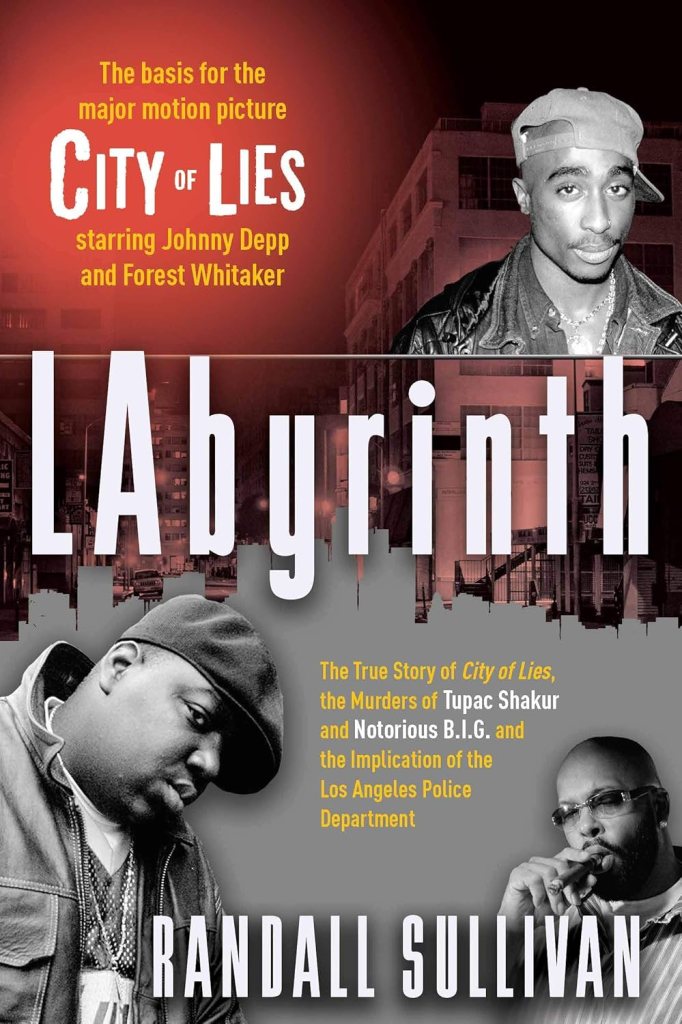
Not a surprise considering Oregon-based journalist Sullivan has been a contributing editor to Rolling Stone magazine for more than 20 years.
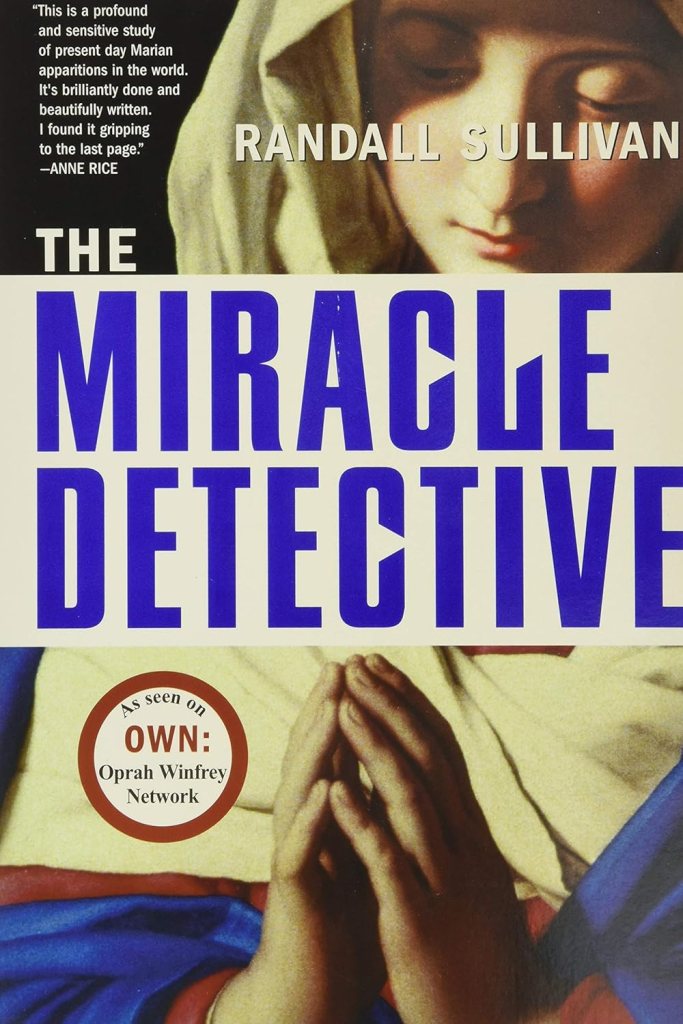
Among many projects, he has also written “The Miracle Detective: An Investigation of Holy Visions” about the Catholic Church in 2005 and “LAbyrinth: The True Story of City of Lies, the Murders of Tupac Shakur and Notorious B.I.G. and the Implication of the Los Angeles Police Department” in 2018.
His work has been in Wired, Esquire, Outside, Men’s Journal, the Washington Post and the Guardian.
More to followup:
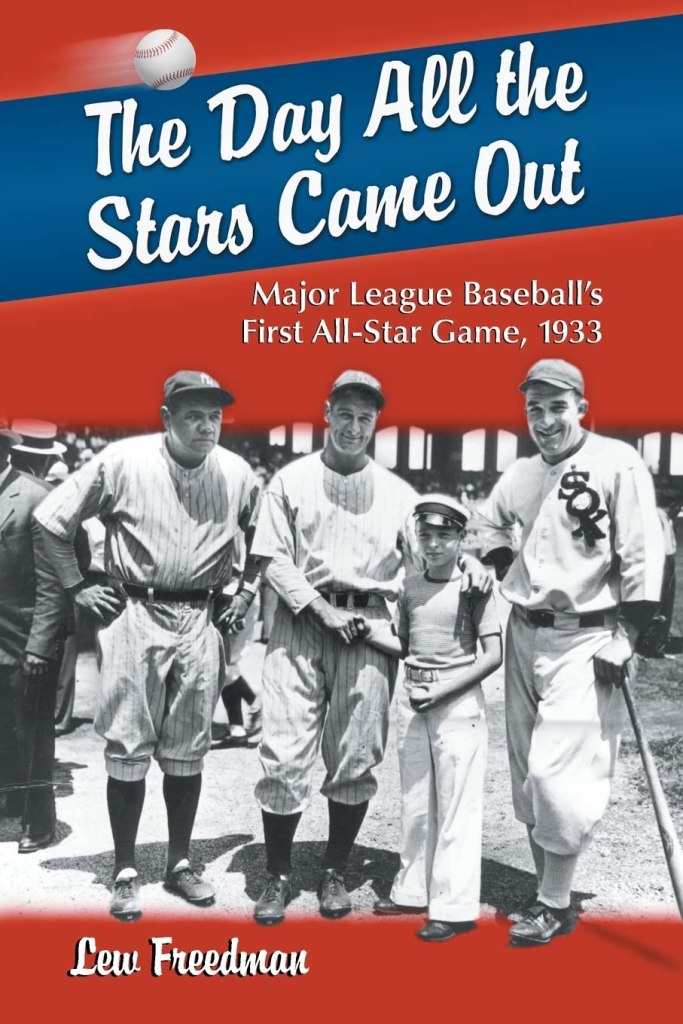
== Previous works about this subject come from the somewhat cheezy “The Day the All Stars Came Out: Major League Baseball’s First All Star Game, 1933,” by Lew Freedman (McFarland, published in 2010, which even the publisher has reduced from $29.95 to $23). It’s not any more insightful than Lyle Spatz’s very dry SABR write-up on the 1933 All-Star game that was included in the organization’s Games Project.
== The Baseball Hall of Fame notes how that ’33 All-Star Game was a blueprint for other leagues to follow.
== After the 2026 MLB All-Star Game is scheduled for Philadelphia to be part of America’s 250th anniversary celebration, the 2027 MLB All Star Game will be back in Chicago — this time, at Wrigley Field.


1 thought on “Day 10 of 2026 baseball books: When the galaxy of stars first came into view”