
“Ford Frick: Baseball’s Third Commissioner
And His Four Decades of Shaping the Game”
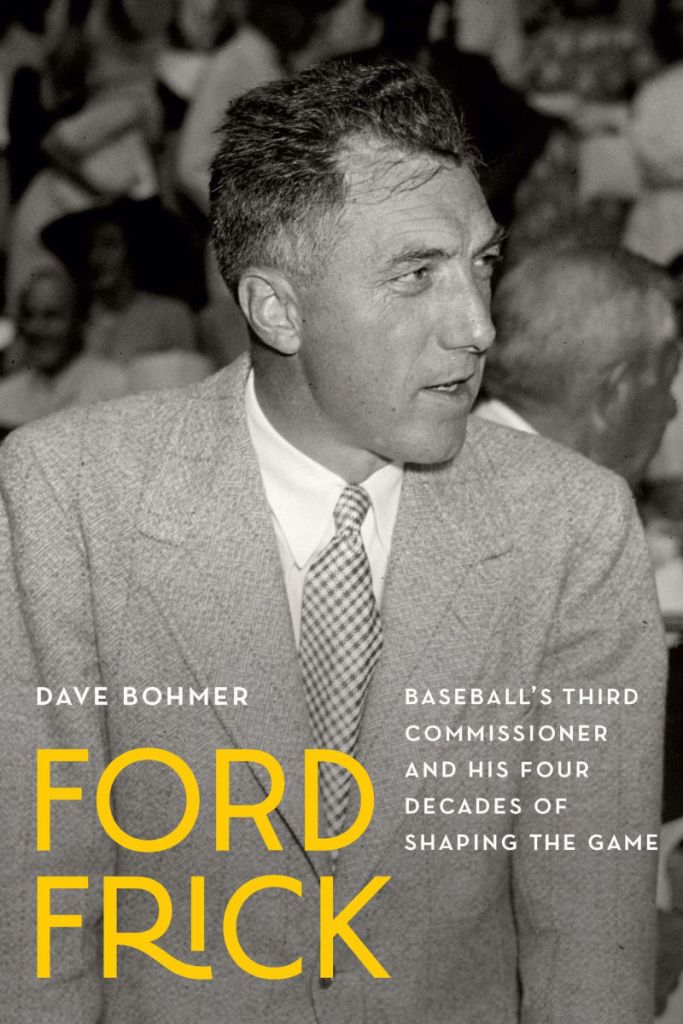
The author: Dave Bohmer
The details: University of Nebraska Press, 416 pages, $39.95, released April 1, ’26
The links: The publisher, Bookshop.org
“A League of His Own:
A. G. Spalding and
The Business of Baseball”
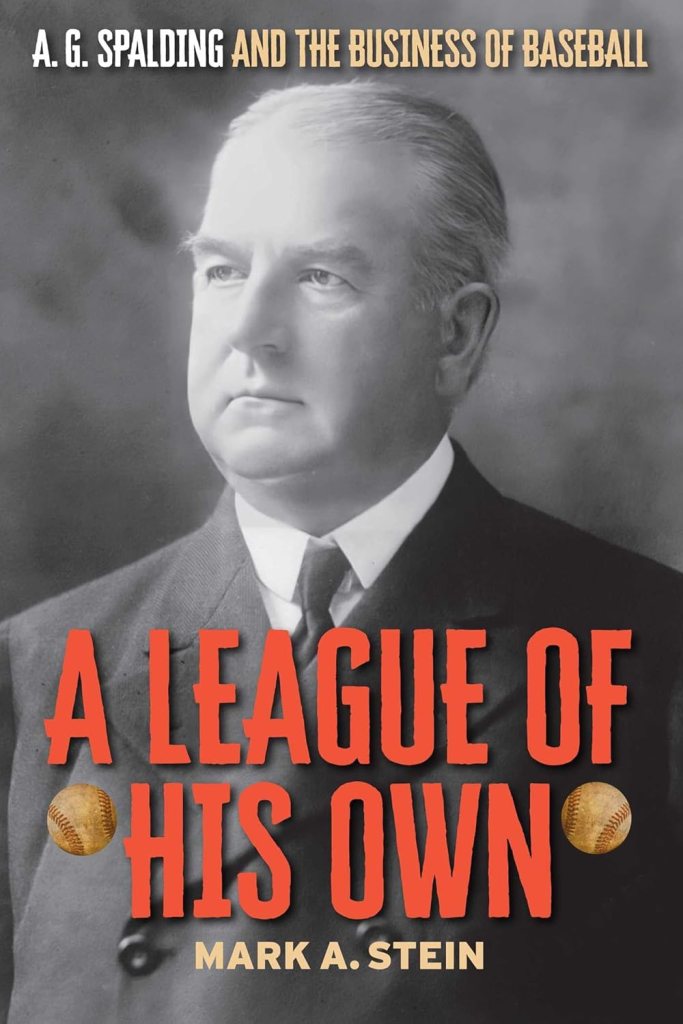
The author: Mark A. Stein
The details: Lyons Press, 352 pages, $39.95; released Jan. 6, ’26
The links: The publisher, the author, Bookshop.org
A review in 90 feet or less:
Americans, by and large, bi or straight, show an unreasonable hesitancy in electing a woman to hold the role as president of the United States.
Given the option of a credible female over an autocratic, nihilistic, narcissistic mad man, recent history disappointingly shows that if it could be called a “perfect storm” aberration the first time, there was an unfathomable repeat performance to come.
Claims that “the people have spoken” as a result of a general abstention of the majority deciding there was a “lesser of two evils” argument that played out was just what we’d have to accept.
Major League Baseball is primed for its own commander in chief decision sooner than later. It can, if it wants, help change some generalized thinking about leadership of America’s pastime — or what’s left of it — doesn’t have to be selected from the sausage factory of candidates.
When Rob Manfred has the expiration date of his MLB commissioner contract occur in 2029, he says he’ll be done. A top-tier dame is not only waiting in the wings, but she’s openly campaigning.
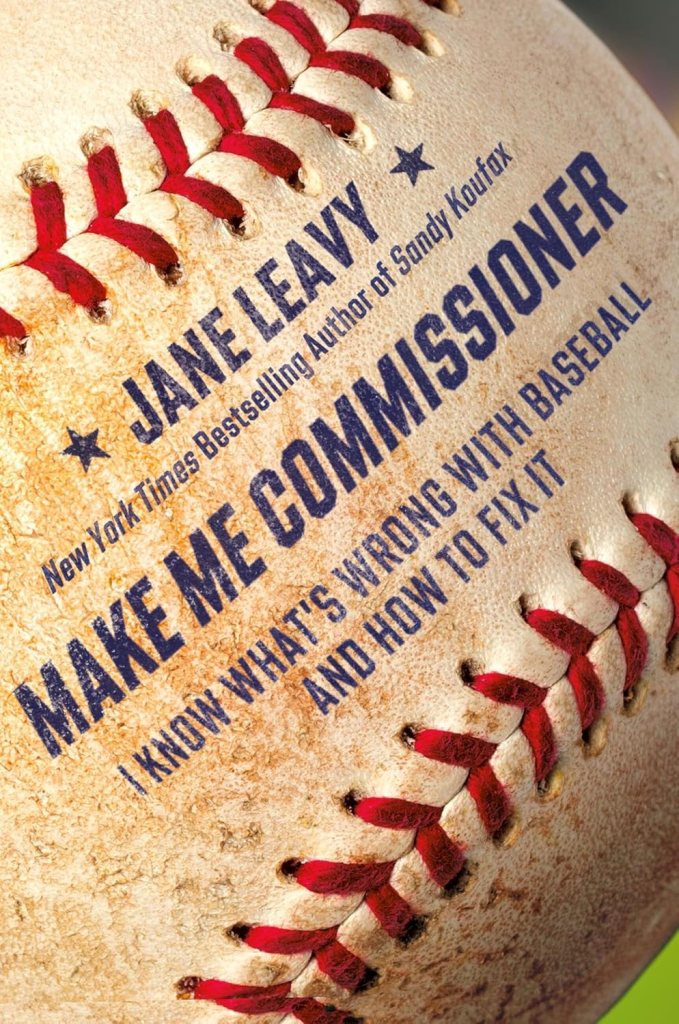
Leave it to Jane Leavy (pronounced LEV-y) to come up with the most no-nonsense manifesto — womanifesto? — of how and why baseball can be great again with her late fall 2025 book, “Make Me Commissioner: I Know What’s Wrong with Baseball and How to Fit It” (Grand Central Publishing/Hachette, $32.50 — although stupidly available on Amazon.com for 77 percent off, so please don’t chase it down there).
The Long Island broadsider, who has already pounded out critically acclaimed books about the life and times of Sandy Koufax, Mickey Mantle and Babe Ruth, aligns her campaign promises in an aggressive way that is also as much about her journey to find the truth than it is reinforcing simple beliefs about how the game has strayed from its sweet spot.
American would love Leavy and her appropriately salty language. The game would be better for her. It already is just having her manifesto published.
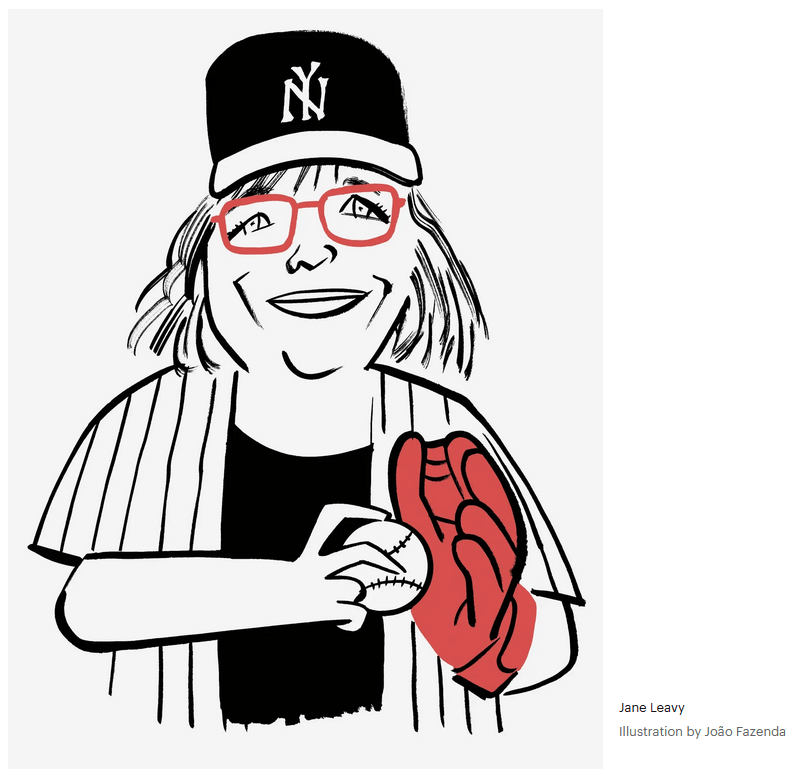
Leavy may not be reasonably labeled a Luddite, but she lovingly spitballs idea to take away as much technology as possible for the sake of restoring more humanity. Whatever brings back joy and romance that’s been buried in data-driven digbats. Her idea of “three true outcomes” is finding room for more afternoon games, better access for kids in the ballpark and reversing the epidemic of pitching injuries with better guidelines in place. Along the way, she saddles up next to like-minded thinkers — Dave Roberts, Dusty Baker, Bill James and Janie Marie Smith — to add their voices.
“I know you should be commissioner,” former big-league chucker Bill “Spaceman” Lee says at one point. “You’re not for the players. You’re not for the owners. You’re for the game.”
Leavy blushes, and carries on.
Maybe she can also reverse this whole thing involved how and why Athletics moved out of Oakland, escaped to Sacramento, and await a new ballpark in Vegas to be finished.
(And, by the way, pro baseball does already have a female commissioner. Google the name Justine Siegal if you have a moment. That’s “gal” at the end, not … never mind.)
For us, Leavy’s book leads us back to a late morning in November of 2018 when we sat at the café in the Beverly Wilshire and talked with her about Ruth (her latest book topic) and what it might have been for the Bambino to navigate today’s world of the media — both legacy and social.
After all, we knew writers in Ruth’s days protected him. That included Ford Frick, a scribe-turned-PR-man-turned-commissioner whose own ghostwriting for Ruth allowed him to appear in major newspapers across the country.
“It was complete collusion,” said Leavy of the media covering Ruth. “There is a quote from Marshall Hunt (a New York Daily News reporter and Ruth friend on many tawdry excursions) when he was ordered by (managing editor) Phil Payne to ask about a paternity suit brought against Ruth, and Hunt didn’t want to do it. He had this telling quote: ‘We’re doing so much with him?’ Why would you want to kill your access. He may have reported things I’m sure Ruth didn’t like. But overall nobody was looking to rock that boat.”
Especially someone like Frick.
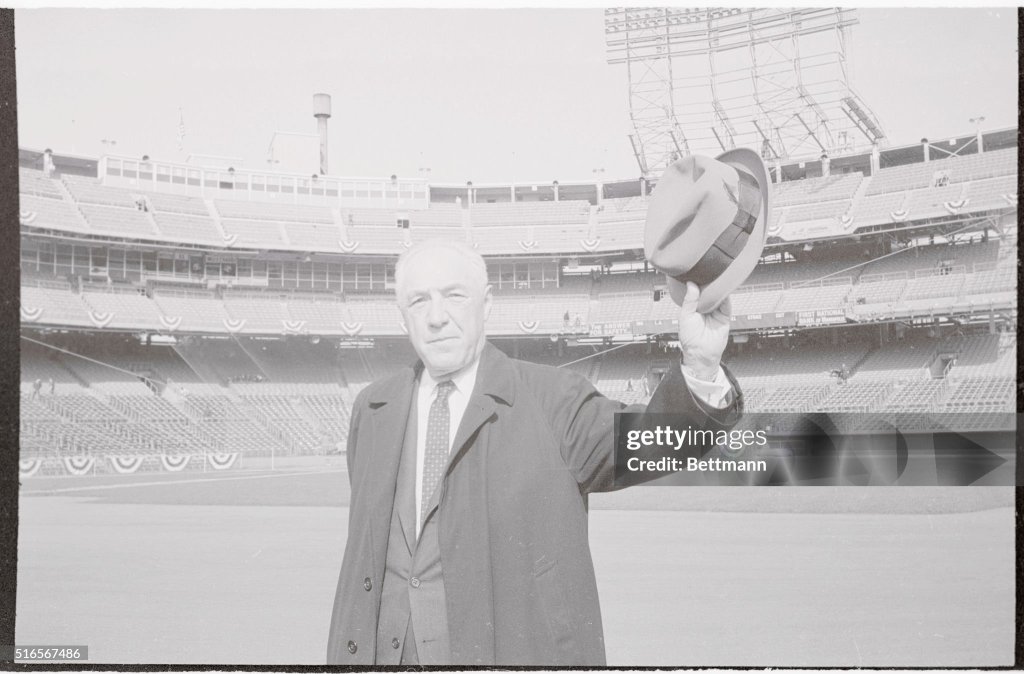
Before he was installed as baseball’s third commissioner in 1951, coming after the convenience of a 17-year run as president of the National League, the alliterative alluringly Ford C. Frick was all about shaping narratives.
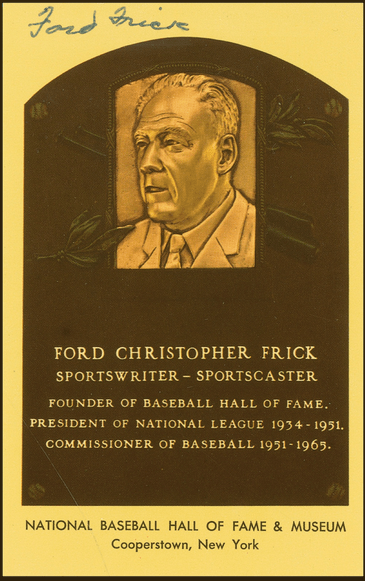
A sportswriter and high school English teacher in Colorado, Frick was invited to join the staff of the New York American in 1922. Amidst his time covering the Yankees, he penned “Babe Ruth’s Own Book of Baseball” in 1928. His ability to do the talking got him into radio broadcasting, doing the first sports-only show for WOR. Then he got into public relations.
Doors opened for him, including, at age 39, the chance to become the National League president in 1934. Mapping that time past the year he left as commissioner in 1965, the game’s achievements included influence:
== Expansion to the West Coast by the Dodgers and Giants.
== Further expansion of league in major cities, including the creation of the Los Angeles Angels, as well as the New York Mets.
== The idea of a Baseball Hall of Fame in Cooperstown, N.Y., with the Baseball Writers’ Association of America behind the voting process.
== Helping the Brooklyn Dodgers avoid bankruptcy by finding new ownership after the ’37 season. After all, Frick did the same for the Phillies, Reds and Braves as teams struggled during the Great Depression.
== Creation of the Cy Young Award for pitchers.

Why is it, then, that Frick so often didn’t think enough to shape his own life story to reflect the role he had in all those things?
Because the idea that Frick was just a do-nothing commissioners a false narrative, Dave Bohmer concludes.
After retiring in 2014 from 20 years of teaching at his alma mater of DePauw University, the liberal arts institute west of Indianapolis, Bohmer began an earnest pursuit to find more fact than fiction about Frick, who also attended DePauw.
Bohmer’s jouney included going to the Baseball Hall of Fame’s Giamatti Research Center in 2015.
“Frick is viewed as sort of a do-nothing owners’ Commissioner and baseball just sort of passed by during that era,” Bohmer was already telling a Baseball Hall of Fame interviewer in ’15, as he paid his way for a two-week visit to the library to research. “I think the game changed a lot, from expansion to franchise movement to the draft. In many ways, I think he’s a much more effective Commissioner than he’s given credit for.”
Bohmer, whose research has finally found a publishing vehicle, unapologetically calls his book “revisionist history.”
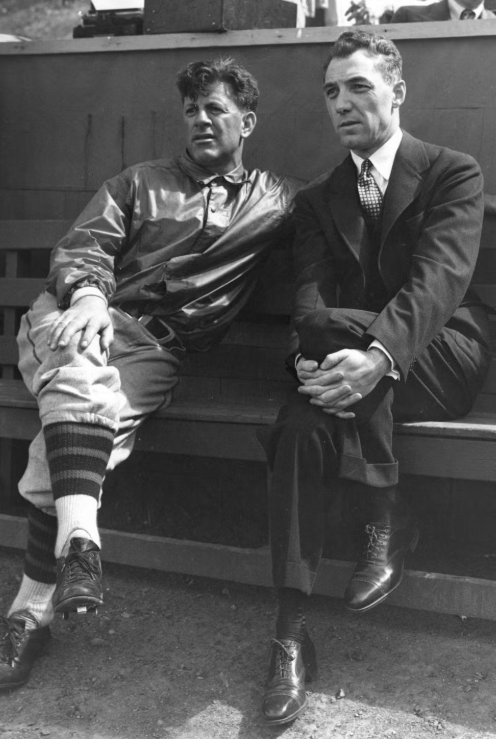
Part of the Frick friction stems from criticism by his predecessor, Happy Chandler. More was perpetuated by rebel owner Bill Veeck, especially in his 1981 biography. Frick caught even more flack for how he was played in Billy Crystal’s 2001 film, “61*” which dramatized the Roger Maris pursuit of Ruth’s single-season home run in 1961. Because that was the first MLB season that expanded to 162 games, Frick tried to take a stance that any homers hit past the 60 that Ruth had in the 154-game season of 1927 would warrant its own separate record-book listing. The general feeling was that Frick had a conflict of interest since Ruth was his friend, and he didn’t want to see the name so easily erased by a rounding-up scheduling error.
Bohmer, who actually started research on this project in 2007, leans into his background as both an academic, historian and working in business management to fully appreciate what Frick accomplished with his means and methods. Bohmer’s years of interviews purposefully includes Buzzie Bavasi, the former Brooklyn and Los Angeles Dodgers’ general manager who considered Frick a surrogate father. Bohmer was able to talk to Bavasi before his death at 93 in 2008, as well as two of Frick’s grandchildren and a daughter-in-law.
Frick, who retired as commissioner at age 71 and died 12 years later in 1978, was remembered in the New York Times as “unflappable” during the time he presided “over a revolutionary era in baseball.” Frick’s reign included having to step in and threaten St. Louis Cardinals players with banishment if they went through on a strike to protest playing against Dodgers’ newcomer Jackie Robinson in 1947.
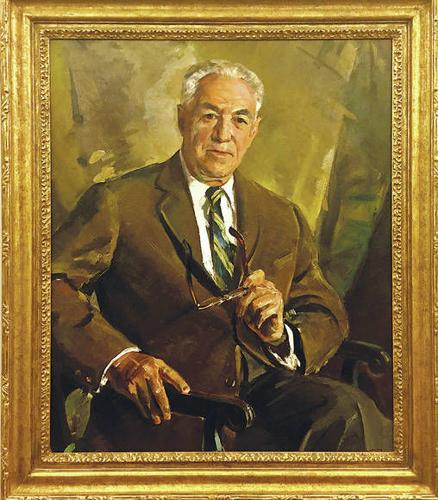
“If you do this,” Frick warned them, “you are through, and I don’t care if it wrecks the league for 10 years. You cannot do this because this is America.”
The Washington Post lede for Frick’s obit noted his contributions “elevated him to the game’s Hall of Fame,” with a 1970 induction. It’s also noteworthy that the Hall’s annual honoree of the broadcasting award is named after him, starting with honoring Red Barber and Mel Allen in 1978.
Bohmer concedes that Frick was “not encumbered with ego … was unbothered by criticism … rarely cared who got credit for successes in the game … was fair and competent.”
And now, Frick’s fair game for Bohmer to bestow until the Hall’s library.
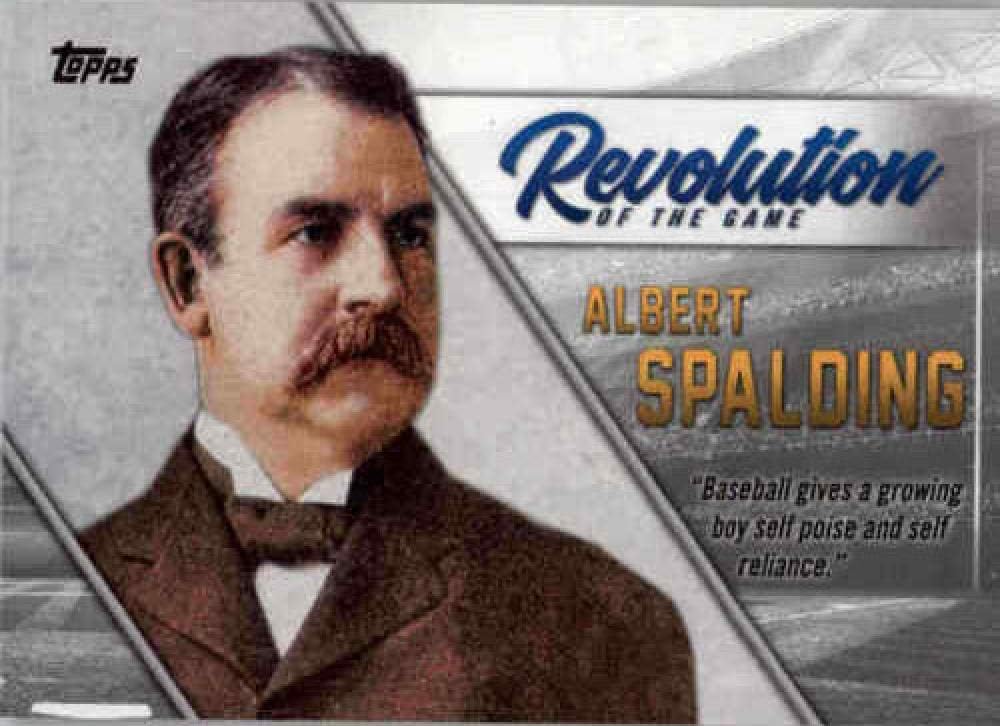
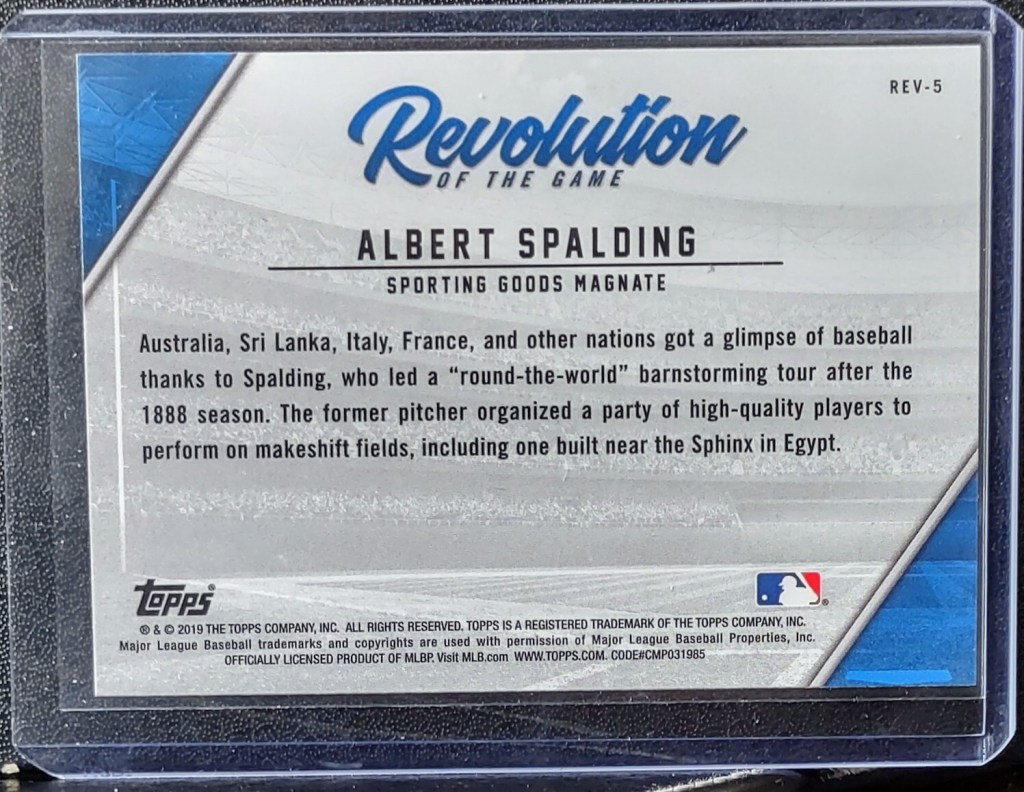
Albert Goodwill Spalding, meanwhile, was adept at story shaping and creating as well, long before Ford.
A pioneer pro baseball pitcher/outfielder/first baseman (1871 to 1877, the first to reach 200 career wins), co-creator of the National League, a club owner, a sporting goods tycoon, a promoter of the game’s global reach and politician before dying in San Diego in 1950, Spalding’s goodwill for the game goes beyond his middle name and Hall of Fame plaque.
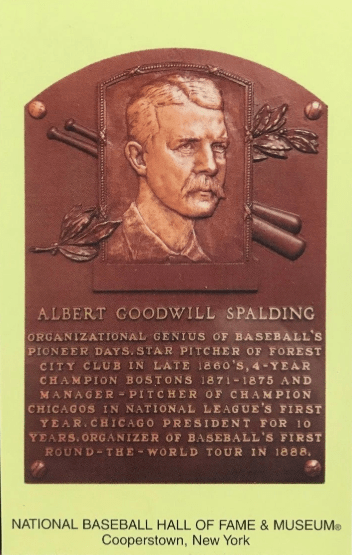
In “A League of His Own,” Stein gets to make a case for Spalding as the “Citizen Kane” of creating baseball’s canopy. Framed as the first comprehensive biography of Spalding — “including his compulsion to put his name on every ball, racquet, discus, bicycle, football, bat, hat, and mask his company produced” — there’s also the truth that he devoted himself to proving baseball a uniquely American game, including the promotion of the myth of its creation by Abner Doubleday.
Last year, we had Jeffrey Orens’ “Selling Baseball: How Superstars George Wright and Albert Spalding Impacted Sports in America” that was far more of Spalding the athlete. This time, with an expanded look at his impact on the business world, Spalding is more accessible.
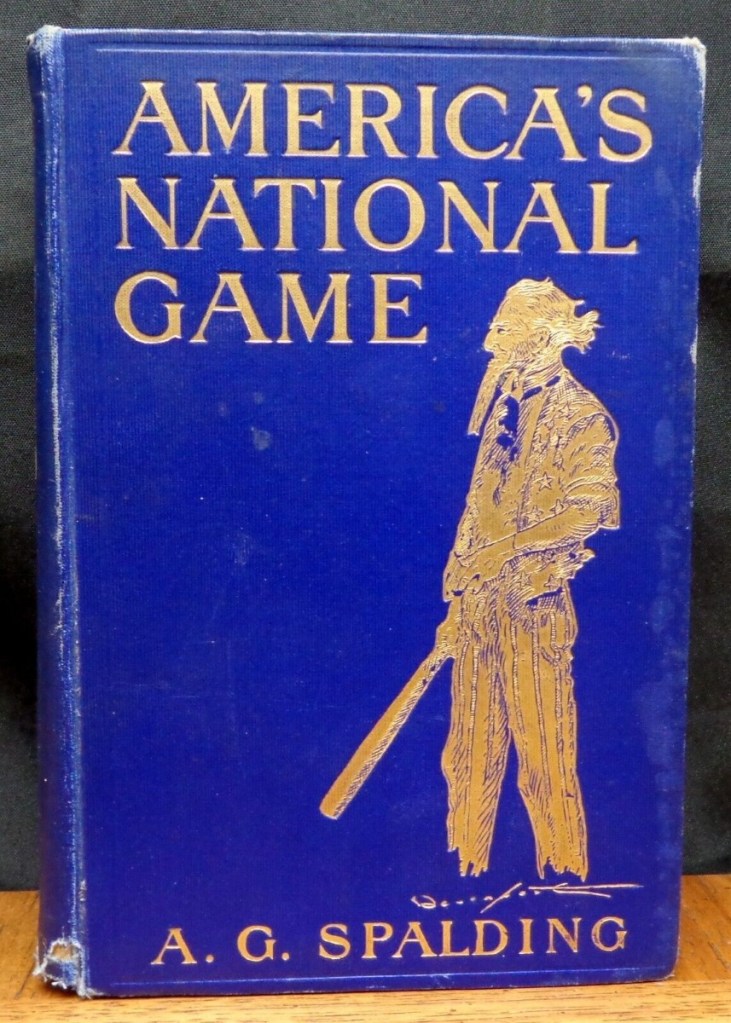
Stein can also expand more on “America’s National Game,” which Spalding wrote and first published in 1911 as a way to give his own testament of the game’s history and narrative. Or, the gospel according to Albert, as it has been framed, coming out shortly before his death.
To which, a Wall Street Journal review of Spaulding leans into how “the main problem with ‘A League of His Own’ is Mr. Stein’s willingness to take at face value Spalding’s claims in his 1911 book, ‘America’s National Game,’ which systematically inflates Spalding’s role in events. The implicit claim in Mr. Stein’s title is that the National League was somehow Spalding’s own league in a way it wasn’t anyone else’s. … More concerning is the pervasive sloppiness. There are errors, contradictions and claims that either don’t match the citations intended to support them or lack citations entirely. … ‘A League of His Own’ is a valuable but flawed contribution. The book is a comprehensive narrative biography … but fails to keep its stories straight or put its subject’s life in context. Readers unfamiliar with 19th-century baseball will be misled while those familiar with early ball will be annoyed.”
This didn’t necessarily annoy us enough to stop reading after a certain point. It’s just that we weren’t entirely interested in finding out more about Spalding.
We were compelled to go to the end, on page 244, to read what the Sporting News wrote about Spalding upon his death: “When the grim reaper took Albert G. Spalding, he removed forever from the domain of sport an heroic figure, and from the National game the greatest man, in some respects, it ever produced — one who wrote his name large and indelibly upon every page of its history.”
And box.
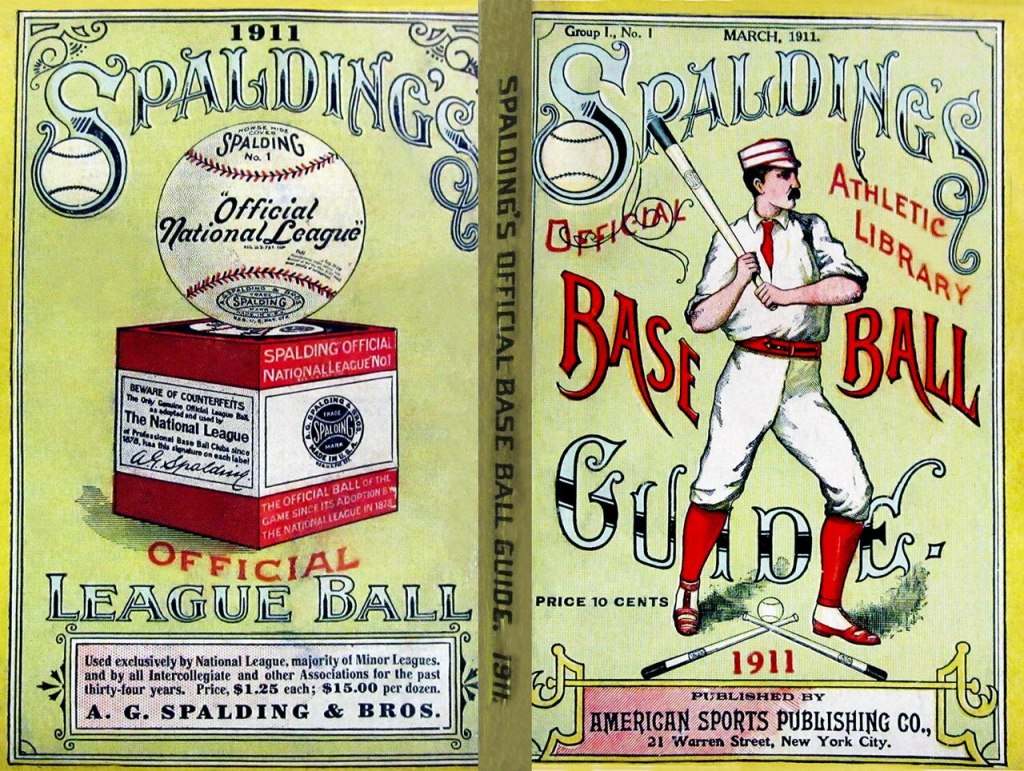
How these go in the scorebook:
If these two add up to too many pages and too many ideas to consume over a period of time, it would be to your best interest to track down Leavy’s book instead.
You’ll feel more empowered.
More to followup:
== Charlie Bevis’ scholarly “Beavis Baseball Reseach” review — based on a 1-5 scale of how he feels the bio covered the subject’s life’s work, his character, how it was researched and how it was written — gives the Spalding project a L4C4R3W2 rating, noting it is “an update to Peter Levine’s biography of Spalding published 40 years ago in 1985, which was an impressive effort for its time when the literary sub-genre of baseball biography was still in its infancy.”
Meanwhile, Bevis gives the Frick project a L4C2R4W1 rating, noting that “research is Bohmer’s strength. … the minimal attention to character assessment is disappointing. In his writing style, Bohmer uses just limited storytelling skill and scant styling to engage readers, preferring a near-total focus on the historian’s mode of fact presentation.” Bohmer himself notes that there has been a 2016 bio on Frick done by John Carvalho as well as Frick’s 1973 memoir.
== A SABR bio of Frick by Warren Corbett at this link.
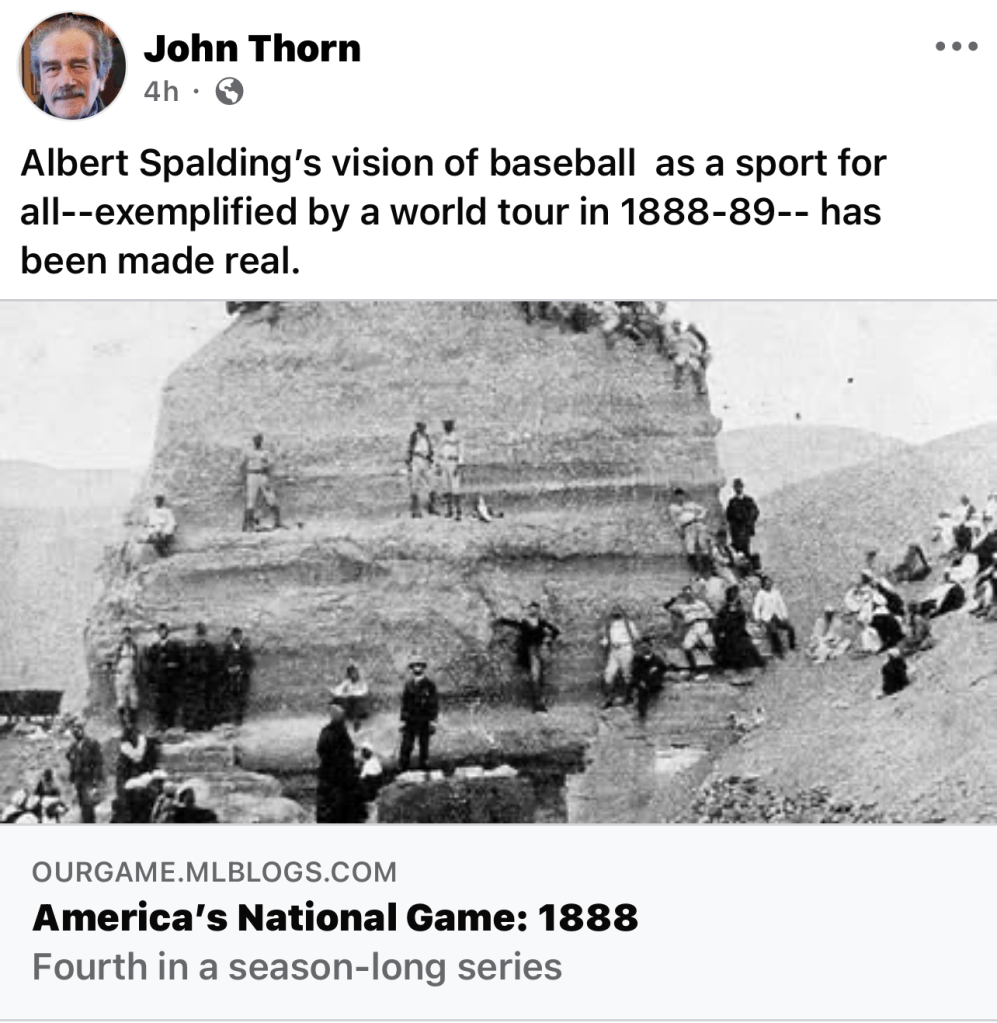
== A SABR bio of Spaulding by Bill McMahon at this link. And Stein’s visit with the Casey Stengel New York City SABR chapter in October of 2025:


1 thought on “Day 11 of 2026 baseball book reviews: In the best interests of the game … in theory”