
“Baseball’s Most Outrageous
Promotions: From Wedlock and Headlock Day
to Disco Demolition Night”
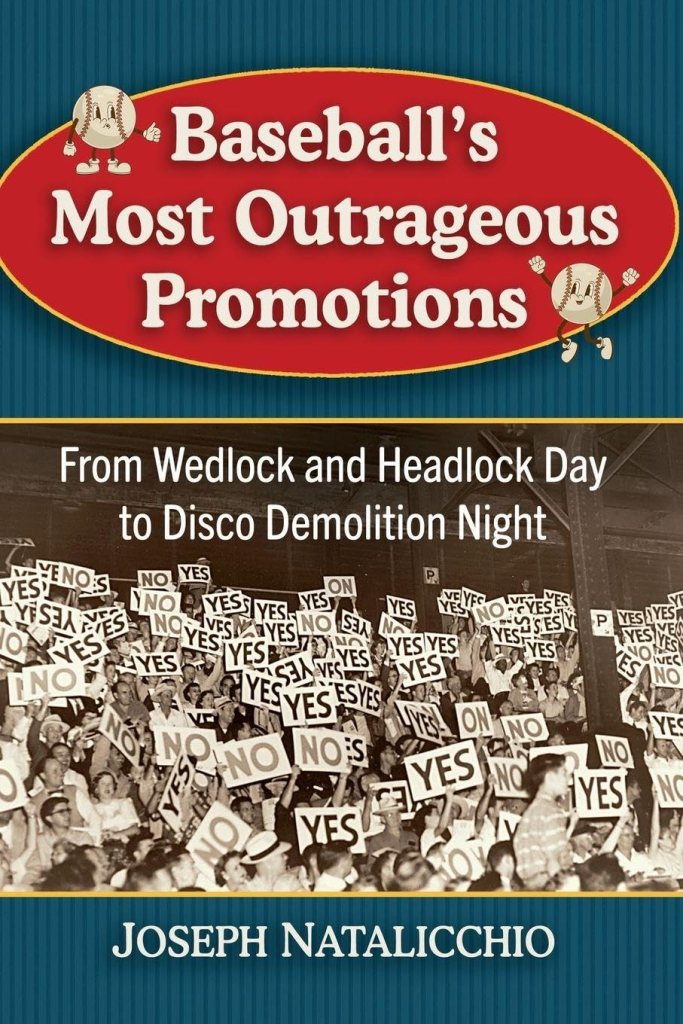
The author: Joseph Natalicchio
The details: McFarland, 254 pages, $29.95, released Dec. 4, ‘26
The links: The publisher, Bookshop.org
A review in 90 feet or less:
In March 1966, John Lennon made his famously toxic comment that he considered The Beatles to be “more popular than Jesus.” It came from a restless give-and-take he had with a British reporter about the influence pop culture had on modern youth versus organized religion.
The backlash to something taken a bit out of context resulted in Lennon having to wear it. Where he stood in the U.K., it made more sense. And having experienced the U.S. Beatlemania, it had more context.
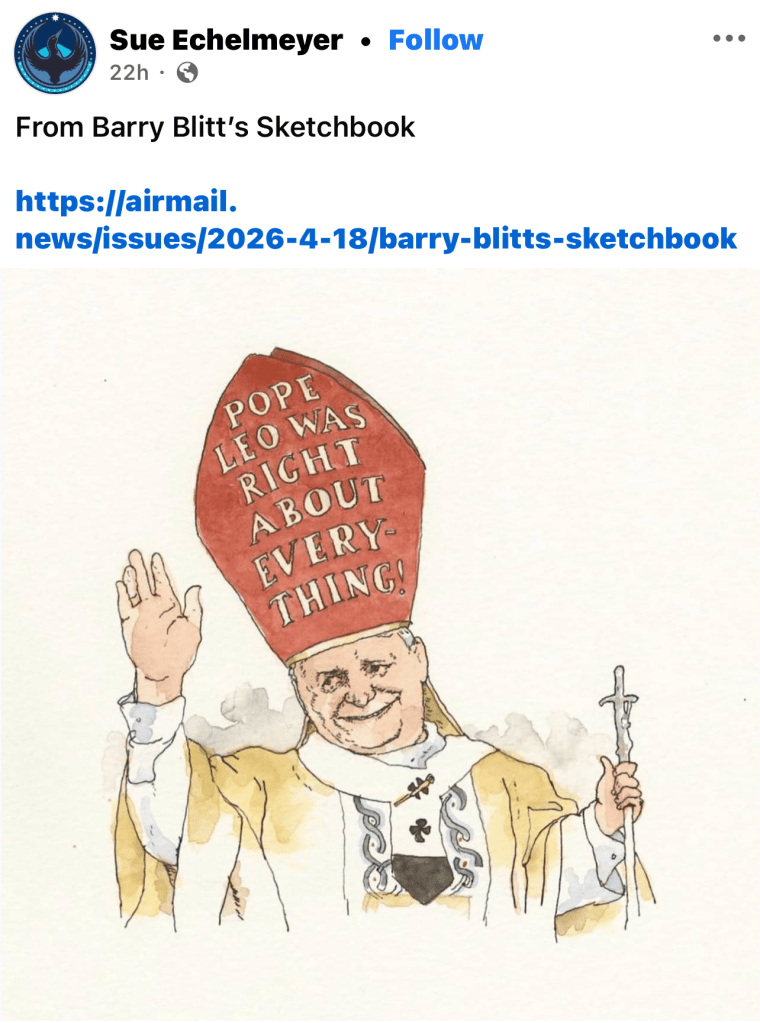
Sixty years later, as we sit in the spring of 2026, what if we were to suggest — Pope Leo XIV is more popular than the Beatles.
Talk amongst yourselves. And consider the role baseball has played in measuring all of this over the year with its promotional muscle.
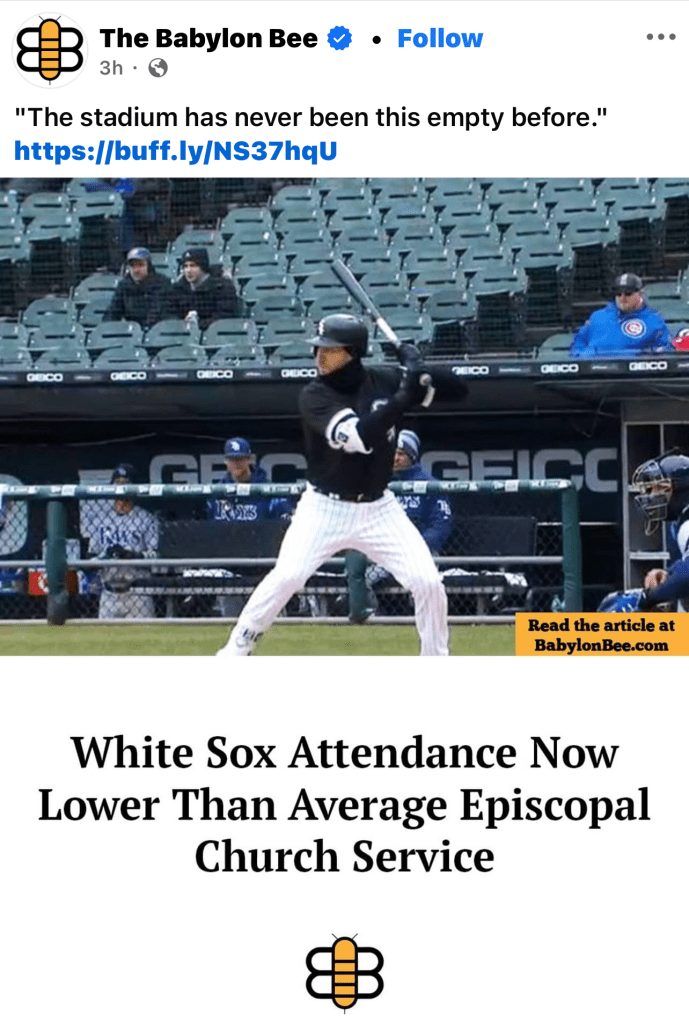
The Chicago White Sox have fully embraced the ideology of how the man known in his previous religious life as Robert Prevost had a devout allegiance to the South Siders, because that’s where he grew up before ascending to the throne of St. Peter.
Earlier this month the team created a “Pope Hat” giveaway to take place on Aug. 11 against the Cincinnati Reds at their home park of Rate/Guaranteed Rate/U.S. Cellular/Comiskey Park Re-Do. Initially, it was supposed to be a theme-night giveaway, capped at around 1,500 who bought tickets in specific sections. The promo quickly went viral. Now it’s a “Pope hats for the masses” promotion.
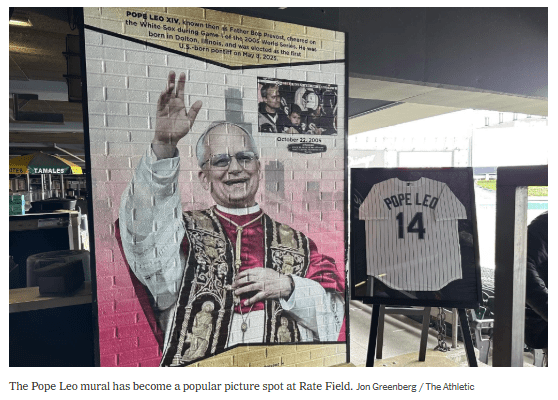
Since Leo’s election last year, the Sox’s ballpark held a Catholic Mass in his honor. The team put up a mural honoring him near where he once watched a World Series game in 2005, a virtual video that went viral from researchers at Fox Sports, who covered that game.
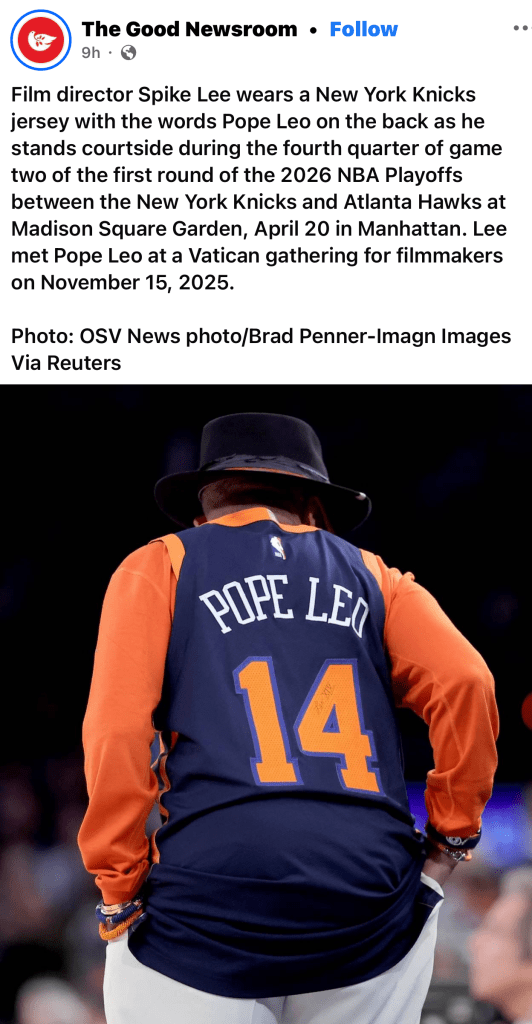
This Pope hat event doesn’t seem to be all that outrageous, let alone bordering on anything considered blasphemous.
Not from a franchise once owned by the immortal Wild Bill Veeck Jr.
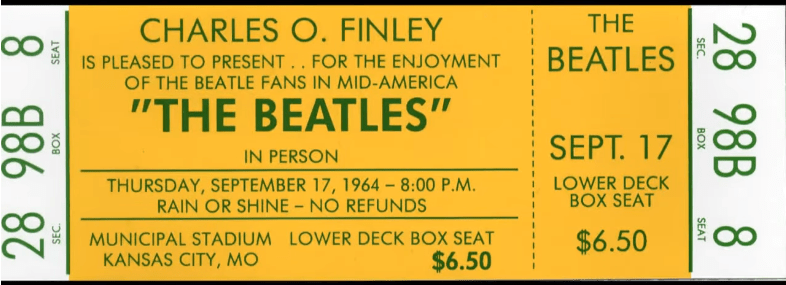
Veeck’s chief promotional rival during his time was Charles O. Finley.
And consider what Charlie O. tried to pull as his Kansas City Athletics were floundering in the American League during the ’64 season and sought relief from Lennon and friends.
Finley had the idea that, since the Beatles were already traversing the states that summer, why not hang out for a day in K.C.? The group’s landmark North America concert tour the previous February caused quite a sensation. They were now prepared to return and do 32 shows in 24 cities over 31 days from August to September.
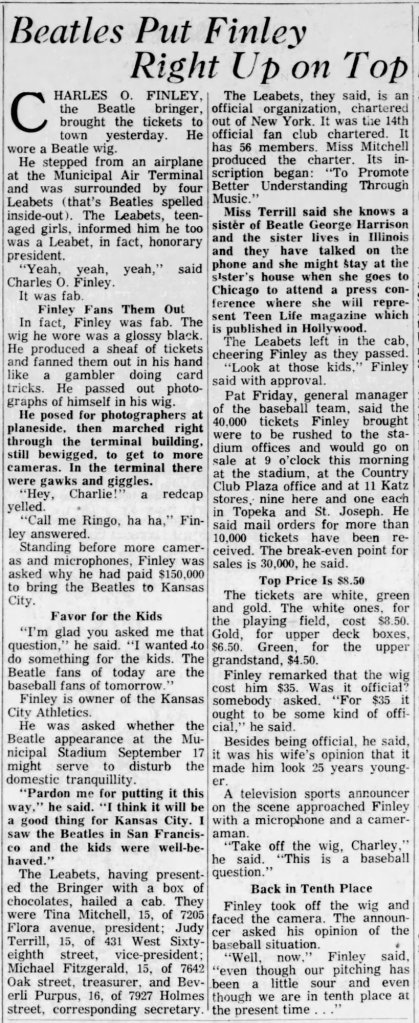
The Fab Five’s manager, Brian Epstein, turned down Finley’s initial offer of $60,000. Finley went to $100,000. Still no. Finley upped it to $150,000. That’s merely as $1.6 million in today’s dollars — but the largest any American artist had ever received for a single show.
Done deal. Sept. 17 it will be.
At a time when the Beatles are doing more theaters, convention halls and arenas than massive ballparks — their famous events at Shea Stadium and Dodger Stadium came in 1965, and their last concert, at San Francisco’s Candlestick Park in 1966, about five months after Lennon’s “Jesus” remarks — Finley had a stadium venue that should have accommodated larger numbers and likely make up what he put out for it. It was much larger than places on this tour such as the Hollywood Bowl, Boston Gardens, Toronto’s Maple Leaf Gardens and New York’s Forest Hills Stadium (the private tennis club in Queens) and later the Paramount Theater.
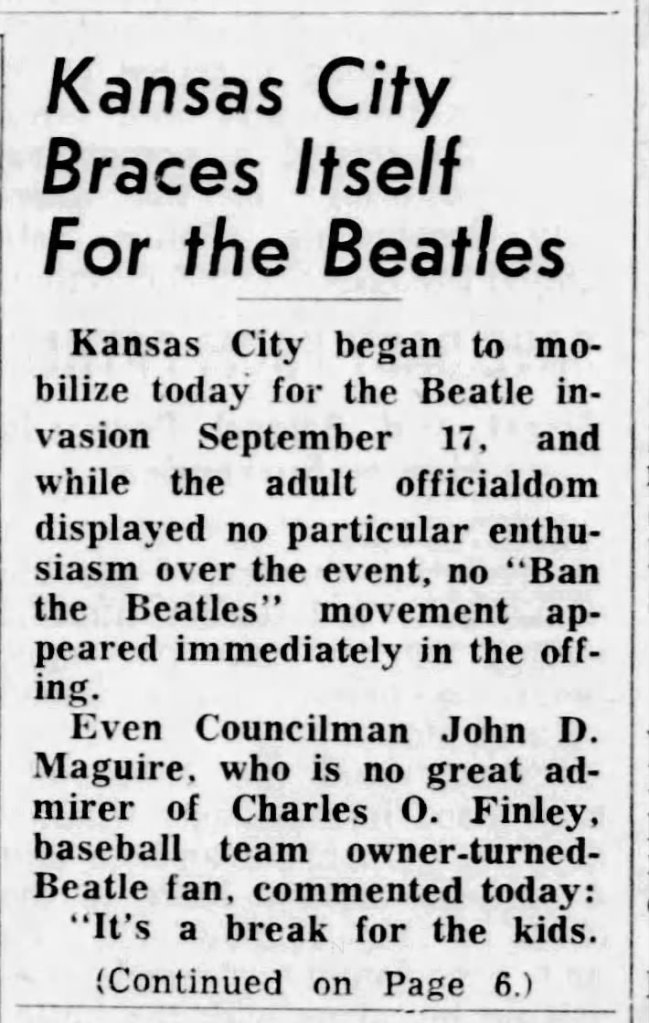
And for this K.C. Municipal Stadium stop, Finley could promote it as “Today’s Beatles Fans Are Tomorrow’s Baseball Fans.”
That was his ticket to ride.
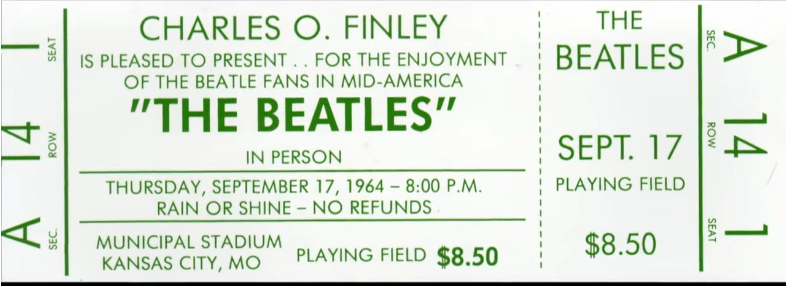
Before the group took the stage an that Thursday night — the A’s were out of town on an East Coast road trip — Finley was said to be comfortable with the fact that, considering all he shelled out, they’d only do a half-hours worth of material. This was also framed to be helping a local charity, so there was more at stake.
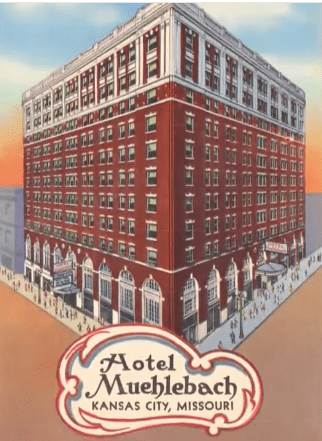
Finley reportedly tracked Lennon down at their Muehlebach Tower hotel, where the group had the 18th floor penthouse.
Finley asked Lennon to stretch out the set list.
As described in Joseph Nataliccio’s new book, “Baseball’s Most Outrageous Promotions,” Lennon “disliked Finley, whom he saw as a member of the monied establishment, and refused.
“As Finley pressed the issue, Lennon reportedly ended the discussion by saying, ‘No f**king way.’”
And there’s more the story.
According to BeatlesInterviews.org, the Beatles flew in from New Orleans to Kansas City after a concert, arrived about 2 a.m., checked into the hotel, ate, drank and played poker, then went to bed. They had to do a press conference hours before the concert.
The first question asked was about the $150,000 payday and included: “Do you plan to perform a little longer than a half-hour?”
Paul McCartney replied: “Just extra well.”
Q: “Did you talk with Charlie Finley when he was in San Francisco?”
Lennon: “We haven’t met him, I believe.”
George Harrison: “I met him this morning.”
McCartney: “I met him last night.”
Harrison “And Brian Epstein was the only one who saw him, I think, in San Francisco.”
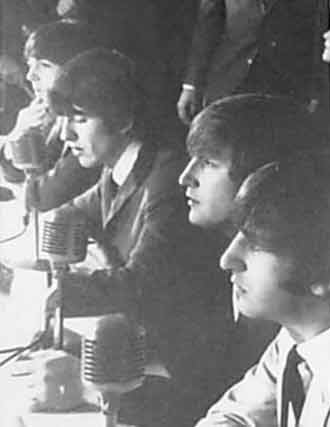
Q: “He said he was very fond of you men.”
Starr: “Oh. We’re fond of HIM, now.”
Q: “Do you like baseball?”
Lennon: “Not particularly.”
McCartney: (jokingly) “Great game!”
Starr: “You throw the ball, and then another ten minutes you have a cigarette and throw another ball.”
Q: “Is it true Charlie Finley asked you to wear kelly green and gold baseball outfits?”
Harrison: “Not true. We wouldn’t wear ’em, anyway. Not even for 300,000.”
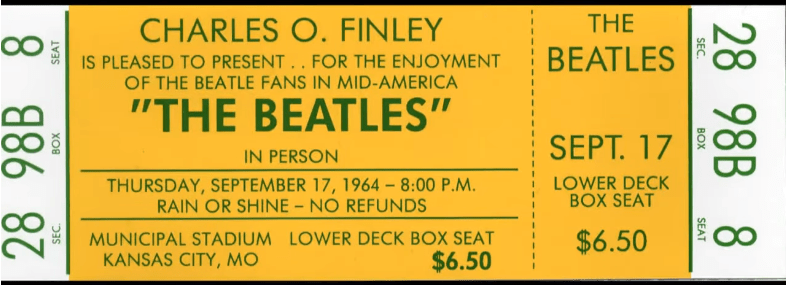
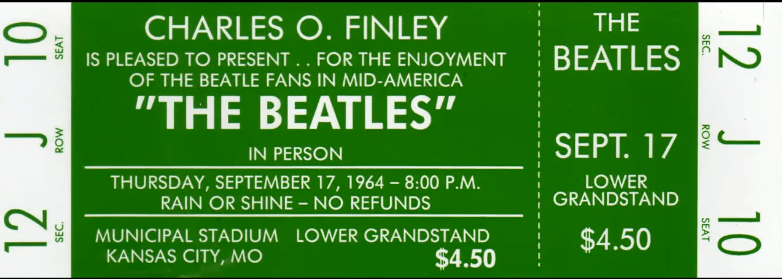
As the BeatlesBible.com website elaborates,ticket prices ranged from $2 to $8.50. But the local media was pressing residents to boycott the event as “a way of showing displeasure with Finley,” Natalicchio writes.
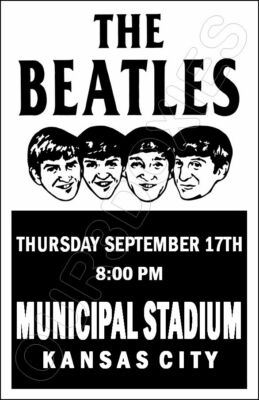
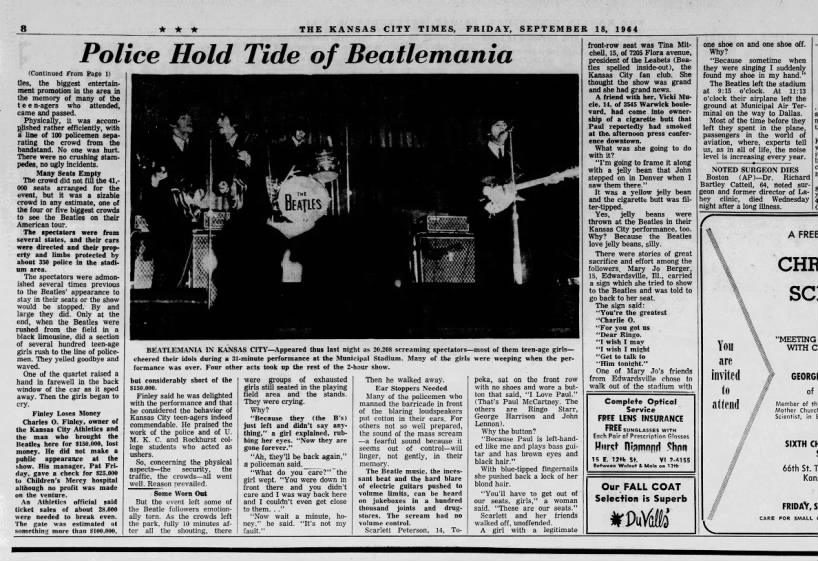
As a result, the 34,164-seat Municipal Stadium only got drew 20,280 that night — Finley knew he had to sell 28,000 to break even.
After the opening acts, the Beatles did a dozen songs, starting with Little Richard medley, “Kansas City/Hey-Hey-Hey-Hey” and ended with his famous “Long Tall Sally.” Then they took off to Dallas.
Not only was it the only Beatles concert during its U.S. tour that didn’t sell out, it was the only one where a promoter lost money. Finley still had to donate $25,000 to the children’s hospital out of his pocket.
“As things turned out, the concert wasn’t a financial loss for all involved,” Natalicchio noted. Two enterprising people obtained the bed sheets — 16 sheets, eight pillow cases — for $750 from the Beatles’ hotel room, cut them into small pieces, sold them as souvenirs, and reportedly earned about $159,000.
By 1968, Finley moved the team to Oakland, ending the 13 years in Kansas City.
Yeah, yeah, yeah.
In the preface to his new book about the history of nutty baseball promotions, Natalicchio writes: “Former Dodgers manager Tommy Lasorda, whom we’ll meet in Chapter 11, once said, ‘In baseball and in business, there are three types of people. Those who make it happen, those who watch it happen, and those who wonder what happened.’”
MLB owners like Finley and Veeck always seemed to make things happen, or tried the hardest with their wildest ideas. Their hope is people would pay to watch it. The rest of us may have wondered why. Wasn’t the game good enough to sell itself? Depends on what you had to offer.
Finley and Veeck, along with baseball execs like Bill Giles and Bob Hope (no, not that one) of that era, are part of what Natalicchio calls the “Era of the Barnums.” It seems appropriate.
Most of their stunts documented over the 90-some years are still worth review and a dissection, especially in the framework of: Would it fly in today’s world?
Ten-Cent Beer Night. The Eddie Gaedel Game. Grandstand Filpcards to Manage Decisions.
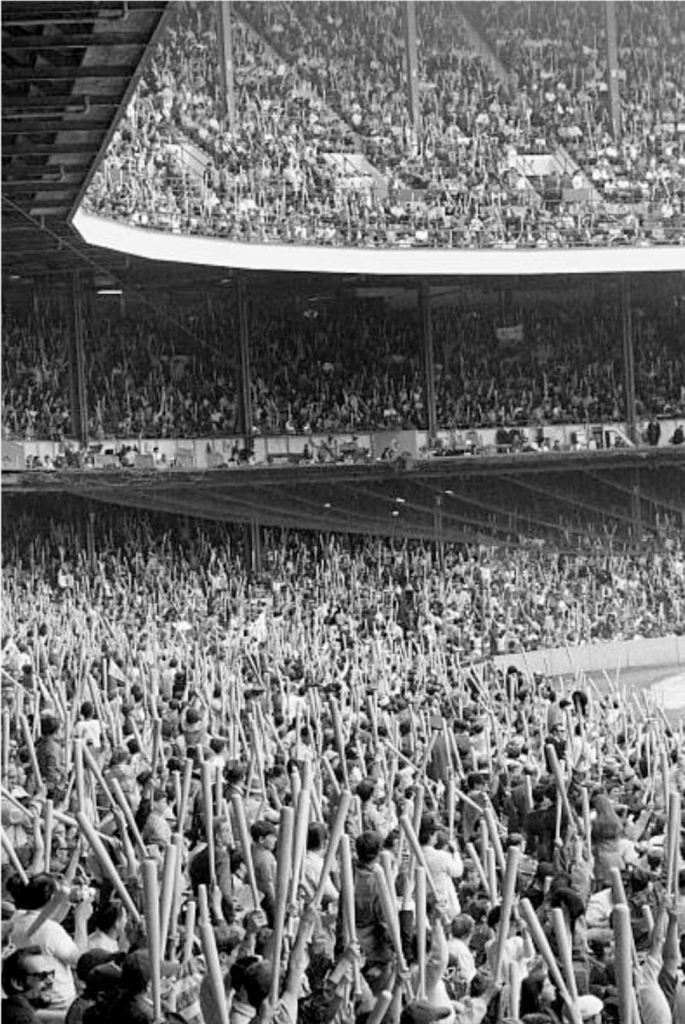
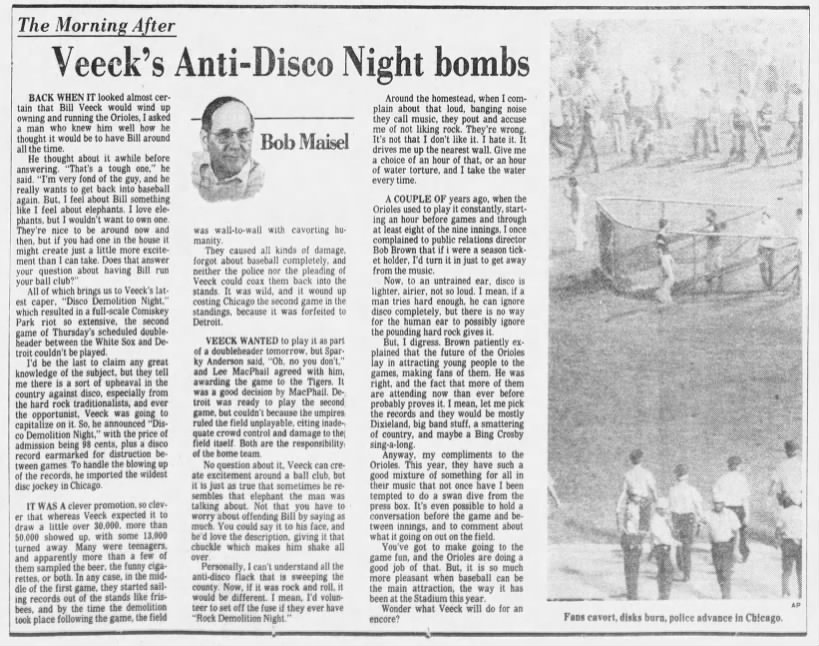
Even Disco Demolition.
But why wouldn’t a simple Souvenir Ball Night promotion end well?
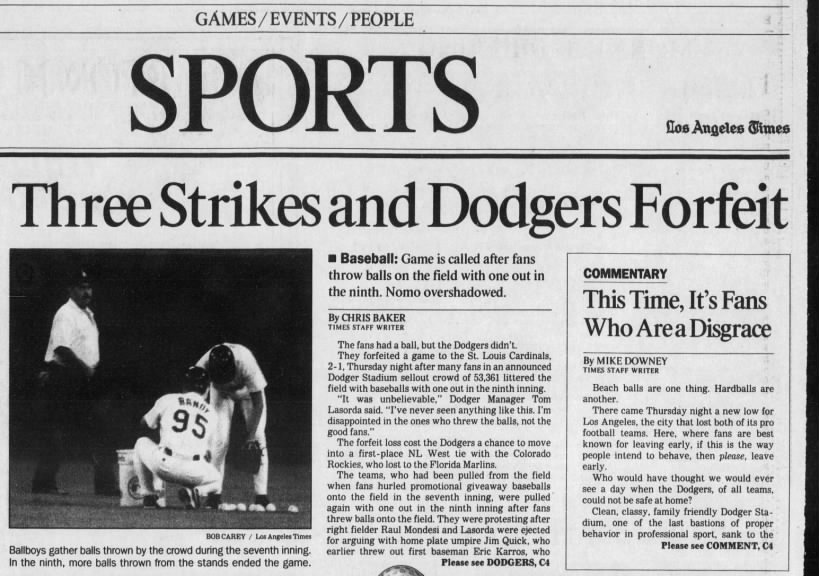
Aug. 10, 1995, Dodger Stadium, Dodgers vs. St. Louis, drew 53,361 on a Thursday night who happily accepted at the turnstiles a baseball highlighting the team’s 14 N.L. Rookie of the Year winners. The 15th, that night’s starting pitcher, Hideo Nomo, would win it a few months later.
“The Dodgers saw no harm with this baseball giveaway,” Natalicchio writes, and quotes former GM Fred Clare as saying: “We had giveaway ball nights many times in the past over the years. It wasn’t something new or different.”
When a few balls came sailing out of the Dodger Stadium right-field pavilion in the seventh inning stretch as the crowd grew restless with the Dodgers trailing, 2-1. It caused a six-minute delay.
In the bottom of the eight, the Dodgers’ Eric Karros came up with the tying run on second and go-ahead run on first. On a 1-2 count, Karros checked his swing on a pitch from T.J. Matthews. It was outside anyway. Or so everyone thought.
Umpire Jim Quick called it a strike. Rally over.
When Karros argued, a few more souvenir baseballs came from the stands onto the field. Groundscrew members picked them up.
In the bottom of the ninth, the Dodgers’ Raul Mondesi had a 3-0 count and took what he thought was ball four from reliever Tom Henke. Modesi started walking to first. Quick called it a strike instead. At the next pitch, Mondesi swung and missed for strike two even though that was also ball four.
Mondesi couldn’t help but grumble over his predicament. So Quick ejected him.
When Lasorda came jogging out of the dugout toward home place, “all hell broke loose … a torrent of baseballs was unleashed from the stands in protest,” Natalicchio writes.
Lasorda was ejected. Karros was also ejected.
It took more than five minutes for the hired help to fill some 20 buckets with balls that were now on the field. The Cardinals were sent off to the dugout during that time. When they came out for the game to resume, and the ejections were officially announced, another “hailstorm of balls” come out of the stands. The umps walked off and declared game over. It was the first forfeit since Veeck’s famous “Disco Demolition Night” between games of a doubleheader in Comiskey Park made its mark in 1979.
The Dodgers, a game behind Colorado at the time in the NL West race at the time during a strike-shortened season where teams only played 144 games, appealed the decision. It was declined two weeks later after a hearing. The Dodgers still outlasted the Rockies by one game to win the West.
“Who was to blame?” asks Natalicchio. Because, we need a reason to revisit this, remember?
Karros, when asked years later, blamed Quick, who was “(bleep) behind the plate, just having a bad night.’”
Crew chief Bob Davidson blamed Lasorda for coming out on the field to rile up the crowd.
Natalicchio’s take: “Truth be known: Both the fans and Lasorda acted in unison to cause the forfeit. Lasorda cultivated a special relationship with the fans. Given their extraordinary close relationship to Lasorda, who they saw not only as the team’s manager but also the Dodgers’ principal fan, many of the fans in the stands that night didn’t just agree with him but compelled to show they had his back…. He ignited a fan reaction. … In the past, when Lasorda argued with umpires, the fans had only their voices to show their support. This night, they had the souvenir balls and weren’t deterred from flinging them.”
Since those kind of promotions have proven to be generally problematic, baseball’s far-more-educated marketing people in this modern era will err on the side of caution when spit-wadding ways to draw extra fans to otherwise non-descript contests.
We remember back in our 1960s and ’70s trips to Dodger Stadium and Anaheim Stadium — plastic helmets you actually wore instead of loaded up with nachos. That was so popular it became “Helmet Weekend” for a three-day event.
Batting gloves. Caps. T-shirts. Baseball cards. Even baseball bats — at least coupons where you had to go to the sporting goods store to pick it up.
In recent years, pristine boxed bobbleheads handed out with white gloves at the entry points have become far more valuable in the secondary market than any one of them that might even be considered taken out and admired, let alone tossed on the field in a show of disappointment.
Pillows, books, costume jewelry, coins, pickle-ball racquets, plush dolls, rally monkeys, replica rings, Rubik’s cubes, sidewalk chalk and water bottles are the things now. Even non-fungible tokens.
And pope hats.
All of this allows Natalicchio room to lament the lack of curiosity and creativity baseball teams put forth with their modern-day promotions. After all, who needs another bobblehead?
What about, at the very least, sending out a Beatlemania cover band after the last out on a Sunday afternoon?
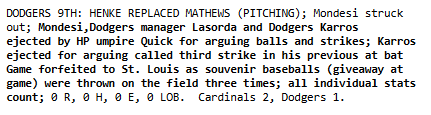
How it goes in the scorebook:
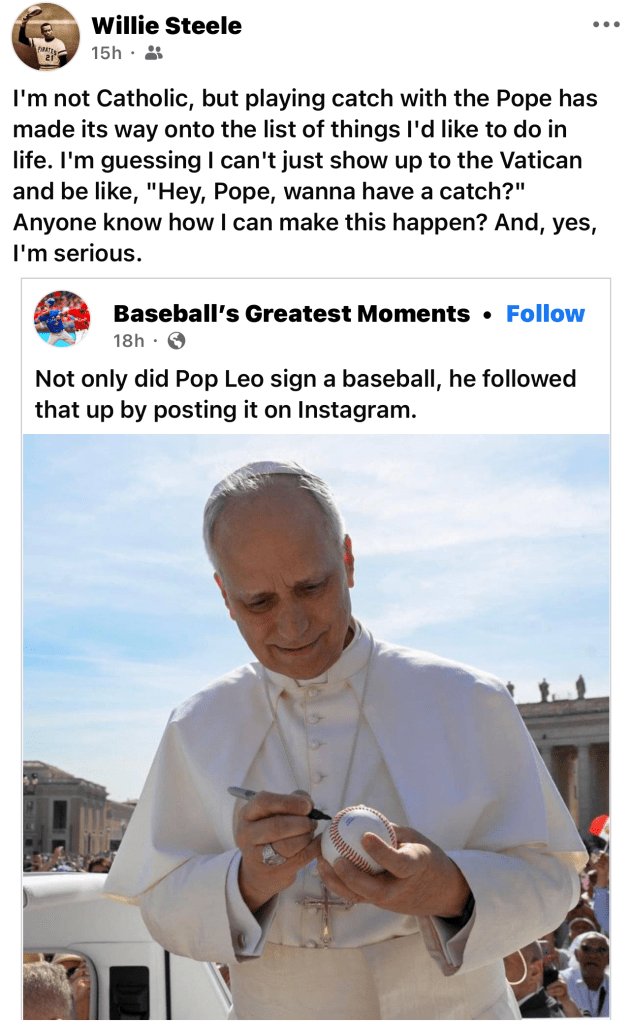
We’re still looking for the promo code to see if we can get this book at a discounted price. Especially after all the research work we just did supplying more visuals.
More to followup:
Natalicchio is on Episode 424 of “Good Seats Still Available” podcast (because, after all, good seats are all fans should really want when they go to the park):


2 thoughts on “Day 9 of 2026 baseball book reviews: You’ve been promoted”