Day 2 of 2026 baseball book reviews: Smell the glove, feel the love

“The Finest in the Field®:
A History of Baseball Through 50 Iconic Gloves”

The author: Ed Wheatley (forward by Johnny Bench)
The details: Rizzoli USA Publishing, 272 pages, $45, released March 24, ‘26
The links: The company website, publishers website and Bookshop.org


A review in 90 feet or less

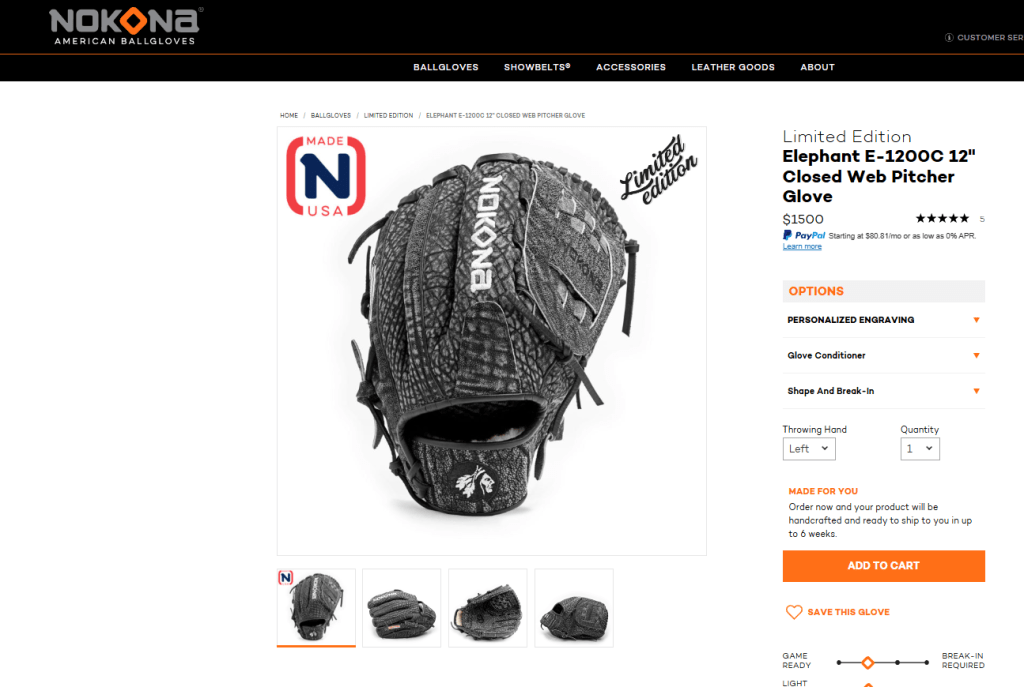
A baseball glove company from the tiny town of Nokona, Texas (population: 3,236) appears to legally sell something it calls the Elephant E-1200C 12” Closed Web Pitcher Glove.

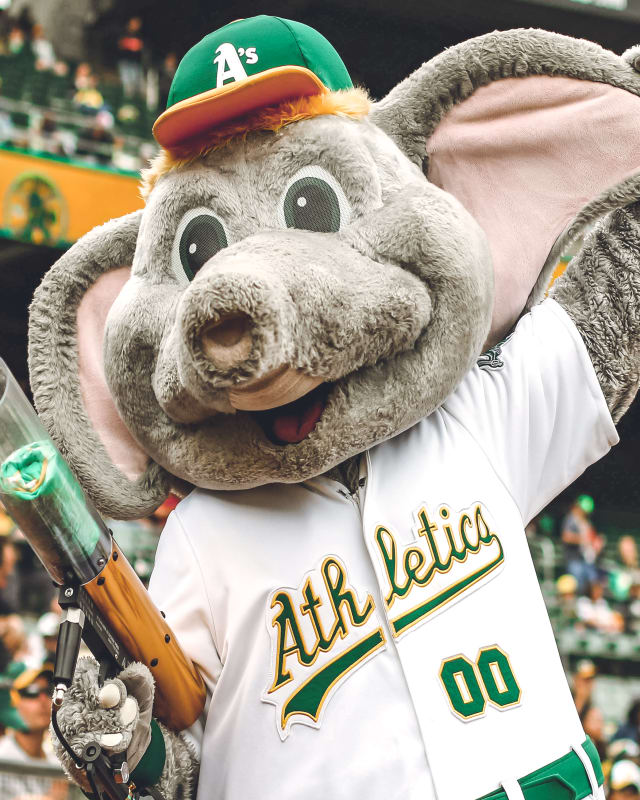
Stomper, the official elephant mascot of the Sacramento/Las Vegas (former Oakland, Kansas City, Philadelphia) Athletics.

It’s made of actual elephant.

Oh, now you’re all ears.

In the product details, it notes: “All skins have CITES tags, meaning they were harvested in an approved program and comply with the Convention on International Trade of Endangered Species (CITES).”

Yes, your glove was “harvested” with oversight from … check the citing.

It also explains: “Elephant leather is one of the most durable materials used in our baseball gloves. Its dense fibers resist stretching and tearing, which allows the glove to maintain its structure season after season. Over time it breaks in beautifully, developing a unique patina while staying strong—making it a glove that can last for many years of play. Instead of Elephant leather wearing out, the glove gradually softens while maintaining its structural strength, giving it a broken-in feel without losing its shape.”

A “patina” is, by definition, a gloss or sheen as a result of aging.

So, we’re calling this “elephant leather”? Something often used in that part of the country for boots and belts, pool cues and holsters.

Asking price on the glove: $1,500. Personal engraving, add $80. Glove conditioner, add $20. If you want them to shape and break it in, add another $50. At least it’s made in the U.S. No tariffs, no problems.

It is probably not suitable for leaving in the trunk of your car. Please don’t tell the kids who have a relationship with the Athletics’ current mascot. And where are all the cows hiding in Texas these days?

It feels like decades since we last purchased a new baseball glove, so excuse our queasiness finding out that not only things other than a steer’s pelt are being used for corralling a stitched-up ball, but there are also a confusing number of companies cranking them out.

A well-oiled machine like Rawlings would never venture out past the pasture that has made for its fortunes and worship faux idols to appease the finicky masses, right?

Dick around at Dick’s Sporting Goods these days — are there any other chain sporting good stores left to shake us down? – and find a composition of mitts from companies from Akedema and All Star to Zett, with Emery, Gloveworks, Jax, Marucci, Miken, Mizuno, Nike, Shoeless Joe, Stinger, SSK, Under Armor and Vinci in between. All looking for that extra edge when up against the grandads of a Rawlings, or its otherwise chief rival Wilson and MacGregor. BaseballGloves.com lists more than 40 glove companies, including L.A.-based Buckler, Soto in Signal Hill and 44 Pro in Poway.

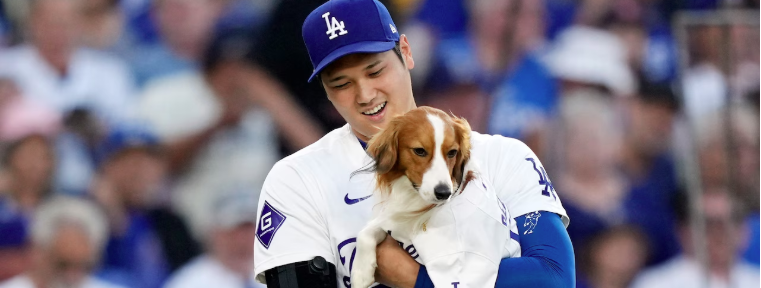
And don’t overlook the new-ish New Balance A2KSO17 model that Shohei Ohtani has during mound visits these days (with an assist from Wilson). According to those who offer such a glove on eBay.com, the production run was limited to 50 and they run for $15,000. Go ahead and add it to your watchlist.

At the reputable website called JustBallGloves.com, its list of the top-rated models for 2026 include a Nokona Alpha. Our elephant hunters. It has bulled its way into the top-tier mix with the Wilson A2000 and A2K, Rawlings Heart of the Hide and REV1X, All-Star Pro Elite and the Easton Professional Collection.

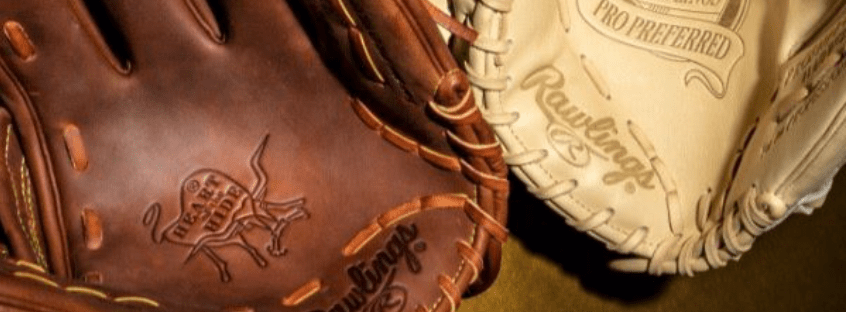
In regards to the Rawlings models, JustBallGloves accentuates how the soft, deer-tanned cowhide is still used for the palm lining to go with its pro-grade lacing. It also says: “When you see the snorting bull in the palm of a baseball glove, you know right away that you’re looking at a Rawlings Heart of the Hide.

The site has a Rawlings Heart of the Hide Yadier Molina catcher’s mitt for $350. Its also has a Croc Skin model (it’s really steer hide) that can go for $330. The Pro Preferred REV1X series with lighter, tighter grain kip leather, can go beyond $400. Something more for a Little Leaguer? Expect to pay up to $100.

They all, of course, now come in an array of rainbow of colors. Far beyond tan, brown, dark brown, and really dark brown.

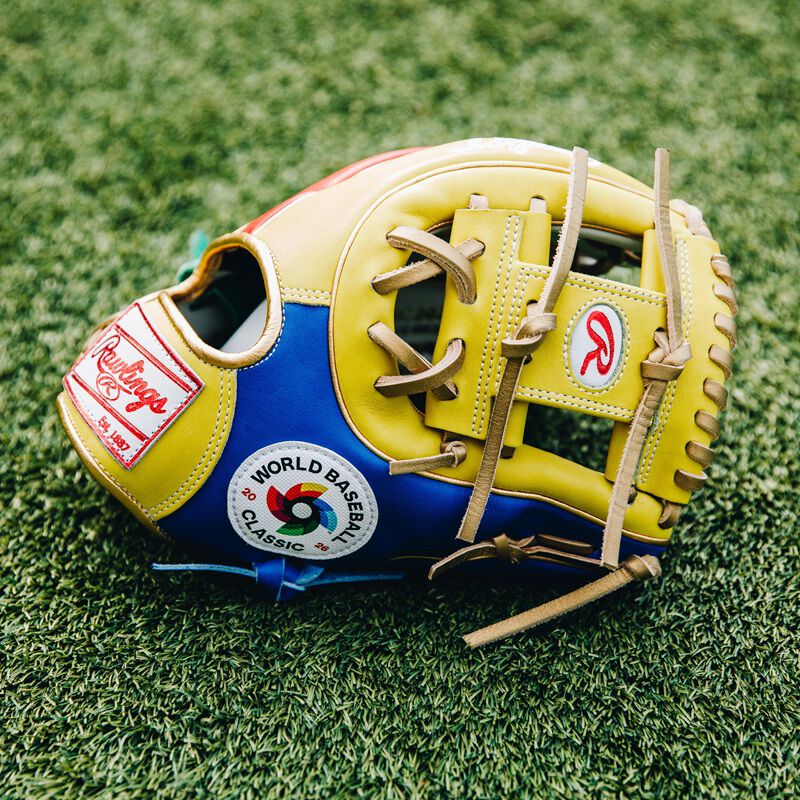
A $329 Rawlings 2026 World Baseball Classic Heart of the Hide glove is already out of stock on its website.

When George Rawlings secured a patent for a padded glove/oversized winter mitten in 1885 that he claimed was “intended especially for the use of base-ball players and cricketers … for the prevention of the bruising of the hands when catching the ball,” it was a way to acknowledge that the game he saw being played in his hometown of St. Louis area was barreling up beyond its bare-hand stage of existence. The forward-thinking drawings he created for the patent actually came two years before the sporting goods company he created with his brother Alfred and named after themselves.

By 1957, Rawlings had the first Gold Glove Awards for the top defensive players in Major League Baseball. In 2011, it introduced the Platinum Glove Award, first through fan voting and later through sabermetric analysis.

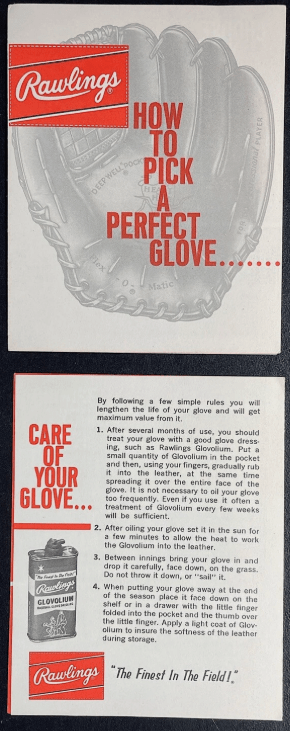
A 1965 magazine advertisement for Rawlings

In 2018, when the Rawlings company was bought for $395 million by MLB Properties along with the  Marina del Rey-based Seidler Equity Partners — the group of brothers who are nephews of former Dodgers owner Peter O’Malley and control ownership of the San Diego Padres — it was investment in a brand that carried value amidst competition. Two years later, Rawlings/Seidler bought up the popular Van Nuys- based Easton brand to increase Rawlings’ offerings in bats and apparel.

So much so that last year, a 14,000-square-feet, two-story Rawlings Experience flagship store was opened in St. Louis just to prove its point.

The store, no doubt, will carry this coffee-table sized book, which has to be larger than a typical MLB second-baseman’s glove. It’s 3-pound arrival isn’t so much a self-congratulatory glove bump boasting about its legacy and survival amidst a jungle of competitors.

Recruiting the services of Rizzoli Publishing in New York to produce something akin to a Taschen art book, the contents also allow it to be more a clever dive into the company archives to extract marketing materials it used to both educate and pitch the quality of its product to kids, mostly through the endorsement of MLB player name recognition.

Except, when it came to Bill Doak.

Continue reading “Day 2 of 2026 baseball book reviews: Smell the glove, feel the love”

Day 1 of 2026 baseball book reviews: Sho-ing off for the kids

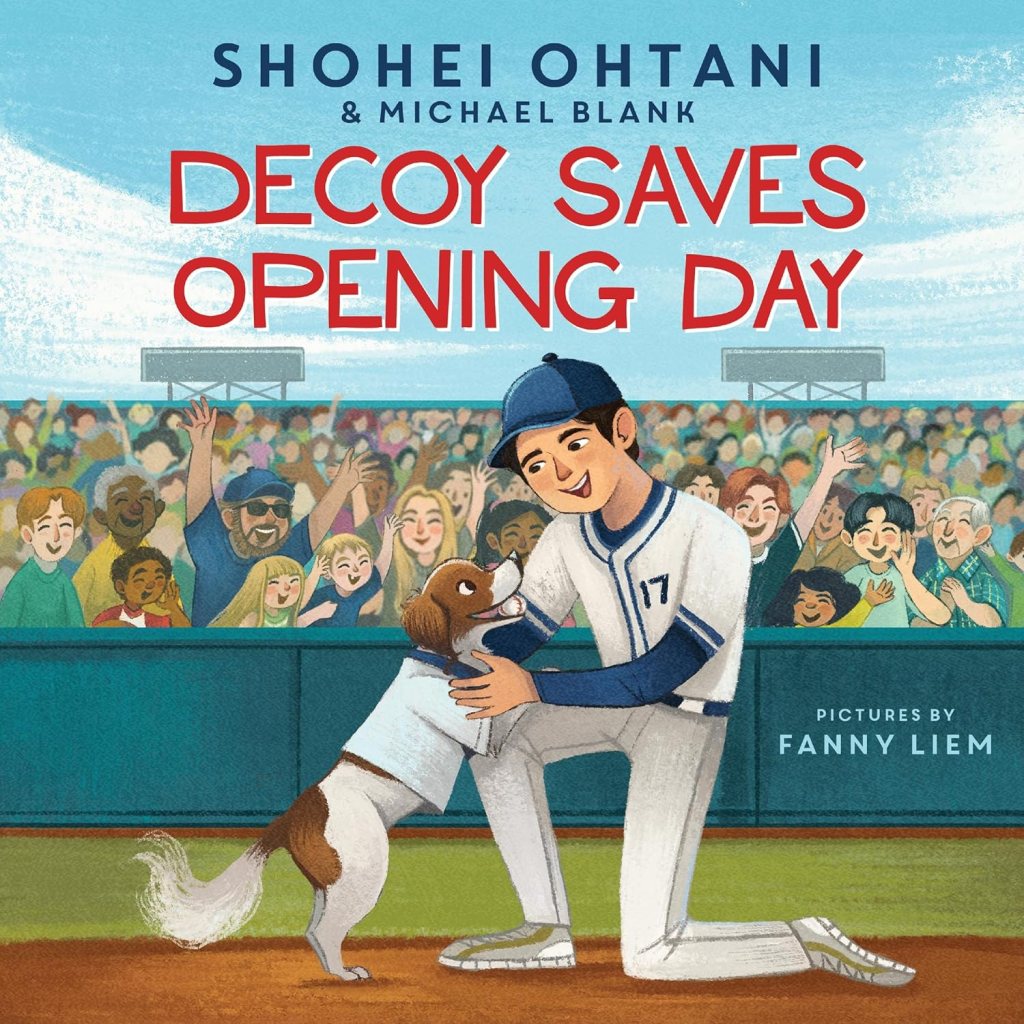
Decoy Saves Opening Day

The author: Shohei Ohtani and Michael Blank
The illustrator: Fanny Liem
The details: HarperCollins, 32 pages, $21.99, released Feb. 3, ’26
The links: The publisher and Bookshop.org

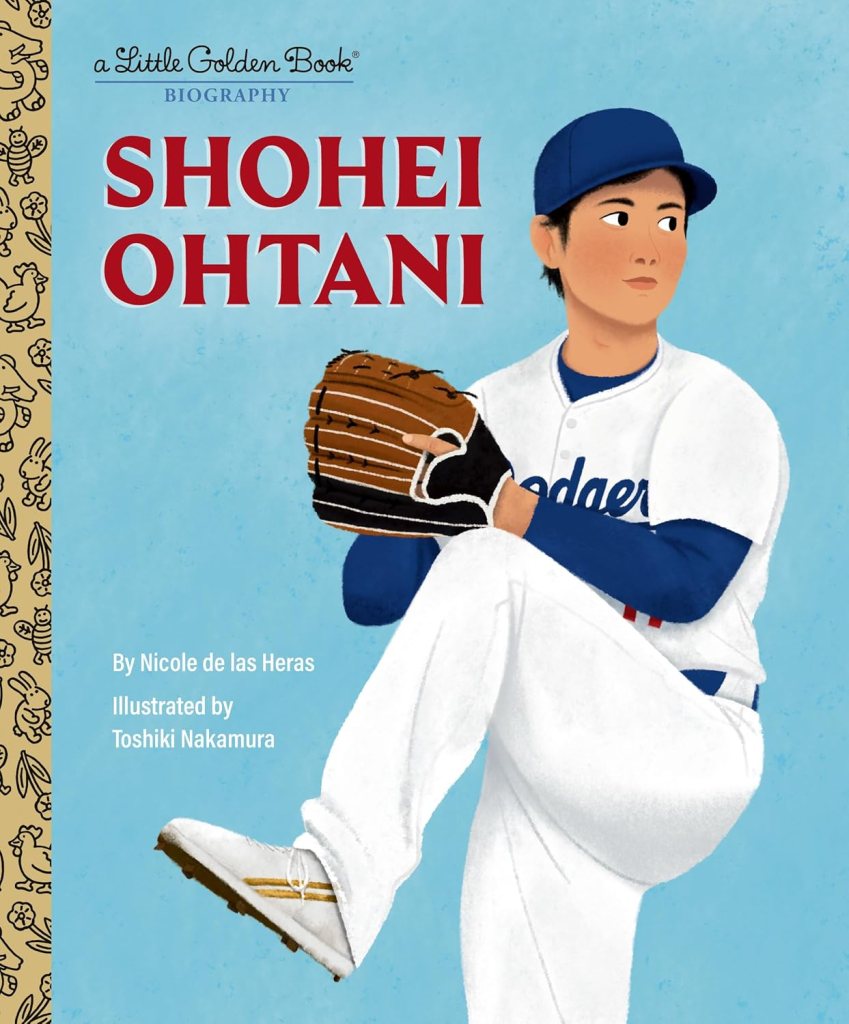
Shohei Ohtani: A Little Golden Book Biography”

The author: Nicole de las Heras
The illustrator: Toshiki Nakamura
The details: Little Golden Book Biographies/Penguin/Random House, 24 pages, $5.99; released March 3, ’26
The links: The publisher and at Bookstore.org


A review in 90 feet or less:

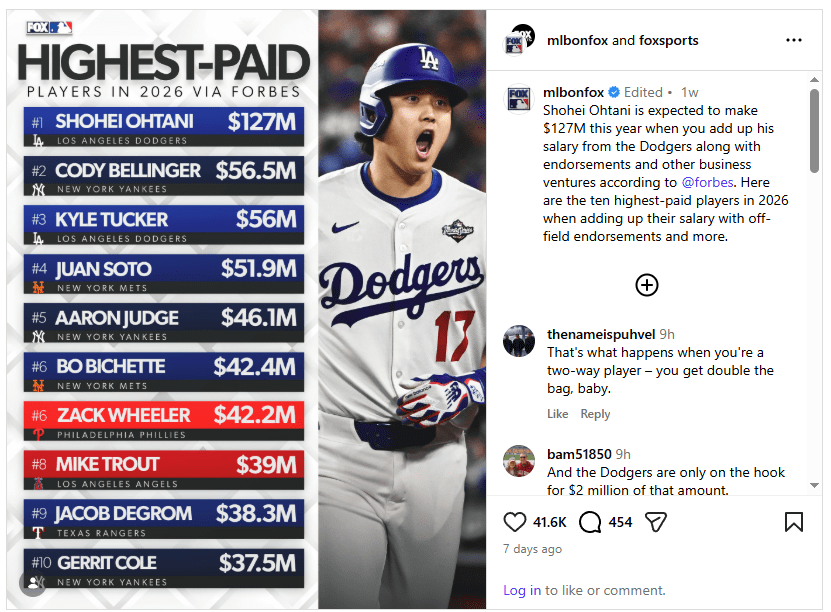
An AI overview collection of words and symbols generated from a search engine ask specifically about “Shohei Ohtani insane endorsement income” quickly will engineer this kind of answer-nugget:

“Shohei Ohtani is projected to earn an estimated $125 million in endorsement income for 2026, with nearly 20 global brand partners, making him the highest-paid athlete in the world from endorsements alone, according to Sportico data via Boardroom. This follows an estimated $100 million in marketing revenue earned during 2025, on top of a $2 million salary with the Dodgers — a threshold only previously reached by legends like Tiger Woods, Roger Federer, and Stephen Curry”

We believe this to be true, because the AI primary source for that information seems to spitting out an Instragram post made by MLB on Fox and Fox Sports. Those numbers had been regurgitated many times over by other media platforms, including the Los Angeles Times, when, in the headline “Why $100 million in endorsements says Shohei Ohtani is the global face of sport,” the writer went on to deduce: “In Ohtani, whose face appears on everything from airplanes to skin care products, baseball at long last has its Michael Jordan: the superstar that has transcended sports and ascended to the status of global pop culture icon.”

He can hit. He can pitch.

He can write a book. Not one of those “as told to” mass-market, ghost-written, give-us-the-gossip type of sordid tale.

No new dirt here on Ippei here. It’s about a different dog.

Ohtani’s handlers must be painfully aware there is no money to be made in the book publishing business.

Just ask writers such as Bill Plunkett, who did the 2025 “L.A. Story: Shohei Ohtani, The Los Angeles Dodges and a Season for the Ages” or Jeff Fletcher, who fashioned an update of his 2022 “Sho-Time: The Inside Story of Shohei Ohtani and the Greatest Baseball Season Ever Played.” All their deadline work dancing around their regular job of covering the Dodgers and Angels didn’t generate royalties that will allow them to lead a more regal suburban existence.

Ohtani’s co-author, Michael Blank, could even clue him in. Blanks is a venture capitalist who has been with Creative Artists Agency for 15 years.

Continue reading “Day 1 of 2026 baseball book reviews: Sho-ing off for the kids”

No. 23: Ryan Elmquist

This post is part of a media project called SoCal Sports History 101: The Prime Numbers from 00 to 99 that Uniformly, Uniquely and Unapologetically Reveal The Narrative of Our Region’s Athletic Heritage. Pick a number, and consider the list of athletes attached to it. Who wore it best? Or, what’s the most compelling story linked to it? Any person, place or thing is in play with Southern California connections. Star power, transformational achievement, longevity, notoriety and quirkiness all factor in. Whatever leads to a lively discussion and interpretation.

The most obvious choices for No. 23:

Kirk Gibson: Los Angeles Dodgers
LeBron James: Los Angeles Lakers
David Beckham: Los Angeles Galaxy
Eric Karros: Los Angeles Dodgers
Dustin Brown: Los Angeles Kings
Harold Minor: USC basketball, via Morningside High

The not-so obvious choices for No. 23:

Diana Taurasi: Don Lugo High School girls basketball
Jackie Joyner: UCLA women’s basketball
Jonathan Franklin: UCLA football
Kenny Washington: UCLA basketball

The most interesting story for No. 23:
Ryan Elmquist, Caltech men’s basketball guard (2007-08 to 2010-11)
Southern California map pinpoints:
Pasadena, Whittier, Pomona, LaVerne


Caltech senior Ryan Elmquist looks for a shot during his team’s 87-53 win over Eastern Nazerene, its second in a row during the 2010-11 season (later forfeited). Danny Moloshok/New York Times.

Ryan Elmquist scored 36 on his ACT college entrance exam. That surely impressed his classmates at Woodbury High in Minnesota, just East of the Twin Cities. Especially those who came to understand how that was a perfect score.

It gave Elmquist a ticket to dig out of the Midwest snow, head to Pasadena and enroll in California Institute of Technology — better known as Caltech in “The Big Bang Theory” fandom.

His major was to study computer science. His guilty pleasure was to keep playing basketball.

In Caltech lore, Elmquist, a 6-foot-5 forward, is far better remembered for the time when he scored one not-so-lousy free throw on February 22, 2011. The last of his 23 points, with 3.3 seconds left, accounted for the final margin in a 46-45 victory for the Beavers over visiting Occidental College on their home Braun Athletic Center.

His smarter-than-smart peers were as impressed as the school’s Nobel Laureate-rich professorial staff and researchers. For Elmquist not only had the perfect ending to his senior season in the final game he ever played for the school, it also ended Caltech’s streak of 310 consecutive losses in Southern California Intercollegiate Athletic Conference (SCIAC) competition. That was a streak that began before Elmquist and his teammates were born, in January of 1985.

But who’s counting. Unless you are a campus full of math nerds.

Bazinga.

Continue reading “No. 23: Ryan Elmquist”

No. 65: Max Montoya

This post is part of a media project called SoCal Sports History 101: The Prime Numbers from 00 to 99 that Uniformly, Uniquely and Unapologetically Reveal The Narrative of Our Region’s Athletic Heritage. Pick a number, and consider the list of athletes attached to it. Who wore it best? Or, what’s the most compelling story linked to it? Any person, place or thing is in play with Southern California connections. Star power, transformational achievement, longevity, notoriety and quirkiness all factor in. Whatever leads to a lively discussion and interpretation.

The most obvious choices for No. 65:

Max Montoya: UCLA football; Los Angeles Raiders
Tom Mack: Los Angeles Rams
Mickey Marvin: Los Angeles Raiders

The most interesting story for No. 65:
Max Montoya, Los Angeles Raiders offensive guard (1990 to 1994), via Mt. San Antonio College (1974 to 1975), UCLA (1976 to 1978) and La Puente High (1969 to 1973).

Southern California map pinpoints:
Montebello, La Puente, Westwood, Los Angeles (Coliseum)


Los Angeles Raiders right guard Max Montoya fends off Cincinnati Bengals defenders during an AFC Divisional Playoff game on Jan. 13, 1991 at the Los Angeles Coliseum. The Raiders won, 20-10. (Photo by Stephen Dunn/Allsport/Getty Images)

Max Montoya isn’t about to max out his Hall of Fame membership cards. But he’s close.

With his 2019 induction into the Salon de Ia Fama Latinoamericano del Deporte — also known as the Latin American International Sports Hall of Fame — Montoya adds to his resume of having found a place in the California Community College Football Coaches Association Hall of Fame (1994), the Mount San Antonio College Athletic Hall of Fame (1992), the California Community College Athletic Association Hall of Fame (3C2A) (2000), and then the National Hispanic Sports Hall of Fame (2012).

Perhaps all that’s missing is the UCLA Athletic Hall of Fame?

Continue reading “No. 65: Max Montoya”

No. 59: Barbie

This post is part of a media project called SoCal Sports History 101: The Prime Numbers from 00 to 99 that Uniformly, Uniquely and Unapologetically Reveal The Narrative of Our Region’s Athletic Heritage. Pick a number, and consider the list of athletes attached to it. Who wore it best? Or, what’s the most compelling story linked to it? Any person, place or thing is in play with Southern California connections. Star power, transformational achievement, longevity, notoriety and quirkiness all factor in. Whatever leads to a lively discussion and interpretation.

The many not-so- obvious choices for No. 59:

George Kase, UCLA football
Mario Celotto, USC football
Evan Phillips, Los Angeles Dodgers
Ismail Valdez, Los Angeles Dodgers

The most interesting story for No. 59:
Barbie, pop culture icon (1959 to present)
Southern California map pinpoints:
Hawthorne, El Segundo, Los Angeles

Reference books on the subject:
Barbie and Ruth: The Story of the World’s Most Famous Doll and the Woman Who Created Her,” by Robin Gerber, 2010
Barbieland: The Unauthorized History,” by Tarpley Hitt, 2025


Of all the pretty petty people, from all the impervious places on the globe, with all the pretentious, pretend things to chose from, guess who pushed herself onto the cover of Sports Illustrated in early 2014?

Barbie, the iconic figurine and model citizen created by the then-Hawthorne based Mattel toy company. It figures she was depicted neither as an athlete nor the SI Sportsperson of the Year. Maybe a jockified Barbie could have played that part, but there was more fashionable forward thinking here.

Since her creation, Barbie has gone far beyond just a fancy-dressed glamor symbol. “You Can Be Anything” is the trademarked phrase Mattel has saved for her.

Barbie has been a volleyball player. And a soccer player. And a softball player. Name the sport — we’re even thinking pickleball — and in many display cases, she’s there sporting a No. 59 jersey.

That’s a call back to the year she was created, 1959.

Some of those “59” Barbies tout off her active lifestyle as part of the “Malibu Collection,” along with genital challenged boyfriend, Ken. She can also play into the “fashionista” genre.

But for this purpose, for this SI cover, this Barbie — a certified Southern California 11 ½-inch titan — made the Swimsuit issue. Wearing her a classic black-and-white one-piece retro swimsuit.

Legendary photographer Water Ioos, Jr., was also in on the photo shoot.

“She’s like the best model I’ve ever worked with,” he said. “She takes directions almost silently.”

Officially, it was an #unapologetic synergistic marketing ploy, a “cover wrap” to coincide with the American International Toy Fair as well as celebrate the 50th anniversary of the magazine. Indeed, Mattel paid SI for the privilege. And a limited edition SI Barbie doll went on sale to add to the transactional process.

All in all, this Barbie/SI co-oped exposure led to more uncomfortable pearl clutching for those concerned about image-consciousness messaging to young women. SI and Barbie provided two easy targets.

“Mattel has long contended with complaints that Barbie, with her lithesome figure and focus on fashion, is not a positive role model for girls,” a New York Times story noted. “At the same time, Sports Illustrated is no favorite of some critics who believe that the swimsuit issue objectifies women.”

A Mattel spokesman responded in a story for NBC News: “Barbie has always been a lightning rod for controversy and opinions. Posing in SI gives Barbie and her fellow legends an opportunity to own who they are, celebrate what they have accomplished and show the world it is OK to be capable and captivating.”

That story noted Sports Illustrated claims to have more than 17 million women read its Swimsuit issue, more than most major fashion magazines combined, and sales for items the models wear get a significant boost.

“Barbie sort of has been taken hostage,” said a university marketing professor, “(but) despite her haters and naysayers, she’s comfortable with who she is.”

Continue reading “No. 59: Barbie”