"Everything comes to him who hustles while he waits." — Tommy Edison
Author: fartheroffthewall
Tom Hoffarth is a sports journalist in Los Angeles, born and raised (reared is the correct phrase, but it just sounds wrong) and specializing in the sports media business. A USC graduate from the School of Journalism (it still exists, somewhat) in 1984, he is also available for service at https://www.linkedin.com/in/tomhoffarth/
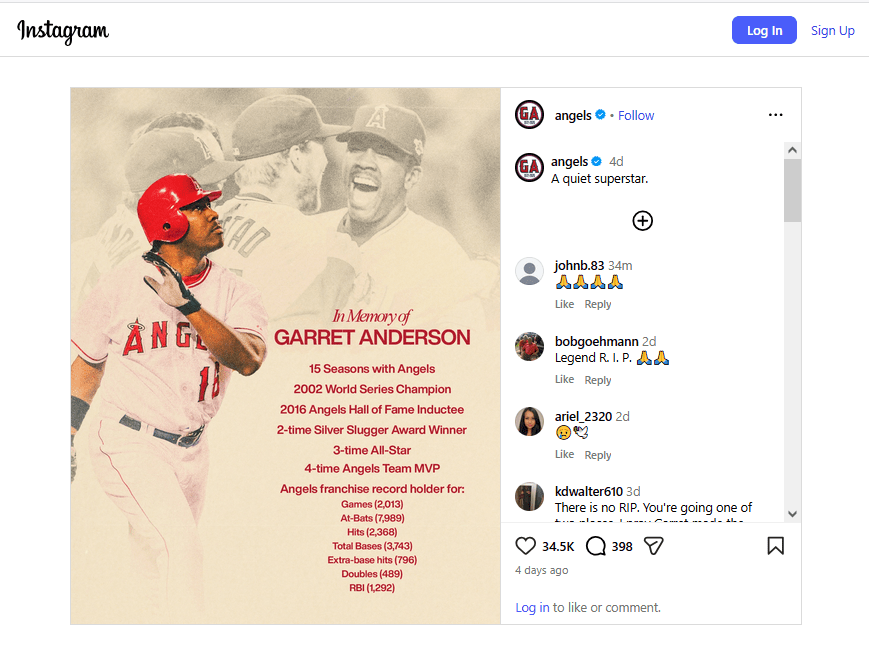
The sudden death of the retired Angels’ outfielder at age 53 on April 16 at his home in Newport Beach from pancreatic issues was a real cause to pause.
GA gave us more than just general admission access to witness him as the only player to wear a team jersey spanning the California (1994-96), Anaheim (1997-2004) and revived Los Angeles (2005-2008) branding names. Which, coupled with his own rather common-man name, made it easier for him to slip under the national radar despite holding that unique spot in the franchise’s history.
The team’s current all-time leader in games played (2,013), hits (2,368), at bats (7,989), total bases (3,743), doubles (489), RBIs (1,292) and sacrifice flies (76), Anderson is momentary now tied with Mike Trout with most extra-base hits (796), second to Trout in runs scored (1,024), third in batting average (.290, behind Vlad Guerrero’s .319 and Rod Carew’s .314), and, if this comes as a surprise, he’s also third in home runs (272, behind Trout and Tim Salmon).
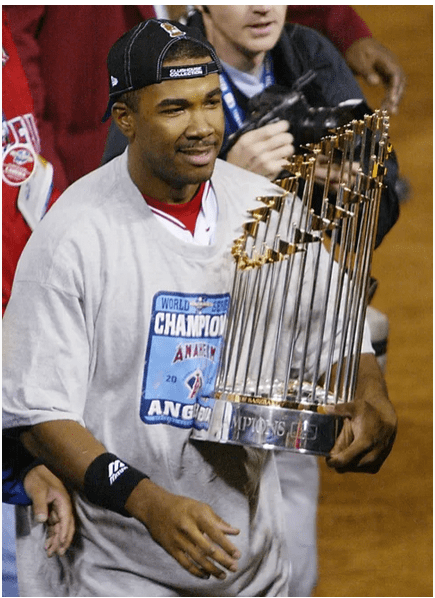
Garret Anderson carries the World Series trophy after the Game 7 win in Anaheim on Oct. 27, 2002. (Don Emmert/Getty Images)
One other key thing perhaps overlooked when those writing about his legacy covered his “graceful and enduring” 17-season MLB career:
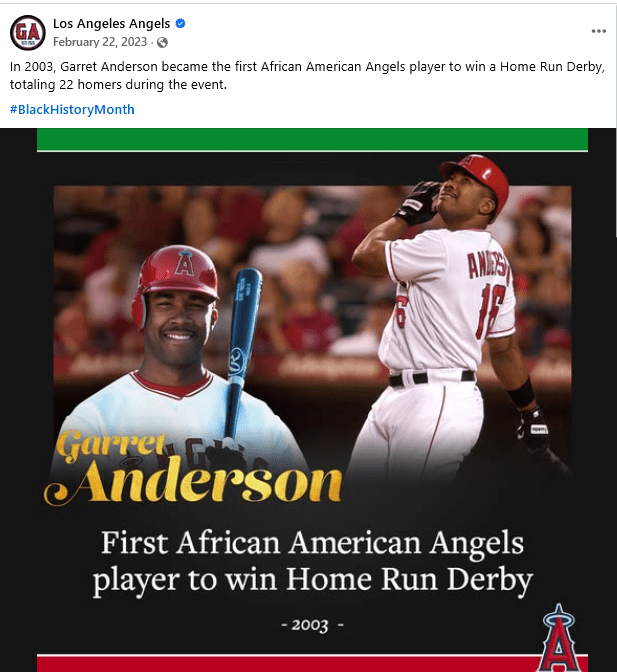
Anderson was the first player to ever win a World Series title, a Home Run Derby title and an All Star Game MVP within a one-year span.
Not so trivial.
In the 2002 World Series, ending with so far the only title in the Angels’ 66-year history, Anderson’s bases-clearing double in the third inning of Game 7 gave the Angels a cushion to ride over San Francisco.
In the 2002 playoffs, covering 16 games, he was 21 for 70 (.300) with two homers, 13 RBIs and 11 runs scored.
In the 2023 Home Run Derby, Anderson proved he belonged — he did have a career-best homer total for a season with 35 in 2000, a year when he only walked 24 times. Anderson outlasted Albert Pujols in the final round to win it, using efficiency to get the job done.
“I don’t look at myself as a home-run hitter, but I know I’m capable of hitting some balls out of the park, and it’s just another platform to go out and show America what I can do,’‘ Anderson said after the eight-man, three-round competition. “That swing I used is not a swing I try to use during the season. It was just strictly for trying to hit the ball over the fence. During the season, mentally and physically, I don’t do that. I look for mistakes and try to hit them hard.”
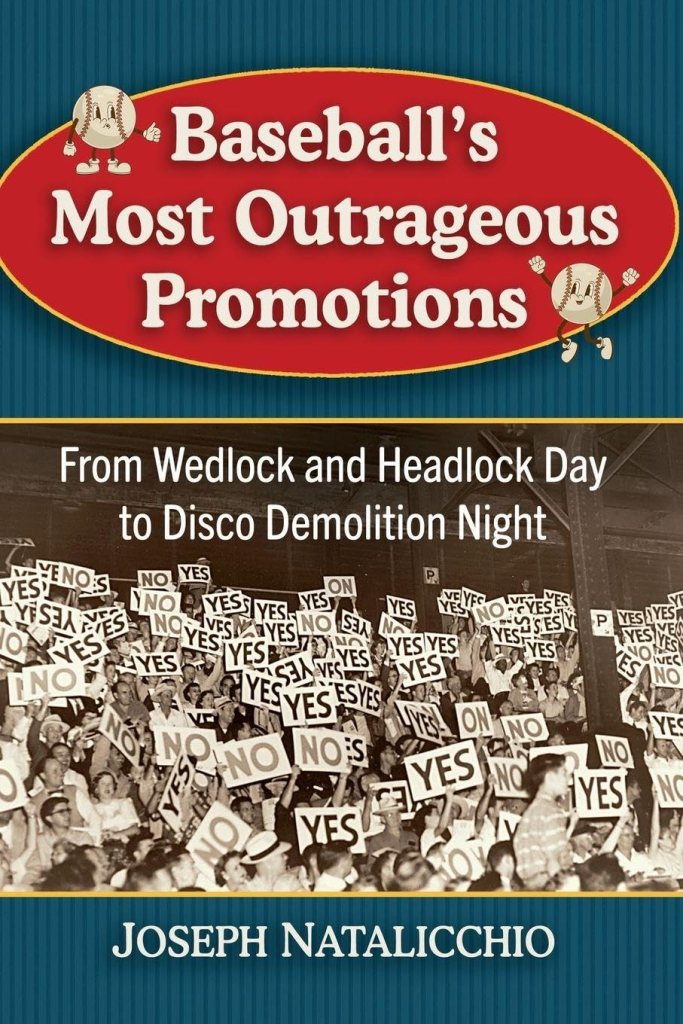
“Baseball’s Most Outrageous Promotions: From Wedlock and Headlock Day to Disco Demolition Night”
The author: Joseph Natalicchio The details: McFarland, 254 pages, $29.95, released Dec. 4, ‘26 The links:The publisher, Bookshop.org
A review in 90 feet or less:
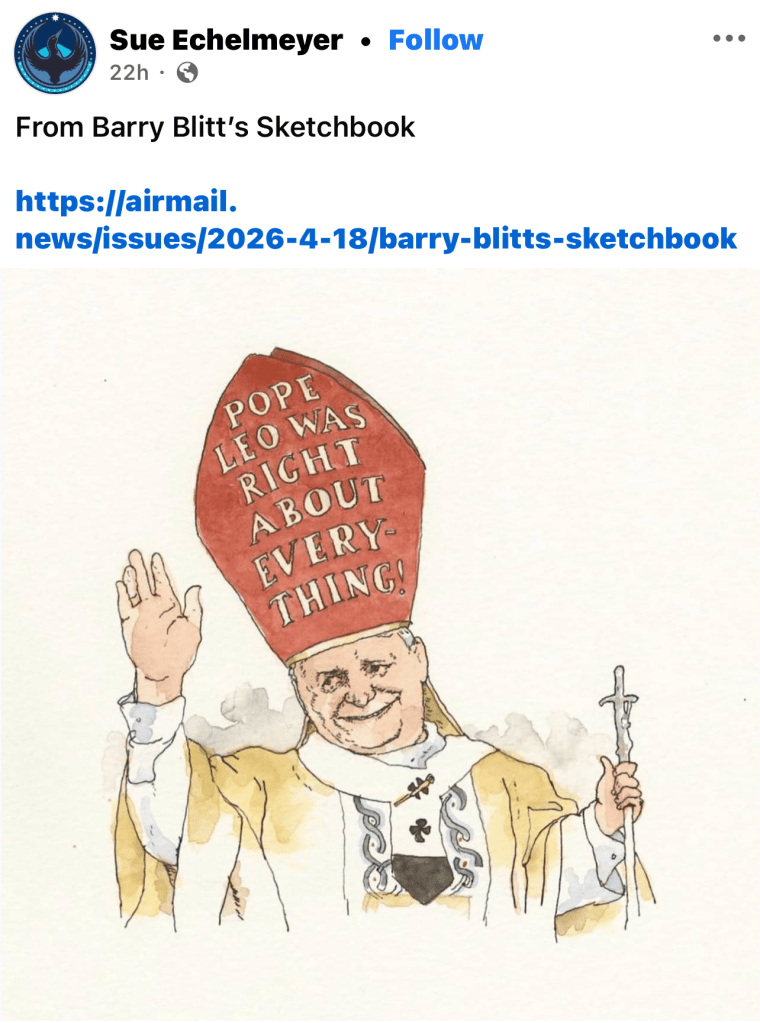
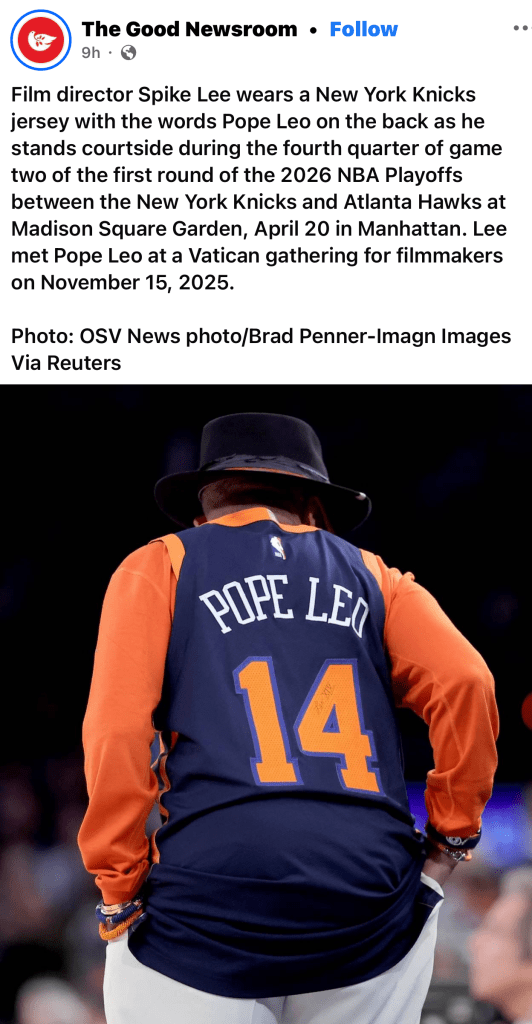
This isn’t the planned Chicago White Sox “Pope Hat Day” promotion. Just a suggestion.
In March 1966, John Lennon made his famously toxic comment that he considered The Beatles to be “more popular than Jesus.” It came from a restless give-and-take he had with a British reporter about the influence pop culture had on modern youth versus organized religion.
The backlash to something taken a bit out of context resulted in Lennon having to wear it. Where he stood in the U.K., it made more sense. And having experienced the U.S. Beatlemania, it had more context.
Sixty years later, as we sit in the spring of 2026, what if we were to suggest — Pope Leo XIV is more popular than the Beatles.
Talk amongst yourselves. And consider the role baseball has played in measuring all of this over the year with its promotional muscle.
The Chicago White Sox have fully embraced the ideology of how the man known in his previous religious life as Robert Prevost had a devout allegiance to the South Siders, because that’s where he grew up before ascending to the throne of St. Peter.
Earlier this month the team created a “Pope Hat” giveaway to take place on Aug. 11 against the Cincinnati Reds at their home park of Rate/Guaranteed Rate/U.S. Cellular/Comiskey Park Re-Do. Initially, it was supposed to be a theme-night giveaway, capped at around 1,500 who bought tickets in specific sections. The promo quickly went viral. Now it’s a “Pope hats for the masses” promotion.
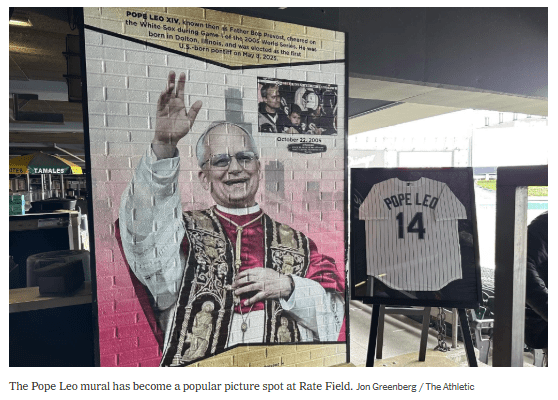
Since Leo’s election last year, the Sox’s ballpark held a Catholic Mass in his honor. The team put up a mural honoring him near where he once watched a World Series game in 2005, a virtual video that went viral from researchers at Fox Sports, who covered that game.
This Pope hat event doesn’t seem to be all that outrageous, let alone bordering on anything considered blasphemous.
Not from a franchise once owned by the immortal Wild Bill Veeck Jr.
Veeck’s chief promotional rival during his time was Charles O. Finley.
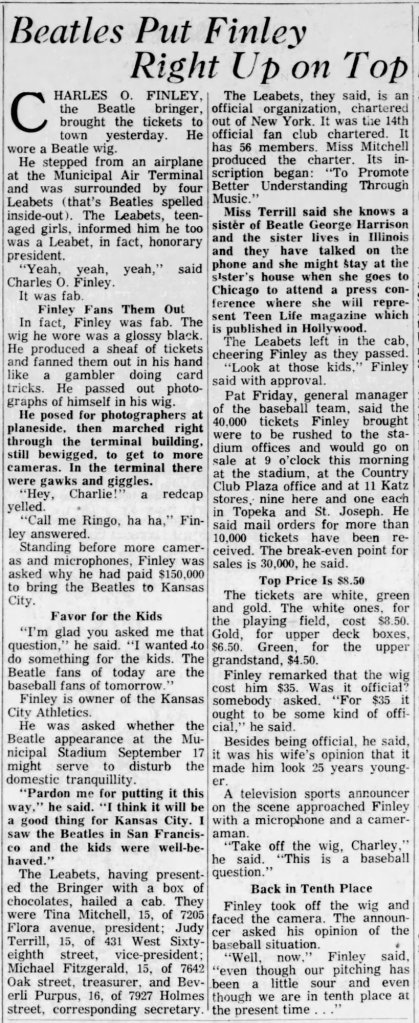
And consider what Charlie O. tried to pull as his Kansas City Athletics were floundering in the American League during the ’64 season and sought relief from Lennon and friends.
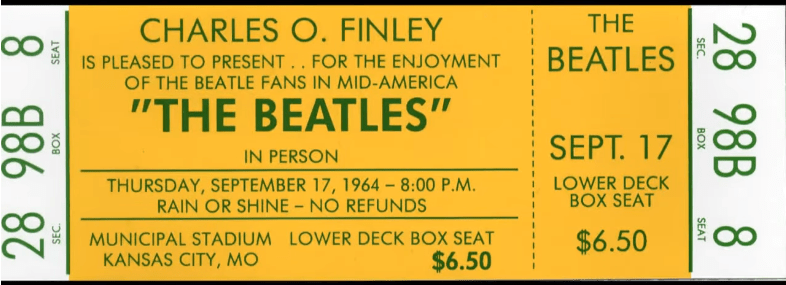
Finley had the idea that, since the Beatles were already traversing the states that summer, why not hang out for a day in K.C.? The group’s landmark North America concert tour the previous February caused quite a sensation. They were now prepared to return and do 32 shows in 24 cities over 31 days from August to September.
The Kansas City Times, Aug. 29, 1964
The Fab Five’s manager, Brian Epstein, turned down Finley’s initial offer of $60,000. Finley went to $100,000. Still no. Finley upped it to $150,000. That’s merely as $1.6 million in today’s dollars — but the largest any American artist had ever received for a single show.
Done deal. Sept. 17 it will be.
At a time when the Beatles are doing more theaters, convention halls and arenas than massive ballparks — their famous events at Shea Stadium and Dodger Stadium came in 1965, and their last concert, at San Francisco’s Candlestick Park in 1966, about five months after Lennon’s “Jesus” remarks — Finley had a stadium venue that should have accommodated larger numbers and likely make up what he put out for it. It was much larger than places on this tour such as the Hollywood Bowl, Boston Gardens, Toronto’s Maple Leaf Gardens and New York’s Forest Hills Stadium (the private tennis club in Queens) and later the Paramount Theater.
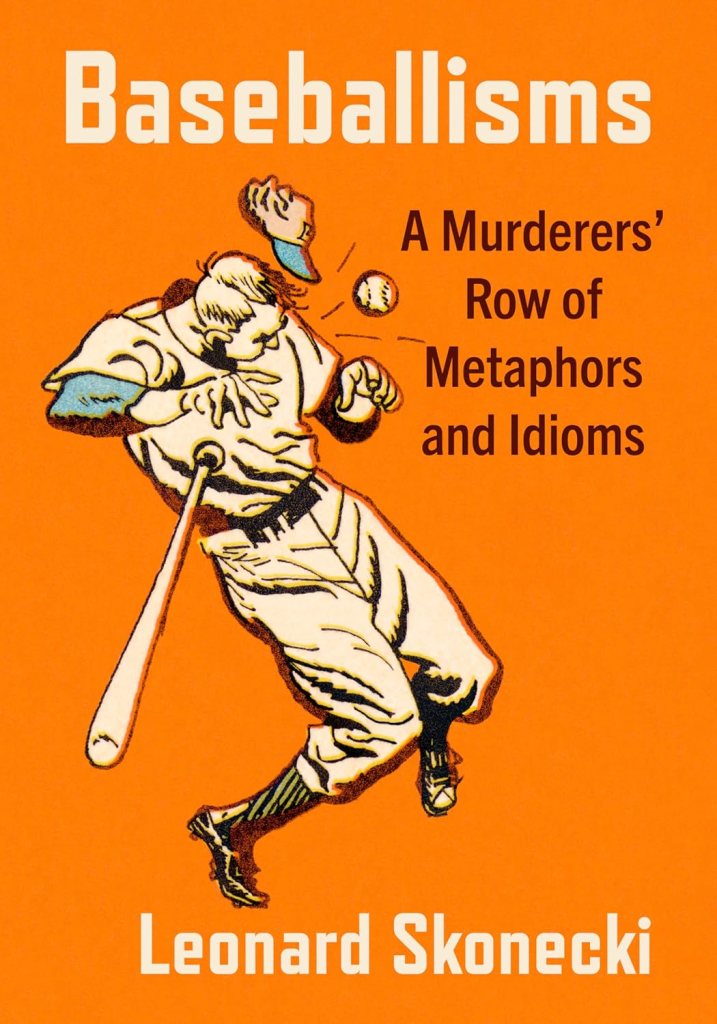
“Baseballisms: A Murders’ Row of Metaphors and Idioms”
The author: Leonard Skonecki The details: McFarland, 334 pages, $59.95/$49.95 The links:The publisher, Bookshop.org The slight confusion: The publisher lists it at $49.95 in stock. Amazon (please don’t buy it there) also has it for that price, as of March 19, ’26. Bookshop has it for $59.94, available as of May 22, ’26. Target also offers it at $49.99 starting in May.
A review in 90 feet or less:
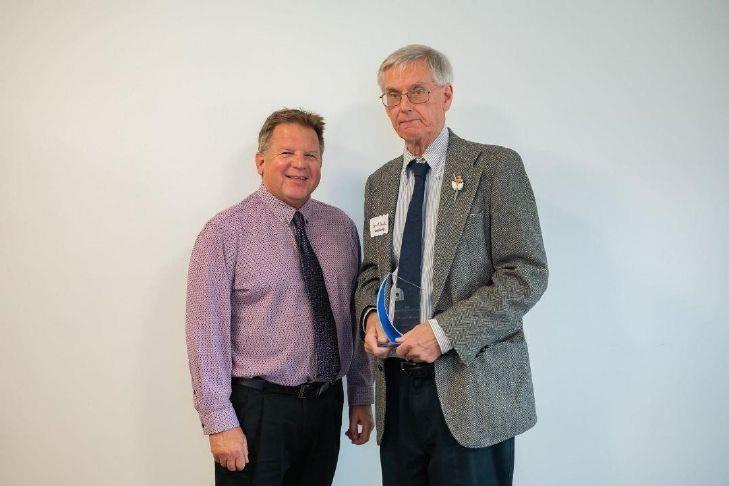
Leonard Skonecki, right, poses with former Fostoria mayor Eric Keckler. (Credit: The Review Times)
Bless you, Leonard Skonecki.
While not a renowned linguist but a dedicated and curious reader/researcher finding something meaningful and purposeful in retirement, Skonecki is best described as “well-known in Fostoria.” That’s from our own research in the matter.
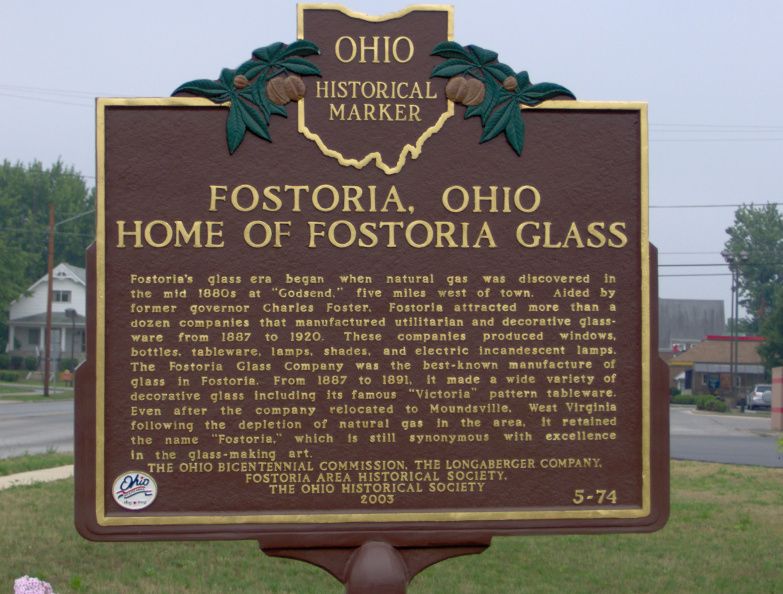
Through a parallel search, we find Fostoria is “a city located at the convergence of Hancock, Seneca and Wood counties in the northwestern part of the U.S. state of Ohio. The population was 13,046 in the 2020 Census, slightly down from 13,441 at the 2010 Census. It is approximately 40 miles south of Toledo and 90 miles north of Columbus.”
It was named after Charles W. Foster, a local businessman. His son, also named Charles, became governor of Ohio and U.S. Secretary of the Treasury under Benjamin Harrison.
It is also was once famous for making glass.
Now we have a visual.
Skonecki’s author bio notes he once wrote for the weekly Fostoria Focus newspaper, which had a bold run between 1994 until 2014. He also worked in the reference department of the Kaubisch Memorial Public Library.
“Now retired, he lives in Fostoria, Ohio,” the bio wraps up.
We also learned from another source Skonecki “was born and raised in Fostoria and graduated from St. Wendelin High School in 1968. He then lived in Toledo and Dayton and returned to Fostoria in 1995. He has served as the president of the Fostoria Area Historical Society, and also worked for WFOB where he hosted the Friday edition of the Talk@10 interview show.”
Now, we have context.
His body of work includes an appearance in the 2013 documentary “History of Fostoria (Vol. 1),” and, because you can’t stop the flow of important material but you can only hope to contain it, Skonecki reprized his role in the 2014 update “History of Fostoria (Vol. 2).”
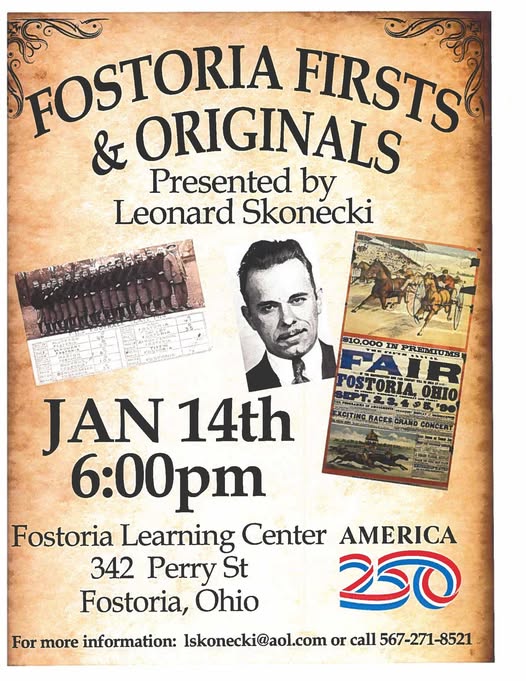
Last January, Skonecki was the guest presenter for “Fostoria First & Originals” at the Fostoria Learning Center as part of its “America 250” celebration. Flyers were distributed as the city noted on its Facebook post that it was a moment in time where “Fostoria history comes to life.”
This follows up from a time in April of 2024 when the Seneca County Museum started a “speaker series” where Skonecki presented a program on the robbery of the First National Bank of Fostoria. On May 3, 1934, John Dillinger and one of his gang, Homer Van Meter, robbed the bank of $17,299. In the course of the robbery, nine persons were shot, including Fostoria Police Chief Franklin Culp. In order to make a safe getaway, Dillinger and Van Meter took two bank employees hostage.
“Leonard will be sharing information about the robbery, related events, and how it affected the persons most directly involved,” the information noted. “He will also allow time for questions.”
Technically, it was an illogical technological clustermess. It nearly short-circuited the ebbs and flow and safety of all concerned in a recent Dodgers-Mets contest.
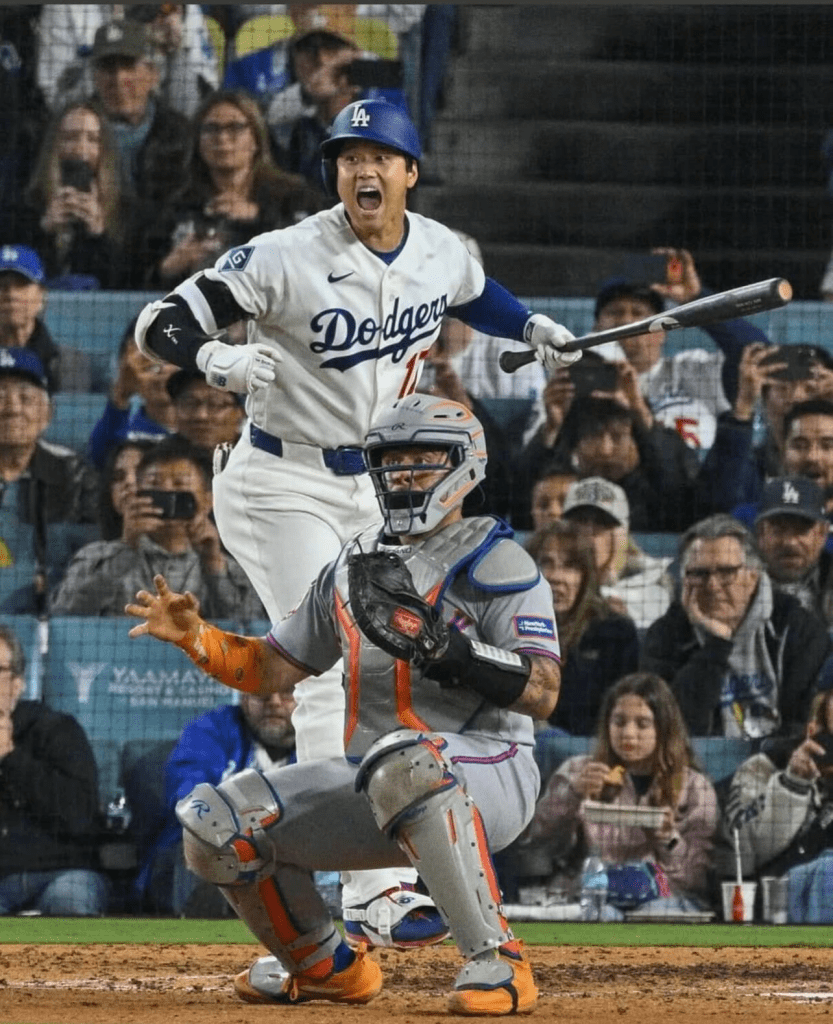
Fourth inning: Mets reliever Craig Kimbrel does his crab-like glare into catcher Francisco Alvarez for a sign — even though we assume he’s hearing it through a small speaker in his cap with the new-fangled PitchCom device. That was put into the game to speed it up and prevent sign stealing. Now we see some unintended consequences.
As Alvarez realizes the pitch clock is winding down to the final two seconds, has a panic attack. Rather than allow Kimbrel to be flagged as a violator, and the count to the Dodgers’ Shohei Ohtani to go to 3-2, the catcher leaps out from behind the plate, sidesteps Ohtani (just as he’s coiling to what he anticipates is a ball coming at him), seems to ask for a timeout amidst his arm flailing, lurches toward the mound and plants himself in front of the plate on the grass like a school crossing guard trying to stop an oncoming e-bike.
Kimbrel, head down, doesn’t notice all this happening. So when he leaps into his jerky windup, he suddenly realizes Alvarez is an object in his peripheral vision closer than he actually appears.
And Ohtani freaks out.
Already been hit by a pitch in his first at-bat and still feeling its affect, and already startled by Alvarez moments earlier when the catcher tried to make a back-pick of Dodgers runner Miguel Rojas at first base, Ohtani spins away to his right in some kind of self preservation mode.
Homeplate umpire Nic Lentz does his own ballet leap to his left. Did he agree to Alvarez’s time-out call? We’re not all that sure as Lentz is still trying to keep some integrity of the game.
Kimbrel almost falls down.
The Dodgers’ broadcasters gasp as well. What just happened?
Unbelievable.
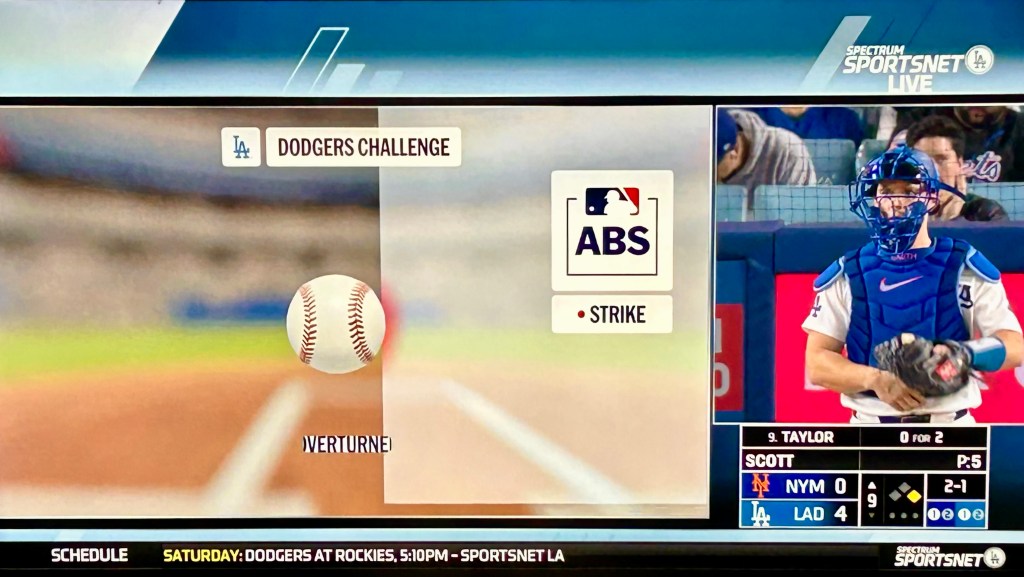
Ninth inning: We’re being technologically challenged again with the Dodgers putting the final touches on a 4-0 victory. Gotta use those unused Automated Ball-Strike Challenge System head-taps, because they don’t carry over to extra innings. Or to tomorrow. Use ’em or lose ’em.
Dodgers reliever Tanner Scott pitches to Mets’ No 9 hitter Tyrone Taylor with a 1-1 count. It is called a ball by Lentz. Dodgers catcher Will Smith wants a review.
The ABS graphic shows that a sliver of the ball hit the side of the gray screen box graphic. The call is overturned. It’s a 1-2 count now instead of 2-1.
“That’s ridiculous,” says Dodgers TV analyst Eric Karros. “You gotta give me more than a seam on that part of the plate (to change it from a ball to a strike). I mean … you gotta give me half a ball or something.”
Undeniable.
And all there for the fans left in the expensive seats to capture on their iPhones to share later.
For all of today’s umpires — including C.B. Bucknor — are already flinching on calling runners safe or out on the basepaths, since instant replay continues to add more nuanced layers of challenge-able calls but also refuses others like a foul tip that make it seem rather arbitrary — this technology seems to add to this pursuit of perfection that will never be attained.
“MLB doesn’t really know in what direction they want the game to go,” Joe Posnanski has written about this on an almost daily basis since the 2026 season started, and before. “They know — they HAVE to know — that the Day of the Umpire has passed, and that the game will be officiated very differently in the years ahead. And I have been saying for a while now that ABS for every pitch is coming.”
Unacceptable.
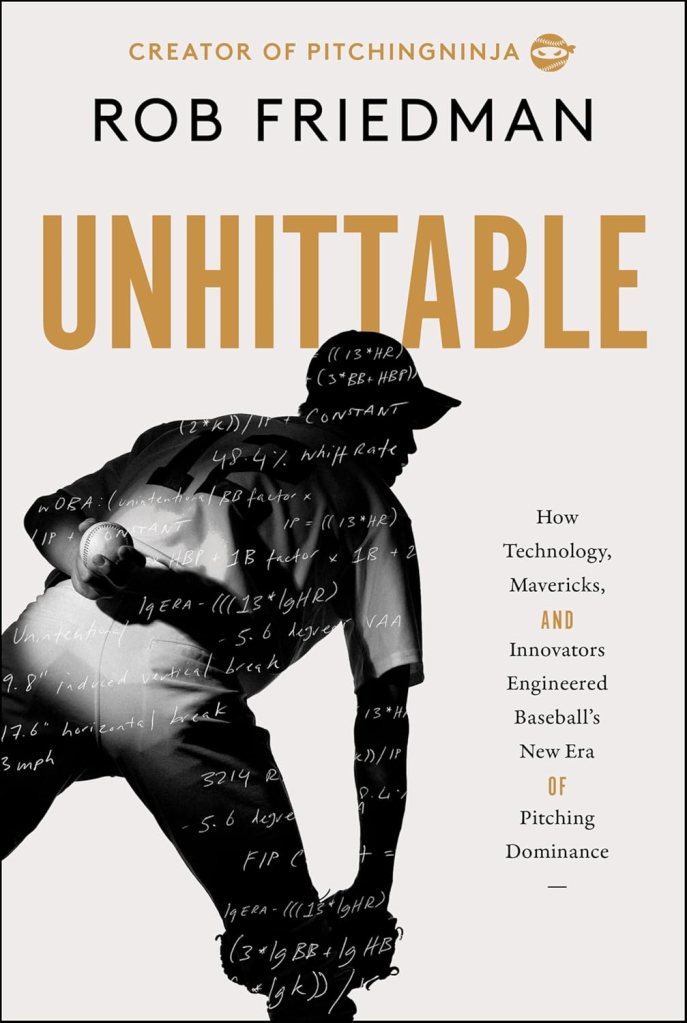
Just went on CNN to talk about my book Unhittable—how technology is making pitchers nastier than ever… and also what robo umps could mean for both pitchers & hitters.
Amidst CNN’s March 25 broadcasting day, there was Phil Mattingly, the network’s chief domestic correspondent filling in for Jake Tapper on “The Lead” (and apparently no relation to Don Mattingly), trying to navigate that hour’s worth of more bizzaro news coverage. He found a way to segue from the Strait of Hormuz straight to Friedman toward the end of the show so Friedman’s new book could be discussed completely out of context before “Erin Burnett Outfront” comes on.
Mattingly: I do want to start with ABS. What do you think of this? What does this change? Friedman: So, it changes a lot. It’s going to change things like framing. It’s going to change what you’re seeing on the on the screen because some pitches, you know, you see those curve balls that barely clip the zone that umpires give up on, hitters give up on, and now they can be challenged and be a strike. There’s a whole level of strategy that comes to be now with robo umps. Mattingly: Does this benefit pitchers? Friedman: That’s a great question. I think that’s heavily debated. … There are hitters that say it favors them because the strike zone will be smaller and they can’t expand the zone. But there are pitchers that say they’re just going to clip the zone with breaking stuff, east to west, north to south. And hitters are going to be helpless against it. So, I’m curious to see what happens. Mattingly: Yeah, it’s going to be fascinating to watch it play out.
How unseemly. Unsuitable. Unbefitting for all.
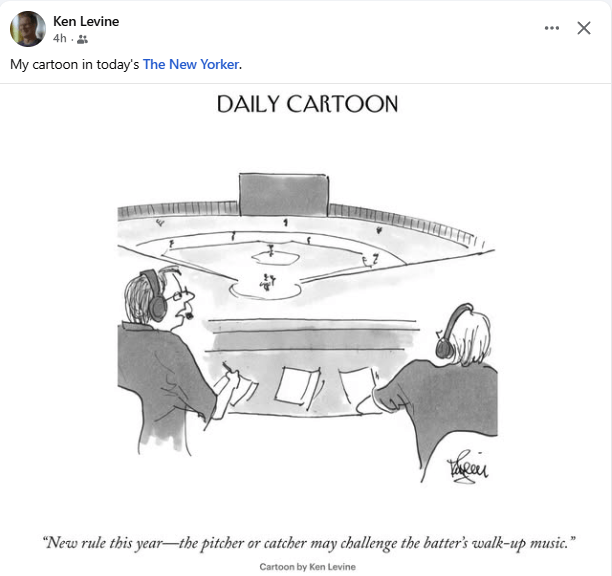
And wait’ll next year when the automated check-swing review process is introduced.
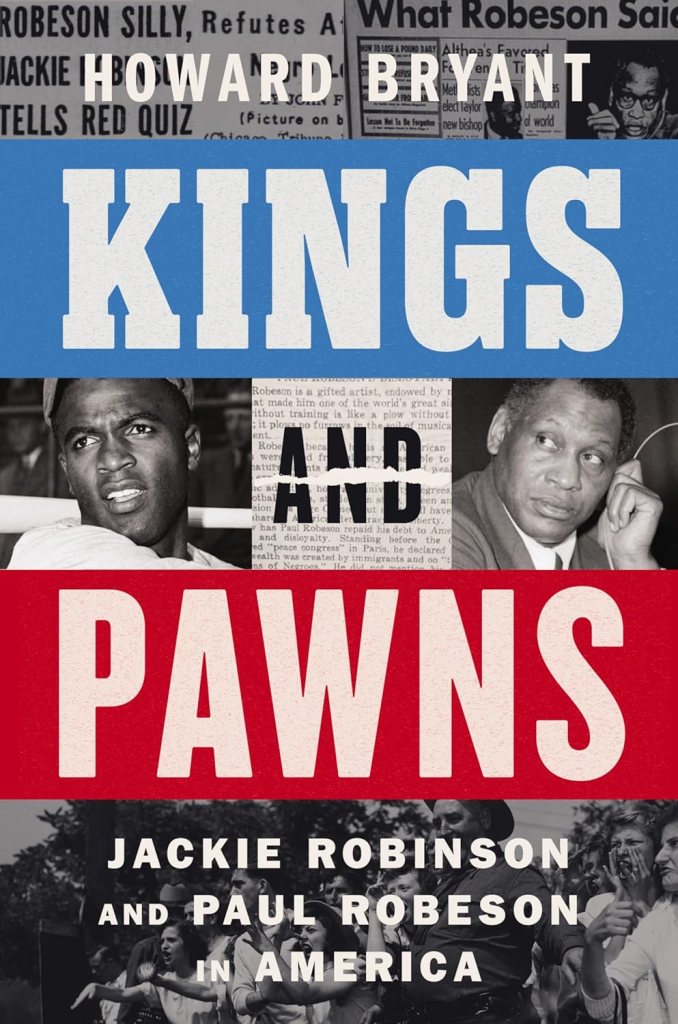
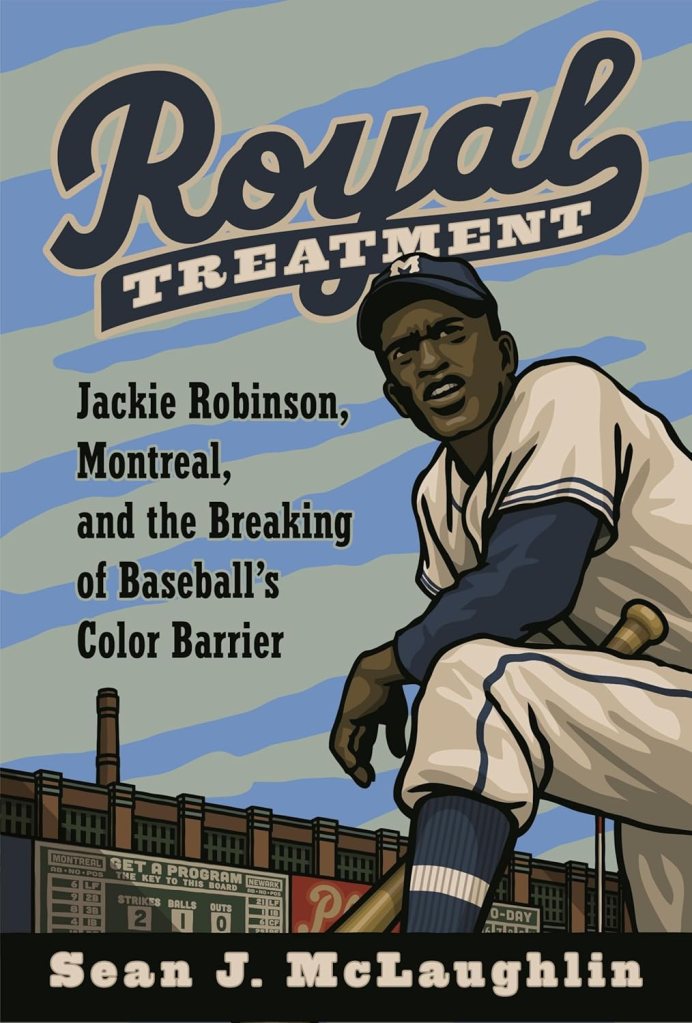
“Royal Treatment: Jackie Robinson, Montreal, and the Breaking of Baseball’s Color Barrier”
The author: Sean J. McLaughlin The details: University of Nebraska Press, 296 pages, $36.95, released April 1, ’26 The links:Publishers website, Bookshop.org
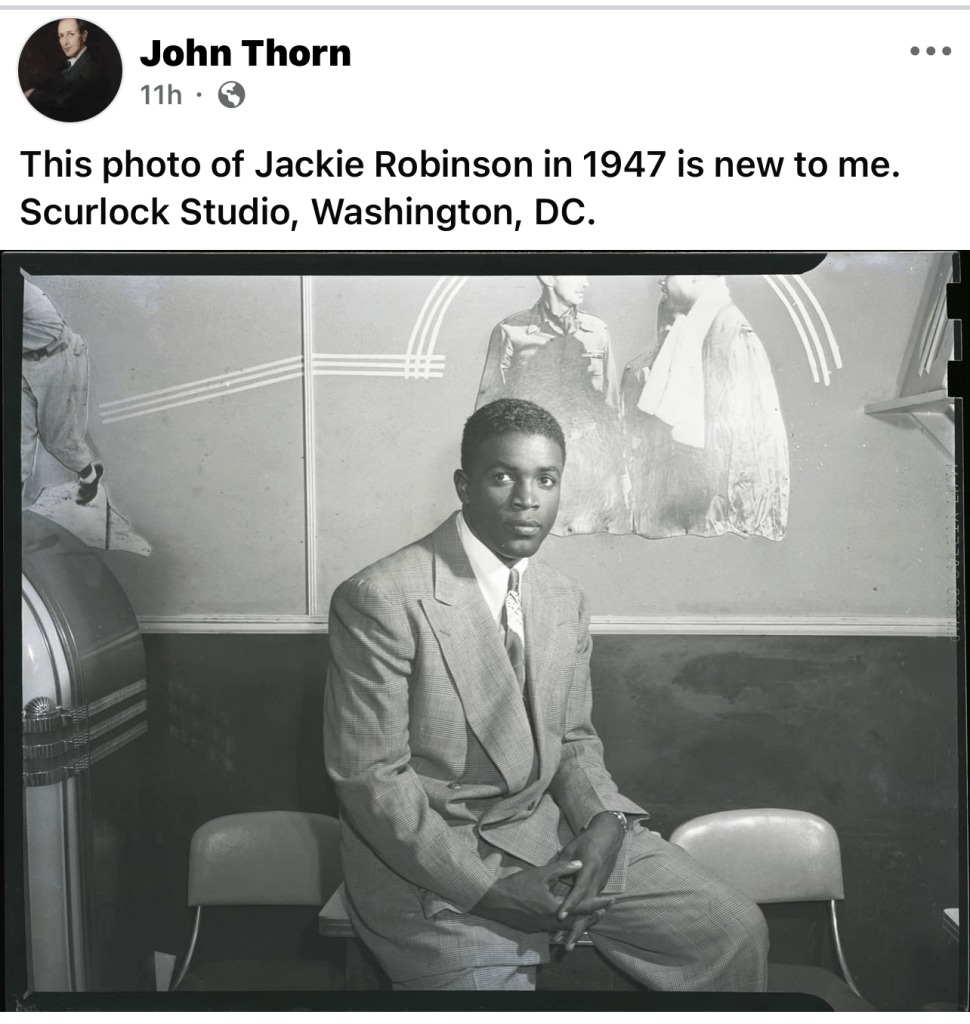
A Jack Robinson Day preamble
Only a year ago, as we rounded up the book reviews for Jack Robinson MLB Appreciation Day — or however they’re selling it — the disgust over crude governmental redaction of all things DEI was front and center. It may seem like such a long time has passed. But it’s still lingering.
What would Jack Robinson had done if he was invited with the Dodgers’ championship team to be vetted in the Trump White House? What would his reaction be if he saw that a bio on his World War II military requirement that’s heralding him on the U.S. Department of Defense’s website had been taken down “by mistake” during a Trump-mandated cleansing history.
What could the Dodgers players do, as they were being “honored” for their 2024 World Series triumph, in protest to mark the occasion — all wear No. 42 jerseys? Give Trump a 42 jersey?
It was all the wishy-washy white washing that was abhorrent, and called out.
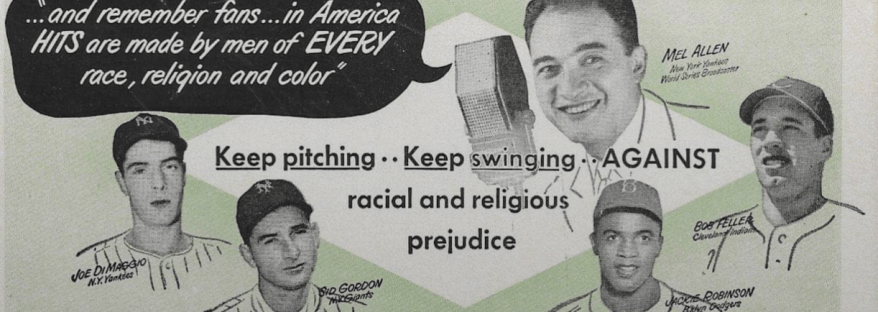
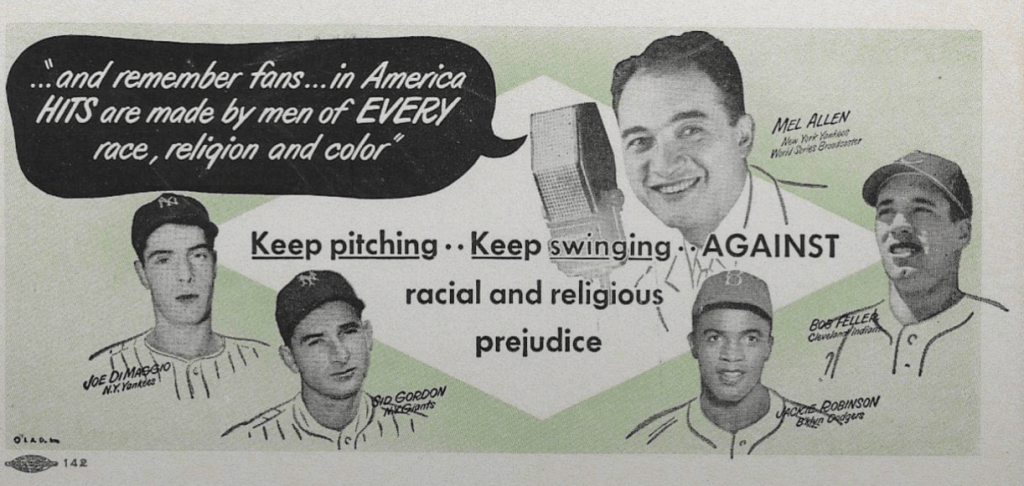
The irony of this public service announcement is positioning Jackie Robinson next to Bob Feller. In 1947, Feller, an established star pitcher for the Cleveland Indians, publicly expressed skepticism about Robinson’s ability to succeed in the major leagues, predicting he would not be able to hit elite pitching. Feller later observed Robinson with admiration for his courage and composure under extreme pressure, acknowledging his tremendous impact on the game. They were inducted together in the Baseball Hall of Fame Class of 1962.
When the Dodgers were recently in DC-adjacent territory over the Easter weekend to face the Washington Nationals, they said “a scheduling conflict” precluded them from making a Trump/Easter Egg roll re-visit to mark their 2025 title. Maybe they’ll reconnect sometime later in the season when some of the push back dies down. Hopefully not.