“The Ballpark and Beyond:
An Illustrated Celebration of
Baseball’s Rich History”
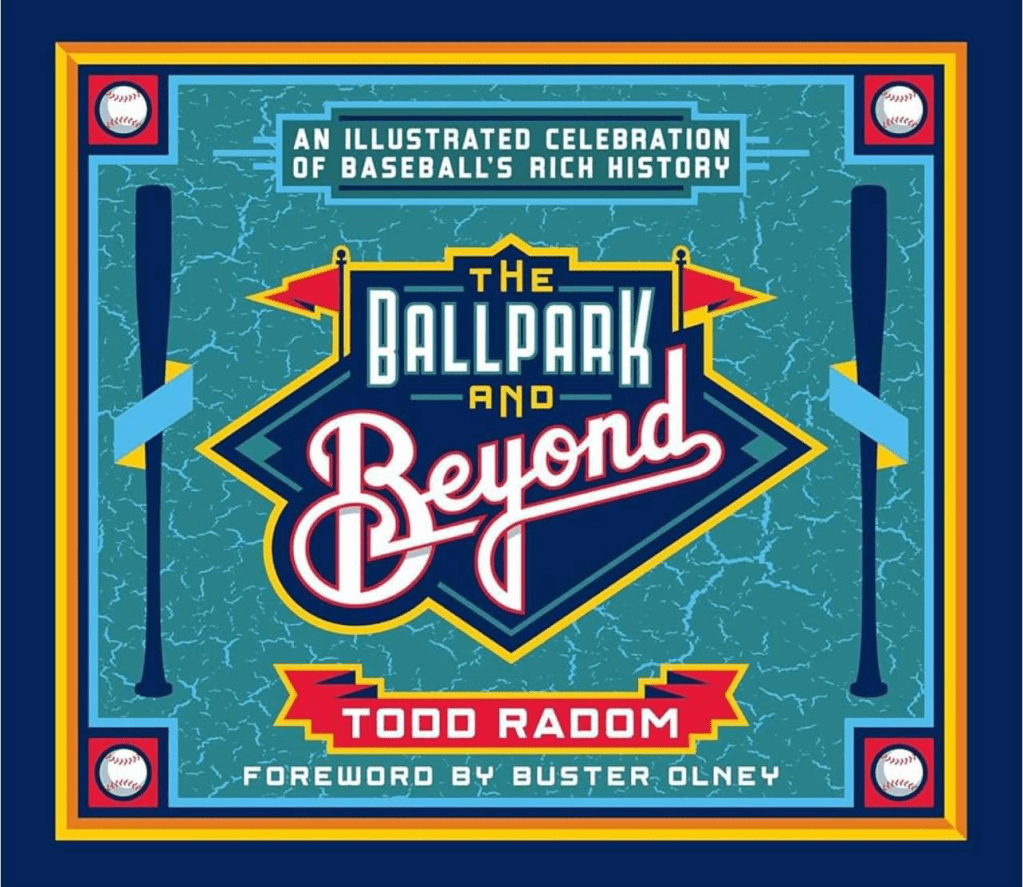
The author: Todd Radom
The details: Sports Publishing/Skyhorse/Simon & Schuster, 248 pages, $29.99, to be released May 26, ’26
The links: The publisher, the author, Bookshop.org
A review in 90 feet or less:
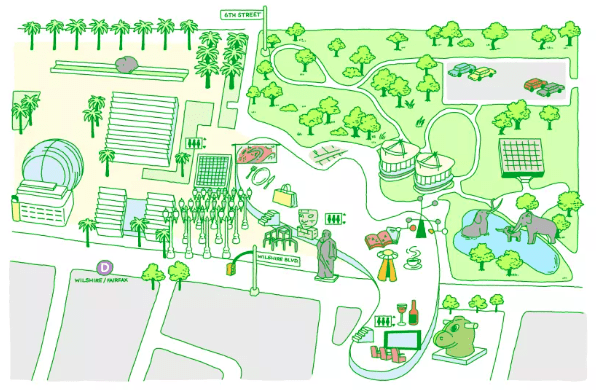
So, whatta you think about the newest Geffen Playhouse?
That’s our playful referencing of the Los Angeles County Museum of Art’s new $724 million addition, the Geffen Galleries, opened to the public as of May 4. It took 20 years of planning and six years of construction. It took going back to the drawing board, a lot of patience and persistence, and a city’s open-mindedness to add something this miraculous on the Miracle Mile.
A rule-bending, disorienting design brings us:
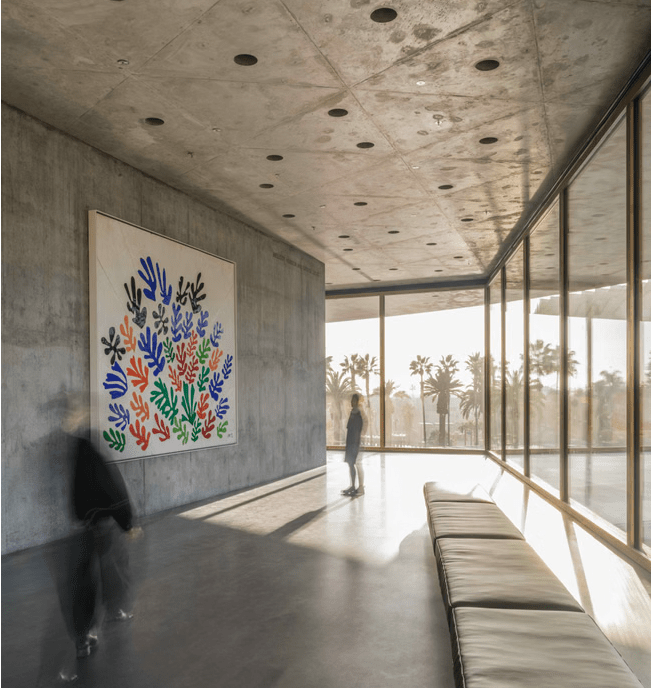
== A Peter Zumthor creation that’s been compared to a “concrete blob.” And a “concrete sandwich.” And a “concrete cow-paddy.” And a “concrete amoeba.” One even went so far as to call it “The Great Los Angeles Turd.” The New York Times called it “uplifting, lyrical and pugnacious.” The Wall Street Journal called it “a work of furious originality and ambition.”
== Counter-initiative floor-to-ceiling windows to draw in all the “urban light,” but if you’re really having a moody day, just draw the metal curtains.
== Cold, and cool, dungeon-like rooms to display an eclectic arrangement spanning Van Gogh to Ansel Adams to Diego Rivera among its 2,000 pieces, with far more awaiting in storage.
== A scrumptious 30-foot-span pedestrian overpass bridging Wilshire Boulevard, which might seem unnecessary until you park yourself on one of the benches and feel levitated over the mindless Door Dash traffic flow below.
== Its own Erewhon cafe. Drink, presented in art form. So why not?

If one dares to call it polarizing, another insists it’s a “petri dish for experimental design.” And, oh the social media photo ops. TimeOut Los Angeles has put in the time to offer the 10-most photogenic things to see, as you angle to get a litter of tar-soaked Saber-Toothed Cats in the background with the proper aperture. Bravo, Pleistocene megafauna.
Don’t spin your wheels here on Superlative Alley. Cruise through if you’re over in that part of the freeway-free grid. Because, as you may know, art always brings serendipitous joy and rhythm to one’s spirits, especially if you’re experiencing May Gray, heading into June Gloom.
Raise the bar, too, when art is mashed up with anything sporty.
Not to paint ourselves into a divergent corner here, but …
I was stumped for ways to size up the latest amazing graphic art-meets-well-researched story presentation that Todd Radom has created and, seeking enlightenment and inspiration, I took an artistic side trip. I decided to contact him directly and flip this on him for a moment of glee.
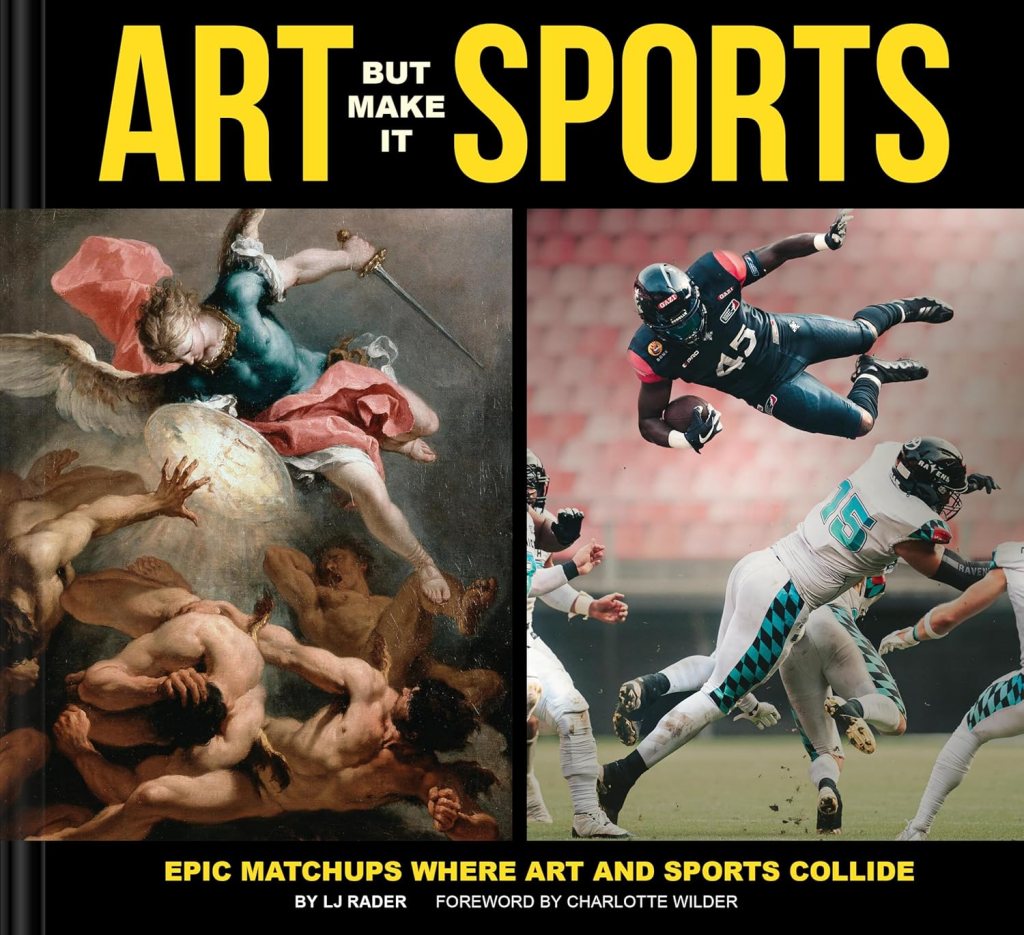
During an email exchange, I asked Radom if he had seen the new collection of published work by LJ Rader called “Art But Make it Sports: Where Art and Sports Collide” (Chronicle Books, 176 pages, $18.95, released March 16, ’26.) This book is deserving, perhaps, of its own review amidst these new baseball books. But I wanted Radom’s take on it first.
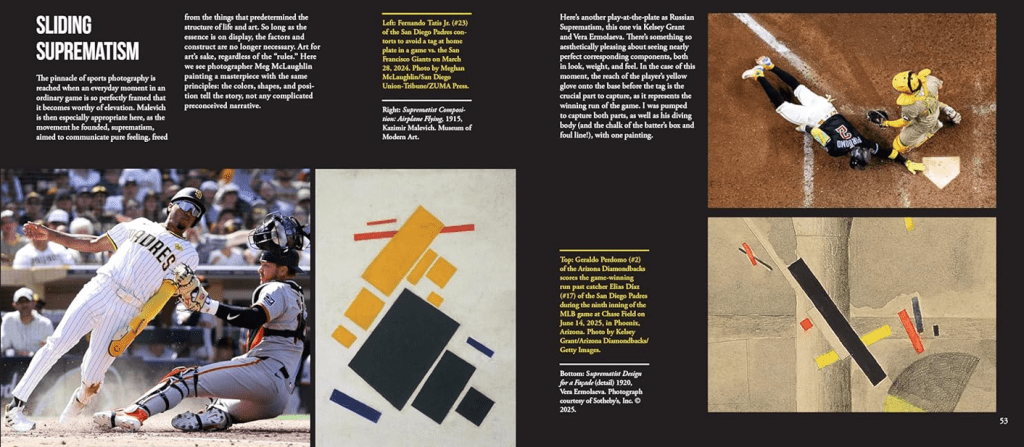
“LJ Rader is brilliant — the guy is a genius, seriously,” Radom said. “I took art history classes in college and I’m married to a trained art historian, but his photographic memory and knowledge of art is striking, funny, and unique.”
Radam said he first connected with Radar on social media “when I conflated the Astros’ World Series scandal and The Ashcan School, the early 20th century art movement that depicted urban scenes with dark, gritty realism. I think ‘Art But Make it Sports’ is the only forum where you can include ‘ashcan’ and ‘trash can’ and connect artist John Sloan to the 2017 Astros.”
What Radam appreciates most about Rader is how he has “a unique brain. A layman who is interested in art and has the ability to retain shapes, colors, composition … all toward fun! We need more of that!”
So while that may seem like the perfect endorsement for Rader when his book goes to paperback — but, resist if possible — it’s also interesting to us that a review of “Art But Make It Sports” in the New York Times/The Athletic provoked Keith Law to write in the lead: “LJ Rader is the genius behind” … and then went on to explain how this project started on Instagram in 2019 and then bled over into Bluesky, and here’s a Q&A with the gentleman.
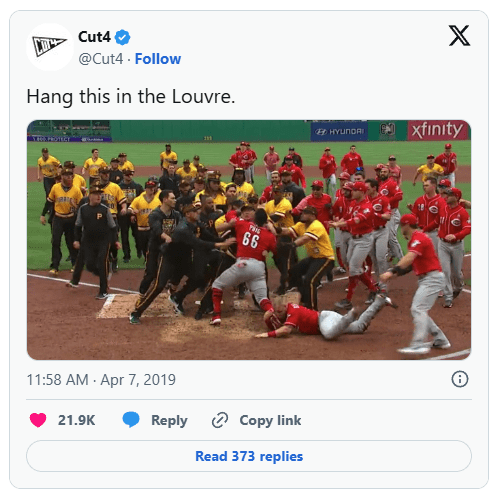
Another sidenote: Wasn’t it Rader who was responsible for seizing on a photo of a 2019 home-plate scuffle featuring Cincinnati Reds hitter Yasiel Puig taking on a hoard of yellow-clad Pittsburgh Pirates and suggesting it looked like some Renaissance battle painting? Somehow, we just assumed it was him — but then, there wasn’t an actual painting that the photo mimicked. Was there?
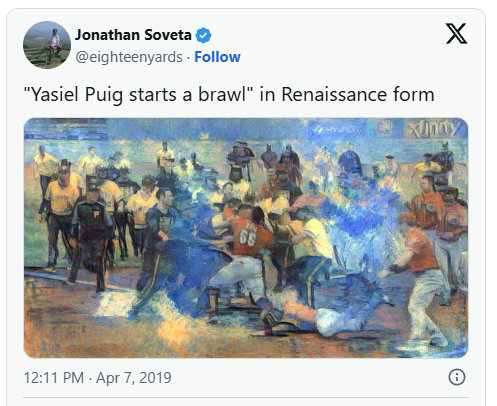
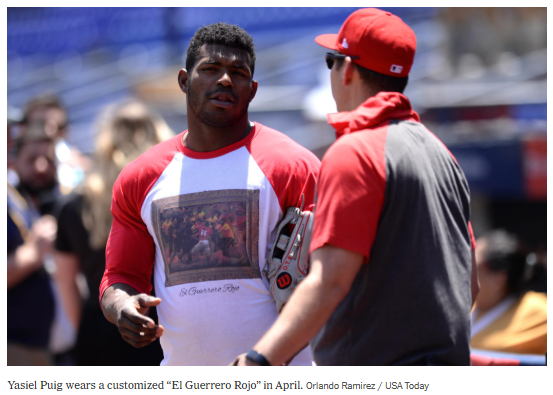
Cincy Shirts, a Cincinnati-based apparel company, seems to have commissioned a faux version of the moment to look like a Renaissance era work and dubbed it “El Guerrero Rojo” — aka, the Red Warrior — then slapped it on T-shirts. Puig then wore it out in public.
For the acuteness, perspicacity, inventiveness and a soothing virtuosity Radom pours into this latest work, it’s not a surprise we’ve come to link it to all sorts of other inspiring sports/art mashups lately.
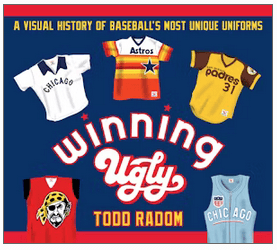
When we caught wind that Radom produced “The Ballpark and Beyond” — and immediately paid up to get a signed copy — our expectations were a bit lofty after embracing his previous work, “Winning Ugly: A Visual History of Baseball’s Most Unique Uniforms” (Skyhorse Publishing, 184 pages, $19.99 paperback, released 2018). Our review at the time noted Radom had put together something that was “uniformly superior to anything we’ve seen like this before.”
When he did “Fabric of the Game: The Stories Behind the NHL’s Names, Logos and Uniforms” with Chris Creamer, Radom could expand more on this imaginative merger of imagery and verbiage.
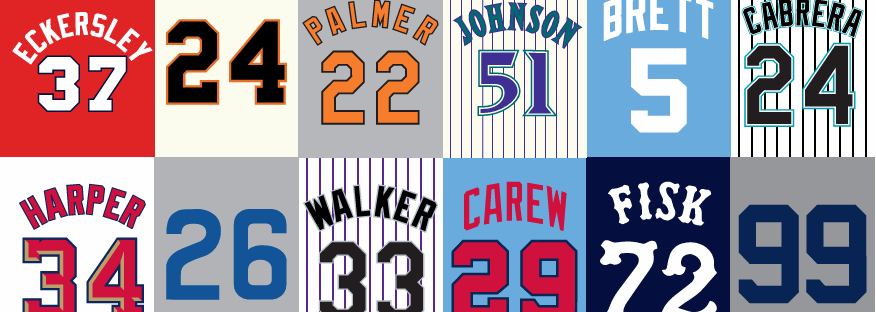
This time, combining 150 original illustrations to go with his own 75,000-plus words, Radom creates 75 unique entries to soak in for all they’re worth. He goes off on appreciations of the game’s origins, its personalities, the quirky equipment, strange-but-true happening — leading the reader into his climactic wheelhouse, the “Hall of Jerseys,” under the umbrella of “The Look of the Game.”
If the purpose of this is, as Radom writes in his intro, to spark “introspection, discussion and curiosity … how can you not be intellectually curious about baseball?” — please indulge us in that exercise as we have our top half-dozen playlist of what resonated most with us:
Continue reading “Day 15 of 2026 baseball books: The drawing power of dual-edged storytelling”