Day 20 of 2025 baseball book reviews: What’s good for the Mallards is good for goosing the game

“Baseball Like It Oughta Be:
How a Shoe Salesman’s Madison Mallards
And His Renegade Staff Ignited a
Summer Collegiate Baseball Revolution”

The author: Tom Alesia
The details: August Publications, $18.95; 208 pages, released May 19, 2025; best available at the publishers website and the author’s website

A review in 90 feet or less

Updated 6.2.25

There oughta be a clear path for someone like Lauren Thiesen to write a piece for Defector.com under the headline: “The Savannah Bananas Make Baseball Boring” and not be weary of getting crapped on for it. Especially when she framed it as coming “the perspective of a baseball nut and ‘sports entertainment’ obsessive.”

Read it for yourself. Good points are made.

She followed it up with a Facebook post: “I was a tiny bit miffed by the handful of ‘this reads like an old man wrote it’ responses … You can disagree with my (nuanced!) thoughts, but idk why it would ever be inconceivable that a 30 yr old woman produced them.”

Especially from a target audience member for the traveling hardball show.

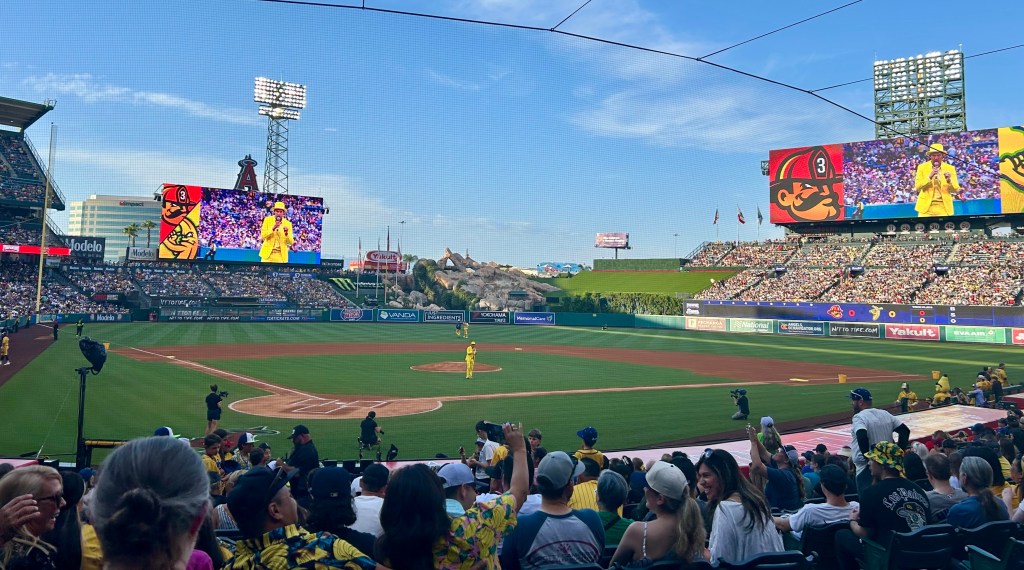
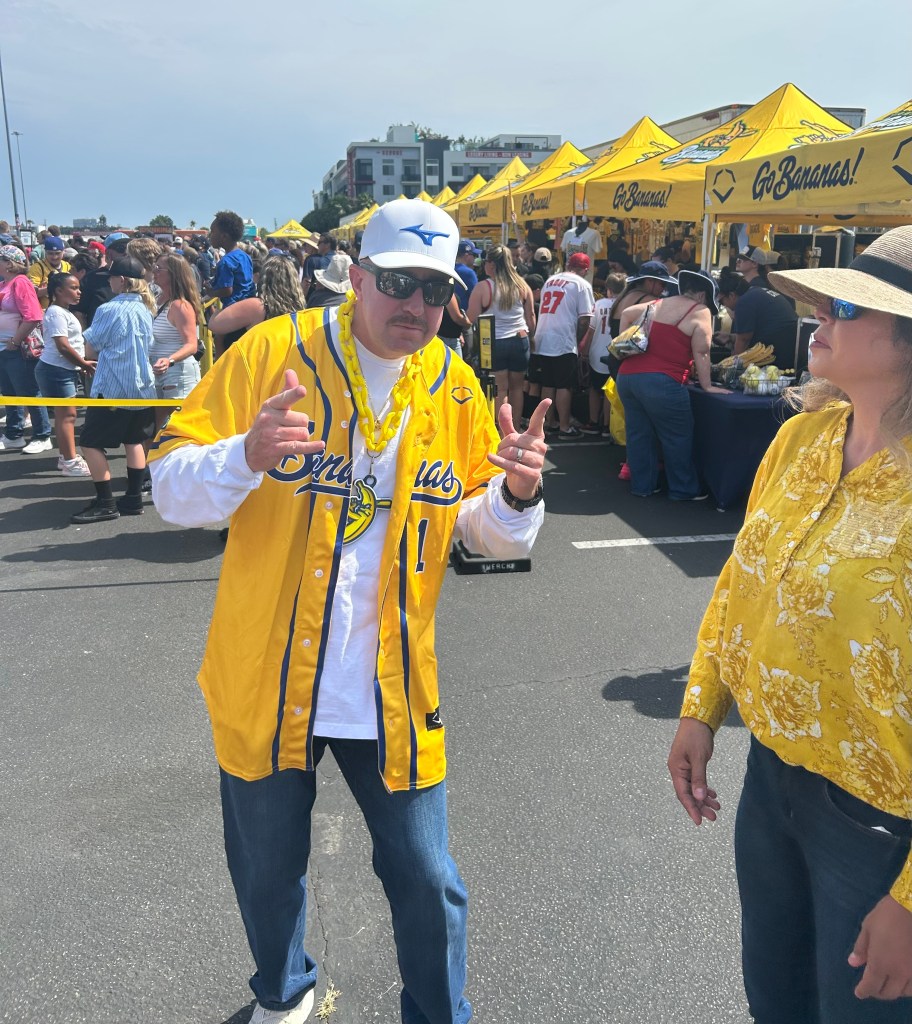
When we visited the Bananas’ second game of a two-day appearance at Angels Stadium in Anaheim this week — perhaps the only two sellouts at the place this 2025 calendar year, coming off a three-game series against the Yankees — we had Thiesen’s words in our head as a frame of reference, as well as local media coverage from the Day 1 game, but otherwise, we tried to be open-minded.

Our take on the whole idea of the Savannah Bannanas and the comparison to the Harlem Globetrotters:

It’s more more “High School Musical” meshed with Horsehide Cirque du Soleil, a wedding reception with a baseball theme wrapped around an activity that looks like a game played at the pace of a batting-practice pitcher grab-and-throw-and-grove. The between-innings experiences of corny planned contests, honoring veterans and first responders, and even a shout out to a non-profit Foster kids program doesn’t drag anything down but allows for catching one’s breath.

And it works.

A DJ-stage gathering to amp up the noise and energy before, then the “show” starts, then the after-party. Perhaps an exhausting pace for some, but it’s taking the elements of action of a “regular” baseball game and heightening it, expanding it, and amping it up. It takes advantage of incorporating local entertainment nods (Disneyland, for sure) and really knows how to read the room. It works in a baseball stadium best (because of the setup with scoreboards, wifi and capacity seating depth) but wedging it as well into a football stadium or other venue will add to its quirkiness.

It’s scripted schizophrenia, pumped up performance art, wonky scorekeeping and incredible talent on display surrounding the unplanned elements of game that has to be a communal stadium experience in person instead of judging it by a Tik Tok video clip or another high light reel. There are surprise guests. There’s a mascot, “Split,” that, at least in Anaheim, dared go up into the batters’ eye area beyond center field and do what every kid has wanted to do: Roll down the green hill.

Sensory overload, but not in a toxic way. Baseball remains the framework amidst all the improve and sketch comedy. The organizers do all they can to prevent the sale of $75 going for $1,000 or more on the open market, but that’s the world we live in — those taking advantage of a situation. Hopefully, you have karma lottery and get the best seats possible (another key to the experience) and bring in as many friends who otherwise might not enjoy a “real” baseball game to see this thing under the circus tent.

Back to how Thiesen ended her essay: “So what does someone want to see in a Savannah Bananas game? I guess they want to see the players dance. But they saw that already online. There’s no need to go to the stadium and catch it again with a worse view. Just give your minor-league boys a shot this summer. They’re probably doing something almost as weird.”

That’s where Tom Alesia starts making his case for the Madison Mallards.

The book is not just on what this college summer-league team has done, continue to do, and likely will do for years to come, but why it resonates in the community, and why it doesn’t need to try to out-gimmick anyone else by trying to be a national attraction, and how it can be content in how it has kept the game relevant in a non-MLB sphere.

It has a formula. It works.

Comparing Mallards to Bananas is more like Granny Smith apples to Cara Cara oranges. They’re each sweet and special in their own fruity way. (And that’s aside from the fact the forward to Alesia’s book is written by John Kovalic, the creator of the fantastic “Apples To Apples” card game.)

Continue reading “Day 20 of 2025 baseball book reviews: What’s good for the Mallards is good for goosing the game”

Day 19 of 2025 baseball book reviews: Unlucky Luciano’s last out

“Big Loosh: The Unruly Life
of Umpire Ron Luciano”

The author: Jim Leeke
The details: University of Nebraska Publishing, $32.95, 216 pages, to be released in July 1, 2025; best available at the publishers website and bookshop.org.

A review in 90 feet or less

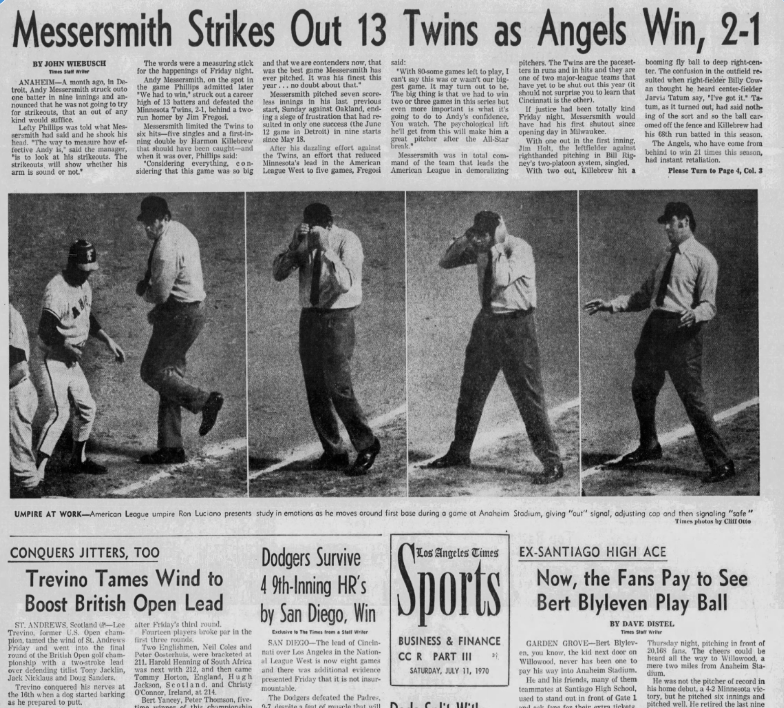
The Los Angeles Times sports section of July 11, 1970 features a series of Ron Luciano photos, showing the second-year AL umpire in all “study of emotions” on the first-base line during a game at Anaheim Stadium.

In the 1980s, the baseball media world could count on three things:

= A movie that directors insisted “was not a baseball film at all but really one about (fill in the blank)” made it as a big box-office draw. The lineup included “The Natural” (1984), “Bull Durham” (1988), “Eight Men Out” (1988), “Field of Dreams” (1988) and “Major League (1989);

= Hearing John Fogerty’s song, “Centerfield,” meant whatever you were watching needed a sound track, over track or background score to clue you in that it had something to do with the game;

= Ron Luciano, retired umpire, wrote another self-deprecating book. While pitching Miller Lite beer. After trying to become a national baseball TV analyst. He needed to be heard, seen and, if possible, felt, and hope you were entertained.

If Fernando Valenzuela and Pete Rose generated the most baseball relatable headlines in the ‘80s, Luciano created the most commentary about it and much more.

The 6-foot-4, 240-pound former All-American Syracuse offensive/defensive lineman who bridged the Orangemen teams in the late ‘50s of Jim Brown and Ernie Davis was drafted in 1959 as the last pick in the third round, No. 36 overall, by the NFL’s Detroit Lions. He wasn’t healthy enough to pursue that, or to teaching, so he turned to umpiring school in Florida, thought he was decent at it, and that’s where his path took him.

Continue reading “Day 19 of 2025 baseball book reviews: Unlucky Luciano’s last out”

Day 18 of 2025 baseball book reviews: The Gardella Years of Living Dangerously

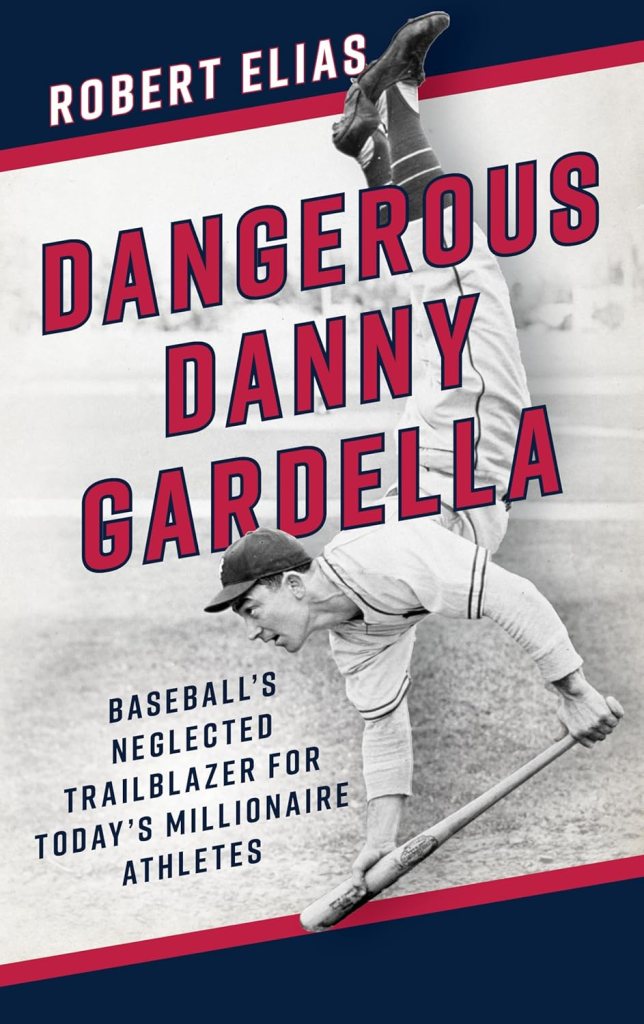
“Dangerous Danny Gardella:
Baseball’s Neglected Trailblazer
for Today’s Millionaire Athletes”

The author: Robert Elias
The details: Rowman & Littlefield, 325 pages, $39, released April 15, 2025; best found at the publisher’s website or BookShop.org

A review in 90 feet or less

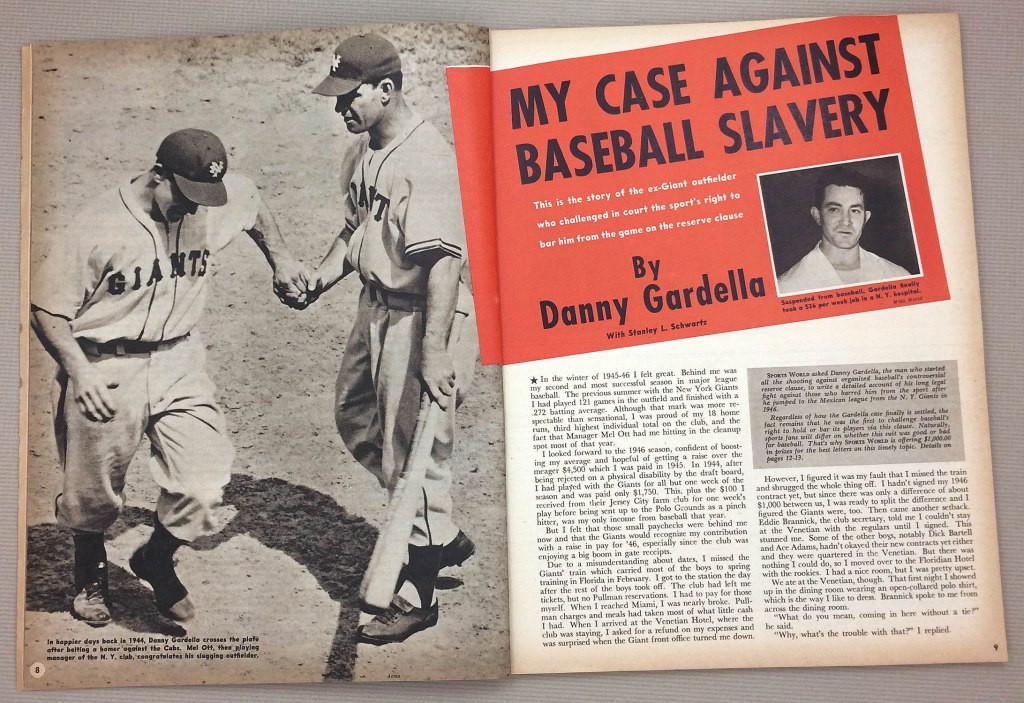
From the July 1949 issue of Sports World magazine.

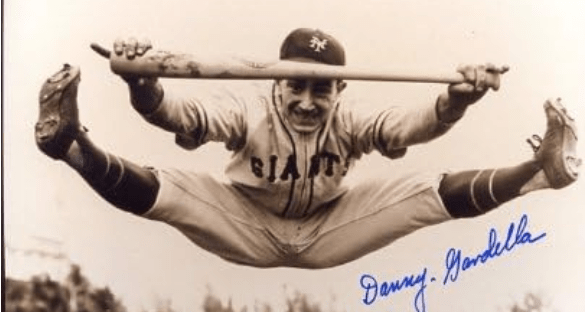
Get to know Daniel Lewis Gardella. No real danger in that.

Unless you’re concerned about getting lumped in with Communists and other people up to no good for baseball’s financial success.

Robert Elias isn’t deterred.

The New York native whose journey as a university teacher went through Montreal (McGill), Boston and France (Tufts), College Park and Europe (Maryland), Geneva (Graduate Institute of International Studies) and the Bay Area (UC Berkeley and now at University of San Francisco), Elias dug in as abaseball/politics/legal studies historical researcher authoring works such as “Baseball and the American Dream: Race, Class, Gender, and the National Pastime” in 2001 and “The Empire Strikes Out: How Baseball Sold U.S. Foreign Policy and Promoted the American Way Abroad” in 2010.

Then came the two he collaborated with Pete Dreier that focused on the game’s anarchistic best in “Baseball Rebels: The Players, People, and Social Movements That Shook Up the Game and Changed America” (a finalist for the 2023 Seymour Medal) and “Major League Rebels: Baseball Battles over Workers’ Rights and American Empire,” both in 2022 and curiously by two different publishers as we noted back then.

All trails seem to lead back to this Gardella character.

Not by accident.

“In those books one person kept popping up: Danny Gardella,” Elias writes in the preface of this bio. “Apparently an obscure figure, he nevertheless appeared over and over.”

Time to flesh it out.

Continue reading “Day 18 of 2025 baseball book reviews: The Gardella Years of Living Dangerously”

Day 17 of 2025 baseball book reviews: The token torpedos of NYC book bombing

“Mets Stories I Only Tell My Friends”

The author: Art Shamsky with Matthew Silverman
The details: Triumph Books, $30, 256 pages, released March 11, 2025; best available at the publishers website and Bookshop.org.

“Get Your Tokens Ready:
The Late 1990s Road to the Subway Series”

The author: Chris Donnelly
The details: University of Nebraska Press, $34.95, 344 pages, released May 1, 2025; best available at the publishers website and Bookshop.org.

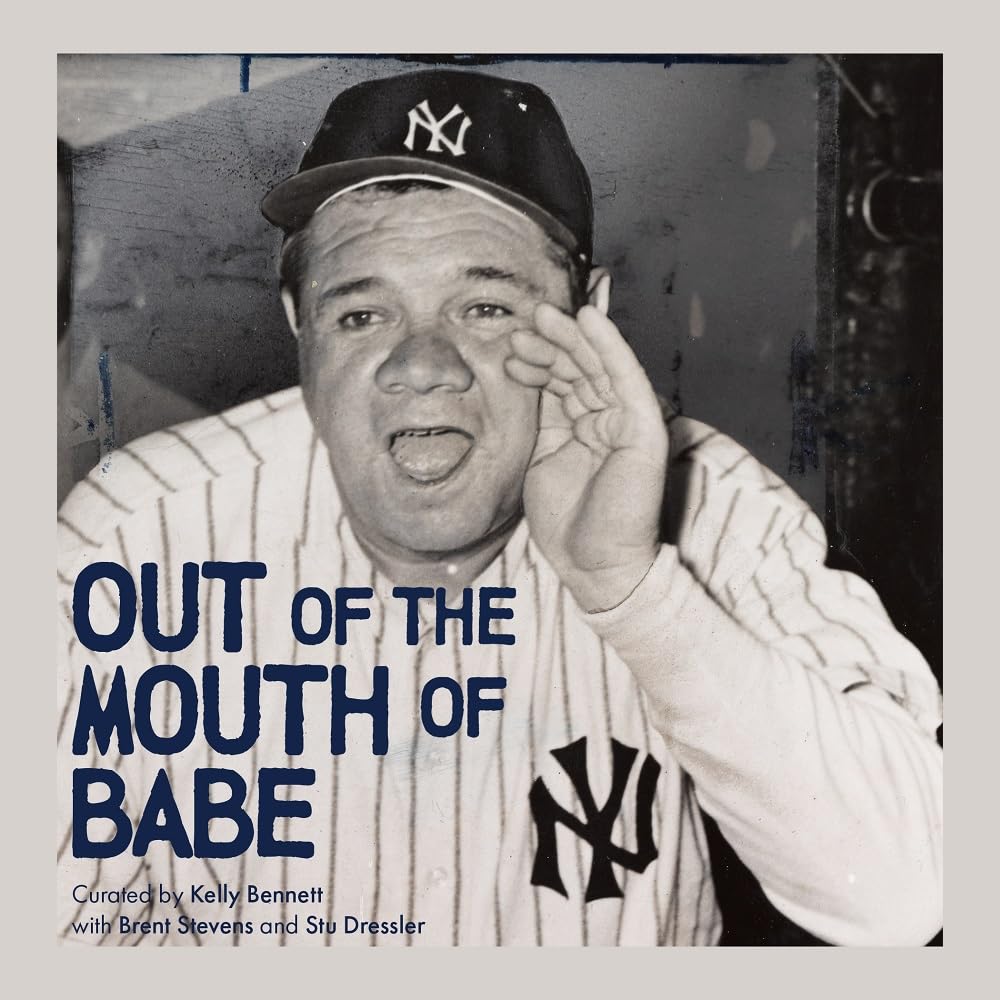
“Out of the Mouth of Babe:
Babe Ruth on Life: Pitching, Hitting,
Striking Out, and Coming Back Swinging”

The author: Kelly Bennett 
The details: Familius Publishing, 200 pages, $16.99, released April 15, 2025; best available at the publishers’ website and Bookshop.org.

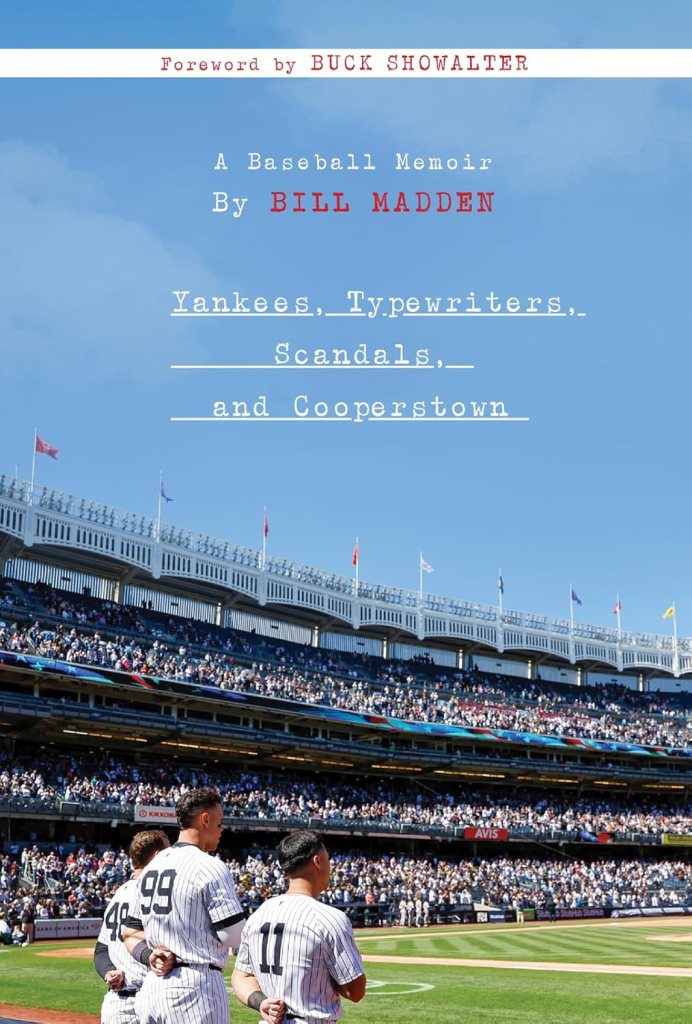
“Yankees, Typewriters, Scandals
and Cooperstown: A Baseball Memoir”

The author: Bill Madden
The details: Triumph Books, 256 pages, $30, released April 1, 2025; best available at the publishers website and Bookshop.org.


A review in 90 feet or less

The top five loudest news stories involving New York’s professional baseball teams in 2025, starting in spring training, have been, more or less, in this order:

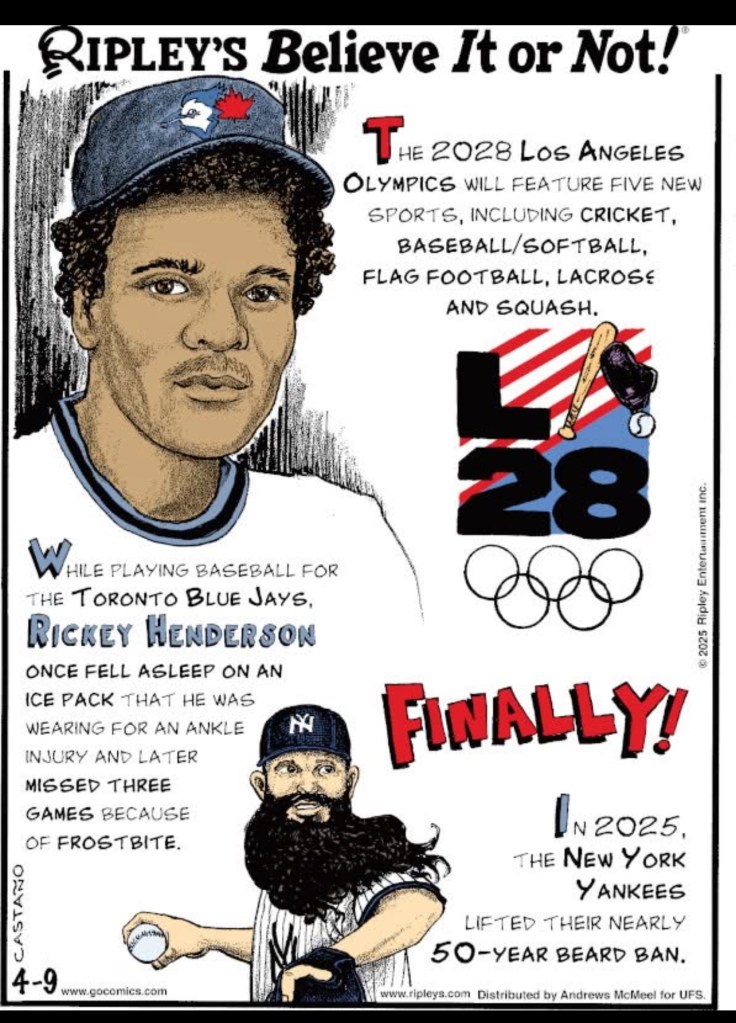
1. Believe it or not, Yankees players can wear hair on their face (which had many pulling out their global hair). And then they got rid of Alex Verdugo, who immediately shed a large beard as an outfielder with the Atlanta Braves.

2. The Yankees won’t stoop to playing Frank Sinatra’s “New York, New York” if they lose a home game.

3. The Yankees leased George Steinbrenner Stadium in St. Petersburg to the Tampa Bay Rays this season — and no, the Yankees won’t play “New York, New York” after they defeat them from the oddness of sitting in the visiting dugout.

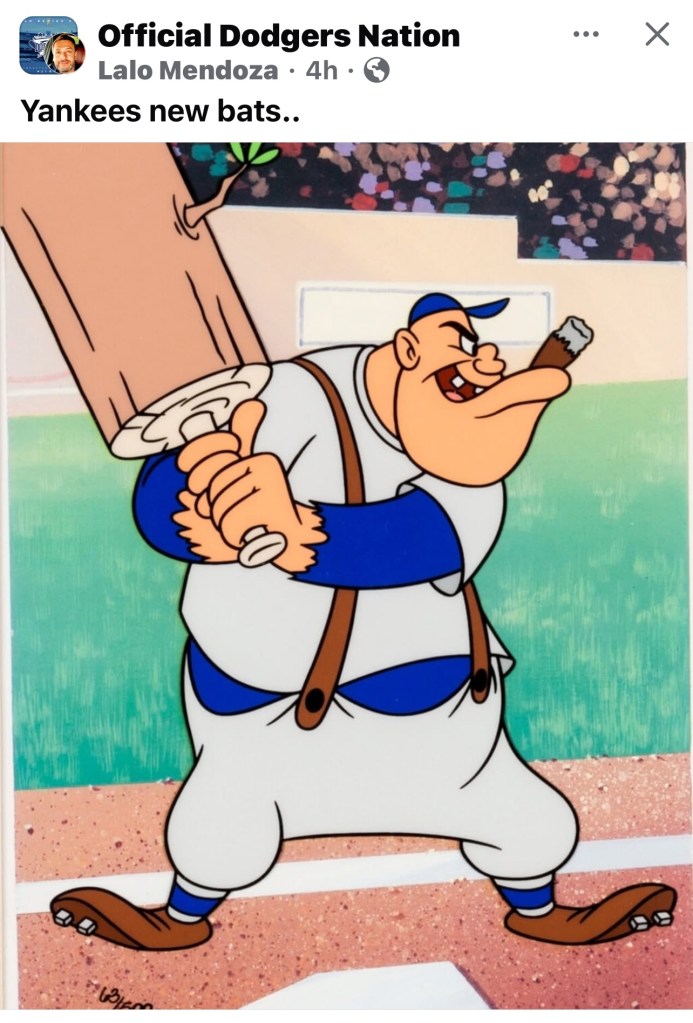
4. Torpedo bats are a thing. And legal. Alex Verdugo may want to look into this.

5. New York Mets owner Steve Cohen has, according to the Sports Business Journal, “an ambitious long-term vision for the area surrounding City Field” that will cost about $8 billion to turn 50 acres of asphalt parking lots into a Hard Rock Hotel and Casino, a food hall and a 5,000-seat indoor concern venue.

And it seems to be legal for someone who the story points out is a “$21 billion hedge fund titan.”

Continue reading “Day 17 of 2025 baseball book reviews: The token torpedos of NYC book bombing”

Day 16 of 2025 baseball book reviews: Willie, Billy, and the Alabama shakes

“A Time for Reflection:
The Parallel Legacies of Baseball Icons
Willie McCovey and Billy Williams”

The author: Jason Cannon
The details: Rowman & Littlefield, $35, 328 pages, released Feb. 4, 2025; best available at the publishers website and Bookshop.org.

“A Giant Among Giants:
The Baseball Life of Willie McCovey”

The author: Chris Haft
The details: University of Nebraska Press, $32.95, 240 pages, released Feb. 1, 2025; best available at the publishers website and Bookshop.org.


A review in 90 feet or less

The software wizardry made available by Stathead Baseball, resourcing Baseball Reference data, is such a cool tool. Compare and contrast MLB players from different eras.

Or, two dudes who led a very parallel lives.

What is doesn’t show is that, during the last month of the 1976 season when the five-time defending AL West champion Oakland A’s, scrambling to overtake the Kansas City Royals, made a curious roster move.

It made Billy Williams and Willie McCovey, two National League big-time names, unlikely 38-year-old teammates trading mercenary at-bats. Based on decades of seeing these two on their baseball cards, the versions that appeared now were as jarringly abnormal in kelly green-and-yellow as Joe DiMaggio was when recruited to coach for the franchise in 1968.

In the course of their careers, Williams and McCovey each made the NL All Star team six times, but only once were they together — the 1968 exhibition at the Houston Astrodome. In a predictable 1-0 NL win (it was the Year of the Pitcher), the only run scored when McCovey grounded into double play in the first inning, pushing across Giants teammate Willie Mays, making Don Drysdale the winner. McCovey, starting at first base and hitting third, proceeded to strike out three times against Blue Moon Odom, Denny McLain and Sam McDowell. Williams got into the game as a pinch hitter in the sixth inning and flew out against McLain.

At WaxPackGods.com, here are seven reasons why “this card is cooler than you ever imagined.”

(Footnote: In the 1969 All Star Game, McCovey homered off both Odom and McLain and was named the game’s MVP in a season where he was also the NL MVP).

Now, in Oakland, eight years later, decline evident, Williams and McCovey were serviceable as a DH, a position that had only come about in 1973 when the American League rule-makers felt there wasn’t enough offense and this was a way to keep old, reliable hitters contributing if their time playing out on the field in the National League was a bit problematic.

(Tell that one to Shohei Ohtani).

Continue reading “Day 16 of 2025 baseball book reviews: Willie, Billy, and the Alabama shakes”