Extra inning baseball book reviews for 2020: Locating a black box that sheds more plight on the 1970 Pilot error

pilots1970team
Card No. 713 in the Topps 1970 set. A year late on the Seattle Pilots team photo, as the franchise was in Milwaukee by then.

Inside Pitch: Insiders Reveal How the Ill-Fated
Seattle Pilots Got Played into
Bankruptcy in One Year

71sb1ucFbmL
The author:

Rick Allen

The publishing info:
Persistence Press
$19.95
178 pages
Released May 18, 2020

The links:
At Amazon.com
At BarnesAndNoble.com
At Powells.com
At Indiebound.org
At the author’s website

The review in 90 feet or less

Jim Bouton told us this was an odd organization. Here’s more to see under the circus tent.

If we weren’t completely up to speed with what happened for the one-and-done Seattle Pilots fiasco and relished personal observations from Bouton’s “Ball Four” in 1970, we get past the 50-year mark of the tream’s crash landing at ill-prepared Sicks’ Stadium for even more head-shaking chicanery.

It’s no wonder they lasted just one year and then dragged their tails to Milwaukee. Considering what’s inside this account, it seems like it was a miracle it lasted that long.

97270433_140884537556625_6288664464531128320_oIt’s also odd how this all came about. Start with the author, Rick Allen.

With a journalism degree from Eastern Washington, a Masters in interpersonal communication from Ohio University and a Masters and doctorate in  public administration from USC, maybe he’s got the right background for knowing how to piece this together, having worked in upper management and executive levels in the higher education, government, and nonprofit sectors and founded two small businesses.

The story about him in the Amazon.com bio says while he was touring southern Africa, Allen found himself at a dinner table listening to funny stories from the former CFO of the Seattle Pilots.

Bob Schoenbachler, who became the Pilots’ chief money guy at the ridiculous age of 21, having done the same job for the city’s Triple-A team (an Angels’ affiliate) the previous two seasons. He provides the thrust of this tale.

Then there is Jim Kittelsby, who was a 29-year-old from the Pacific Northwest who is asked to work for Dewey and Max Soriano, the brothers who took out loans to get a MLB team in Seattle, also having to get another part-owner, Bill Daley, involved with a 49 percent share.

Now let the hi-jinx begin.

Stuff we learned from the Schoenbachler/Kittelsby connection: Continue reading “Extra inning baseball book reviews for 2020: Locating a black box that sheds more plight on the 1970 Pilot error”

Extra inning baseball book reviews for 2020: You make the call on what makes a perfect book about imperfect umpires


Working a ‘Perfect Game’
Conversations with Umpires

71XcNBLzOAL


The author:

Bill Nowlin

The publishing info:
Summer Game Books
$18.99
308 pages
Released May 29, 2020

The links:
At the publisher’s website
At Amazon.com
At BarnesAndNoble.com
At Powells.com
At Indiebound.org

The review in 90 feet or less

Funny to see MLB umpire Joe West’s name pop up amidst trending Twitter topics recently. Not really for all the best of reasons, of course, but that would be the Joe West Story.

The 62-year-old West admits he’s motivated to continue working for a 42nd season even during the MLB pandemic protocols. He is approaching the all-time record of 5,375 regular-season games worked, held by Bill Klem, and needs 65 to reach it. Can it be done in a truncated 60-game season, skipping around cities to work, taking days off? He’ll load up his C-pap machine and see what happens to his BMI.

Followers of the game, long-term or now, really aren’t supposed to know much about West, or any umpire, or so we’re told. We recall more human-interest quips that Vin Scully would provide on a Dodgers broadcast about an umpire’s resume — he called a perfect game, worked in the post-season, etc. But the best ones escape our field of vision and stay off our judgmental radar.

We’re not supposed to have a sense of dread when we hear West – “Country Joe” – is apt to insert and assert himself into the game’s ebb and flow as he has conducted his business since the 1970s. There’s also the bedeviling Angel Hernandez, amazed he’s still employed, with all his mysterious methods of arbitration that led to him getting black marks on the MLB judgment ratings.

And really, you had to sue MLB as you still work games?

51tB04WhgyLThere have been, for better or worse, autobiographical books of the regal Doug Harvey, the flamboyant Ron Luciano (three of them between 1982 and ’86), Al Clark, Ken Kaiser, Durwood Merrell, Dave Pallone, Augie Donatelli, Eric Gregg …

perfctThe only one of real social redeeming value was the 2011 “Nobody’s Perfect: Two Men, One Call, and a Game for Baseball History,” where umpire Jim Joyce combined with the Detroit Tigers’ Armando Galarraga (and Daniel Pasiner) to discuss what happened in the wake of a June, 2010 game when Joyce’s final safe call — replays showed it was an out, but there were no review rules in effect — took away Galarraga’s perfect game.
Continue reading “Extra inning baseball book reviews for 2020: You make the call on what makes a perfect book about imperfect umpires”

Extra inning baseball book reviews for 2020: How to make the Dodgers-Yankees rivalry become historically dull, dim-witted and disappointingly vapid … but not out of left field

Dodgers yankees 2019
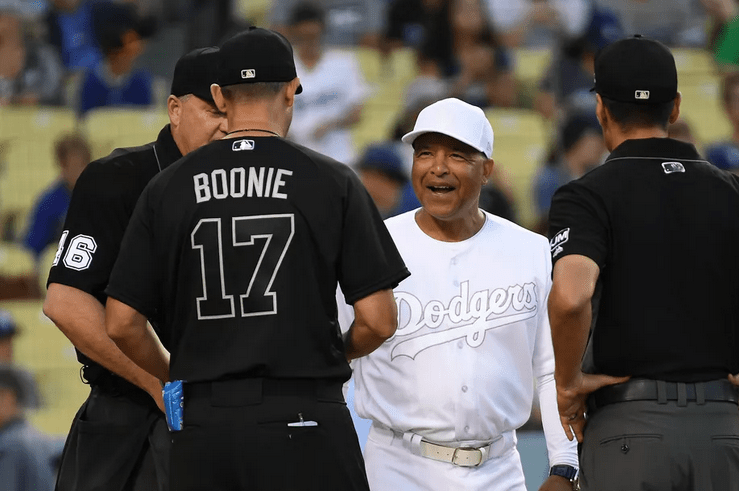
In Aug., ’19, the Yankees came to L.A. to face the Dodgers in a highly-publicized interleague matchup. And MLB made them wear these ridiculous uniforms, starting with Dave Roberts and Aaron Boone exchanging the lineup cards. Photo by Richard Mackson/USA Today.

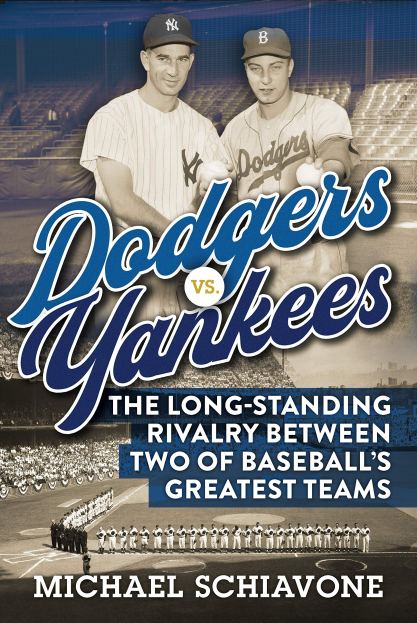
Dodgers vs. Yankees: The Long-Standing Rivalry Between Two of Baseball’s Greatest Teams

cover
The author:

Michael Schiavone

The publishing info:
Sports Publishing/Skyhorse
$24.95
288 pages
Released June 30, 2020 (after original promised release dates of May 5 and June 2)

The links:
At the publisher’s website
At Amazon.com
At BarnesAndNoble.com
At Powells.com
At Target.com
At Indiebound.org

The review in 90 feet or less

Who can really tell what the future brings at this point? “Past performance is no guarantee of future results” could be the motto of what the 2020 MLB season comes to be, if it actually comes to be. Yet if they make it to late October week and discover a Dodgers-Yankees matchup in the World Series awaits — is it best three-of-five now with six DHs per side? — that would seem to give odds makers a reason to feel some validation, for whatever they seem to be espousing at this point in time based on no idea who else will opt out of playing, who becomes sick and … the world’s future condition in general.

The Dodgers currently launch as as a 15/4 favorite to win it all, just ahead of the 4/1 Yankees by VegasInsider.com, while at Vegas.com, it’s the Yankees (3/1) over the Dodgers (6/1). There’s Forbes.com citing something called SportsInformationTraders.com that has the Dodgers (+375) with an edge over the Yankees (+450). At BetOnLine.ag, they are co-favorites at  +400.

14682a_medSo now in anticipation of this projected occurrence, if we were to calculate odds on whether this latest book from Michael Schiavone actually gives us something to advance our education and/or entertainment of the history of the Dodgers-Yankees rivalry – it goes back to the 1941 World Series, most recently to that 1981 strike-plagued campaign, and then a few inter-league meetings that resulted in some oddly-dressed version in 2019 – they would be far longer than the 1,000-to-1 we’ve already seen pinned on chances that the Orioles, Tigers or Marlins have in winning the 2020 title.
The low-bar expectancy is solely based on Schiavone’s 2018 travesty, “Dodgers: 60 Years in Los Angeles,” which is summed up in a back-cover blurb by Molly Knight as a “must-read for not only Dodger fans but for anyone interested in how America’s pastime went national.” This gives its content some benefit of the doubt based on an opinion by the author of the equally dubious “Best Team Money Can Buy” mess of a book about the Guggenheim Dodgers a few years ago that is nothing more than a scripted press release than any sort of journalistic endeaver.

Nonetheless, because it involves a title focused on local history, and we assume readers could often be swayed only by that fact, we dug into it, process it and came up with our conclusion: Continue reading “Extra inning baseball book reviews for 2020: How to make the Dodgers-Yankees rivalry become historically dull, dim-witted and disappointingly vapid … but not out of left field”

Extra inning baseball book reviews for 2020: Fred Claire’s new lineup card of hope

1 SRXLAnr7YMRngVmb2cV1Vw
Fred Claire, right — with his wife, Sheryl and daughter Jennifer — becomes emotional watching a video tribute to him on June 10, 2017 after the Dodgers’ Oldtimers Game and before throwing out the ceremonial first pitch prior to the Dodgers-Reds contest. Photo: Jon SooHoo/Dodgers

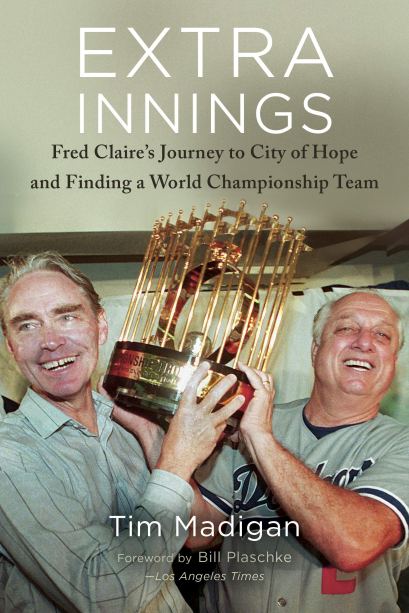
Extra Innings: Fred Claire’s Journey to City of Hope
And Finding a World Championship Team

91XEIAULmvL
The author:

Tim Madigan

The publishing info:
Mascot Books
$24.95
240 pages
Released July 7, 2020

The links:
At the publisher’s website
At Amazon.com
At BarnesAndNoble.com
At Powells.com
At Indiebound.org
At the author’s website

The review in 90 feet or less

In an April, 2017 column for the Los Angeles Times, Bill Plaschke did a 30-year look-back at how Fred Claire’s character and successes led to him becoming the team’s new general manager. But it came under a somewhat curious headline: “Almost forgotten, Fred Claire played a role in the Dodgers’ last World Series.”

How was it possible to even consider anyone like Fred Claire as forgotten?

After a dozen years as a sports writer, the last with the Long Beach Press-Telegram covering the Dodgers, he enters the team’s organizational flow chart with a role in its public relations department in 1969. Some 20 years later, he’s installed as the best in-house candidate to fill the vacant role of general manager under extremely strained circumstances (see: Campanis, Al; “Nightline”).

It was not a fun time to be associated with the franchise. Peter Gammons writes as much in Sports Illustrated (Aug. 10, 1987), and Claire manages to deviate from the narrative with this quote: “There are still a lot of great scouts and instructors in the Dodger organization. We have some good prospects. I am extremely positive about our future. We just have some things to pull together.”

Refashioning the roster with tenacity and talent (Kirk Gibson) as well as relevant role players (Mike Davis, Mickey Hatcher, Rick Dempsey, Alfredo Griffin, Tim Belcher, Jesse Orosco, Jay Howell, John Shelby), the team of character wills its way to the 1988 World Series title – still the last one in franchise history. Without those deals, there’s no dramatic Game 1 walkoff, or a backup catcher walking Orel Hershiser through the Game 5 clincher in Oakland. Dempsey would save that ball from the final strikeout and give it to Claire. He was The Sporting News’ MLB Executive of the Year.

From 1994 to 1997, the team reaches the post-season twice. But now it’s May, 1998, and Claire has no knowledge of the new Fox ownership team regrettably trading off Mike Piazza to the Florida Marlins in May, 1998 in a pure business cable rights TV deal. Claire ends up getting let go, along with manager Bill Russell, a month later. Continue reading “Extra inning baseball book reviews for 2020: Fred Claire’s new lineup card of hope”

Extra inning baseball book reviews for 2020: Tom Seaver, Pat Jordan, and the lonesome, poignant pursuit of happiness … drop and drive

spread
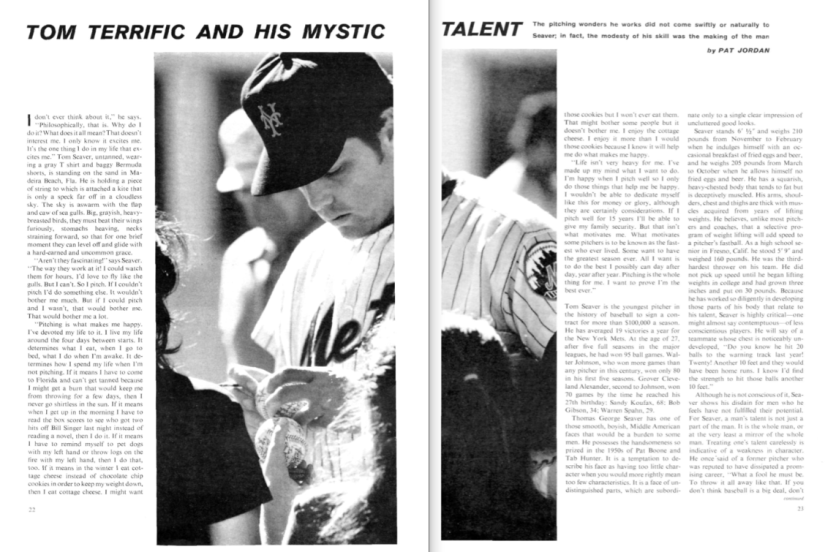
The start of Pat Jordan’s six-page Sports Illustrated profile on Tom Seaver from July, 1972.

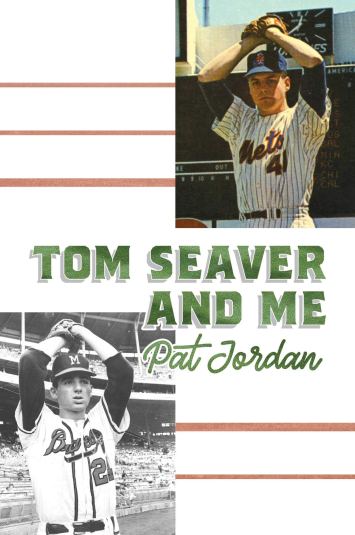
Tom Seaver and Me

712KVjfWAXLThe author:
Pat Jordan

The publishing info:
Post Hill Press/Simon & Schuster
$28
192 pages
Released May 26, 2020

The links:
At the publisher’s website
At Amazon.com
At BarnesAndNoble.com
At Target
At Powells.com
At Indiebound.org
At the author’s website

The review in 90 feet or less

When you’ve come to trust the honest, reflective storytelling of Pat Jordan – his 1975 bio “A False Spring,” followed by the 1999 “A Nice Tuesday” would be a general baseline — it’s an easy sell when a book of his somewhat pops up with little advanced notice on the subject of his relationship with a Hall of Fame pitcher.

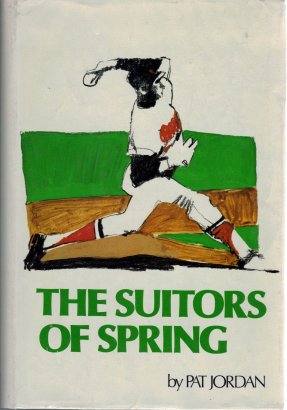
91Cle454TyLFor us, it’s his 1973 book, “The Suitors of Spring,” that we pick up once and awhile and can easily enjoy again — character studies Jordan, a self-proclaimed free-lancer had been selling to Sports Illustrated about some of the game’s famous pitchers. There’s a chapter on Tom Seaver called “To Fly Like The Gulls” amidst profiles that try to figure out Bo Belinski, Steve Dalkowski, Johnny Sain, Sam McDowell and others of interest during that time frame.

The Seaver profile is directly connected to a July 24, 1972 issue of Sports Illustrated that allowed Jordan six pages of valued space for him to size up Seaver. In “Tom Terrific and his Mystic Talent,” Jordan pulls from two extensive interviews he did with Seaver at his home in the fall of ’71 and during spring training of ’72. He sizes up Seaver as a deep thinker, one whose talents did not come naturally, who learned the value of hard work from growing up in Fresno, who figured out what made him happy, what he could control, and what he didn’t care about controlling. A lot of it was counter to what Jordan was experiencing.

(Two years later, when Jordan wrote another SI profile, this time on Bert Blyleven, the fact that he couldn’t help but compare him to Seaver kind of showed how much an impact was made from the previous bio).

Connecting more dots, it can be deducted that Jordan’s granular examinations of what makes major-league pitchers sail or fail is born from his own trajectory of a pitching career — a rising star from his Little League and high school days, where people would come from miles away just to watch him, then signing a $50,000 bonus in 1958 with the Milwaukee Braves based on the belief his remarkable fastball could get him places, only to lose it after just more than three years in the low minor leagues.

“A False Spring” is his account of how that pro journey went for him. “A Nice Tuesday” is his attempt to make a comeback at age 56 in such a Bouton-esque way.

With this, “Tom Seaver and Me” allows the 79-year-old Jordan to reflect on how and why he and Seaver connected in the first place some 50 years ago, and why there is now a disconnect by neither of their choices.

In March of 2019, the Seaver’s family disclosed publicly what Jordan had sensed first hand for the last few years prior. Seaver, who will turn 76 in November, was suffering from dementia and would not be making any more public appearances. They had been said before that the effects of Lyme disease that was causing him to have memory problems. With that announcement it was clear Seaver would not be participating in any 50-year reunions of the 1969 Mets’ World Championship team. (However, in June of ’19, a group of Mets that included Art Shamsky, Ron Swoboda, Bud Harrelson and Jerry Koosman went to Calistoga to visit Seaver).

Jordan and Seaver 2013 USA Today
Pat Jordan with Tom Seaver in Calistoga, Calif., in 2013 (Photo by Kelley L. Cox, USA Today)

Jordan, whose work over the years have made it into the Best American Sports Writing, Best American Mystery Stories, Best American Essays and Norton Anthology of World Literature, pulls on all his visits to pull together what reads like another of his gloriously extended magazine pieces. They have this gruff, loving relationship of two men who realize their talents took them in opposite trajectories, but it’s really Jordan who bests sizes up Seaver rather than the other way around. Continue reading “Extra inning baseball book reviews for 2020: Tom Seaver, Pat Jordan, and the lonesome, poignant pursuit of happiness … drop and drive”