


“Future Value: The Battle for Baseball’s Soul
and How Teams Will Find the Next Superstar”

The authors:
Eric Longenhagen
and
Kiley McDaniel
The publishing info:
Triumph Books
$28
384 pages
Released April 14
The links:
At the publisher’s website
At Amazon.com
At BarnesAndNoble.com
At Powells.com
At Indiebound.org
The review in 90 feet or less
Look closer at the cover: Unless this is two photos superimposed into one, it’s Clayton Kershaw trying to react to a ball coming back at him, one he just hurled at Mookie Betts.
The future value of that photo could be ironic if the 2020 season, with them as Dodgers teammates, doesn’t happen. It does seem to do well to frame the main title of the book and keep the ball in play.
Talent evaluation in the age of analytics pushes information into all sorts of directions, and can make things even more absurd when you’re trying to create an accurate assessment of an 18-year-old high school kid who may not have even had time to take a drivers’ training class or wash his own laundry. We’ve talked to enough scouts to know how this works, what they believe their strengths are and how much/little they feel their voices heard these days.
The complicated process surrounding the evaluation of talent is full of further analysis, and that’s where this 13-chapter book begins as a collection portal.

Longenhagen, the lead prospect analyst at FanGraphs and a former contributor to ESPN’s MLB prospect coverage five years ago, marries up with McDaniel, who very recently was at FanGraphs but is now an ESPN Atlanta-based writer. McDaniel has done work in the front office for the Yankees (2005-’07), Orioles (2009-’10), Pirates (2010-’11) and Braves (2015-’17), as well time at Fox Sports’ Scout.com (2013-’14) and the Baseball Prospectus (2009).

But then having Keith Law hit leadoff with the forward also certifies this is coming from a “smart” perspective (coming soon: a review of Law’s new book, “The Inside Game,” that launches Tuesday, April 21).
Writes Law: “Eric and Kiley give you the grand tour of scouting without asking you to leave your couch. They’ll walk you through the draft, the most important three days in the entire year for amateur scouting; the Wild West of international free agency (where players can sign at age 16, and often strike verbal deals with teams before they’re teenagers); and professional scouting, where scouts evaluate players already in the minor leagues…. You couldn’t ask for a better pair of tour guides.” Continue reading “Day 19 of (at least) 30 baseball book reviews for spring/summer 2020: Everything you might want to know about current talent evaluation but were afraid to ask”
 The author:

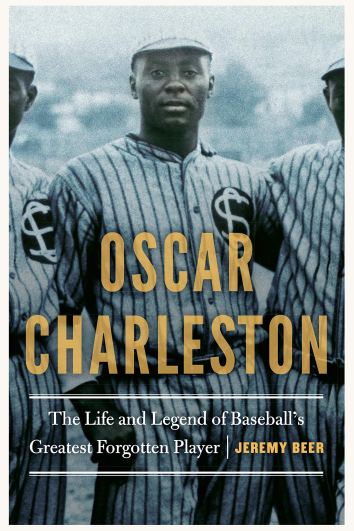
 There’s not a lot of documentation to gather about Charleston by fellow Indiana native Beer, a
  The quick afoot outfielder and worthy slugger is someone Bill James was convinced by the data he collected to be deemed the fourth-best player of all time, behind Babe Ruth, Honus Wagner and Willie Mays.

 “Easter is the only player I ever saw who can hit a baseball as far as Babe Ruth,” said then-Padres and future Angels coach Jimmie Reese. As his homers were known as “Easter Eggs,” he is said to have been the first to hit a ball into the center-field bleachers at the New York oblong Polo Grounds while with the Negro League’s Homestead Grays, a shot that was recorded at 477 feet.
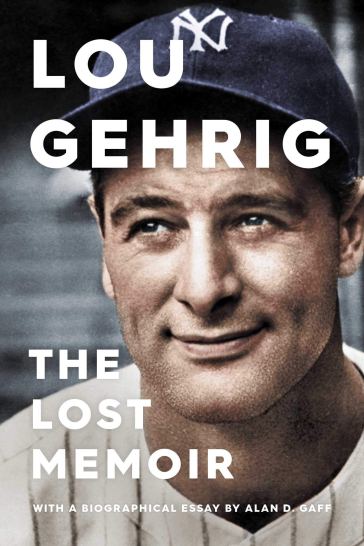 The author/editor:
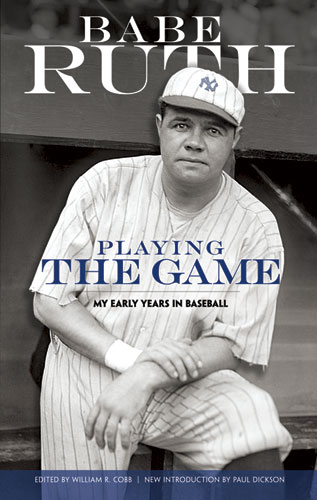 Just 102 pages, it is essentially a 12-part newspaper serial, ghost written for him in 1920, before Christy Walsh became his official agent in 1921. It’s Ruth talking and likely sportswriter (and future commissioner) Ford Frick doing the transcription, and it ended up in The Atlanta Constitution archives. The publishers call it a “breezy account of his early life that’s rich with recollections of his childhood, his transition from pitcher to outfielder, and the blockbuster trade that sent him from the Red Sox to the Yankees.” Paul Dickson provides the intro.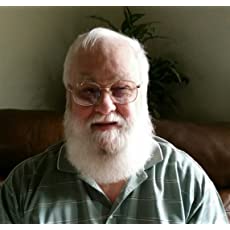
 How did this book happen? What were you doing when you stumbled across it as you mention in the introduction?
 In 2005, my book
  Tom Hoffarth's The Drill: More Farther Off the Wall