

“The Wax Pack: On the Open Road
in Search of Baseball’s Afterlife”

The author:
Brad Balukjian
The publishing info:
University of Nebraska Press
$27.95
264 pages
Released April 1
The links:
At the publisher’s website
At Amazon.com
At BarnesNoble.com
At Powells.com
At IndieBound.org
At the author’s personal site
At the created site for the book
The review in 90 feet or less
The premise, simple: After ripping open a pack of 1986 Topps baseball cards, a guy spends 48 days during the summer of 2015 traversing America. It starts in the Bay Area, heads through Southern California, sweeping across the Southern states, a pilgrimage to Cooperstown, N.Y., left turn to Las Vegas and then to a cemetery headstone in Inglewood. That’s more than 11,000 miles through 38 states.
The goal, translucent: Interview every baseball player represented in that pack. If possible. A way to return to one’s baseball card-loving roots. Discover more about the person than just a set of numbers on the back stained in chewing gum.
The execution, perfect imperfection: Which makes this far more enriching than we could have ever imagined.

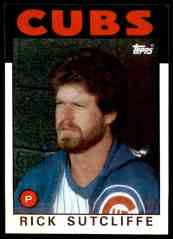 When your lineup is tracking down former Dodgers Steve Yeager and Rick Sutcliffe, former Angels Gary Pettis and Al Cowens, Hall of Famer Carlton Fisk, former All-Stars Doc Gooden, Garry Templeton, Vince Coleman and Lee Mazilli, plus — and the real gems — Richie Hebner, Jaime Cocanower, Rance Mulliniks and Randy Ready, get ready for some mixed results and unexpected pleasures.

 That’s the reality of how a fundamental idea evolves, against the grain, label up.
Just as how this college-prof-turned author may have thought that once he could finally get a publisher to bite on it, he could go around the country and connect with people in promoting it.
Things can just go sideways.

 Balukjian, a 39-year-old director of the National History and Sustainability Program and biology teacher at Merritt College in Oakland, has done freelance pieces for several publications, but he need not worry about his writing skills here. The stories speak for themselves, and what becomes a cathartic trip for the soul also allows him to come to grips with some other things in his life.
This is definitely an adventure where we need to do little explaining and trust that the freshness of the ride will get one quickly immersed and unable to put it down until the journey finishes. But then again, we can’t help ourselves.
The guy gets to watch kung fu movies with Templeton, play Cards Against Humanity with Cocanower, go bowling and lift weights with Ready. And listen to those who definitely have lives on the other side of the diamond experience.
With Yeager in the leadoff role of this lineup, we find him back at his Jersey Mike’s shop in Granada Hills, doting on his wife, Charlene, and with his kids, trying to quit smoking (he eventually does), and admitting: “There might be some people that think I’m tougher than I look. Don’t let the facial expression get you. I can sit there and watch a game with my glasses on and look like I’m boring a hole through you, but I might not be … Ya know, if the kids do something good, I cry.”

 By the way, in that ’86 set of Topps, it started off with Boomer as a Dodger, but he was done with the team by then after 14 seasons and starting a last go-around with Seattle as a 37-year-old backup to Bob Kearney and Scott Bradley. We still can’t even get our masks around that one.
Templeton, who Balukjian tracked down in San Marcos, confides in having a daughter in April of ’74, when he was 18, two years before his debut in St. Louis. He ended up gaining full custody during her high school years when she moved to San Diego and joined the rest of the Templeton family. But the more he reveals, the better this visit gets.
It’s not unlike what Balukjian uncovers when he get around to Cowens.
He rests in Inglewood Park Cemetery across the street from the Forum. Acacia Slope, Lot 432, Grave F. The headstone: “Cowens, Husband, Father, and Grandfather, 1951-2002.” With his nickname: Ace.
“I rest his baseball card on top (of the headstone) and take a picture,” writes Balukjian, after learning far more than he might have expected after locating Cowens’ closest surviving family members.
If it takes the right person at the right time to shuffle this deck, Balukjian and all his baggage brings it to us with honesty, humor, and an inquisitive nature that allows you to ride shotgun without sharing in the expenses. When it’s over, you might wonder why you never did this yourself. Maybe you will — aside from time, money and perhaps social distancing issues?
And when it’s done, Balukjian leaves us with this sort of epiphany:
Everything changes except for this one constant: As long as you’re breathing, you will always have whatever is right in front of you. Make it count.
A very cool author Q&A
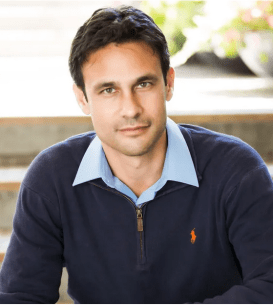 From his home in Oakland, Dr. Balukjian, a self-proclaimed bug collector, took a semester off teaching at Merritt College in Oakland (you can see his RateMyProfessor.com scores when he taught biology at Laney College) so he could focus on this book promotion, but he really hasn’t been able to spring himself loose. As the director of the Natural History & Sustainability Program at Merritt, he is trying to help coordinate ways to keep students engaged with online classes through May.
Balukjian, who also once started a Ph.D. program in Environmental Science Policy and Management at Cal-Berkley in 2006, has this classic description of himself on his website:
Brad Balukjian is a doctor, but not one who can write you a prescription (unless you’re a sick insect). He hated school when he was little, but now loves it so much that after graduating from the 23rd grade, he has moved to the other side of the desk to teach natural history at Merritt College in Oakland, California. He has strong opinions about the value of education, exposure to nature, and utility infielders from the 1980s, and is pursuing a hybrid career of teaching, writing, and research to get the word out that science is accessible and (gasp!) fun. He chose this path because he never wants to stop learning and apparently has a strong aversion to money. This is his first time writing in the third-person.
Balukjian, who once had an L.A. Times fellowship that allowed him write science stories while he was given a desk in the sports department at the old downtown building, gives us more about this book, about this process and what he wanted to achieve:

 Did you think going in, most of these ex-players would accept the premise of your journey/book project and cooperate, based on how you approached this as some sort of social experiment, trying to document history as well as find a human side to a cardboard photo?
 The beauty of the pack of baseball cards is to get a random sample. My favorite players were the underdog guys. This was my secret way to write about them. You could never do a book about Don Carmen or Jamie Cocanower or Randy Ready. What I tried to reinforce to all of them was that I wasn’t a traditional sports writer and this would be interesting beyond the field. That helped me. What was so rewarding and pleasant is how open they were, willing to be vulnerable.
It was also very interesting how you could incorporate your own journey into this, not just do a collection of “Whatever happened to …?” pieces that otherwise didn’t have a common thread.
I always knew this book would be tough and ambitious. I didn’t set out to write a “sports book,” but I knew it would get shelved in “sports,” where there are all sorts of biographies or stories about a particular season or a particular team. It’s rare, unless you’re that athlete who is the focus, to have the narrator integrated into the story. This becomes a mix of memoir, and baseball, and travel, and the challenge is how to keep it to 15 magazine profiles stapled together. Continue reading “Day 9 of (at least) 30 baseball book reviews for spring/summer 2020: Waxing nostalgic, beyond a journey of re-connecting with cardboard gods”


 So w
So w A moment of silence.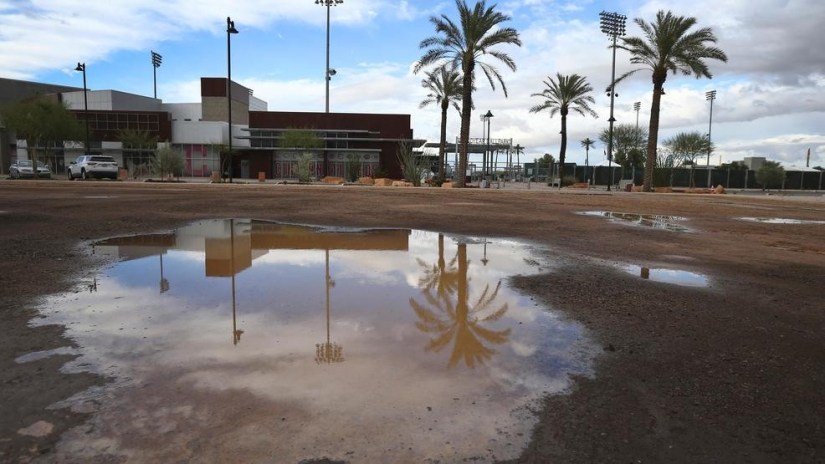


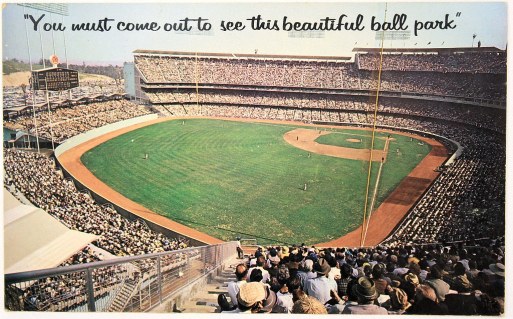


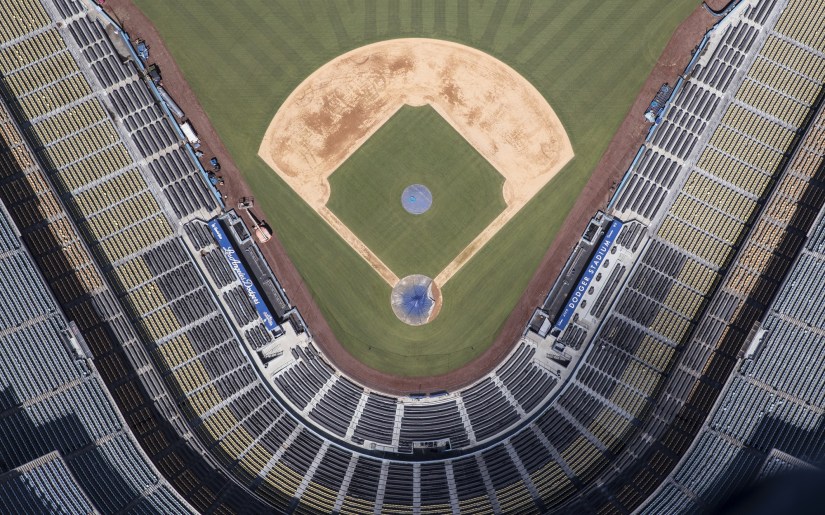
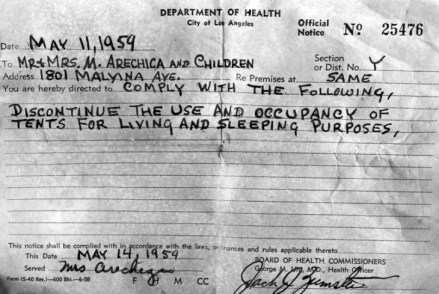 And now that house is “buried somewhere underneath the distant parking lots of what is now Dodger Stadium,” writes Nusbaum. “It wasn’t supposed to be this way. But it is.”
 To Nusbaum, it circles back to the importance of a man named Frank Wilkinson – someone who spoke to Nusbaum’s Culver City High School in 2002 at an assembly and flat-out said: “Dodger Stadium should not exist.”
 He feels, and really is, uniquely qualified as a journalist who has worked in the U.S. and Mexico, a native Angelino who believes the story of my city “has too often been told through the gaze of writers perched firmly on the East Coast and peering west as if through a pair of binoculars,” and his desire to work on this ever since that day Wilkinson visited his school.
 of why it does.”
 Tom Hoffarth's The Drill: More Farther Off the Wall